
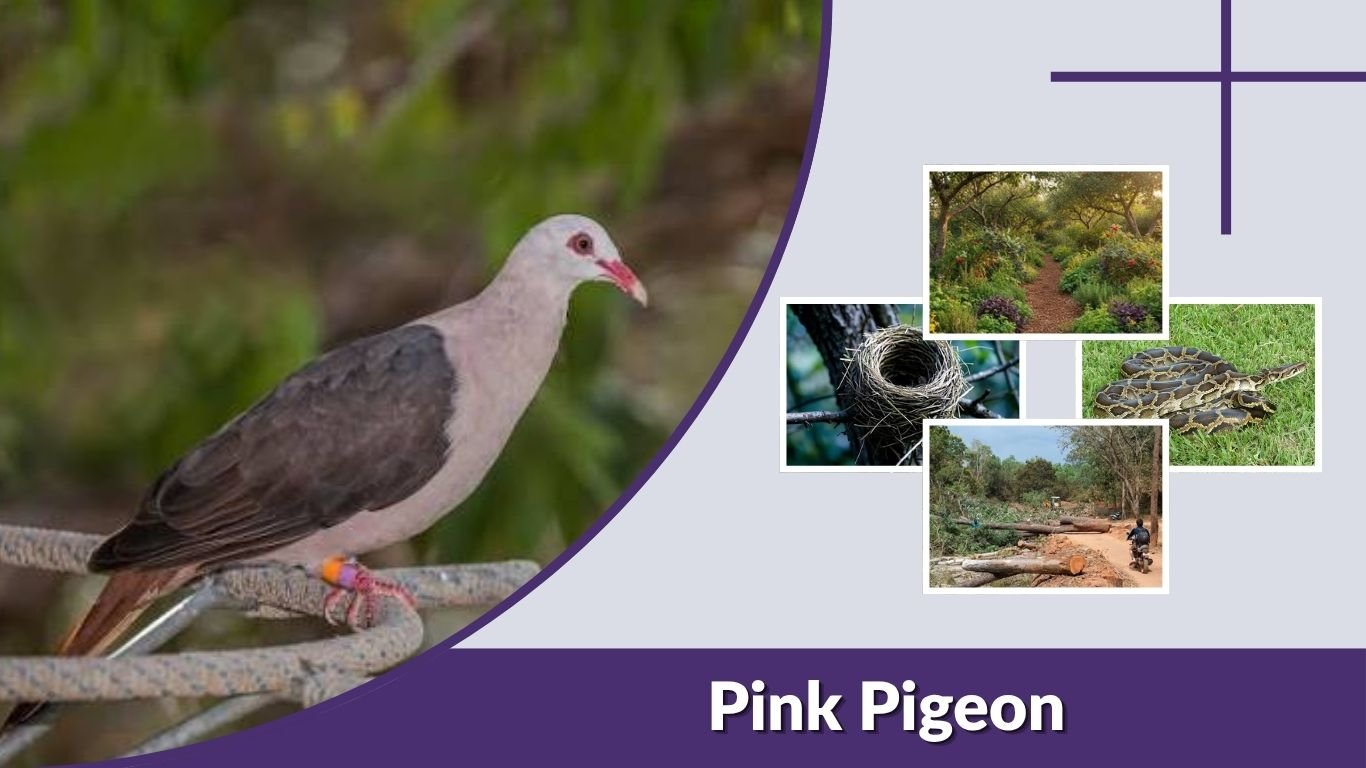
The pink pigeon is a rare forest bird found only in Mauritius. Unlike dyed or fancy pigeons, this is a real wild species with naturally soft pink plumage, dark wings, red feet, and a reddish bill. Once close to extinction, the pink pigeon has survived because of long-term conservation work, habitat protection, captive breeding, predator control, and careful monitoring.
What Is a Pink Pigeon?
The pink pigeon is a real pigeon species from the island of Mauritius in the Indian Ocean. It is not a city pigeon painted pink, and it is not the same bird as the pink-necked green pigeon. Its natural color is pale pinkish-gray, with darker brown wings and a rusty tail.
Scientific Name and Classification
The scientific name of the pink pigeon is Nesoenas mayeri. It belongs to the family Columbidae, which includes pigeons and doves. It is also known as the Mauritian pink pigeon because it is native to Mauritius.
Basic classification:
- Common name: Pink pigeon
- Other name: Mauritian pink pigeon
- Scientific name: Nesoenas mayeri
- Family: Columbidae
- Order: Columbiformes
- Native range: Mauritius
- Bird type: Forest pigeon
- Conservation status: Vulnerable
This bird is especially important because many native pigeons of the Mascarene Islands disappeared after human settlement. The pink pigeon is the only surviving native Mascarene pigeon species.
Pink Pigeon Appearance
The pink pigeon has a gentle, soft-colored appearance. Its body is mostly pale pinkish-gray or rosy beige. The wings are darker brown, the tail may look reddish-brown, and the legs and bill are red or pinkish-red. Around the eye, it has a visible red skin ring.
Identification Features
You can identify a pink pigeon by these features:
- Pale pinkish-gray head, neck, and underparts
- Dark brown wings
- Rusty or reddish-brown tail
- Red or pinkish-red bill with a pale tip
- Red legs and feet
- Red skin ring around the eye
- Rounded pigeon-like body
- Short to medium tail
- Calm forest-dwelling behavior
- Often seen walking or perching in trees
Male and female pink pigeons look similar, but females may appear slightly duller. In the field, it can still be difficult to separate them unless you have experience with the species.
Pink Pigeon Size and Weight
The pink pigeon is a medium-sized pigeon. It is not as large as a crowned pigeon, but it is bigger and heavier-looking than many small doves. Its rounded body, broad wings, and sturdy legs make it well suited to forest life.
Size Comparison Table
| Feature | Pink Pigeon | Common City Pigeon |
| Length | About 14–15 inches | About 11–14 inches |
| Weight | Around 10–12 ounces | Around 9–13 ounces |
| Main color | Pale pinkish-gray | Usually gray, black, or white |
| Wings | Dark brown | Gray with dark bars |
| Native habitat | Mauritius forest | Cities, cliffs, farms |
| Conservation status | Vulnerable | Not threatened globally |
The pink pigeon’s body shape is typical of many forest pigeons. It is strong enough to fly through trees, but it also spends time walking and feeding on the ground.
Where Do Pink Pigeons Live?
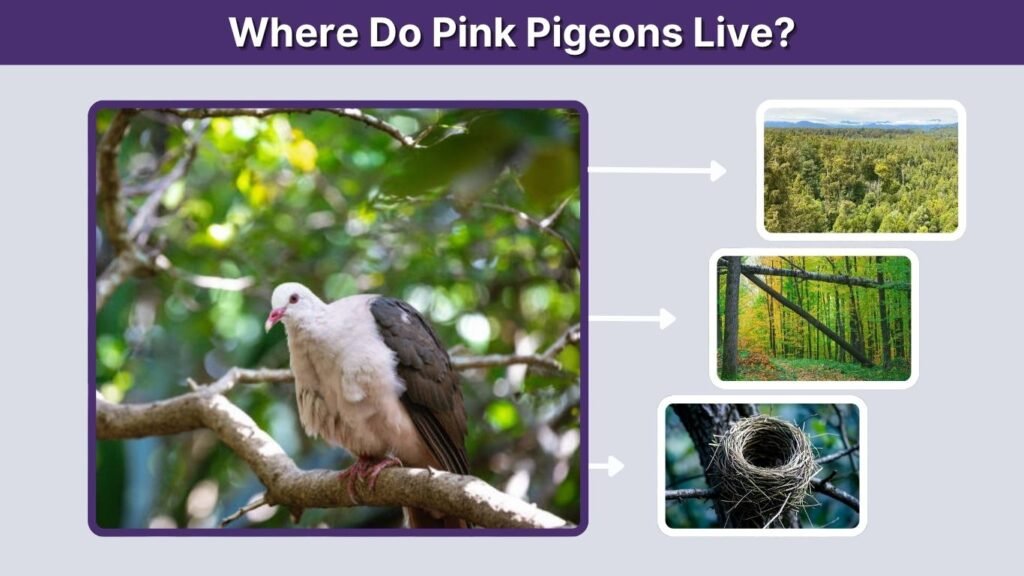
Pink pigeons live only in Mauritius. This island has a unique natural history, but much of its original forest has been lost. Today, pink pigeons survive mainly in protected and managed forest areas where native vegetation remains or is being restored.
Habitat and Distribution
The pink pigeon prefers native evergreen forest, upland forest, coastal forest, and restored woodland. It depends on areas with native trees and shrubs because these provide food, nesting sites, cover, and safe movement routes.
Important habitat features include:
- Native forest trees
- Dense woodland cover
- Fruiting plants
- Safe nesting branches
- Low predator pressure
- Managed conservation areas
- Restored forest patches
The species has also been supported on Île aux Aigrettes, a small island nature reserve near Mauritius. Conservation teams monitor birds, protect nests, control predators, and support habitat restoration in key areas.
Pink Pigeon Diet
The pink pigeon feeds mainly on plant material. It eats leaves, buds, flowers, seeds, and fruits from native plants. It may also take some cultivated or introduced plant material, but native vegetation is especially important for long-term survival.
What Do Pink Pigeons Eat?
Their diet includes:
- Native fruits
- Leaves
- Buds
- Flowers
- Seeds
- Shoots
- Small pieces of plant material
- Supplementary food in managed areas
In some conservation sites, pink pigeons receive supplementary feeding. This helps birds survive when natural food is limited, especially in smaller forest fragments. However, conservation work also focuses on restoring native plants so the species can depend more on natural food sources.
Because the pink pigeon eats fruits and seeds, it may help move seeds through the forest. This makes it part of the island’s natural ecosystem, not just a rare bird to protect.
Pink Pigeon Behavior and Lifestyle
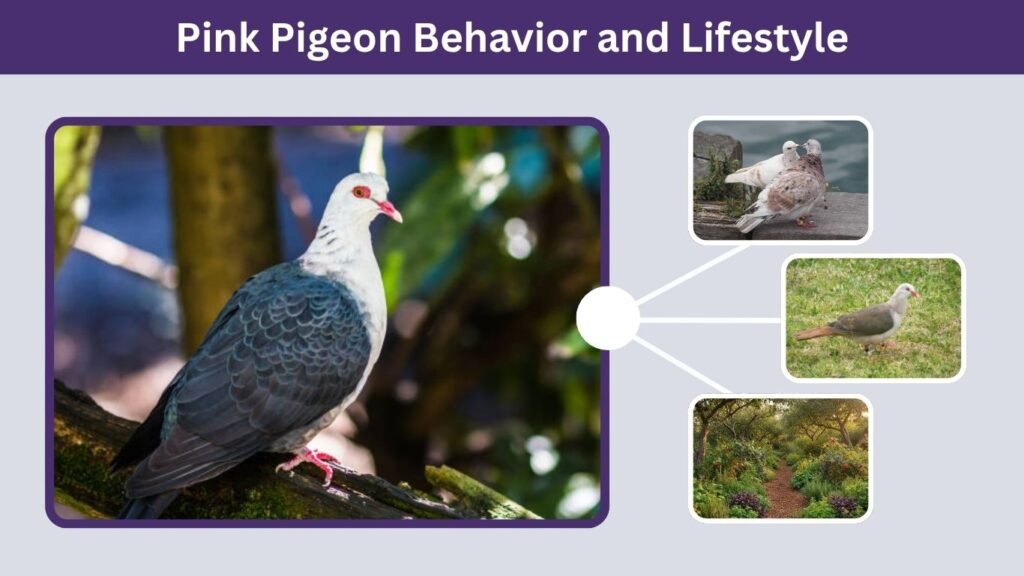
The pink pigeon is a forest bird with calm, social behavior. It may be seen alone, in pairs, or in small groups. It can fly, but it is not known as a powerful long-distance flier. It often moves between trees and may also walk on the ground while feeding.
Movement, Call, and Social Habits
Pink pigeons spend much of their time feeding, resting, preening, and moving through forest vegetation. They are not noisy city birds, but they do use calls to communicate with mates and other pigeons.
Their behavior includes:
- Perching in trees
- Walking on the ground
- Feeding in forest vegetation
- Pair bonding
- Nest defense
- Short flights between trees
- Courtship displays
- Group feeding in safe areas
The bird’s calm behavior can make it vulnerable in the wild. Introduced predators, habitat loss, and disease can affect populations quickly, especially when the total number of birds is small.
Can Pink Pigeons Fly?
Yes, pink pigeons can fly. They have broad wings and can move between trees, nesting sites, and feeding areas. However, they are not famous for long-distance migration. They are resident birds, meaning they stay in Mauritius rather than traveling across continents.
Flying Ability and Adaptations
Pink pigeons are adapted to forest movement. They can fly through woodland, but they may also spend time walking on branches or the ground. Their strong legs help them move while feeding, and their wings help them escape danger or travel between forest patches.
Important adaptations include:
- Broad wings for short forest flights
- Strong feet for perching and walking
- Soft pink-gray plumage for blending into forest light
- Red eye-ring and bill for species recognition
- Plant-based diet suited to native forest
- Ability to use both trees and ground areas
Their ability to fly does not fully protect them from threats. Eggs, chicks, and adults can still be affected by rats, cats, mongooses, disease, and habitat damage.
Breeding and Nesting
Pink pigeons usually form pairs during the breeding season. Like many pigeons and doves, both parents help with nesting and chick care. This shared care is important because chicks need warmth, protection, and regular feeding.
Eggs, Chicks, and Parental Care
The nest is usually built in a tree or shrub. It is often a loose platform of twigs and plant material. The female usually lays eggs, and both parents help incubate and feed the young.
Like other pigeons, pink pigeons feed their chicks with crop milk during the early stage. Crop milk is a soft, nutrient-rich substance produced by the parents. Later, the chicks begin receiving more plant-based food.
Breeding success can be affected by:
- Nest predators
- Storms and bad weather
- Food shortage
- Disease
- Weak genetic diversity
- Disturbance near nests
- Poor habitat quality
Because the species passed through a severe population bottleneck, careful conservation management is still needed to keep breeding populations healthy.
Lifespan of the Pink Pigeon
Pink pigeons can live for many years when protected from predators and given enough food. In managed conservation areas or captivity, they may live longer than birds in the wild because they receive monitoring and veterinary support.
How Long Do Pink Pigeons Live?
A pink pigeon may live for more than a decade, and some individuals can live longer under good conditions. Lifespan depends on food supply, disease pressure, predator control, genetics, and habitat quality.
Long-lived adult birds are very important for conservation. When a rare bird population is small, every breeding adult matters. Protecting mature birds helps the population recover and reduces the risk of another sharp decline.
Is the Pink Pigeon Endangered?
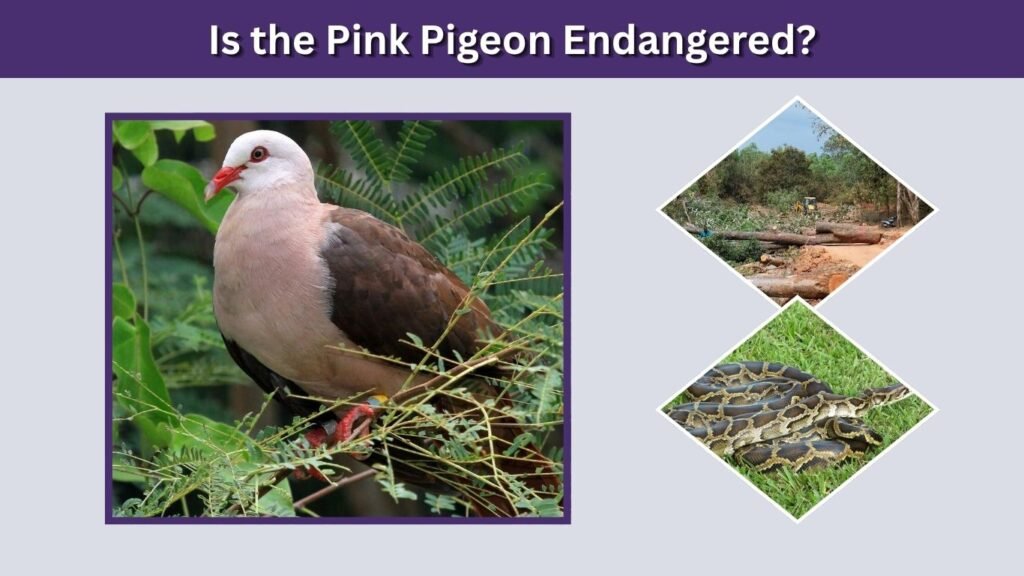
The pink pigeon is currently listed as Vulnerable. It is no longer at the most critical level, but it is still at risk. The species nearly disappeared in the late 20th century, when only a very small number remained in the wild.
Conservation Status
The recovery of the pink pigeon is often considered a conservation success story. Captive breeding, releases, feeding stations, nest protection, predator control, and habitat restoration helped the population increase.
However, the bird is not fully safe. It still faces serious threats, including:
- Small population size
- Limited habitat
- Introduced predators
- Disease
- Inbreeding risks
- Loss of native forest
- Dependence on conservation management
The pink pigeon shows that extinction can sometimes be prevented, but recovery requires long-term work. If conservation support stops too early, the population could decline again.
Why Are Pink Pigeons Rare?
Pink pigeons are rare because Mauritius lost much of its native forest, and introduced animals changed the island’s ecosystem. Rats, cats, mongooses, and other introduced species can attack eggs, chicks, or adult birds. Disease from introduced pigeons has also been a concern.
Main Threats
The biggest threats include:
- Habitat loss
- Forest degradation
- Rats eating eggs and chicks
- Feral cats and mongooses hunting birds
- Disease from introduced pigeons
- Low genetic diversity
- Competition with invasive species
- Dependence on small protected areas
Island birds are often vulnerable because they evolved without many mammal predators. When new predators arrive, native birds may not have strong defenses. This is one reason many island pigeons and doves have disappeared.
Are Pink Pigeons Real?
Yes, pink pigeons are real. The Mauritian pink pigeon is a natural species with soft pinkish-gray plumage. However, not every pink pigeon seen online is a real wild pink pigeon. Some city pigeons may appear pink because they are dyed, stained, or affected by lighting.
Real Pink Pigeon vs Dyed Pigeon
A real pink pigeon has a natural pale pink tone, dark brown wings, red feet, and a red bill. It lives in Mauritius and is a protected species. A dyed pink pigeon is usually a common domestic or city pigeon whose feathers have been artificially colored.
A real pink pigeon should not be confused with:
- Pink-necked green pigeon
- Fancy pink-colored domestic pigeons
- Dyed city pigeons
- Pink fantail pigeons
- Product or place names using “pink pigeon”
The true pink pigeon is a rare wild bird with conservation importance.
Can You Keep a Pink Pigeon as a Pet?
The pink pigeon is not a normal pet bird. It is a rare conservation species from Mauritius, and ownership or trade may be restricted. People should not try to buy wild-caught pink pigeons. Removing rare birds from the wild can damage conservation progress.
Pet and Sale Concerns
Anyone seeing “pink pigeon for sale” should be careful. The listing may refer to a domestic fancy pigeon, a dyed bird, or another species. A real Mauritian pink pigeon should only be handled through legal conservation or specialist breeding programs.
Before considering any rare pigeon, ask:
- Is the bird a real pink pigeon or a domestic breed?
- Is ownership legal in the country?
- Is there proof of captive breeding?
- Are permits required?
- Does the seller follow wildlife laws?
- Can proper long-term care be provided?
For most bird lovers, the best way to support pink pigeons is through conservation organizations, wildlife education, and responsible habitat protection.
Pink Pigeon vs Pink-Necked Green Pigeon
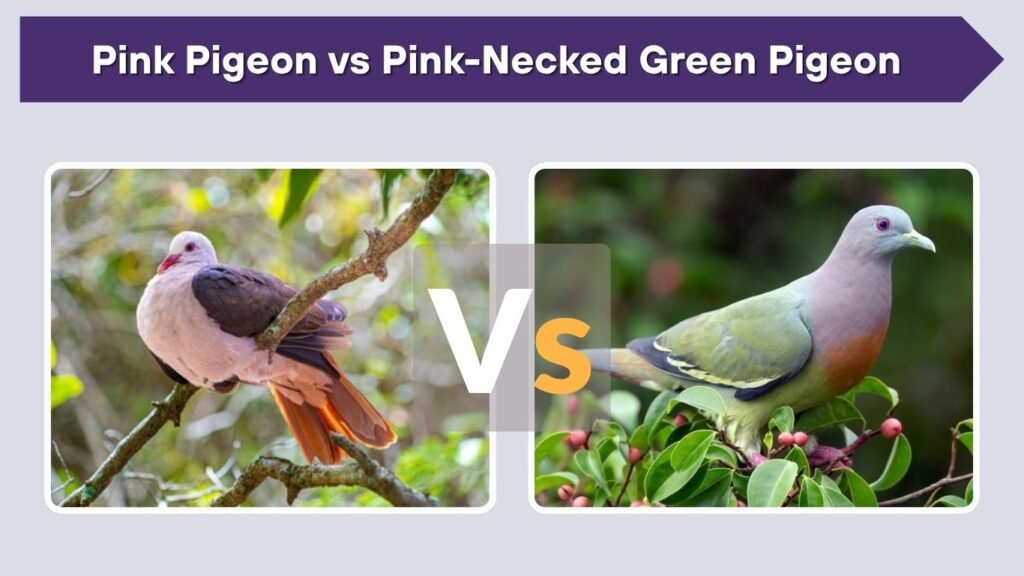
The pink pigeon and the pink-necked green pigeon are different birds. The pink pigeon is native to Mauritius and has soft pink-gray plumage with brown wings. The pink-necked green pigeon lives in parts of Southeast Asia and has bright green plumage, with males showing a pinkish neck and colorful chest.
Key Differences
The pink pigeon is a rare island conservation species. The pink-necked green pigeon is a colorful fruit dove found in a wider Asian range. Their appearance, range, and conservation stories are different.
The easiest difference is body color. The pink pigeon looks pale pink and brown, while the pink-necked green pigeon is mostly green. Their habitats also differ: one is tied to Mauritius, while the other is found in countries such as Singapore, Malaysia, Indonesia, Thailand, and nearby regions.
Interesting Facts About Pink Pigeons
The pink pigeon is more than a beautiful bird. It is a symbol of survival, island conservation, and the importance of protecting native forests. Its story is closely connected with the recovery of endangered wildlife in Mauritius.
Quick Facts
Here are some interesting facts:
- The pink pigeon is found only in Mauritius.
- Its scientific name is Nesoenas mayeri.
- It is naturally pinkish-gray, not dyed.
- It has dark brown wings and a reddish tail.
- It has red feet, a red bill, and a red eye-ring.
- It nearly went extinct in the 1990s.
- Only about 10 wild birds remained at one point.
- Conservation work helped the species recover.
- It is still considered Vulnerable.
- It eats fruits, leaves, buds, flowers, and seeds.
- It is the only surviving native Mascarene pigeon.
- It can fly but is not a long-distance migrant.
- It depends heavily on native forest habitat.
- Introduced predators remain a major threat.
- It is one of Mauritius’s most important endemic birds.
FAQs
Are pink pigeons real?
Yes, pink pigeons are real. The Mauritian pink pigeon is a natural bird species with pale pinkish-gray feathers, dark brown wings, red feet, and a red bill. However, some pink pigeons seen online may be dyed domestic pigeons, so they should not be confused with the real wild species.
Where do pink pigeons live?
Pink pigeons live only in Mauritius, an island in the Indian Ocean. They are found mainly in protected forests, restored woodland, and conservation areas with native vegetation. Their survival depends on healthy forest habitat, predator control, and long-term monitoring by conservation teams.
Why are pink pigeons endangered?
Pink pigeons became rare because of habitat loss, introduced predators, disease, and low genetic diversity. Rats, cats, and mongooses can harm eggs, chicks, or adult birds. Although the species has recovered from near extinction, it is still Vulnerable and needs continued conservation support.
What does a pink pigeon eat?
A pink pigeon eats fruits, leaves, buds, flowers, seeds, and other plant material. In managed conservation areas, it may also receive supplementary food. Native plants are especially important because they provide natural nutrition and help the bird survive in restored forest habitats.
Can you buy a pink pigeon?
A real Mauritian pink pigeon is not a normal pet bird and may be protected by wildlife laws. Some listings may refer to domestic fancy pigeons or dyed pigeons instead. Anyone interested in rare birds should avoid wild-caught animals and check legal requirements carefully.
