
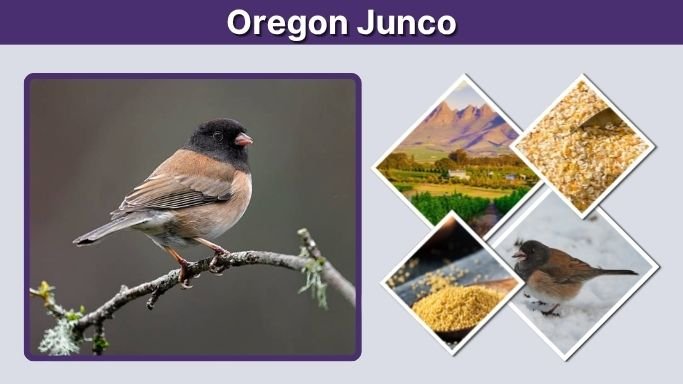
The Oregon junco is a colorful form of the dark-eyed junco, often seen in western North America. It has a dark hood, brown back, pale belly, and pinkish sides, making it easy to separate from the slate-colored junco. These small sparrow-like birds are active ground feeders, common in forests, gardens, parks, and backyards, especially where seeds and low cover are available.
What Is an Oregon Junco?
The Oregon junco is one of the best-known forms of the dark-eyed junco. It is not usually treated as a separate species today, but birdwatchers still use the name because its color pattern is very distinctive.
This bird belongs to the sparrow family. It is small, rounded, quick-moving, and often seen hopping on the ground. In many western areas, Oregon juncos are familiar backyard birds.
Oregon Junco Scientific Name and Group
The Oregon junco is part of the dark-eyed junco species, whose scientific name is Junco hyemalis. It is often called the Oregon form, Oregon race, or Oregon subspecies group of the dark-eyed junco.
Older bird books sometimes used names that made these birds seem like separate species. Today, most guides place them under dark-eyed junco. That is why people often ask, “Are dark-eyed junco and Oregon junco the same bird?” The answer is yes. Oregon junco is a form of the dark-eyed junco.
The Oregon form is most common in western North America. It is especially recognized by its dark head and warm brown back.
Oregon Junco Identification
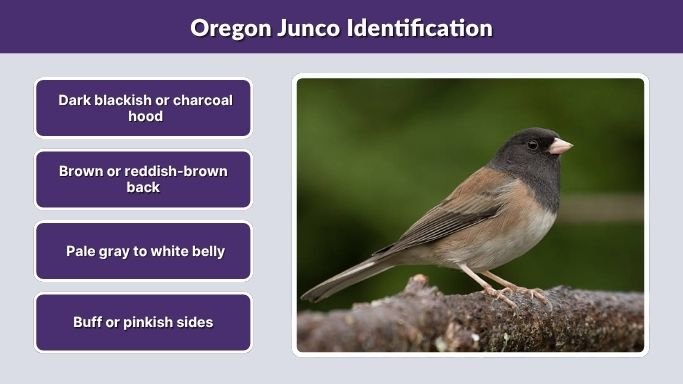
Oregon junco identification is easier when you focus on the head, back, sides, belly, and bill. Unlike the slate-colored junco, the Oregon junco has a sharper color pattern with a dark hood and brown upperparts.
Its body is compact, and its tail often flashes white when it flies. This white tail flash is one of the best clues for identifying many dark-eyed juncos.
Key Identification Marks
- Dark blackish or charcoal hood
- Brown or reddish-brown back
- Pale gray to white belly
- Buff or pinkish sides
- Small pink or pale bill
- Dark eyes
- White outer tail feathers
- Rounded body shape
- Ground-feeding behavior
- Quick hopping movement
Male Oregon juncos usually look darker and bolder. Female Oregon juncos are often paler, browner, and softer in contrast. Juvenile Oregon juncos may look streaky and can be confusing until they molt into cleaner adult plumage.
If you see a small bird with a black hood, brown back, pale belly, and white tail flashes in the western United States, it is likely an Oregon dark-eyed junco.
Oregon Junco Male vs Female
Male and female Oregon juncos look similar in shape, but their colors are often different. Males usually have a darker head and stronger contrast. Females are generally lighter, browner, and less sharply marked.
These differences are useful, but they are not always perfect. Age, feather wear, lighting, and regional variation can make identification harder.
Male vs Female Comparison
| Feature | Male Oregon Junco | Female Oregon Junco |
| Head color | Dark blackish hood | Gray-brown or softer hood |
| Back color | Rich brown | Duller brown |
| Side color | Pinkish or buff | Pale buff or brownish |
| Contrast | Strong and sharp | Softer and lighter |
| Overall look | Bold and clean | Warm, muted, and less dark |
A male Oregon dark-eyed junco often looks very neat, with a dark hood that contrasts strongly with the brown back and pale belly. A female Oregon junco may look more blended, especially on the head and back.
When identifying females, look for the same basic pattern: hooded head, brown back, pale underside, pinkish bill, and white tail edges.
Oregon Junco vs Dark-Eyed Junco
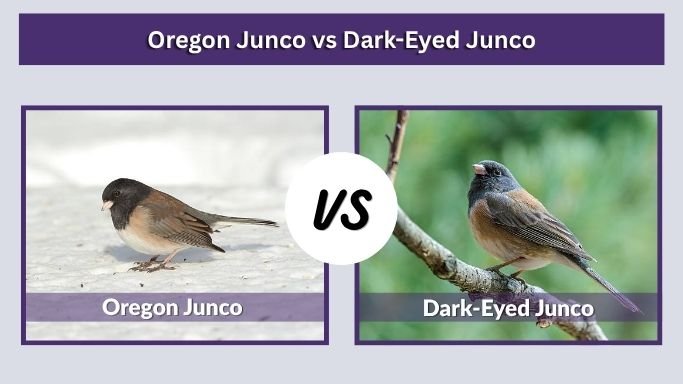
Many people search for Oregon junco vs dark-eyed junco because the names can be confusing. The Oregon junco is not separate from the dark-eyed junco. It is one form within the dark-eyed junco group.
The name “dark-eyed junco” covers several forms across North America. These forms can look different depending on region.
Main Difference Explained
The main difference is that “dark-eyed junco” is the full species name, while “Oregon junco” describes a western-looking form.
Slate-colored juncos are mostly gray and white. Oregon juncos have a dark hood, brown back, and pinkish sides. Pink-sided juncos have even stronger pinkish sides and a different head-back pattern. Cassiar juncos may show mixed traits between slate-colored and Oregon-like forms.
So, an Oregon junco is a dark-eyed junco, but not every dark-eyed junco is an Oregon junco.
Oregon Junco Habitat
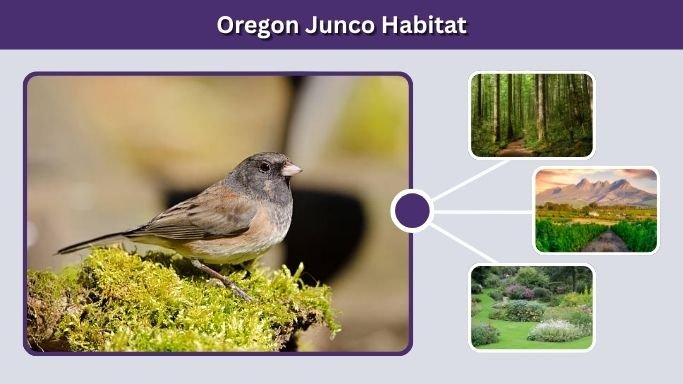
Oregon juncos live in many habitats, especially where there are trees, shrubs, and open ground for feeding. They are common in coniferous forests, mixed woodlands, mountain slopes, parks, and gardens.
They are also frequent visitors to backyards, especially if there are low bushes, leaf litter, and spilled seed under feeders.
Common Habitat Areas
- Coniferous forests
- Mixed woodlands
- Forest edges
- Mountain areas
- Brushy fields
- Parks and gardens
- Backyard shrubs
- Hedgerows
- Open yards with cover
- Ground below bird feeders
In Oregon, Washington, California, and other western states, these birds can be seen in both natural and urban areas. In Portland, Oregon, for example, juncos may visit gardens, parks, and wooded neighborhoods.
They prefer places where they can feed on the ground and quickly escape into nearby cover.
Oregon Junco Range and Migration
The Oregon junco is mostly a western North American bird. It is common along the Pacific Coast, the Rocky Mountains, and parts of the western United States and Canada.
Some Oregon juncos stay in the same general region all year. Others move between higher breeding areas and lower wintering areas.
Do Oregon Juncos Migrate?
Yes, many Oregon juncos migrate, but migration patterns can vary. Some birds move south for winter. Others move from mountains to valleys. In mild coastal areas, some may remain year-round.
During the breeding season, Oregon juncos are often found in forests and mountain habitats. In winter, they may become more visible in towns, gardens, and lowland areas.
Eastern Oregon, central Oregon, and western Oregon can all have dark-eyed juncos, but the exact appearance may vary by location. Some birds may show traits close to other junco forms, especially where ranges overlap.
Oregon Junco Diet and Feeding
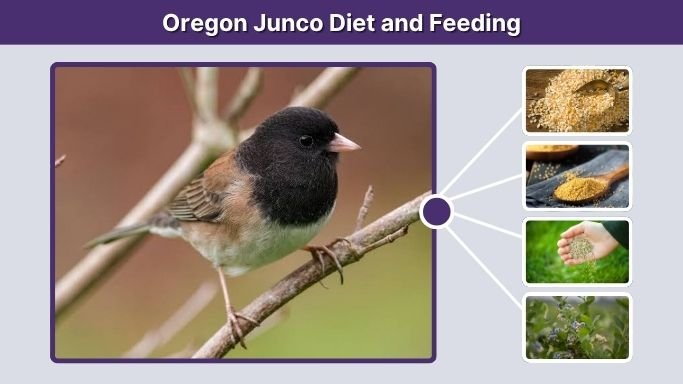
Oregon juncos are mainly seed eaters, especially in fall and winter. They spend much of their time hopping on the ground and searching through soil, leaves, grass, or snow.
During spring and summer, they also eat insects. Insects are especially important for growing chicks because they provide protein.
What Do Oregon Juncos Eat?
- Grass seeds
- Weed seeds
- Millet
- Cracked corn
- Sunflower chips
- Small berries
- Beetles
- Caterpillars
- Ants
- Spiders
- Small insects
- Other tiny invertebrates
At bird feeders, Oregon juncos usually prefer the ground below the feeder. They often pick up spilled seed instead of feeding from hanging tubes. Platform feeders and low feeding trays may also attract them.
To support Oregon juncos naturally, plant native grasses, leave some leaf litter under shrubs, and avoid using too many pesticides.
Oregon Junco Nest and Eggs
Oregon juncos usually nest on or near the ground. Their nests are often hidden in grass, under roots, beside logs, on banks, or in low vegetation. Good cover is important because the nest needs protection from predators and weather.
The female usually does most of the nest building. She uses grasses, moss, rootlets, leaves, and fine plant material.
Nesting Habits
Oregon junco nests are usually cup-shaped and well hidden. They may be placed in a small depression on the ground or tucked into a protected spot. In some areas, they may also nest slightly above ground in low shrubs or on slopes.
A typical Oregon junco clutch has 3 to 5 eggs. The eggs are usually pale, with brown, gray, or purplish markings. The female incubates the eggs, while both parents help feed the young after they hatch.
Baby Oregon juncos grow quickly. After leaving the nest, fledglings may hide near the ground while their parents continue feeding them. This is a sensitive time, so outdoor cats and heavy yard work can be dangerous for young birds.
Oregon Junco Song and Call
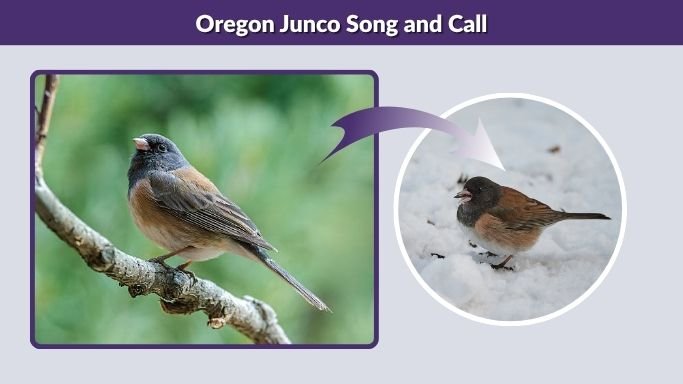
The Oregon junco song is simple, musical, and often heard during the breeding season. It is usually a clear trill given from a perch. The song may sound like a steady ringing note repeated quickly.
The call is shorter and sharper. Calls help the birds stay in contact, warn each other, and move together in loose groups.
Oregon Junco Bird Sounds
The song is often described as a fast, even trill. It can sound similar to the song of a chipping sparrow, so beginners may need practice to tell them apart.
Oregon junco calls may sound like short chips, ticks, or clicking notes. You may hear these calls when birds are feeding in shrubs or moving through a garden.
An alarm call may be sharper when the bird feels threatened. If several juncos suddenly flush from the ground, listen for quick calls and watch for white tail feathers flashing as they fly.
Juvenile Oregon Junco
A juvenile Oregon junco can look very different from an adult. Young birds are often brownish and streaky, especially on the chest and sides. This streaked look can make them resemble other young sparrows.
As they grow, they gradually develop the adult pattern. The dark hood, brown back, pale belly, and pinkish sides become easier to see after molting.
How to Recognize Young Birds
Juvenile Oregon juncos are usually seen in late spring and summer near breeding areas. They may stay close to cover and beg for food from adults.
Look for their small rounded shape, pale bill, ground-feeding behavior, and white outer tail feathers. Even if the plumage is streaky, these clues can help separate them from other sparrows.
Young juncos may seem fluffy or awkward after leaving the nest. This is normal. Unless the bird is injured or in immediate danger, it is usually best to leave it alone so the parents can continue caring for it.
Oregon Junco Behavior
Oregon juncos are active, social birds, especially outside the breeding season. They often feed in loose flocks and may mix with sparrows, chickadees, towhees, and finches.
They move with quick hops, scratch at leaf litter, and stay close to shrubs or low branches.
Common Behavior Traits
- Hops instead of walking
- Feeds mostly on the ground
- Scratches leaves to uncover food
- Flashes white tail feathers in flight
- Forms winter flocks
- Uses shrubs for cover
- Gives short contact calls
- Visits backyard feeding areas
- Becomes territorial during breeding season
- Often stays low rather than high in trees
Many people notice Oregon juncos because they seem calm but busy. They may feed quietly under a feeder for several minutes, then fly suddenly into cover when disturbed.
During breeding season, males sing to defend territory and attract females. In winter, they are more social and may gather in small groups.
Oregon Junco Bird House and Backyard Tips
Oregon juncos are not typical birdhouse nesters. Since they usually nest on or near the ground, a standard nest box is unlikely to attract them. A better approach is to create safe, natural nesting and feeding habitat.
They need cover, food, and protection from predators.
How to Attract Oregon Juncos
Provide low shrubs, native plants, grasses, and quiet ground areas. Leave some natural leaf litter under bushes because juncos search there for food. Avoid cleaning every corner of the yard too perfectly.
Offer millet, cracked corn, and sunflower chips on a platform feeder or on the ground near cover. Keep feeding areas clean to reduce disease.
Fresh water is also helpful. A shallow birdbath can attract juncos, especially in dry or cold weather. Keep cats indoors, because Oregon juncos spend so much time on the ground.
Interesting Facts About Oregon Juncos
Oregon juncos are common, but they are still fascinating birds. Their sharp color pattern makes them one of the most attractive dark-eyed junco forms.
They are also easy birds for beginners to study because they often come close to homes and feeders.
Quick Facts
- Oregon junco is a form of the dark-eyed junco.
- It is common in western North America.
- Males usually have darker hoods than females.
- Females are often browner and softer in color.
- They usually feed on the ground.
- They eat seeds, insects, and small invertebrates.
- Their nests are often hidden near the ground.
- They usually lay 3 to 5 eggs.
- Their song is a musical trill.
- Their tail shows white flashes in flight.
One of the most interesting things about Oregon juncos is their regional variation. Birds from different western areas may show slight differences in color, size, and contrast.
FAQs
Are Oregon juncos and dark-eyed juncos the same bird?
Yes, the Oregon junco is a form of the dark-eyed junco. “Dark-eyed junco” is the full species name, while “Oregon junco” describes a western form with a dark hood, brown back, pale belly, and pinkish sides. Birdwatchers often use both names.
What does a female Oregon junco look like?
A female Oregon junco usually has a softer gray-brown hood, brown back, pale belly, and buff or pinkish sides. She is often less sharply marked than the male. Her bill is pale pink, and she still shows white outer tail feathers when flying.
Where do Oregon juncos nest?
Oregon juncos usually nest on or near the ground. Their nests may be hidden under grass, roots, logs, shrubs, or banks. The female builds a cup-shaped nest using grasses, moss, rootlets, and other plant materials. Good cover helps protect eggs and young birds.
What do Oregon juncos eat?
Oregon juncos mostly eat seeds, especially in fall and winter. They also eat insects, spiders, caterpillars, ants, and beetles during warmer months. At backyard feeders, they often pick up spilled millet, cracked corn, and sunflower chips from the ground.
Do Oregon juncos migrate?
Many Oregon juncos migrate, but not all move long distances. Some travel south in winter, while others move from mountains to lower valleys. In mild areas, some may stay year-round. Their movement depends on weather, elevation, food supply, and local habitat.
