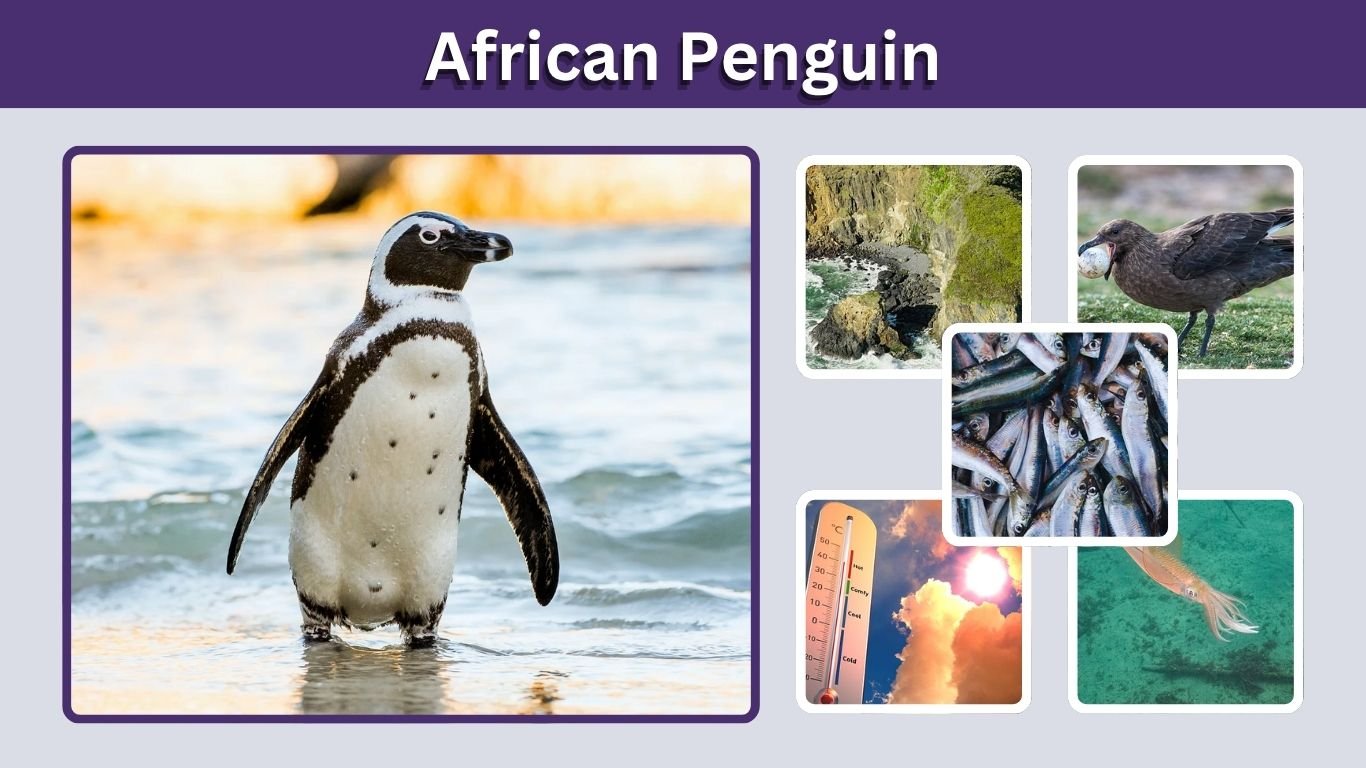
The African penguin is a small, distinctive seabird found along the coasts of southern Africa. Known for its black-and-white plumage, pink facial patches, and donkey-like braying call, this species is adapted to life in cool coastal waters rather than icy Antarctic environments. African penguins feed mainly on small schooling fish, breed in colonies, and depend on productive marine ecosystems for survival. This guide explains their habitat, diet, size, lifespan, predators, behavior, life cycle, adaptations, and the conservation challenges now threatening their future. Pasted text
African Penguin Facts and Appearance
African penguins (Spheniscus demersus) are the only penguin species native to Africa. Although their upright posture and black-and-white feathers resemble other penguins, their warm-climate coastal habitat makes them distinctive. Adults are relatively small, streamlined seabirds with physical features that help them swim efficiently, regulate body temperature, communicate with colony members, and remain camouflaged while hunting underwater.
Quick African Penguin Facts
- Scientific name: Spheniscus demersus
- Other name: Jackass penguin or black-footed penguin
- Height: About 61–69 cm (24–27 inches)
- Weight: Roughly 2–5 kg (4.4–11 pounds)
- Diet: Mainly sardines, anchovies, and other small fish
- Habitat: Rocky and sandy coastlines and offshore islands
- Typical clutch: Usually two eggs
- Conservation status: Critically Endangered
African penguins can reach swimming speeds of around 12–15 mph while pursuing prey.
What Does an African Penguin Look Like?
An adult has a black back, white underside, and a distinctive black band across its chest. Small black spots scattered across the white breast vary between individuals.
Another noticeable feature is the bare pink skin above the eyes. Increased blood flow through this exposed area can help the bird release heat when temperatures rise. Their dark back and pale underside also provide countershading, helping camouflage them against the ocean when viewed from above or below.
Why Is It Called a Jackass Penguin?
The nickname comes from its loud braying vocalization, which can sound surprisingly similar to a donkey. African penguins use calls for courtship, recognizing mates, maintaining pair bonds, and communicating around crowded breeding colonies.
African Penguin Habitat and Distribution
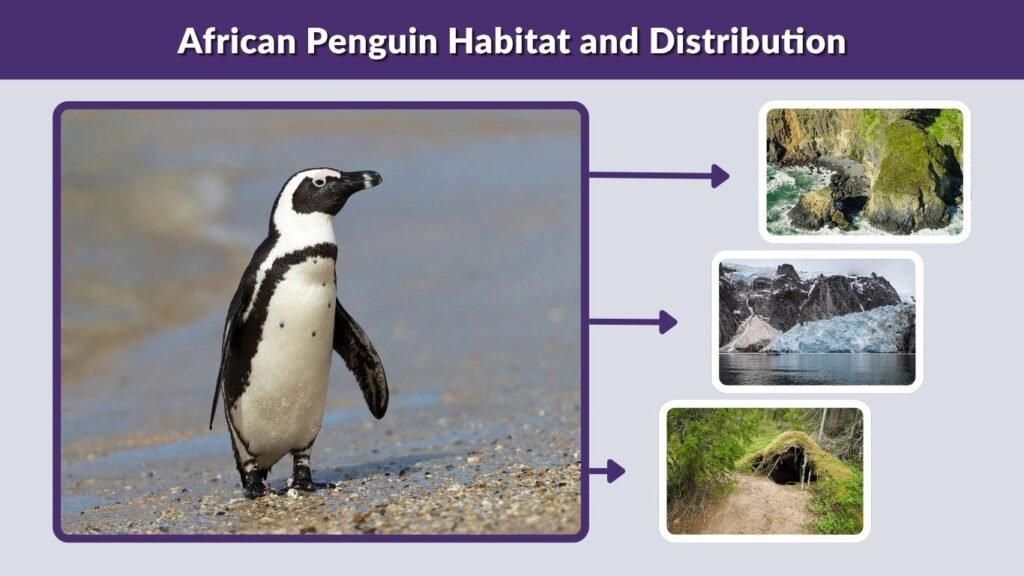
African penguins do not naturally inhabit Antarctica. Their range is centered on the southern African coastline, particularly South Africa and Namibia. They spend much of their time feeding at sea but return to islands, beaches, rocky shores, and protected coastal areas for breeding, resting, and moulting. Access to productive ocean waters close to colonies is particularly important during breeding.
Where Does an African Penguin Live?
Wild African penguins occur along the coasts of South Africa and Namibia. Important colonies are found on offshore islands and at mainland locations such as Boulders Beach near Simon’s Town and Stony Point at Betty’s Bay.
Their distribution is closely linked to productive marine waters where schooling fish are available. During breeding, adults need suitable nesting areas within practical travelling distance of feeding grounds.
Main African Penguin Habitat Features
Suitable African penguin habitat commonly includes:
- Rocky coastal areas and sheltered beaches
- Offshore islands with breeding colonies
- Burrows, sandy depressions, rock crevices, or vegetation for nesting
- Nearby cold, nutrient-rich marine waters
- Reliable populations of sardines, anchovies, and other prey
- Relatively protected areas with limited disturbance and terrestrial predators
Historically, many penguins nested in deep guano deposits, but extensive guano harvesting removed much of this natural nesting material.
African Penguin Diet, Predators, and Adaptations
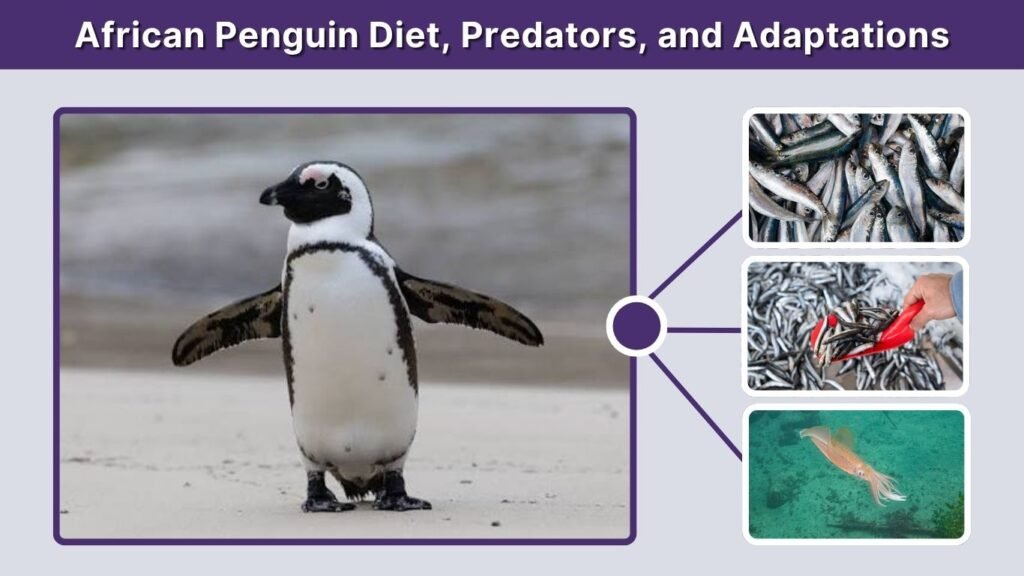
Life along southern Africa’s coast requires African penguins to function efficiently both on land and underwater. Their streamlined bodies, powerful flippers, waterproof feathers, camouflage, and social behavior all contribute to survival. However, even these adaptations cannot eliminate pressures from natural predators or compensate completely when preferred prey becomes scarce around important breeding colonies.
What Does an African Penguin Eat?
The African penguin diet consists primarily of marine prey, including:
- Sardines
- Anchovies
- Other small schooling fish
- Squid
- Small crustaceans
They are skilled underwater hunters, using their flipper-like wings for propulsion and their feet for steering. Sardines and anchovies are particularly important food sources, making changes in these fish populations significant for penguin survival and breeding success.
African Penguin Predators and Enemies
Predation varies between land and sea. Cape fur seals and sharks can prey on penguins in the ocean, while terrestrial predators may enter breeding colonies. Eggs and chicks are especially vulnerable to gulls and other opportunistic animals.
At some mainland colonies, conservation managers also deal with predators such as caracals, mongooses, dogs, and cats. Smaller colonies may become particularly vulnerable when fewer adult birds are available to defend nesting areas.
Adaptations for Swimming and Warm Weather
African penguins have dense, waterproof plumage that provides insulation in cold ocean water. Their streamlined body and modified wings work like underwater flippers.
Countershading makes them less obvious to predators, while the exposed pink skin above their eyes assists with heat loss. They also undergo an annual moult in which their feathers are replaced. During this period, they cannot forage at sea and must depend on stored body reserves.
African Penguin Life Cycle and Lifespan
African penguins spend important stages of their lives both at sea and within breeding colonies. Adults form pair bonds, prepare protected nests, incubate eggs, and share chick-rearing responsibilities. Young penguins eventually leave the colony and spend an extended period at sea before returning. Survival during these early years strongly influences the long-term stability of the population.
Breeding, Eggs, and African Penguin Chicks
Females commonly lay two eggs, and both parents participate in incubation. Incubation lasts approximately 38–41 days. After hatching, chicks depend heavily on their parents for protection and regurgitated food.
As chicks grow, they may gather with other young birds while their parents forage. They generally develop juvenile plumage and fledge at roughly 70–90 days. Young birds then spend considerable time at sea before returning and eventually acquiring adult plumage.
How Long Do African Penguins Live?
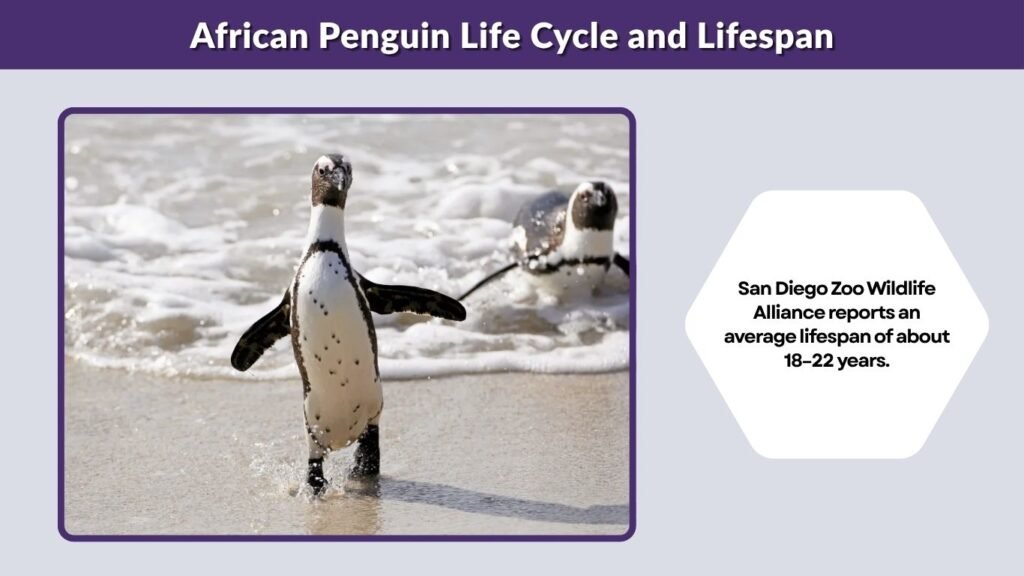
Lifespan varies according to environmental conditions, food availability, predation, disease, and other pressures. San Diego Zoo Wildlife Alliance reports an average lifespan of about 18–22 years, while some wild individuals may survive longer.
African Penguin Behavior
These birds are highly social and commonly breed in colonies. Vocalizations help partners communicate and defend nesting territories, while behaviors such as mutual preening help maintain feathers.
Despite their somewhat awkward movement on land, African penguins become powerful, agile swimmers once they enter the water.
African Penguin Conservation Status and Population
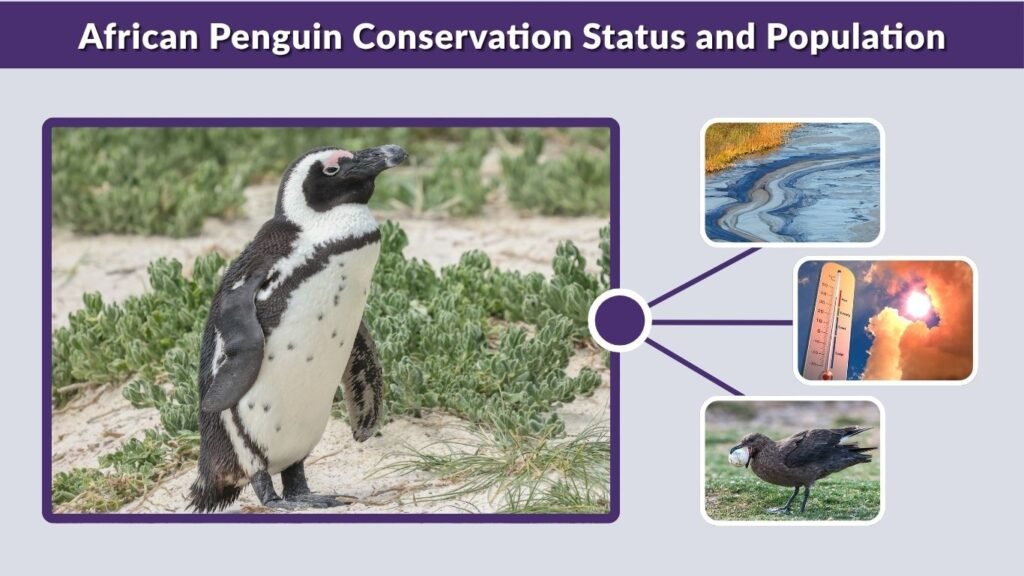
The future of the African penguin has become a major conservation concern. The species was officially uplisted to Critically Endangered on the IUCN Red List in 2024 after decades of severe population decline. BirdLife International reported that more than 97% of the historical population had disappeared and fewer than 10,000 breeding pairs remained around this period.
Why Are African Penguins Critically Endangered?
Major pressures include:
- Reduced availability of sardines and anchovies
- Changes in prey distribution
- Competition with commercial fisheries
- Oil pollution
- Disturbance around breeding colonies
- Loss or degradation of nesting habitat
- Predation
- Extreme weather and climate-related changes
- Disease and other marine ecosystem pressures
Food scarcity is considered one of the most important ongoing drivers of the decline.
African Penguin Conservation Efforts
Conservation programs include rehabilitating injured and oiled birds, rescuing abandoned chicks, improving nesting habitat, monitoring colonies, controlling predators, establishing new breeding sites, and protecting important feeding areas.
A significant development occurred in March 2025, when a South African High Court order established 10-year commercial sardine and anchovy fishing closures around six important African penguin breeding colonies. These zones are intended to reduce competition for food close to key colonies.
FAQs
African penguins generate many questions because their habitat, appearance, behavior, and conservation situation differ from the Antarctic image commonly associated with penguins. The answers below cover several practical facts about where they live, what they eat, how they handle warmer conditions, their current conservation status, and whether they can fly.
1. Where Do African Penguins Live?
African penguins naturally occur along the coasts and offshore islands of South Africa and Namibia, where they breed and feed in productive coastal waters.
2. What Do African Penguins Eat?
They primarily eat small schooling fish such as sardines and anchovies, although squid, crustaceans, and other small fish may also be consumed.
3. Can African Penguins Live in Warm Weather?
Yes. They are adapted to southern Africa’s coastal climate. Features such as exposed pink skin above the eyes help them release excess body heat.
4. Are African Penguins Endangered?
African penguins are currently classified as Critically Endangered, having been uplisted from Endangered in 2024 because of their continuing severe population decline.
5. Can African Penguins Fly?
African penguins cannot fly through the air. Their wings have evolved into stiff, powerful flippers that allow them to effectively “fly” through the water while pursuing fish.