
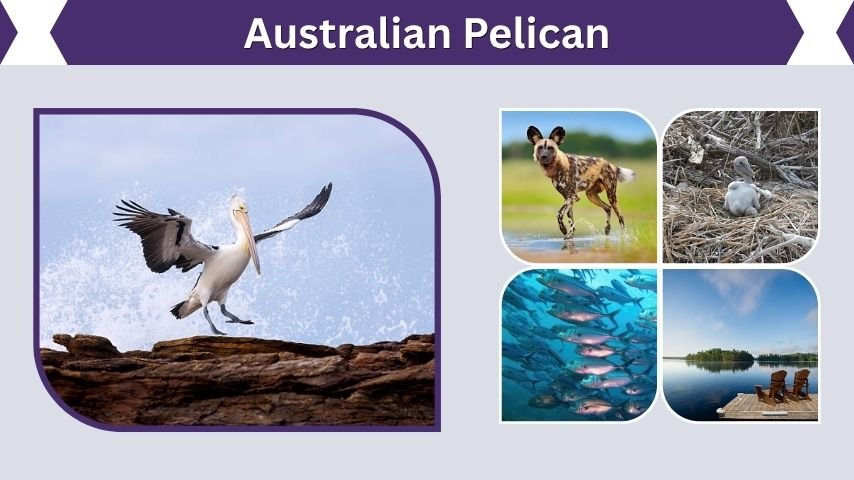
The Australian pelican is one of the largest flying waterbirds in the world. Famous for its enormous bill and huge wingspan, this bird is commonly found near lakes, rivers, coastlines, and wetlands across Australia. Its graceful soaring flight and cooperative fishing behavior make it one of the most interesting birds in Australian wildlife.
Many people search for Australian pelican facts because of the bird’s unusual appearance and feeding habits. From its giant throat pouch to its impressive flying ability, the Australian pelican has many adaptations that help it survive in different environments throughout the country.
What Is an Australian Pelican?
The Australian pelican is a large waterbird native to Australia and nearby islands. It belongs to the pelican family and is known for its massive pink bill and expandable throat pouch used for catching fish. These birds are highly social and often gather in groups near water sources. Australian pelicans are also excellent fliers and can travel long distances while searching for food and nesting areas.
Scientific Classification
- Scientific name: Pelecanus conspicillatus
- Family: Pelecanidae
- Order: Pelecaniformes
- Native region: Australia
- Bird type: Waterbird
Why Is the Australian Pelican Famous?
- One of the longest bird bills in the world
- Huge wingspan for soaring flight
- Skilled fish-catching behavior
- Distinctive throat pouch
- Common Australian coastal bird
Australian Pelican vs American Pelican
| Feature | Australian Pelican | American White Pelican |
| Bill Length | Very long | Shorter |
| Main Color | White with black wings | Mostly white |
| Native Area | Australia | North America |
| Wingspan | Extremely large | Large |
Australian Pelican Identification
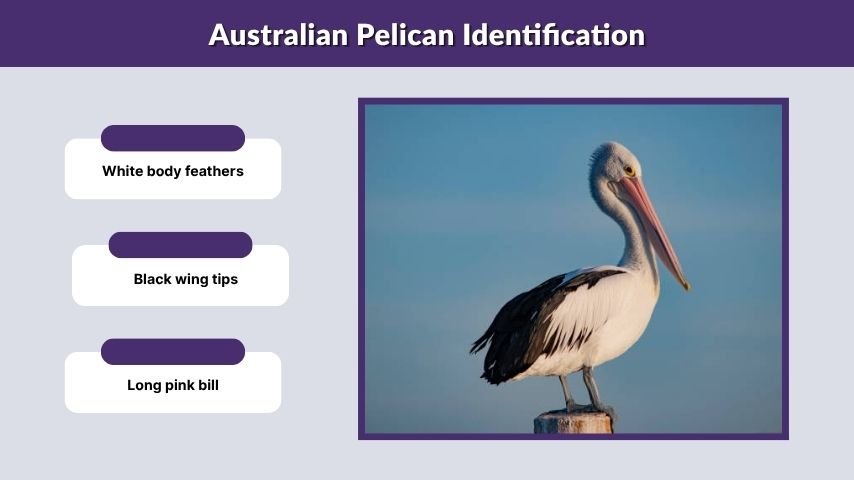
Australian pelicans are easy to recognize because of their giant beaks, pale feathers, and broad wings. Adult birds usually have white bodies with black markings on the wings. Their enormous bill and throat pouch are used to scoop fish from the water. Despite their large size, they are surprisingly graceful when flying.
Physical Appearance
- White body feathers
- Black wing tips
- Long pink bill
- Large throat pouch
- Pale blue-gray eyes
Australian Pelican Size and Height
Australian pelicans are among the heaviest flying birds in Australia. Adults can grow more than 5 feet in length and stand very tall near shorelines. Their bill alone may measure over 18 inches long.
Australian Pelican Wingspan
| Measurement Type | Average Size |
| Wingspan | Up to 11 feet |
| Weight | 8–20 pounds |
| Bill Length | Among the world’s longest |
Australian Pelican Habitat and Distribution
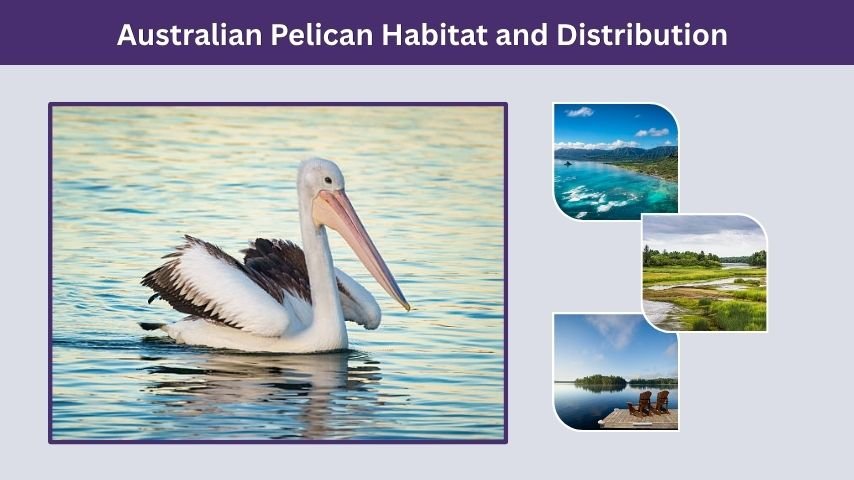
Australian pelicans live across most parts of Australia and are highly adaptable birds. They can survive in coastal waters, inland lakes, rivers, wetlands, and even temporary flood areas. Because they travel long distances, they are often seen moving between habitats depending on rainfall and food availability.
Where Do Australian Pelicans Live?
- Coastal beaches
- Wetlands
- Lakes
- Rivers
- Harbors and estuaries
Pelican Range in Australia
Australian pelicans are found in nearly every Australian state, including Queensland, New South Wales, Victoria, South Australia, Western Australia, and Tasmania. They are especially common in areas with large bodies of water and abundant fish populations.
Migration and Movement
Unlike some birds that follow fixed migration routes, Australian pelicans move according to rainfall and water conditions. Large groups may travel inland after heavy rains create temporary lakes and breeding opportunities.
Australian Pelican Diet and Feeding Habits
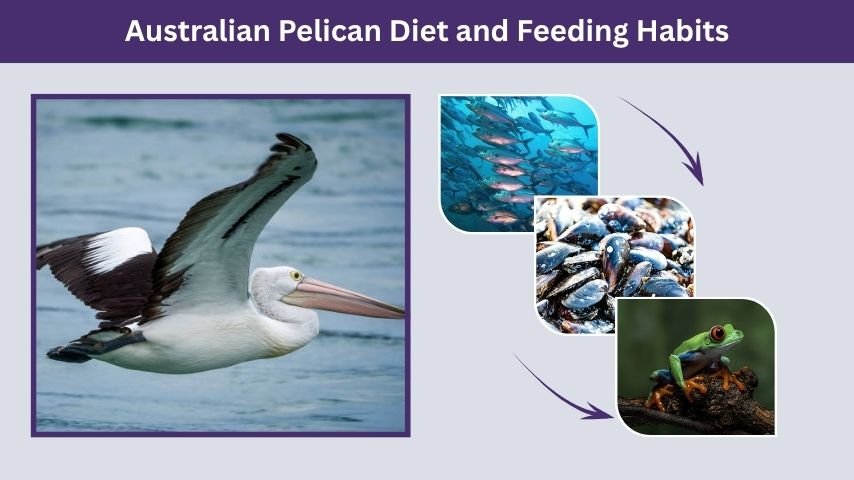
Australian pelicans are carnivorous birds that mainly eat fish and other aquatic animals. Their giant throat pouch allows them to scoop prey directly from the water. They often work together in groups to herd fish into shallow areas before feeding.
What Do Australian Pelicans Eat?
- Fish
- Crustaceans
- Tadpoles
- Frogs
- Small aquatic animals
Feeding Techniques
- Scooping fish with bill
- Cooperative group feeding
- Surface hunting
- Draining water from throat pouch
- Catching prey in shallow water
Are Australian Pelicans Carnivores?
Yes, Australian pelicans are carnivores because they feed mainly on fish and aquatic creatures. Their strong bill and flexible pouch are perfectly adapted for catching slippery prey in rivers and coastal waters.
Australian Pelican Behavior and Lifestyle
Australian pelicans are highly social birds that often gather in large colonies. They spend much of the day swimming, resting near shorelines, or soaring high in the sky using warm air currents. These birds are calm around humans in many coastal areas, especially where visitors regularly feed them.
Australian Pelican Flying Ability
Australian pelicans are powerful fliers despite their large body size. They can soar for long distances without flapping their wings constantly. Warm rising air helps them glide efficiently across lakes, coastlines, and wetlands.
Australian Pelican Calls and Sounds
Unlike many birds, pelicans are generally quiet. Adult Australian pelicans produce low grunts and bill-clapping sounds, while chicks make louder begging calls when waiting for food from parents.
Social Behavior
- Live in large colonies
- Often feed in groups
- Rest together near shorelines
- Travel long distances in flocks
- Breed in nesting colonies
Australian Pelican Breeding and Life Cycle
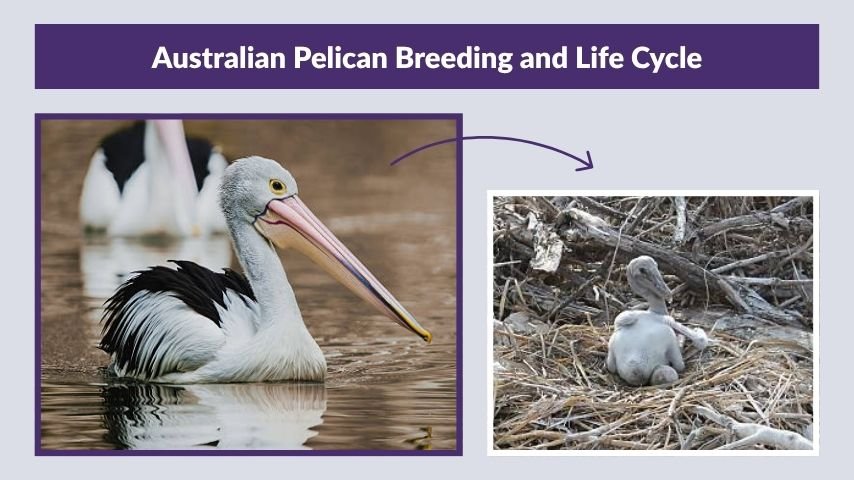
Australian pelicans breed in large colonies that may contain hundreds or even thousands of birds. Breeding usually depends on rainfall and water levels because fish become more abundant after floods. During nesting season, pelicans gather on islands, sandbanks, and quiet shorelines to raise their chicks safely away from predators.
Australian Pelican Breeding Season
Breeding can happen at different times depending on environmental conditions. In many inland areas, heavy rainfall triggers breeding activity because temporary lakes provide rich feeding opportunities for growing chicks.
Nesting Habits
- Ground nests made from sand and grass
- Nesting colonies on islands
- Shallow nests close together
- Protected shoreline breeding areas
- Both parents guard the nest
Eggs and Chicks
Female pelicans usually lay one to three eggs. Both parents help incubate the eggs for about one month. After hatching, chicks stay in the nest for several weeks before gathering into nursery groups called pods. Young pelicans grow quickly and learn to fly after several months.
Australian Pelican Adaptations
Australian pelicans have several unique adaptations that help them survive in coastal and inland habitats. Their large bill, expandable pouch, and enormous wings allow them to feed efficiently and travel across huge distances in search of food and water.
Beak and Pouch Adaptations
The Australian pelican’s bill is one of the longest of any bird species. Its flexible throat pouch acts like a fishing net, allowing the bird to scoop fish and drain excess water before swallowing prey.
Flight Adaptations
- Large wings for soaring
- Lightweight bones
- Strong chest muscles
- Efficient gliding ability
- Long-distance travel skills
Behavioral Adaptations
Australian pelicans often hunt cooperatively to improve feeding success. They can also move quickly to new habitats after rainfall, helping them survive in Australia’s changing climate conditions.
Australian Pelican Predators and Threats
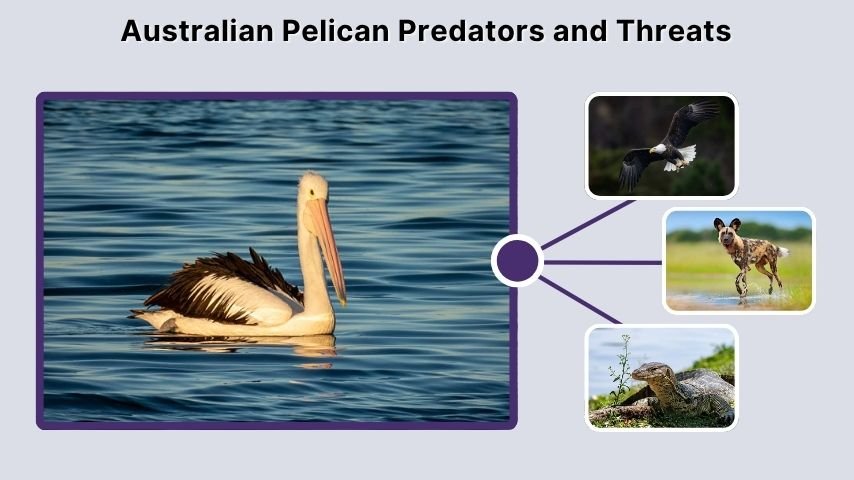
Adult pelicans have few natural predators because of their large size, but eggs and young chicks are more vulnerable. Environmental changes and pollution also create serious challenges for wild populations in some regions.
Natural Predators
- Eagles
- Large reptiles
- Wild dogs
- Sharks attacking young birds
- Large gulls stealing eggs
Human-Related Threats
Fishing hooks, plastic pollution, and habitat destruction can injure pelicans or reduce food availability. Oil spills and contaminated water also threaten wetland ecosystems where these birds feed and breed.
Conservation Status
Australian pelicans are not currently endangered and remain common across much of Australia. Protected wetlands and wildlife reserves help support healthy breeding populations throughout their natural range.
Interesting Australian Pelican Facts
Australian pelicans are among the most impressive waterbirds in the Southern Hemisphere. Their huge beaks, long-distance flying ability, and cooperative feeding behavior make them fascinating animals for birdwatchers and wildlife photographers.
Fun Facts About Australian Pelicans
- Have one of the world’s longest bird bills
- Can soar for hours with little effort
- Often fish together in groups
- Large pouch can hold several gallons of water
- Can travel huge distances across Australia
- Young pelicans form nursery groups called pods
- Common near Australian coastlines and wetlands
Australian Pelicans in Culture and Tourism
Pelicans are popular symbols of Australian coastal wildlife and are featured in tourism, photography, and public feeding attractions. Many coastal towns host daily pelican feeding events that attract visitors from around the world.
Pelicans in Australian Wildlife Tourism
Birdwatchers often visit lakes, beaches, and wetlands to observe Australian pelicans in flight or feeding near shorelines. Their large size and calm behavior make them favorite subjects for wildlife photography.
Pelicans in Art and Photography
Australian pelicans frequently appear in paintings, postcards, documentaries, and nature photography because of their graceful flying posture and unusual appearance.
FAQs
What do Australian pelicans eat?
Australian pelicans mainly eat fish, crustaceans, frogs, tadpoles, and other aquatic animals. They catch prey using their long bills and expandable throat pouches.
How big is an Australian pelican?
Australian pelicans are very large birds with wingspans reaching up to 11 feet. Adults can weigh between 8 and 20 pounds and have extremely long bills.
Can Australian pelicans fly long distances?
Yes, Australian pelicans are excellent long-distance fliers. They use warm air currents to soar efficiently and may travel great distances while searching for food and breeding habitats.
Are Australian pelicans dangerous?
Australian pelicans are generally not dangerous to humans. They are calm birds, although they may defend themselves with their large bill if threatened or handled improperly.
Where do Australian pelicans live?
Australian pelicans live across Australia in coastal areas, wetlands, rivers, lakes, estuaries, and inland flood regions with abundant water and fish populations.