
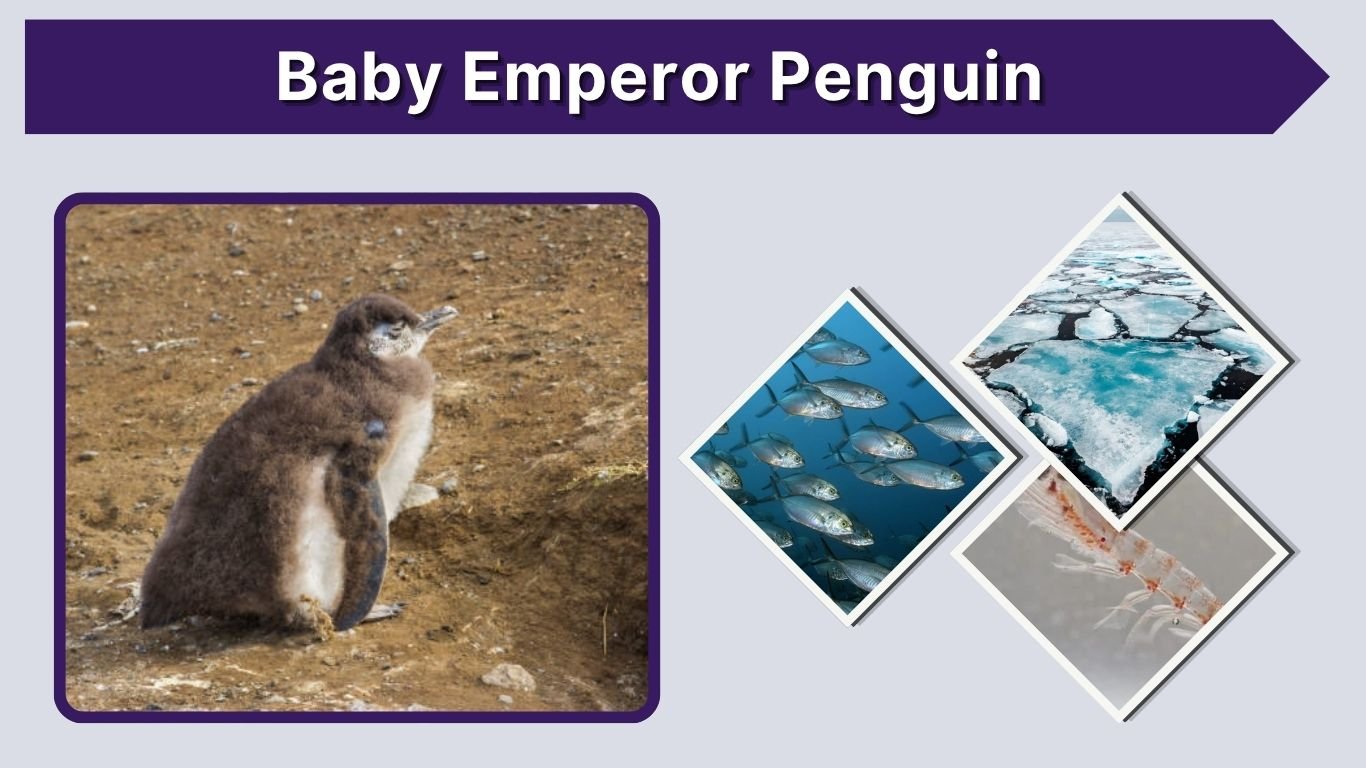
A baby emperor penguin is one of Antarctica’s most fascinating young animals, recognizable by its fluffy gray feathers, tiny flippers, and adorable black-and-white face. These chicks are born during the harsh Antarctic winter and depend entirely on their parents for warmth, food, and protection. Unlike many other birds, emperor penguins raise their babies on frozen sea ice rather than in traditional nests. From their remarkable hatching process to their first swimming experience, baby emperor penguins undergo an extraordinary journey before becoming independent adults.
What Is a Baby Emperor Penguin Called?
A baby emperor penguin is called a chick. The scientific name of the species is Aptenodytes forsteri, and it is the largest living penguin species.
Emperor penguin chicks hatch during the Antarctic winter, usually in July or August. At birth, they are extremely vulnerable and cannot regulate their body temperature effectively.
Unlike adult penguins, which have waterproof feathers, newborn chicks have thin, soft down that provides limited insulation.
For the first several weeks, their survival depends on remaining warm beneath their parents’ protective brood pouches.
As they grow, these chicks gradually develop thicker feathers, stronger bodies, and the ability to survive outside their parents’ immediate protection.
What Do Baby Emperor Penguins Look Like?
Baby emperor penguins have a distinctive appearance that makes them easy to recognize. Their fluffy, rounded bodies look very different from the sleek black-and-white appearance of adult emperor penguins.
Newly hatched chicks have relatively sparse gray down. As they develop, their plumage becomes noticeably thicker and fluffier.
Physical Characteristics
- Gray feathers: Older chicks have thick, silvery-gray down covering most of their bodies.
- Black-and-white faces: Their dark heads feature prominent white facial patches.
- Small flippers: Their short flippers eventually develop into powerful structures for swimming.
- Rounded bodies: Thick feathers and developing body fat give them a plump appearance.
- Short beaks: Young emperor penguins have relatively small, dark beaks that become more developed as they mature.
These characteristics change during growth. Before entering the ocean, chicks replace their fluffy down with juvenile feathers that provide the waterproofing necessary for swimming.
How Big Is a Baby Emperor Penguin?
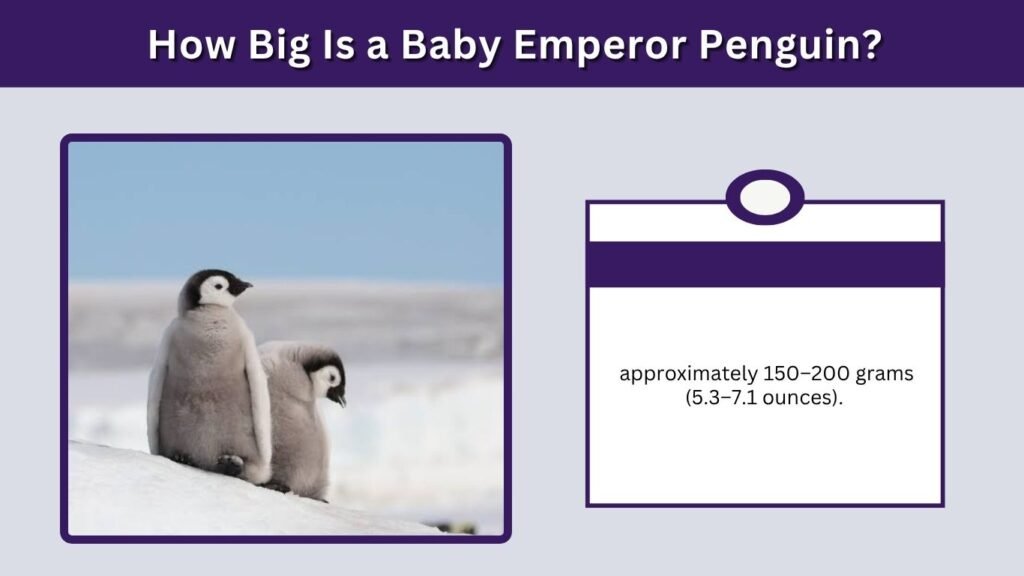
A newborn emperor penguin chick generally weighs approximately 150–200 grams (5.3–7.1 ounces). This is remarkably small compared with an adult emperor penguin, which can weigh more than 30 kilograms.
Baby emperor penguins grow rapidly when their parents provide sufficient food.
There is no single standard height for a baby emperor penguin because its size changes dramatically throughout development.
During the first months, chicks increase their body mass and gradually become taller.
By approximately five months of age, some young emperor penguins approach adult height, although their body weight is usually considerably lower.
Adequate nutrition is essential for reaching the developmental stage needed for independent survival.
How Are Baby Emperor Penguins Born?
Emperor penguins have one of the most unusual breeding cycles among birds. They reproduce during Antarctica’s winter, when temperatures can fall below −40°C.
Unlike most penguins, emperor penguins do not build traditional nests. Instead, the female lays a single egg, which the male incubates on his feet.
Emperor Penguin Hatching Process
1. Egg laying: Female emperor penguins generally lay one egg during May or early June.
2. Egg transfer: The female carefully passes the egg to the male, who balances it on his feet beneath a protective brood pouch.
3. Incubation: The male incubates the egg for approximately 65–75 days without leaving to hunt.
4. Hatching: The chick breaks through its eggshell using a small temporary structure on its beak called an egg tooth.
5. Early protection: After hatching, the chick remains sheltered beneath the parent’s brood pouch until it can withstand the cold more effectively.
This remarkable process allows emperor penguins to reproduce in conditions that would be dangerous for most other bird species.
How Do Emperor Penguin Dads Care for Their Babies?
Male emperor penguins are famous for their extraordinary parental dedication.
After the female lays her egg, she travels to the ocean to feed. The male remains behind, protecting the egg through intense Antarctic winter conditions.
During incubation, males may endure temperatures approaching −50°C and powerful winds while fasting for an extended period.
They gather in tightly packed groups called huddles to conserve warmth.
After the chick hatches, the father continues protecting it beneath his brood pouch.
If the mother has not yet returned, the male can temporarily feed the newborn chick with a nutrient-rich secretion produced in his esophagus.
When the female returns with food, she takes over chick care while the exhausted male finally travels to the ocean to feed.
Both parents subsequently participate in raising their offspring.
What Do Baby Emperor Penguins Eat?
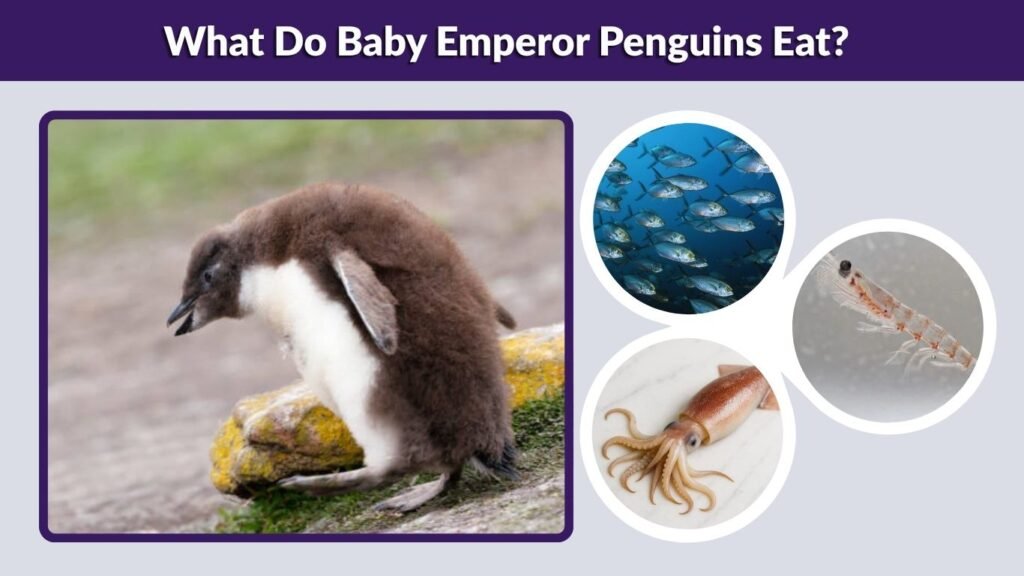
Baby emperor penguins cannot hunt independently during their early development. Instead, their parents catch marine animals and bring food back to the breeding colony.
Adult emperor penguins swallow their prey and later regurgitate partially digested food directly into their chicks’ mouths.
Main Foods for Baby Emperor Penguins
- Fish: Antarctic fish provide important proteins and nutrients for growth.
- Krill: These small crustaceans are part of the emperor penguin’s natural diet.
- Squid: Various squid species supply additional nutrients and energy.
The chicks depend on regular feeding as their bodies grow.
Both parents undertake hunting trips, sometimes traveling considerable distances from their breeding colonies.
As young emperor penguins approach independence, their nutritional needs increase, and they eventually begin hunting marine prey themselves.
How Do Baby Emperor Penguins Stay Warm?
Baby emperor penguins survive extreme Antarctic temperatures through parental protection, insulating feathers, and group behavior.
During their earliest weeks, they remain on their parents’ feet beneath a warm brood pouch.
This protects their bodies from direct contact with freezing ice.
As the chicks develop thicker down feathers and improve their ability to regulate body temperature, they spend increasing amounts of time outside their parents’ protection.
Older chicks often gather in groups called crèches.
These groups reduce exposure to freezing winds and help conserve body heat while parents travel to the ocean.
However, chicks must still receive regular meals from their parents until they become independent.
Baby Emperor Penguin Growth Stages
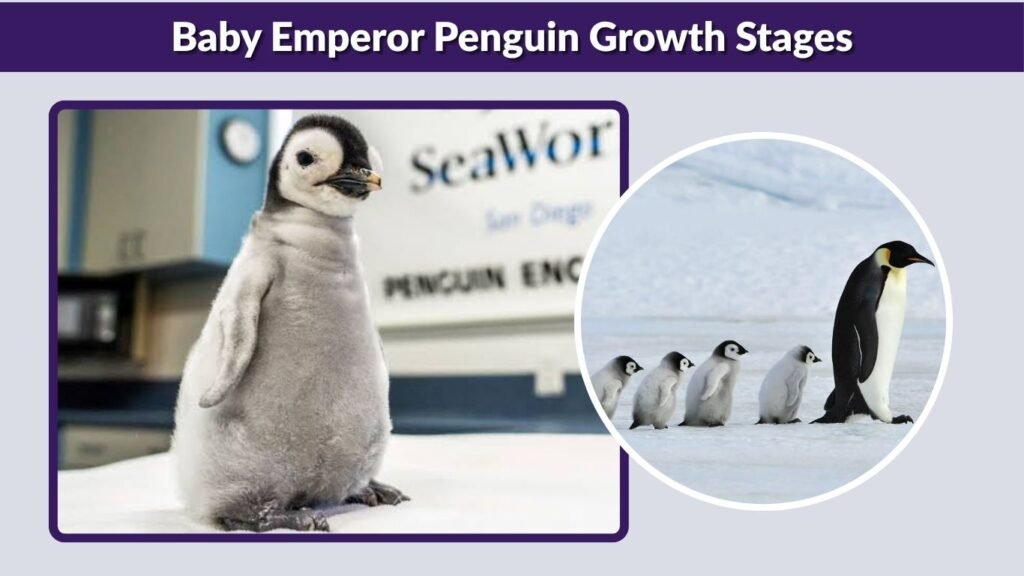
Baby emperor penguins experience several important developmental stages before they can survive independently.
Their growth usually occurs over approximately five months, although timing varies with breeding conditions.
1. Hatching Stage
The chick emerges from its egg after approximately 65–75 days of incubation. It remains highly dependent on parental warmth and protection.
2. Early Development
During the first several weeks, the chick develops thicker down feathers and gradually becomes better at regulating its body temperature.
3. Growing and Socializing
Older chicks become more active, walk around the colony, and gather in crèches. Both parents continue delivering food as they develop.
4. Feather Development
By November or December, chicks begin replacing their fluffy down with waterproof juvenile plumage.
5. Independence
Once their feathers are suitable for swimming, the young penguins leave their colonies and enter the Southern Ocean to begin finding food independently.
When Do Baby Emperor Penguins Start Swimming?
Baby emperor penguins generally begin swimming at approximately five months of age, around the Antarctic summer.
Unlike adults, younger chicks lack the waterproof feathers required for safe ocean swimming.
Their fluffy down provides insulation but becomes ineffective when thoroughly soaked.
Before entering the water, chicks undergo a feather replacement process that produces streamlined juvenile plumage.
Once this change is complete, young penguins leave the breeding colony and enter the ocean.
They must quickly develop hunting abilities while learning to navigate their marine environment.
This transition is particularly dangerous because young penguins lack the experience of mature adults.
What Are the Biggest Threats to Baby Emperor Penguins?
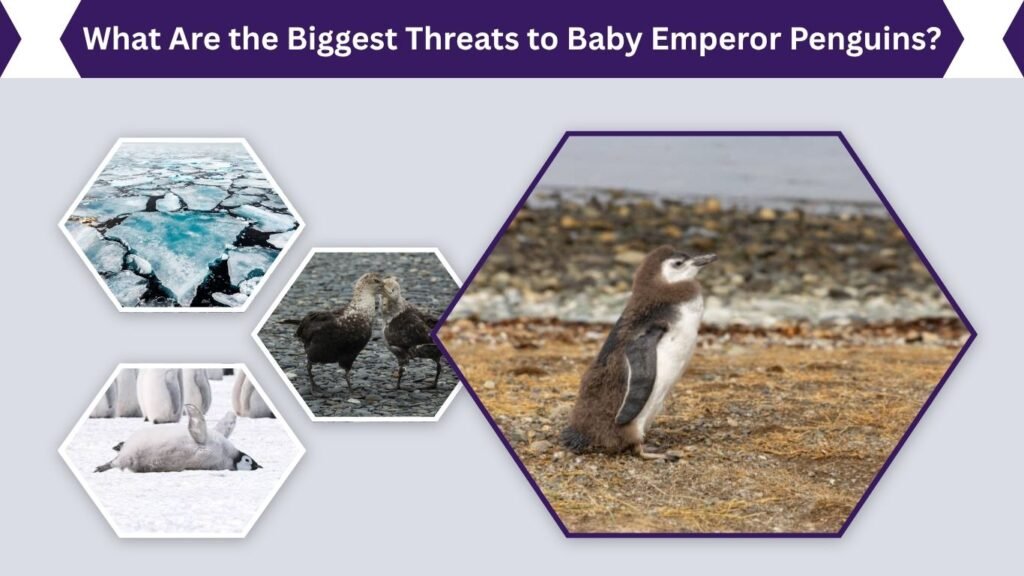
Baby emperor penguins encounter numerous survival challenges in Antarctica.
Extreme weather, food shortages, predators, and changing sea-ice conditions can all affect their chances of reaching adulthood.
Major Threats
- Extreme cold: Newly hatched chicks can die from exposure if separated from parental protection.
- Food shortages: Limited prey availability can prevent parents from providing sufficient nutrition.
- Predators: Giant petrels and skuas may attack vulnerable chicks, while leopard seals and killer whales threaten penguins at sea.
- Early sea-ice breakup: Chicks may drown or freeze if breeding ice breaks apart before they develop waterproof feathers.
Climate change poses a particularly serious long-term threat.
In April 2026, the International Union for Conservation of Nature (IUCN) classified emperor penguins as Endangered, primarily because declining Antarctic sea ice threatens their breeding success and future populations.
5 Interesting Baby Emperor Penguin Facts
- They hatch in winter: Emperor penguin chicks emerge during Antarctica’s coldest season rather than the warmer summer.
- Their dads incubate the eggs: Male emperor penguins protect their eggs on their feet for approximately nine weeks.
- They recognize parental calls: Chicks and adults use distinctive vocalizations to locate one another within crowded breeding colonies.
- They cannot swim immediately: Young emperor penguins must develop waterproof juvenile feathers before entering the ocean.
- They grow remarkably quickly: Within approximately five months, chicks develop from tiny hatchlings into independent young penguins capable of hunting at sea.
FAQs
1. How Much Does a Baby Emperor Penguin Weigh?
A newly hatched emperor penguin typically weighs approximately 150–200 grams. Its weight increases rapidly during development as its parents supply food. By fledging, young emperor penguins are substantially larger, although they generally weigh less than fully grown adults.
2. Why Are Baby Emperor Penguins So Fluffy?
Baby emperor penguins develop thick, fluffy down feathers that trap air and provide insulation against Antarctic cold. These feathers are not waterproof, so chicks must eventually replace them with juvenile plumage before they can safely enter the ocean.
3. How Long Do Baby Emperor Penguins Stay With Their Parents?
Baby emperor penguins depend on their parents for approximately five months. During this period, adults provide warmth, protection, and food. Once the chicks develop waterproof juvenile feathers, they leave the colony and begin finding food independently.
4. Can Baby Emperor Penguins Survive Without Their Parents?
Newly hatched emperor penguins cannot survive independently because they require warmth and regular feeding. Older chicks gradually become more capable of tolerating cold conditions, but they remain dependent on parental food deliveries until they are ready to enter the ocean.
5. Where Do Baby Emperor Penguins Live?
Baby emperor penguins live in breeding colonies on Antarctic sea ice. These colonies are often located on stable coastal ice, where adults incubate their eggs and raise their chicks throughout winter and spring before the young birds leave for the ocean.