
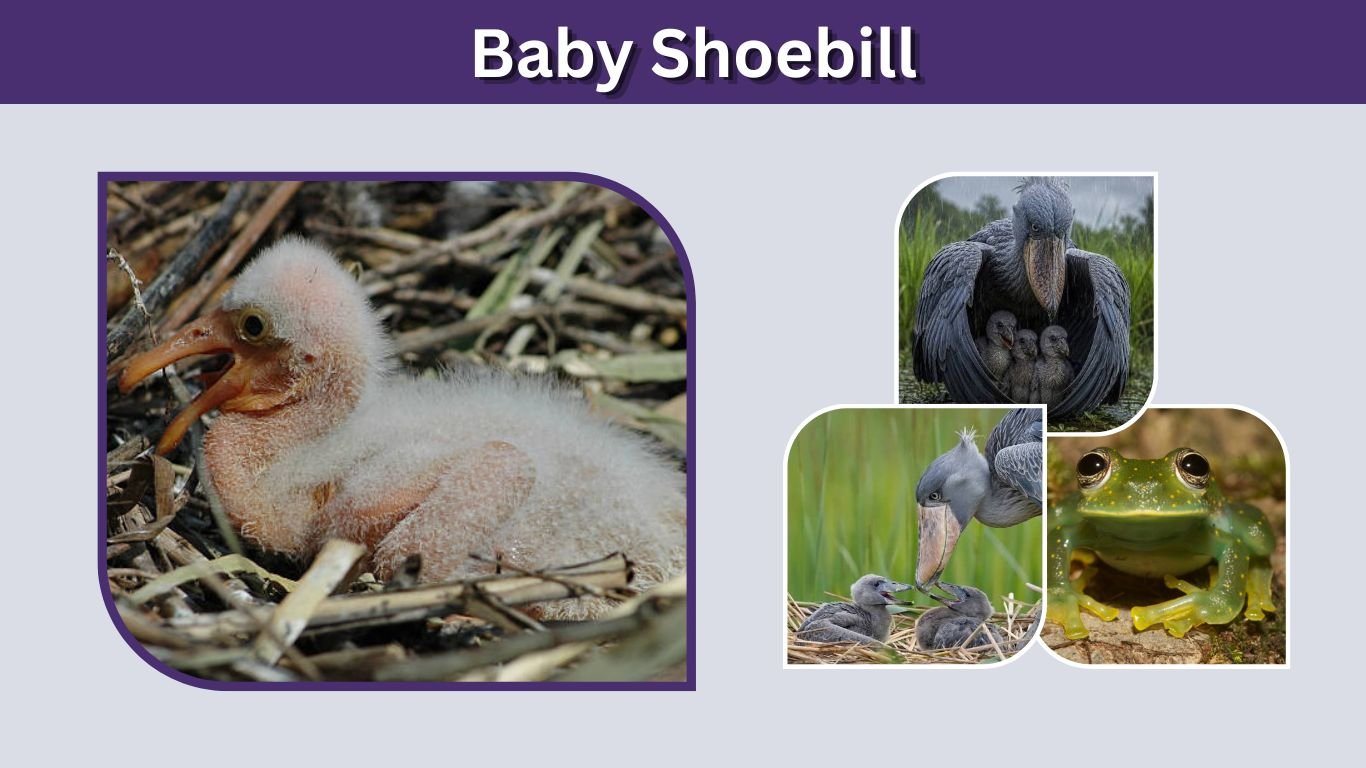
A baby shoebill looks very different from the tall, intimidating adult it will eventually become. Newly hatched chicks have soft silver-gray down, round eyes, small wings, and a bill that has not yet developed its famous shoe-like shape.
Baby shoebills depend entirely on their parents for food, shade, protection, and temperature control. Although a pair may hatch two or three chicks, it usually raises only one to independence.
What Does a Baby Shoebill Look Like?
A newly hatched shoebill is covered in thick, silky, silvery-gray down. Its body looks fluffy, while its head appears large compared with its thin neck. Young chicks already have a wide mouth, but the recognizable bulge of the adult bill does not begin developing until they are approximately one month old.
Baby Shoebill Identification
- Thick silver-gray down
- Large head and wide mouth
- Pale, undeveloped bill
- Long, thin neck
- Round gray or bluish eyes
- Short, developing wings
- Oversized feet and long toes
- Darker plumage as juvenile feathers appear
As the chick grows, its soft down is gradually replaced by darker gray juvenile feathers. Its bill becomes broader, deeper, and more strongly hooked, eventually developing the characteristic wooden-shoe appearance seen in adults.
Where Are Baby Shoebills Born?
Shoebills build their nests in remote African freshwater wetlands. The nest is usually placed on floating vegetation or a small island surrounded by papyrus, reeds, and relatively deep water.
Both adults trample surrounding plants and collect aquatic vegetation to create a large, flat nesting platform. The secluded location protects the eggs and chicks from people, livestock, fires, and some ground-based predators.
Shoebill Eggs and Hatching
A female lays between one and three eggs, although two eggs are most common. The eggs are laid several days apart and incubated for approximately 30 days. Both parents participate in incubation and regularly turn the eggs using their bills or feet.
| Developmental stage | Approximate timing |
| Incubation | 30 days |
| Bill begins developing its adult shape | Around one month |
| Feathers become fully developed | Around 60 days |
| Fledging | Around 95 days |
| First flight | Approximately 105–112 days |
| Independence | Around 125 days |
Development is slow compared with that of many smaller birds. A young shoebill may leave the nest before it can fly confidently and continues receiving food from its parents for several weeks afterward.
How Do Shoebill Parents Care for Their Babies?
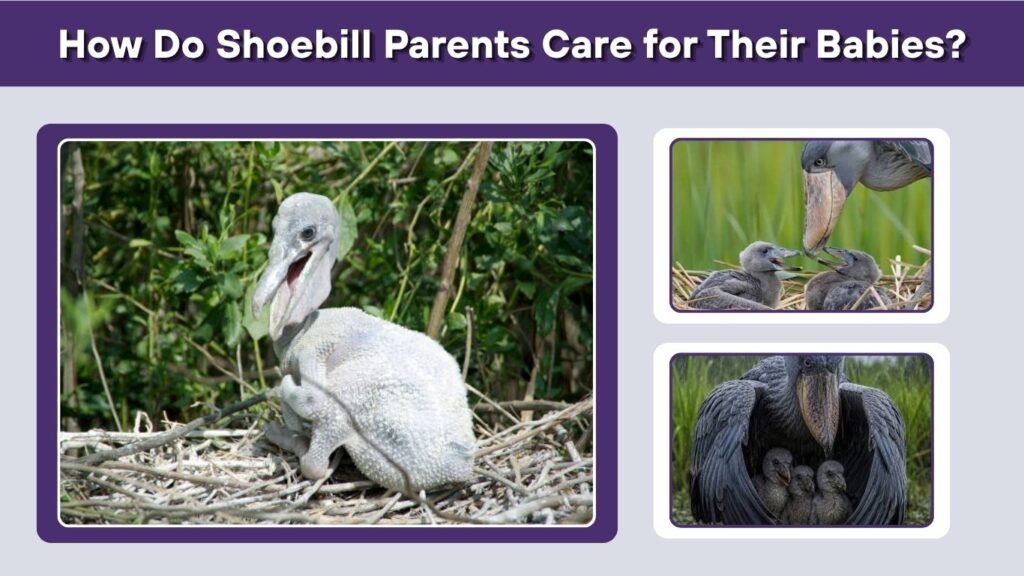
Male and female shoebills share responsibility for building the nest, incubating the eggs, guarding the chicks, and delivering food. They also use their bodies to shade young birds from intense sunlight.
Cooling the Chicks With Water
Heat can be dangerous to shoebill eggs and chicks. An adult collects water in its enormous bill and pours it over the nest. It may also bring wet vegetation and place it around the eggs.
After hatching, the parents continue pouring water over and shading their babies until the chicks have developed enough feathers to regulate their own temperature more effectively.
Feeding a Baby Shoebill
During the first month, parents provide softened or mashed food. As the chick grows, they begin leaving more complete prey in the nest for it to pick up and swallow.
Young shoebills eat fish and other wetland animals brought by their parents. A chick may initially receive food one to three times per day, increasing to approximately five or six feedings daily as it approaches fledging.
Common foods include:
- Lungfish
- Catfish
- Tilapia
- Frogs
- Water snakes
- Small turtles
- Other suitable aquatic prey
What Sound Does a Baby Shoebill Make?
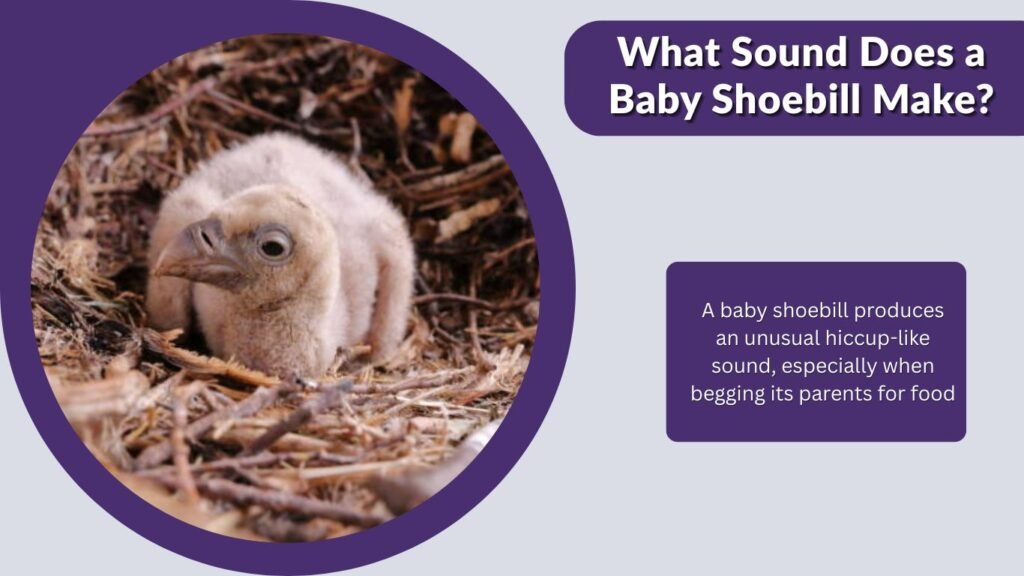
A baby shoebill produces an unusual hiccup-like sound, especially when begging its parents for food. The call is softer and less mechanical than the famous bill clattering produced by adults.
Young shoebills eventually begin practicing bill clattering as their bills grow. Adult birds use this loud machine-gun-like sound during greetings, breeding displays, and communication around the nest.
Why Do Baby Shoebills Fight?
Shoebills commonly hatch more than one chick, but parents usually raise only one. Because the eggs may hatch several days apart, the first chick is already larger and stronger by the time its younger sibling emerges.
The older chick may dominate or attack the younger chick. Wildlife footage has documented an older shoebill biting and striking a smaller sibling. The weaker chick then struggles to compete for food, shade, water, and parental attention.
This form of competition is called brood reduction. Producing an additional egg gives the parents a backup chick in case the first egg fails to hatch or the oldest chick dies. When the first chick remains healthy, the younger chick has a much lower chance of survival.
Do Shoebills Kill Their Babies?
Shoebill parents do not normally attack and kill their chicks directly. However, they may concentrate their feeding and care on the strongest chick while giving little attention to its weaker sibling.
The younger chick may eventually die because of sibling injuries, hunger, heat, exposure, predation, or insufficient parental care. Therefore, the claim that shoebill parents deliberately kill their babies is misleading.
Can Both Shoebill Chicks Survive?
It is possible, but uncommon, for more than one chick to survive. Food availability, chick health, hatching order, weather, and parental care can influence the outcome.
BirdLife notes that shoebills commonly hatch multiple chicks but normally raise only one. If the oldest chick is weak or dies, a younger chick may become the surviving offspring.
How Long Does a Baby Shoebill Stay With Its Parents?
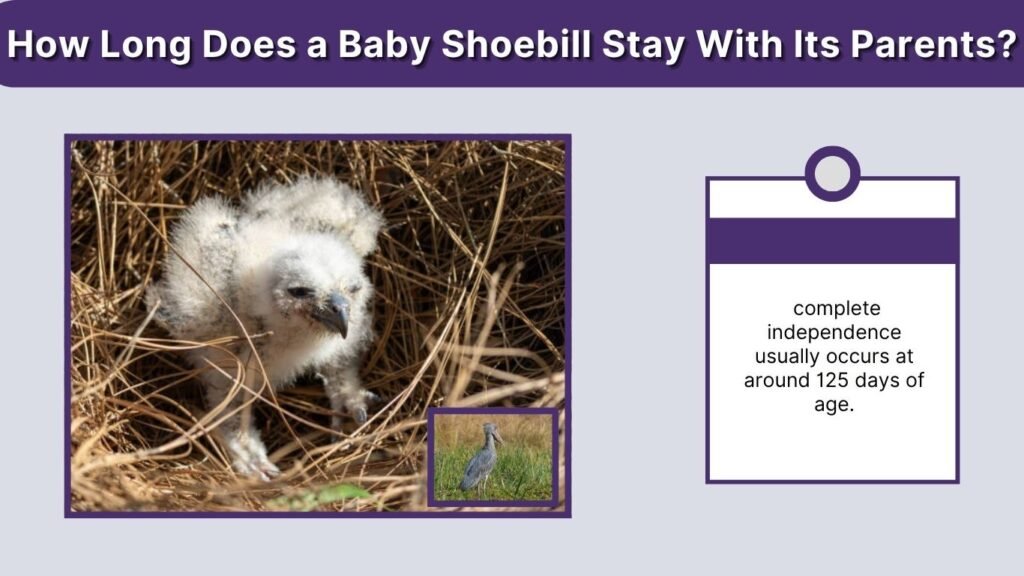
A baby shoebill usually fledges at around 95 days old. Fledging means it has developed enough feathers and strength to begin leaving the nest, but it may not yet be a confident flier.
Young shoebills generally begin flying at approximately 105 to 112 days. Their parents continue providing food after fledging, and complete independence usually occurs at around 125 days of age.
Are Baby Shoebills Endangered?
Shoebills are classified as Vulnerable, and relatively few mature individuals remain in the wild. Their slow breeding cycle and tendency to raise only one surviving chick make population recovery difficult.
Eggs and chicks are threatened by nest disturbance, habitat loss, fires, livestock, predators, egg collection, and illegal capture. Protecting remote wetland nesting sites is therefore essential for the species’ long-term survival.
FAQs
Are Baby Shoebills Cute or Scary?
Baby shoebills are usually described as fluffy and curious-looking rather than scary. They have soft gray down, round eyes, and a relatively small bill. Their prehistoric appearance becomes stronger as the bill enlarges and their tall adult body begins developing.
Do Baby Shoebills Eat by Themselves?
Very young chicks depend on softened food supplied by their parents. As they grow, the adults leave larger pieces of prey in the nest, allowing the chicks to pick up and swallow food themselves while still relying on regular parental deliveries.
Why Does Only One Baby Shoebill Survive?
The first-hatched chick normally has a size and strength advantage. It may dominate its younger sibling and receive more food and protection. The additional chick effectively serves as a backup in case the oldest chick fails to survive.
When Does a Baby Shoebill Learn to Fly?
A young shoebill fledges at approximately 95 days but may not fly properly until around 105 to 112 days old. It continues depending on its parents for food and protection until becoming independent at approximately 125 days.
What Is a Baby Shoebill Called?
A baby shoebill is called a chick. After its down is replaced by feathers and it leaves the nest, it may be described as a fledgling or juvenile. Juvenile shoebills are generally darker gray than fully mature adults.
