
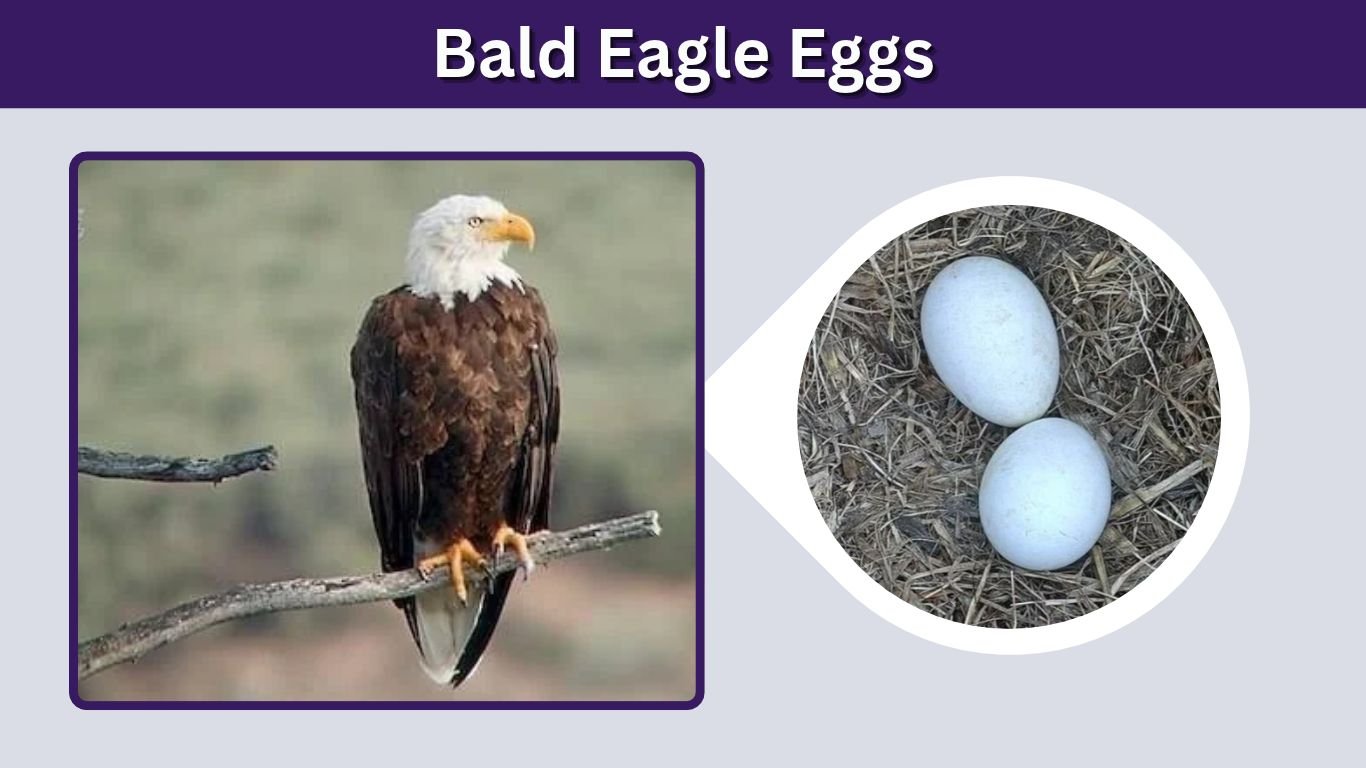
Bald eagle eggs are an important part of the breeding cycle of America’s national bird. These large birds of prey typically lay one to three white eggs in enormous nests built high in trees. Both parents participate in incubation, which usually lasts around 35 days before the chicks begin hatching. Egg-laying seasons vary by location, and not every egg successfully develops into a healthy eaglet. Understanding bald eagle egg size, color, incubation, hatching, and nesting behavior offers fascinating insight into how these remarkable birds reproduce and raise their young.
What Do Bald Eagle Eggs Look Like?
Bald eagle eggs are generally dull white, oval-shaped, and larger than ordinary chicken eggs. Their shells are relatively thick and have a slightly rough appearance. Unlike many wild bird eggs, they usually lack distinctive spots or colored patterns.
Freshly laid eggs appear clean and pale, although they may gradually become stained by nesting materials.
Bald Eagle Egg Identification
- Scientific Name: Haliaeetus leucocephalus
- Egg Color: Dull white or creamy white.
- Egg Shape: Rounded oval.
- Egg Length: Approximately 2.3–3.3 inches.
- Egg Width: Approximately 1.9–2.5 inches.
- Shell Texture: Firm and slightly rough.
- Clutch Size: Usually one to three eggs.
How Big Are Bald Eagle Eggs?
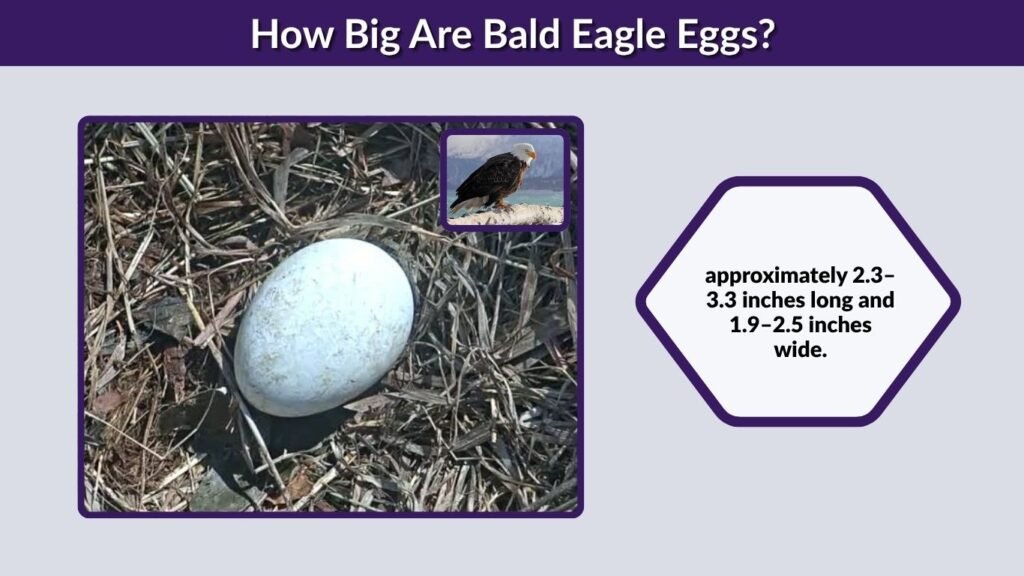
Bald eagle eggs measure approximately 2.3–3.3 inches long and 1.9–2.5 inches wide. Their size varies among individual females and populations.
Compared with typical chicken eggs, bald eagle eggs are generally larger and broader. Their rounded shape makes them particularly noticeable inside the nesting bowl.
Egg size alone cannot confirm the species because other large birds of prey produce similarly shaped eggs.
When Do Bald Eagles Lay Eggs?
Bald eagles begin breeding at different times depending on their geographic location. Southern populations may lay eggs during late fall or winter, while northern populations generally breed later.
Across much of the United States, egg laying occurs between January and April. In Alaska and other northern regions, breeding may begin during spring.
Bald Eagle Egg-Laying Season by Region
- Florida: November through February in many areas.
- California: Commonly January through March, depending on location.
- Minnesota: Often January through March.
- Pennsylvania: Frequently February through March.
- Alaska: Generally April through May.
These periods are approximate. Weather conditions, food availability, and individual breeding schedules can influence the exact dates.
How Many Eggs Do Bald Eagles Lay?
Female bald eagles typically lay two eggs per clutch, although one or three eggs are also common. Clutches containing four eggs are unusual but have occasionally been documented.
Eggs are generally laid several days apart, commonly at intervals of two to four days.
Most breeding pairs produce one brood each year. However, some females may lay a replacement clutch if their first nesting attempt fails early enough in the breeding season.
Both adult eagles help maintain the nest before and during egg laying.
How Long Do Bald Eagle Eggs Take to Hatch?
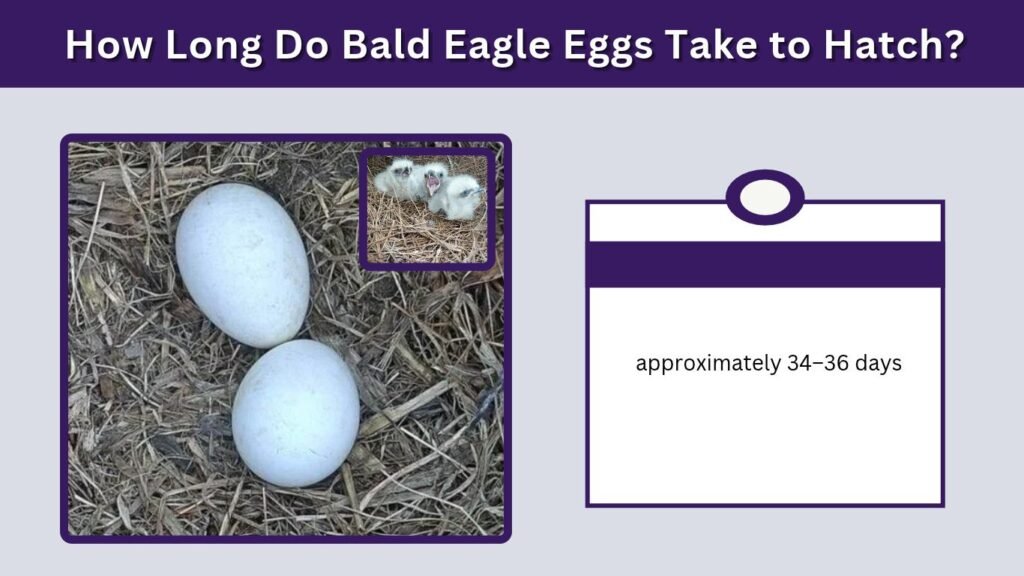
Bald eagle eggs usually require approximately 34–36 days of incubation before hatching. Both parents participate in keeping the eggs warm, although females generally spend more time incubating.
Incubation begins around the time the first egg is laid, and the parents regularly reposition the eggs to support development.
Male and Female Bald Eagle Incubation Duties
- Female Eagle: Performs a larger share of incubation and often remains overnight.
- Male Eagle: Takes incubation shifts while the female feeds or rests.
- Egg Turning: Both adults periodically reposition the eggs.
- Nest Protection: Both parents defend the nesting area against potential threats.
The adults use their body heat and brood patches to maintain suitable conditions for embryo development, even during cold weather.
How Do Bald Eagle Eggs Hatch?
Bald eagle chicks begin hatching when they create a small opening in the shell using a temporary structure called an egg tooth.
This initial opening is known as pipping. The chick gradually enlarges the opening until it can break free from the shell.
Do Bald Eagle Eggs Hatch at the Same Time?
Bald eagle eggs do not necessarily hatch simultaneously. Since eggs are laid several days apart, the chicks often emerge on different days.
Newly hatched eaglets are covered with light-gray down and cannot care for themselves. Both parents provide food and protection while the young gradually develop stronger feathers and hunting abilities.
Where Do Bald Eagles Build Nests for Their Eggs?

Bald eagles construct enormous nests using sticks, branches, grass, and other natural materials. Most nests are located high in mature trees near lakes, rivers, reservoirs, or coastal environments.
Some nests measure five to six feet across, and repeated additions can make them considerably larger.
Do Bald Eagles Reuse Their Nests?
Yes, bald eagle pairs frequently return to the same nesting territory and reuse existing nests for several breeding seasons.
They add fresh branches and lining materials before laying eggs. Some pairs maintain multiple nests within their territory and alternate between them.
In areas without suitable trees, bald eagles may occasionally nest on cliffs or other protected surfaces.
Why Do Some Bald Eagle Eggs Fail to Hatch?

Not every bald eagle egg develops successfully. Some eggs are infertile, while others fail because of developmental problems, environmental conditions, or damage.
Unhatched eggs may remain in a nest after their siblings emerge, but their appearance alone cannot establish whether they are viable.
Common Causes of Bald Eagle Egg Failure
- Infertility: Unfertilized eggs cannot develop into chicks.
- Temperature Problems: Prolonged exposure to unsuitable temperatures can interrupt development.
- Shell Damage: Cracks may expose embryos to harmful conditions.
- Predation: Ravens, crows, and other animals sometimes raid nests.
- Developmental Problems: Some embryos stop developing before hatching.
An unsuccessful nesting attempt does not necessarily prevent a pair from breeding successfully in future seasons.
Big Bear Bald Eagle Eggs: Jackie and Shadow
Jackie and Shadow became widely recognized through the Big Bear bald eagle nest camera in California. Their nesting activities allowed wildlife enthusiasts to observe egg laying, incubation, and hatching.
During January 2026, Jackie laid two eggs, but the nesting attempt failed after the eggs were damaged and ravens entered the unattended nest.
Jackie subsequently laid another two eggs on February 24 and February 27. Both successfully hatched on April 4 and April 5, producing eaglets named Sandy and Luna.
Both young eagles successfully fledged in June 2026. Jackie later died in August 2026 following a period of veterinary treatment.
Their documented nesting history illustrates both the challenges and successes of bald eagle reproduction.
Are Bald Eagle Eggs Protected by Law?
Bald eagle eggs are federally protected in the United States under the Bald and Golden Eagle Protection Act and other applicable wildlife laws.
Destroying, collecting, possessing, or selling these eggs without appropriate legal authorization is prohibited. Violations can result in substantial fines and criminal penalties.
People observing bald eagle nests should maintain a safe distance and avoid disturbing breeding adults. Wildlife cameras and binoculars allow observers to watch nesting activities without interfering with the birds.
FAQs
1. How Long Does It Take Bald Eagle Eggs to Hatch?
Bald eagle eggs typically hatch after approximately 34–36 days of incubation. Both parents help maintain appropriate temperatures throughout development. The exact hatching date depends on when incubation begins and the conditions experienced by each egg.
2. How Often Do Bald Eagles Lay Eggs?
Bald eagles generally produce one clutch annually during their breeding season. Most females lay two eggs, although clutch sizes vary. If an early nesting attempt fails, a pair may occasionally produce a replacement clutch within the same season.
3. Do Male Bald Eagles Sit on Eggs?
Yes, male bald eagles regularly participate in egg incubation. They take turns with females, allowing each parent opportunities to feed and rest. Females usually spend more time incubating, particularly during nighttime hours and unfavorable weather.
4. What Color Are Bald Eagle Eggs?
Bald eagle eggs are typically dull white or slightly creamy white. Their shells usually lack spots or prominent markings. However, natural nesting materials and environmental exposure may cause eggs to develop stains during the incubation period.
5. Can You Touch or Collect Bald Eagle Eggs?
No, bald eagle eggs should never be touched, collected, or removed without appropriate legal authorization. They are protected under federal wildlife laws. Anyone discovering an unattended egg or damaged nest should contact the appropriate wildlife authority rather than interfere.