
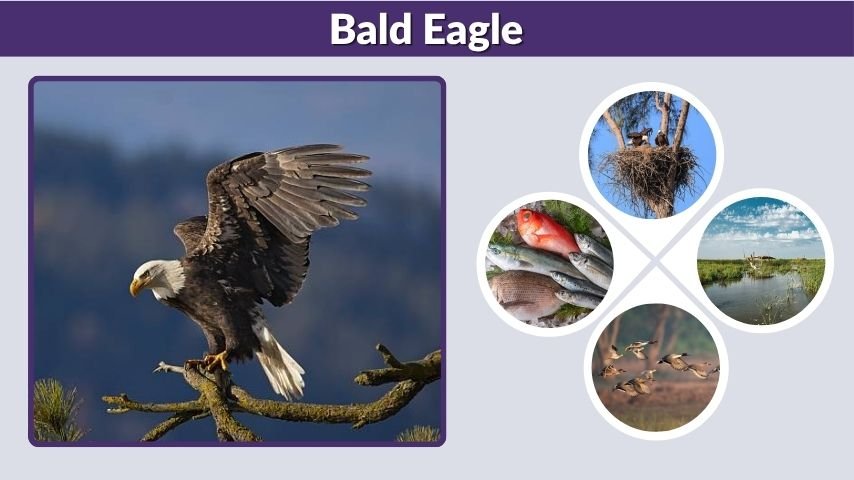
The Bald Eagle (Haliaeetus leucocephalus) is one of the most recognizable birds in North America and serves as the national bird of the United States. Known for its striking white head, powerful yellow beak, and impressive wingspan, this bird symbolizes strength and freedom. Once threatened by habitat loss and pesticide use, the Bald Eagle has made a remarkable recovery through conservation efforts. Today, it thrives near lakes, rivers, wetlands, and coastal regions, where it hunts fish and builds some of the largest nests among birds.
What Is a Bald Eagle?
The Bald Eagle is a large bird of prey belonging to the sea eagle group. It is primarily found across North America and is famous for its excellent vision, powerful talons, and soaring flight. Although called “bald,” the bird is not actually bald; its name comes from an old English word meaning white-headed.
Species Overview
The Bald Eagle belongs to the family Accipitridae, which includes hawks, eagles, and other birds of prey. Adult birds develop their distinctive white head and tail feathers at around five years of age. Before reaching maturity, young eagles have mottled brown plumage that can make identification more challenging.
Bald Eagle Scientific Name
The scientific name of the Bald Eagle is Haliaeetus leucocephalus. The genus Haliaeetus means “sea eagle,” reflecting its close association with large bodies of water. The species name leucocephalus translates to “white head,” describing one of its most distinctive features.
How to Identify a Bald Eagle
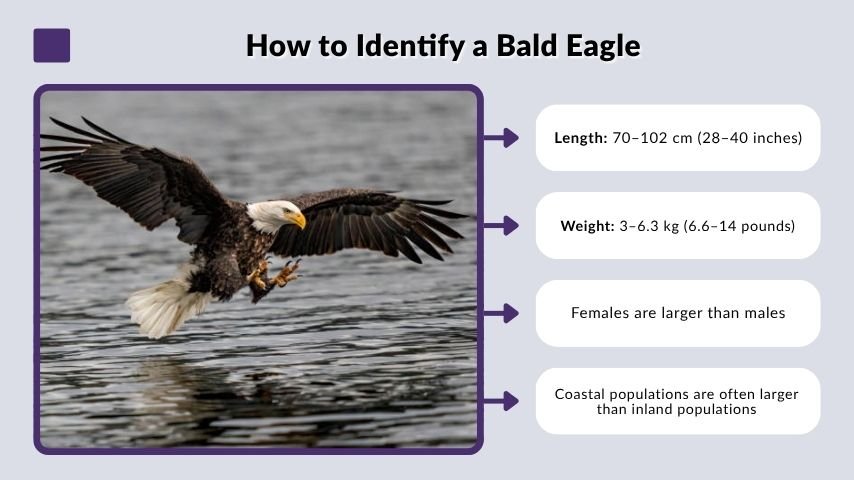
Identifying a Bald Eagle becomes easier once you understand its size, coloration, and flight characteristics. Adult birds are unmistakable due to their contrasting white head and dark brown body. Their broad wings and steady soaring flight also help distinguish them from other large birds.
Physical Appearance
Adult Bald Eagles have dark brown feathers covering most of their bodies, while the head and tail are bright white. Their hooked yellow beak and strong yellow feet are designed for catching and tearing prey. These features combine to create one of the most iconic appearances in the bird world.
Bald Eagle Size
The Bald Eagle ranks among the largest birds of prey in North America.
Key size measurements include:
- Length: 70–102 cm (28–40 inches)
- Weight: 3–6.3 kg (6.6–14 pounds)
- Females are larger than males
- Coastal populations are often larger than inland populations
These impressive dimensions allow the species to dominate many aquatic ecosystems throughout its range.
Bald Eagle Wingspan
One of the most impressive features of the Bald Eagle is its enormous wingspan. Its long, broad wings enable efficient soaring over vast distances while searching for food.
Typical wingspan measurements include:
- Average wingspan: 1.8–2.3 meters
- Maximum wingspan: Up to 2.4 meters
- Wings designed for gliding and soaring
- Broad shape improves flight stability
The wingspan helps reduce energy expenditure during long flights and enhances hunting efficiency.
Bald Eagle Habitat
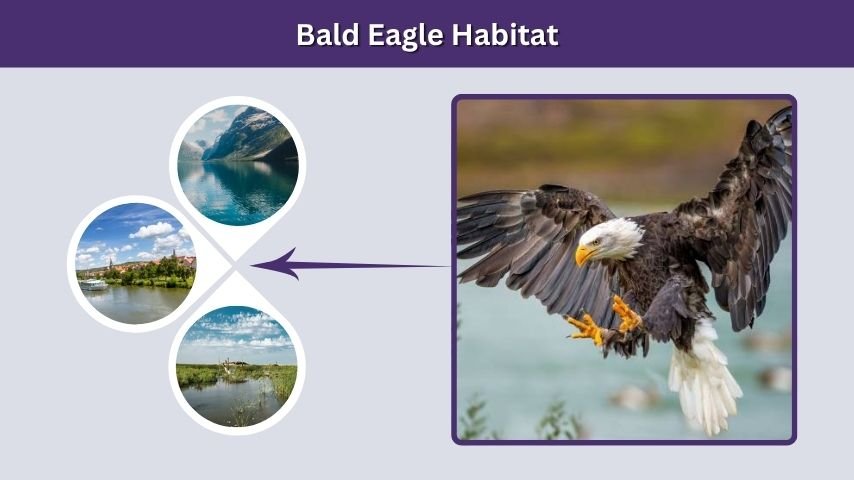
Bald Eagles depend heavily on healthy aquatic environments. Their habitats provide access to fish, nesting sites, and open areas for hunting. Because of these requirements, they are commonly found near large water bodies throughout North America.
Preferred Habitats
Bald Eagles inhabit a variety of environments, including freshwater lakes, rivers, reservoirs, marshes, and coastal shorelines. Areas with abundant fish populations are especially attractive. Large trees near water are also important because they provide nesting and roosting locations.
Habitat Requirements
Successful Bald Eagle habitats share several important characteristics. They need reliable food sources, minimal disturbance, and suitable nesting structures. Regions that combine these elements often support thriving eagle populations and multiple breeding pairs.
Geographic Distribution
The Bald Eagle occurs throughout much of North America. It is commonly found in Canada, the United States, and parts of northern Mexico. Some populations migrate seasonally, while others remain in the same region throughout the year depending on food availability and climate conditions.
Bald Eagle Diet and Hunting Behavior
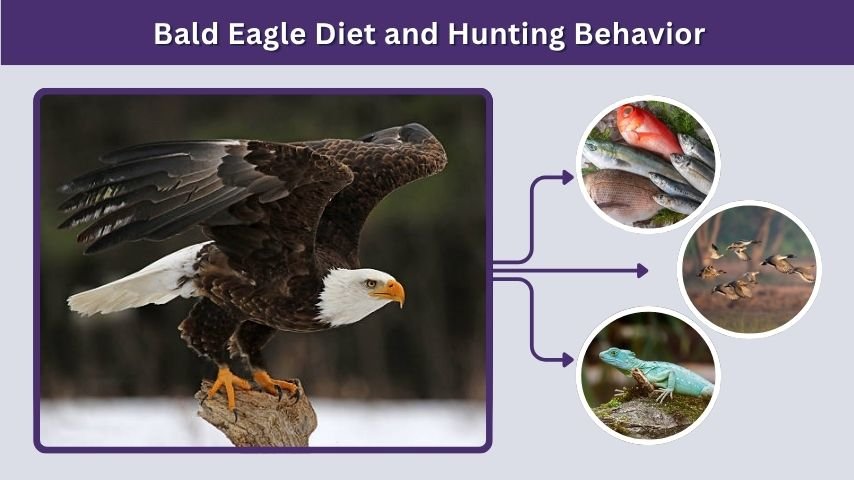
As a top predator, the Bald Eagle plays an important role in maintaining ecological balance. Its diet consists primarily of fish, but it is also an opportunistic hunter and scavenger. This flexibility helps the species survive in a wide range of environments.
What Do Bald Eagles Eat?
The Bald Eagle consumes a variety of prey depending on location and season.
Common food sources include:
- Fish
- Waterfowl
- Small mammals
- Reptiles
- Carrion
- Injured animals
Fish remain the most important component of the diet in most habitats.
Hunting Techniques
Bald Eagles typically hunt by soaring above water and scanning for prey with their exceptional eyesight. Once a target is identified, they swoop down and grasp it with powerful talons. They may also steal prey from other birds, particularly ospreys, a behavior known as kleptoparasitism.
Role in the Ecosystem
As apex predators, Bald Eagles help regulate populations of fish and other animals. They also act as scavengers, removing dead animals from the environment. Their presence often indicates a healthy ecosystem with sufficient food resources and good environmental conditions.
Bald Eagle Sounds and Communication
Although often portrayed in movies with dramatic screeches, the real vocalizations of Bald Eagles are quite different. Communication is important for defending territories, maintaining pair bonds, and interacting with offspring. Their sounds are generally higher-pitched and less powerful than many people expect.
Bald Eagle Sounds
Bald Eagles produce a variety of calls that serve different purposes. These vocalizations are commonly heard during territorial disputes, courtship displays, and interactions between parents and young birds.
Why Movie Sounds Are Misleading
Many films and television programs replace actual Bald Eagle calls with the louder and more dramatic sounds of Red-tailed Hawks. As a result, the public often has an inaccurate perception of how Bald Eagles truly sound. Their real calls are softer, sharper, and more whistle-like than the iconic movie versions.
Bald Eagle Nesting Habits
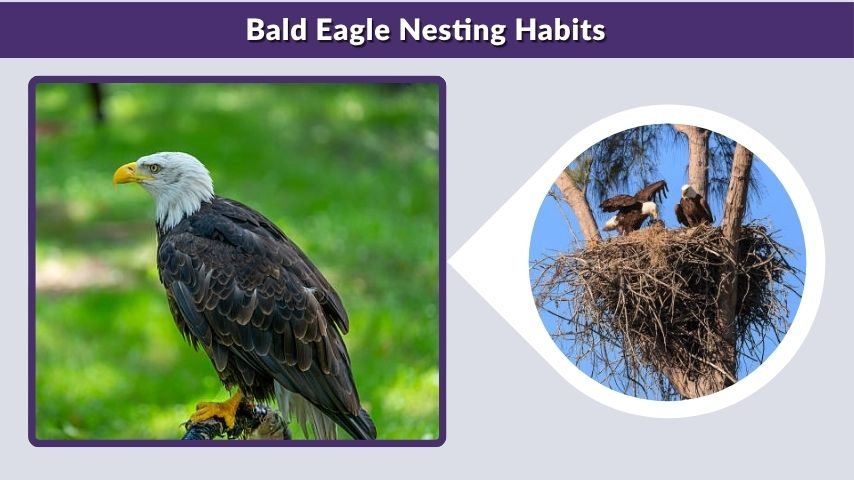
Bald Eagles are famous for building some of the largest nests in the bird world. These massive structures are often reused and expanded year after year, becoming important sites for breeding and raising young. Nesting success depends on suitable trees, abundant food, and minimal human disturbance.
Bald Eagle Nest Construction
Bald Eagles typically build their nests in large trees near water. They use sticks, branches, grass, and other natural materials to create a sturdy structure capable of supporting adults and growing chicks.
Important nest characteristics include:
- Built high above the ground
- Constructed from large sticks and branches
- Lined with grass, moss, and softer materials
- Reused and enlarged each breeding season
These nests can remain active for many years when conditions remain favorable.
Bald Eagle Nest Size
Bald Eagle nests are among the largest nests built by any bird species in North America. Some nests reach impressive dimensions after decades of use.
Typical nest measurements include:
- Width of 1.5–3 meters
- Depth of 1–4 meters
- Weight exceeding 900 kilograms
- Expanded annually by breeding pairs
Their enormous size reflects the long-term commitment of Bald Eagles to established nesting territories.
Breeding Season
Breeding seasons vary across the species’ range, but courtship generally begins several months before eggs are laid. Pairs perform aerial displays and strengthen pair bonds through cooperative behaviors. After hatching, both parents participate in feeding and protecting the chicks until they are ready to leave the nest.
Bald Eagle Lifespan
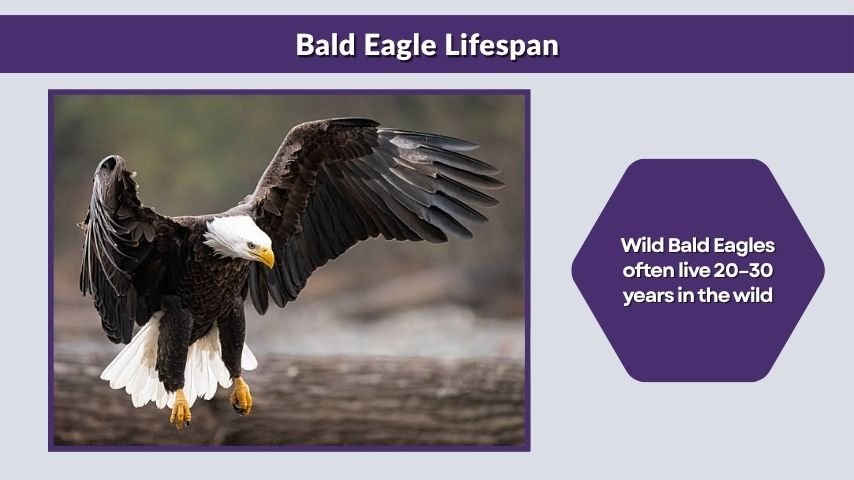
The Bald Eagle is a long-lived bird, especially when it survives the challenges of early life. Lifespan depends on food availability, habitat quality, disease, and environmental conditions. Protected habitats and conservation efforts have improved survival rates in many regions.
Average Lifespan
Wild Bald Eagles often live for several decades. Individuals that successfully reach adulthood have a greater chance of surviving for many years.
Typical lifespan figures include:
- 20–30 years in the wild
- More than 35 years in captivity
- Higher survival rates among adults
- Increased longevity in protected areas
Many young eagles face significant challenges before reaching maturity.
Factors Affecting Longevity
Several factors influence how long Bald Eagles live. Food shortages, severe weather, habitat loss, collisions with vehicles, and exposure to environmental contaminants can all affect survival. Conservation measures have helped reduce many of these threats, contributing to population growth.
Survival Rates of Young Eagles
Young Bald Eagles experience the highest mortality rates during their first years of life. Learning to hunt, avoid predators, and navigate seasonal conditions presents many challenges. Those that survive to adulthood often establish territories and breed successfully.
Bald Eagle vs Golden Eagle

The Bald Eagle and Golden Eagle are two of North America’s most impressive birds of prey. While they share certain similarities, several important differences help birdwatchers identify them in the field.
Key Physical Differences
Adult Bald Eagles are easily recognized by their white head and tail, whereas Golden Eagles have golden-brown feathers on the back of the head and neck. Bald Eagles also tend to have larger beaks and a heavier overall appearance.
Habitat Comparison
Bald Eagles are strongly associated with lakes, rivers, and coastal habitats because of their reliance on fish. Golden Eagles are more commonly found in mountains, grasslands, deserts, and open country where they hunt mammals and other terrestrial prey.
Hunting and Diet Differences
Although both species are powerful predators, their hunting preferences differ. Bald Eagles focus primarily on fish and water-associated prey, while Golden Eagles frequently hunt rabbits, hares, ground squirrels, and other mammals. These differences reduce competition in areas where both species occur.
Bald Eagle Conservation Success Story
The recovery of the Bald Eagle is considered one of the greatest conservation achievements in modern wildlife history. Once facing serious population declines, the species has rebounded dramatically thanks to legal protections and habitat management programs.
Historical Population Decline
During the mid-20th century, Bald Eagle populations dropped sharply because of habitat destruction, hunting, and the widespread use of the pesticide DDT. The chemical weakened eggshells, reducing breeding success and causing significant declines throughout North America.
Recovery Efforts
Conservation organizations, government agencies, and local communities worked together to protect eagle habitats and eliminate major threats. The ban on DDT played a crucial role in improving reproductive success and helping populations recover.
Current Population Status
Today, Bald Eagles are found across much of their historical range. Their numbers continue to grow in many regions, making them a powerful symbol of successful wildlife conservation.
Bald Eagle Cam: Watch Eagles Live
Technology has made it easier than ever to observe Bald Eagles in their natural environment. Live-streaming nest cameras allow people to follow breeding pairs and watch chick development without disturbing the birds.
What Is a Bald Eagle Cam?
A Bald Eagle Cam is a live video feed focused on an active nest. These cameras provide educational opportunities for students, researchers, and wildlife enthusiasts around the world.
What You Can Observe
Viewers may witness:
- Nest building
- Courtship behavior
- Egg incubation
- Chick feeding
- First flights of young eagles
These live broadcasts offer a unique glimpse into the daily lives of Bald Eagles.
Interesting Facts About Bald Eagles
The Bald Eagle possesses exceptional eyesight that is several times stronger than human vision. It can spot prey from great distances while soaring high above the landscape. The species is capable of flying at speeds exceeding 40 miles per hour during normal flight and even faster during dives. Its powerful talons can exert tremendous force, allowing it to capture slippery fish and other prey effectively.
FAQs
How big is a Bald Eagle?
Adult Bald Eagles typically measure 70–102 cm in length and weigh between 3 and 6.3 kilograms.
What is the wingspan of a Bald Eagle?
Most adults have a wingspan ranging from 1.8 to 2.3 meters, although some individuals can exceed this range.
How long do Bald Eagles live?
Bald Eagles commonly live 20–30 years in the wild and may live even longer in captivity.
What sounds do Bald Eagles make?
Their calls are generally high-pitched whistles and chirps rather than the dramatic screeches often heard in movies.
What is the difference between a Bald Eagle and a Golden Eagle?
Bald Eagles have a white head and tail and primarily hunt near water, while Golden Eagles have golden-brown plumage and often hunt mammals in open landscapes.
