
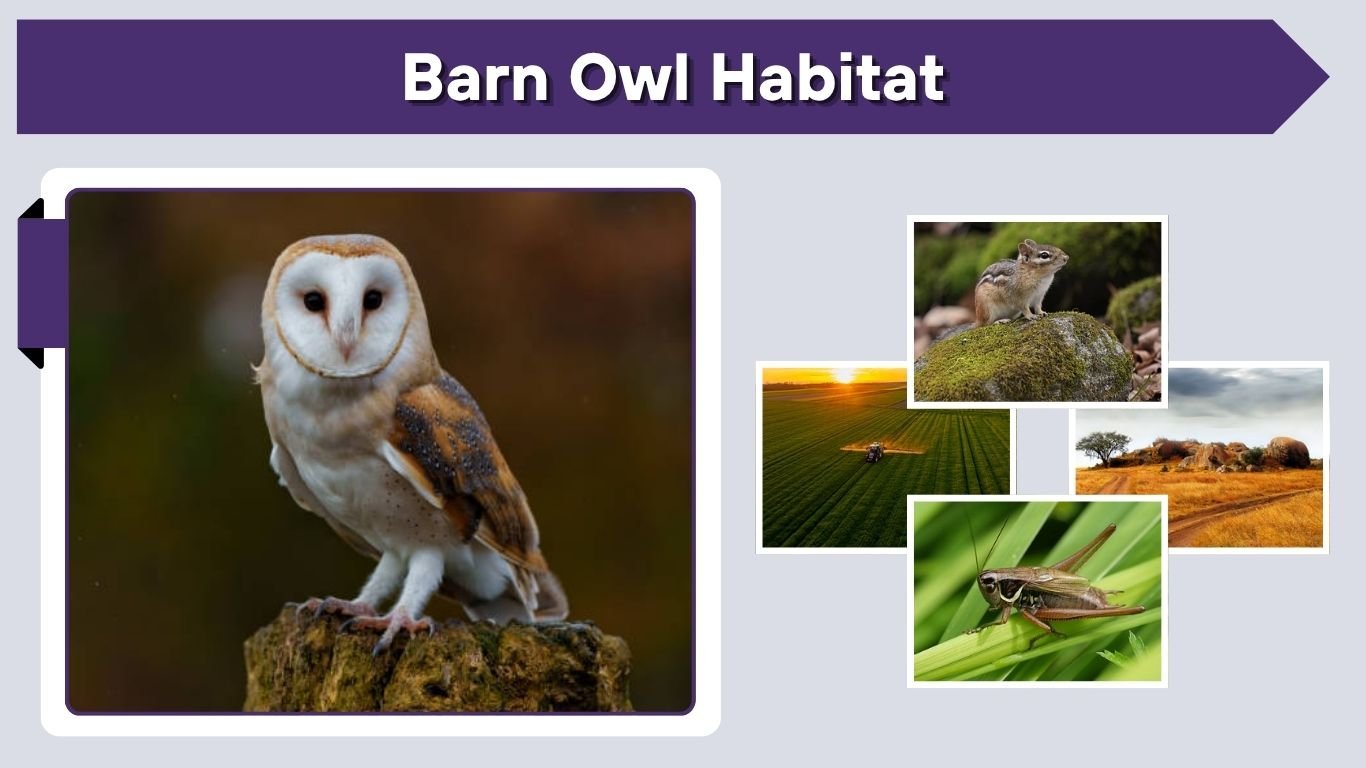
Barn owl habitat is usually open, quiet, and rich in small mammals. These pale owls do not need deep forests; they need grasslands, farms, marsh edges, rough field margins, barns, hollow trees, and safe nesting places. A good habitat gives them three things: food, shelter, and space to hunt low over the ground. In this guide, you’ll learn where barn owls live, what habitat they prefer, where they nest, and why habitat loss can affect their survival.
Barn Owl Habitat Overview
Barn owls are birds of the open country. They are often seen flying low over rough grassland, farmland, marshes, pastures, and field edges at dusk or night. Unlike many woodland owls, barn owls hunt best where they can glide slowly and listen for small animals moving below. Good habitat is usually open, prey-rich, and not too disturbed.
Quick habitat facts
- Main habitat: Open grassland, farmland, marshes, and rough fields
- Hunting areas: Field margins, ditches, pastures, meadows, and wetland edges
- Nest sites: Barns, tree cavities, caves, old buildings, and nest boxes
- Avoided places: Dense forests, busy urban centers, and high-risk road edges
- Main prey habitat: Places with mice, voles, shrews, and small rats
- Best time to see them: Dusk, night, or early morning
American Barn Owls use open habitats such as grasslands, deserts, marshes, agricultural fields, ranchlands, brushy fields, suburbs, and cities, and they may nest in tree cavities, caves, barns, and other buildings.
What Is the Natural Habitat of a Barn Owl?
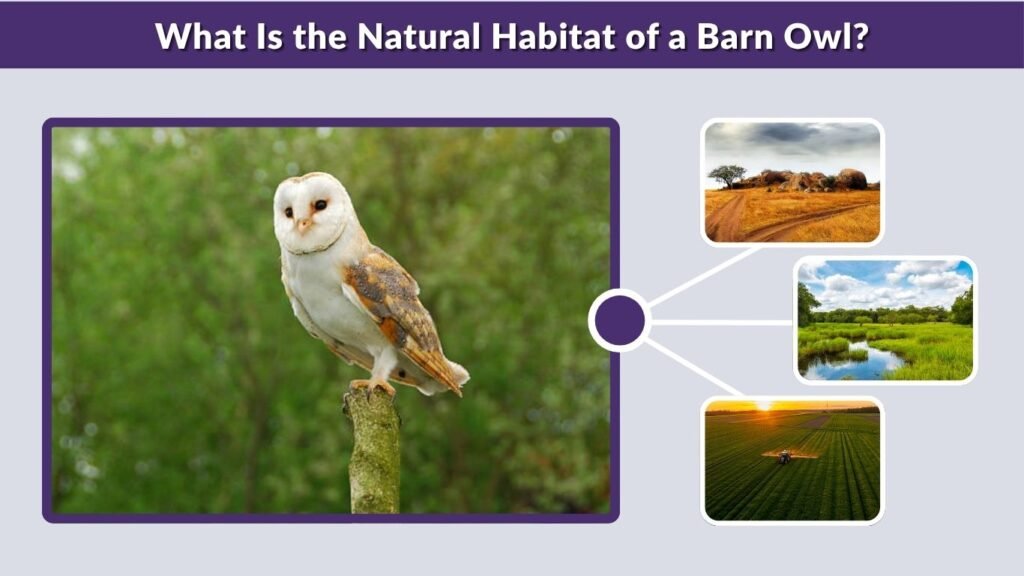
The natural habitat of a barn owl is not one single place. Barn owls live wherever open land supports enough small mammals and safe roosting or nesting sites. Their habitat can include dry grassland, wet meadows, farmland, marshes, and open countryside. The key feature is not the name of the habitat, but whether it provides prey and safe cover.
Open grassland and rough fields
Rough grassland is one of the best habitats for barn owls because it supports small mammals. Tall, tussocky grass gives cover to voles, mice, and shrews, which are the main prey of many barn owls. The Barn Owl Trust describes the best foraging habitat as rough grassland with a thick, matted mix of native grasses and plenty of field voles and other small mammals.
Farmland and field edges
Barn owls are strongly linked with farming landscapes. They often hunt along field margins, drainage ditches, rough pastures, hay meadows, hedgerows, and the edges of villages. Mixed farmland can be useful when it includes rough grass strips, small woods, ditches, barns, and quiet nesting places.
Barn Owl Habitat Requirements
A barn owl habitat must provide more than open space. It needs enough prey, places to rest, safe nesting sites, and low disturbance. A beautiful field is not always good habitat if it has no small mammals. A barn is not enough either if the surrounding land does not support food.
Main habitat requirements
- Prey-rich grassland: The area should support mice, voles, shrews, or rats.
- Safe nesting place: Barns, tree holes, nest boxes, caves, or old buildings can work.
- Quiet roosting site: Barn owls need safe places to rest during the day.
- Open hunting ground: They need space to fly low and listen for prey.
- Low road danger: Sites near fast, open roads can increase collision risk.
- Limited disturbance: Nesting owls may fail if disturbed too often.
For nest boxes in the UK and Ireland, the Barn Owl Trust recommends open countryside, isolated trees, or trees overlooking open habitat, and warns against dense forest, urban areas, high mountain areas, and sites close to fast roads.
Where Do Barn Owls Nest?
Barn owls do not build neat stick nests like many birds. Instead, they use sheltered spaces where eggs and chicks can stay dry and protected. Their nesting habitat may be natural or human-made. This is why old barns, church towers, silos, tree cavities, and nest boxes can all become important.
Common nesting places
Barn owls may nest in hollow trees, barns, old farm buildings, caves, cliffs, towers, and nest boxes. They often return to suitable nest sites if the area continues to provide food. Cornell Lab notes that American Barn Owls nest in tree cavities, caves, barns, and other buildings.
Barn owl boxes and habitat
Nest boxes can help barn owls when natural cavities or old buildings are missing. However, a nest box alone will not create good habitat. It should be placed near suitable hunting land where voles, shrews, and mice are likely to be present. GWCT advises placing boxes within or close to suitable foraging habitat.
Barn Owl Habitat and Diet
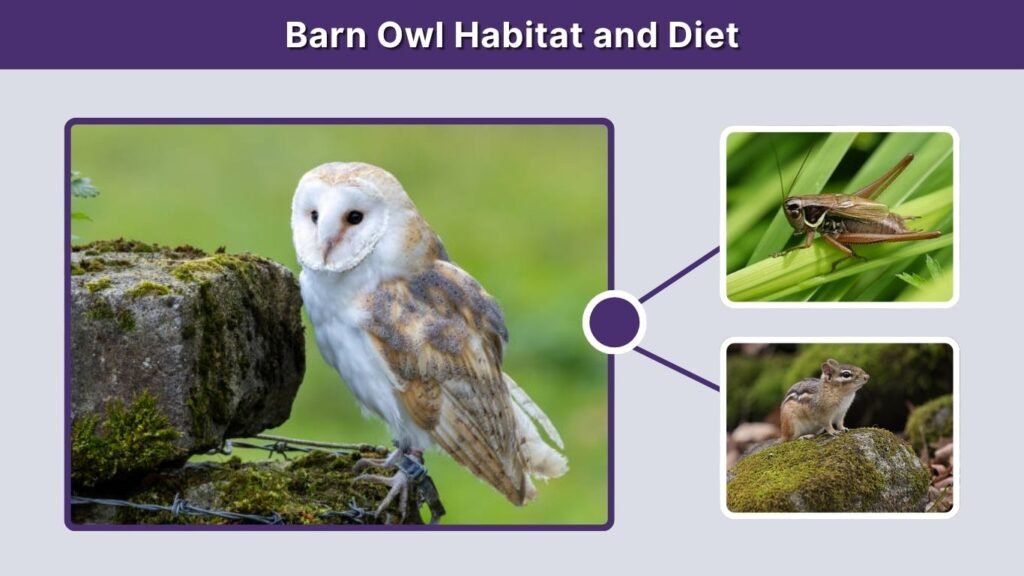
Barn owl habitat is closely connected to diet. These owls usually hunt small mammals, so they live where small mammals are common. If grassland is cut too short, sprayed heavily, or converted into unsuitable land, prey numbers may fall. When prey becomes scarce, barn owls may struggle to breed or survive winter.
Why prey habitat matters
Barn owls often hunt by flying low and listening for prey. Rough grassland, field margins, ditches, and marsh edges are important because they give small mammals shelter and food. RSPB says barn owls rely on rough grassland and field edges, and farmers can help by creating prey-rich habitat and safe nesting opportunities.
Habitat and the food web
A barn owl is part of a simple but important food web. Grass and seeds support insects and small mammals. Small mammals support barn owls. When rough grassland disappears, the food chain weakens. This is why barn owl conservation often focuses on land management, not only on protecting the bird itself.
Barn Owl Habitat Range Around the World
Barn owls are widespread, but different populations use different landscapes. Some live in warm dry regions, some in farmland, and some near wetlands. They are absent from Antarctica and are limited in colder regions where winters reduce prey and make hunting difficult. Their range depends on climate, prey, nesting sites, and land use.
Barn owl range
Cornell Lab notes that barn owls were split in 2024 into American Barn Owl, Eastern Barn Owl, and Western Barn Owl. American Barn Owls are in the Americas, Eastern Barn Owls occur from South Asia to Australia, and Western Barn Owls live in Europe, Africa, and western Asia.
Barn owl habitat in Canada
Barn owls occur in Canada, but their range is limited. NatureCounts says barn owls are found on all continents except Antarctica, but in Canada they are restricted mainly to southwestern British Columbia and Ontario. The western population is estimated at 250–1,000 individuals, while the eastern population likely has fewer than 20.
Best Habitat for Barn Owls
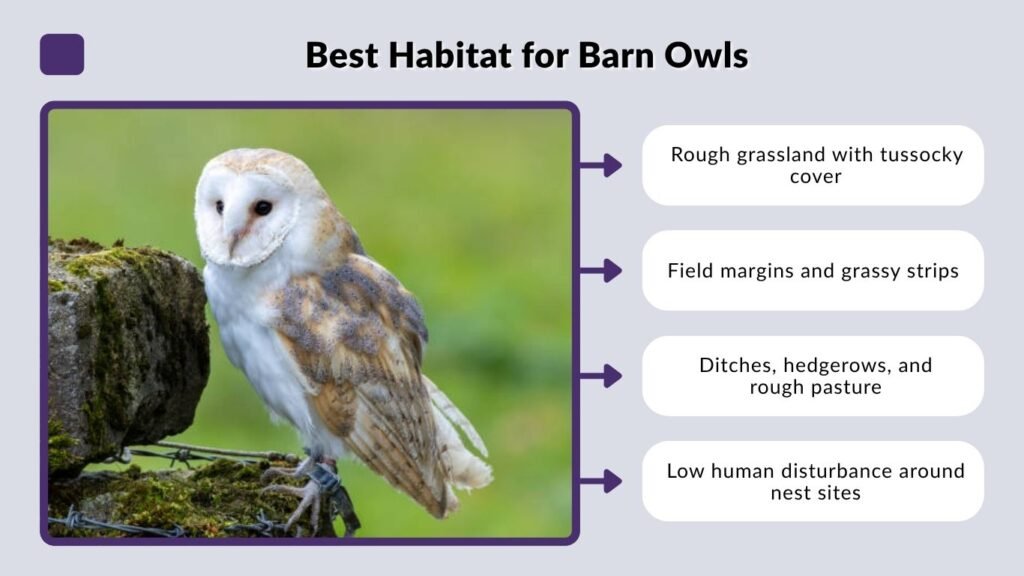
The best habitat for barn owls combines hunting land and nesting shelter. A perfect-looking barn is not useful if the surrounding land has no prey. A rough field may be excellent for hunting, but the owls still need a safe place to roost and breed nearby. Good barn owl habitat works as a complete system.
Features of ideal habitat
- Rough grassland with tussocky cover
- Field margins and grassy strips
- Ditches, hedgerows, and rough pasture
- Low human disturbance around nest sites
- Old barns, hollow trees, or nest boxes
- Few nearby fast roads
- Healthy populations of mice, voles, shrews, and rats
The Game & Wildlife Conservation Trust says barn owls prefer mixed farming habitat with spinneys, ditches, rough pastures, well-managed field margins, and grassland for hunting.
Barn Owl Habitat Loss
Barn owl habitat loss happens when rough grassland, old barns, field edges, and nesting places disappear. Modern farming, development, road traffic, and the conversion of old buildings can all reduce habitat quality. In many places, conservation work focuses on restoring rough grassland and adding safe nest boxes.
Why habitat loss is harmful
When habitat is lost, barn owls may lose both food and shelter. Short grass, intensive land use, and removed field margins can reduce vole and mouse numbers. Building conversions may remove traditional nesting places. Roadside hunting areas can also be dangerous because barn owls often fly low and may collide with vehicles.
How people can help
Barn owls can be helped by keeping rough grass margins, protecting old nesting sites, installing well-placed nest boxes, reducing disturbance, and avoiding harmful rodent control methods. Farmers and landowners can support them by managing field edges and grassland so small mammals can thrive.
FAQs
1. What is the habitat of a barn owl?
A barn owl’s habitat is usually open country such as grassland, farmland, marshes, rough pasture, field edges, and open countryside. They also need safe nesting places such as barns, hollow trees, caves, old buildings, or nest boxes.
2. Do barn owls live in forests?
Barn owls may use strips of forest or woodlots, but they are not mainly dense-forest owls. They prefer open habitats where they can fly low and hunt small mammals by sound.
3. Why is rough grassland good for barn owls?
Rough grassland is good because it supports small mammals such as voles, mice, and shrews. These animals are the main food source for barn owls, so prey-rich grassland improves hunting success.
4. Where do barn owls nest?
Barn owls nest in sheltered places such as tree cavities, barns, caves, old buildings, towers, and nest boxes. The best nest sites are close to good hunting habitat.
5. Are barn owls found in Canada?
Yes, but they are limited in Canada. They occur mainly in southwestern British Columbia and Ontario, and their Canadian populations are small compared with many other parts of their range.
