
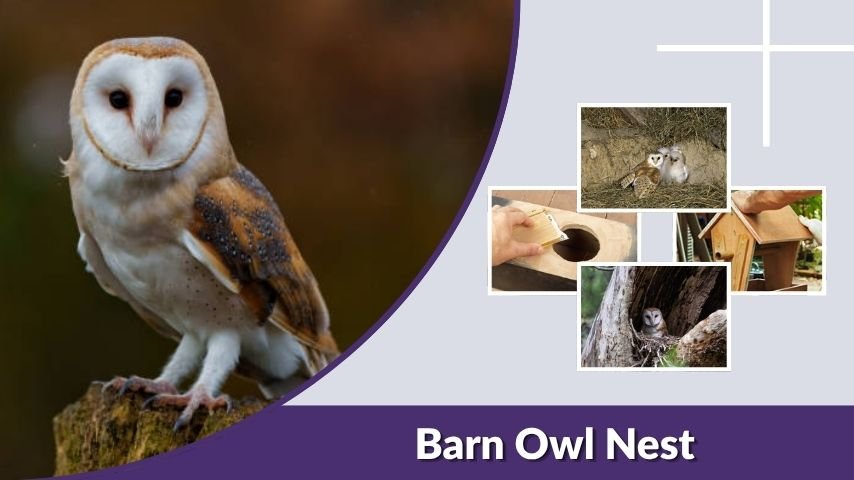
Barn owls are cavity-nesting birds that choose quiet, sheltered places to lay eggs and raise their young. Unlike many birds, they do not build neat nests from twigs or grass. Instead, they use barns, hollow trees, old buildings, cliffs, and nest boxes. A good barn owl nest site must be safe, dry, dark, and close to open hunting land. This guide explains where barn owls nest, what their nests look like, when they nest, and how nest boxes help them.
Where Do Barn Owls Nest?
Barn owls nest in hidden places that protect eggs and chicks from weather, predators, and disturbance. They prefer enclosed spaces rather than open branch nests. The best nesting sites are usually close to fields, grasslands, farms, marshes, or meadows where mice, voles, rats, and shrews are easy to find at night.
Barn Owl Nest in Barns
Barns are one of the most common nesting places for barn owls. Old barns often have quiet lofts, beams, rafters, and dark corners where owls can rest and raise chicks. These buildings also stand near farmland, which usually provides a steady food supply. A barn owl may return to the same barn year after year if it feels safe.
Barn Owl Nest in Trees
Barn owls can nest in trees, but they do not build nests on open branches like many other birds. Instead, they use hollow trees, large cavities, or broken trunk openings. These tree cavities must be roomy enough for the adult owl, eggs, and growing chicks. A tree nest is most useful when it is near open hunting habitat.
Barn Owl Nest in Buildings and Cavities
Barn owls may also nest in church towers, silos, sheds, abandoned houses, cliff holes, and roof spaces. They like places that are dark, quiet, and protected. If a site has too much human activity, bright light, or frequent disturbance, barn owls may avoid it or abandon it.
What Does a Barn Owl Nest Look Like?
A barn owl nest usually looks simple, rough, and messy. These birds do not weave a clean cup-shaped nest. Instead, they lay eggs in a cavity, box, or sheltered corner. Over time, the nest area may collect pellets, feathers, droppings, dust, old prey remains, and soft debris from the nesting space.
Do Barn Owls Build Nests?
Barn owls do not build traditional nests. They use places that already provide shelter, such as cavities, barns, or nest boxes. The female usually lays eggs directly on the floor of the chosen site. This is why a barn owl nest may look plain compared with the carefully shaped nests of songbirds.
What Is a Barn Owl Nest Made Of?
A barn owl nest is often made of whatever collects inside the cavity. This may include broken-down owl pellets, feathers, dust, droppings, and old nesting debris. In a nest box, a thin layer of wood shavings may be added to give the eggs a safer surface. Straw and hay are not ideal because they can hold moisture.
Barn Owl Nest and Eggs
Barn owl eggs are usually laid on the floor of the cavity or nest box. The eggs are white and rounded, and the female incubates them while the male brings food. If food is plentiful, barn owls may raise larger broods. If prey is limited, fewer chicks may survive.
Barn Owl Nesting Behaviour and Habits
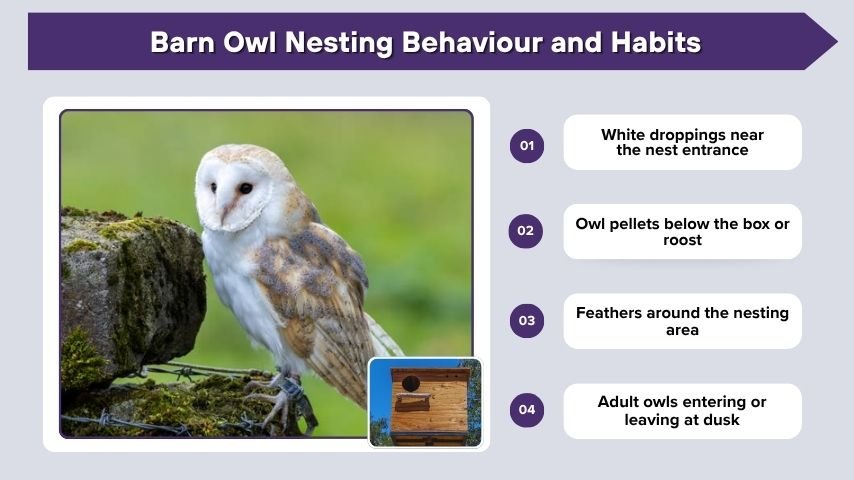
Barn owl nesting behavior includes courtship, choosing a nest site, laying eggs, incubating, feeding chicks, and protecting the nesting area. These birds are usually quiet during the day but become active at night. Their nesting success depends on safe shelter, good hunting habitat, low disturbance, and enough prey for both adults and chicks.
Barn Owl Mating and Nesting
During courtship, male barn owls may call, display, and bring food to the female. Food gifts help strengthen the pair bond and show that the male can support nesting. Once the pair chooses a site, the female spends more time inside while the male hunts. This pattern continues during incubation and early chick growth.
Barn Owl Nesting Habits
Barn owls may reuse the same nest site if it remains safe. They often choose places with little disturbance and easy access to open hunting areas. They are not very social around the nest, but a breeding pair will work together to feed and protect their young.
Signs of an Active Barn Owl Nest
Common signs of an active barn owl nest include:
- White droppings near the nest entrance
- Owl pellets below the box or roost
- Feathers around the nesting area
- Adult owls entering or leaving at dusk
- Hissing or begging sounds from chicks
- Prey remains inside or near the nest
- Regular nighttime activity around the site
When Do Barn Owls Nest?
Barn owl nesting season depends on region, climate, weather, and food supply. In many places, nesting often begins in spring, but barn owls can breed at other times if prey is abundant. Warmer regions may have longer nesting seasons, while colder areas may have a shorter breeding period.
What Time of Year Do Barn Owls Nest?
In many areas, barn owls start nesting during late winter or spring. This timing gives chicks a better chance of growing when prey is easier to find. However, barn owls are flexible breeders. If food is available and the weather is suitable, they may nest earlier, later, or even raise more than one brood.
When Do Barn Owls Start Nesting?
Barn owls may start visiting a nest site before eggs are laid. You might notice adults roosting nearby, calling at night, or entering a nest box more often. These early signs can happen weeks before actual nesting begins. Once eggs are laid, disturbance should be avoided.
When Do Barn Owls Leave the Nest?
Young barn owls leave the nest when they are developed enough to explore and fly. This stage is called fledging. Even after leaving the nest, young owls may stay nearby and depend on their parents for food while they improve their flying and hunting skills.
Baby Barn Owls in the Nest
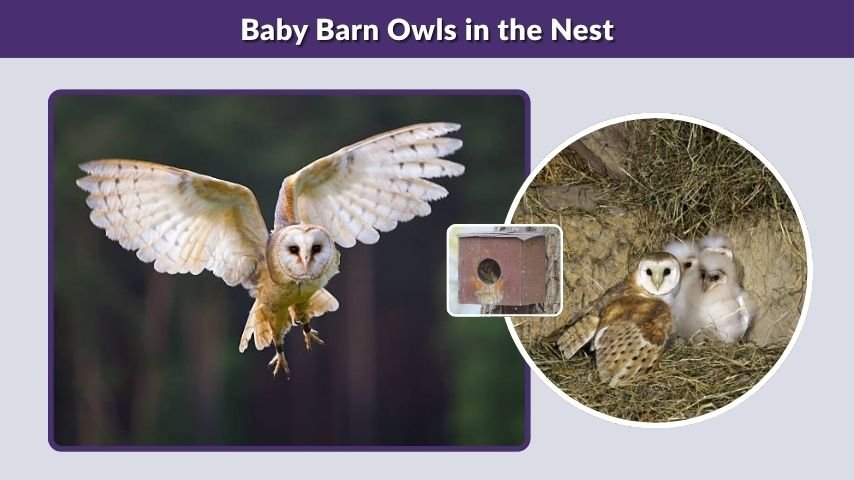
Baby barn owls are helpless when they hatch and need constant care from their parents. They are usually covered in soft white down and grow quickly when food is available. Nestlings can be noisy, especially at night. Their hissing, rasping, and begging calls are normal parts of life inside an active barn owl nest.
Baby Barn Owl in Nest
A baby barn owl looks fluffy, pale, and slightly awkward during its early weeks. As it grows, adult feathers slowly replace the down. Chicks in the same nest may be different sizes because barn owl eggs hatch at different times. Older chicks may look much larger than younger ones.
How Long Do Barn Owls Stay in the Nest?
Barn owls usually stay in the nest for several weeks before fledging. The exact time depends on food supply, weather, and the health of the chicks. During this period, the parents bring prey to the nest every night. A successful nest can become noisy and busy as the chicks grow.
How Old Are Barn Owls When They Leave the Nest?
Young barn owls often begin leaving the nest when they are around two months old, though timing can vary. They may first stand near the entrance, stretch their wings, and make short practice flights. Leaving the nest does not mean they are fully independent. They still need time to learn hunting skills.
Barn Owl Nest Box Plans and Dimensions
A barn owl nest box is a man-made nesting cavity designed to help owls where natural nesting sites are limited. A good box should be dry, secure, roomy, and protected from predators. It should also have proper ventilation, drainage, a safe entrance, and an access panel for cleaning when the box is inactive.
Barn Owl Nest Box Size
A barn owl nest box should be large enough for an adult pair and growing chicks. A box that is too small can become crowded, dirty, and unsafe. The floor should provide enough space for eggs, young owls, pellets, and movement. A roomy design is especially important when several chicks hatch.
Barn Owl Nest Box Dimensions
Exact dimensions can vary by plan and region, but most designs focus on a large floor area, a secure entrance hole, and enough height for comfort. The entrance should allow barn owls to enter easily while helping limit access by larger predators. The roof should keep rain out, and the floor should drain well.
| Nest Box Feature | Purpose |
| Large floor area | Gives chicks room to grow |
| Entrance hole | Allows safe owl access |
| Sloped or covered roof | Helps keep the box dry |
| Drainage holes | Prevents moisture buildup |
| Access panel | Allows cleaning when inactive |
| Ventilation gaps | Reduces heat and dampness |
Barn Owl Nest Box Diagram
A nest box diagram usually shows the front, back, sides, roof, floor, entrance hole, drainage holes, and cleaning panel. A good diagram helps builders cut the correct pieces and assemble the box safely. Before using any plan, check whether it matches your local barn owl species and climate.
How to Build a Barn Owl Nest Box
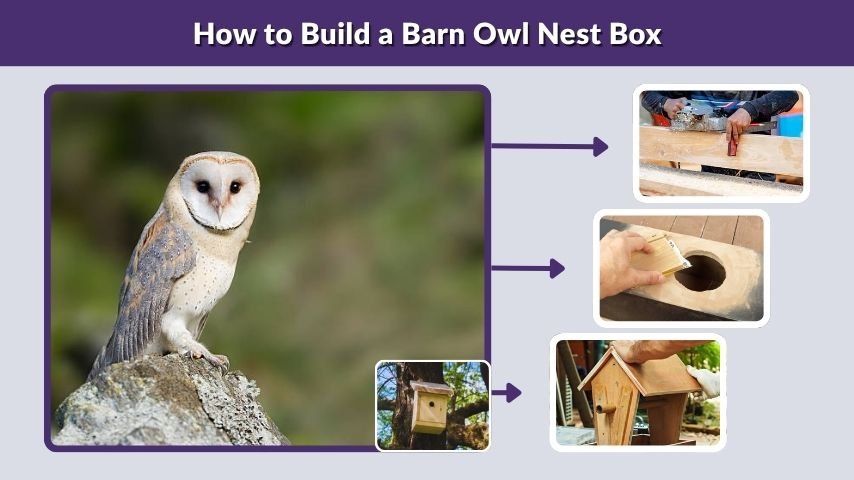
Building a barn owl nest box requires strong materials and careful planning. The goal is to create a safe cavity, not just a wooden box. It must handle weather, support the weight of growing chicks, and stay secure for years. Poor design, unsafe placement, or weak materials can make the box unsuitable.
Materials Needed
Useful materials for a DIY barn owl nest box include:
- Untreated exterior-grade plywood or durable wood
- Weather-resistant screws
- Hinges for a cleaning panel
- Waterproof roof covering
- Drill and saw
- Measuring tape
- Sandpaper for rough edges
- A small amount of wood shavings
- Strong mounting hardware
Basic Building Steps
The basic process for building a barn owl nest box includes:
- Choose a trusted nest box plan
- Cut the wood panels to size
- Create the entrance hole
- Assemble the floor, sides, back, and front
- Add roof protection
- Drill drainage and ventilation holes
- Attach a safe cleaning panel
- Add light bedding
- Mount the box securely in a suitable place
Common DIY Mistakes
Common mistakes include building the box too small, using treated wood inside, placing the box in a noisy area, forgetting drainage, and making the entrance easy for predators to access. Another mistake is checking the box too often. Barn owls need privacy, especially during egg laying and chick rearing.
Barn Owl Nest Box Placement and Height
Placement is one of the most important parts of barn owl nest box success. Even a well-built box may remain empty if it is placed in the wrong location. Barn owls need open hunting land nearby, a quiet setting, safe height, protection from predators, and limited disturbance from people, pets, and bright lights.
Barn Owl Nest Box Location
The best location is near open fields, farms, grasslands, meadows, or marshes. These areas support the small mammals barn owls eat. Avoid placing boxes in dense woods because barn owls prefer open hunting spaces. The site should be quiet, stable, and safe from regular human disturbance.
Barn Owl Nest Box Height
A nest box should be high enough to feel safe from ground predators and disturbance. It may be mounted inside a barn, on a strong pole, in a suitable tree, or on a quiet building. The exact height depends on the location, design, and maintenance needs. Safety for both owls and people should come first.
How to Get Barn Owls to Nest
You cannot force barn owls to use a nest box, but you can improve the chances. Place the box near good hunting habitat, install it before nesting season, avoid rodent poison, reduce disturbance, and keep the box dry and secure. Patience is important because owls may take months or years to use a new box.
Safety, Laws, and Ethical Nest Box Use
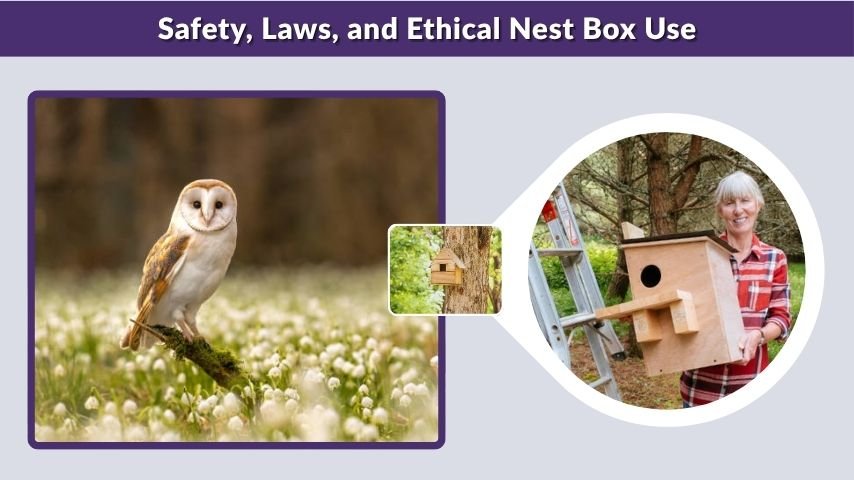
Barn owl nesting should always be handled with care. Active nests should not be disturbed, moved, or opened without proper permission or knowledge. In many places, barn owls and their nests may be protected by law. The purpose of a nest box should be to support wildlife, not to interfere with breeding birds.
Do Not Disturb an Active Nest
Disturbing an active barn owl nest can stress adults and put eggs or chicks at risk. Opening a box too often may cause problems, especially during incubation. If you suspect a nest is active, watch from a distance and avoid unnecessary contact. For serious concerns, contact a local wildlife expert.
Cleaning a Barn Owl Nest Box
A nest box should only be cleaned when it is inactive and when local guidance allows it. Cleaning during nesting season can harm the birds. When cleaning is appropriate, old pellets and debris can be removed carefully, and a thin layer of clean wood shavings may be added.
Rodent Control and Barn Owls
Barn owls are natural rodent hunters, but they should not be treated as a complete pest-control solution. Avoid using rodent poison near barn owl habitat because poisoned rodents can harm owls and their chicks. Supporting barn owls works best as part of a wildlife-friendly approach.
FAQs
Where do barn owls nest?
Barn owls nest in quiet, sheltered places such as barns, hollow trees, old buildings, cliffs, church towers, and nest boxes. They prefer nesting sites near open hunting areas where small mammals are common. A good nest site is dry, dark, safe, and protected from frequent disturbance.
Do barn owls build nests?
Barn owls do not build neat twig nests like many birds. They usually use an existing cavity or enclosed space. The nest floor may contain pellets, feathers, dust, droppings, and natural debris. In nest boxes, a thin layer of wood shavings may be added for safety.
What does a barn owl nest look like?
A barn owl nest often looks simple and messy. It may be inside a barn loft, hollow tree, wall cavity, cliff hole, or nest box. The floor may contain broken pellets, feathers, prey remains, and debris. It is usually not shaped like a traditional bird nest.
When do barn owls nest?
Barn owl nesting season varies by region, climate, and food supply. In many areas, nesting often begins in spring, but barn owls may breed at other times when prey is abundant. Local weather and habitat conditions can strongly affect when nesting starts.
How do you attract barn owls to a nest box?
To attract barn owls, place a safe nest box near open hunting habitat with plenty of natural prey. Install it before nesting season, avoid rodent poison, keep the area quiet, and reduce disturbance. Barn owls may not use a new box immediately, so patience is important.
