
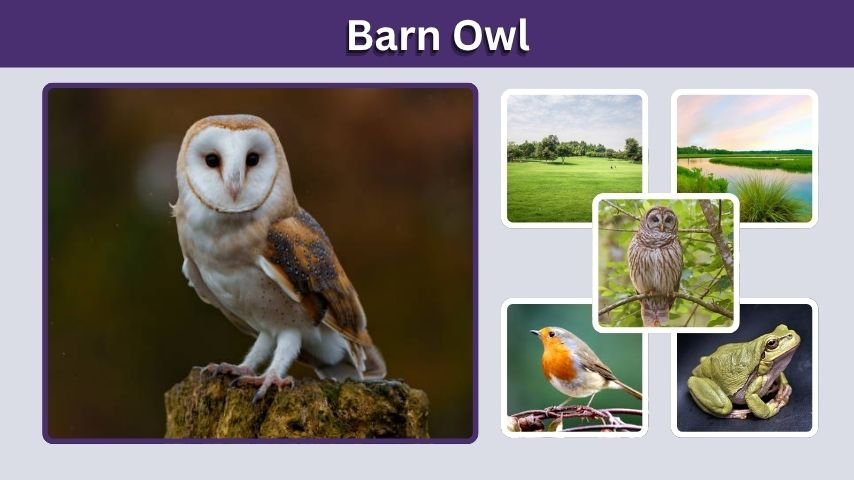
Barn owls are among the most recognizable owls in the world, known for their heart-shaped face, pale body, silent flight, and strange nighttime screeches. Unlike many owls, barn owls do not usually make a classic hooting sound. Instead, they produce raspy calls, hisses, and screams that can sound scary in the dark. These beautiful birds are skilled hunters, mostly feeding on rodents and living near open fields, farms, barns, grasslands, and quiet nesting places.
What Is a Barn Owl?
A barn owl is a nocturnal bird of prey with a pale face, long wings, and excellent hunting skills. It belongs to the owl family Tytonidae and is different from many other owls because of its heart-shaped facial disc and unusual screeching call. Barn owls are often seen near farms, barns, old buildings, fields, and grasslands where they can easily hunt small animals.
Barn Owl Scientific Name
The scientific name commonly used for the barn owl is Tyto alba. The word “Tyto” refers to barn owls, while “alba” means white, which matches the bird’s pale appearance. Some regions may classify barn owl groups differently, such as the American barn owl or western barn owl, but they are closely related and share many similar features.
Why Are They Called Barn Owls?
Barn owls get their name because they often nest or roost in barns and other quiet buildings. Farmers have long noticed these birds living near agricultural land because farms provide plenty of mice, rats, and voles. Barns, sheds, church towers, tree cavities, and nest boxes can all provide safe places for them to rest and raise their young.
Are Barn Owls Birds of Prey?
Yes, barn owls are birds of prey. They hunt live animals using sharp talons, strong eyesight, and outstanding hearing. Their soft feathers allow them to fly silently, making it easier to surprise prey at night. Although they look gentle, they are powerful predators in the small-animal food chain.
Barn Owl Appearance and Colors
Barn owls have a ghostly appearance that makes them easy to recognize. Their pale heart-shaped face, dark eyes, long wings, and light-colored body create a soft but mysterious look. Their feathers are usually a mix of white, cream, buff, gray, and golden brown. Some barn owls look very white, while others appear darker depending on age, region, lighting, and feather pattern.
Barn Owl Face and Eyes
The barn owl’s face is one of its most famous features. Its heart-shaped facial disc helps direct sound toward its ears, making it easier to locate prey in darkness. The eyes are usually dark and round, giving the bird an intense expression. This unique face is one reason barn owls are often described as beautiful, strange, cute, or even creepy.
White, Black, Blue, and Melanistic Barn Owls
Most barn owls are not pure white, but many have a pale white or cream underside. Their upper feathers may be golden, gray, or brown with speckles. A black barn owl is usually a rare melanistic bird, a shadowed photo, or an edited image. A blue barn owl is not a normal natural color and is usually linked to art, fantasy, toys, or digital edits.
Barn Owl Feathers and Wings
Barn owl feathers are soft, lightweight, and specially shaped for quiet flight. Their wings are broad and allow them to fly slowly over fields while listening for prey. This silent movement helps them hunt without warning mice or rats. Their pale underside also makes them look ghostlike when they fly at night.
Barn Owl Size, Length, and Wingspan
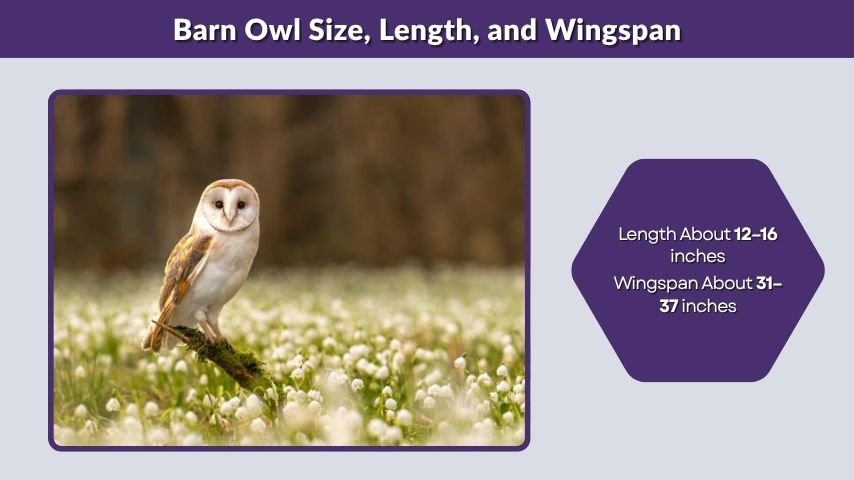
Barn owls are medium-sized owls with slim bodies and long wings. They are not as heavy as they may appear because their feathers add volume. Their size helps them move smoothly through open spaces while hunting. Wingspan, body length, and lightweight structure all work together to make the barn owl an efficient night hunter.
| Feature | Typical Barn Owl Measurement |
| Length | About 12–16 inches |
| Wingspan | About 31–37 inches |
| Body Shape | Slim and lightweight |
| Face Shape | Heart-shaped facial disc |
| Main Activity Time | Night |
Barn Owl Length
A barn owl is usually around 12 to 16 inches long from head to tail. Its body is slim, but its feathers can make it look larger. Compared with some other owls, the barn owl has a more delicate and stretched appearance, especially when sitting upright.
Barn Owl Wingspan
The wingspan of a barn owl is usually around 31 to 37 inches. These long wings help the bird glide low over fields and grasslands. When seen in flight, a barn owl can look larger than expected because its wings are wide, pale, and graceful.
Barn Owl in Flight
A flying barn owl often looks smooth, silent, and almost floating. It usually flies low over open ground while searching for prey. Its slow wingbeats and quiet feathers allow it to move through the night without drawing attention. This silent flight is one of its greatest hunting advantages.
What Does a Barn Owl Sound Like?
Barn owls are famous for their unusual sounds. Many people expect owls to hoot, but barn owls usually screech, scream, hiss, or make raspy calls. These sounds can be surprising, especially at night. A barn owl call may seem scary to people who hear it for the first time, but it is a normal part of the bird’s communication.
Common Barn Owl Sounds
Barn owl vocalizations may include:
- Harsh screeches
- Raspy screams
- Hissing sounds
- Clicking or chattering noises
- Food-begging calls from young owls
- Alarm calls near a nest
These sounds are used for territory, courtship, warning, and communication between adults and young birds.
Barn Owl Screech
The barn owl screech is one of its best-known sounds. It is sharp, rough, and drawn out, very different from the soft hoot many people associate with owls. This screech is often heard at night when the bird is flying, defending territory, or communicating with another owl.
Baby Barn Owl Sounds
Baby barn owls can be surprisingly loud. Young owls often make hissing, rasping, or begging sounds when they want food. A nest full of chicks can sound strange or unsettling at night. These noises are normal and usually mean the young birds are waiting for their parents to return with prey.
Where Do Barn Owls Live?
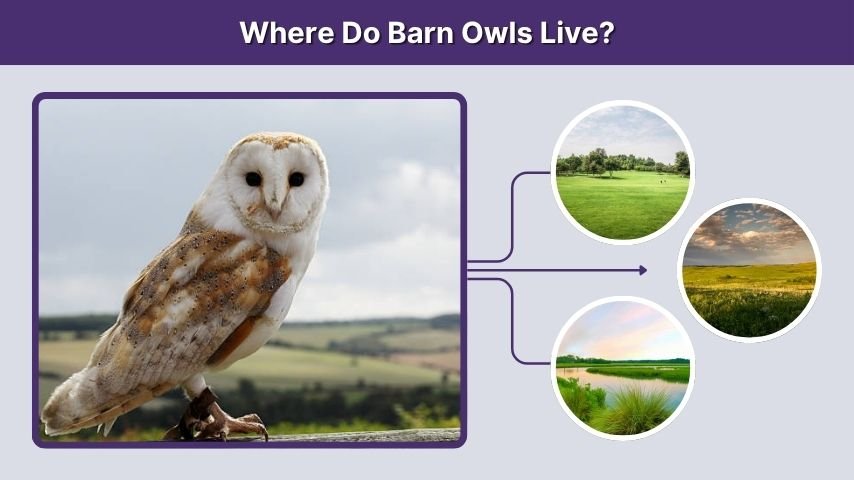
Barn owls live in many parts of the world and prefer open areas where hunting is easy. They are commonly found around farms, meadows, grasslands, marshes, and rural buildings. They need open hunting land and safe nesting places nearby. Their ability to live close to humans has helped them survive in many agricultural landscapes.
Barn Owl Habitat
Barn owls often live in:
- Open fields
- Grasslands
- Farmland
- Marshes
- Meadows
- Rural buildings
- Tree cavities
- Old barns and sheds
- Nest boxes
They avoid dense forests because thick trees make hunting more difficult. Open land gives them space to fly low and listen for small mammals.
Common Barn Owl Habitat
The common barn owl usually chooses areas with plenty of rodents and quiet nesting spots. Farms are ideal because grain storage and open fields often attract mice and rats. Old barns and buildings provide shelter, while nearby fields provide food. This is why barn owls are often connected with rural life.
Barn Owl at Night
Barn owls are mostly active at night. They leave their roost after dusk and begin hunting when small mammals are active. Their pale bodies, silent wings, and eerie calls make them one of the most noticeable nighttime birds. During the day, they usually rest quietly in hidden places.
What Do Barn Owls Eat?
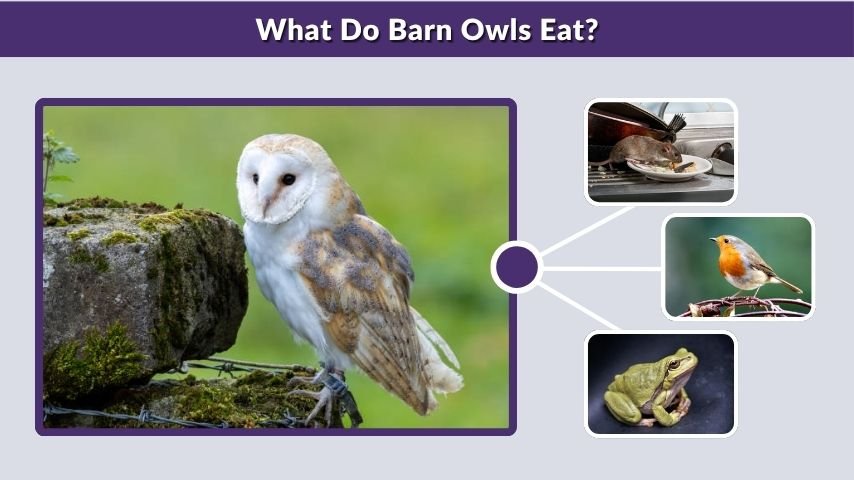
Barn owls mainly eat small mammals and are especially known for hunting rodents. Their diet makes them helpful to farmers because they naturally reduce mice and rat populations. They hunt using sound as much as sight, listening carefully for movement in grass. Their food choices depend on habitat, season, and what prey is available nearby.
Barn Owl Diet
A barn owl diet commonly includes:
- Mice
- Voles
- Rats
- Shrews
- Small birds
- Bats
- Frogs
- Lizards
- Large insects
Rodents make up most of their diet in many areas. After eating, barn owls often cough up pellets containing bones, fur, and other indigestible parts.
How Barn Owls Hunt
Barn owls hunt by flying low and slowly over fields. Their facial disc helps collect sound, while their uneven ear placement helps them locate prey with great accuracy. Once they hear movement, they drop quickly and grab the animal with sharp talons. Their silent flight gives prey little chance to escape.
Barn Owl Food Web
In the food web, barn owls are important predators of small mammals. They help control rodent numbers, which benefits farms and natural ecosystems. At the same time, barn owls may face danger from larger predators, harsh weather, traffic, poison, and loss of nesting places.
Barn Owl Nesting and Baby Barn Owls
Barn owls do not build fancy nests like some birds. Instead, they use safe, hidden spaces where eggs and chicks can be protected. They may nest in barns, tree holes, cliffs, towers, or man-made nest boxes. Baby barn owls are fluffy, noisy, and fully dependent on their parents during the early weeks of life.
Barn Owl Nest
A barn owl nest is usually placed in a quiet, sheltered location. The pair may use old buildings, hollow trees, cliff ledges, or nest boxes. Instead of building a detailed nest from twigs, they often lay eggs on a surface covered with pellets, feathers, and natural debris.
Baby Barn Owl
A baby barn owl looks very different from an adult. Chicks are usually covered in soft white down and have a round, fluffy appearance. As they grow, adult feathers slowly replace the down. Young barn owls stay in the nest for several weeks while their parents bring them food.
Barn Owl Nest Box
A barn owl nest box can help provide safe nesting space where natural cavities are limited. These boxes are often placed in barns, trees, or quiet outdoor structures near open hunting land. A good nest box should be dry, safe from predators, and placed where the owls will not be disturbed.
Barn Owl vs Barred Owl
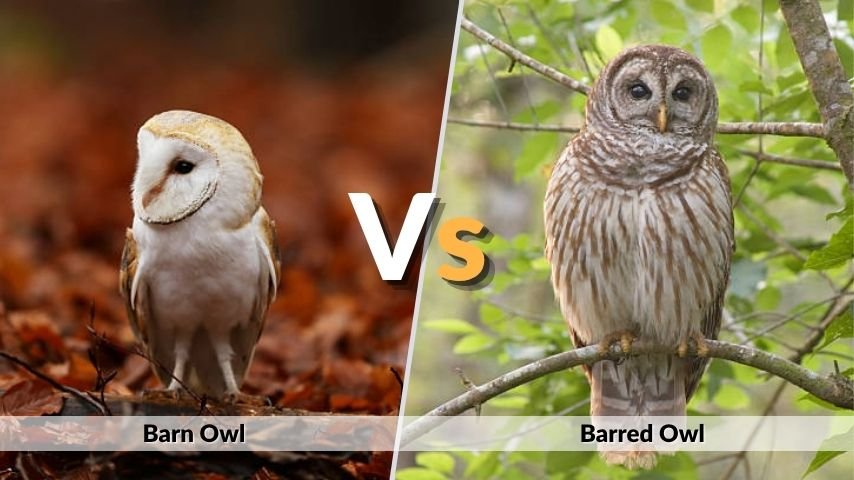
Barn owls and barred owls are often confused because both are owls, but they look and sound very different. The barn owl has a pale body, heart-shaped face, and screeching voice. The barred owl is darker, rounder, and known for a classic hooting call. Their habitats also differ, with barn owls favoring open fields and barred owls favoring wooded areas.
Appearance Differences
A barn owl has a white or pale heart-shaped face, dark eyes, and a slim body. A barred owl has a rounder head, dark eyes, and brown-and-white barred feather patterns. The barn owl often looks ghostly, while the barred owl looks more forest-colored and heavily patterned.
Sound Differences
The sound difference is one of the easiest ways to tell them apart. A barn owl makes raspy screeches, screams, and hisses. A barred owl gives a deeper hooting call often described as rhythmic and owl-like. If the sound is a harsh scream, it may be a barn owl.
Habitat Differences
Barn owls usually prefer open spaces such as farms, fields, and grasslands. Barred owls are more connected with forests, wooded swamps, and mature trees. Seeing an owl in a barn or open field may suggest a barn owl, while seeing one deep in woodland may suggest a barred owl.
Barn Owl vs Western Barn Owl
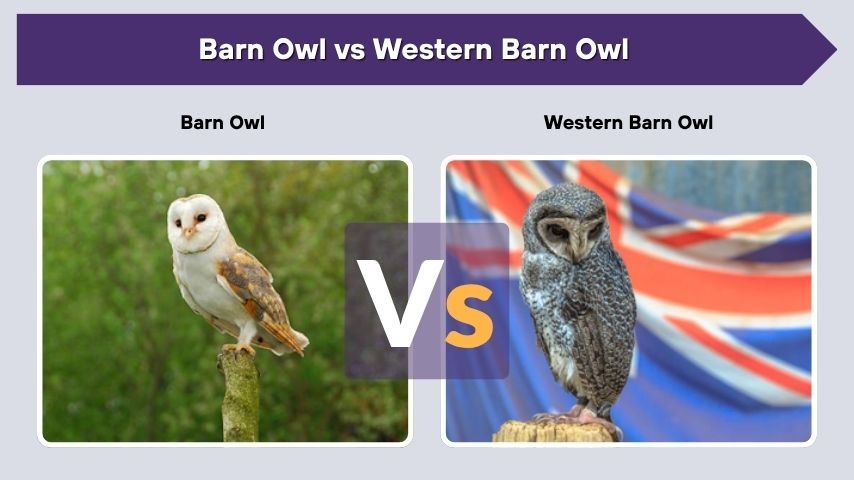
The terms barn owl and western barn owl can be confusing because bird classification changes depending on the source. In many cases, “barn owl” is used as a general name for the group. “Western barn owl” usually refers to Tyto alba, especially in Europe, Africa, and parts of Asia. Other regions may treat similar barn owls as separate species.
Is the Western Barn Owl the Same as a Barn Owl?
The western barn owl is a type of barn owl. Many people use “barn owl” broadly, while “western barn owl” is more specific. They share the same general appearance: pale body, heart-shaped face, dark eyes, long wings, and screeching calls. The difference is mostly about taxonomy and regional naming.
American Barn Owl
The American barn owl is found in the Americas and is very similar to the western barn owl in behavior and appearance. Some authorities classify it separately, while others include it within a broader barn owl group. For general readers, it is enough to know that both are barn owls with similar hunting habits and features.
Common Barn Owl
“Common barn owl” is another name often used for the widespread barn owl group. The phrase can refer to the familiar pale barn owl seen in many countries. Because naming systems vary, readers may see common barn owl, western barn owl, and barn owl used in overlapping ways.
Why Are Barn Owls Considered Scary or Cute?
Barn owls can seem scary and cute at the same time. Their pale face, silent flight, dark eyes, and night screams create a ghostly impression. However, their soft feathers, rounded face, and fluffy chicks make them charming to many bird lovers. Whether someone sees them as creepy or beautiful often depends on the situation.
Why Barn Owls Seem Scary
Barn owls may seem scary because they are active at night, fly silently, and make sudden screeching sounds. Their white face can appear mask-like in darkness. When a barn owl flies across a road or field at night, it can look like a pale ghost moving through the air.
Why Barn Owls Are Cute
Barn owls are also considered cute because of their heart-shaped face, soft feathers, and gentle-looking posture. Baby barn owls are especially popular because they are fluffy and expressive. Photos of barn owls often show their calm, bright, and curious appearance.
Are Barn Owls Dangerous?
Barn owls are not dangerous to people under normal conditions. They are wild birds and should not be touched, chased, or disturbed, especially near a nest. They may defend themselves if threatened, but they usually avoid humans and focus on hunting small animals.
Interesting Barn Owl Facts
Barn owls are full of fascinating features that make them different from many other birds. Their hunting skills, ghostly appearance, and unusual sounds make them popular among bird watchers, photographers, farmers, and nature lovers. They are also important for natural pest control because they eat large numbers of rodents.
Quick Facts About Barn Owls
- Barn owls usually screech instead of hooting.
- They have a heart-shaped facial disc.
- Their soft feathers help them fly silently.
- They mainly eat mice, voles, rats, and shrews.
- They often nest in barns, old buildings, and nest boxes.
- Baby barn owls make loud begging and hissing sounds.
- Their pale color makes them look ghostly at night.
- They are useful natural rodent hunters.
- Barn owls are mostly active after dark.
- They are found in many parts of the world.
FAQs
What does a barn owl sound like?
A barn owl usually sounds like a harsh screech or raspy scream rather than a classic owl hoot. It may also hiss, chatter, or make begging calls near a nest. These sounds can seem scary at night, but they are normal barn owl vocalizations.
What do barn owls eat?
Barn owls mainly eat small mammals such as mice, voles, rats, and shrews. They may also eat small birds, bats, frogs, lizards, and large insects when available. Their rodent-heavy diet makes them helpful for farms and natural pest control.
Where do barn owls live?
Barn owls live in open habitats such as farms, grasslands, meadows, marshes, and rural areas. They often roost or nest in barns, old buildings, tree cavities, cliffs, and nest boxes. They need open hunting land with enough small prey nearby.
Are barn owls scary?
Barn owls can seem scary because they are pale, silent, active at night, and make loud screeching sounds. However, they are not dangerous or evil. They are shy wild birds that usually avoid people and spend most of their time hunting small animals.
What is the scientific name of the barn owl?
The scientific name commonly used for the barn owl is Tyto alba, especially for the western or common barn owl. Some authorities classify regional barn owl groups differently, such as the American barn owl, but they share many similar features and behaviors.
