
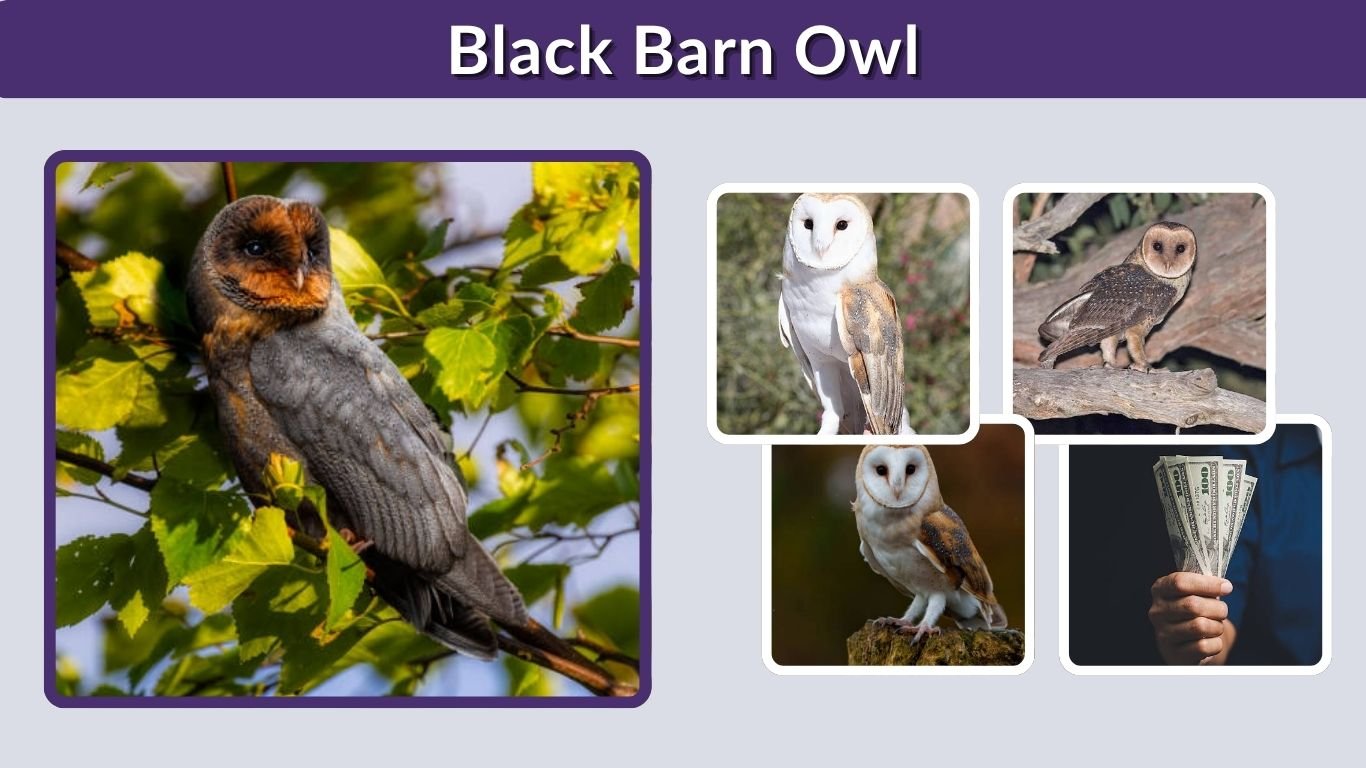
A black barn owl is usually not a separate owl species. Most searches for “black barn owl” refer to a very rare melanistic barn owl, a dark-colored individual with unusually high dark pigment. Normal barn owls are pale, with a heart-shaped face, dark eyes, buff or gray upperparts, and white to cinnamon underparts. Black or very dark barn owls are unusual, which is why they attract attention in photos, art, tattoos, and wildlife discussions.
Is a Black Barn Owl Real?
Yes, black barn owls can be real, but they are extremely rare. A true black barn owl is usually described as melanistic, meaning its feathers contain more dark pigment than normal. Melanism is a color variation caused by excessive melanin, which makes feathers darker than the typical color pattern.
Melanistic barn owls may look charcoal, smoky brown, dark gray, blue-black in photos, or almost fully black depending on lighting. Some still show the classic heart-shaped facial disc, dark eyes, pale beak, and speckled body pattern. A 2025 Journal of Raptor Research article notes that albinism, leucism, and melanism are extremely rare in Common Barn-Owls.
Quick Identification
A dark owl may be a black barn owl if it has:
- Heart-shaped facial disc
- Dark eyes
- Long legs
- Pale or ivory beak
- Soft rounded head without ear tufts
- Barn owl body shape
- Dark gray, blackish, or smoky plumage
- Speckling or mottling still visible on wings or body
If the bird has yellow eyes, ear tufts, a round facial disc, or a heavily barred body, it may be another owl species.
What Does a Normal Barn Owl Look Like?
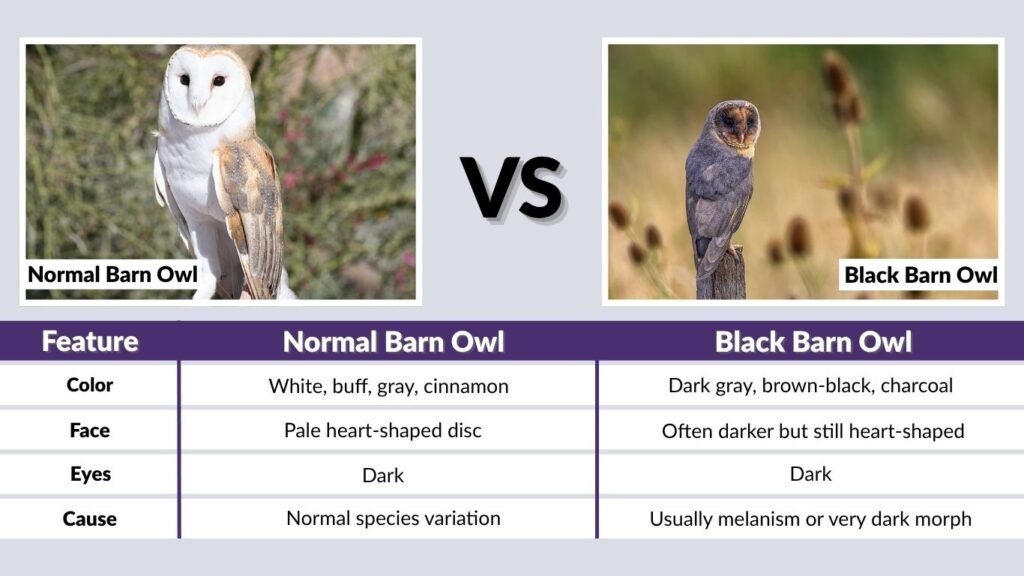
Normal barn owls are much lighter than the viral “black barn owl” images. Cornell describes the American Barn Owl as a medium-sized owl with a white heart-shaped face, gray and cinnamon upperparts, and white to cinnamon or spotty underparts.
The Owl Research Institute also describes barn owls as white to light brown birds with a heart-shaped face, dark eyes, and plumage that can vary from white to buff or light brown, with females often darker than males.
| Feature | Normal Barn Owl | Black Barn Owl |
| Color | White, buff, gray, cinnamon | Dark gray, brown-black, charcoal |
| Face | Pale heart-shaped disc | Often darker but still heart-shaped |
| Eyes | Dark | Dark |
| Cause | Normal species variation | Usually melanism or very dark morph |
| Rarity | Common in suitable areas | Very rare |
| Species? | Barn owl species/group | Usually color variant, not separate species |
A black barn owl still has the body shape and facial structure of a barn owl. The color is the unusual part.
Why Are Some Barn Owls Black?
Some barn owls appear black because of melanism, a condition where the body produces or deposits more melanin than normal. In birds, this can make feathers look darker, sometimes turning a normally pale bird into a smoky, brown-black, or nearly black individual.
However, not every dark barn owl photo shows true melanism. Some images may look darker because of low light, shadows, wet feathers, camera editing, or unusual regional color variation. Barn owl plumage naturally varies among populations, and research on barn owl coloration shows variation from reddish to whitish and from heavily spotted to nearly unspotted birds.
Melanistic vs Dark Morph
A melanistic barn owl has abnormal dark pigmentation. A dark morph or naturally darker individual may still fall within normal color variation. This is why a “black barn owl” photo should be identified carefully rather than assumed to be a new species.
Are Black Barn Owls Rare?
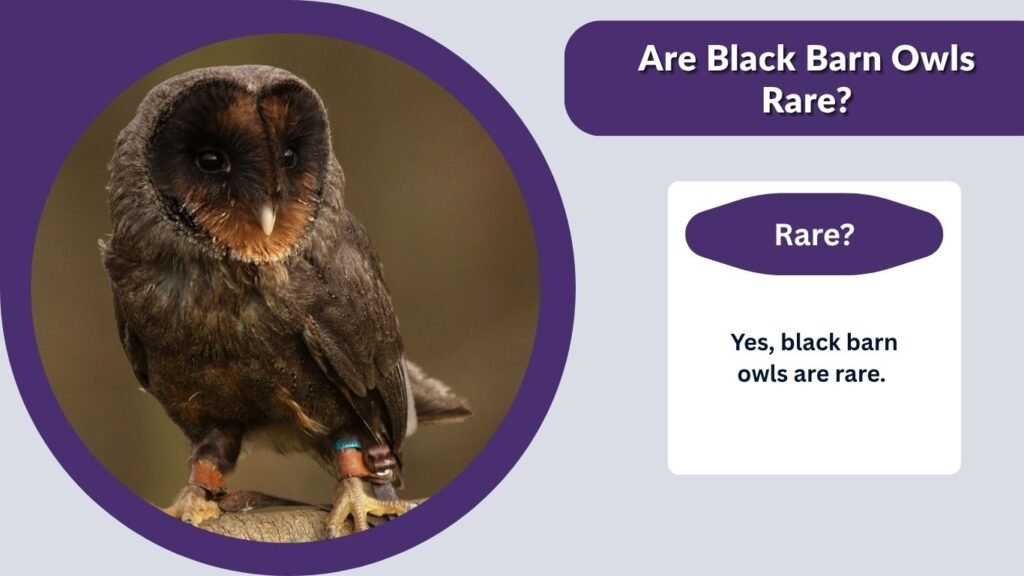
Yes, black barn owls are rare. Melanism in barn owls is unusual enough that dark individuals often become famous online. Scientific literature describes melanism in Common Barn-Owls as extremely rare, and most barn owl field guides show the usual pale, buff, gray, or cinnamon forms instead.
A black barn owl may also face survival challenges in the wild. Barn owls are normally pale nocturnal hunters, and unusual plumage can affect camouflage, mate choice, or visibility. Still, the exact effect depends on habitat, predator pressure, and individual survival.
Black and White Barn Owl
Many people search for “black and white barn owl” because normal barn owls already have strong contrast. Their white face, pale underparts, dark eyes, and spotted upperparts make them look dramatic in photos. Black-and-white barn owl photography, drawings, clipart, tattoos, and SVG designs are popular because the bird’s face has a clear heart shape.
In normal barn owls, “black” often refers to:
- Dark eyes
- Black speckles on the breast
- Dark wing markings
- Shadow around the face
- Black-and-white photo style
- Black background photography
- Tattoo or line-art design
So a “black and white barn owl” may not mean a melanistic owl. It may simply mean a normal barn owl shown in black-and-white art or photography.
Australian Black Barn Owl
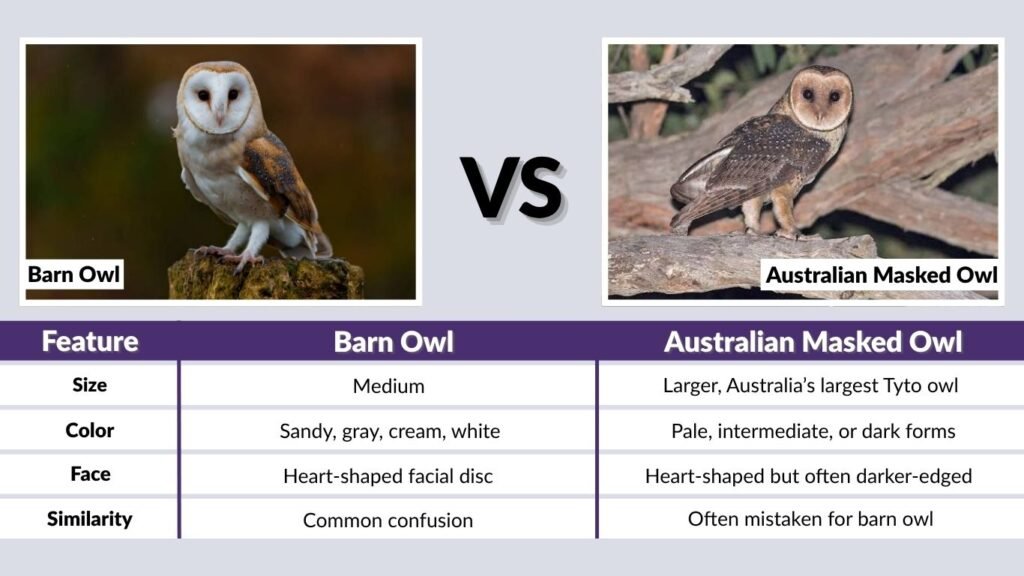
The phrase “Australian black barn owl” can be confusing. In Australia, a dark owl with a barn-owl-like face may not be a true Barn Owl. It may be an Australian Masked Owl, which is also in the genus Tyto and can look similar. The Australian Museum says the Masked Owl has pale, intermediate, and dark plumage forms and is listed as similar to the Barn Owl.
The Australian Barn Owl is generally sandy orange and light gray above with white to cream underparts and black spotting. A very dark Australian “barn owl” sighting should be compared with Masked Owl, Sooty Owl, and other local owl species before calling it a black barn owl.
Barn Owl vs Australian Masked Owl
| Feature | Barn Owl | Australian Masked Owl |
| Size | Medium | Larger, Australia’s largest Tyto owl |
| Color | Sandy, gray, cream, white | Pale, intermediate, or dark forms |
| Face | Heart-shaped facial disc | Heart-shaped but often darker-edged |
| Similarity | Common confusion | Often mistaken for barn owl |
| Habitat | Open country, farms, grasslands | Forests, woodlands, timbered waterways |
A dark Australian owl with a heart-shaped face is not automatically a melanistic barn owl.
Black Barn Owl Meaning
A black barn owl can carry different meanings in art, culture, and symbolism. Because barn owls are often linked with night, silence, mystery, wisdom, and hidden knowledge, a black barn owl may symbolize secrecy, rare beauty, transformation, protection, or the unknown.
In wildlife terms, though, its meaning is simpler: it is usually a rare color variation. Melanism is a biological pigmentation difference, not a supernatural sign. Still, the unusual look makes black barn owls popular in fantasy art, gothic tattoos, black-and-gray tattoo sleeves, and dramatic wildlife photography.
Black Barn Owl for Sale
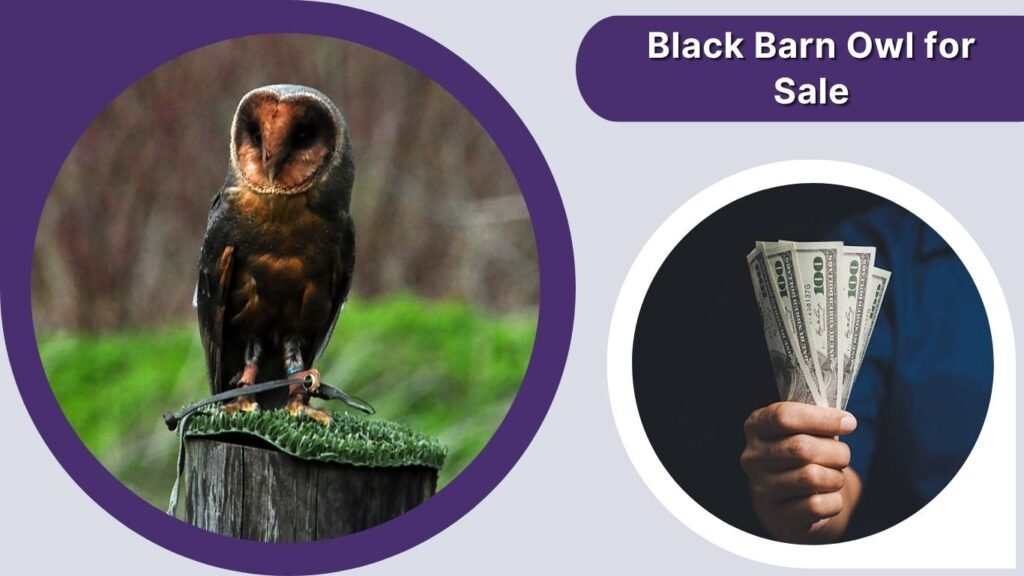
Searches for “black barn owl for sale” or “black barn owl price” should be treated carefully. Barn owls are wild birds of prey, and ownership, sale, transport, possession, or release may be regulated or illegal depending on the country and whether the bird is wild-caught or captive-bred.
In the United States, the Migratory Bird Treaty Act permit rules cover activities such as possession, sale, purchase, transport, import, export, and marking of migratory birds. In the UK, the Barn Owl Trust notes that releasing captive-bred Barn Owls is illegal, and captive-bred birds used for sale or commercial display require proper documentation.
Anyone interested in barn owls should focus on conservation, nest boxes, habitat protection, and licensed wildlife education rather than trying to buy a rare color morph.
Black Barn Owl Pellets
Barn owl pellets may look dark, gray, or black because they contain compressed fur, bones, feathers, and other undigested prey remains. The pellet color does not mean the owl itself is black. Barn owls hunt small mammals in open fields and meadows, and they are well known for leaving pellets at roosting or nesting sites.
Black barn owl pellets are usually a normal result of diet and digestion. If you find pellets in a barn, attic, nest box, or old building, it may show that a barn owl is roosting nearby.
FAQs
Are black barn owls real?
Yes, black barn owls can be real, but they are very rare. They are usually melanistic barn owls, meaning they have unusually high dark pigment in their feathers.
Is a black barn owl a different species?
Usually no. A black barn owl is normally a rare color variant of a barn owl, not a separate species. However, some dark owls that look like barn owls may actually be other species, such as the Australian Masked Owl.
Can barn owls be black and white?
Yes, barn owls can appear black and white in photography, drawings, clipart, tattoos, or high-contrast lighting. Normal barn owls also have pale plumage with dark eyes and dark speckles, which creates a strong black-and-white look.
Why are black barn owls so rare?
Black barn owls are rare because melanism is an unusual pigmentation condition in this group. Most barn owls have pale, buff, gray, cinnamon, or white plumage rather than black feathers.
Can you buy a black barn owl?
Buying or keeping barn owls is heavily regulated in many places, and wild birds should not be captured or sold. Laws vary by country and region, so any ownership or sale requires proper legal permits and documentation.
