
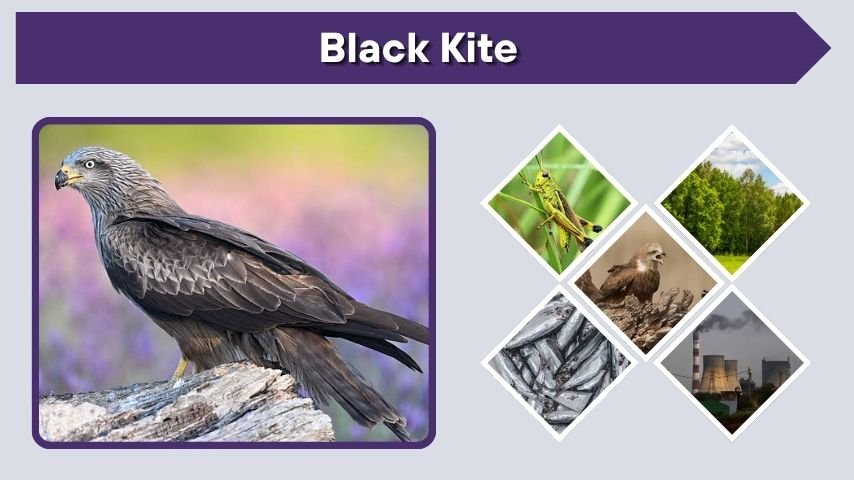
The black kite is one of the most widespread birds of prey in the world. Known for its dark brown body, angled wings, forked tail, and effortless soaring flight, this raptor is common across many parts of Europe, Asia, Africa, and Australia. Unlike some powerful hawks and eagles that rely mainly on live prey, the black kite is highly opportunistic. It hunts, scavenges, steals food, and adapts well to human-altered environments.
What Is a Black Kite?
The black kite is a medium-sized raptor with the scientific name Milvus migrans. It belongs to the family Accipitridae, which includes hawks, eagles, harriers, and other kites. Although its name suggests a black bird, the black kite is usually more dark brown than truly black.
Black Kite Identification
A black kite can be identified by its slim body, long wings, and slightly forked tail. When it soars, the wings often look angled or slightly bent, giving the bird a distinctive shape in the sky.
Key identification features include:
- Dark brown plumage
- Slightly forked tail
- Long, narrow wings
- Pale or streaked head in some birds
- Hooked beak
- Smooth gliding flight
- Frequent soaring in circles
In flight, the tail is one of the most useful clues. The black kite’s tail is forked, but not as deeply forked as the tail of a red kite or swallow-tailed kite. This makes it look more subtle and less dramatic.
Black Kite Size and Appearance
The black kite is medium-sized compared with other birds of prey. It is larger than many small falcons but usually slimmer and lighter-looking than large eagles.
What Does a Black Kite Look Like?
Adult black kites usually have dark brown upperparts, paler brown or streaked underparts, and a somewhat lighter head. The wings are broad but not bulky, and the tail is long with a shallow fork. The bill is hooked, as expected in a raptor, and the legs are relatively short.
| Feature | Black Kite Description |
|---|---|
| Scientific name | Milvus migrans |
| Bird family | Accipitridae |
| Bird type | Kite, raptor, bird of prey |
| Main color | Dark brown |
| Tail shape | Long and shallowly forked |
| Flight style | Soaring, gliding, circling |
| Diet | Carrion, fish, insects, small animals, refuse |
| Conservation status | Least Concern globally |
Juvenile black kites may look more streaked than adults. Young birds can also appear paler on the head and underparts, which sometimes causes confusion with other raptors.
Black Kite Range
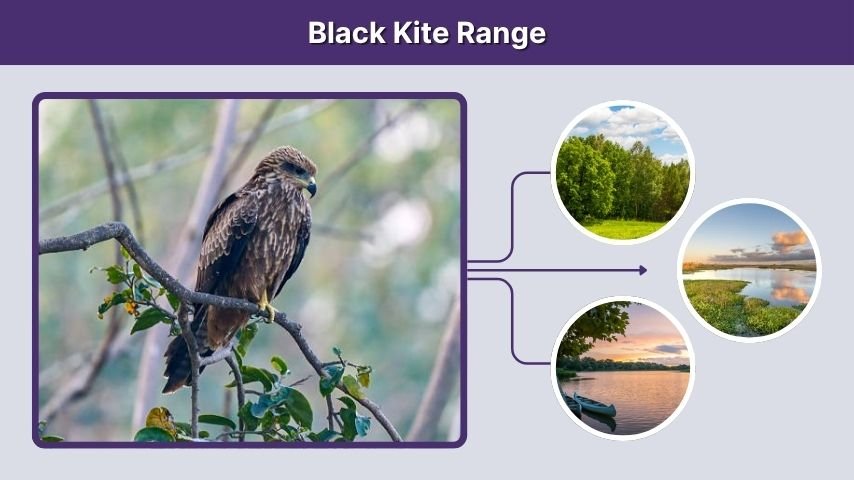
The black kite has an extremely wide range. It occurs across temperate and tropical parts of Eurasia, Africa, and Australasia. Some populations are migratory, while others remain in the same region year-round.
Where Do Black Kites Live?
Black kites can be found in many habitats, including:
- Open countryside
- Forest edges
- Wetlands
- Rivers and lakes
- Farmland
- Grasslands
- Towns and cities
- Rubbish dumps
- Coastal areas
This wide habitat use is one reason black kites are so successful. They do not need untouched wilderness to survive. In many regions, they live close to people and take advantage of food from farms, roads, markets, fisheries, and urban waste areas.
Is the Black Kite Found in North America?
The black kite is not a regular North American bird. It is mainly an Old World species, found across Europe, Asia, Africa, and Australia. In North America, it would be considered a rare visitor or vagrant rather than a common bird.
Black Kite vs. North American Kites
In North America, people are more likely to see species such as the Mississippi kite, swallow-tailed kite, or white-tailed kite. These birds are different from the black kite in shape, color, range, and behavior.
The black kite is darker and more strongly associated with scavenging than many North American kite species.
Black Kite Habitat
Black kites are highly adaptable. They can live in natural landscapes, agricultural areas, and busy cities. They often prefer places with open airspace for soaring and nearby food sources.
Why Black Kites Thrive Near People
Black kites are skilled scavengers. They often feed around human activity where food scraps, carrion, fish waste, or roadkill are available. In some cities, they are a familiar sight circling above markets, rivers, dumps, and neighborhoods.
This adaptability can make them very common in certain urban regions. However, living near people also exposes them to risks such as poisoning, vehicle strikes, pollution, and dangerous waste.
What Do Black Kites Eat?
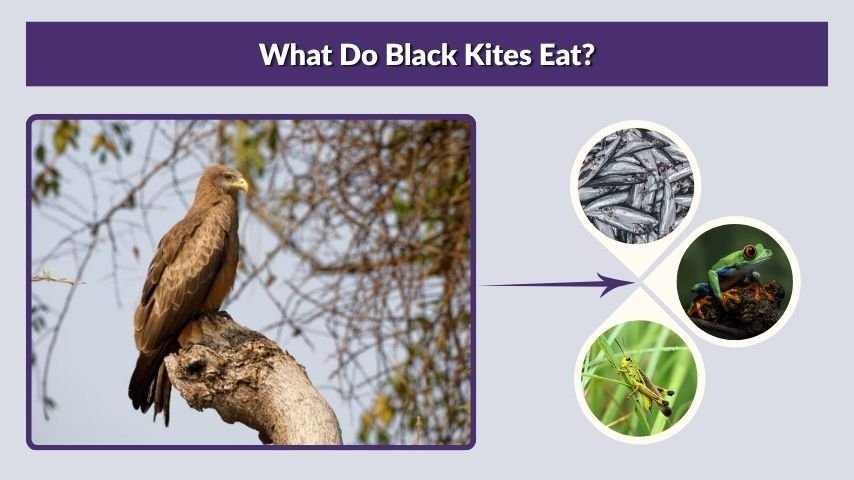
The black kite has a very flexible diet. It eats carrion, fish, insects, reptiles, amphibians, small mammals, birds, and human refuse. It may hunt live prey, steal food from other birds, or scavenge dead animals.
Common Black Kite Foods
The black kite diet may include:
- Dead animals and carrion
- Fish and fish scraps
- Grasshoppers and other insects
- Lizards and small snakes
- Frogs and amphibians
- Small rodents
- Small birds
- Eggs and nestlings
- Human food waste
The IUCN describes the black kite as an extremely versatile feeder that takes carrion along with live birds, mammals, fish, lizards, amphibians, and invertebrates. Human refuse can also become a major food source in some areas.
Does the Black Kite Hunt?
Yes, the black kite does hunt, but it is not only a hunter. It is an opportunist. If live prey is easy to catch, it may hunt. If dead food is available, it may scavenge. If another bird has food, it may try to steal it.
This flexible strategy helps the black kite survive in many different environments.
Black Kite Hunting and Feeding Behavior
Black kites spend a lot of time soaring. They use rising warm air, called thermals, to circle high above the ground while searching for food. This allows them to cover large areas without wasting much energy.
How Black Kites Find Food
Black kites often look for food from the air. They may drop down to pick up carrion, snatch prey from the ground, grab fish from the surface, or take scraps from human areas.
They are also known for gathering in groups where food is abundant. For example, several black kites may appear near rubbish dumps, fishing areas, fields being plowed, or roads where carrion is present.
Black Kite Call and Sound
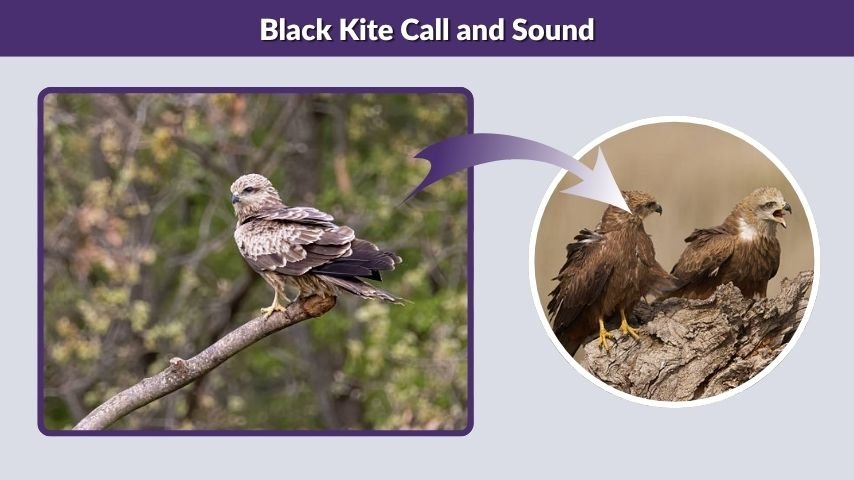
Black kites are vocal birds, especially around nesting areas or food sources. Their call is often described as a high, thin, whistling or neighing sound.
When Do Black Kites Call?
Black kites may call when:
- Flying near a nest
- Interacting with mates
- Competing for food
- Defending territory
- Gathering with other kites
- Alarmed by disturbance
Their calls can be noticeable in areas where many kites gather. In cities where black kites are common, their sounds may be part of the everyday urban birdlife.
Black Kite Nesting and Breeding
Black kites usually build their nests in trees, although they may also use cliffs or man-made structures in some areas. The nest is made from sticks and may be lined with soft or unusual materials.
Black Kite Nest
A black kite nest is often placed in a fork or branch of a tree. The same nest site may be reused in later years. The nest may contain sticks, paper, plastic, cloth, rags, or other materials collected from the surrounding area.
Females usually lay two or three eggs. Both parents may be involved in raising the young, though the amount of care can vary. Young birds remain dependent for a period after hatching and need regular food from the adults.
Black Kite Migration
Some black kite populations are migratory, while others are resident. Birds that breed in cooler regions often migrate to warmer areas after the breeding season.
When Do Black Kites Migrate?
Migration timing depends on region. In parts of Europe and Asia, black kites may move south before winter. In warmer tropical or subtropical areas, they may stay year-round.
During migration, black kites may travel in groups and use thermal currents to conserve energy. They often follow land routes where rising air helps them soar efficiently.
Black Kite Conservation Status
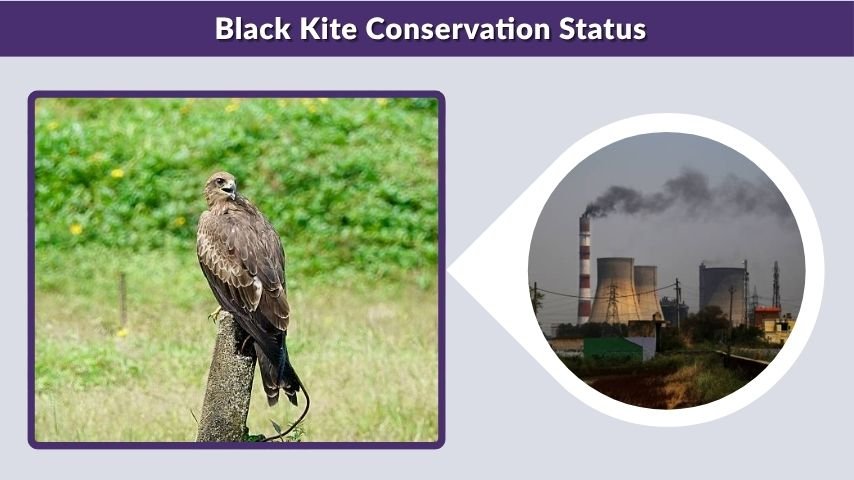
The black kite is listed globally as Least Concern by the IUCN. BirdLife reports a very large range and a global mature population estimated in the millions. However, local populations can still decline because of habitat change, poisoning, pollution, electrocution, or reduced food sources.
Is the Black Kite Endangered?
Globally, the black kite is not endangered. Its wide range and large population keep it in a relatively secure conservation category. However, this does not mean every local population is safe. In some areas, modernization, agricultural changes, and urban changes may reduce food availability or nesting sites.
Black Kite vs. Red Kite
The black kite and red kite are often compared because both are fork-tailed raptors. However, they differ in color, tail shape, and overall appearance.
Main Differences
The red kite usually has a more reddish body, paler patches in the wings, and a deeply forked tail. The black kite is darker brown, has a less deeply forked tail, and often looks plainer from below.
If the bird has a very deep fork and warm reddish tones, it may be a red kite. If it is darker, browner, and has a shallower fork, it may be a black kite.
Black Kite vs. Eagle
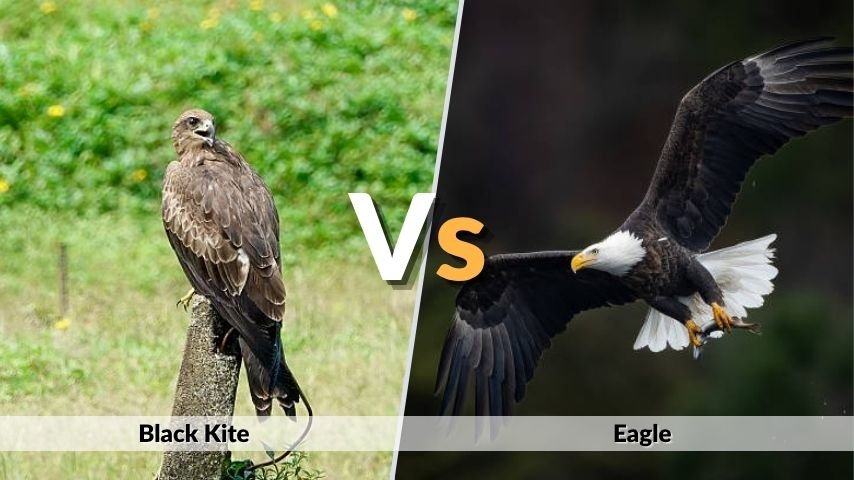
A black kite may look large when soaring, but it is not an eagle. Eagles are generally heavier, stronger, and broader-winged. Black kites are slimmer, more buoyant, and more likely to scavenge around human settlements.
Easy Field Clue
A soaring eagle often looks powerful and broad, while a black kite looks lighter and more agile. The black kite’s forked tail and restless gliding style can help separate it from many eagles.
Are Black Kites Dangerous?
Black kites are not usually dangerous to humans. They may become bold around food, especially in places where people feed them or leave food exposed. In rare situations, a kite may swoop down to snatch food from a person’s hand, but they are not normally aggressive toward people.
Are Black Kites Dangerous to Pets?
Black kites mostly eat small prey, carrion, and scraps. They are not a major threat to most pets. Very small animals should still be supervised outdoors, especially in areas with many raptors, but black kites are not known as typical pet predators.
Interesting Black Kite Facts
The black kite is successful because it is intelligent, adaptable, and efficient in flight. It can live in wild areas, farmland, and crowded cities.
Quick Facts
Here are some interesting facts about black kites:
- They are among the most widespread raptors in the world.
- They often scavenge as well as hunt.
- Their tail is forked but not deeply split.
- They can soar for long periods with little effort.
- Some populations migrate long distances.
- They may gather in large numbers where food is available.
- They sometimes use human-made materials in nests.
- They are closely related to other kites and hawks.
FAQs
What is a black kite?
A black kite is a medium-sized bird of prey with dark brown plumage, long wings, and a shallowly forked tail. Its scientific name is Milvus migrans, and it is one of the most widespread raptors in the world.
What does a black kite eat?
A black kite eats carrion, fish, insects, reptiles, amphibians, small mammals, small birds, eggs, and human food waste. It is an opportunistic feeder that hunts, scavenges, and sometimes steals food from other birds.
Where do black kites live?
Black kites live across large parts of Europe, Asia, Africa, and Australia. They use many habitats, including wetlands, farmland, grasslands, forests, towns, cities, and areas near water.
Is a black kite an eagle?
No, a black kite is not an eagle. It is a kite, which is a type of raptor in the same broad family as hawks and eagles. It is slimmer, lighter, and more scavenging than most eagles.
Are black kites endangered?
Black kites are not globally endangered. They are listed as Least Concern because they have a very wide range and a large population. However, some local populations can be affected by pollution, poisoning, habitat changes, and reduced nesting sites.
