
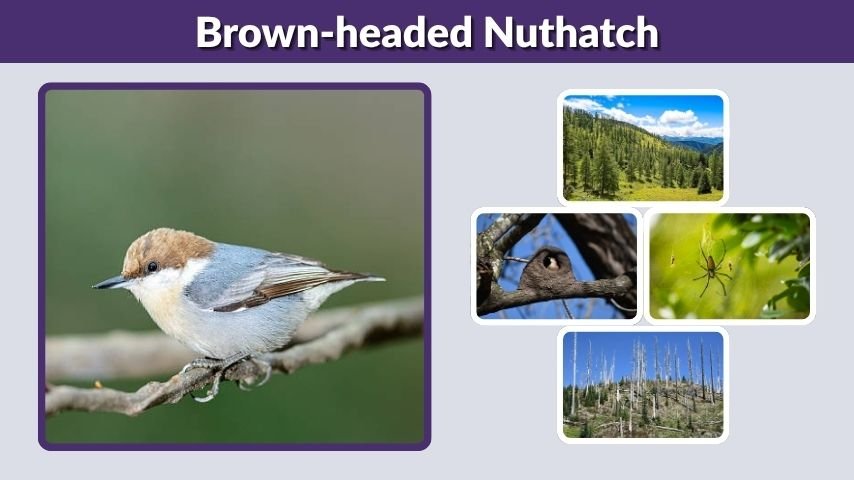
The Brown-headed Nuthatch is a small, energetic bird best known for its squeaky call, brown cap, short tail, and strong connection to pine forests. Though tiny, it has a bold personality and is often seen climbing tree trunks, moving along branches, or hanging upside down while searching for insects. This bird is especially associated with mature pine woods in the southeastern United States. For birdwatchers, the Brown-headed Nuthatch is a charming species because of its social behavior, distinctive voice, and fascinating nesting habits.
What Is a Brown-headed Nuthatch?
The Brown-headed Nuthatch is a small songbird in the nuthatch family. Like other nuthatches, it has strong feet and claws that help it move up, down, and sideways along tree bark. Unlike woodpeckers, it does not use its tail as a stiff support. Instead, it relies on its feet to cling tightly to trunks and branches.
This bird is smaller than many familiar backyard birds, but it can be easy to notice because of its constant movement and high-pitched sounds. It is often found in pairs or small family groups, especially in pine-dominated habitats.
Brown-headed Nuthatch Identification
The Brown-headed Nuthatch has a soft brown cap, bluish-gray back, pale underparts, and a short tail. Its face is light, and its bill is straight, narrow, and pointed. The bird’s overall appearance is compact, with a large head compared to its body.
One of the easiest ways to identify it is by its call. Many people describe the Brown-headed Nuthatch call as sounding like a tiny rubber duck or squeaky toy. This nasal, squeaky sound often gives away the bird’s presence before it is seen.
Size and Shape
The Brown-headed Nuthatch is a very small bird, usually only a few inches long. It has a short neck, short tail, rounded body, and sharp bill. Its small size can make it hard to spot high in pine trees, but its behavior helps.
It moves quickly over bark, often hanging upside down or creeping along branches. This upside-down movement is typical of nuthatches and is one of the best field clues.
Brown-headed Nuthatch Identification Table
The Brown-headed Nuthatch may be confused with other small birds, especially the White-breasted Nuthatch, Red-breasted Nuthatch, and Pygmy Nuthatch. This table highlights the main differences.
| Feature | Brown-headed Nuthatch | White-breasted Nuthatch | Red-breasted Nuthatch | Pygmy Nuthatch |
| Head color | Brown cap | Black or gray cap | Black cap with white eyebrow | Brownish-gray cap |
| Body size | Very small | Larger | Small | Very small |
| Underparts | Pale whitish | White | Rusty or reddish | Pale grayish |
| Common habitat | Southeastern pine forests | Deciduous and mixed woods | Conifer forests | Western pine forests |
| Call | Squeaky, toy-like notes | Nasal yank-yank | Thin nasal calls | Fast chattering calls |
Where Do Brown-headed Nuthatches Live?
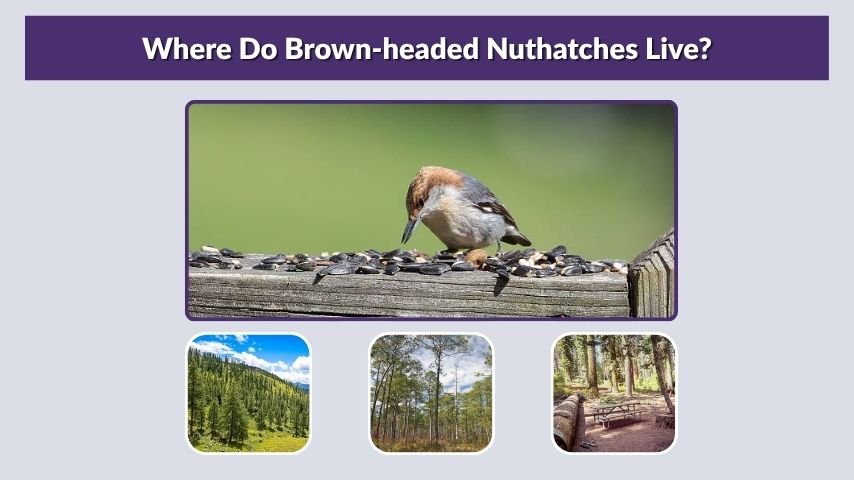
Brown-headed Nuthatches are strongly connected to pine forests. They are most common in the southeastern United States, especially in areas with mature pine trees, open pine woods, pine savannas, and mixed pine habitats.
They are less likely to be found in dense hardwood forests with few pines. Their lifestyle depends heavily on pine bark, pine seeds, old trees, dead snags, and cavities for nesting.
Preferred Habitat
Brown-headed Nuthatches prefer open pine habitats rather than thick, closed forests. They often live in places where sunlight reaches the ground and pine trees are spaced enough to allow movement and foraging.
Common habitats include:
- Longleaf pine forests
- Loblolly pine woods
- Pine savannas
- Open pine plantations
- Mixed pine-hardwood edges
- Mature pine stands
- Parks with large pine trees
- Residential areas with pine cover
Healthy pine habitat is important for their survival. When old pine forests are removed or heavily altered, these birds may decline locally.
Brown-headed Nuthatch Range
The Brown-headed Nuthatch is mainly found in the southeastern United States. Its range includes areas from parts of the coastal plain and southeastern interior, extending through pine-rich regions.
Unlike many migratory birds, Brown-headed Nuthatches usually stay in their home range throughout the year. They are considered resident birds in most places where they occur. This means they can be seen in winter as well as during breeding season.
Brown-headed Nuthatch Call and Sound
The Brown-headed Nuthatch call is one of its most memorable features. It produces high, nasal, squeaky notes that sound almost mechanical. Many birdwatchers compare the sound to a rubber duck, squeaky toy, or tiny horn.
Because the bird is small and often high in pine trees, learning its sound is one of the best ways to find it.
What Does a Brown-headed Nuthatch Sound Like?
The call is usually a repeated squeaky note or short series of nasal sounds. It may sound playful, thin, or toy-like. In a quiet pine forest, these calls can be surprisingly noticeable.
Brown-headed Nuthatches use calls to stay in contact with mates and group members. Since they are social birds, you may hear several individuals calling as they move together through trees.
Why the Call Matters for Identification
Visual identification can be difficult when the bird is high in the canopy or moving quickly. The call helps confirm its presence. If you hear a squeaky, rubber-duck-like sound coming from pine trees, it is worth scanning the branches and trunks for small nuthatches.
Their calls are especially useful in mixed flocks, where chickadees, woodpeckers, warblers, and other small birds may be moving through the same area.
What Do Brown-headed Nuthatches Eat?
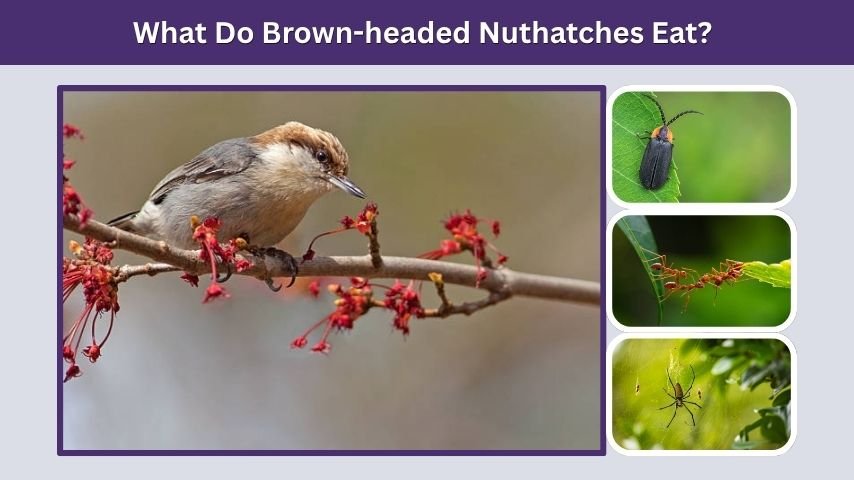
Brown-headed Nuthatches eat a mix of insects, spiders, seeds, and other small food items. Their diet changes with the season. During warmer months, insects and other invertebrates are very important. During colder months, they may rely more on pine seeds and other available foods.
They are active foragers and spend much of their time searching bark, cones, branches, and crevices.
Common Foods
Brown-headed Nuthatches commonly eat:
- Beetles
- Caterpillars
- Ants
- Spiders
- Insect eggs
- Small larvae
- Pine seeds
- Other small seeds
- Occasionally feeder foods such as sunflower pieces or suet
Their insect diet makes them useful members of the forest ecosystem. By feeding on insects hidden in bark and branches, they help maintain natural balance in pine woods.
Feeding Behavior
Brown-headed Nuthatches forage by creeping along trunks, limbs, and pine branches. They inspect bark cracks and pine cones with their pointed bills. They often hang upside down, which allows them to reach places other birds may miss.
They may also store food for later. Like some other nuthatches, they can tuck seeds into bark crevices and return to them when needed.
Brown-headed Nuthatch Nesting
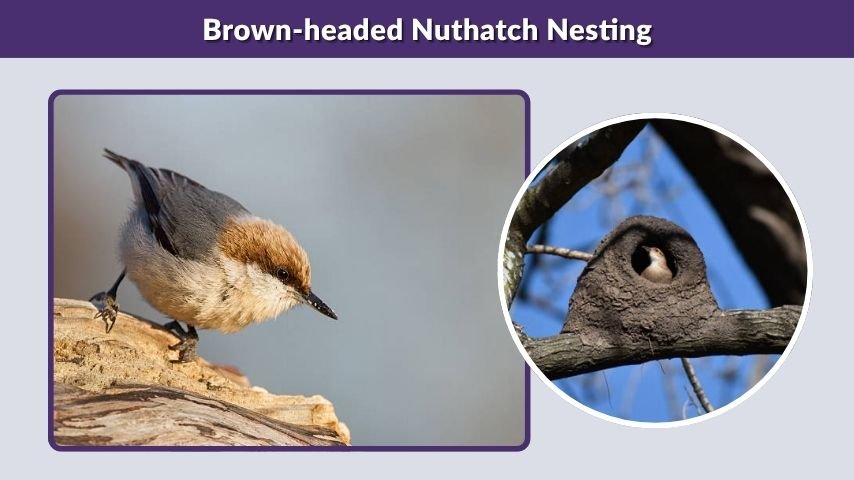
Brown-headed Nuthatches are cavity nesters. They usually nest in holes in dead trees, dead limbs, or soft decaying wood. Sometimes they use old woodpecker holes, but they may also excavate their own cavity in soft wood.
Because they rely on cavities, dead trees and snags are important nesting resources. Removing every dead limb or snag from a property can reduce nesting opportunities.
Nest Sites
Brown-headed Nuthatches often choose nest sites in pine snags or dead branches. The cavity is usually small, matching the bird’s tiny size. They may use natural cavities, old woodpecker holes, or nest boxes if suitable ones are available.
Good nest sites are usually in areas with nearby pine trees for foraging. A nest in open pine habitat gives the adults easy access to food for their young.
Eggs and Young
The female lays eggs inside the cavity, and the nest is lined with soft materials such as bark fibers, grass, feathers, or plant matter. Both parents may help feed the young after they hatch.
One especially interesting behavior is cooperative breeding. In some groups, young birds from a previous brood may help the breeding pair feed and care for the new nestlings. This social system makes Brown-headed Nuthatches especially fascinating to bird researchers and birdwatchers.
Brown-headed Nuthatch Behavior
The Brown-headed Nuthatch is active, social, and curious. It rarely sits still for long. Instead, it moves through pine branches, calls to other birds, and searches for food in bark.
Its behavior can make it easier to identify than its size or color alone.
Upside-Down Movement
One of the most typical nuthatch behaviors is moving headfirst down tree trunks. Brown-headed Nuthatches can climb in many directions, including upside down along limbs. This gives them access to insects and seeds hidden in bark crevices.
This movement separates them from many other small birds, which usually hop on branches rather than creep along bark.
Social Groups
Brown-headed Nuthatches are often found in pairs, family groups, or small flocks. They may stay close together while foraging and calling. Their social nature helps them locate food and watch for predators.
They may also join mixed-species flocks with chickadees, titmice, woodpeckers, and warblers. These mixed flocks are common in winter and can make birdwatching more exciting.
Tool Use
One of the most remarkable facts about the Brown-headed Nuthatch is that it has been observed using tools. It may use small pieces of bark as tools to pry up other bark while searching for insects. This behavior is unusual among birds and shows impressive problem-solving ability for such a tiny species.
Tool use is one reason the Brown-headed Nuthatch is considered especially interesting among North American songbirds.
Brown-headed Nuthatch vs Similar Birds
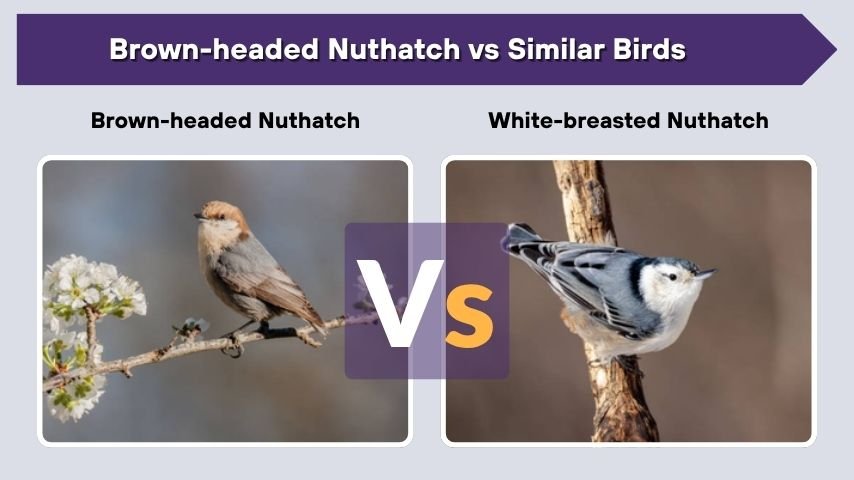
Because several nuthatches are small, grayish, and active on tree trunks, it is helpful to compare the Brown-headed Nuthatch with similar species.
The best clues are head color, habitat, call, and range.
Brown-headed Nuthatch vs White-breasted Nuthatch
The White-breasted Nuthatch is larger and has a strong black or gray cap, white face, and white underparts. Its call is also different, often described as a nasal “yank-yank.”
The Brown-headed Nuthatch is smaller, has a brown cap, and is more strongly tied to pine forests. Its squeaky call is also very distinctive.
Brown-headed Nuthatch vs Red-breasted Nuthatch
The Red-breasted Nuthatch has a bold face pattern with a dark eye line, white eyebrow, and rusty underparts. It is often associated with conifer forests but has a different look and sound.
The Brown-headed Nuthatch lacks the strong head stripes and reddish underparts. It looks softer and plainer, with a brown cap and pale belly.
Brown-headed Nuthatch vs Pygmy Nuthatch
The Pygmy Nuthatch is also tiny and social, but it is mostly a western species. It lives in western pine forests, while the Brown-headed Nuthatch is mainly southeastern.
Both are small and brown-capped, so location is one of the best clues. If you are in the southeastern pine woods, Brown-headed Nuthatch is more likely. If you are in western pine country, Pygmy Nuthatch is more likely.
How to Attract Brown-headed Nuthatches
Attracting Brown-headed Nuthatches depends largely on habitat. If you live within their range and have pine trees nearby, you may be able to make your yard more appealing.
They are not as common at feeders as some backyard birds, but they may visit when suitable food and cover are available.
Provide Pine Habitat
The most important step is maintaining pine trees. Mature pines provide bark, cones, seeds, insects, and nesting opportunities. Native pine trees are especially valuable.
Avoid removing dead limbs unless they create a safety hazard. Small dead branches and snags can provide cavities and foraging sites.
Offer Feeder Foods
Brown-headed Nuthatches may visit feeders for:
- Sunflower chips
- Peanut pieces
- Suet
- Mealworms
- Bark butter-style foods
- Small seed blends
Because they are small birds, they may prefer feeders near trees or shrubs where they can retreat quickly.
Add Nest Boxes
A properly sized nest box may attract Brown-headed Nuthatches in suitable habitat. The entrance hole should be small enough to fit them while discouraging larger competitors.
Place nest boxes near pine trees and away from heavy disturbance. Clean boxes after the nesting season, but never disturb an active nest with eggs or young.
Conservation and Importance
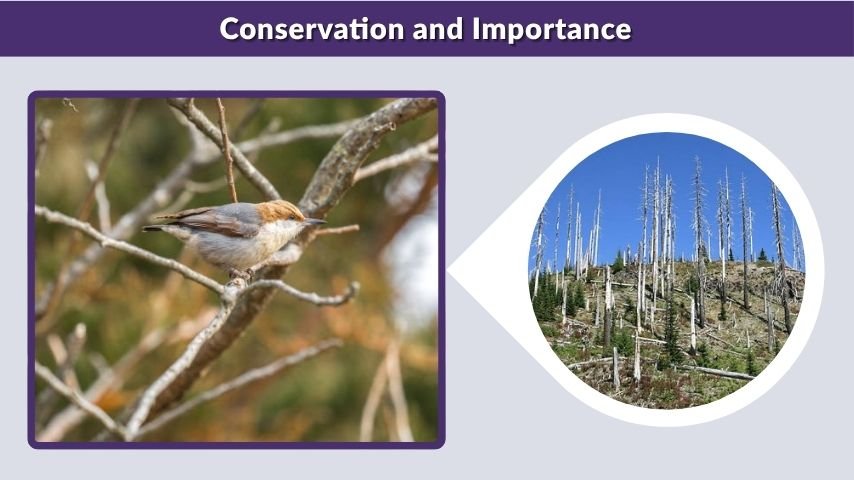
The Brown-headed Nuthatch depends on healthy pine ecosystems. Changes in forest management, removal of mature pines, loss of old snags, and development can reduce available habitat.
Longleaf pine forests, in particular, are important for many southeastern species. Managing pine woods with wildlife in mind can support Brown-headed Nuthatches and many other birds.
Why Pine Forests Matter
Pine forests provide food, shelter, nesting cavities, and safe travel routes. They also support insects that birds need during breeding season.
When pine forests are maintained with a mix of mature trees, open structure, and dead wood, they become much better habitat for nuthatches.
How People Can Help
People can support Brown-headed Nuthatches by protecting pine habitat, planting native pines where appropriate, reducing unnecessary pesticide use, and leaving safe dead wood for cavity nesters.
Even small actions in yards, parks, and managed forests can make a difference when they create more nesting and feeding opportunities.
Fun Facts About the Brown-headed Nuthatch
The Brown-headed Nuthatch may be small, but it has many unusual qualities. Its voice, behavior, and intelligence make it one of the most interesting birds in southeastern pine forests.
Interesting Facts
- It makes a squeaky call that sounds like a rubber duck.
- It can climb headfirst down tree trunks.
- It often lives in family groups.
- Some individuals help raise young that are not their own.
- It is strongly connected to pine forests.
- It may use bark pieces as tools.
- It is smaller than many other nuthatches.
- It usually stays in the same region year-round.
These facts show why this little bird is such a favorite among birdwatchers.
FAQs
What does a Brown-headed Nuthatch look like?
A Brown-headed Nuthatch is a tiny bird with a soft brown cap, bluish-gray back, pale underparts, short tail, and pointed bill. It often climbs along pine bark and may hang upside down while foraging. Its small size and brown head help separate it from other nuthatches.
What does a Brown-headed Nuthatch sound like?
The Brown-headed Nuthatch makes a high, squeaky, nasal call that many people compare to a rubber duck or squeaky toy. This sound is one of the best ways to detect the bird, especially when it is hidden high in pine trees.
Where do Brown-headed Nuthatches live?
Brown-headed Nuthatches live mainly in the southeastern United States, especially in pine forests, pine savannas, open pine woods, and areas with mature pine trees. They are closely associated with pine habitat and usually remain in their range year-round.
What do Brown-headed Nuthatches eat?
Brown-headed Nuthatches eat insects, spiders, insect eggs, larvae, pine seeds, and small seeds. They search bark, branches, and pine cones for food. At feeders, they may take sunflower chips, peanut pieces, suet, or mealworms.
Do Brown-headed Nuthatches use birdhouses?
Yes, Brown-headed Nuthatches may use nest boxes if they are placed in suitable pine habitat. They are cavity nesters, so they naturally use holes in dead trees, dead branches, or old woodpecker cavities. Nest boxes should be left undisturbed during active nesting.
