
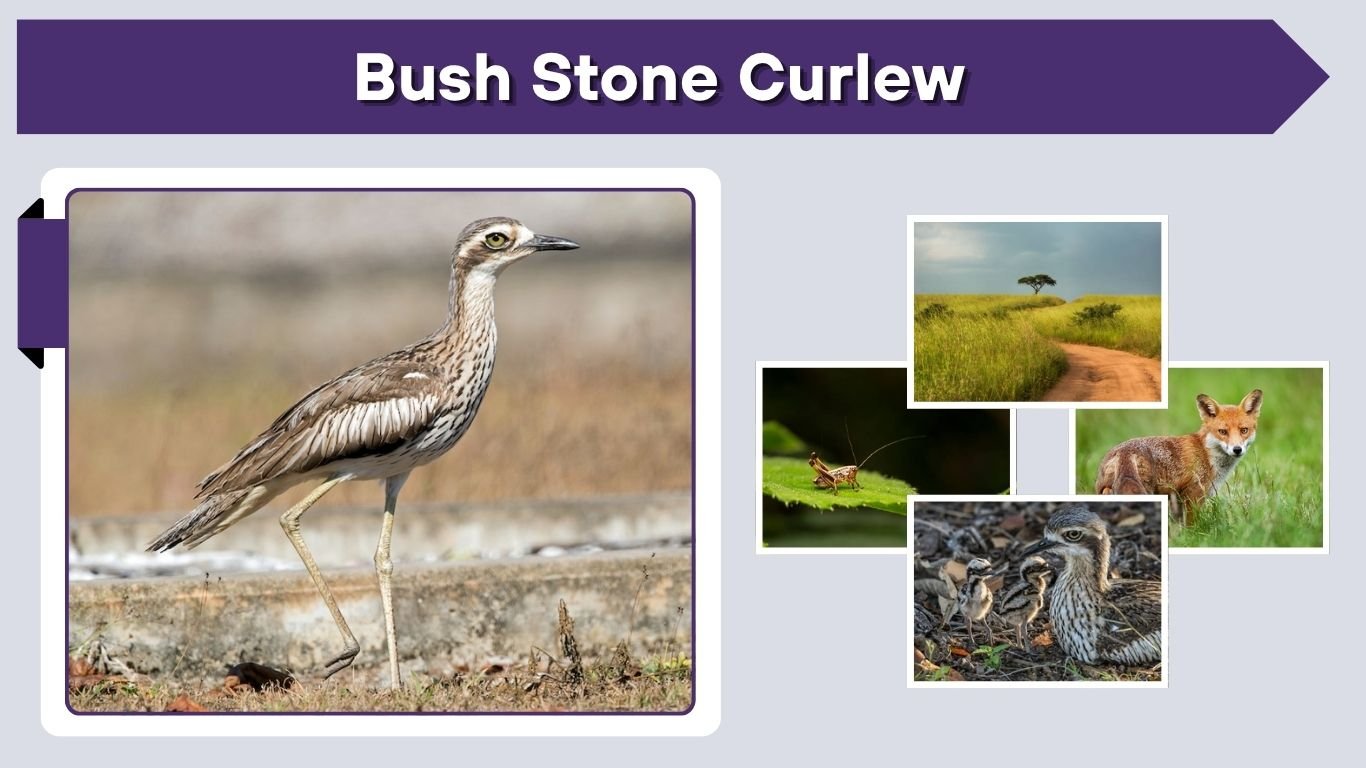
The bush stone curlew (Burhinus grallarius) is one of Australia’s most distinctive nocturnal birds. Also called the bush thick-knee, it has exceptionally long legs, large yellow eyes, cryptic brown plumage, and an unforgettable nighttime scream. Although it spends most of its time walking on the ground, the bush stone curlew can fly when necessary. These unusual birds inhabit woodlands, grasslands, parks, golf courses, and even suburban areas. Here is everything you need to know about their calls, diet, habitat, nests, chicks, behavior, and conservation.
What Is a Bush Stone Curlew?
The bush stone curlew is a large, mostly nocturnal, ground-dwelling bird belonging to the family Burhinidae. Despite its name, it is not one of the typical curlews belonging to the sandpiper family.
It spends much of the day standing motionless or resting among vegetation and leaf litter. After sunset, it becomes much more active and begins feeding and communicating.
Bush Stone Curlew Identification
You can recognize a bush stone curlew by these features:
- Approximately 52–58 cm long
- Very long yellowish or gray legs
- Large yellow eyes
- Prominent pale eyebrow
- Gray-brown upperparts
- Black and reddish-brown streaking
- Whitish underparts with darker streaks
- Short, dark bill
- Large rounded head
- Upright standing posture
Males and females look extremely similar, so distinguishing them visually can be difficult. Young birds resemble adults but tend to have paler, browner plumage.
Bush Stone Curlew Call and Sound
The call is probably the most famous characteristic of this Australian bird. It is loud, eerie, and surprisingly human-like, particularly when heard in darkness.
What Does a Bush Stone Curlew Sound Like?
Its characteristic call is often described as a drawn-out “weer-loo” or “wer-loooo.”
The call may begin relatively slowly before becoming louder and faster. Several birds sometimes call together, producing a dramatic chorus that can carry a considerable distance at night.
Why Do Bush Stone Curlews Scream at Night?
Bush stone curlews are naturally nocturnal, so nighttime is when much of their communication occurs.
They may call to:
- Maintain contact with a mate
- Communicate with family members
- Advertise territory
- Participate in courtship
- Respond to neighboring birds
- Warn or react to disturbances
Their call may sound alarming to someone hearing it for the first time, but screaming is normal behavior and does not necessarily mean the bird is injured.
Bush Stone Curlew Habitat

Bush stone curlews generally prefer relatively open habitats where they can walk easily across the ground while retaining enough vegetation for shelter and camouflage.
Where Do Bush Stone Curlews Live?
Typical habitats include:
- Open woodland
- Grassy woodland
- Grasslands
- Heathland
- Forest edges
- Parks
- Large gardens
- Golf courses
- Cemeteries
- Some suburban areas
Bush stone curlews are primarily Australian birds and occur across large areas of the mainland, although populations have declined substantially in parts of southeastern Australia.
They can still be relatively noticeable around places such as Queensland and the Northern Territory, including urban areas where suitable open ground remains.
Bush Stone Curlew Diet
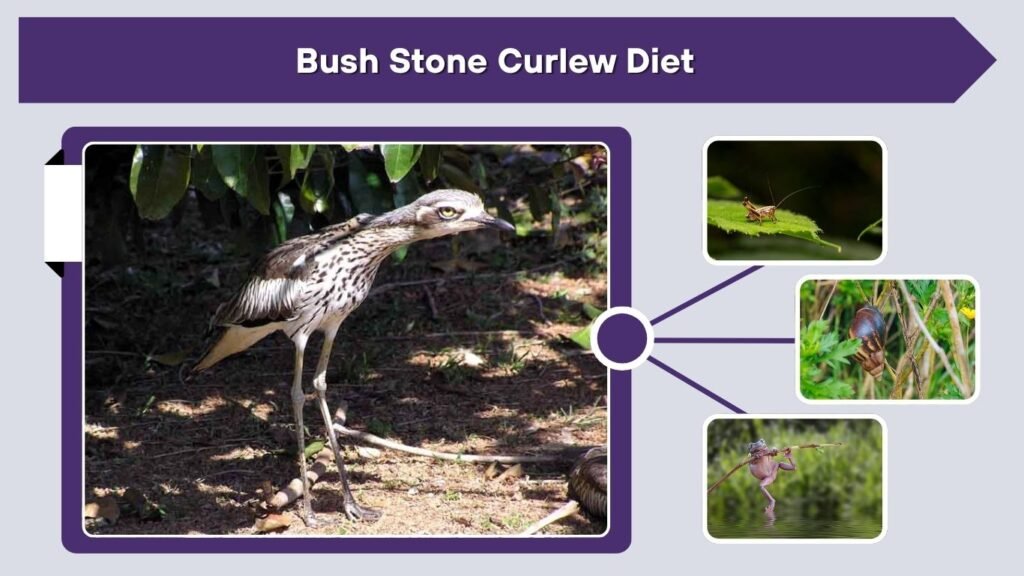
Bush stone curlews are opportunistic feeders. They walk slowly across the ground at night, searching leaf litter, grass, and exposed soil for prey.
What Do Bush Stone Curlews Eat?
Their diet can include:
- Insects
- Beetles and other invertebrates
- Molluscs
- Small lizards
- Frogs
- Small snakes
- Small mammals
- Seeds and other plant material
Most food is collected directly from the ground. During breeding, adults tend to forage reasonably close to their nesting area, while at other times they may travel farther in search of food.
Their nighttime feeding habits are supported by their unusually large eyes, which are well adapted for functioning under low-light conditions.
Bush Stone Curlew Nest and Eggs
Bush stone curlews do not construct elaborate tree nests. Their nesting strategy reflects their strongly terrestrial lifestyle.
Where Do Bush Stone Curlews Nest?
The nest is usually little more than a shallow scrape or bare patch on the ground.
A nesting area may occur among fallen branches, leaves, grass, or other natural materials that provide camouflage.
In some areas, birds also nest surprisingly close to human activity, including parks, large lawns, school grounds, golf courses, and suburban properties.
Bush Stone Curlew Eggs
A typical clutch contains around one to three eggs, although two eggs are common.
Both parents participate in incubation and later care for the chicks. The eggs are naturally camouflaged, helping them blend into the ground. BirdLife Australia reports a breeding season extending approximately from July to January.
Because nests are placed directly on the ground, eggs are vulnerable to predators, vehicles, mowing, domestic animals, trampling, and other disturbances.
Bush Stone Curlew Chicks
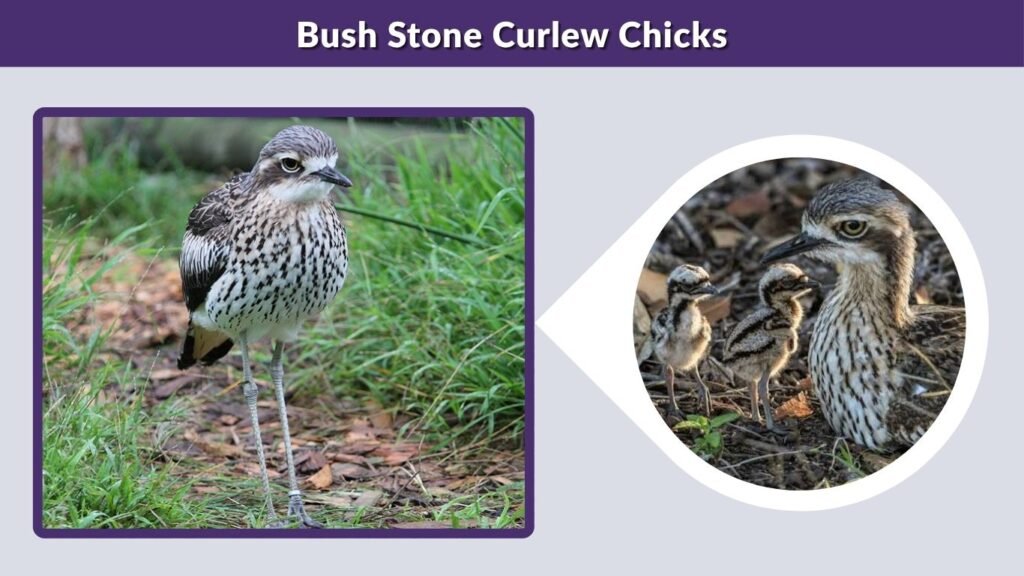
Baby bush stone curlews are well camouflaged and depend heavily on their parents during their first weeks of life.
What Do Baby Bush Stone Curlews Look Like?
Chicks have mottled brown and cream coloring that helps them disappear visually against leaves, soil, and dry grass.
Unlike helpless nestlings of many tree-nesting birds, bush stone curlew chicks are relatively mobile soon after hatching. Parents move them away from the original nest site and teach them where and how to find food.
Chicks remain unable to fly for several weeks, making camouflage particularly important. NSW environmental authorities report that young birds generally cannot fly until they are around nine weeks old.
If chicks are nearby, adults may become particularly alert and defensive.
Bush Stone Curlew Mating and Courtship
Courtship is another unusual part of bush stone curlew behavior.
Bush Stone Curlew Courtship Dance
During courtship, birds may:
- Spread their wings
- Raise their tails
- Stretch their necks forward
- Stamp their feet
- Call loudly
- Perform together for extended periods
The display can continue for a surprisingly long time and may become accompanied by increasingly loud vocalizations.
For people living near breeding pairs, nighttime calling may therefore become particularly noticeable during the breeding season.
Can Bush Stone Curlews Fly?
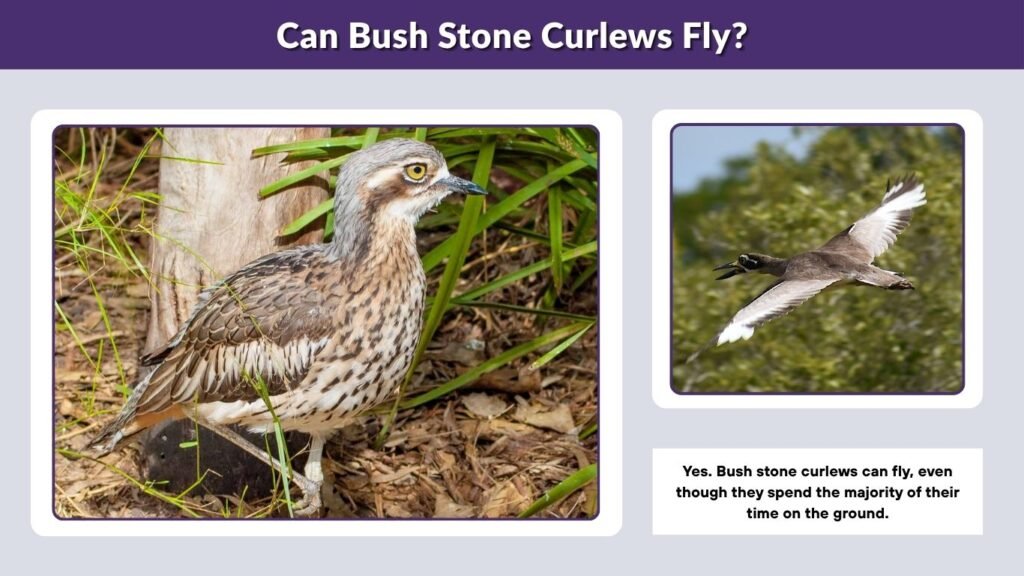
Yes. Bush stone curlews can fly, even though they spend the majority of their time on the ground.
Their long legs and ground-dwelling habits sometimes create the impression that they are flightless birds. However, they have fully developed wings and can fly to escape danger or move between locations.
When threatened, their first response may instead be to freeze motionless.
Their gray-brown plumage makes this remarkably effective because a stationary bird can blend almost completely into dry leaves and surrounding vegetation.
Do Bush Stone Curlews Attack People?
Bush stone curlews are not normally aggressive toward humans.
However, adults protecting eggs or chicks may become defensive if a person, dog, or other animal approaches too closely.
They can use warning calls, hissing, wing displays, or threatening body postures to encourage an intruder to move away.
If you encounter a breeding pair, giving the birds plenty of space is the safest approach. Dogs should be kept away from nests and chicks.
Are Bush Stone Curlews Endangered?
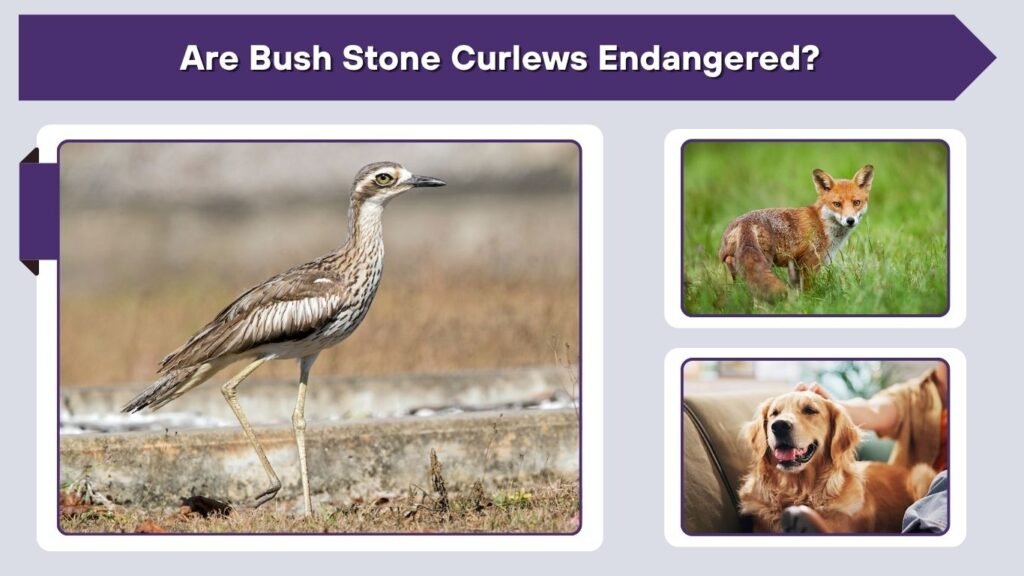
Their conservation status depends on the geographic scale being considered.
Globally, BirdLife lists the bush stone curlew as Least Concern, but this does not mean every Australian population is secure. The species has suffered serious regional declines, particularly in southeastern Australia.
In New South Wales, for example, the bush stone curlew is listed as endangered.
Major Threats
Important threats include:
- Habitat clearing
- Habitat fragmentation
- Fox predation
- Feral and domestic cats
- Dogs
- Loss of fallen timber and leaf litter
- Disturbance around nests
- Trampling of eggs
- Changes to woodland management
- Frequent fires in unsuitable areas
Ground nesting makes eggs and young birds especially vulnerable.
Interesting Bush Stone Curlew Facts
Bush stone curlews are unusual birds with several memorable characteristics:
- Scientific name: Burhinus grallarius
- Also known as the bush thick-knee
- Mostly active at night
- Famous for their eerie “weer-loo” calls
- Have unusually large yellow eyes
- Spend most of their lives on the ground
- Can fly despite their terrestrial lifestyle
- Males and females look similar
- Nest directly on the ground
- Both parents help care for chicks
- Perform elaborate courtship dances
- Use camouflage as an important defense
FAQs
Why Do Bush Stone Curlews Make Noise at Night?
They are nocturnal birds and use nighttime calls for communication, territorial behavior, courtship, and maintaining contact with partners or family members.
Can a Bush Stone Curlew Fly?
Yes. Bush stone curlews are capable fliers, although they usually spend most of their time walking or resting on the ground.
What Does a Bush Stone Curlew Eat?
They eat insects, molluscs, small reptiles, frogs, small mammals, seeds, and other food found while foraging on the ground.
Where Do Bush Stone Curlews Nest?
They normally nest on the ground in a shallow scrape or bare patch, often surrounded by leaves, grass, fallen branches, or other material that provides camouflage.
Are Bush Stone Curlews Dangerous?
No. They are generally not dangerous to people. Adults may display defensive behavior when protecting their eggs or chicks, so nesting birds should be given plenty of space.