
Some birds become most active when the sun goes down. These night-active birds use darkness to hunt, feed, call, and move safely through their habitats. Owls are the best-known nocturnal birds, but they are not the only ones. Nighthawks, nightjars, whip-poor-wills, and night herons also become active in low light. In this guide, you will learn about 12 common birds that are active at night, how to identify them, where they live, what they eat, and how they behave after dark.
1. Barn Owl
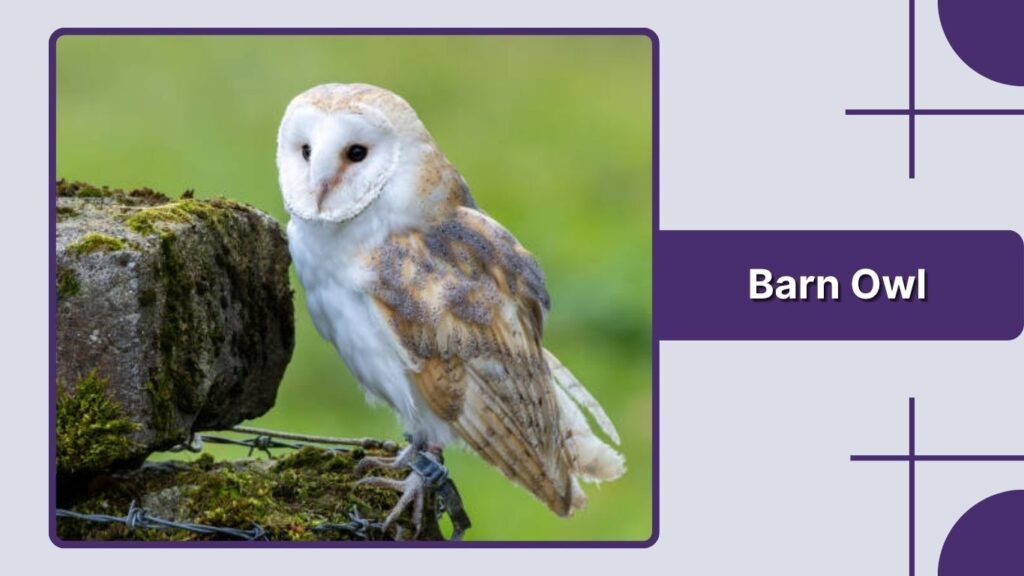
The Barn Owl is one of the most recognizable birds that is active at night. It is known for its pale heart-shaped face, silent flight, and ghostly appearance in open fields and farmland. This owl hunts mainly after sunset, using excellent hearing to find small animals in darkness.
Identification
- Pale, heart-shaped face
- White or light-colored underside
- Golden-brown back and wings
- Dark eyes
- Long legs compared with many other owls
- Soft, rounded wings for silent flight
- Often seen flying low over fields at night
Habitat
Barn Owls usually live in open habitats where they can hunt easily. They are often found around farmland, grasslands, marshes, meadows, and open countryside. They may also nest in barns, old buildings, tree cavities, cliffs, and nest boxes. Their name comes from their habit of using barns and farm structures as shelter.
Diet
Barn Owls mainly eat small mammals. Their common prey includes mice, rats, voles, shrews, and other small rodents. They are skilled night hunters and rely heavily on sound instead of sight. Their sharp hearing helps them locate prey even when it is hidden in grass or moving in darkness.
Night Behavior
Barn Owls are mostly nocturnal, which means they are most active at night. They often begin hunting around dusk and continue through the night. Their silent flight helps them approach prey without being heard. Instead of a typical hoot, Barn Owls often make a harsh screeching call, which can sound eerie at night.
2. Great Horned Owl
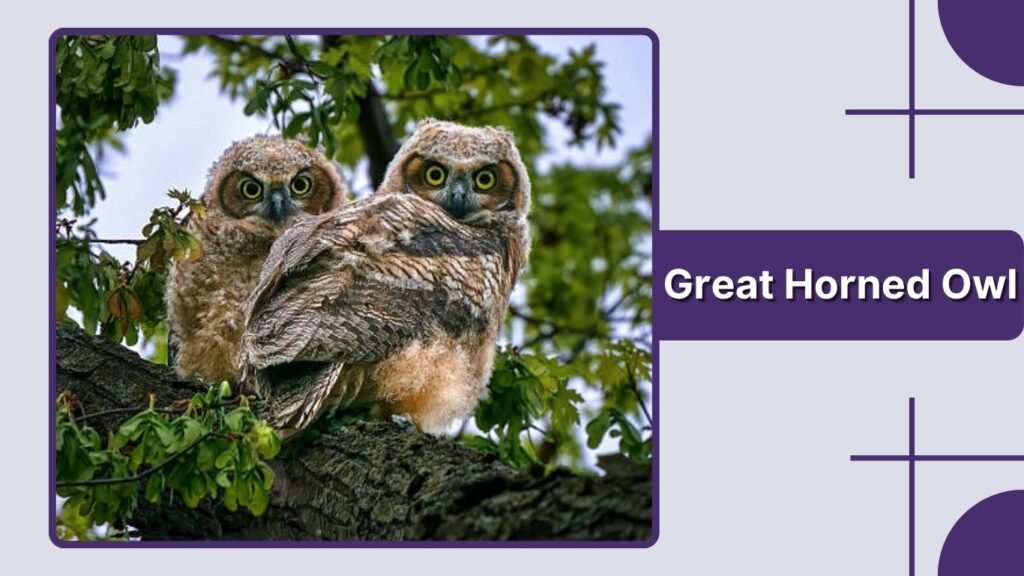
The Great Horned Owl is a powerful night bird known for its large body, deep hooting call, and ear-like feather tufts. It is one of the most widespread owls in North America and can live in forests, deserts, wetlands, parks, and suburban areas. At night, it becomes an active hunter with strong talons and sharp eyesight.
Identification
- Large owl with a strong body
- Prominent ear-like feather tufts
- Yellow eyes
- Brown, gray, and mottled feathers
- White patch on the throat
- Broad wings
- Deep hooting call
- Powerful talons
Habitat
Great Horned Owls can live in many different habitats. They are found in forests, open woodlands, deserts, grasslands, wetlands, city parks, and neighborhoods with large trees. They often use old nests made by hawks, crows, or other large birds instead of building their own nests.
Diet
Great Horned Owls are strong predators with a very wide diet. They eat rabbits, mice, rats, squirrels, skunks, snakes, frogs, insects, and other birds. Their powerful talons allow them to catch prey larger than many other owls can handle. They usually hunt from a perch and strike quickly.
Night Behavior
Great Horned Owls are mostly active at night, especially around dusk and before dawn. Their deep hoots are often heard after sunset. They use excellent vision and hearing to locate prey in darkness. During the day, they usually rest quietly in trees, where their mottled feathers help them blend in.
3. Eastern Screech-Owl
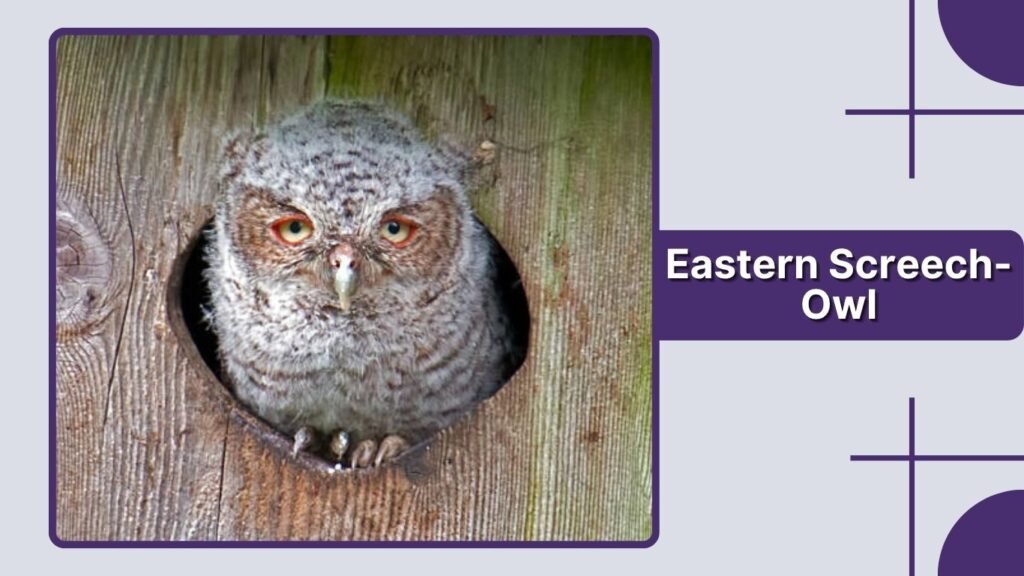
The Eastern Screech-Owl is a small nocturnal owl known for its compact body, ear-like feather tufts, and excellent camouflage. Despite its name, it does not always make a loud screech. This owl is active at night and often lives close to people in woodlands, parks, orchards, and suburban neighborhoods.
Identification
- Small owl with a rounded body
- Short ear-like feather tufts
- Yellow eyes
- Gray or reddish-brown color forms
- Streaked and mottled feathers
- Short tail
- Excellent tree-bark camouflage
- Small hooked beak
Habitat
Eastern Screech-Owls live in wooded areas with enough tree cavities for nesting and roosting. They are common in forests, parks, orchards, farms, and suburban yards with mature trees. They may also use nest boxes. During the day, they often hide in tree holes or sit close to trunks where their feathers blend with bark.
Diet
Eastern Screech-Owls eat a wide variety of prey. Their diet includes insects, mice, small birds, frogs, lizards, worms, and sometimes small fish or crayfish. Because they are small owls, they usually hunt smaller prey than larger owls. They often wait on a perch, then drop quickly onto food.
Night Behavior
Eastern Screech-Owls are mostly active after sunset. They hunt quietly from low branches and use sharp hearing and vision to find prey in darkness. Their calls include soft trills and whinny-like sounds. During daylight, they usually stay hidden and still, making them difficult to notice.
4. Barred Owl
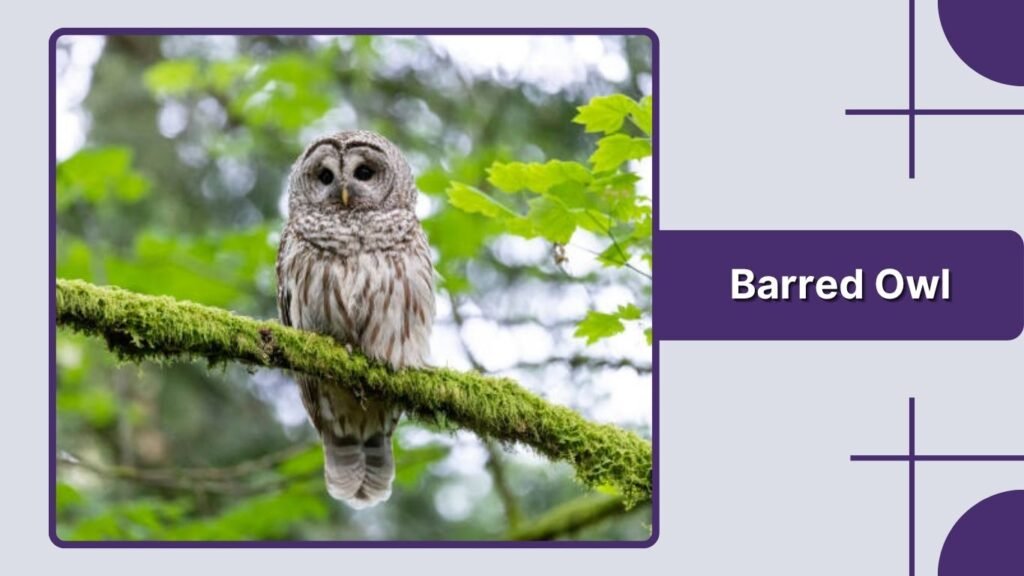
The Barred Owl is a medium-to-large owl known for its rounded head, dark eyes, and deep calling voice. It is active mostly at night and is often heard before it is seen. This owl prefers wooded habitats, especially mature forests near water, where it hunts small animals from quiet perches.
Identification
- Rounded head with no ear tufts
- Large dark eyes
- Brown and white barred pattern
- Pale face with dark rings around the eyes
- Streaked belly
- Broad rounded wings
- Medium-to-large body
- Deep “who-cooks-for-you” style call
Habitat
Barred Owls usually live in mature forests, wooded swamps, river bottoms, and areas with large trees. They prefer places with good cover and nearby water, but they can also live in wooded suburban areas. During the day, they often rest on tree branches where their brown and white feathers help them blend in.
Diet
Barred Owls eat many kinds of small animals. Their diet includes mice, voles, squirrels, rabbits, frogs, snakes, salamanders, fish, insects, and smaller birds. They usually hunt from a perch, watching and listening carefully before dropping down on prey. Their varied diet helps them survive in different wooded habitats.
Night Behavior
Barred Owls are mainly nocturnal, but they may sometimes call or move around during the day. At night, they hunt quietly through forests and wetlands. Their loud calls can carry through the woods and are often heard after sunset. They rely on strong hearing, sharp vision, and silent flight to catch prey.
5. Burrowing Owl
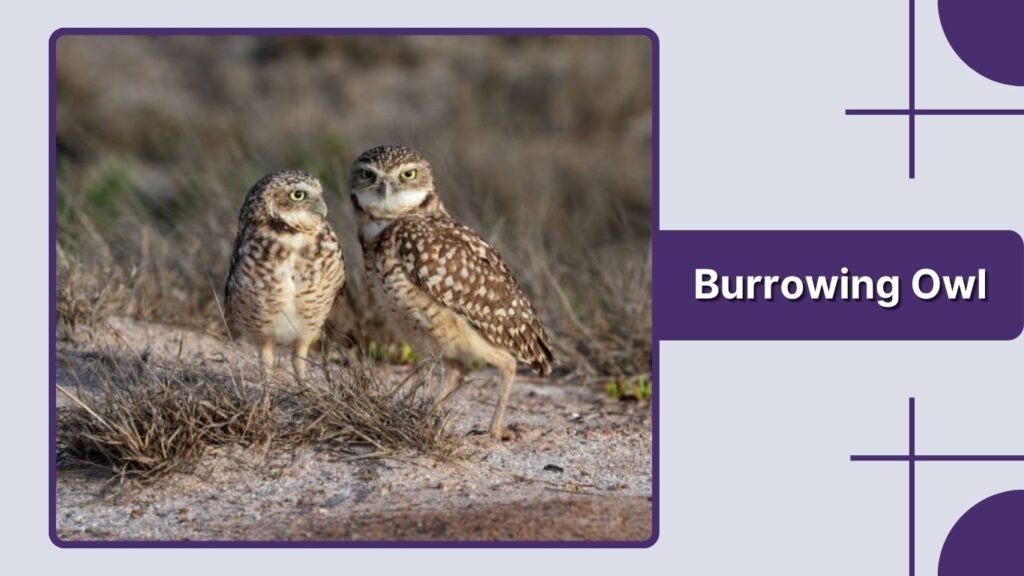
The Burrowing Owl is a small owl with long legs, bright eyes, and a habit of living close to the ground. Unlike many owls, it often spends time near open burrows and may be seen during the day. However, it can also be active at night, especially when hunting insects and small animals.
Identification
- Small owl with a rounded head
- Long legs
- Bright yellow eyes
- Brown feathers with white spots
- Pale underside with barring
- No obvious ear tufts
- Often stands upright near burrows
- Short tail and compact body
Habitat
Burrowing Owls live in open areas with short vegetation and available burrows. They are often found in grasslands, deserts, prairies, agricultural fields, and open scrublands. Instead of nesting in trees, they use underground burrows made by animals such as prairie dogs, ground squirrels, or tortoises.
Diet
Burrowing Owls eat insects, small mammals, reptiles, amphibians, and small birds. Insects such as beetles and grasshoppers are especially important in their diet. They may hunt from the ground, from low perches, or by running after prey. Their diet can change depending on season and location.
Night Behavior
Burrowing Owls are not strictly nocturnal because they may also be active during the day. Still, they often hunt at dusk, dawn, and nighttime. At night, they may catch insects and small animals near their burrows. Their ground-based lifestyle makes them different from many other night-active owls.
6. Tawny Owl
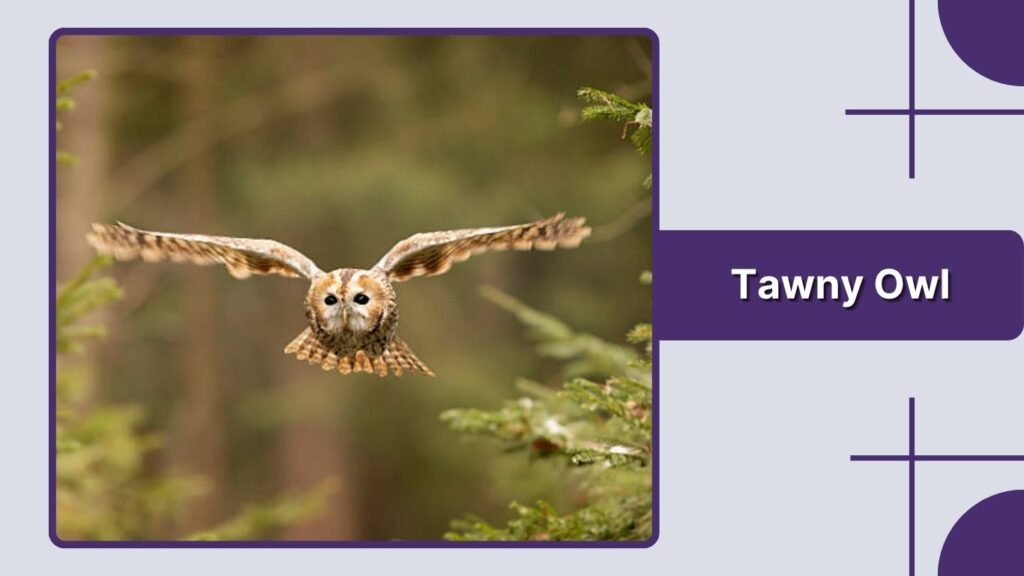
The Tawny Owl is a medium-sized night bird known for its rounded head, dark eyes, and classic owl call. It is mostly active after sunset and is often heard in woodlands, parks, and old gardens. This owl spends the day hidden in trees and comes out at night to hunt small animals.
Identification
- Medium-sized owl with a rounded body
- Large rounded head
- Dark eyes
- Brown, gray, or reddish-brown feathers
- Mottled pattern for camouflage
- No obvious ear tufts
- Broad wings
- Famous “twit-twoo” style call
Habitat
Tawny Owls usually live in woodlands with mature trees. They are also found in parks, large gardens, farmland with trees, and wooded suburban areas. They prefer places with tree cavities, old branches, or quiet roosting spots. During the day, they often stay hidden close to tree trunks.
Diet
Tawny Owls mainly eat small mammals such as mice, voles, rats, and shrews. They also eat small birds, frogs, insects, and worms when available. They usually hunt from a perch, waiting quietly before dropping down on prey. Their strong hearing helps them find animals moving in darkness.
Night Behavior
Tawny Owls are mostly nocturnal and become active after dusk. Their calls are often heard at night, especially during breeding season. They defend their territory with repeated hoots and may call back and forth with a mate. During the day, they usually remain still and hidden in trees.
7. Short-eared Owl
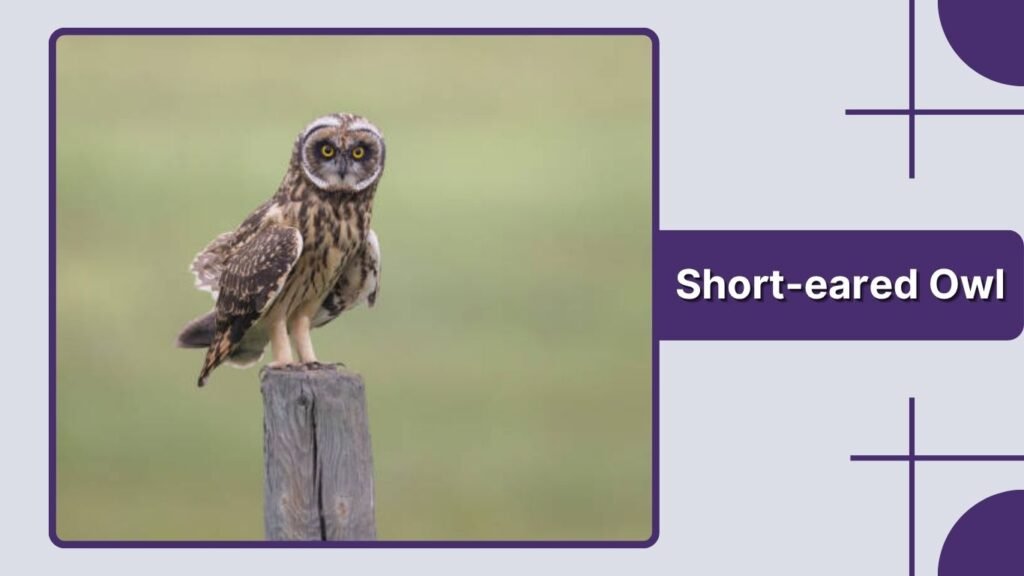
The Short-eared Owl is a medium-sized owl known for flying low over open fields and grasslands. It is active at night, but it may also hunt during daylight, especially around dawn and dusk. This owl has a rounded face, long wings, and very small ear tufts that are often hard to see.
Identification
- Medium-sized owl with long wings
- Small ear tufts that are often hidden
- Yellow eyes with dark patches around them
- Pale face with a rounded shape
- Brown, buff, and white mottled feathers
- Streaked chest and pale underside
- Flies low over fields with slow wingbeats
- Often seen in open country
Habitat
Short-eared Owls prefer open habitats rather than dense forests. They are often found in grasslands, marshes, prairies, tundra, dunes, and agricultural fields. They usually nest on the ground in areas with tall grass or low vegetation. Their open-country lifestyle makes them different from many tree-roosting owls.
Diet
Short-eared Owls mainly eat small mammals, especially voles and mice. They may also eat rats, shrews, small birds, and insects when available. Their diet depends on the prey found in open fields and wetlands. When vole numbers are high, Short-eared Owls may gather in good hunting areas.
Night Behavior
Short-eared Owls are most active around dusk, dawn, and nighttime. They hunt by flying low over open land while listening and watching for movement below. Their soft feathers help them fly quietly. Unlike many owls, they may also be seen hunting during the day, especially in winter or cloudy weather.
8. Long-eared Owl
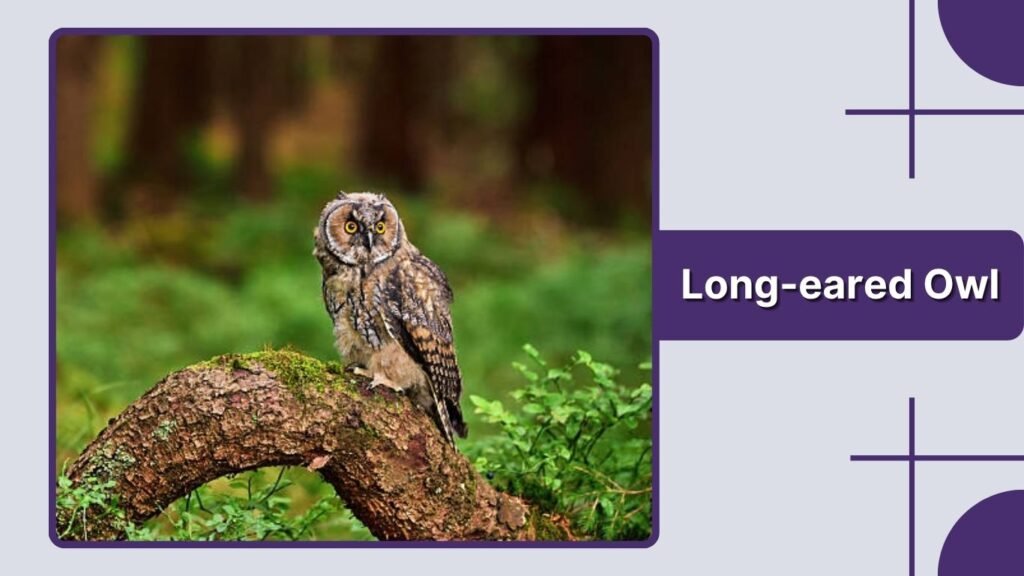
The Long-eared Owl is a slender, medium-sized owl known for its tall ear-like feather tufts and secretive nature. It is mostly active at night and is often difficult to see during the day because it roosts quietly in dense trees. This owl hunts mainly in open areas near woodlands.
Identification
- Medium-sized owl with a slim body
- Long ear-like feather tufts
- Orange or yellowish eyes
- Brown, buff, and gray mottled feathers
- Long wings
- Narrow face with a surprised expression
- Streaked underside
- Often roosts upright close to tree trunks
Habitat
Long-eared Owls usually live near a mix of wooded cover and open hunting areas. They often roost in dense conifer trees, shelterbelts, wooded edges, and thick groves. For hunting, they use nearby grasslands, fields, marsh edges, and open country where small mammals are easier to find.
Diet
Long-eared Owls mainly eat small mammals, especially mice and voles. They may also eat shrews, rats, small birds, and insects when available. They usually hunt by flying low over open ground and listening for prey. Their soft feathers allow them to move quietly through the night.
Night Behavior
Long-eared Owls are strongly nocturnal and usually become active after dark. During the day, they stay hidden in dense trees and may roost in groups during colder months. At night, they leave their roosts to hunt silently over fields and grasslands. Their calls are often soft, low, and repeated.
9. Common Nighthawk
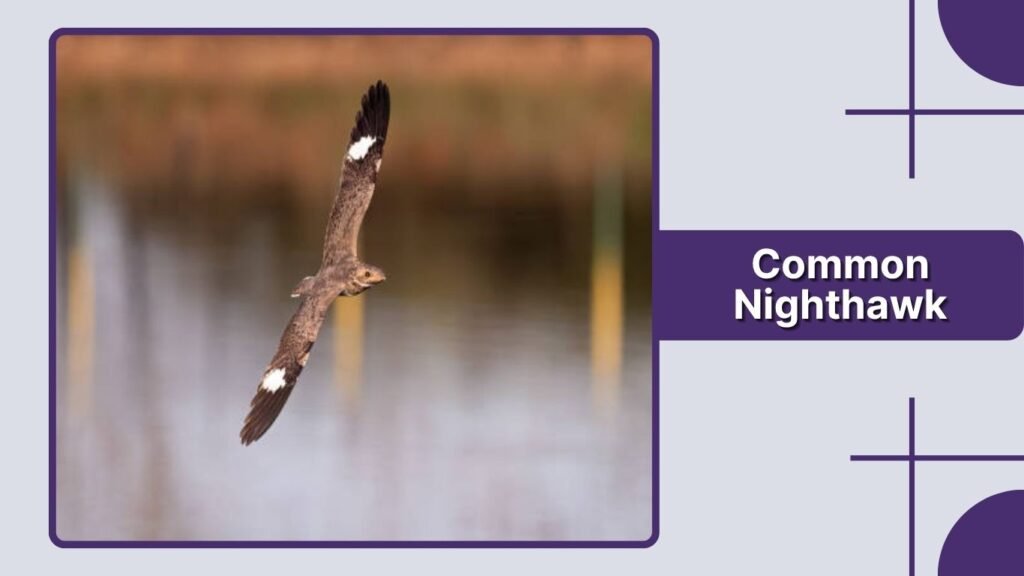
The Common Nighthawk is a night-active bird known for its long pointed wings, erratic flight, and habit of catching insects in the air. Although its name includes “hawk,” it is not a true hawk. It is most active around dusk, dawn, and nighttime, especially when flying insects are abundant.
Identification
- Medium-sized bird with long pointed wings
- Slim body and short bill
- Large mouth for catching insects
- Brown, gray, and black mottled feathers
- White patches on the wings
- White throat patch
- Erratic, bat-like flight
- Often seen flying high at dusk
Habitat
Common Nighthawks live in open and semi-open areas. They are found in grasslands, fields, forests, river areas, towns, and cities. They may nest on bare ground, gravel rooftops, open soil, or rocky areas. Their mottled feathers help them blend into flat surfaces during the day.
Diet
Common Nighthawks eat flying insects. Their diet includes moths, beetles, flies, mosquitoes, winged ants, and other insects caught in the air. They hunt by flying with wide-open mouths and scooping insects as they move. Their feeding style makes them useful for controlling nighttime insect populations.
Night Behavior
Common Nighthawks are most active during dusk and dawn, but they may also feed after dark when insects are available. They fly in looping, twisting patterns while hunting. During breeding season, males may perform diving displays that create a booming sound with their wings.
10. Chuck-will’s-widow
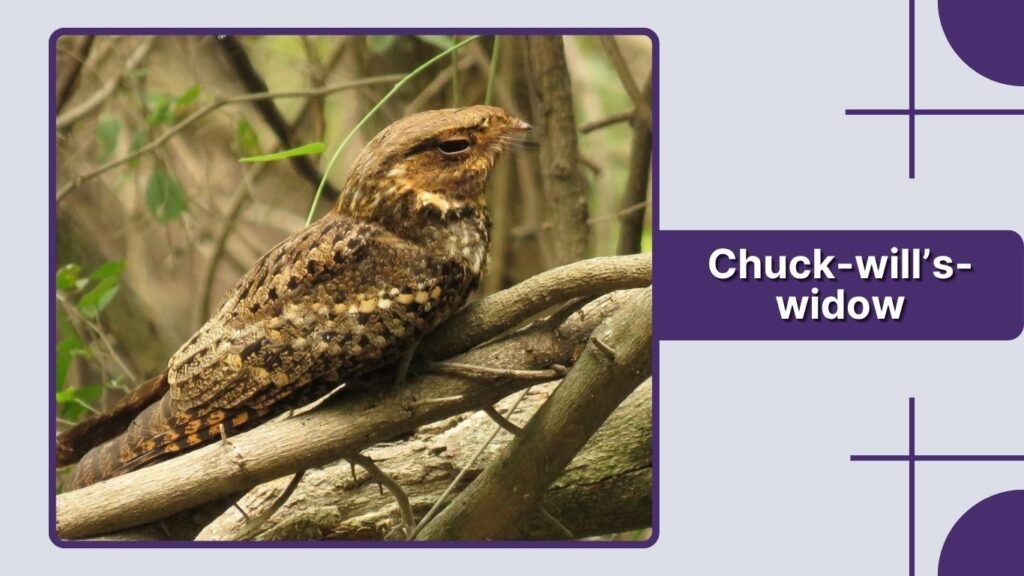
The Chuck-will’s-widow is a nocturnal bird known for its loud repeated call and excellent camouflage. It belongs to the nightjar family and is most active after sunset. This bird is often heard in warm woodlands and forest edges, but it can be hard to see because its brown mottled feathers blend with leaves and bark.
Identification
- Medium-to-large nightjar
- Brown, gray, and buff mottled feathers
- Large head and wide mouth
- Short bill
- Long wings
- Long rounded tail
- Camouflaged body pattern
- Loud “chuck-will’s-widow” call at night
Habitat
Chuck-will’s-widows usually live in dry woodlands, pine forests, forest edges, and open wooded areas. They prefer habitats with enough cover for resting during the day and enough open space for catching insects at night. During daylight, they often sit quietly on the ground or on low branches, where their camouflage keeps them hidden.
Diet
Chuck-will’s-widows mainly eat flying insects such as moths, beetles, and other night-active insects. They catch prey while flying with their mouths open. Because their mouth is wide, they can scoop insects from the air efficiently. They may also eat small birds or bats on rare occasions.
Night Behavior
Chuck-will’s-widows are most active at dusk, nighttime, and before dawn. Their repeated call is one of the easiest ways to notice them in the dark. They hunt by flying low or from open perches, catching insects in the air. During the day, they remain still and hidden, relying on camouflage rather than movement.
11. Eastern Whip-poor-will
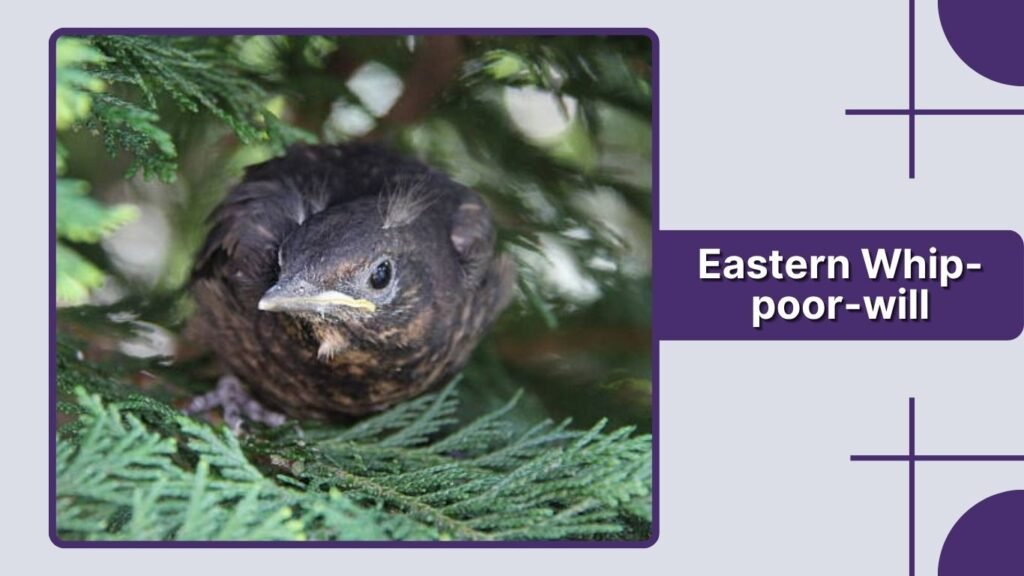
The Eastern Whip-poor-will is a nocturnal bird best known for its repeated nighttime call. It belongs to the nightjar family and is more often heard than seen. This bird has excellent camouflage, resting quietly on the ground or low branches during the day, then becoming active after sunset to hunt flying insects.
Identification
- Medium-sized nightjar
- Brown, gray, and black mottled feathers
- Large head and short bill
- Very wide mouth
- Long rounded tail
- Rounded wings
- Strong camouflage against leaves and bark
- Repeated “whip-poor-will” call at night
Habitat
Eastern Whip-poor-wills usually live in dry open woods, forest edges, pine barrens, and mixed woodland areas. They prefer places with both trees for cover and open spaces for hunting. During the day, they stay still on the forest floor or low branches, where their patterned feathers help them disappear into the background.
Diet
Eastern Whip-poor-wills mainly eat flying insects. Their diet includes moths, beetles, mosquitoes, flies, and other night-active insects. They hunt by flying from the ground or a low perch and catching insects in the air. Their wide mouth helps them scoop up prey while flying in darkness.
Night Behavior
Eastern Whip-poor-wills are most active at dusk, night, and just before dawn. Their loud repeated call is commonly heard during warm months, especially around breeding season. They often hunt in short flights, then return to a perch or the ground. During the day, they remain quiet and hidden.
12. Night Heron
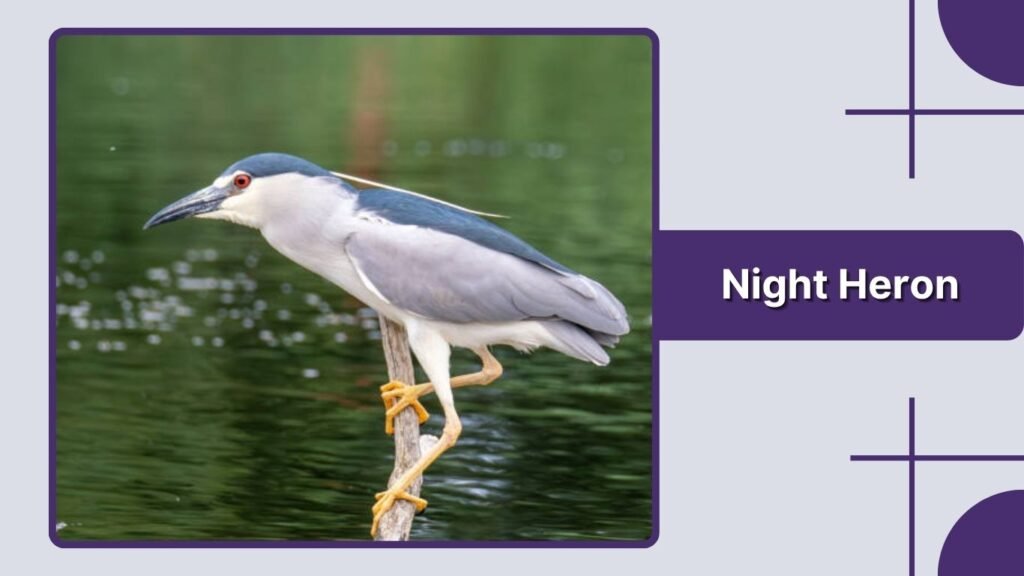
The Night Heron is a short, stocky wading bird that is often active in the evening, at night, and early in the morning. Unlike many daytime herons, it commonly feeds in low light. It is usually found near wetlands, ponds, lakes, rivers, marshes, and coastal areas where fish and other small aquatic animals are available.
Identification
- Short, stocky heron body
- Thick neck and large head
- Short legs compared with many herons
- Straight, pointed bill
- Gray, black, or brownish upperparts depending on species
- Pale underside
- Red or yellow eyes depending on species and age
- Often stands quietly near water at dusk or night
Habitat
Night Herons live around wet places with shallow water and good feeding areas. They are commonly found in marshes, swamps, ponds, lakes, rivers, mangroves, mudflats, and coastal wetlands. They may also appear near urban ponds or drainage areas if food is available. During the day, they often rest in trees or dense vegetation.
Diet
Night Herons mainly eat fish, frogs, insects, crustaceans, small reptiles, and other aquatic animals. They usually hunt by standing still near the water’s edge and waiting for prey to come close. Once the target is within reach, they strike quickly with their sharp bill. Their patient hunting style works well in darkness.
Night Behavior
Night Herons are most active during dusk, nighttime, and early morning. They often feed quietly while many other birds are resting. Their night activity helps them avoid competition with daytime herons. They may fly between roosting and feeding areas after sunset, sometimes giving rough calls as they move through the dark.
FAQs
What birds are most active at night?
Owls, nightjars, nighthawks, and night herons are some of the most common birds active at night. Barn Owls, Great Horned Owls, Eastern Screech-Owls, Common Nighthawks, Chuck-will’s-widows, and Eastern Whip-poor-wills are good examples.
Why are some birds active at night?
Some birds are active at night because they hunt nocturnal prey, avoid daytime competition, or use darkness for safety. Owls hunt rodents in low light, while nightjars and nighthawks feed on flying insects that are active after sunset.
Are all owls active at night?
Most owls are nocturnal, but not all owls are strictly active only at night. Some, such as Burrowing Owls and Short-eared Owls, may also be seen during the day, especially around dawn, dusk, or in open habitats.
What bird makes loud calls at night?
Several birds make loud calls at night. Great Horned Owls give deep hoots, Barred Owls make a “who-cooks-for-you” call, and Eastern Whip-poor-wills repeat their name-like call. Nightjars are often heard more than seen.
Do night birds see better in the dark?
Many night birds have excellent low-light vision, but they also rely on other senses. Owls, for example, use sharp hearing to locate prey in darkness. Nightjars use vision and wide mouths to catch flying insects at dusk and night.
