
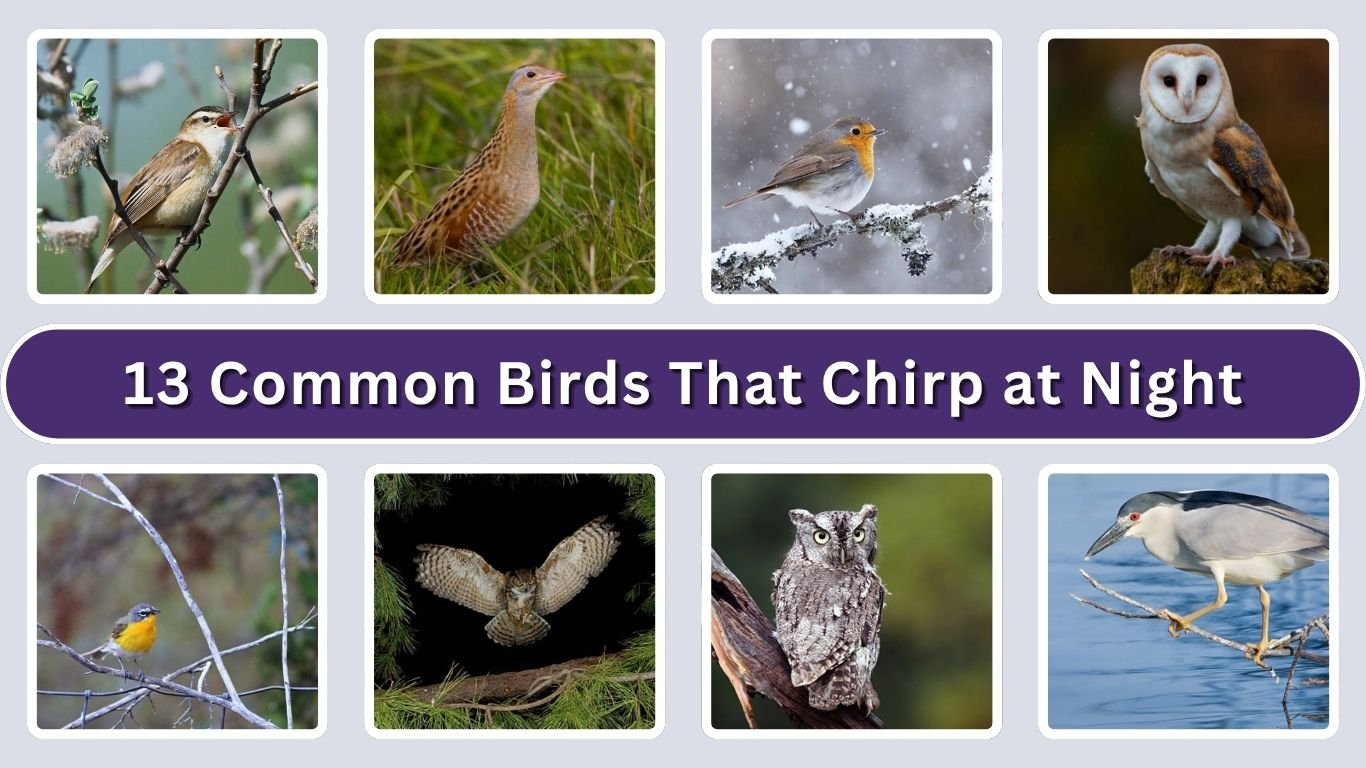
Birds that chirp at night create a unique and often mysterious soundscape, especially in quiet environments. While most birds are active during the day, certain species are known for their nighttime vocalizations, either due to their nocturnal nature or seasonal behaviors like mating and territory defense. These sounds can range from melodic songs to sharp calls and eerie hoots.
In this guide, we explore 13 common birds that chirp at night, highlighting their identification, habitat, behavior, and lifestyle. Understanding these birds can help you recognize nighttime sounds and appreciate the hidden world of nocturnal and crepuscular birdlife.
1. Nightingale
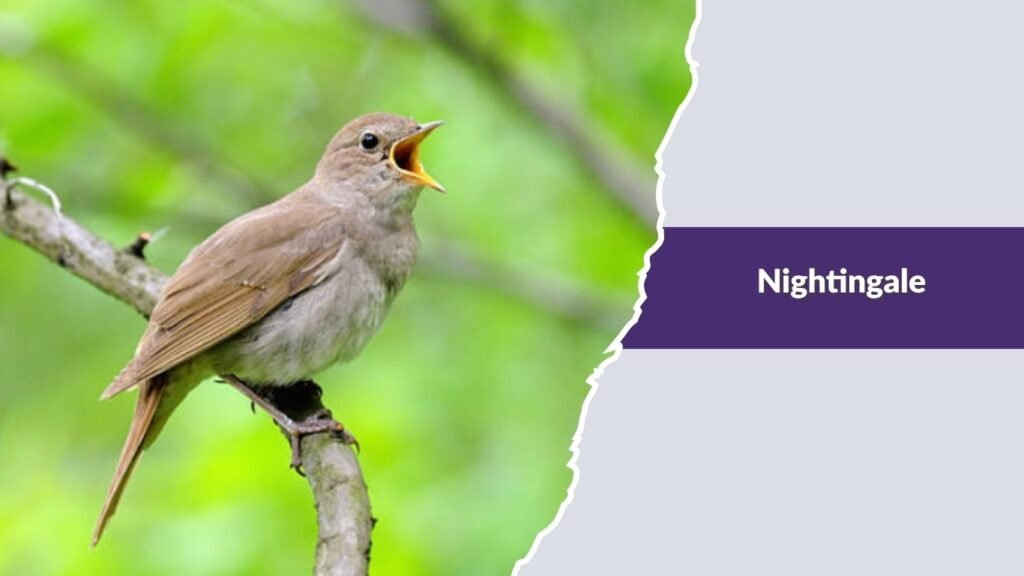
The Nightingale is one of the most famous songbirds in the world, celebrated for its powerful and melodious voice, especially at night. Found across Europe, Asia, and parts of Africa, this small bird is known for singing in darkness, often during the breeding season. Its rich and varied song has inspired poetry and music for centuries, making it a symbol of beauty and nature.
Identification
- Small, plain-looking bird with a slender body
- Warm brown upperparts and lighter, buff-colored underparts
- Reddish-brown tail, often slightly raised
- Large, dark eyes suited for low-light activity
- Thin, pointed bill for insect feeding
- Strong legs adapted for ground movement
- More often heard than seen due to its secretive nature
Habitat
The Nightingale prefers dense shrubs, thickets, woodland edges, and riverbanks where there is plenty of cover. It thrives in areas with thick undergrowth, which provides protection and nesting sites. During migration, it travels between Europe and Africa, selecting habitats with abundant food and shelter. Despite its loud song, it usually stays hidden within vegetation, making visual sightings less common.
Comparison
Compared to more colorful songbirds, the Nightingale appears quite plain, lacking bright feathers or bold markings. However, it stands out because of its exceptionally rich and complex song, especially at night. Unlike birds such as the Northern Mockingbird, which mimics other sounds, the Nightingale produces its own powerful and varied melodies, making it unique in vocal performance.
Diet and Lifespan
The Nightingale feeds mainly on insects such as beetles, ants, and flies, along with spiders and small larvae. It forages mostly on the ground or in low vegetation. During autumn, it may also consume berries to build energy for migration. Its average lifespan in the wild is around 2 to 5 years, though some individuals may live longer under favorable conditions.
2. Northern Mockingbird

The Northern Mockingbird is a well-known songbird famous for its ability to mimic the calls of other birds, animals, and even mechanical sounds. Found across North America, it is one of the most vocal birds, often singing both during the day and at night—especially during the breeding season. Its loud, repetitive, and varied songs make it easy to recognize even in the dark.
Identification
- Medium-sized bird with a slim body and long tail
- Gray upperparts and pale gray to white underparts
- White patches on wings, visible during flight
- Long legs and slightly curved bill
- Tail often held upright or flicked frequently
- Bright, alert eyes
- Active and confident behavior, often perching in open areas
Habitat
The Northern Mockingbird is highly adaptable and can be found in a wide range of environments, including urban areas, gardens, parks, farmland, and open woodlands. It prefers areas with scattered trees and shrubs where it can perch and sing. This species thrives near human settlements and is commonly seen in cities and suburban neighborhoods.
Comparison
Compared to the Nightingale, the Northern Mockingbird is more visible and less secretive. While the Nightingale is known for its original, melodious song, the mockingbird stands out for its mimicry skills, often copying dozens of other bird calls. Its gray coloration and bold behavior also make it easier to spot than the more camouflaged Nightingale.
Diet and Lifespan
The Northern Mockingbird has a varied diet that includes insects, fruits, and berries. It feeds on beetles, ants, and grasshoppers during warmer months and switches to fruits in colder seasons. It typically forages on the ground or in shrubs. Its average lifespan is around 8 years, though some individuals can live longer in safe environments.
3. Eastern Whip-poor-will
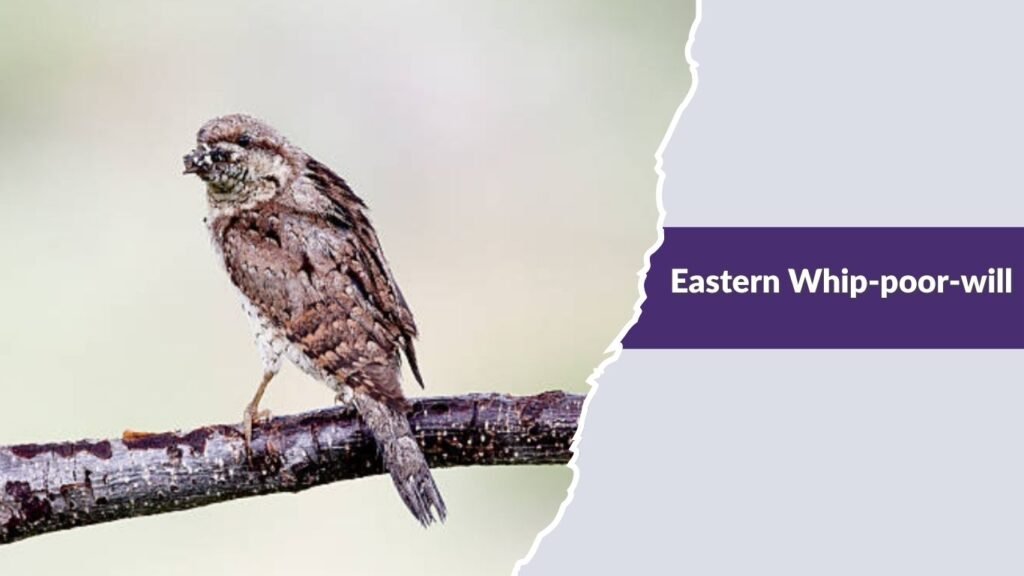
The Eastern Whip-poor-will is a nocturnal bird well known for its repetitive and haunting call, which sounds like its name. Found in eastern North America, this species is most active at night and during twilight hours. It is rarely seen due to its excellent camouflage and secretive behavior, but its constant calling makes it easy to identify by sound.
Identification
- Medium-sized bird with a compact body
- Mottled gray, brown, and black plumage for camouflage
- Large head with a short bill and wide mouth
- Big, dark eyes adapted for night vision
- Rounded wings and a relatively short tail
- Often remains motionless on the ground or low branches
- Blends perfectly with leaf litter and forest floor
Habitat
The Eastern Whip-poor-will prefers open woodlands, forest edges, and areas with scattered trees and clearings. It is commonly found in dry deciduous forests and mixed woodlands. During the day, it rests on the ground or on low branches, relying on camouflage. It avoids dense forests and heavily urbanized areas, favoring quiet, undisturbed habitats with plenty of insects.
Comparison
Compared to the Northern Mockingbird, the Eastern Whip-poor-will is far more secretive and almost entirely nocturnal. While the mockingbird is active and visible, this species is rarely seen and is better identified by its distinctive call. It also lacks the bright wing markings and upright posture of the mockingbird, appearing more camouflaged and ground-oriented.
Diet and Lifespan
The Eastern Whip-poor-will feeds mainly on flying insects such as moths, beetles, and flies, which it catches in flight at night. It hunts from perches or low flights through wooded areas. Like many nightjars, it does not build a nest and lays eggs directly on the ground. Its average lifespan is around 4 to 7 years in the wild, depending on environmental conditions.
4. Chuck-will’s-widow
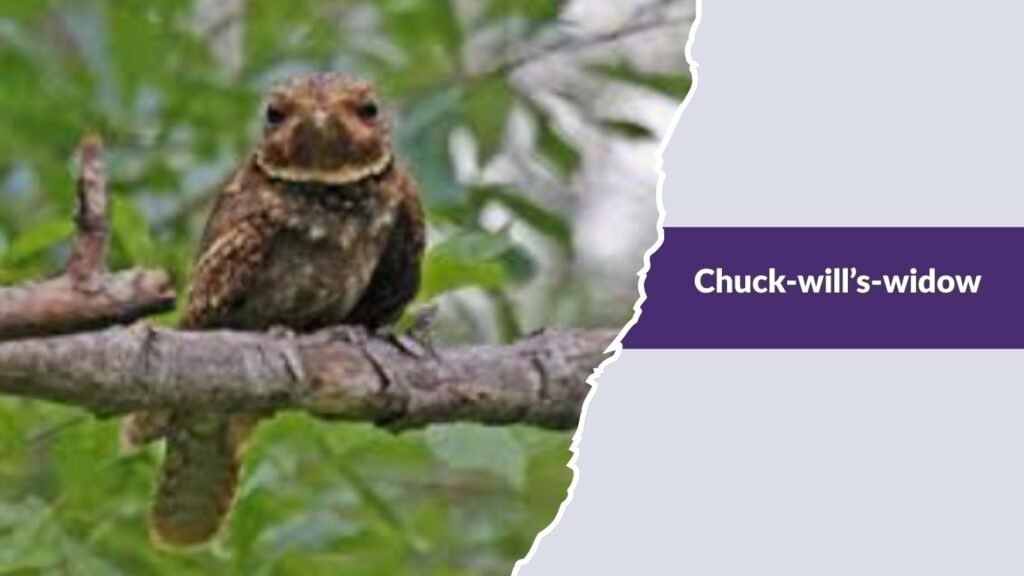
The Chuck-will’s-widow is a nocturnal bird known for its deep, repetitive call that echoes through forests at night. Found mainly in the southeastern United States, it is one of the largest nightjars in North America. Like other night birds, it is more often heard than seen due to its excellent camouflage and secretive nature. Its name comes directly from its distinctive nighttime song.
Identification
- Large nightjar with a broad body and long wings
- Mottled gray, brown, and black plumage for camouflage
- Large head with a short bill and very wide mouth
- Big, dark eyes adapted for night vision
- Rounded wings and a long tail
- Often rests on the ground or low branches
- Appearance blends well with leaf litter and forest floor
Habitat
The Chuck-will’s-widow prefers open woodlands, pine forests, and forest edges with sandy or dry soil. It is commonly found in warm, subtropical regions with scattered trees and clearings. During the day, it rests quietly on the ground or on low perches, relying on camouflage to remain hidden. It tends to avoid dense forests and highly urbanized areas.
Comparison
Compared to the Eastern Whip-poor-will, the Chuck-will’s-widow is larger and has a deeper, slower call. While both species are nocturnal and similarly camouflaged, this bird is bulkier and less frequently heard in northern regions. Its call is also more spaced out and less rapid, making it distinguishable by sound.
Diet and Lifespan
This species feeds mainly on flying insects such as moths, beetles, and grasshoppers, catching them in flight at night. It may also consume larger prey compared to smaller nightjars. Like others in its family, it does not build a nest and lays eggs directly on the ground. Its average lifespan is around 5 to 8 years in the wild.
5. Common Nighthawk

The Common Nighthawk is a crepuscular bird known for its sharp calls and aerial feeding behavior, often heard during dusk and sometimes at night. Found across North and South America, it is commonly seen flying over cities, fields, and open landscapes. Its nasal “peent” call and booming sound during dives make it recognizable even in low light.
Identification
- Medium-sized bird with long, pointed wings
- Gray-brown mottled plumage for camouflage
- Distinct white bar across each wing
- Slightly notched tail; males may show a white band
- Small bill with a wide mouth for catching insects
- Large eyes adapted for low-light activity
- Erratic, bat-like flight pattern
Habitat
The Common Nighthawk prefers open habitats such as grasslands, deserts, forest edges, and urban areas. It is often seen flying over rooftops and city skies, especially during summer evenings. It nests on flat surfaces like gravel rooftops or bare ground, avoiding dense forests.
Comparison
Compared to the Eastern Whip-poor-will, the Common Nighthawk is more aerial and active during twilight rather than deep night. It has more visible wing markings and a more erratic flight pattern, while the whip-poor-will is more ground-oriented and rarely seen flying high.
Diet and Lifespan
It feeds mainly on flying insects such as moths, beetles, and mosquitoes, catching them mid-air. The species does not build a nest and lays eggs directly on the ground or flat surfaces. Its average lifespan is around 4 to 6 years, though some individuals may live longer.
6. Black-crowned Night Heron
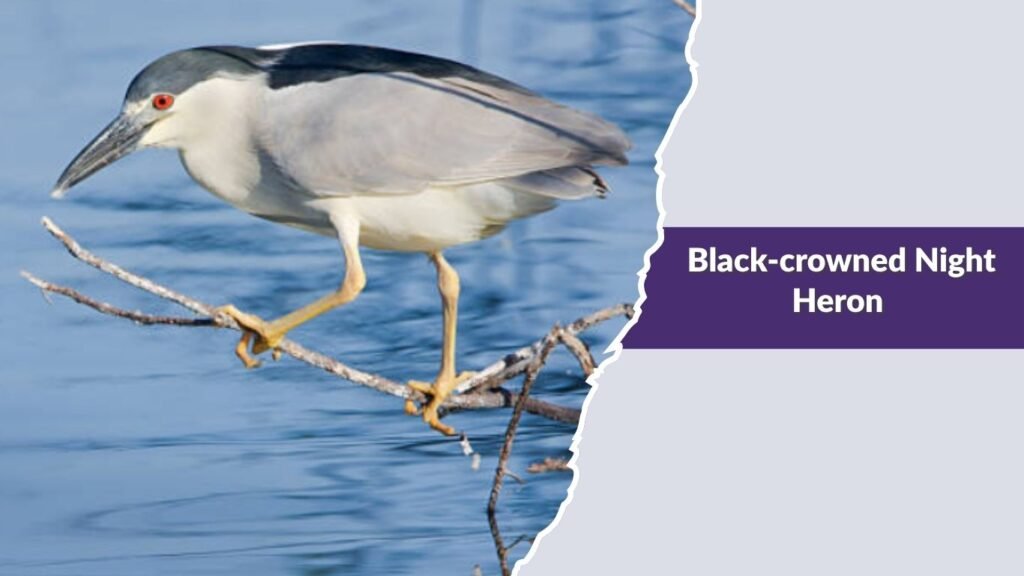
The Black-crowned Night Heron is a stocky, nocturnal bird commonly found near water bodies. Unlike many other birds that chirp at night, this species produces harsh, croaking calls after dark. It is widely distributed across many parts of the world and is often seen standing still near water, waiting to catch prey. Its quiet, patient hunting style and nighttime activity make it a unique member of this list.
Identification
- Medium-sized heron with a compact, stocky body
- Black crown and back contrasting with gray wings
- White or pale underparts
- Red eyes that are especially noticeable at night
- Short neck compared to other herons
- Thick, pointed bill for catching prey
- Often seen standing still or flying slowly
Habitat
The Black-crowned Night Heron prefers wetlands such as lakes, rivers, marshes, ponds, and coastal areas. It is commonly found near both freshwater and saltwater environments. During the day, it roosts in trees or dense vegetation, becoming active at dusk. It adapts well to urban areas and can often be found near city water bodies and parks.
Comparison
Compared to the Common Nighthawk, the Black-crowned Night Heron is much heavier and less agile in flight. While the nighthawk feeds on insects in the air, this heron hunts fish and other aquatic prey. It is also more visually noticeable due to its contrasting colors and upright posture.
Diet and Lifespan
This species feeds on fish, frogs, insects, and small aquatic animals, hunting mostly at night or during twilight. It uses a sit-and-wait strategy, striking quickly when prey comes close. The Black-crowned Night Heron builds nests in trees or shrubs, often in colonies. Its average lifespan is around 10 to 15 years in the wild.
7. Barn Owl
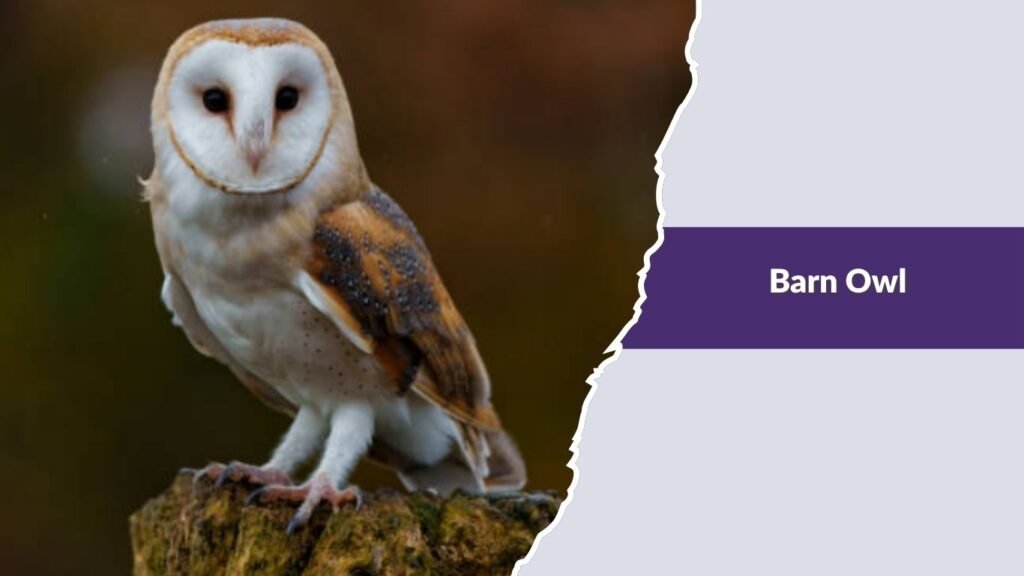
The Barn Owl is a well-known nocturnal bird recognized for its eerie screeches rather than typical chirping. Found across much of the world, it is highly active at night and often associated with open countryside and farmland. Its silent flight and ghost-like appearance make it one of the most distinctive night birds. It plays an important role in controlling rodent populations.
Identification
- Medium-sized owl with a slender body
- Heart-shaped, pale white facial disc
- Golden-brown upperparts with gray and white speckles
- White to light-colored underparts
- Long wings and short tail
- Dark eyes set in a distinctive face
- Silent, smooth flight
Habitat
The Barn Owl prefers open habitats such as farmland, grasslands, marshes, and rural areas. It is often found near barns, old buildings, and tree cavities where it can roost and nest. This species avoids dense forests and thrives in areas with open space for hunting. It is commonly seen in agricultural landscapes where prey is abundant.
Comparison
Compared to the Black-crowned Night Heron, the Barn Owl is more adapted for aerial hunting and has a completely different diet. While the heron hunts near water, the owl hunts over land. It is also more silent in flight and relies heavily on hearing rather than sight alone.
Diet and Lifespan
The Barn Owl feeds mainly on small mammals such as mice, rats, and voles. It hunts at night using its exceptional hearing to locate prey. Unlike many birds on this list, it builds nests in cavities or structures. Its average lifespan in the wild is around 4 to 10 years, though some individuals live longer.
8. Eastern Screech Owl
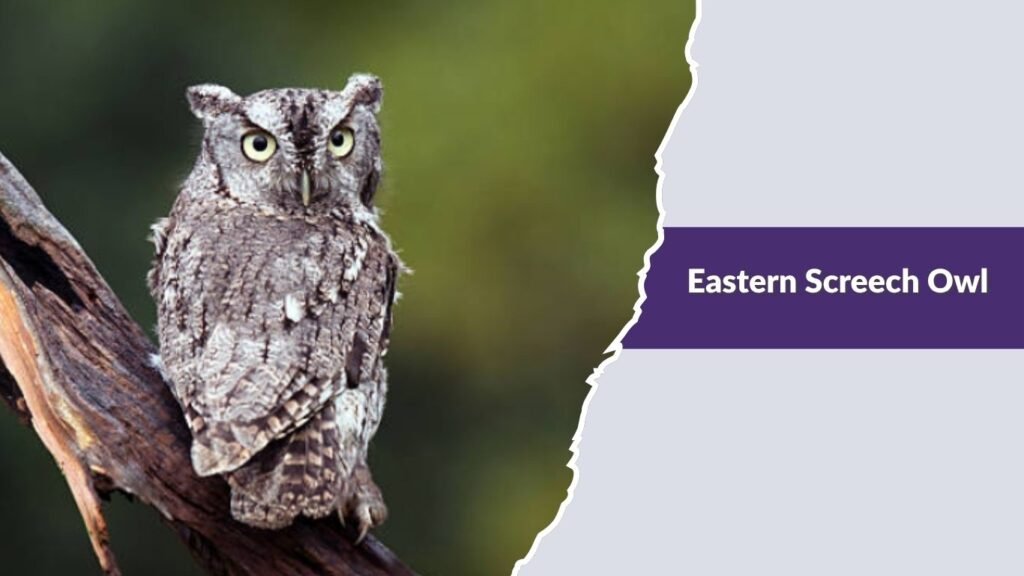
The Eastern Screech Owl is a small, adaptable owl commonly found in eastern North America. Despite its name, it does not truly “screech” often but produces soft trills and whinnies that can be heard at night. It is highly active after dark and is well known for living close to human habitats, including parks and suburban areas.
Identification
- Small owl with a compact, rounded body
- Gray or reddish-brown plumage (color varies by individual)
- Prominent ear tufts on the head
- Yellow eyes with a sharp, alert expression
- Short, hooked bill
- Well-camouflaged feather pattern resembling tree bark
- Perches upright and remains still during the day
Habitat
The Eastern Screech Owl prefers woodlands, forest edges, orchards, and suburban areas with mature trees. It is highly adaptable and often lives close to humans, nesting in tree cavities, nest boxes, or abandoned woodpecker holes. It avoids dense, unbroken forests, favoring areas with open spaces for hunting.
Comparison
Compared to the Barn Owl, the Eastern Screech Owl is much smaller and has ear tufts, which the Barn Owl lacks. Its calls are softer and more musical, unlike the harsh screeches of the Barn Owl. It is also more commonly found in wooded and suburban environments.
Diet and Lifespan
This owl feeds on a variety of prey, including insects, small mammals, birds, and even amphibians. It hunts at night, swooping down silently from perches. It nests in cavities rather than building its own nest. The average lifespan is around 8 to 10 years in the wild, depending on environmental conditions.
9. Great Horned Owl
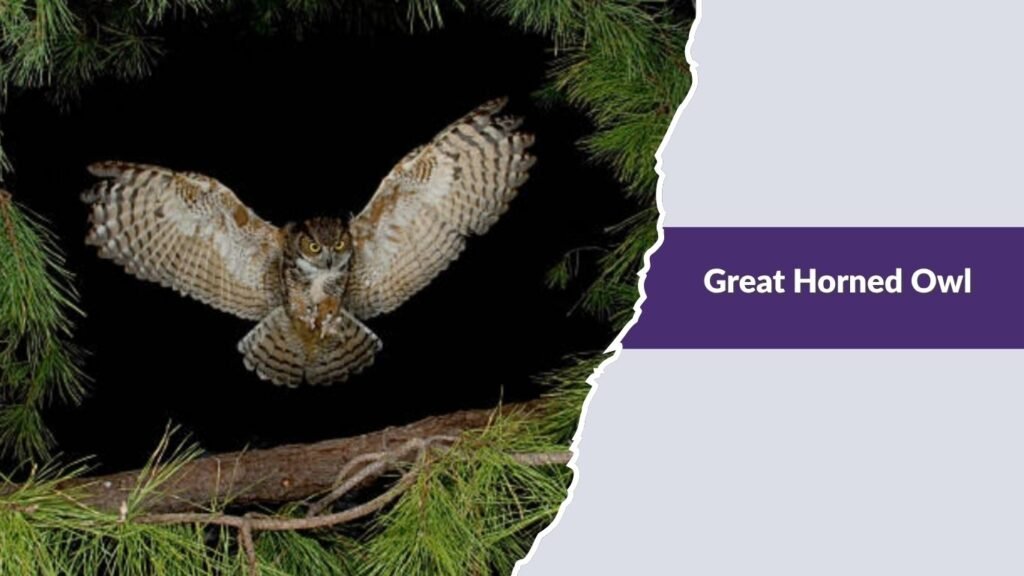
The Great Horned Owl is a powerful and widespread nocturnal bird known for its deep hooting calls heard at night. Found throughout the Americas, it is one of the most adaptable and recognizable owls. Its strong presence and haunting आवाज make it a dominant predator in many ecosystems. It is active mainly after sunset, often calling to mark territory.
Identification
- Large, bulky owl with a broad wingspan
- Prominent ear tufts that resemble “horns”
- Mottled brown, gray, and black plumage
- White throat patch, often visible when calling
- Large yellow eyes with a fierce expression
- Strong, hooked bill
- Silent, powerful flight
Habitat
The Great Horned Owl lives in a wide variety of habitats, including forests, deserts, wetlands, grasslands, and even urban areas. It is highly adaptable and can be found in both remote wilderness and near human settlements. It typically roosts in trees during the day and becomes active at night for hunting.
Comparison
Compared to the Eastern Screech Owl, the Great Horned Owl is much larger and more powerful. It has stronger talons and can take down bigger prey. Its hooting call is deeper and more resonant, while the screech owl produces softer, higher-pitched sounds. It is also more dominant in its habitat.
Diet and Lifespan
This owl has a very diverse diet, feeding on small mammals, birds, reptiles, and even other owls. It hunts at night using its sharp vision and silent flight. Unlike many birds, it often uses abandoned nests of other species. Its lifespan in the wild is typically around 10 to 15 years, though some may live longer.
10. European Robin

The European Robin is a small and familiar songbird known for its bright orange-red breast and sweet, melodious song. Unlike many birds, it often sings at night, especially in urban areas with artificial lighting. Found across Europe and parts of Asia, it is a bold and curious bird, frequently seen close to humans.
Identification
- Small, round-bodied bird
- Bright orange-red face and breast
- Brown upperparts and lighter underparts
- Thin, pointed bill for insect feeding
- Large, dark eyes
- Upright posture with a slightly puffed appearance
- Often seen alone rather than in groups
Habitat
The European Robin prefers woodlands, gardens, parks, and hedgerows. It adapts very well to human environments and is commonly found in urban and suburban areas. It favors places with dense shrubs for cover and open ground for feeding. Artificial lighting in cities often encourages it to sing at night.
Comparison
Compared to the Great Horned Owl, the European Robin is much smaller and completely different in behavior. While the owl is a silent predator, the robin is an active songbird. Its night singing is more melodic and continuous, unlike the deep hooting of owls.
Diet and Lifespan
The European Robin feeds on insects, worms, and small invertebrates, often foraging on the ground. It may also eat fruits and berries during colder months. It builds nests in sheltered spots such as bushes or crevices. Its average lifespan is around 2 to 5 years in the wild.
11. Yellow-breasted Chat
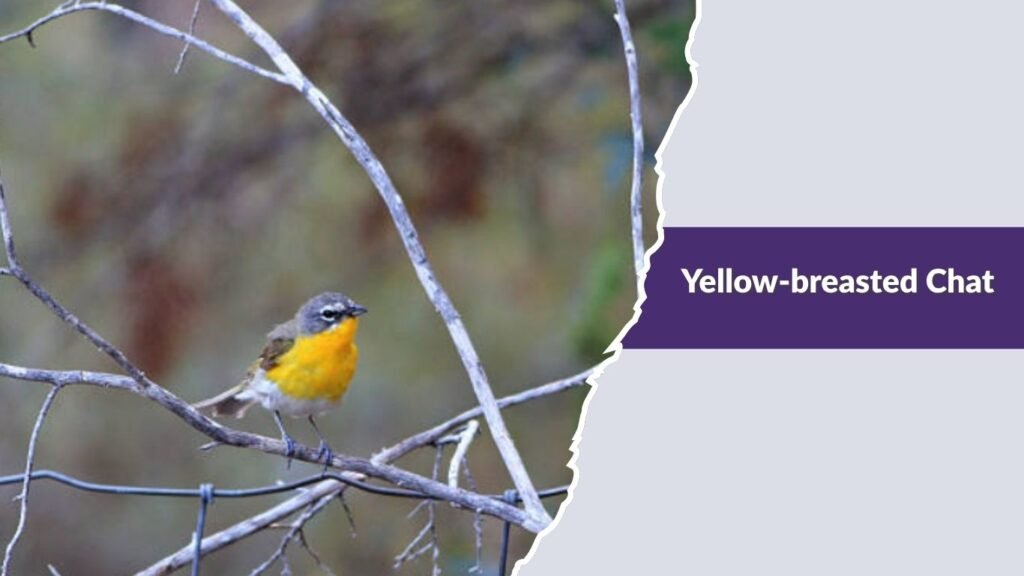
The Yellow-breasted Chat is a unique and highly vocal bird found in North America, especially known for its strange mix of whistles, cackles, and chirps often heard at night. It is more often heard than seen due to its secretive nature and dense habitat. During the breeding season, males may sing both day and night to defend territory and attract mates.
Identification
- Medium-sized bird with a thick body
- Bright yellow throat and breast
- Olive-green upperparts and white belly
- Distinct white “spectacles” around the eyes
- Thick, slightly curved bill
- Long tail, often held at an angle
- Usually stays hidden in dense vegetation
Habitat
The Yellow-breasted Chat prefers dense shrubs, thickets, forest edges, and overgrown fields. It is commonly found in areas with thick vegetation where it can stay concealed. This species avoids open spaces and is rarely seen in urban environments. It relies heavily on cover for both feeding and nesting.
Comparison
Compared to the European Robin, the Yellow-breasted Chat is more secretive and less likely to be seen in open areas. Its vocalizations are also very different—rather than a smooth, melodic song, it produces a mix of unusual and varied sounds. It is also larger and has brighter yellow coloring.
Diet and Lifespan
This bird feeds on insects such as beetles, caterpillars, and grasshoppers, as well as berries and small fruits. It forages within dense vegetation rather than on open ground. It builds a cup-shaped nest hidden in shrubs. Its average lifespan is around 5 to 8 years in the wild.
12. Corncrake
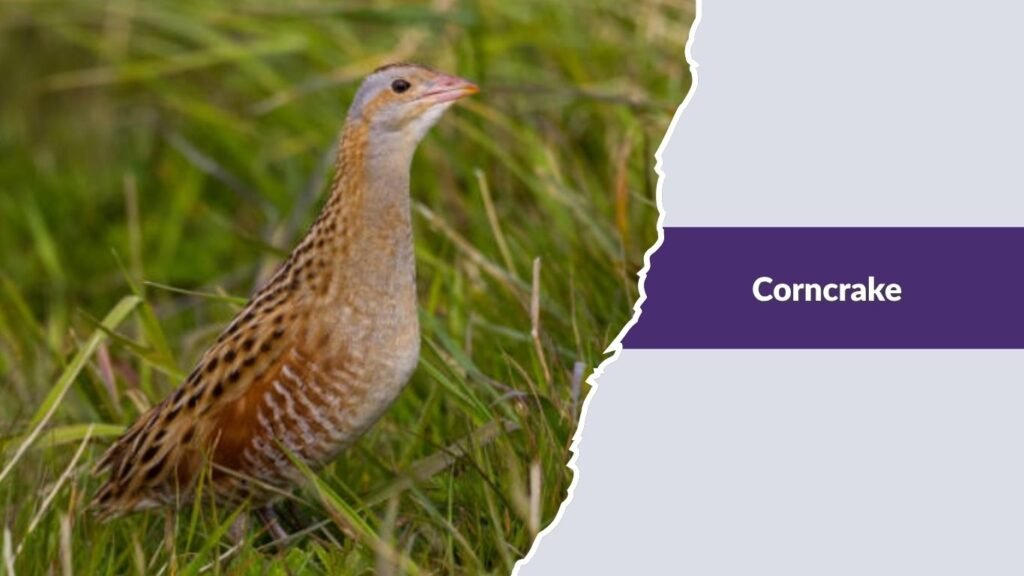
The Corncrake is a secretive bird known for its harsh, repetitive nighttime call, often heard in grasslands and meadows. Found across Europe and parts of Asia, it is rarely seen due to its shy nature and preference for staying hidden in tall vegetation. Its rasping “crek-crek” sound is a familiar night call in rural areas during the breeding season.
Identification
- Medium-sized bird with a slender body
- Brown and buff streaked plumage for camouflage
- Grayish face and chest
- Short, strong bill
- Long legs adapted for walking through grass
- Rounded wings and short tail
- Rarely seen flying; prefers to run through vegetation
Habitat
The Corncrake inhabits tall grasslands, meadows, farmland, and marshy areas. It prefers dense vegetation where it can remain hidden from predators. This species is strongly associated with traditional farmland and is often found in areas with low-intensity agriculture. It migrates to Africa during the winter months.
Comparison
Compared to the Yellow-breasted Chat, the Corncrake is far more secretive and ground-dwelling. While the chat sings from within shrubs, the Corncrake usually calls from deep within tall grass. Its call is also harsher and more mechanical, lacking the varied tones of the chat.
Diet and Lifespan
The Corncrake feeds on insects, small invertebrates, and plant material. It forages mostly on the ground, moving quietly through dense grass. It builds nests hidden in tall vegetation. The average lifespan of a Corncrake is around 2 to 4 years in the wild, though many face threats from habitat loss.
13. Sedge Warbler

The Sedge Warbler is a small, energetic songbird known for its rapid and continuous singing, often heard at night during the breeding season. Found across Europe and Asia, it is especially active in spring and early summer. Its lively and chattering song, sometimes delivered even in darkness, makes it a notable night singer despite its small size.
Identification
- Small bird with a slim, active body
- Brown, streaked upperparts with a pale underside
- Distinct pale stripe above the eye (supercilium)
- Thin, pointed bill for insect feeding
- Short wings and a slightly rounded tail
- Constant movement, often hopping through vegetation
- More often heard than clearly seen
Habitat
The Sedge Warbler prefers wetlands such as marshes, reed beds, and areas with dense waterside vegetation. It thrives in habitats with plenty of reeds and shrubs, which provide both food and nesting sites. During migration, it travels between Europe/Asia and Africa, selecting areas rich in insects and cover.
Comparison
Compared to the Corncrake, the Sedge Warbler is much smaller and more active above ground, often singing from exposed perches. Its song is more varied and musical, unlike the harsh, repetitive call of the Corncrake. It is also more visible, frequently moving through reeds and bushes.
Diet and Lifespan
This bird feeds mainly on insects such as flies, beetles, and caterpillars, along with spiders. It actively forages among reeds and shrubs. The Sedge Warbler builds a well-hidden nest in dense vegetation. Its average lifespan is around 2 to 5 years in the wild, depending on environmental conditions.
FAQs
Why do some birds chirp at night?
Some birds chirp at night mainly for communication, especially during the breeding season. Males often sing to attract mates or defend their territory. In urban areas, artificial lighting can confuse birds, causing them to behave as if it is still daytime and continue singing after dark.
Which bird is most famous for singing at night?
The Nightingale is the most famous bird known for its nighttime singing. Its rich, melodious, and powerful song has made it a symbol of beauty in literature and culture for centuries.
Are night-chirping birds nocturnal?
Not all night-chirping birds are fully nocturnal. Many are crepuscular, meaning they are most active during dawn and dusk. However, some species, like owls and nightjars, are truly nocturnal and remain active throughout the night.
Do birds chirp at night all year round?
No, most birds chirp at night mainly during the breeding season. This is when males are actively trying to attract mates and establish territories. Outside this period, nighttime singing is much less common.
Is it normal to hear birds chirping in cities at night?
Yes, it is quite common in cities. Artificial lights, noise, and environmental changes can disrupt birds’ natural rhythms, causing them to sing at unusual times, including late at night.
