

The Common Kingfisher (Alcedo atthis) is one of the most colorful and fascinating birds found across Europe, Asia, and parts of North Africa. Known for its brilliant blue upperparts and orange underparts, this small bird is often seen near rivers, lakes, and streams. Despite its bright appearance, the Common Kingfisher can be difficult to spot because of its fast flight and secretive behavior. Birdwatchers and nature enthusiasts admire this species for its hunting skills, distinctive calls, and remarkable adaptations to aquatic environments.
What Is a Common Kingfisher?
The Common Kingfisher is a small freshwater bird belonging to the kingfisher family. It is widely recognized for its vivid plumage and exceptional fishing abilities. This species spends much of its time perched near water, searching for fish and other aquatic prey before diving with impressive accuracy.
Species Overview
The Common Kingfisher is a compact bird with a large head, short tail, and long pointed bill. Its striking colors make it one of the most beautiful birds in its range. Although often associated with rivers, it can also be found around ponds, canals, and wetlands where food is plentiful.
Common Kingfisher Scientific Name
The scientific name of the Common Kingfisher is Alcedo atthis. It belongs to the family Alcedinidae, which includes many kingfisher species found throughout the world. Scientists use this name to distinguish it from other kingfishers that share similar characteristics but occupy different habitats and regions.
How to Identify a Common Kingfisher
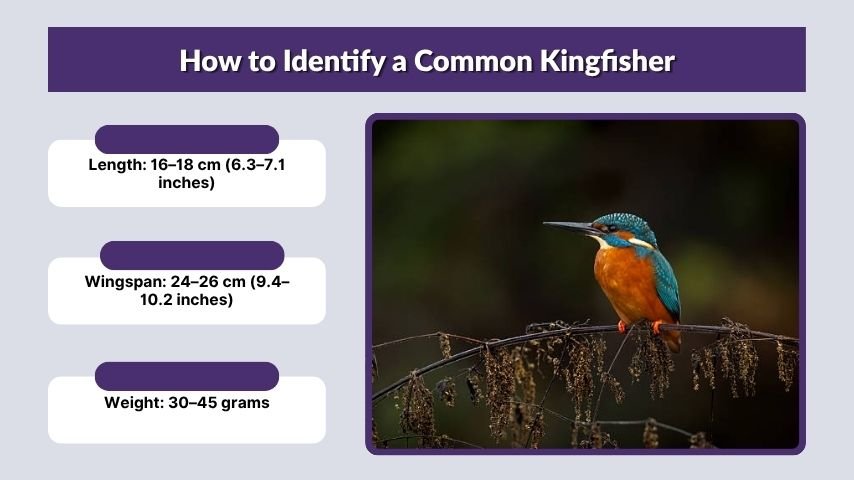
Recognizing a Common Kingfisher is relatively easy because of its distinctive coloration and shape. Even from a distance, its bright plumage often stands out against the surrounding vegetation and water.
Physical Appearance
The bird features shimmering blue feathers on its back and wings, while its chest and belly display rich orange tones. A white patch is usually visible on the throat and neck. Its long, sharp bill is perfectly adapted for catching fish beneath the water’s surface.
Common Kingfisher Size
Despite its striking appearance, the Common Kingfisher is quite small.
Key size measurements include:
- Length: 16–18 cm (6.3–7.1 inches)
- Wingspan: 24–26 cm (9.4–10.2 inches)
- Weight: 30–45 grams
- Tail length: Relatively short compared to body size
Its compact size allows it to move quickly and efficiently while hunting in narrow waterways.
Male vs Female Differences
Male and female Common Kingfishers look very similar at first glance. However, careful observation reveals subtle differences.
Key distinctions include:
- Males typically have an entirely black bill.
- Females often show an orange-red coloration on the lower mandible.
- Females may appear slightly duller in coloration.
- Size differences between the sexes are usually minimal.
Common Kingfisher Habitat
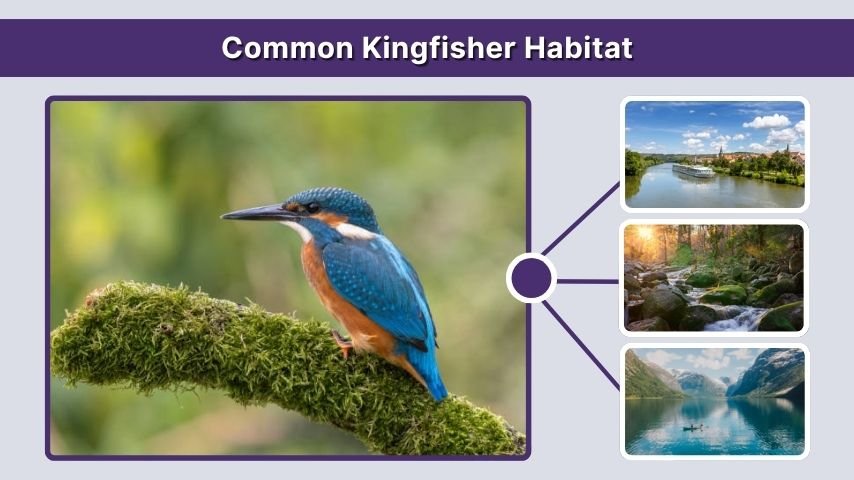
The Common Kingfisher depends heavily on healthy freshwater ecosystems. Its survival is closely linked to clean water and abundant prey populations. Because of this relationship, the species is often considered an indicator of environmental quality.
Preferred Habitats
Common Kingfishers are most frequently found near slow-moving or gently flowing water bodies. Rivers, streams, ponds, lakes, and canals provide ideal feeding opportunities. The bird prefers locations with nearby perches such as branches, reeds, or rocks from which it can observe the water below.
Nesting Locations
During the breeding season, Common Kingfishers excavate tunnels into sandy or earthen riverbanks. These tunnels can extend more than a meter in length and end in a nesting chamber. The secluded location helps protect eggs and chicks from predators while providing a stable environment for development.
Habitat Requirements
To thrive, Common Kingfishers need specific environmental conditions. Clear water allows them to locate prey efficiently, while healthy fish populations provide a reliable food source. Vegetation near the water also offers shelter, resting spots, and protection from disturbances.
Common Kingfisher Range and Distribution
The Common Kingfisher has a broad geographic distribution, making it one of the most widespread kingfisher species in the world. Its adaptability allows it to occupy a variety of freshwater habitats across different climates.
Global Distribution
The species occurs throughout much of Europe, Asia, and North Africa. In temperate regions, populations may remain in the same area year-round, while birds living in colder northern regions often migrate to warmer locations during winter.
Countries Where Common Kingfishers Are Found
Common Kingfishers can be observed in many countries, including:
- United Kingdom
- France
- Germany
- Spain
- India
- China
- Japan
- Turkey
- Morocco
Their wide distribution reflects their ability to adapt to various freshwater environments, provided suitable nesting and feeding conditions are available.
Seasonal Movement Patterns
Migration behavior varies according to climate and food availability. Birds living in northern regions may travel south when water bodies freeze during winter. In contrast, populations in milder climates often remain resident throughout the year. These seasonal movements help ensure access to open water and sufficient prey during colder months.
Common Kingfisher Diet and Hunting Behavior

The Common Kingfisher is an expert predator that relies on speed, precision, and exceptional eyesight. Its hunting strategy has evolved specifically for capturing prey in and around freshwater habitats. By patiently observing the water from a perch, it can detect even small movements beneath the surface before launching a rapid attack.
What Do Common Kingfishers Eat?
The diet of the Common Kingfisher consists mainly of aquatic animals. Although fish are the preferred food source, the bird is highly adaptable and will consume other prey when necessary.
Common food items include:
- Small fish
- Aquatic insects
- Tadpoles
- Freshwater shrimp
- Crustaceans
- Small amphibians
The availability of these food sources often determines where kingfishers establish territories and nesting sites.
Hunting Techniques
A Common Kingfisher usually hunts from a low perch overlooking the water. Once prey is spotted, it dives headfirst into the water and captures it with its sharp bill. After returning to a perch, the bird often strikes the prey against a branch to kill it before swallowing it whole.
Common Kingfisher Sound, Call, and Song
Vocal communication plays an important role in the daily life of the Common Kingfisher. Although not known for elaborate songs like many songbirds, it produces a variety of sounds used for territorial defense, communication, and courtship.
Common Kingfisher Call
The most frequently heard vocalization is a sharp, high-pitched whistle often described as a “tsee” or “chee” sound. This call is commonly heard when the bird flies rapidly along rivers and streams.
The call serves several purposes:
- Defending territory
- Contacting mates
- Warning of danger
- Announcing presence during flight
Common Kingfisher Sound
The bird’s sounds are usually short and piercing, allowing them to travel effectively across water. Experienced birdwatchers often hear a kingfisher before they see one, especially in densely vegetated habitats.
Common Kingfisher Song
Unlike many passerine birds, the Common Kingfisher does not have a complex song. What is often referred to as its “song” consists of repeated calls used during breeding displays and interactions between pairs. These vocalizations become more frequent during the nesting season.
Common Kingfisher Breeding and Life Cycle
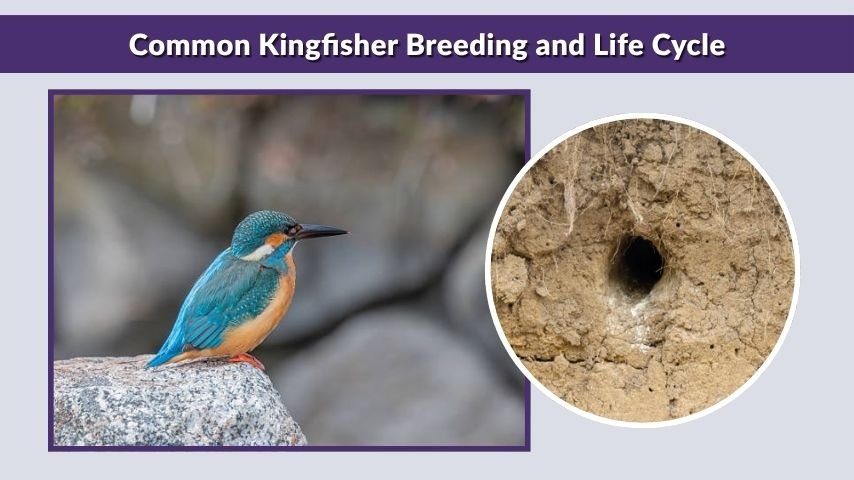
The breeding season is one of the most active periods in the Common Kingfisher’s annual cycle. During this time, pairs establish territories, perform courtship displays, and raise their young in carefully constructed nesting tunnels.
Mating Season
Breeding typically begins in spring, although timing varies depending on geographic location and climate. Courtship involves aerial displays, vocal communication, and food-sharing behaviors in which the male presents fish to the female.
Nesting and Eggs
Once a suitable riverbank is selected, the pair excavates a nesting tunnel. The nesting chamber at the end of the tunnel provides a protected location for egg laying and chick development.
Typical breeding characteristics include:
- Nest tunnel length of up to 1 meter
- Clutch size of 5–7 eggs
- Incubation period of about 19–21 days
- Both parents participate in incubation
Chick Development
After hatching, the chicks depend entirely on their parents for food. Adult birds make frequent fishing trips to provide enough nourishment for the growing brood. Young kingfishers usually leave the nest several weeks after hatching and gradually learn to hunt independently.
Common Kingfisher Conservation Status
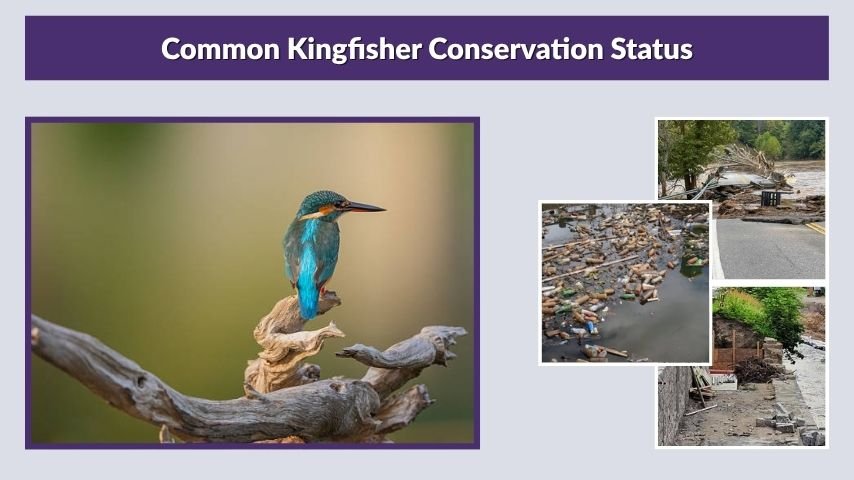
Although the Common Kingfisher remains widespread across much of its range, local populations can be affected by environmental changes. The health of freshwater ecosystems directly influences the species’ long-term survival.
Population Trends
The species is currently classified as Least Concern by conservation authorities because of its extensive range and relatively stable global population. However, numbers can fluctuate significantly in certain regions following harsh winters or habitat degradation.
Major Threats
Several factors can negatively affect Common Kingfisher populations:
- Water pollution
- Habitat destruction
- River modification projects
- Loss of nesting banks
- Severe winter weather
- Declining fish populations
Conservation Efforts
Conservation programs focus on improving water quality, protecting wetlands, and preserving natural riverbanks. These measures benefit not only kingfishers but also many other aquatic species that share the same habitats.
Common Kingfisher Drawing and Birdwatching Tips
The Common Kingfisher’s vivid colors and unique shape make it a favorite subject for artists, photographers, and birdwatchers.
How to Draw a Common Kingfisher
When drawing this bird, begin with simple body shapes before adding details. Pay particular attention to the long bill, rounded body, and bright color patterns that distinguish the species from other birds.
Birdwatching Guide
Successful observation often requires patience and careful attention to habitat.
Helpful birdwatching tips include:
- Visit rivers and streams early in the morning.
- Listen for high-pitched flight calls.
- Watch low branches overhanging water.
- Remain quiet and avoid sudden movements.
- Bring binoculars for distant observations.
Interesting Facts About the Common Kingfisher
The Common Kingfisher possesses several remarkable adaptations that contribute to its success as a freshwater hunter. It can accurately judge the position of fish underwater despite light refraction and has specialized vision that helps it focus both above and below the water surface. Its brilliant blue coloration is produced largely by feather structure rather than blue pigment, creating the striking iridescent effect seen in sunlight.
FAQs
Can Common Kingfishers swim?
Common Kingfishers do not swim like ducks or other waterbirds. However, they frequently dive into the water to catch fish and can briefly move underwater while pursuing prey before returning to a perch.
How long do Common Kingfishers live?
The average lifespan of a Common Kingfisher is around 2–5 years in the wild. Some individuals can live longer, but many face challenges such as harsh weather, predation, and habitat loss.
Why are Common Kingfishers so colorful?
The bright blue coloration of a Common Kingfisher is mainly caused by the microscopic structure of its feathers, which reflects light. This structural coloration creates the bird’s brilliant blue appearance rather than blue pigment.
When is the best time to see a Common Kingfisher?
Early morning and late afternoon are usually the best times to spot Common Kingfishers. During these periods, they are often actively hunting along rivers, streams, and lakes.
Do Common Kingfishers migrate?
Migration depends on location and climate. Populations living in colder northern regions may move south during winter when water bodies freeze, while birds in milder climates often remain in the same area throughout the year.
