
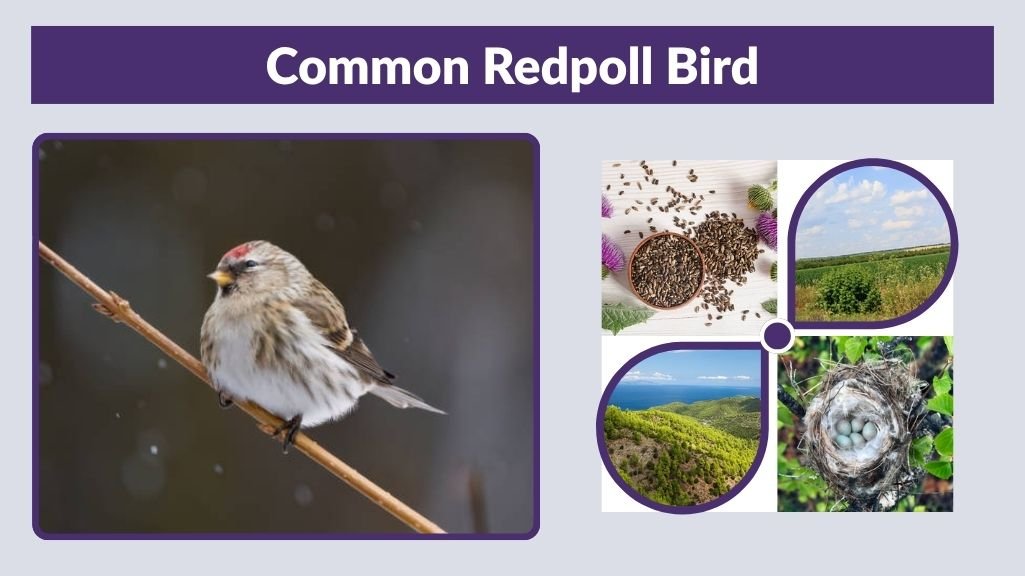
The Common Redpoll (Acanthis flammea) is a small finch known for its vibrant red forehead and streaked brown plumage. Breeding in Arctic regions and migrating south during winter, these birds form large flocks and often appear at feeders. Easily confused with Hoary and Lesser Redpolls, the Common Redpoll’s subtle differences in size, coloration, and behavior make careful observation essential for birdwatchers. This guide explores its identification, habitat, diet, seasonal movements, and comparisons with related species, providing a complete overview for enthusiasts and ornithologists alike.
Common Redpoll Overview
The Common Redpoll is an agile finch adapted to cold climates. Its red forehead, brown streaked plumage, and small size distinguish it from other northern finches. These birds are highly social, often forming large winter flocks, and produce distinctive trilling songs. Understanding their traits helps with accurate identification in the field.
Identification
Common Redpolls can be identified by:
- Size: 12–14 cm in length.
- Coloration: Brown streaked back with a white rump.
- Red Forehead: Present in both males and females; males show pink on chest.
- Bill: Small, conical, suited for seed eating.
- Tail and Wings: Short tail, rounded wings for quick flight.
Male vs Female
Males have a brighter pink chest and stronger streaking than females, whose plumage is lighter brown. Juveniles are duller, often missing the red forehead patch, and blend in with adults in mixed flocks.
Vocalizations
The call is a sharp, high-pitched “chit-chit,” while the song is a soft trilling warble. These sounds help distinguish Common Redpolls from Hoary or Lesser Redpolls.
Common Redpoll Habitat and Distribution
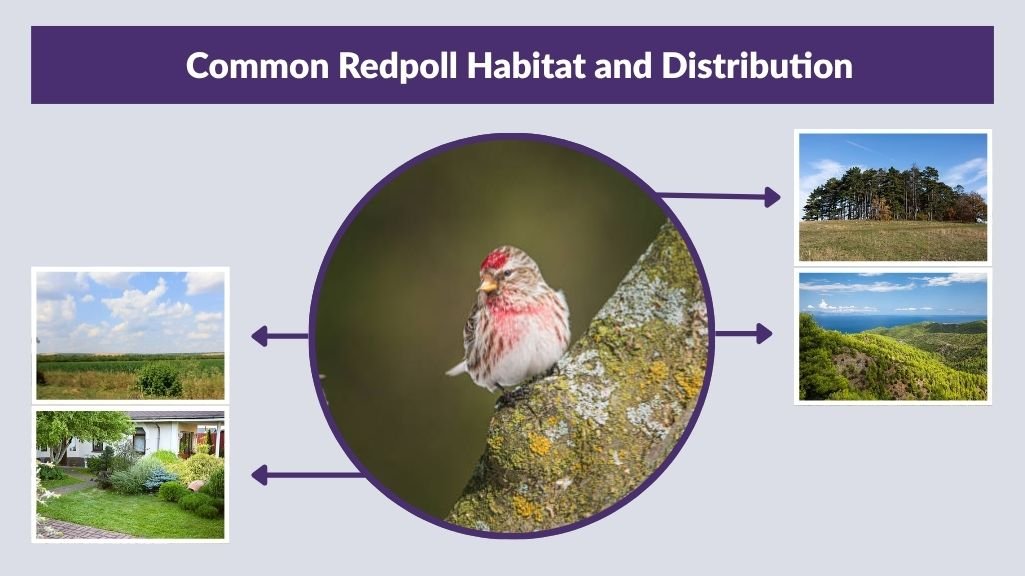
Common Redpolls breed in Arctic tundra and northern boreal forests, then migrate south during winter. They are adaptable, occupying open woodlands, shrublands, and even urban bird feeders. Migration is influenced by food availability, leading to occasional irruptions into southern regions.
Breeding Habitat
They nest in low shrubs or birch trees. Nests are cup-shaped, lined with feathers and moss, and well-concealed from predators. Both parents feed chicks, which hatch in late May or June.
Winter Habitat
During winter, flocks may number in hundreds, often mingling with other finches. They occupy open fields, woodland edges, and garden feeders. Food availability largely dictates their southern movement.
Migration
Common Redpolls are short-distance migrants. Some populations remain in northern areas year-round, while others travel south in response to harsh winters, often in large flocks for safety and food-finding efficiency.
Common Redpoll Diet and Feeding
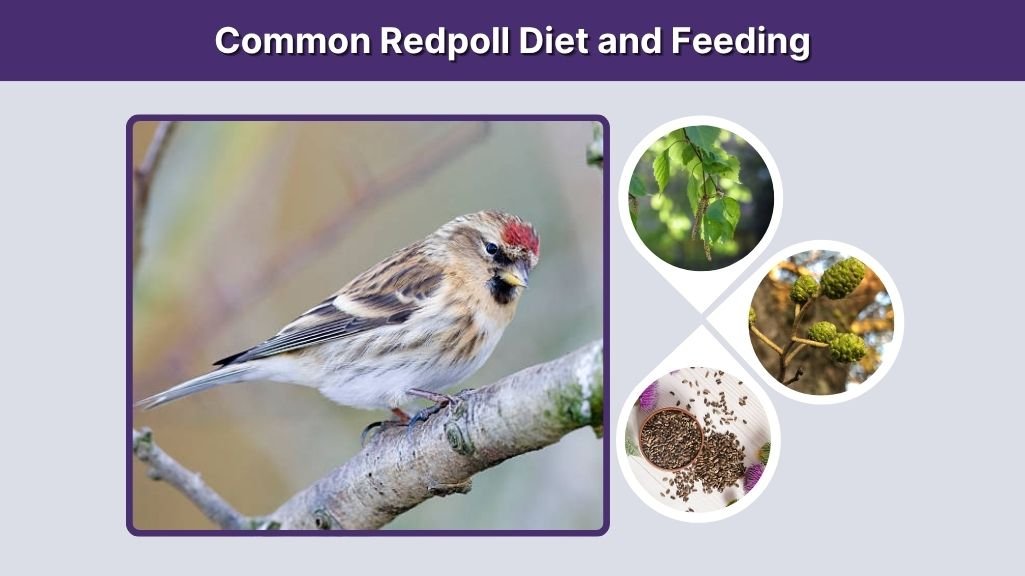
Common Redpolls primarily eat seeds but adjust their diet seasonally. They are active, social foragers and use a specialized throat pouch to store seeds. Their diet also includes buds, berries, and insects during the breeding season, providing essential protein for chicks.
Seed Preferences
- Birch seeds
- Alder seeds
- Thistle seeds
Feeding Behavior
Redpolls feed both on the ground and in shrubs, sometimes hanging upside down to reach seeds. They consume hundreds of seeds daily during winter to sustain energy in cold conditions.
Social Feeding
Winter flocks often mix with other finches such as Pine Siskins. Group foraging aids in finding food and offers protection from predators.
Redpoll Species Comparison
Overview: The Common Redpoll is closely related to Hoary, Lesser, and Arctic Redpolls. Subtle differences in size, plumage, bill shape, and behavior help distinguish these species. Observing them during winter flocks or breeding season can aid identification for birdwatchers and ornithologists.
Comparison Table
| Feature | Common Redpoll | Hoary Redpoll | Lesser Redpoll | Arctic Redpoll |
| Size | 12–14 cm | 13–15 cm | 11–13 cm | 12–14 cm |
| Plumage | Brown streaked, red forehead | Paler, whiter underparts | Darker brown, less pink | Very pale, more white |
| Bill | Small, conical | Stout | Slender | Short, stubby |
| Chest Color | Males pink, females brown | Pale pink | Slightly pink | Very pale |
| Winter Range | Northern U.S., Europe | Northernmost areas | Europe & Asia | Arctic only |
Flight Call Differences
- Common Redpoll: High-pitched “chit-chit.”
- Hoary Redpoll: Sharper metallic tone.
- Lesser Redpoll: Softer nasal call.
- Arctic Redpoll: Thin, high trill, rarely heard outside the Arctic.
Size and Plumage Notes
Hoary Redpoll appears paler and whiter; Lesser Redpoll is smaller and darker. Arctic Redpoll is extremely pale with minimal streaking. Males often show more rosy color than females, but differences can be subtle in juvenile birds.
Breeding and Behavior
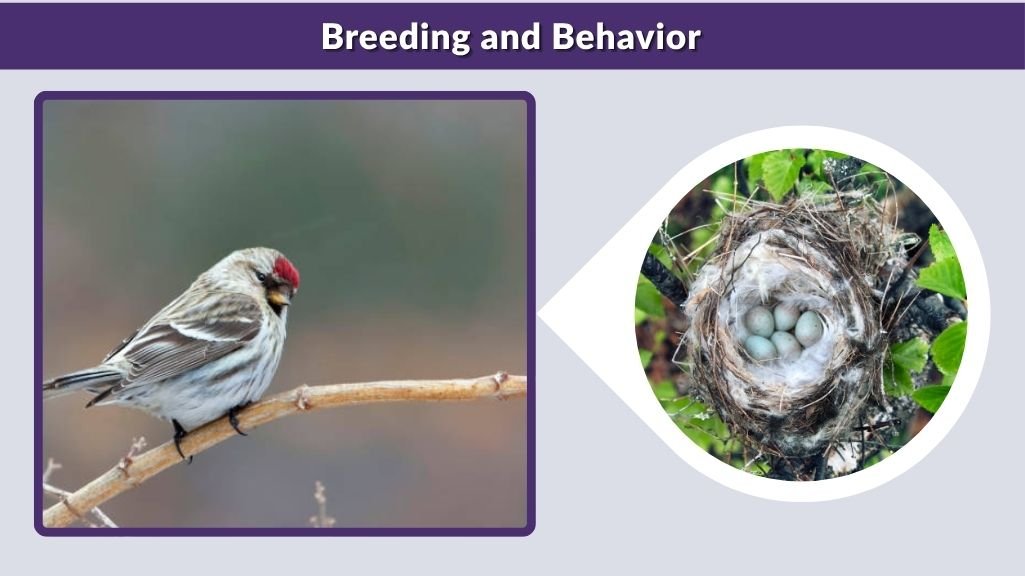
Overview: Common Redpolls breed in the Arctic during summer, forming monogamous pairs. Nesting occurs in low shrubs or trees, and both parents feed chicks. Their sociable nature continues in winter flocks, showing unique behaviors including seed storage and cooperative feeding.
Nesting
- Cup-shaped nests lined with moss, feathers, and soft material.
- Placed in birch or alder shrubs, well-concealed.
- Clutch size: 4–7 eggs, pale with fine spots.
- Incubation: 11–13 days by female; both parents feed chicks.
Flocking and Social Behavior
Common Redpolls are highly social, forming flocks of dozens or hundreds in winter. Mixed-species flocks help locate food efficiently and provide predator protection. Flocking behavior is especially noticeable during seed irruptions.
Irruptions
- Occur when northern seed crops fail.
- Birds move unusually far south in search of food.
- Flocks may appear in states where redpolls are otherwise rare, such as southern U.S. or central Europe.
Interesting Facts
Overview: Common Redpolls have unique adaptations for surviving extreme cold, including specialized feeding behavior, seed storage, and rapid metabolism. Their bright red forehead and sociable nature make them easily recognized among northern finches.
- Can survive temperatures below -50°C.
- Uses throat pouch to store seeds temporarily.
- Males display bright pink chests only during breeding season.
- Sometimes mistaken for other redpoll species due to subtle differences.
- Juveniles are duller and harder to distinguish in flocks.
FAQs
What is the difference between a Common and Hoary Redpoll?
Hoary Redpolls are paler, slightly larger, and have whiter underparts. Common Redpolls are browner with a more noticeable pink chest in males. Flight calls and bill size also help differentiate them.
How can you tell a female Common Redpoll from a male?
Females lack the pink chest seen in males. They have lighter brown, streaked plumage but share the red forehead. Juveniles may lack a red forehead entirely.
Where do Common Redpolls migrate during winter?
They migrate south from Arctic breeding grounds to the northern United States, Europe, and parts of Asia. Winter movements are influenced by seed availability, sometimes resulting in large irruptions.
What do Common Redpolls eat?
They primarily eat seeds from birch, alder, and thistle. During the breeding season, they supplement with buds, berries, and insects to provide protein for chicks.
How can you distinguish a Common Redpoll from a Lesser Redpoll?
Lesser Redpolls are smaller, darker, and less rosy than Common Redpolls. They also have a more slender bill, and their plumage shows less contrast, especially in females and juveniles.
