
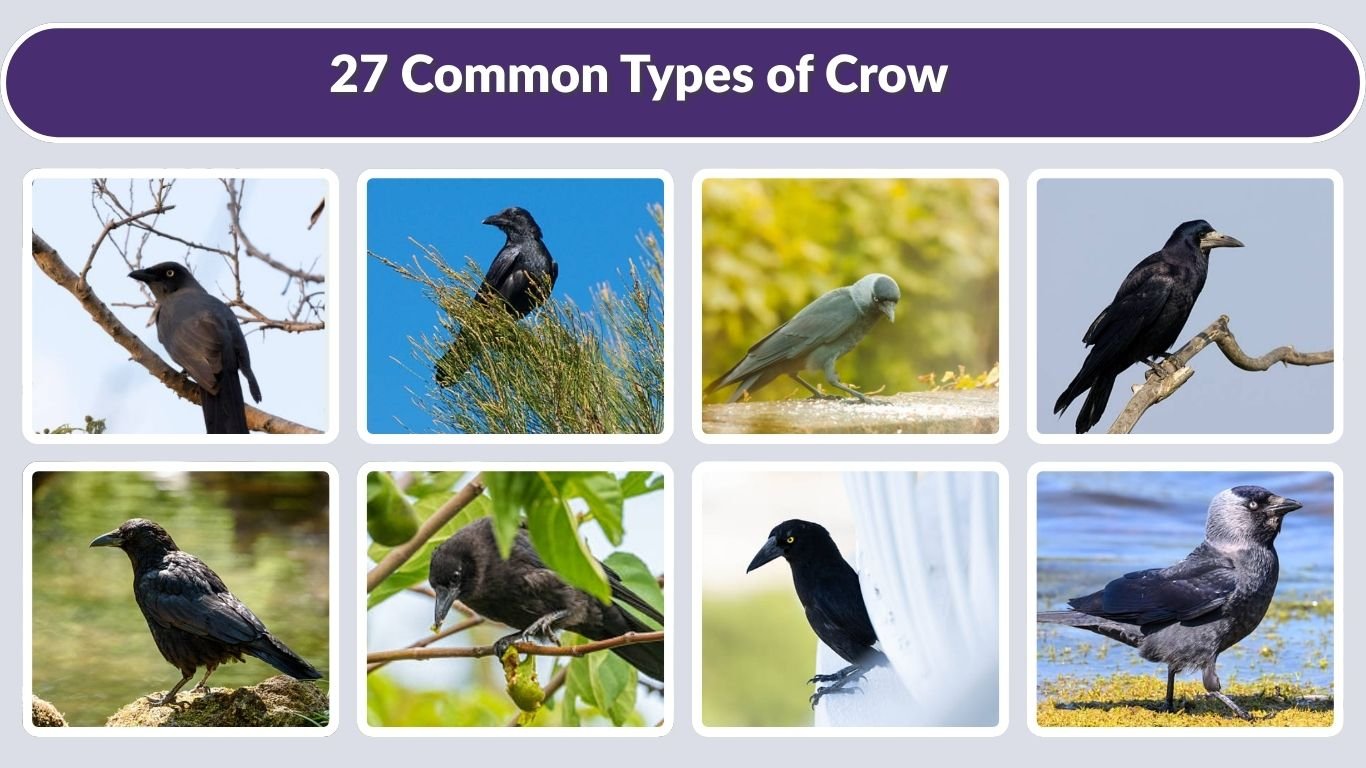
Crows are among the most intelligent and adaptable birds in the world, belonging to the corvid family, which also includes ravens, rooks, and jackdaws. Found across nearly every continent, these birds thrive in a wide range of habitats—from dense forests and open grasslands to busy urban environments. Their problem-solving abilities, social behavior, and varied vocalizations make them fascinating to observe.
In this guide, we explore 27 common types of crow, highlighting their identification, habitat, differences, and lifestyle. Understanding these species will help you recognize their unique traits and appreciate the diversity within this remarkable group of birds.
1. American Crow
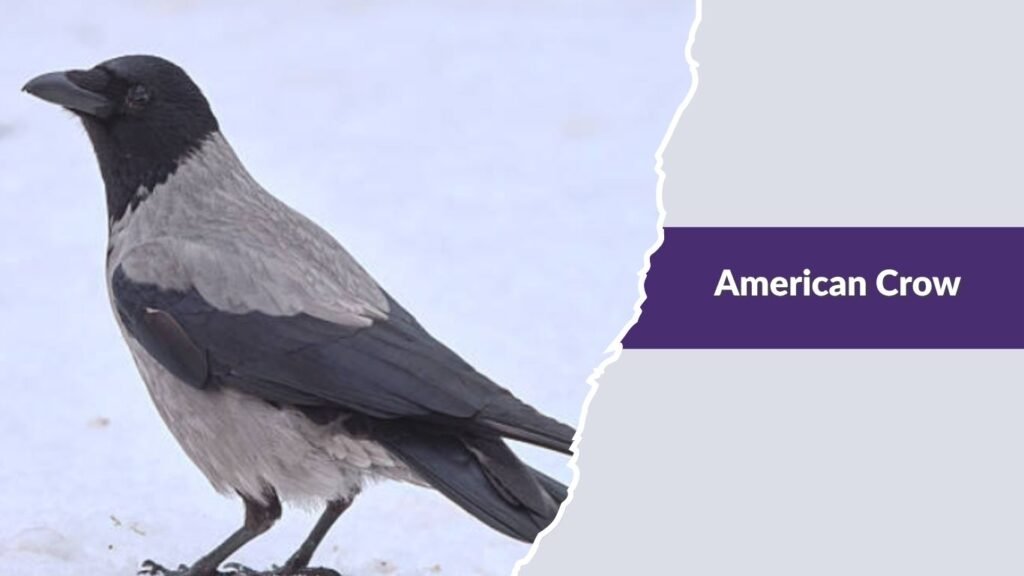
The American Crow is one of the most familiar and widespread crow species in North America. Known for its intelligence and adaptability, it thrives in a variety of environments, from rural landscapes to busy urban areas. This bird is highly social and often seen in groups, especially during feeding or roosting. Its loud “caw” call is a common sound in many regions.
Identification
- Medium to large-sized bird with an all-black body
- Glossy black feathers that may show a slight purple or green sheen in sunlight
- Strong, thick black bill
- Fan-shaped tail
- Dark eyes and legs
- Straight flight with steady wingbeats
- Often seen in groups or flocks
Habitat
The American Crow is highly adaptable and can be found in forests, farmland, grasslands, towns, and cities. It prefers open areas with nearby trees for nesting and roosting. This species thrives in human-modified environments and is commonly seen in parks, roadsides, and suburban neighborhoods. It avoids dense, unbroken forests but uses forest edges effectively.
Comparison
Compared to the Common Raven, the American Crow is smaller and has a more slender bill. Its call is a clear “caw,” while the raven produces deeper, more guttural sounds. The crow also has a fan-shaped tail, whereas the raven’s tail is wedge-shaped. Behaviorally, crows are more social and often gather in large flocks.
Diet and Lifespan
The American Crow is an omnivore with a very varied diet, including insects, seeds, fruits, small animals, and human food scraps. It is known for its problem-solving skills when finding food. It typically forages on the ground but may also hunt or scavenge. Its average lifespan is around 7 to 8 years in the wild, though some individuals can live much longer.
2. Carrion Crow
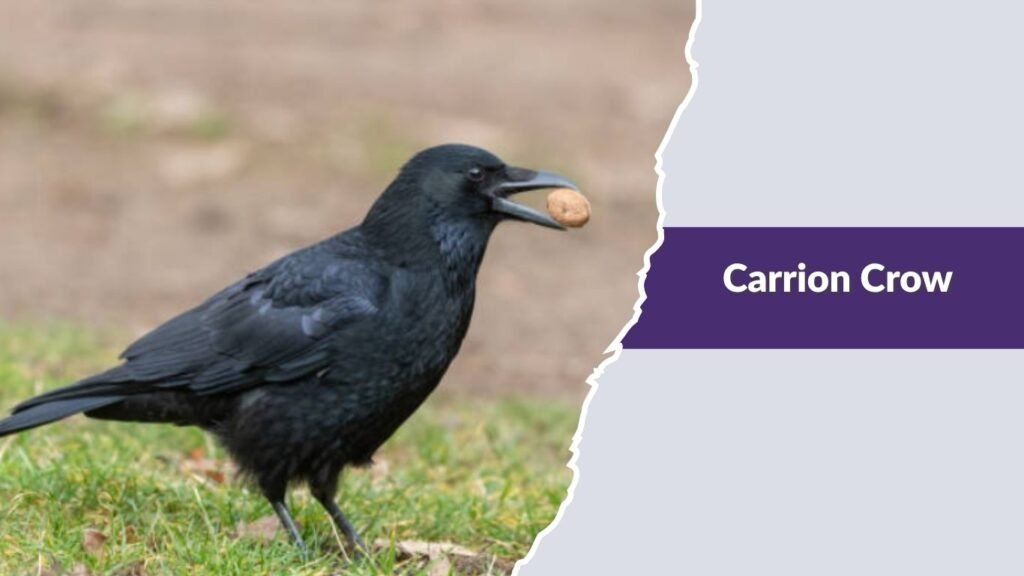
The Carrion Crow is a well-known species found across Europe and parts of Asia. It is recognized for its all-black appearance and solitary or paired behavior, unlike some more social crow species. Highly intelligent and adaptable, it thrives in both rural and urban environments. Its harsh “caw” call and confident nature make it a familiar bird in many regions.
Identification
- Medium-sized bird with entirely black plumage
- Glossy feathers with a slight green or purple sheen
- Strong, straight black bill
- Fan-shaped tail
- Dark eyes and legs
- Sturdy body with a slightly hunched posture
- Direct, steady flight pattern
Habitat
The Carrion Crow is found in a wide range of habitats, including farmland, woodlands, coastal areas, and urban environments. It prefers open landscapes with scattered trees for nesting. This species adapts well to human presence and is often seen in cities, parks, and agricultural fields. It avoids dense forests but thrives in mixed and open habitats.
Comparison
Compared to the American Crow, the Carrion Crow is very similar in appearance but is found in Europe and Asia rather than North America. It is often more solitary, while American Crows are highly social. It also closely resembles the Hooded Crow, but unlike that species, it is entirely black without gray body parts.
Diet and Lifespan
The Carrion Crow is an omnivore, feeding on insects, small animals, eggs, carrion, seeds, and human food waste. It is an opportunistic feeder and highly resourceful. It often scavenges as well as hunts. The average lifespan is around 6 to 10 years in the wild, though some individuals may live longer under favorable conditions.
3. Hooded Crow
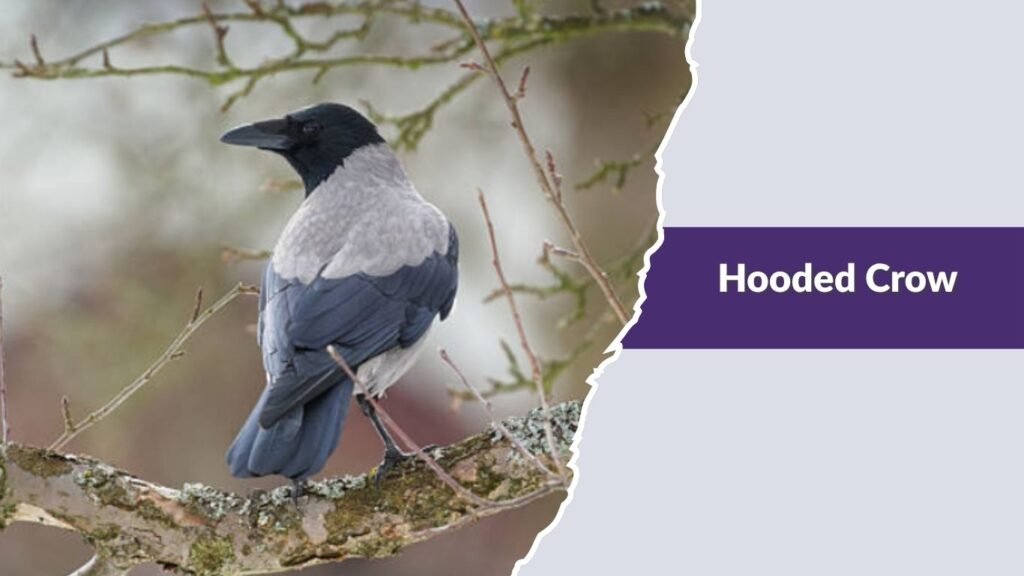
The Hooded Crow is a distinctive crow species found across Europe, the Middle East, and parts of Asia. Unlike all-black crows, it has a striking two-tone appearance that makes it easy to recognize. This intelligent and adaptable bird is commonly seen in both rural and urban environments, often foraging on the ground or near water.
Identification
- Medium-sized crow with a unique black and gray color pattern
- Black head, wings, tail, and throat
- Pale gray body and back
- Strong black bill and legs
- Fan-shaped tail
- Dark eyes with an alert expression
- Steady, direct flight similar to other crows
Habitat
The Hooded Crow inhabits a wide range of environments, including open countryside, farmland, coastal regions, and cities. It prefers areas with scattered trees and open ground for feeding. This species adapts well to human presence and is often found in urban parks, streets, and near water bodies. It avoids dense forests but thrives in mixed landscapes.
Comparison
Compared to the Carrion Crow, the Hooded Crow is easily distinguished by its gray body and black head, wings, and tail. While both species are similar in size and behavior, the Carrion Crow is entirely black. In regions where their ranges overlap, they may even interbreed, making identification interesting in some areas.
Diet and Lifespan
The Hooded Crow is an omnivore with a highly varied diet, including insects, small animals, eggs, carrion, seeds, and food scraps. It is an opportunistic feeder and often scavenges in urban areas. Known for its intelligence, it can solve problems to access food. Its average lifespan is around 5 to 10 years in the wild.
4. House Crow
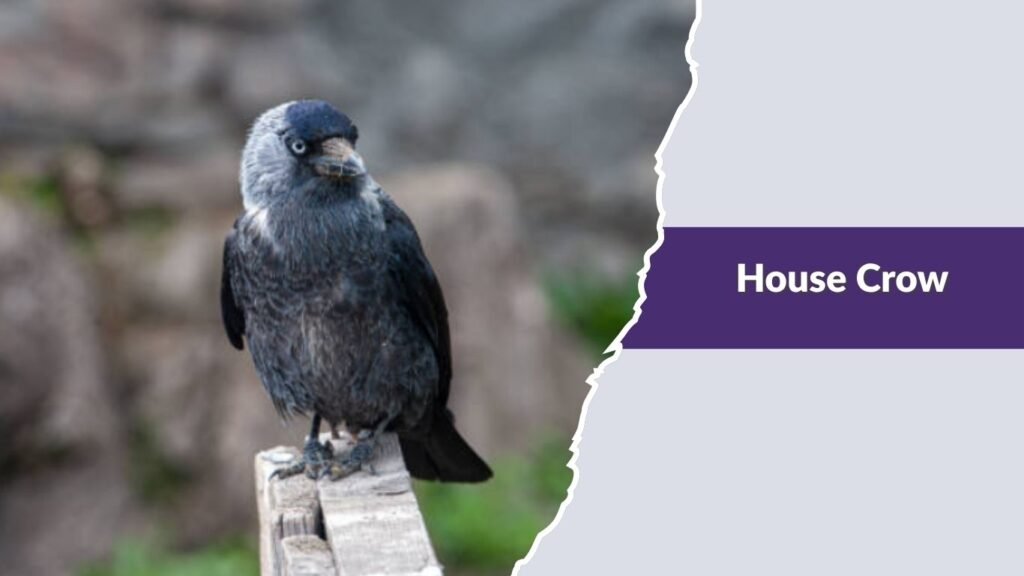
The House Crow is a highly adaptable and social species commonly found in South Asia and many coastal regions around the world. It is closely associated with human settlements and is often seen in cities, towns, and ports. Known for its intelligence and noisy behavior, it thrives in urban environments and is considered one of the most successful crow species.
Identification
- Medium-sized crow with a slender body
- Black head, wings, and tail
- Gray neck and upper breast
- Strong, slightly curved black bill
- Dark eyes and legs
- Long tail with a slightly rounded shape
- Active and often seen in noisy groups
Habitat
The House Crow prefers urban and suburban environments, including cities, towns, ports, and villages. It is strongly associated with human activity and rarely found far from settlements. It thrives in areas with abundant food sources such as markets, garbage sites, and coastal regions. This species is especially common in South Asia but has spread to other parts of the world through human activity.
Comparison
Compared to the Hooded Crow, the House Crow is smaller and has a more limited gray area, mainly around the neck and chest. It is also more dependent on human environments, while the Hooded Crow can thrive in more natural settings. The House Crow is generally noisier and more social.
Diet and Lifespan
The House Crow is an omnivore that feeds on a wide variety of food, including insects, fruits, grains, small animals, and human waste. It is an opportunistic feeder and often scavenges in urban areas. Its close association with humans allows it to access diverse food sources. The average lifespan is around 6 to 15 years in the wild.
5. Fish Crow
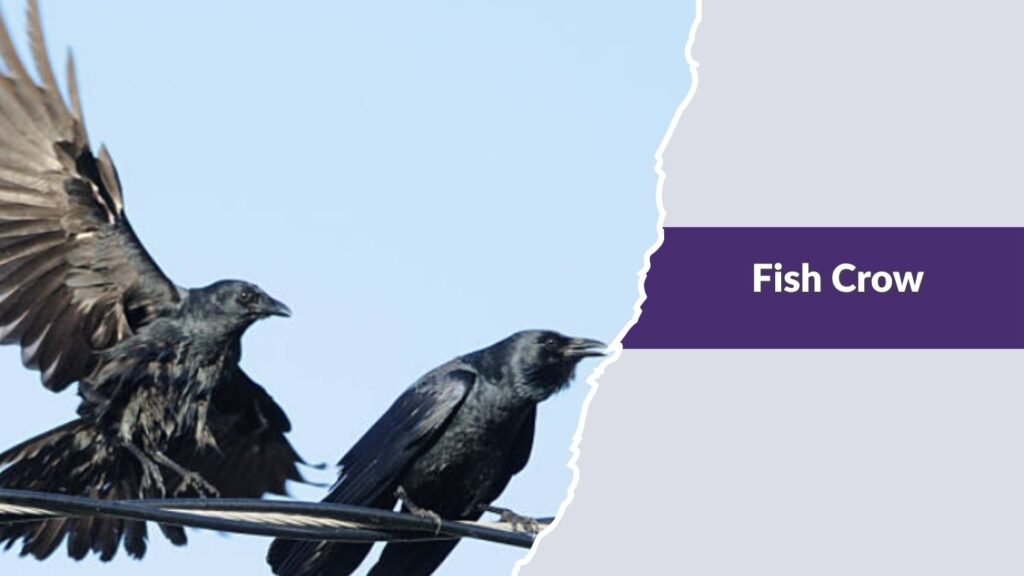
The Fish Crow is a coastal and water-associated species found mainly in the eastern United States. It closely resembles the American Crow but is slightly smaller and has a more nasal call. This intelligent and adaptable bird is often seen near water, where it takes advantage of a variety of food sources.
Identification
- Medium-sized crow, slightly smaller than the American Crow
- Entirely black plumage with a glossy sheen
- Strong black bill, slightly slimmer than that of larger crows
- Fan-shaped tail
- Dark eyes and legs
- Similar appearance to American Crow but more compact
- Distinct nasal “uh-uh” call instead of a clear “caw”
Habitat
The Fish Crow is commonly found near water bodies such as rivers, lakes, marshes, and coastal areas. It prefers habitats close to shorelines but can also be seen in urban and suburban areas near water. This species often nests in trees close to wetlands or waterways and may gather in groups in suitable feeding areas.
Comparison
Compared to the American Crow, the Fish Crow is smaller and has a more nasal, softer call. Visually, the two species look very similar, making them difficult to distinguish without hearing their आवाज. The Fish Crow is also more closely tied to water habitats than the more widespread American Crow.
Diet and Lifespan
The Fish Crow is an omnivore, feeding on fish, insects, crustaceans, eggs, fruits, and human food waste. It often scavenges along shorelines and may steal food from other birds. Like other crows, it is highly intelligent and opportunistic. Its average lifespan is around 5 to 10 years in the wild.
6. Northwestern Crow
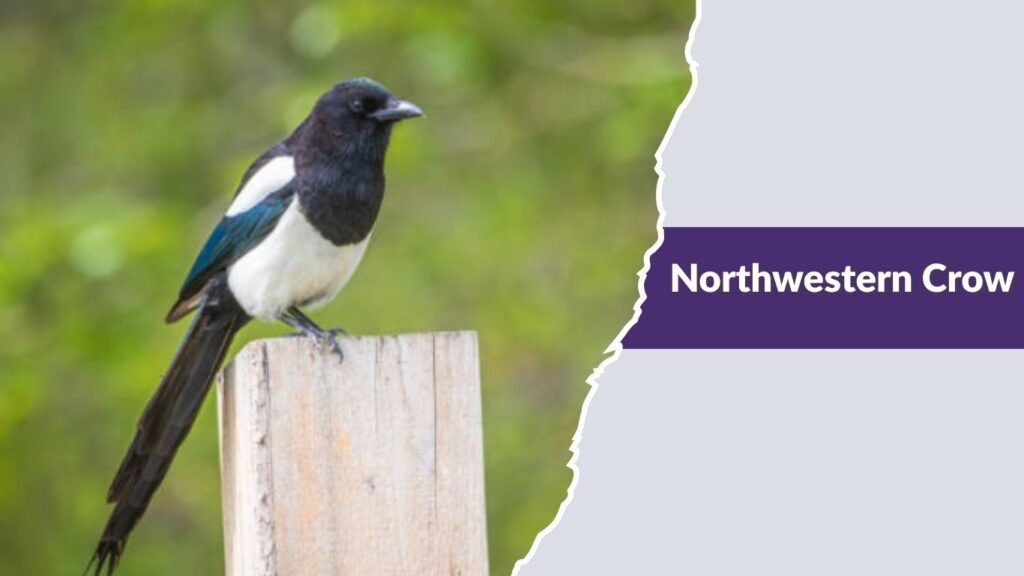
The Northwestern Crow is a coastal species found along the Pacific Northwest of North America. It closely resembles the American Crow but is generally smaller and more associated with marine environments. This intelligent bird is often seen near shorelines, feeding on a variety of coastal resources. Its behavior and adaptability make it well suited to life along the coast.
Identification
- Smaller than the American Crow with a more compact body
- Entirely black plumage with a glossy sheen
- Slender black bill
- Fan-shaped tail
- Dark eyes and legs
- Slightly softer and more varied vocalizations
- Often seen in pairs or small groups
Habitat
The Northwestern Crow is primarily found in coastal habitats such as beaches, tidal flats, estuaries, and coastal forests. It prefers areas close to the ocean where food is abundant. This species is rarely found far inland and is strongly tied to marine environments. It may also be seen around coastal towns and fishing areas.
Comparison
Compared to the American Crow, the Northwestern Crow is smaller and has a more restricted coastal range. While both species look very similar, the Northwestern Crow tends to have softer calls and is more often found near the ocean. Habitat is often the best way to distinguish between the two.
Diet and Lifespan
The Northwestern Crow has a varied diet that includes fish, shellfish, insects, eggs, and carrion. It often forages along shorelines, picking food from the sand or shallow water. Like other crows, it is opportunistic and highly intelligent. Its average lifespan is around 5 to 8 years in the wild.
7. Tamaulipas Crow
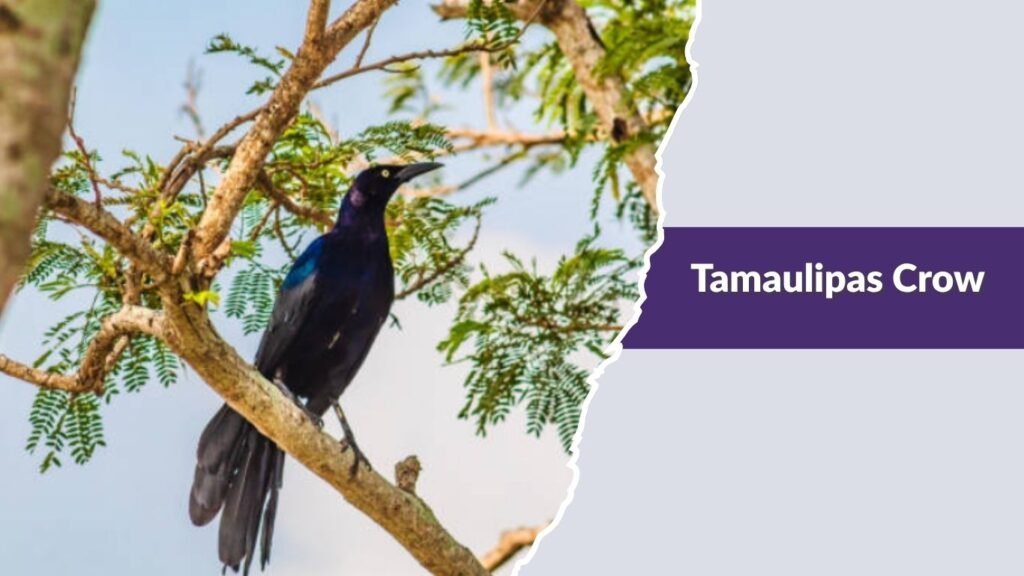
The Tamaulipas Crow is a lesser-known species found mainly in northeastern Mexico. It is a medium-sized crow that prefers open and semi-arid environments. Compared to more widespread crows, it has a more limited range and is less frequently observed. Despite this, it shares the intelligence and adaptability typical of crow species.
Identification
- Medium-sized crow with entirely black plumage
- Glossy feathers with a slight sheen in sunlight
- Strong, straight black bill
- Fan-shaped tail
- Dark eyes and legs
- Slightly slimmer build compared to some other crows
- Steady, direct flight pattern
Habitat
The Tamaulipas Crow prefers open habitats such as scrublands, grasslands, and lightly wooded areas. It is often found in semi-arid regions and may occur near farmland or rural settlements. Unlike some crows, it is less associated with dense forests or large urban centers, favoring quieter, open landscapes.
Comparison
Compared to the American Crow, the Tamaulipas Crow has a much more restricted range and is less commonly seen. It is similar in appearance but may appear slightly slimmer. Habitat and location are key factors in distinguishing it from other all-black crow species.
Diet and Lifespan
The Tamaulipas Crow is an omnivore, feeding on insects, small animals, seeds, fruits, and carrion. It forages mostly on the ground and may also scavenge when opportunities arise. Like other crows, it is intelligent and adaptable in finding food. Its lifespan is not well documented but is believed to be similar to other crow species, around 5 to 10 years.
8. Cuban Palm Crow
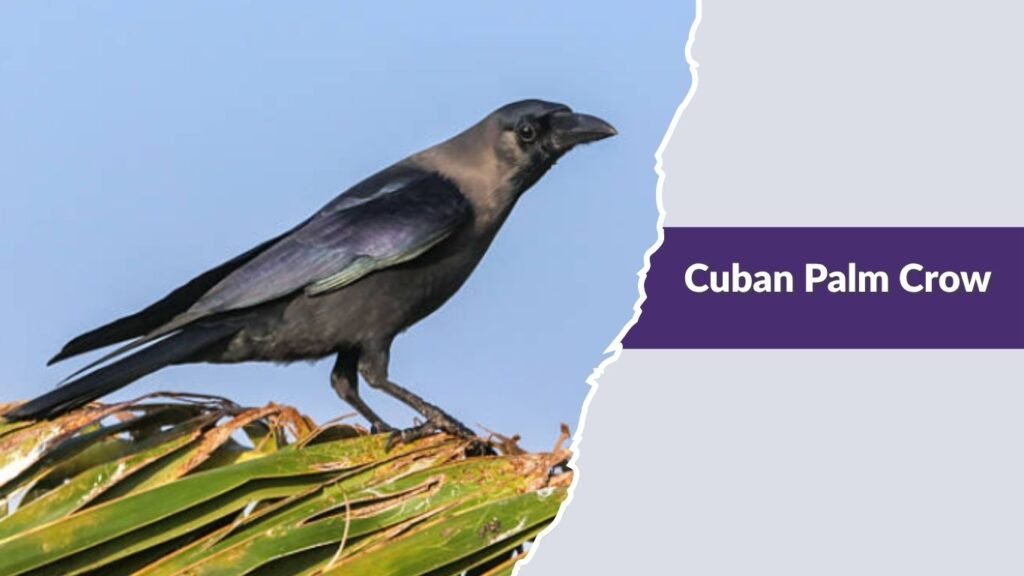
The Cuban Palm Crow is a distinctive species native to Cuba, often associated with palm trees and open countryside. It is known for its social behavior and unique vocalizations, which can include a variety of calls. This crow is less widespread than many others but is well adapted to its local environment.
Identification
- Medium-sized crow with entirely black plumage
- Glossy feathers with a slight bluish or green sheen
- Strong black bill, slightly curved
- Fan-shaped tail
- Dark eyes and legs
- Slightly shaggy throat feathers
- Often seen in small, noisy groups
Habitat
The Cuban Palm Crow prefers open habitats such as savannas, farmland, and areas with scattered palm trees. It is commonly found in rural landscapes rather than dense forests. This species often nests in tall palm trees, which provide both shelter and a good vantage point. It may also be seen near villages and agricultural areas.
Comparison
Compared to the American Crow, the Cuban Palm Crow is more localized and has a slightly different structure, including a heavier bill and shaggier throat feathers. Its vocalizations are also more varied and distinctive. Habitat is another key difference, as this species is strongly tied to palm-rich environments in Cuba.
Diet and Lifespan
The Cuban Palm Crow is an omnivore, feeding on insects, fruits, seeds, small animals, and carrion. It often forages on the ground or in trees and may take advantage of agricultural areas for food. Like other crows, it is intelligent and adaptable. Its lifespan is estimated to be around 5 to 10 years in the wild.
9. Jamaican Crow
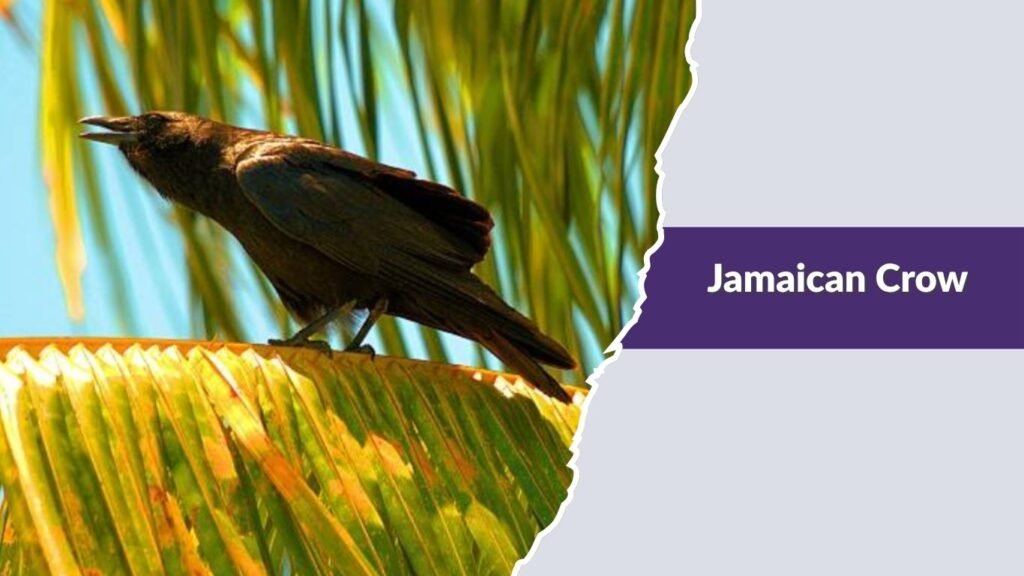
The Jamaican Crow is a large and distinctive crow species found only in Jamaica. It is known for its glossy black appearance and unique, varied vocalizations that include rattles and croaks. This intelligent bird is often seen in forested areas and is an important part of the island’s ecosystem.
Identification
- Large crow with entirely black plumage
- Glossy feathers with a purple or green sheen
- Strong, thick black bill
- Fan-shaped tail
- Dark eyes and legs
- Slightly shaggy throat feathers
- Produces a variety of unusual calls
Habitat
The Jamaican Crow prefers forested habitats, including tropical forests, woodland edges, and mountainous regions. It is often found in areas with dense vegetation but may also appear in plantations and rural landscapes. This species is less associated with urban environments compared to some other crows.
Comparison
Compared to the Cuban Palm Crow, the Jamaican Crow is larger and more strongly associated with forest habitats rather than open palm areas. Its vocalizations are also more varied and complex. Unlike many widespread crow species, it is restricted to a single island, making location an important identifying factor.
Diet and Lifespan
The Jamaican Crow is an omnivore, feeding on fruits, insects, small animals, and eggs. It forages both in trees and on the ground, often using its intelligence to locate food. Like other crows, it is adaptable in its feeding habits. Its lifespan is estimated to be around 7 to 12 years in the wild.
10. White-necked Raven
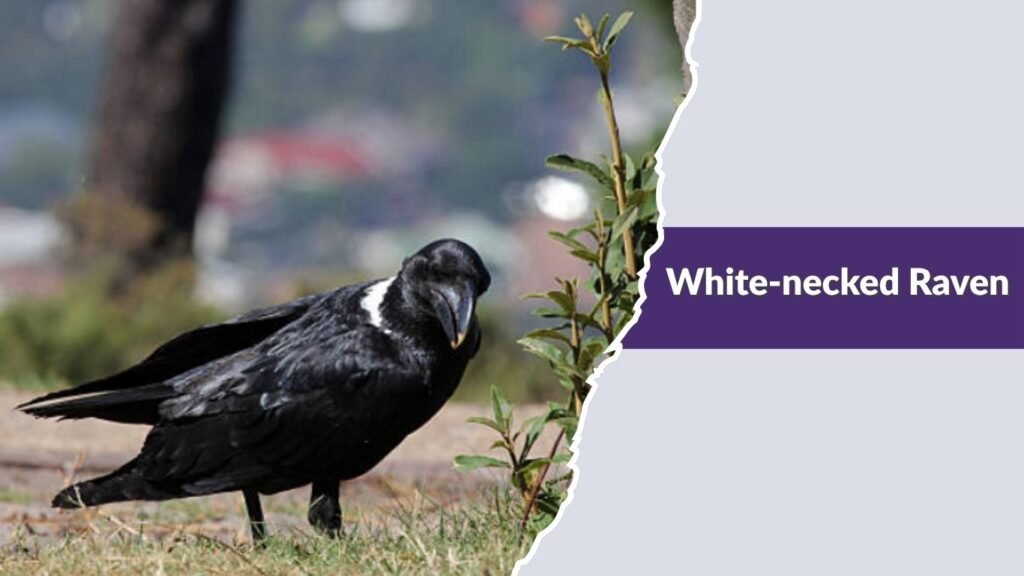
The White-necked Raven is a large and striking member of the crow family found in parts of Africa. It is known for its powerful build, loud calls, and distinctive white patch on the back of its neck. This intelligent bird is often seen soaring over open landscapes or perched on cliffs and tall structures.
Identification
- Large, heavy-bodied raven with glossy black plumage
- Distinct white patch on the back of the neck (may be subtle at rest)
- Thick, strong black bill
- Wedge-shaped tail, typical of ravens
- Dark eyes and legs
- Shaggy throat feathers
- Deep, croaking call
Habitat
The White-necked Raven prefers open and semi-open habitats such as savannas, mountains, cliffs, and rocky areas. It is often found at higher elevations and near steep terrain where it can nest on ledges. This species may also occur near human settlements, especially where food is available.
Comparison
Compared to typical crows like the American Crow, the White-necked Raven is much larger and has a heavier bill and a wedge-shaped tail. Its white neck patch is a key identifying feature. It also has deeper, more resonant calls and is more often seen soaring than flapping continuously.
Diet and Lifespan
The White-necked Raven is an omnivore, feeding on insects, small animals, carrion, fruits, and human food waste. It is an opportunistic feeder and often scavenges. Like other ravens, it is highly intelligent and capable of problem-solving. Its lifespan is estimated to be around 10 to 15 years in the wild.
11. Chihuahuan Raven
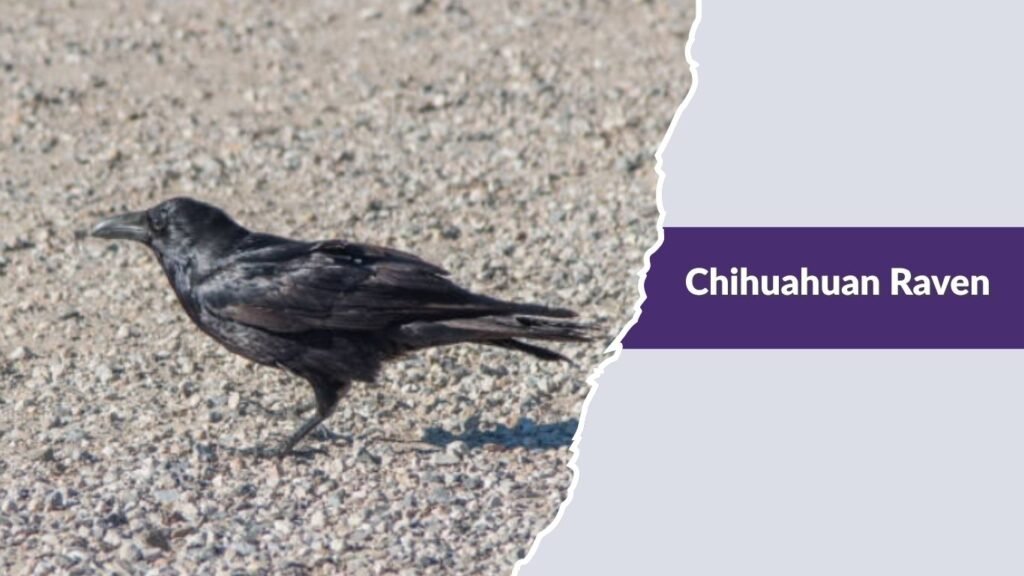
The Chihuahuan Raven is a medium-sized raven species found in the southwestern United States and Mexico. It is well adapted to dry, open landscapes and is often seen soaring or perching in desert regions. This species is known for its intelligence and social behavior, sometimes gathering in small groups.
Identification
- Medium-sized raven with glossy black plumage
- Slightly smaller and slimmer than the Common Raven
- Wedge-shaped tail, typical of ravens
- Long, pointed wings
- Thick black bill, though less massive than larger ravens
- Dark eyes and legs
- Less shaggy throat feathers compared to Common Raven
Habitat
The Chihuahuan Raven prefers arid and semi-arid environments such as deserts, grasslands, and open plains. It is commonly found in regions with sparse vegetation and wide open spaces. Unlike some ravens, it is less associated with mountainous or forested areas and is more adapted to flat, dry landscapes.
Comparison
Compared to the White-necked Raven, the Chihuahuan Raven is smaller and lacks the distinctive white neck patch. It also has a less robust build and smoother throat feathers. While both species share similar intelligence and feeding habits, their habitats and physical features help distinguish them.
Diet and Lifespan
The Chihuahuan Raven is an omnivore, feeding on insects, small animals, carrion, grains, and fruits. It often forages on the ground and may follow livestock or human activity for food. Like other ravens, it is highly adaptable and resourceful. Its average lifespan is around 8 to 12 years in the wild.
12. Common Raven
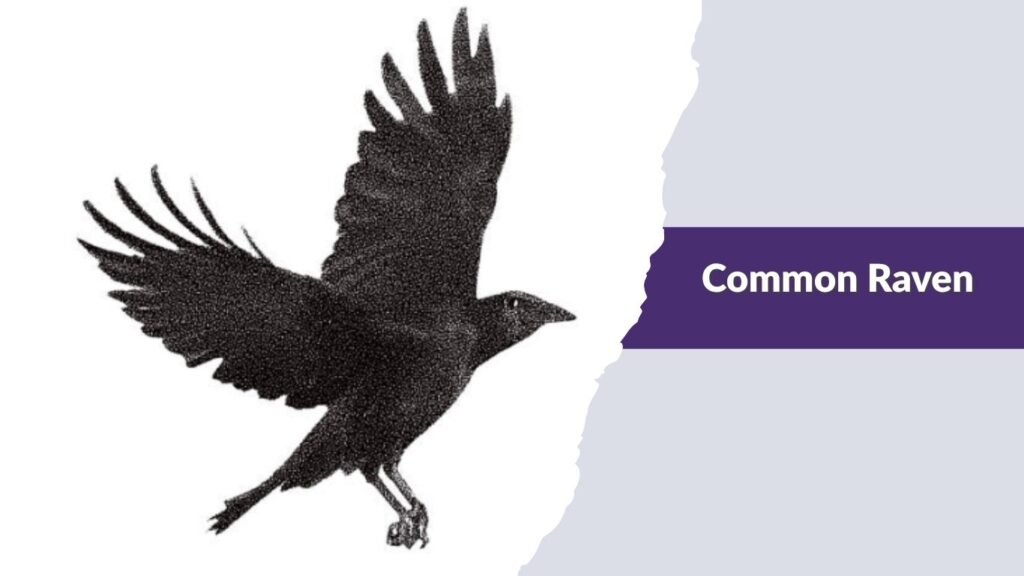
The Common Raven is one of the largest and most intelligent members of the crow family, found across the Northern Hemisphere. Known for its deep, croaking आवाज and impressive problem-solving abilities, it thrives in a wide range of environments. This bird is often seen alone or in pairs, soaring high in the sky or perched in remote areas.
Identification
- Large, heavy-bodied bird with glossy black plumage
- Thick, powerful black bill
- Wedge-shaped tail (distinct in flight)
- Long, broad wings suited for soaring
- Shaggy throat feathers (known as hackles)
- Dark eyes and legs
- Deep, croaking call
Habitat
The Common Raven occupies a wide variety of habitats, including mountains, forests, deserts, tundra, and coastal regions. It is often found in remote or less populated areas but can also adapt to human presence in some regions. It prefers areas with cliffs or tall trees for nesting and open spaces for foraging.
Comparison
Compared to the Chihuahuan Raven, the Common Raven is larger and more robust, with a heavier bill and more prominent shaggy throat feathers. Its call is deeper and more resonant. It is also more widely distributed and can be found in a greater variety of habitats.
Diet and Lifespan
The Common Raven is an omnivore, feeding on carrion, small animals, insects, grains, fruits, and human food waste. It is highly opportunistic and often scavenges. Known for its intelligence, it can solve complex problems to access food. Its lifespan is typically around 10 to 15 years in the wild, though some individuals live much longer.
13. Brown-necked Raven
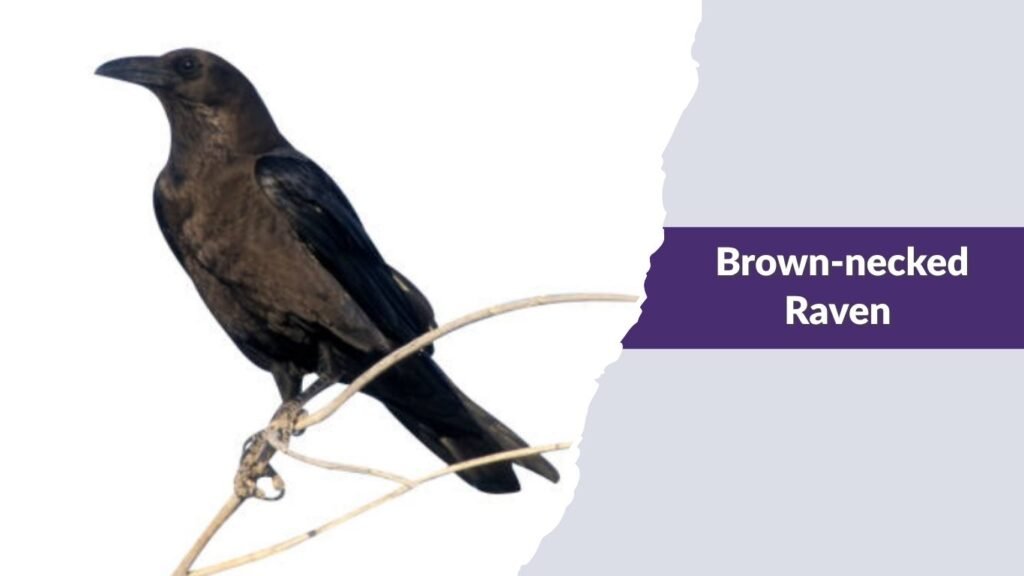
The Brown-necked Raven is a desert-adapted species found in North Africa, the Middle East, and parts of Asia. It is known for its slightly lighter coloration around the neck and its ability to survive in harsh, arid environments. This intelligent bird is often seen soaring over deserts or scavenging near human settlements.
Identification
- Large raven with mostly black plumage
- Brownish or dusty coloration on the neck and upper back
- Thick, slightly curved black bill
- Wedge-shaped tail
- Long wings suited for soaring
- Dark eyes and legs
- Shaggy throat feathers, though less prominent than in Common Raven
Habitat
The Brown-necked Raven prefers arid and semi-arid habitats such as deserts, rocky plains, and dry grasslands. It is well adapted to extreme heat and can often be seen in remote, barren areas. This species may also occur near human settlements, especially where food is available.
Comparison
Compared to the Common Raven, the Brown-necked Raven has a lighter, brownish tone on the neck and appears slightly less glossy overall. It is also more specialized for desert environments, whereas the Common Raven occupies a wider range of habitats. Its build is slightly slimmer and more adapted to hot climates.
Diet and Lifespan
The Brown-necked Raven is an omnivore, feeding on insects, small animals, carrion, and human food waste. It is an opportunistic scavenger and often searches for food over large distances. Like other ravens, it is highly intelligent and adaptable. Its average lifespan is around 10 to 15 years in the wild.
14. Thick-billed Raven
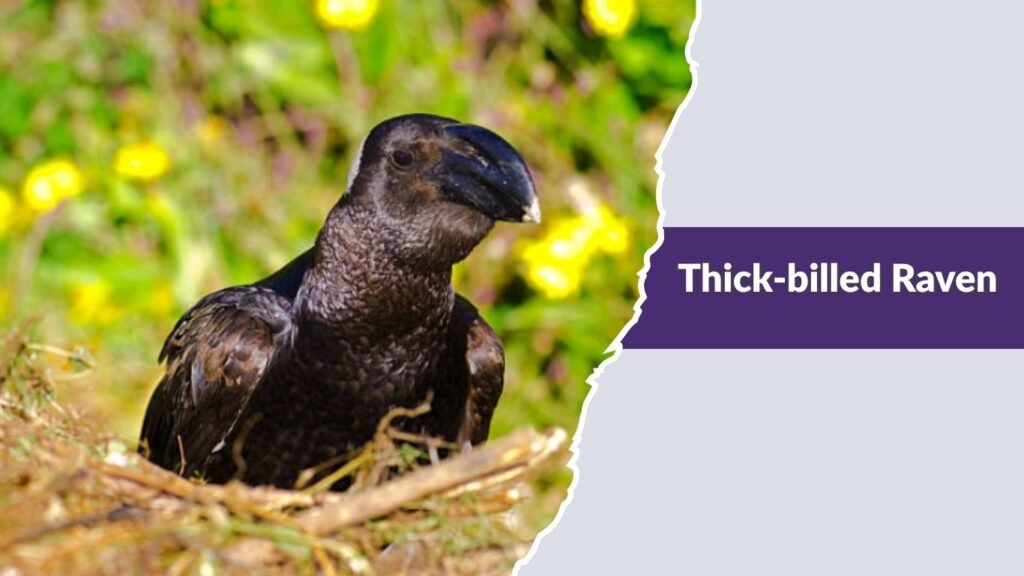
The Thick-billed Raven is a large and distinctive raven species native to the highlands of Ethiopia. It is one of the largest members of the crow family and is known for its massive bill and unique white patches on its wings. This intelligent bird is often seen in mountainous regions, where it soars and scavenges for food.
Identification
- Very large raven with glossy black plumage
- Massive, thick black bill (one of the largest among ravens)
- Distinct white patches on the wings, visible in flight
- Wedge-shaped tail
- Shaggy throat feathers
- Dark eyes and legs
- Strong, deep calls
Habitat
The Thick-billed Raven is mainly found in mountainous and highland regions, especially in Ethiopia. It prefers cliffs, rocky outcrops, and open high-altitude landscapes. This species is often associated with steep terrain where it can nest on ledges and soar over valleys.
Comparison
Compared to the Brown-necked Raven, the Thick-billed Raven is much larger and has a noticeably heavier bill. The presence of white wing patches also makes it easier to identify. It is more restricted in range and is adapted to cooler, high-altitude environments rather than hot deserts.
Diet and Lifespan
The Thick-billed Raven is an omnivore, feeding on insects, small animals, carrion, and scraps from human activity. It is often seen scavenging and may also steal food when possible. Like other ravens, it is highly intelligent and resourceful. Its lifespan is estimated to be around 10 to 15 years in the wild.
15. Fan-tailed Raven
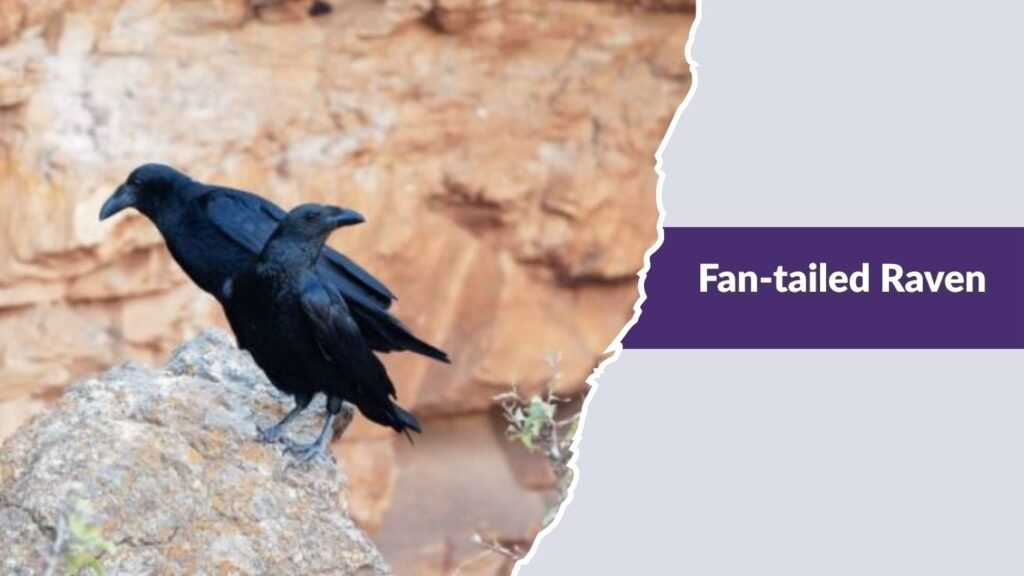
The Fan-tailed Raven is a medium-sized raven found in the Middle East and parts of North and East Africa. It is well adapted to dry, rocky environments and is often seen soaring gracefully over cliffs and valleys. This species is known for its distinctive tail shape and agile flight, making it easy to recognize in its natural habitat.
Identification
- Medium-sized raven with glossy black plumage
- Distinct fan-shaped tail (less wedge-shaped than other ravens)
- Slender body compared to larger ravens
- Long, pointed wings
- Black bill, slightly curved
- Dark eyes and legs
- Agile and acrobatic flight
Habitat
The Fan-tailed Raven prefers arid and semi-arid habitats such as cliffs, rocky hills, mountains, and desert regions. It is commonly found in areas with steep terrain, where it nests on ledges. This species is well adapted to dry climates and is often seen soaring in warm air currents above rugged landscapes.
Comparison
Compared to the Thick-billed Raven, the Fan-tailed Raven is smaller and more slender, with a noticeably different tail shape. While the Thick-billed Raven has a heavy build and massive bill, this species appears lighter and more agile. Its fan-shaped tail is a key feature that sets it apart from most other ravens.
Diet and Lifespan
The Fan-tailed Raven is an omnivore, feeding on insects, small animals, carrion, and food scraps. It often forages on the ground or scavenges near human settlements. Like other ravens, it is intelligent and adaptable in finding food. Its average lifespan is around 8 to 12 years in the wild.
16. Pied Crow
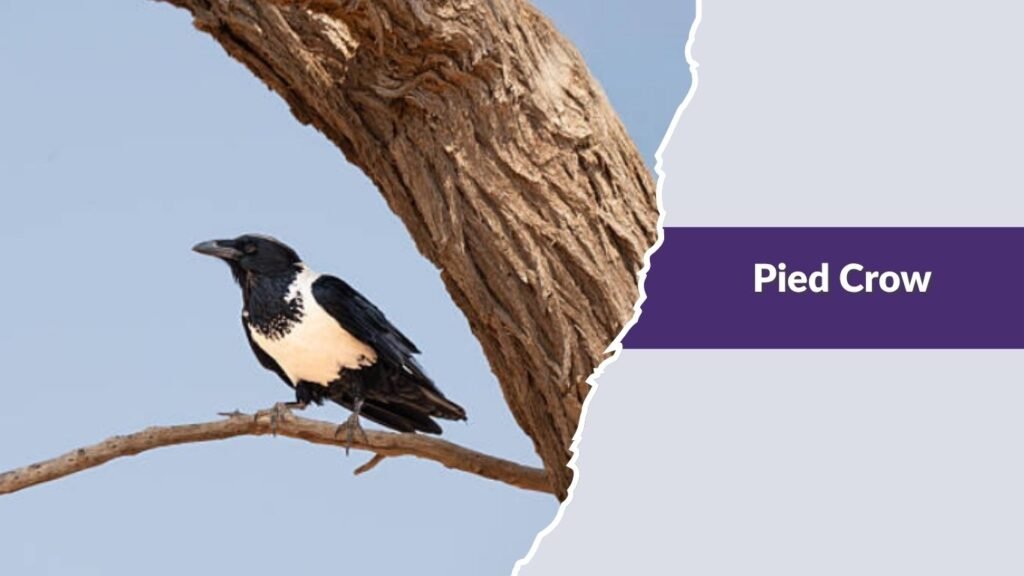
The Pied Crow is a striking black-and-white member of the crow family found across sub-Saharan Africa. It is known for its bold coloration, loud calls, and adaptability to both natural and human-altered environments. This species is often seen alone or in pairs, frequently near roads, towns, and open landscapes.
Identification
- Medium to large crow with black and white plumage
- Black head, wings, and tail
- White chest and upper back forming a clear contrast
- Strong black bill
- Fan-shaped tail
- Dark eyes and legs
- Loud, harsh calling आवाज
Habitat
The Pied Crow inhabits a wide range of environments, including savannas, grasslands, farmland, coastal areas, and urban regions. It is highly adaptable and often found near human settlements, roads, and garbage sites. It prefers open areas with scattered trees or structures for perching.
Comparison
Compared to the all-black Fan-tailed Raven, the Pied Crow is easily distinguished by its contrasting black-and-white coloration. It is also less associated with cliffs and more commonly found in open and human-influenced environments. Its appearance alone makes identification straightforward.
Diet and Lifespan
The Pied Crow is an omnivore, feeding on insects, small animals, carrion, eggs, fruits, and human waste. It is an opportunistic feeder and often scavenges. Like other crows, it is intelligent and adaptable. Its average lifespan is around 6 to 10 years in the wild.
17. Somali Crow
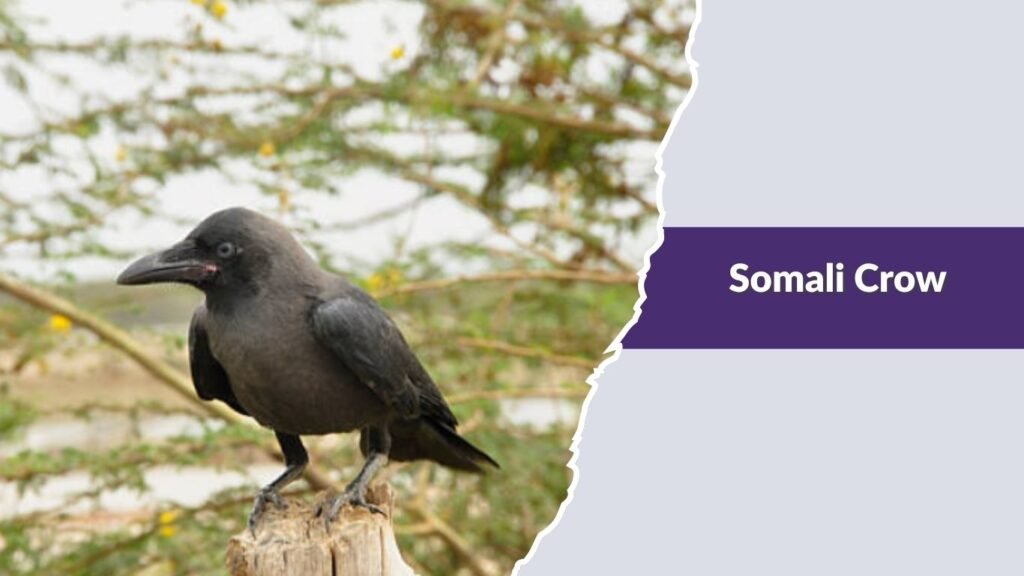
The Somali Crow, also known as the Dwarf Raven, is a smaller member of the crow family found in parts of East Africa. It is adapted to dry, open environments and is often seen in pairs or small groups. Despite its smaller size, it shares the intelligence and resourcefulness typical of corvids.
Identification
- Small to medium-sized crow with a slender body
- Glossy black plumage with a slight brownish tone in sunlight
- Slim, slightly curved black bill
- Wedge-shaped tail, though less pronounced
- Dark eyes and legs
- Less shaggy throat compared to larger ravens
- Light, agile flight
Habitat
The Somali Crow prefers arid and semi-arid habitats such as deserts, scrublands, and open plains. It is commonly found in dry regions with sparse vegetation and may also occur near villages and roads. This species is well adapted to hot climates and open landscapes.
Comparison
Compared to the Pied Crow, the Somali Crow is smaller and entirely black without any white markings. It also has a more slender build and is more associated with dry, desert-like habitats. Its size and habitat help distinguish it from larger and more widespread crow species.
Diet and Lifespan
The Somali Crow is an omnivore, feeding on insects, small animals, carrion, and scraps from human activity. It often forages on the ground and may scavenge when opportunities arise. Like other crows, it is intelligent and adaptable. Its lifespan is estimated to be around 6 to 10 years in the wild.
18. Cape Crow
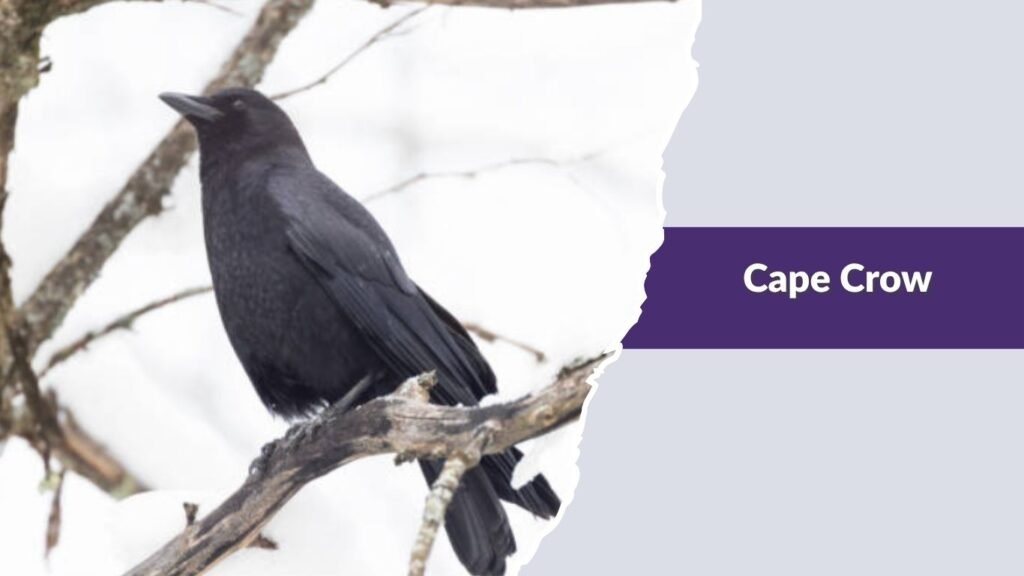
The Cape Crow is a large crow species found in southern and eastern Africa. It is known for its glossy black appearance and relatively large size compared to many other crows. This species is often seen in open landscapes, where it forages on the ground or perches on trees and poles. It is intelligent and adaptable, like other members of the crow family.
Identification
- Large crow with entirely black plumage
- Glossy feathers with a purple or green sheen
- Long, slender black bill
- Fan-shaped tail
- Dark eyes and legs
- Slightly longer legs compared to other crows
- Strong, direct flight
Habitat
The Cape Crow prefers open habitats such as grasslands, savannas, farmland, and semi-arid regions. It is often found in areas with scattered trees or open ground, where it can easily forage. This species adapts well to agricultural landscapes and may also be seen near human settlements.
Comparison
Compared to the Somali Crow, the Cape Crow is larger and has a longer, more slender bill. It is also more commonly found in grasslands rather than desert regions. Its size and structure make it appear more robust and easier to spot in open environments.
Diet and Lifespan
The Cape Crow is an omnivore, feeding on insects, small animals, seeds, fruits, and carrion. It often forages on the ground, searching for food in open areas. Like other crows, it is highly intelligent and opportunistic. Its average lifespan is around 6 to 10 years in the wild.
19. Rook
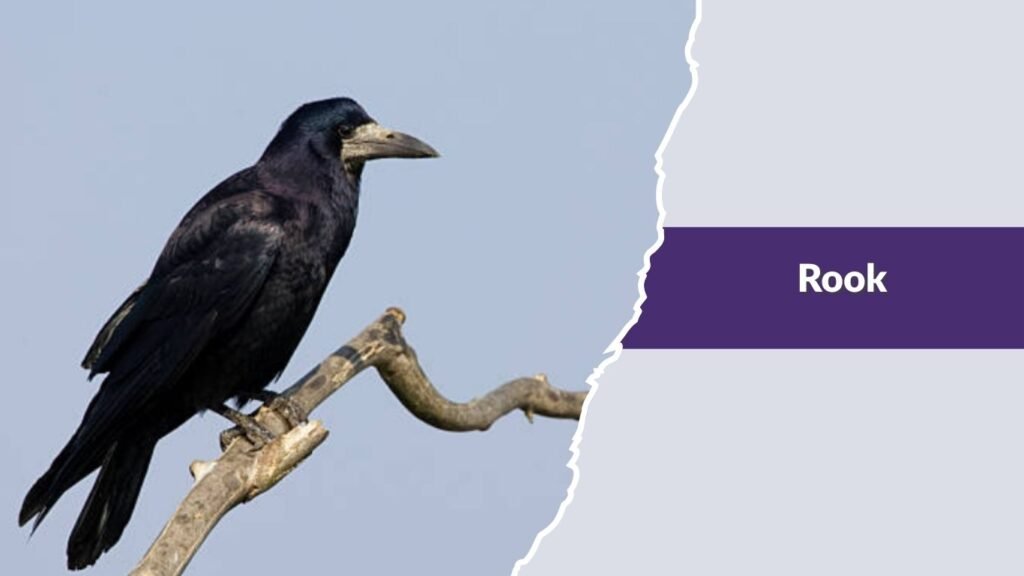
The Rook is a social and intelligent member of the crow family commonly found across Europe and Asia. It is often seen in large flocks, especially in open farmland and grasslands. Known for its distinctive bare face and communal nesting behavior, the Rook is a familiar sight in rural landscapes.
Identification
- Medium to large crow with entirely black plumage
- Glossy feathers with a slight sheen
- Pale, bare skin around the base of the bill (adults)
- Long, pointed black bill
- Fan-shaped tail
- Dark eyes and legs
- Often seen in large groups
Habitat
The Rook prefers open habitats such as farmland, grasslands, and rural areas with scattered trees. It is commonly found near agricultural fields where food is abundant. This species nests in colonies called rookeries, usually in tall trees. It adapts well to human presence and is often seen near villages and towns.
Comparison
Compared to the Cape Crow, the Rook is slightly smaller and can be easily identified by the bare, pale skin around its bill—something not seen in most other crows. It is also more social, often forming large colonies, whereas many other crow species are seen in smaller groups.
Diet and Lifespan
The Rook is an omnivore, feeding on insects, earthworms, seeds, grains, and small animals. It often forages on the ground, especially in plowed fields. Like other crows, it is intelligent and resourceful. Its average lifespan is around 6 to 10 years in the wild, though some may live longer.
20. Jackdaw
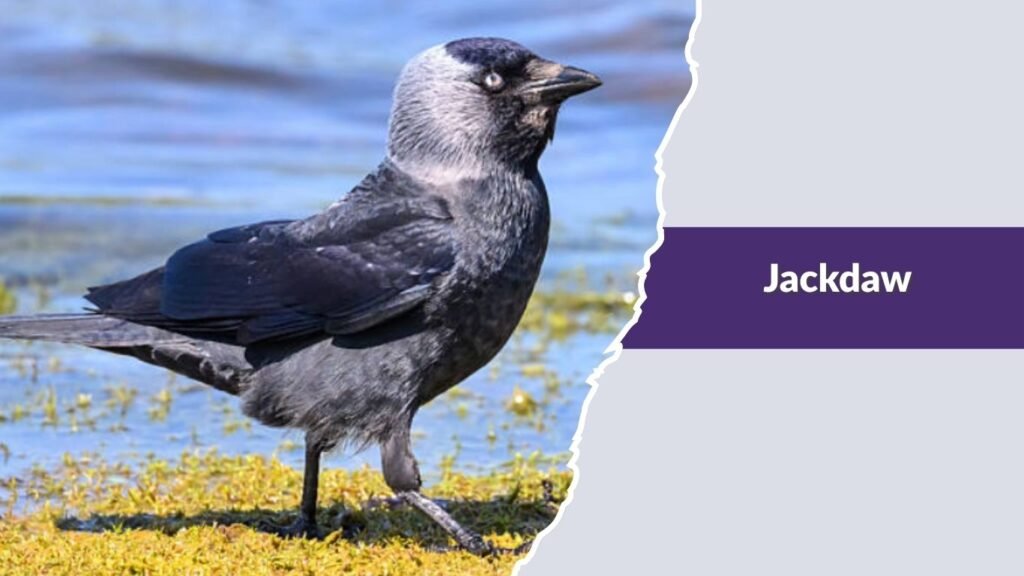
The Jackdaw is a small and social member of the crow family found across Europe, Asia, and North Africa. It is easily recognized by its compact size and pale eyes. This intelligent bird often lives close to humans and is commonly seen in towns, farmland, and open countryside, usually in noisy groups.
Identification
- Small crow with a compact, rounded body
- Black plumage with a grayish nape (back of the head)
- Pale gray or bluish eyes (very distinctive)
- Short, stout black bill
- Shorter tail compared to larger crows
- Dark legs
- Quick, agile flight
Habitat
The Jackdaw prefers open habitats such as farmland, grasslands, cliffs, and urban areas. It often nests in cavities, including tree holes, buildings, and chimneys. This species is highly adaptable and frequently found near human settlements, including cities and villages.
Comparison
Compared to the Rook, the Jackdaw is much smaller and has a more compact body. It also has pale eyes and a grayish nape, which clearly distinguish it from the entirely black Rook. Jackdaws are also more agile and tend to fly in tighter, more coordinated groups.
Diet and Lifespan
The Jackdaw is an omnivore, feeding on insects, seeds, fruits, and small animals. It often forages on the ground and may scavenge near human activity. Like other crows, it is intelligent and resourceful. Its average lifespan is around 5 to 10 years in the wild.
21. Daurian Jackdaw
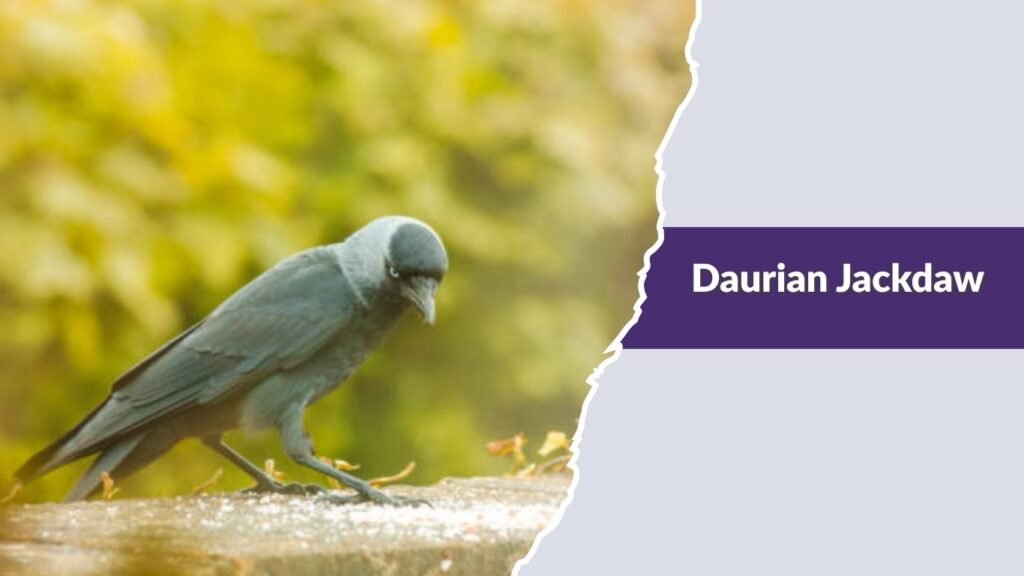
The Daurian Jackdaw is a distinctive and social crow species found in East Asia. It is closely related to the Jackdaw but stands out due to its contrasting black-and-white plumage. This intelligent bird is often seen in flocks and is commonly associated with open landscapes and human settlements.
Identification
- Small crow with a compact body
- Black head, wings, and tail
- White to pale gray neck, chest, and belly
- Short, stout black bill
- Pale eyes similar to the Jackdaw
- Short tail and quick flight
- Often seen in noisy groups
Habitat
The Daurian Jackdaw prefers open habitats such as grasslands, farmland, and semi-arid regions. It is often found near cliffs, villages, and towns where it can nest in cavities. Like other jackdaws, it adapts well to human environments and is commonly seen near agricultural areas.
Comparison
Compared to the common Jackdaw, the Daurian Jackdaw has a much more contrasting appearance with its black-and-white coloration. While both species share similar size and behavior, the Daurian Jackdaw is more visually striking. Its range is also more limited to East Asia.
Diet and Lifespan
The Daurian Jackdaw is an omnivore, feeding on insects, seeds, grains, and small animals. It often forages on the ground in open areas and may scavenge near human activity. Like other corvids, it is intelligent and adaptable. Its average lifespan is around 5 to 10 years in the wild.
22. Australian Raven
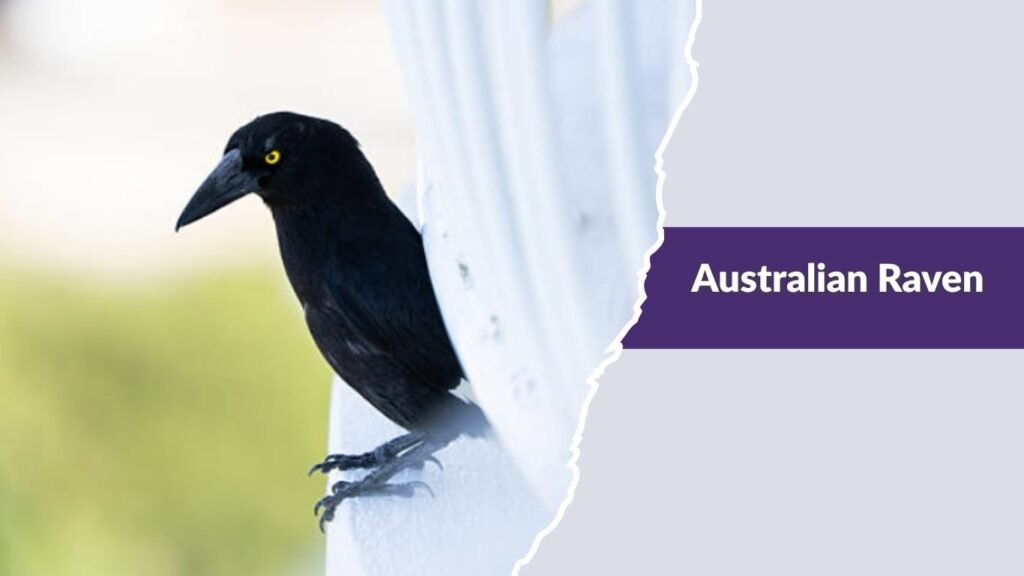
The Australian Raven is a large and widespread crow species found across much of Australia. It is known for its deep, drawn-out calls and strong presence in both natural and urban environments. This intelligent bird is often seen alone or in small groups and plays an important role in the ecosystem as both a scavenger and predator.
Identification
- Large bird with entirely black plumage
- Glossy feathers with a slight sheen
- Thick, strong black bill
- Wedge-shaped tail
- Distinctive shaggy throat feathers
- Pale eyes (whitish), noticeable up close
- Deep, drawn-out “ahhh” call
Habitat
The Australian Raven occupies a wide range of habitats, including forests, grasslands, farmland, deserts, and urban areas. It is highly adaptable and often seen near human settlements, roads, and agricultural regions. It prefers open spaces with access to trees or structures for nesting.
Comparison
Compared to the Common Raven, the Australian Raven has a slightly different call and pale eyes, which help distinguish it. It is also more adapted to Australian environments, including dry and semi-arid regions. Its throat feathers are shaggy but may appear less prominent depending on posture.
Diet and Lifespan
The Australian Raven is an omnivore, feeding on insects, small animals, carrion, fruits, and human food waste. It often scavenges and forages on the ground. Like other ravens, it is highly intelligent and resourceful. Its average lifespan is around 10 to 15 years in the wild.
23. Torresian Crow
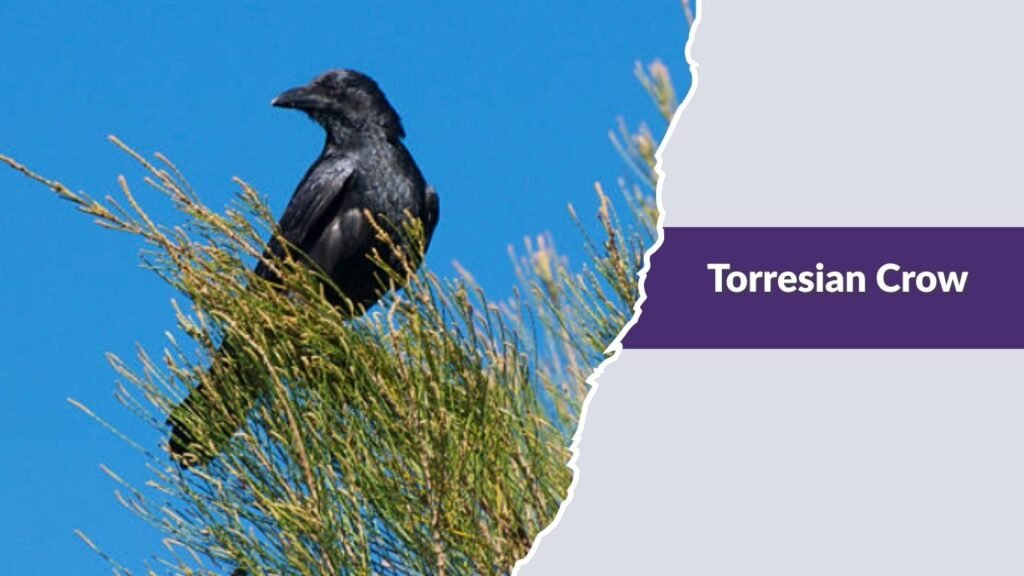
The Torresian Crow is a common crow species found in northern and eastern Australia, as well as parts of New Guinea. It is highly adaptable and often seen in urban areas, farmland, and open landscapes. Known for its intelligence and loud calls, it is one of the most familiar crows in its range.
Identification
- Medium to large crow with entirely black plumage
- Glossy feathers with a slight sheen
- Strong black bill
- Fan-shaped tail
- Dark eyes and legs
- Slightly smaller and less shaggy than Australian Raven
- Loud, sharp “caw” call
Habitat
The Torresian Crow prefers open habitats such as grasslands, farmland, coastal areas, and urban environments. It is commonly found near human settlements, where food is readily available. This species thrives in warm climates and is often seen around towns, roads, and agricultural fields.
Comparison
Compared to the Australian Raven, the Torresian Crow is slightly smaller and has less prominent throat feathers. Its call is also sharper and more crow-like, whereas the raven’s call is deeper and more drawn out. Habitat overlap can occur, but behavior and صوت help distinguish them.
Diet and Lifespan
The Torresian Crow is an omnivore, feeding on insects, small animals, fruits, seeds, carrion, and human food waste. It often forages on the ground and scavenges in urban areas. Like other crows, it is intelligent and adaptable. Its average lifespan is around 8 to 12 years in the wild.
24. Little Crow
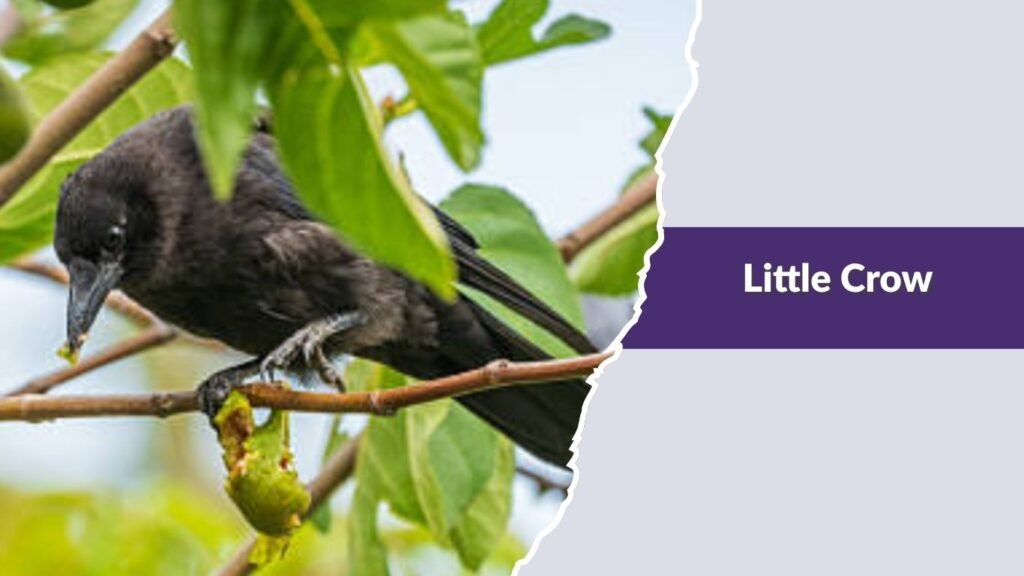
The Little Crow is a smaller crow species found in Australia, particularly in inland and agricultural regions. It is known for its social behavior and adaptability, often seen in flocks near farmland. Despite its name, it shares many characteristics with larger crows, including intelligence and opportunistic feeding habits.
Identification
- Small to medium-sized crow with black plumage
- Glossy feathers with a slight sheen
- Shorter and more slender bill compared to larger crows
- Fan-shaped tail
- Dark eyes and legs
- Slightly more compact body
- Higher-pitched call compared to larger crows
Habitat
The Little Crow prefers open habitats such as grasslands, farmland, and semi-arid regions. It is commonly found in agricultural areas where food is abundant. This species avoids dense forests and is more associated with inland environments rather than coastal regions.
Comparison
Compared to the Torresian Crow, the Little Crow is smaller and has a shorter, less robust bill. Its call is also higher-pitched and less harsh. While both species may share similar habitats, size and vocal differences help distinguish them.
Diet and Lifespan
The Little Crow is an omnivore, feeding on insects, seeds, grains, small animals, and carrion. It often forages on the ground and may gather in flocks to feed in agricultural fields. Like other crows, it is intelligent and adaptable. Its average lifespan is around 6 to 10 years in the wild.
25. Forest Raven
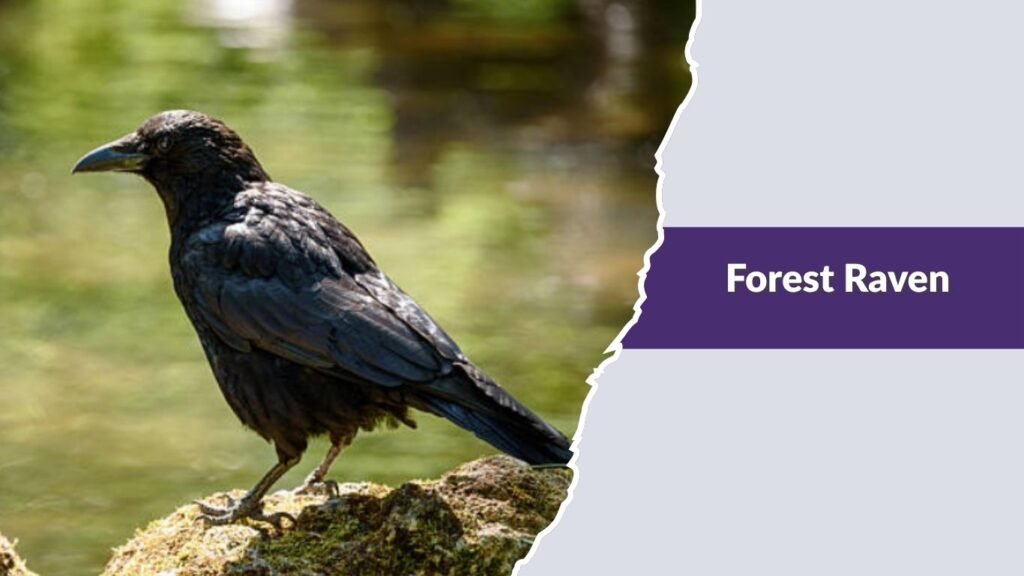
The Forest Raven is a large crow species native to southern Australia and Tasmania. It is known for its deep, resonant calls and strong presence in forested and coastal environments. This intelligent bird is often seen alone or in pairs, soaring or perched in tall trees.
Identification
- Large bird with entirely black plumage
- Glossy feathers with a slight blue or green sheen
- Thick, strong black bill
- Wedge-shaped tail
- Shaggy throat feathers
- Dark eyes and legs
- Deep, powerful call
Habitat
The Forest Raven prefers forests, woodlands, coastal areas, and mountainous regions. It is commonly found in areas with tall trees and open spaces for foraging. This species is less common in dry inland regions and more associated with cooler, wetter environments.
Comparison
Compared to the Little Crow, the Forest Raven is much larger and has a heavier bill and more prominent throat feathers. Its call is deeper and more resonant, while the Little Crow has a higher-pitched voice. Habitat differences also help distinguish them.
Diet and Lifespan
The Forest Raven is an omnivore, feeding on insects, small animals, carrion, fruits, and human food waste. It often forages on the ground or scavenges. Like other ravens, it is highly intelligent and adaptable. Its average lifespan is around 10 to 15 years in the wild.
26. New Caledonian Crow
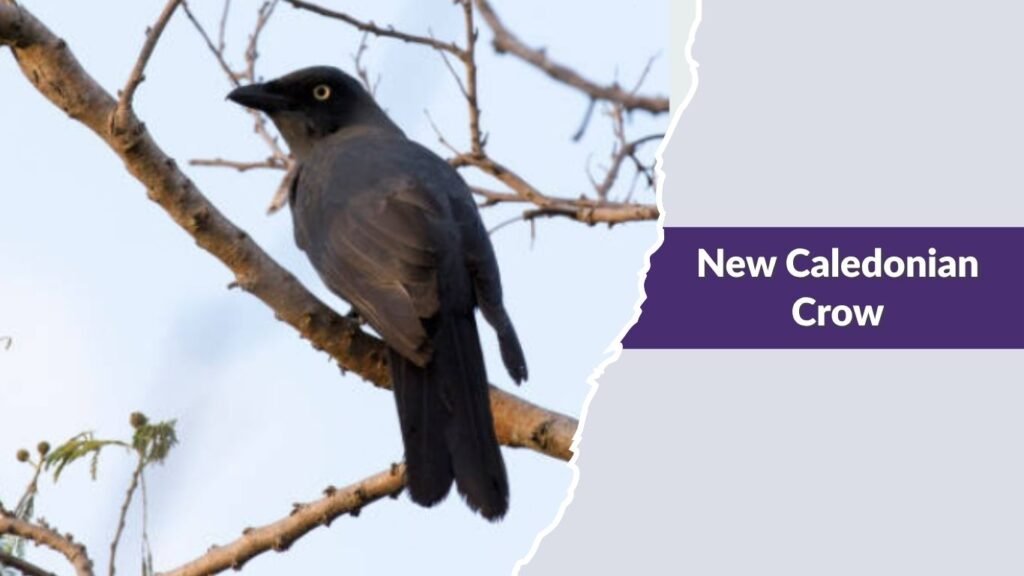
The New Caledonian Crow is one of the most intelligent birds in the world, native to the islands of New Caledonia in the Pacific. It is famous for its ability to use and even create tools to obtain food. This remarkable behavior has made it a subject of scientific study and a standout species among crows.
Identification
- Medium-sized crow with entirely black plumage
- Glossy feathers with a slight sheen
- Strong, slightly curved black bill
- Fan-shaped tail
- Dark eyes and legs
- Compact, sturdy body
- Often seen manipulating objects with its bill
Habitat
The New Caledonian Crow inhabits forests, woodlands, and forest edges on the islands of New Caledonia. It prefers areas with dense vegetation where it can find insects hidden in tree bark or branches. This species is less associated with urban areas and is more commonly found in natural habitats.
Comparison
Compared to the Forest Raven, the New Caledonian Crow is smaller and more specialized in behavior. Its most notable difference is its advanced tool use, which is rarely seen in other crow species. While many crows are intelligent, this species stands out for its problem-solving abilities.
Diet and Lifespan
The New Caledonian Crow feeds on insects, larvae, small animals, and fruits. It is especially known for using sticks or modified tools to extract insects from crevices. This advanced feeding behavior highlights its intelligence. Its lifespan is estimated to be around 10 to 15 years in the wild.
27. Long-billed Crow
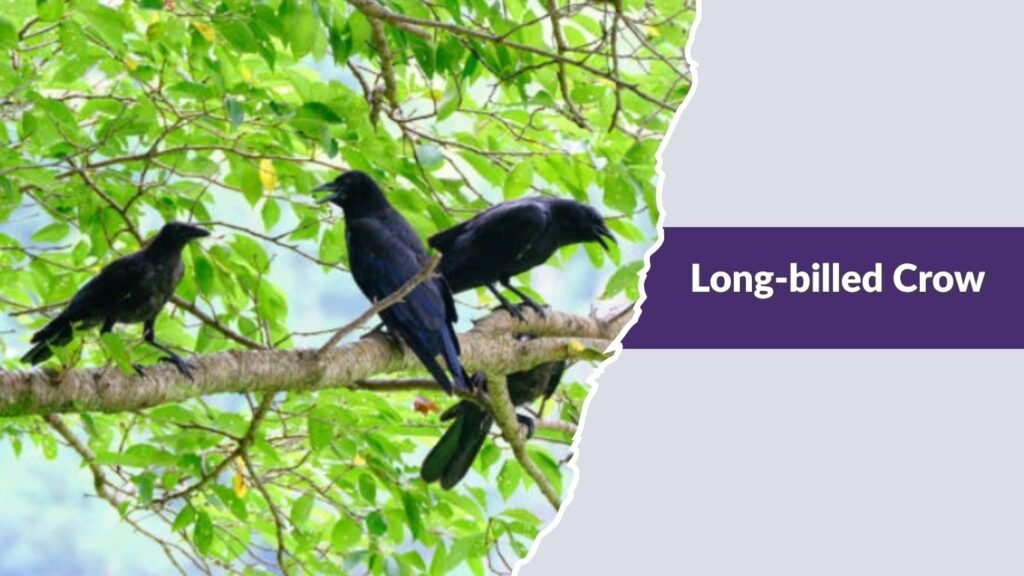
The Long-billed Crow is a widespread species found across South and Southeast Asia. It is highly adaptable and commonly seen in both rural and urban environments. Known for its intelligence and loud calls, this crow is often observed in pairs or small groups, especially around human settlements where food is readily available.
Identification
- Medium to large crow with entirely black plumage
- Glossy feathers with a slight green or purple sheen
- Long, slender, and slightly curved black bill
- Fan-shaped tail
- Dark eyes and legs
- Slightly elongated head profile
- Loud, harsh “caw” call
Habitat
The Long-billed Crow inhabits a wide range of environments, including forests, farmland, villages, and cities. It is especially common near human activity, where it can find abundant food. This species prefers open and semi-open areas with trees for nesting and perching, and it adapts well to different climates and landscapes.
Comparison
Compared to the American Crow, the Long-billed Crow has a noticeably longer and more slender bill. It is also more common in Asian regions, while the American Crow is found in North America. Its call may also sound harsher and more varied depending on the region.
Diet and Lifespan
The Long-billed Crow is an omnivore, feeding on insects, small animals, fruits, grains, carrion, and human food waste. It is highly opportunistic and often scavenges in urban areas. Like other crows, it is intelligent and resourceful. Its average lifespan is around 8 to 15 years in the wild.
FAQs
What is the difference between a crow and a raven?
Crows are generally smaller with fan-shaped tails and simpler calls like “caw,” while ravens are larger with wedge-shaped tails and deeper, croaking voices. Ravens also have thicker bills and shaggy throat feathers, making them appear more robust than crows.
How intelligent are crows?
Crows are among the most intelligent birds in the world. They can solve complex problems, use tools, recognize human faces, and even remember past experiences. Their intelligence is often compared to that of primates in terms of problem-solving abilities.
Where are crows commonly found?
Crows are found on almost every continent except Antarctica. They live in a wide range of habitats, including forests, grasslands, deserts, mountains, and urban areas. Their adaptability allows them to thrive in both natural and human environments.
What do crows eat?
Crows are omnivores with a very varied diet. They eat insects, fruits, seeds, small animals, carrion, and human food waste. Their opportunistic feeding behavior helps them survive in different environments.
Do crows live in groups?
Yes, many crow species are highly social. They often live and travel in groups called flocks. Some species gather in large numbers for roosting, especially during the non-breeding season.
