
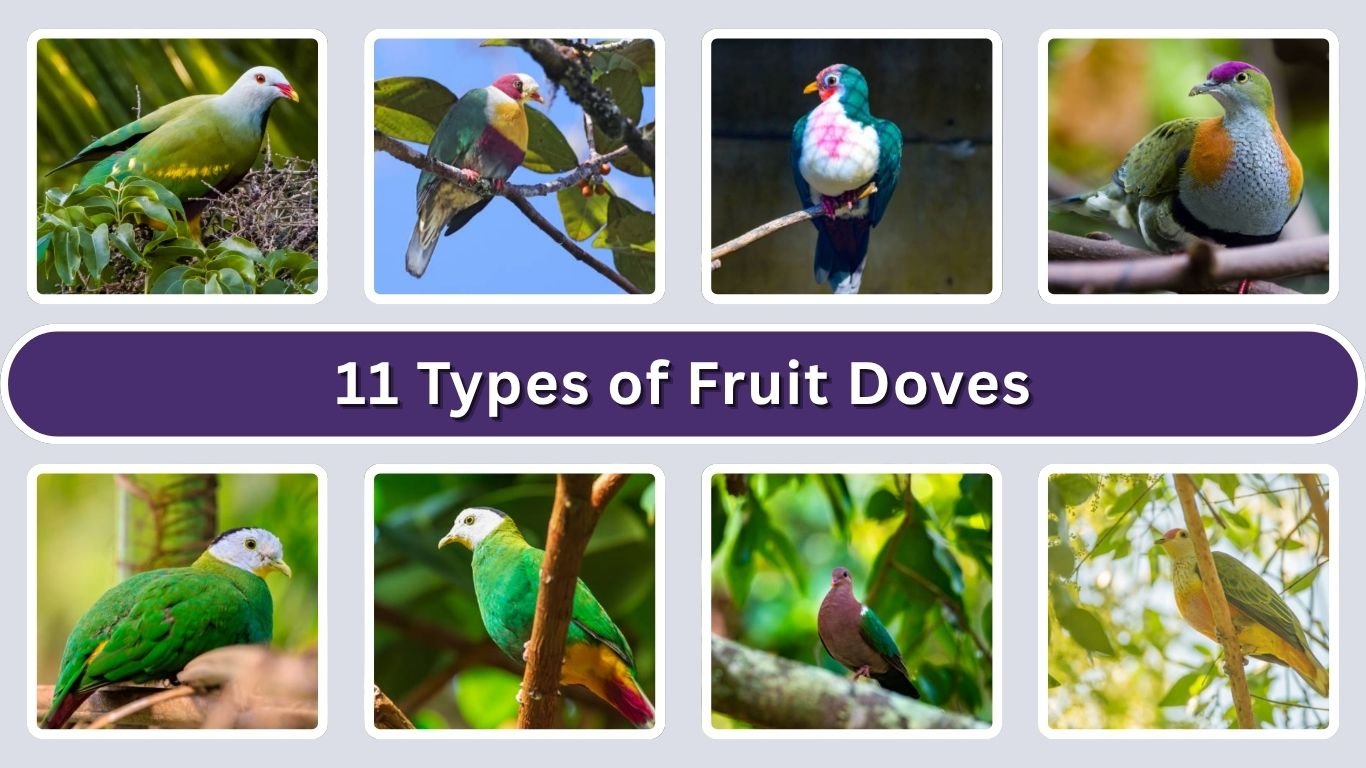
Fruit doves are among the most colorful and fascinating birds found in tropical regions. Known for their vibrant plumage and tree-dwelling lifestyle, these birds play a key role in maintaining forest ecosystems through seed dispersal. They are mostly found in Southeast Asia, Australia, and Pacific islands, living quietly in dense forests. In this guide, you’ll explore 11 different types of fruit doves, along with their unique features, habitats, and behaviors.
1. Pink-necked Green Pigeon
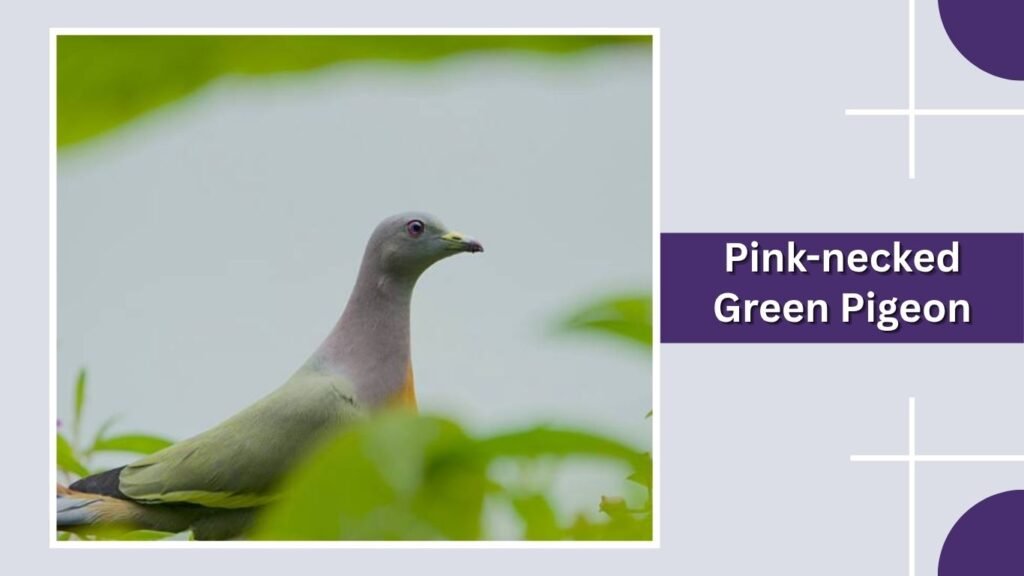
The Pink-necked Green Pigeon is a vibrant and eye-catching fruit dove native to Southeast Asia. It is especially admired for its bright green body and the soft pink patch on the neck of males, which creates a striking contrast. This species is commonly seen in both natural and urban environments, making it one of the more familiar fruit doves in its range. Its calm nature and preference for tree canopies make it an interesting bird for observers.
Identification
- Medium-sized bird with a plump, rounded body
- Bright green plumage covering most of the body
- Males display a distinct pink patch on the neck and upper breast
- Females are mostly green with less vivid coloration
- Yellowish underparts with smooth color blending
- Short tail and broad wings suited for quick flight
- Pale bluish bill with a slightly curved shape
Habitat
The Pink-necked Green Pigeon is widely found in lowland forests, coastal areas, mangroves, gardens, and urban parks. It prefers regions with abundant fruiting trees, which provide both food and shelter. This species has adapted well to human environments and is often spotted in city areas where large trees are present. It thrives in tropical and subtropical climates, particularly in countries like Malaysia, Indonesia, and Thailand. Its ability to live near people makes it more visible compared to other forest-dwelling fruit doves.
Behaviors
This pigeon spends most of its life in the canopy, rarely coming down to the ground. It is usually seen in small flocks or pairs, quietly moving among branches while feeding. The bird is known for its swift and direct flight between trees. It generally remains calm and silent, producing soft calls that are not easily heard from a distance. Its behavior is largely peaceful, and it avoids confrontation, relying on camouflage and height for safety.
Diet and Lifespan
The Pink-necked Green Pigeon mainly feeds on fruits and berries, with a strong preference for figs. It plays a vital ecological role by dispersing seeds across its habitat, contributing to forest regeneration. The bird plucks fruits directly from trees using its strong bill. In terms of lifespan, it typically lives around 5 to 10 years in the wild, although this can vary depending on environmental conditions, food availability, and predation.
2. Orange-bellied Fruit Dove
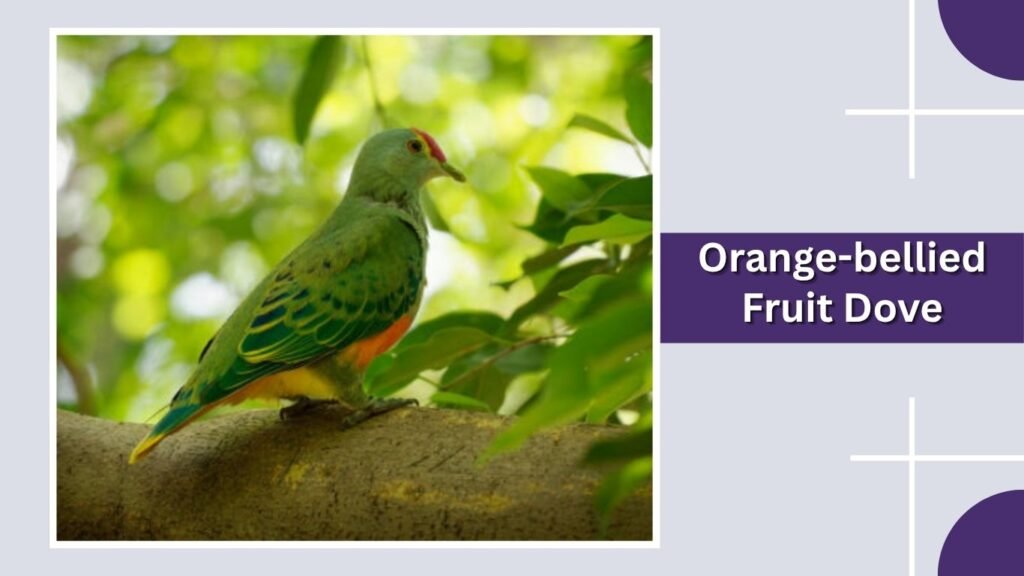
The Orange-bellied Fruit Dove is a small and brightly colored bird known for its vivid mix of green, orange, and yellow shades. Native to parts of Southeast Asia and nearby islands, this species is admired for its striking appearance and its quiet life among dense tree canopies.
Identification
- Small, compact body with a rounded shape
- Bright green upperparts and wings
- Distinct orange patch on the belly
- Yellowish underparts blending with the orange area
- Short tail and smooth feather texture
- Dark eyes and a pale, slightly curved bill
Habitat
The Orange-bellied Fruit Dove is typically found in tropical forests, woodland edges, and dense shrub areas. It prefers regions with abundant fruiting trees, which provide both food and shelter. This species is most common in lowland and hilly forest environments. It tends to avoid open areas and is rarely seen in heavily urbanized places, choosing instead to remain within natural vegetation where it can stay hidden and safe.
Behaviors
This bird is generally quiet and spends most of its time in the upper canopy of trees. It is often seen alone or in small groups, moving slowly while searching for food. Its flight is quick and direct, allowing it to travel efficiently between trees. The Orange-bellied Fruit Dove is not very vocal, producing soft calls that are difficult to hear unless nearby.
Diet and Lifespan
The diet of the Orange-bellied Fruit Dove mainly consists of fruits, berries, and figs. It feeds by picking fruits directly from branches and plays an important role in seed dispersal. Its lifespan in the wild is estimated to be around 5 to 10 years, depending on environmental conditions and natural threats.
3. Superb Fruit Dove
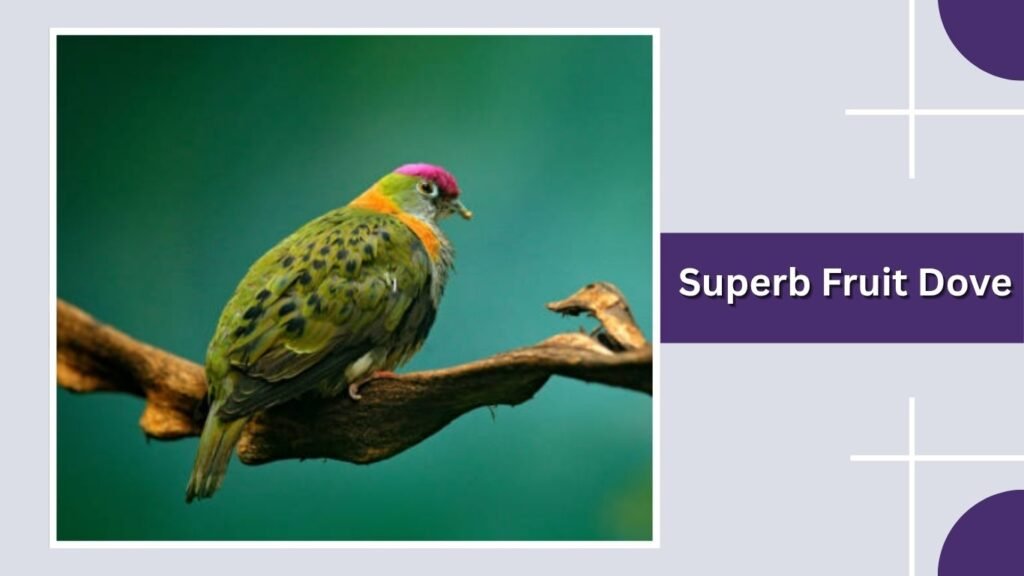
The Superb Fruit Dove is one of the most colorful fruit doves, known for its striking combination of green, purple, and yellow shades. Found mainly in Australia and nearby regions, this bird stands out due to its vibrant appearance and elegant presence in forest canopies.
Identification
- Small to medium-sized bird with a compact body
- Bright green wings and back
- Deep purple crown and chest in males
- Yellow underparts with a smooth transition of colors
- Short tail and rounded wings
- Females are mostly green with less vivid markings
Habitat
The Superb Fruit Dove is commonly found in rainforests, coastal forests, and woodland areas. It prefers dense vegetation with plenty of fruit-bearing trees. This species is often seen in eastern Australia and surrounding islands, where it thrives in humid, forested environments. It may also visit gardens and orchards if suitable food sources are available.
Behaviors
This dove spends most of its time high in the trees, rarely coming down to the ground. It is usually seen alone or in pairs, quietly moving through branches in search of food. Its flight is fast and direct, allowing it to travel between feeding areas efficiently. The Superb Fruit Dove is generally calm and produces soft, low calls.
Diet and Lifespan
The Superb Fruit Dove feeds mainly on fruits, berries, and figs. It plays an important ecological role by spreading seeds across forest areas. The bird carefully selects ripe fruits and swallows them whole. In the wild, it typically lives around 5 to 10 years, depending on habitat quality and environmental factors.
4. Wompoo Fruit Dove
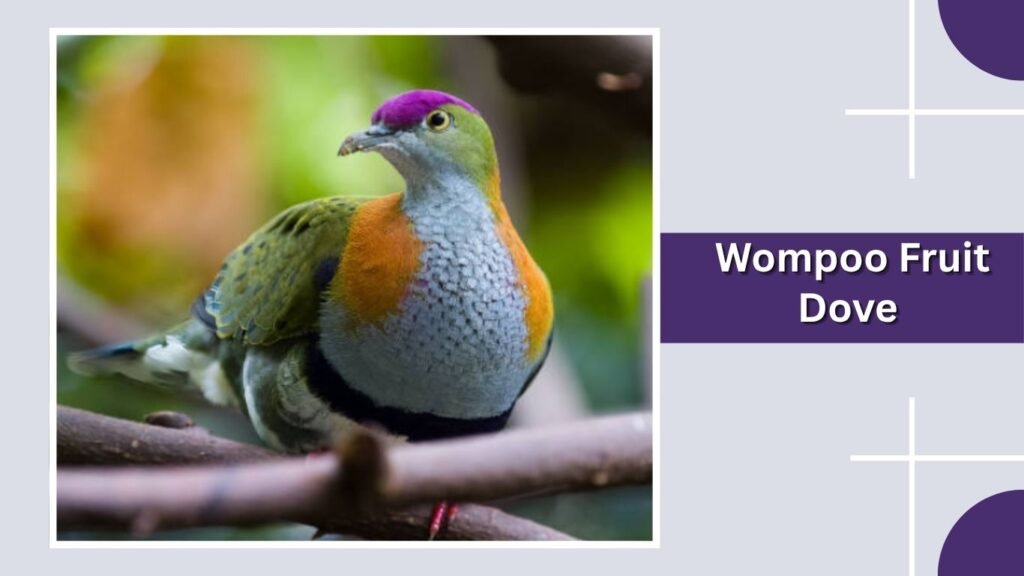
The Wompoo Fruit Dove is one of the largest and most colorful fruit doves, known for its rich mix of green, purple, and yellow plumage. It is native to rainforests of Australia and nearby regions, where it is often heard before it is seen due to its deep, booming call.
Identification
- Large, plump body compared to other fruit doves
- Bright green upperparts and wings
- Deep purple chest and underparts
- Yellow belly and undertail area
- Short tail and strong wings
- Pale eyes with a noticeable ring
Habitat
The Wompoo Fruit Dove is commonly found in dense tropical and subtropical rainforests. It prefers areas with tall trees and abundant fruit supply. This species is mainly seen in eastern Australia and nearby islands. It stays within forest canopies and is rarely found in open or urban environments, relying heavily on undisturbed forest habitats.
Behaviors
This bird spends most of its time in the upper canopy, moving quietly between branches while feeding. It is usually seen alone or in small groups. The Wompoo Fruit Dove is known for its deep, resonant call, which can travel long distances through the forest. Despite its size, it is often difficult to spot due to its calm and still behavior.
Diet and Lifespan
The Wompoo Fruit Dove feeds mainly on fruits, especially figs and large berries. It swallows fruits whole and helps disperse seeds across the forest. This makes it an important part of the ecosystem. In the wild, its lifespan is estimated to be around 6 to 10 years, depending on habitat conditions and natural threats.
5. Rose-crowned Fruit Dove
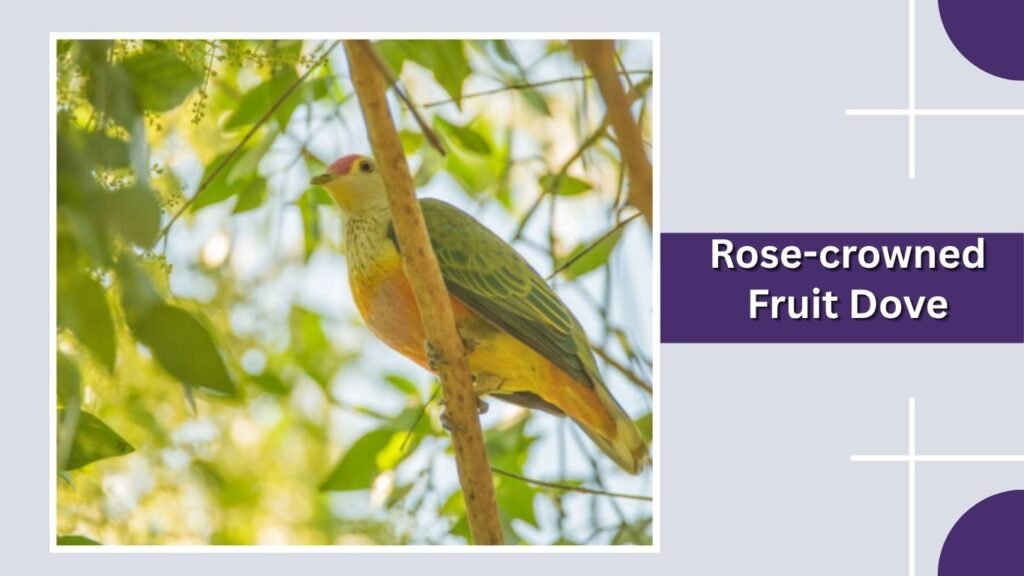
The Rose-crowned Fruit Dove is a beautifully colored species known for its soft green body and distinctive pinkish crown. Native to Australia, it is often seen quietly resting or feeding in forest canopies, blending well with surrounding foliage.
Identification
- Medium-sized bird with a plump, rounded body
- Bright green plumage covering most of the body
- Distinct rose-pink crown on the head
- Pale gray underparts with soft shading
- Short tail and smooth, compact wings
- Dark eyes with a pale, slightly curved bill
Habitat
The Rose-crowned Fruit Dove is commonly found in rainforests, coastal forests, and woodland areas. It prefers dense vegetation with plenty of fruit-bearing trees. This species is mainly distributed in eastern Australia, where it thrives in humid environments. It occasionally appears in gardens and orchards if suitable food sources are available, but it generally stays within forested regions.
Behaviors
This dove spends most of its time in the upper canopy, remaining still and quiet. It is often seen alone or in pairs, moving slowly among branches while feeding. Its flight is direct and swift, allowing it to travel between feeding sites efficiently. The Rose-crowned Fruit Dove is generally calm and produces soft, low-pitched calls.
Diet and Lifespan
The Rose-crowned Fruit Dove primarily feeds on fruits, berries, and figs. It plays an important role in seed dispersal within its habitat. The bird carefully selects ripe fruits and swallows them whole. Its lifespan in the wild is estimated to be around 5 to 10 years, depending on environmental conditions and predation.
6. Jambu Fruit Dove
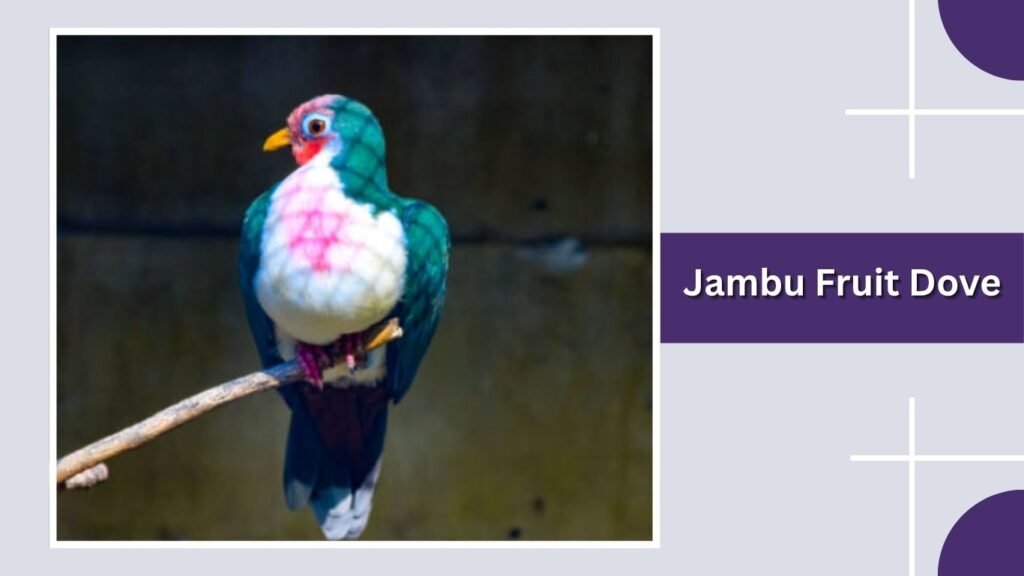
The Jambu Fruit Dove is a striking and colorful bird known for its bold combination of green, white, and deep red plumage. Native to Southeast Asia, it is especially admired for the vivid crimson patch on its face and chest, making it one of the most visually distinctive fruit doves.
Identification
- Medium-sized bird with a plump, rounded body
- Bright green wings and upperparts
- Distinct deep red face and upper chest
- White belly that contrasts sharply with the red and green
- Short tail and compact wings
- Pale bill and dark, noticeable eyes
Habitat
The Jambu Fruit Dove is commonly found in tropical rainforests, mangroves, and wooded areas. It prefers dense vegetation with plenty of fruiting trees. This species is widely distributed across regions like Malaysia, Indonesia, and Thailand. It thrives in humid environments and is rarely seen in open or urban areas, choosing instead to remain within forest cover where it can find both food and shelter.
Behaviors
This bird spends most of its time in the canopy, quietly moving among branches. It is usually seen alone or in small groups, feeding or resting. The Jambu Fruit Dove is generally calm and not very vocal, producing soft cooing sounds. Its flight is fast and direct, allowing it to move efficiently between fruiting trees while staying hidden from predators.
Diet and Lifespan
The Jambu Fruit Dove mainly feeds on fruits, especially figs and small berries. It plays an important role in seed dispersal, helping maintain forest ecosystems. The bird plucks fruits directly from trees and swallows them whole. In the wild, its lifespan is estimated to be around 5 to 10 years, depending on habitat conditions and environmental factors.
7. Beautiful Fruit Dove
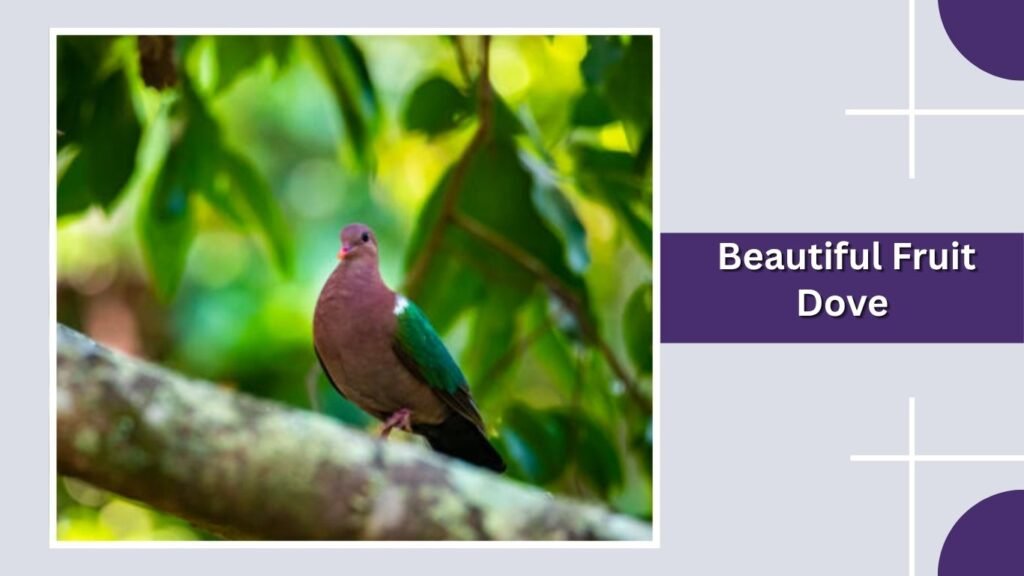
The Beautiful Fruit Dove lives up to its name with its bright and varied coloration. Native to parts of Indonesia, this small dove is admired for its vibrant mix of green, yellow, and purple shades, making it one of the more visually appealing fruit doves.
Identification
- Small, compact body with a rounded shape
- Bright green upperparts and wings
- Purple crown or head area
- Yellowish underparts with smooth color blending
- Short tail and neatly shaped wings
- Dark eyes with a pale, slightly curved bill
Habitat
The Beautiful Fruit Dove is typically found in tropical forests, especially in lowland and hilly regions. It prefers dense vegetation with abundant fruiting trees. This species is mostly seen in Indonesia, where it thrives in humid forest environments. It tends to stay within natural habitats and is rarely found in urban or open areas.
Behaviors
This dove spends most of its time in the upper canopy, moving quietly among branches. It is usually seen alone or in pairs, feeding or resting. The Beautiful Fruit Dove is calm and not very vocal, producing soft and subtle calls. Its flight is quick and direct, allowing it to move efficiently between trees.
Diet and Lifespan
The Beautiful Fruit Dove mainly feeds on fruits, berries, and figs. It plays an important role in spreading seeds across its habitat, supporting forest growth. It typically forages by picking fruits directly from branches. In the wild, its lifespan is estimated to be around 5 to 10 years, depending on environmental conditions and predators.
8. Claret-breasted Fruit Dove
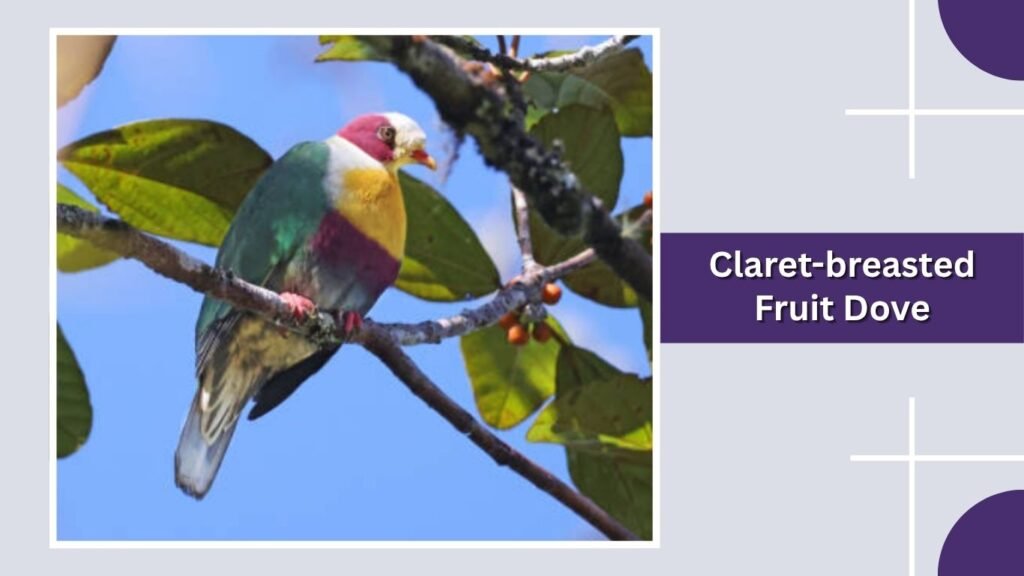
The Claret-breasted Fruit Dove is a colorful and eye-catching species known for its deep wine-colored chest and bright green body. Native to parts of Southeast Asia, it is a forest-dwelling bird that remains mostly hidden among dense foliage.
Identification
- Small to medium-sized body with a rounded shape
- Bright green upperparts and wings
- Deep claret (dark red) colored breast
- Yellowish underparts blending with the chest color
- Short tail and compact wings
- Pale bill with dark, expressive eyes
Habitat
The Claret-breasted Fruit Dove is commonly found in tropical rainforests, woodland edges, and dense vegetation. It prefers lowland forests with plenty of fruiting trees. This species is mainly distributed in Indonesia and nearby islands, where it thrives in warm and humid environments. It usually avoids open spaces and stays within thick forest cover.
Behaviors
This dove is quiet and spends most of its time in the tree canopy. It is usually seen alone or in pairs, moving slowly while feeding. The Claret-breasted Fruit Dove is not very vocal and produces soft calls that are hard to detect. Its flight is swift and direct, helping it travel between fruiting trees efficiently.
Diet and Lifespan
The Claret-breasted Fruit Dove mainly feeds on fruits, berries, and figs. It plays an important role in seed dispersal within forest ecosystems. The bird picks fruits directly from branches and swallows them whole. Its lifespan in the wild is estimated to be around 5 to 10 years, depending on habitat conditions and environmental factors.
9. Black-naped Fruit Dove
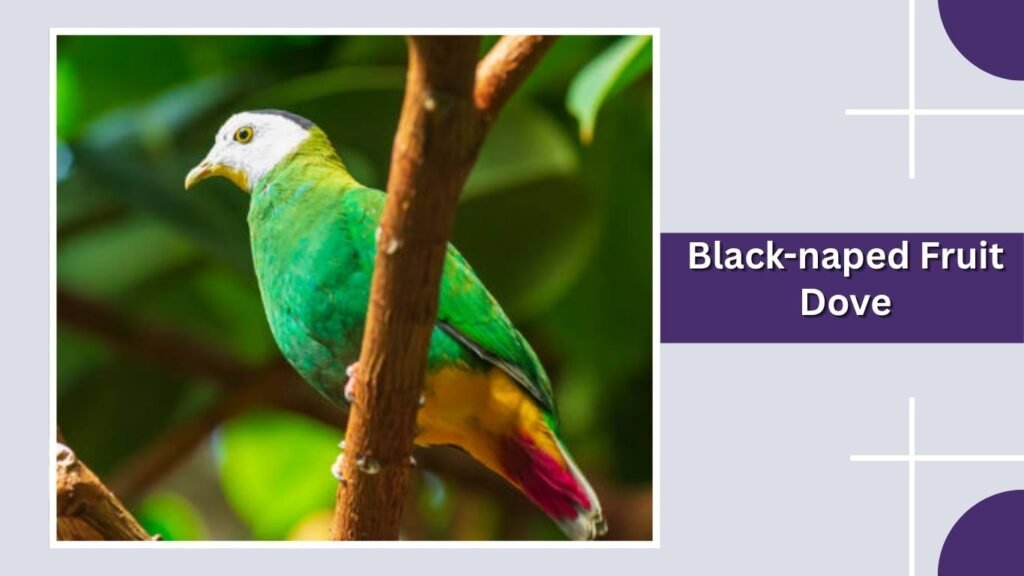
The Black-naped Fruit Dove is a brightly colored species known for the distinct black marking on the back of its neck. It is widely found across Southeast Asia and is admired for its vibrant green body and contrasting head colors.
Identification
- Medium-sized bird with a plump body
- Bright green plumage covering most of the body
- Distinct black patch on the nape (back of the neck)
- Soft gray or purplish head depending on the region
- Yellowish underparts with smooth blending
- Short tail and strong wings
- Pale bill and dark eyes
Habitat
The Black-naped Fruit Dove is commonly found in tropical forests, mangroves, coastal woodlands, and gardens. It prefers areas with abundant fruiting trees and can adapt well to human environments. This species is widely distributed across countries like Indonesia, Malaysia, and the Philippines, thriving in warm, humid climates.
Behaviors
This dove spends most of its time in the tree canopy, often seen perched quietly while feeding. It is usually found alone or in small groups. The Black-naped Fruit Dove is generally calm and produces soft cooing sounds. Its flight is quick and direct, allowing it to move easily between trees.
Diet and Lifespan
The Black-naped Fruit Dove mainly feeds on fruits, berries, and figs. It plays an important role in spreading seeds throughout its habitat. The bird typically feeds by plucking fruits directly from branches. Its lifespan in the wild is estimated to be around 5 to 10 years, depending on environmental conditions and predators.
10. White-headed Fruit Dove
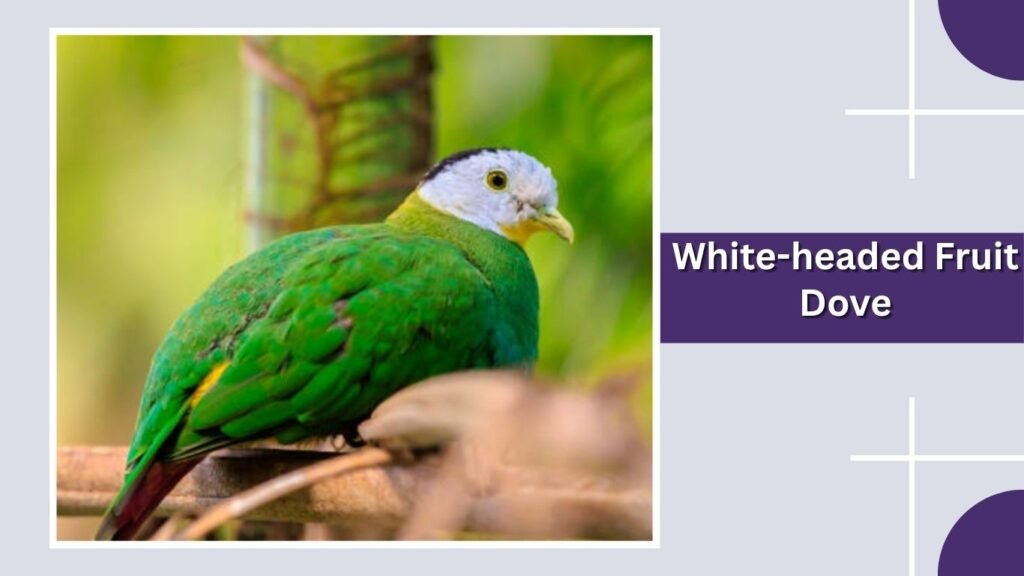
The White-headed Fruit Dove is a distinctive and elegant species known for its contrasting white head and green body. Native to parts of Southeast Asia, it is a quiet forest bird that blends well into its surroundings despite its noticeable head coloration.
Identification
- Medium-sized bird with a rounded, plump body
- Bright green upperparts and wings
- Distinct white head that contrasts with the body
- Soft gray or yellowish underparts
- Short tail and smooth, compact wings
- Pale bill with dark, alert eyes
Habitat
The White-headed Fruit Dove is typically found in tropical forests, woodland edges, and dense vegetation. It prefers areas with plenty of fruiting trees and thick canopy cover. This species is mainly seen in Southeast Asia, where it thrives in humid and warm environments. It usually avoids open areas and remains within forested regions.
Behaviors
This dove spends most of its time in the upper canopy, quietly moving among branches. It is usually seen alone or in pairs, rarely forming large groups. The White-headed Fruit Dove is calm and not very vocal, producing soft cooing sounds. Its flight is quick and direct, helping it move efficiently between feeding sites.
Diet and Lifespan
The White-headed Fruit Dove mainly feeds on fruits, berries, and figs. It plays an important role in seed dispersal within its habitat. The bird picks fruits directly from trees and swallows them whole. Its lifespan in the wild is estimated to be around 5 to 10 years, depending on habitat conditions and environmental factors.
11. Many-colored Fruit Dove
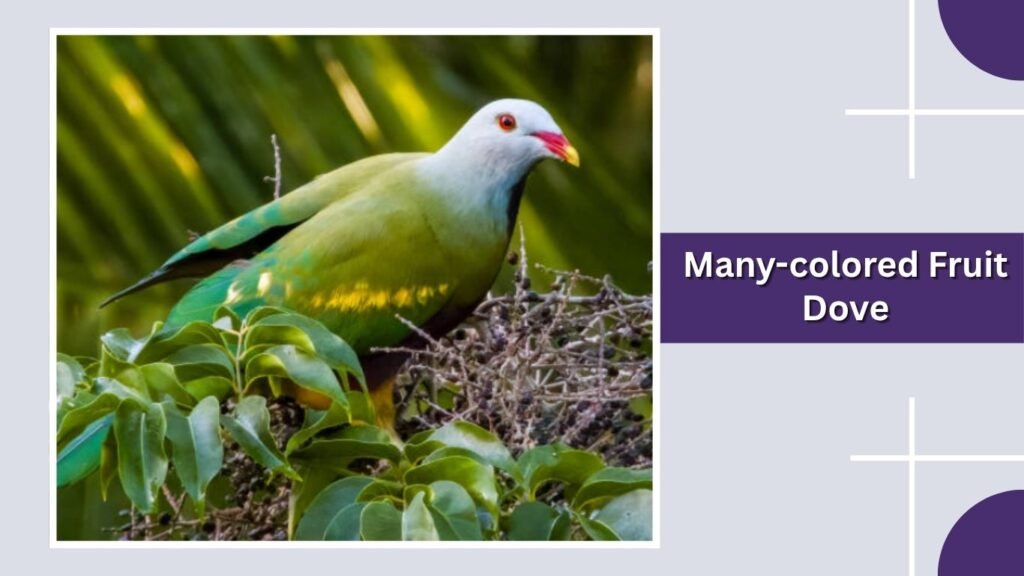
The Many-colored Fruit Dove is one of the most vividly colored doves, displaying a stunning mix of bright hues across its body. Native to Pacific islands, this species is highly admired for its unique and artistic appearance, making it stand out among fruit doves.
Identification
- Small to medium-sized bird with a compact body
- Bright green wings and back
- Multi-colored plumage including purple, yellow, orange, and white
- Distinctive colorful head with contrasting patches
- Short tail and rounded wings
- Pale bill with dark, expressive eyes
Habitat
The Many-colored Fruit Dove is typically found in tropical forests, especially on Pacific islands such as Fiji. It prefers dense vegetation with plenty of fruiting trees. This species thrives in warm, humid environments and is usually seen in undisturbed forest areas. It rarely appears in open or urban habitats, relying on forest cover for protection and food.
Behaviors
This dove spends most of its time in the canopy, quietly moving among branches. It is usually seen alone or in small groups while feeding. The Many-colored Fruit Dove is generally calm and produces soft, low calls. Its flight is fast and direct, allowing it to travel efficiently between fruiting trees.
Diet and Lifespan
The Many-colored Fruit Dove mainly feeds on fruits, berries, and figs. It plays an important role in seed dispersal within its ecosystem. The bird carefully selects ripe fruits and swallows them whole. In the wild, its lifespan is estimated to be around 5 to 10 years, depending on environmental conditions and natural threats.
FAQs
What is a fruit dove?
A fruit dove is a type of pigeon that mainly feeds on fruits and lives in tropical and subtropical forests. These birds are known for their bright and colorful plumage, especially in males. They usually stay in tree canopies and play an important role in spreading seeds across forests.
Where are fruit doves found?
Fruit doves are mostly found in Southeast Asia, Australia, and Pacific islands. They prefer warm climates with dense forests and plenty of fruiting trees. Some species may also be seen in gardens or plantations, but most remain in natural forest habitats.
What do fruit doves eat?
Fruit doves primarily eat fruits such as figs, berries, and small soft fruits. They swallow fruits whole and later disperse the seeds through their droppings. Occasionally, they may eat small insects, but fruits make up the majority of their diet.
Are fruit doves migratory birds?
Most fruit dove species are non-migratory and stay in the same region year-round. However, they may move locally in search of food, especially when fruit availability changes with the seasons. These movements are usually short and not considered true migration.
How long do fruit doves live?
Fruit doves generally live between 5 to 10 years in the wild. Their lifespan depends on factors such as food availability, habitat quality, and predation. In protected environments with fewer threats, they may live slightly longer.
