
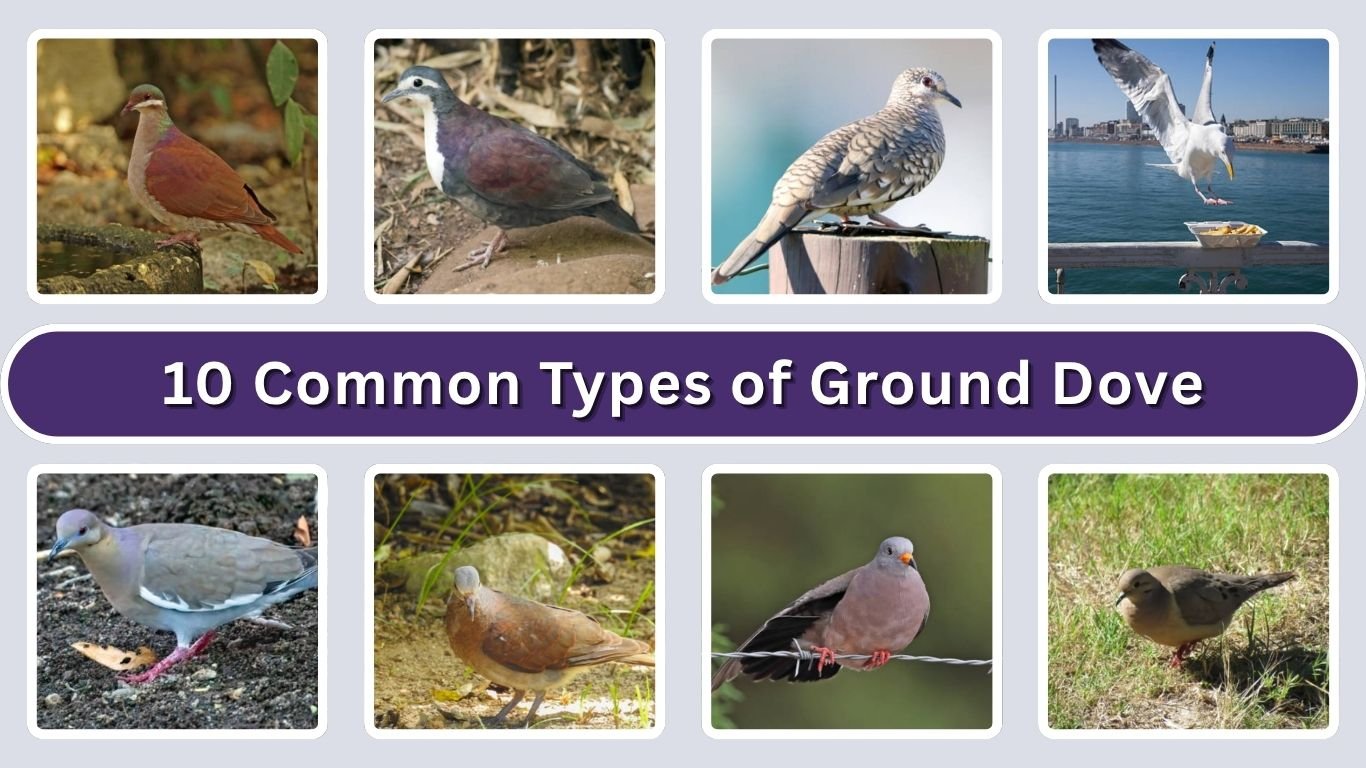
Ground doves are small, gentle birds known for their calm behavior and ground-feeding habits. Found mainly in warm regions, these birds adapt to a variety of habitats, from open fields to dense forests. Each species has unique features, colors, and behaviors that make them interesting to observe. In this guide, you’ll discover ten common types of ground doves, along with their key characteristics, habitats, and lifestyles, helping you better understand these fascinating birds.
1. Common Ground Dove
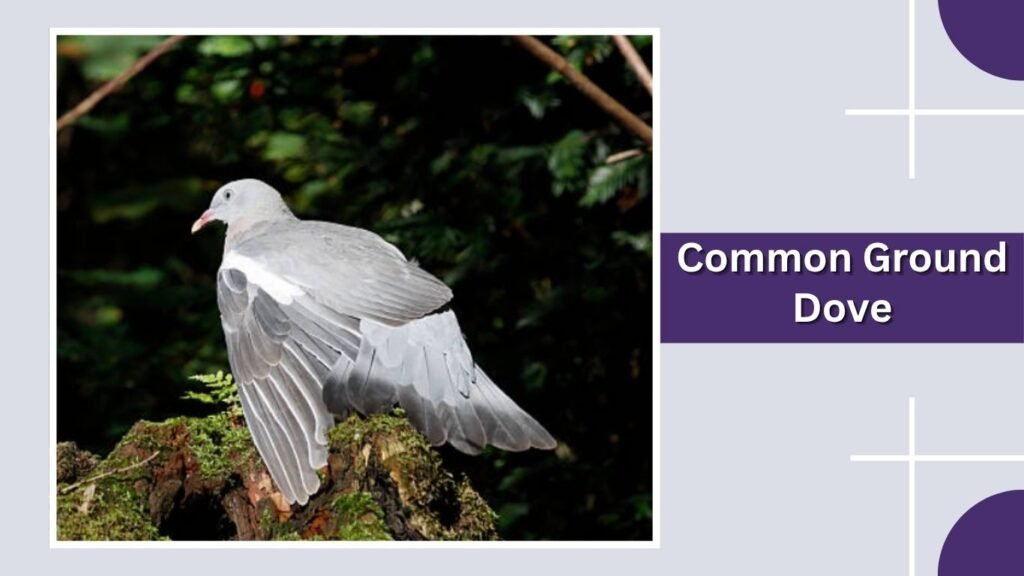
The Common Ground Dove is one of the smallest and most widespread doves found across the Americas. It is especially common in warm regions and is easily recognized by its habit of foraging on the ground. Despite its small size, it adapts well to both natural and human-altered environments, often appearing in open fields, gardens, and roadside areas.
Identification
- Small, compact body with a short tail
- Brownish-gray feathers with a scaled appearance on the wings
- Pink or reddish base on the bill
- Dark spotting on the wings
- Reddish legs and feet
- Slightly rounded head with a soft, delicate look
Habitat
The Common Ground Dove prefers open and semi-open habitats where it can easily access food on the ground. It is commonly found in grasslands, agricultural fields, scrublands, and urban outskirts. This bird thrives in tropical and subtropical climates and is often seen in dry, warm regions. It can also adapt to human presence, frequently appearing in parks, gardens, and along roadsides where seeds are abundant.
Behaviors
This dove spends most of its time walking on the ground rather than perching in trees. It moves in a calm, steady manner while searching for food. When startled, it flies in short, quick bursts before settling again. The Common Ground Dove is usually seen alone or in pairs and produces a soft, rhythmic cooing sound that is repeated frequently.
Diet and Lifespan
The diet of the Common Ground Dove mainly consists of small seeds and grains found on the ground. It may occasionally consume tiny insects, but plant material forms the majority of its food. This feeding behavior makes it an important part of the ecosystem by helping in seed dispersal. In the wild, it typically lives between 3 to 5 years, although lifespan can vary depending on habitat conditions and threats from predators.
2. Ruddy Ground Dove
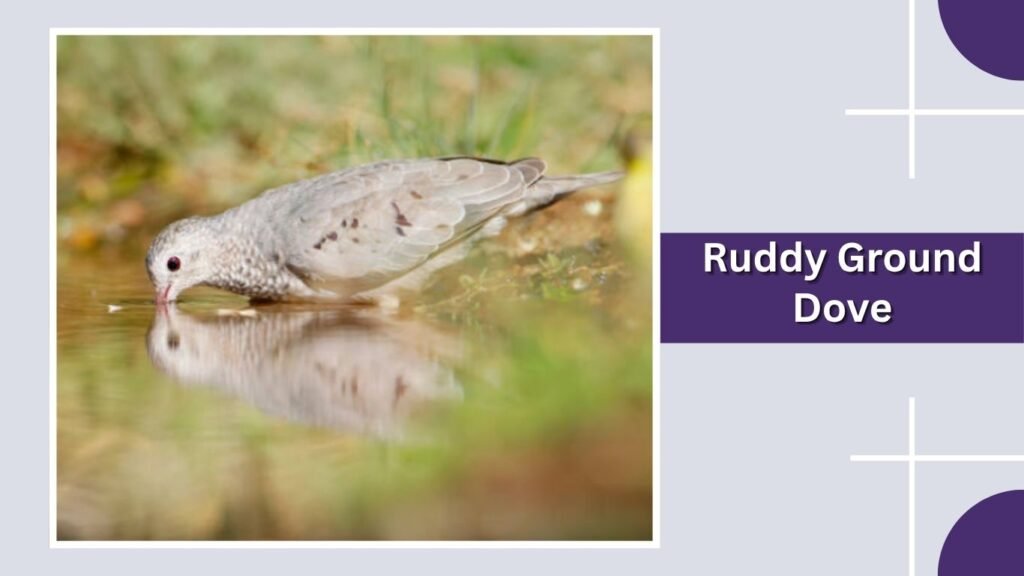
The Ruddy Ground Dove is a small, warm-colored dove commonly found in tropical and subtropical regions. It is known for its rich reddish-brown plumage and adaptability to various environments, especially areas close to human settlements.
Identification
- Small and slender body shape
- Reddish-brown (ruddy) plumage, especially in males
- Females appear duller with more grayish tones
- Fine scaling pattern on wings
- Short tail with slightly rounded edges
- Dark bill and pinkish legs
Habitat
The Ruddy Ground Dove prefers open and semi-open areas such as farmland, grasslands, gardens, and urban outskirts. It is widely distributed across Central and South America and has expanded into parts of North America. This species thrives in warm climates and is often seen near human habitation where food sources are easily available.
Behaviors
This dove is usually seen foraging on the ground, either alone or in pairs. It walks calmly while searching for seeds and occasionally flies short distances when disturbed. The Ruddy Ground Dove is known for its soft, repetitive cooing call. It is generally shy but can become quite accustomed to human presence in populated areas.
Diet and Lifespan
The Ruddy Ground Dove primarily feeds on small seeds and grains found on the ground. It may also consume small insects occasionally. Its feeding habits help maintain ecological balance by dispersing seeds. In the wild, it typically lives around 3 to 5 years, depending on environmental conditions and predation.
3. Blue Ground Dove
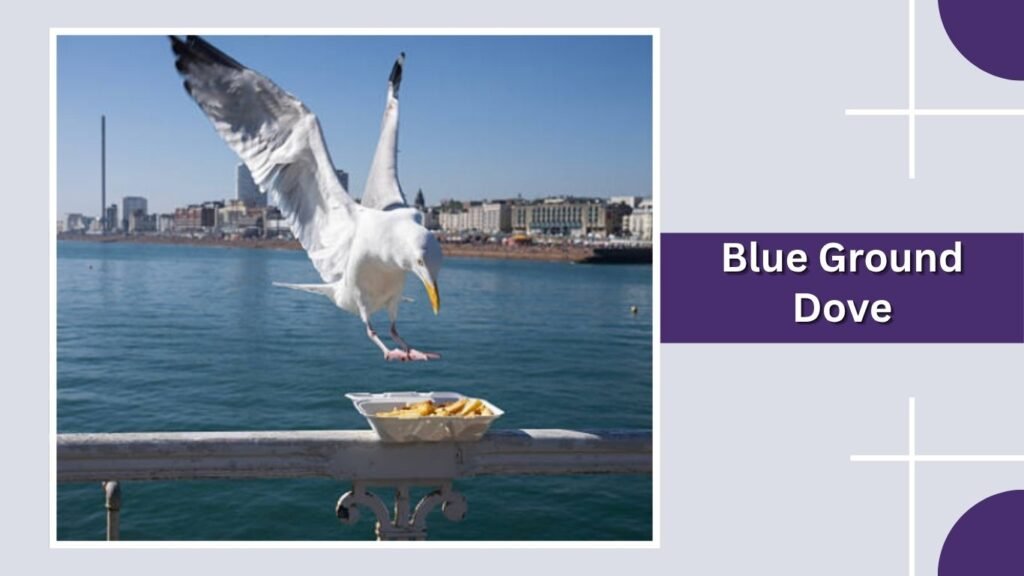
The Blue Ground Dove is a small and striking species known for its soft bluish-gray coloration. It is less commonly seen than other ground doves but stands out due to its subtle beauty and preference for forested environments.
Identification
- Small, delicate body structure
- Soft bluish-gray plumage, especially in males
- Females appear more brownish-gray
- Slightly rounded wings with smooth feather texture
- Short tail and slender bill
- Dark eyes with a gentle expression
Habitat
The Blue Ground Dove is typically found in tropical forests, woodland edges, and shaded areas. It prefers environments with dense vegetation where it can remain hidden while foraging. This species is most commonly seen in parts of Central and South America. Unlike other ground doves, it is less likely to be found in open or urban areas.
Behaviors
This dove is generally shy and secretive, often staying under cover rather than out in the open. It spends much of its time walking quietly on the forest floor in search of food. When disturbed, it flies quickly to nearby cover. Its call is soft and low, making it difficult to detect in dense habitats.
Diet and Lifespan
The Blue Ground Dove mainly feeds on small seeds, fallen fruits, and occasionally tiny insects. It forages mostly on the ground, picking food from leaf litter. Its lifespan in the wild is not well documented but is estimated to be around 3 to 5 years, similar to other small dove species.
4. Plain-breasted Ground Dove
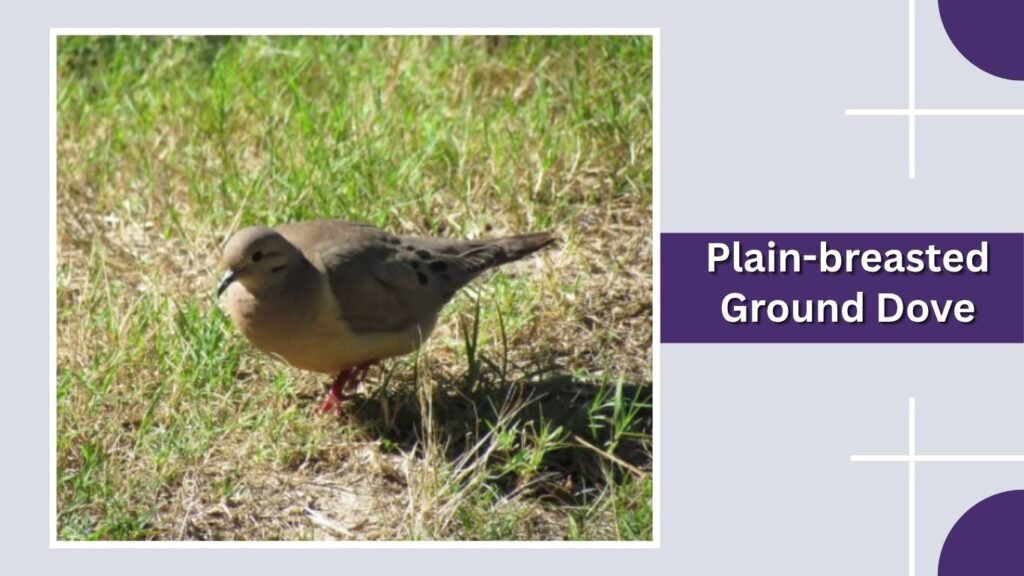
The Plain-breasted Ground Dove is a small and subtle-looking bird known for its soft, uniform coloring. Unlike more patterned doves, it has a simpler appearance, which helps it blend easily into its natural surroundings.
Identification
- Small size with a slim, compact body
- Plain brownish or grayish breast with minimal markings
- Wings may show faint scaling or soft patterns
- Short tail and rounded wings
- Dark bill and relatively long legs
- Overall muted and smooth feather coloration
Habitat
This species prefers tropical and subtropical regions, especially areas with dense vegetation such as forest edges, secondary growth, and shrublands. It is often found near water sources and in humid environments. The Plain-breasted Ground Dove tends to avoid highly open or heavily urbanized areas, favoring quieter, more natural habitats.
Behaviors
The Plain-breasted Ground Dove is typically shy and not easily noticed. It spends most of its time on the ground, quietly searching for food. When threatened, it quickly flies into nearby cover rather than staying exposed. It is usually seen alone or in pairs and communicates with soft, low-pitched cooing sounds.
Diet and Lifespan
Its diet mainly consists of small seeds and grains, along with occasional insects. It forages by walking slowly across the ground, picking food carefully. Like many small doves, its lifespan in the wild is estimated to be around 3 to 5 years, depending on environmental conditions and predator presence.
5. Scaled Dove
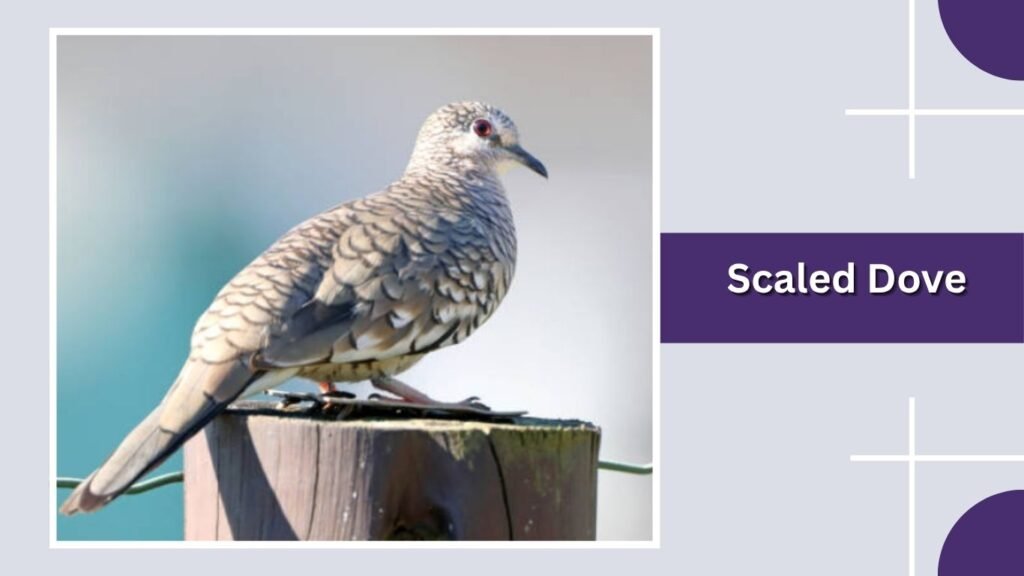
The Scaled Dove is a medium-small ground dove recognized for the distinct “scaled” pattern across its feathers. This unique marking gives it a textured appearance, making it stand out among other ground doves. It is commonly found in warm regions and adapts well to open environments.
Identification
- Medium-small size with a compact body
- Distinct scaled pattern on neck, breast, and wings
- Grayish-brown overall coloration
- Slightly longer tail compared to some ground doves
- Dark bill with pinkish or reddish legs
- Subtle contrast between body and wing patterns
Habitat
The Scaled Dove is commonly found in open and semi-open habitats such as dry grasslands, scrublands, agricultural fields, and rural areas. It prefers warm, arid, or semi-arid climates and is often seen in places with scattered vegetation. This species is also known to adapt to human-modified environments, including villages and roadside areas, where food is easily available.
Behaviors
This dove spends much of its time on the ground, walking steadily while searching for food. It is usually seen alone or in small groups. When disturbed, it flies quickly but not very far before settling again. The Scaled Dove produces a soft, repetitive cooing sound and tends to be calm and unobtrusive in its behavior.
Diet and Lifespan
The Scaled Dove mainly feeds on small seeds and grains found on the ground. It may also consume tiny insects occasionally. Its feeding behavior helps in seed dispersal within its habitat. In the wild, it typically lives around 3 to 5 years, though lifespan may vary depending on environmental conditions and predators.
6. Croaking Ground Dove
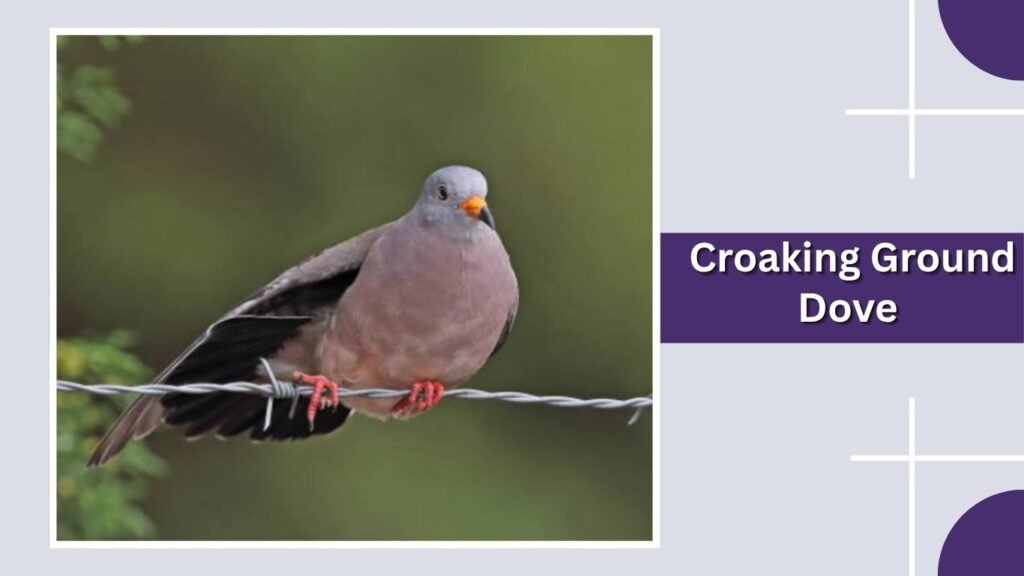
The Croaking Ground Dove is a small and slender dove known for its distinctive call, which sounds like a soft croak. It is widely distributed across dry and open regions and is often seen quietly moving along the ground.
Identification
- Small, slim body with a slightly elongated shape
- Pale brown or grayish plumage
- Fine scaled pattern on the neck and wings
- Long, narrow tail with pointed edges
- Dark bill and pinkish legs
- Subtle facial features with a calm appearance
Habitat
The Croaking Ground Dove is commonly found in dry, open habitats such as scrublands, savannas, grasslands, and agricultural areas. It prefers warm climates and is often seen in regions with sparse vegetation. This species adapts well to rural and semi-urban environments, especially where there is easy access to food on the ground.
Behaviors
This dove spends most of its time walking on the ground in search of food. It is usually seen alone or in pairs and tends to stay low and quiet. When disturbed, it flies short distances before landing again. Its name comes from its unique, repetitive croaking call, which is softer than many other dove species.
Diet and Lifespan
The Croaking Ground Dove mainly feeds on small seeds and grains, occasionally supplementing its diet with tiny insects. It forages by slowly walking and picking food from the ground. Its average lifespan in the wild is around 3 to 5 years, depending on environmental conditions and predation.
7. Ruddy Quail-Dove
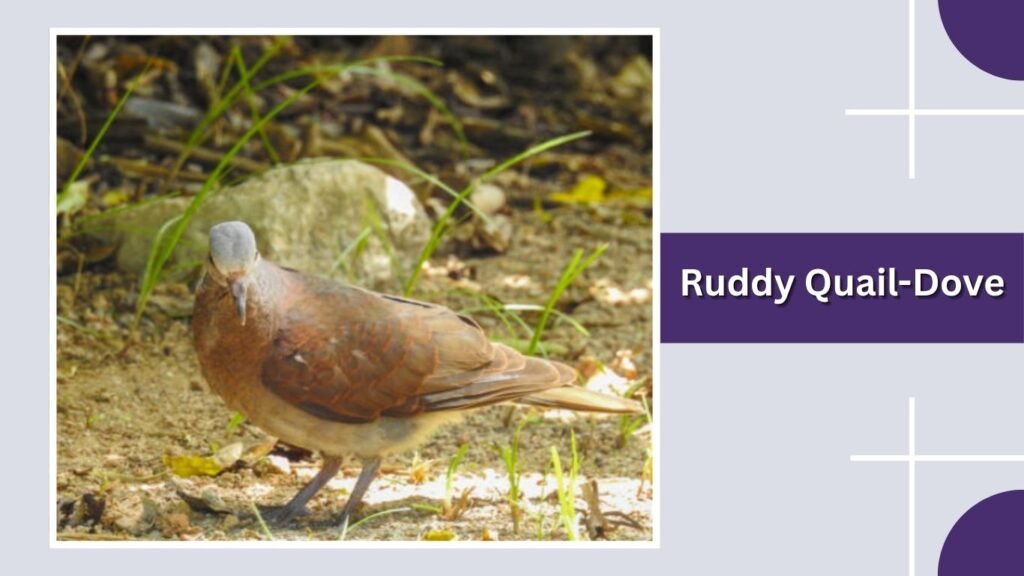
The Ruddy Quail-Dove is a shy, ground-dwelling bird known for its rich reddish coloration and preference for dense forest habitats. Unlike more open-area ground doves, this species is rarely seen in the open and is often heard before it is seen.
Identification
- Medium-sized dove with a sturdy body
- Rich reddish-brown (ruddy) plumage overall
- Darker wings with subtle shading
- Short tail and rounded wings
- Dark bill and reddish or pinkish legs
- Bright eyes that stand out against its plumage
Habitat
The Ruddy Quail-Dove primarily inhabits tropical and subtropical forests, especially dense lowland and montane forests. It prefers thick undergrowth where it can remain hidden from predators. This species is commonly found in Central and South America and tends to avoid open or urban areas, staying deep within forest cover.
Behaviors
This bird is very secretive and spends most of its time on the forest floor. It moves quietly through leaf litter while searching for food. When disturbed, it quickly retreats into dense vegetation rather than flying long distances. It is usually solitary and produces soft, low-pitched calls that are difficult to locate.
Diet and Lifespan
The Ruddy Quail-Dove feeds mainly on seeds, fallen fruits, and small invertebrates found on the forest floor. It forages slowly and carefully among leaves and debris. Its lifespan in the wild is not precisely known but is estimated to be around 3 to 5 years, depending on environmental factors and predation.
8. Violaceous Quail-Dove
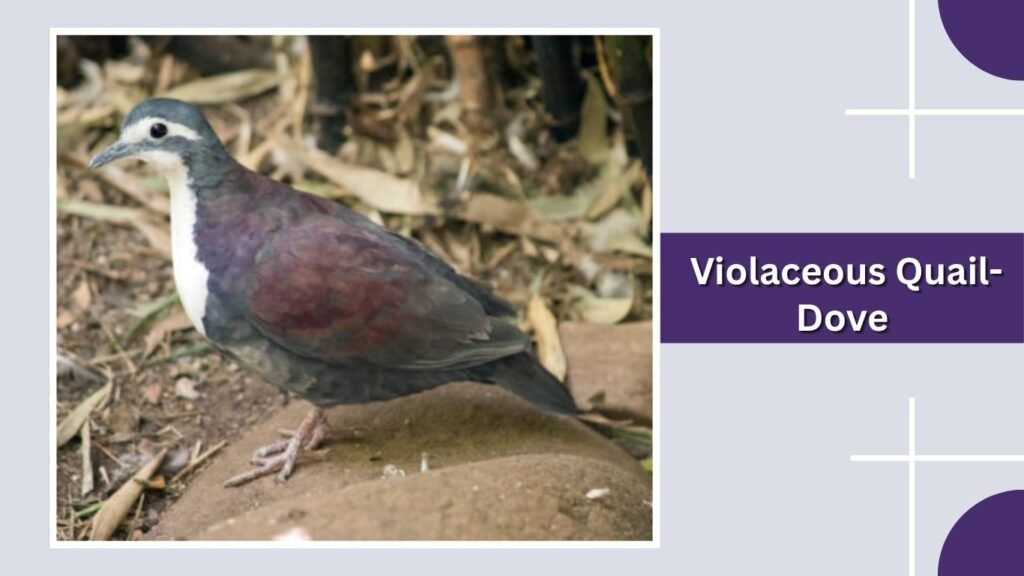
The Violaceous Quail-Dove is a beautifully colored, ground-dwelling dove known for its deep violet or purplish tones. It is a secretive species that prefers dense forests and is more often heard than seen due to its quiet and hidden lifestyle.
Identification
- Medium-sized, compact body
- Deep violet or purplish plumage, especially on the upperparts
- Brownish or grayish underparts with soft shading
- Short tail and rounded wings
- Dark bill and reddish legs
- Bright, noticeable eye color contrasting with the face
Habitat
The Violaceous Quail-Dove lives mainly in tropical and subtropical forests, including both lowland and mountainous regions. It prefers dense vegetation with thick undergrowth, where it can stay concealed. This species is found in parts of Central and South America and avoids open landscapes, remaining within forest interiors.
Behaviors
This dove is highly secretive and spends most of its time walking quietly on the forest floor. It is usually solitary and avoids human presence. When disturbed, it quickly disappears into dense cover rather than flying far. Its call is soft and low, often echoing through the forest, making it easier to hear than to see.
Diet and Lifespan
The Violaceous Quail-Dove feeds mainly on seeds, fallen fruits, and small insects. It forages by carefully picking food from leaf litter. Its lifespan is not well documented, but like similar species, it is estimated to live around 3 to 5 years in the wild under natural conditions.
9. White-tipped Dove
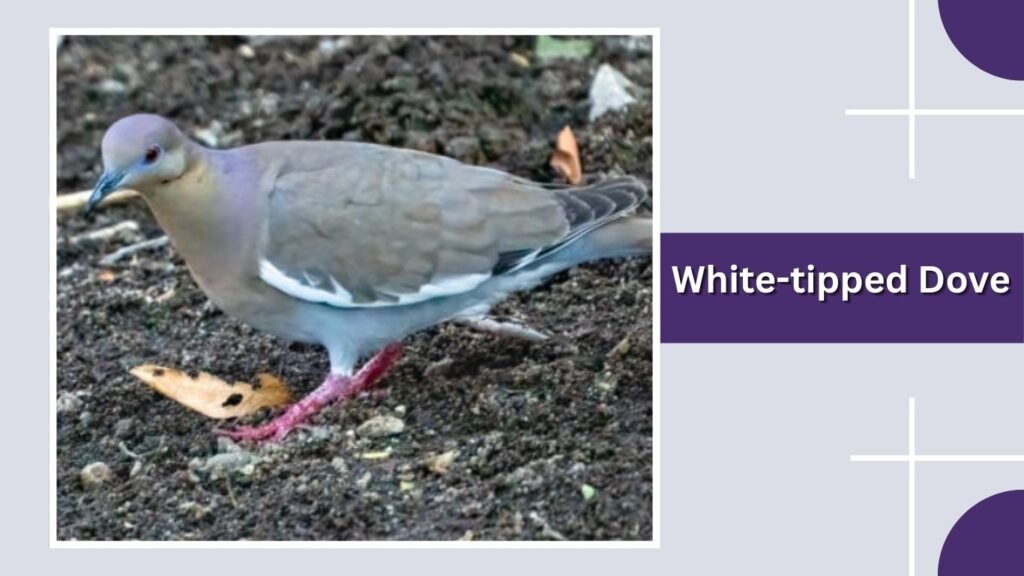
The White-tipped Dove is a medium-sized ground dove recognized for the distinctive white tips on its tail feathers. It is a quiet and adaptable species often found in dense vegetation but also near human settlements in suitable climates.
Identification
- Medium-sized body with a slightly rounded shape
- Brownish or gray-brown overall plumage
- Distinct white tips on the outer tail feathers
- Subtle bluish ring around the eye
- Dark bill and reddish legs
- Smooth, plain feather pattern with minimal markings
Habitat
The White-tipped Dove is commonly found in tropical and subtropical regions, especially in forests, woodland edges, and thick shrublands. It prefers areas with dense cover but can also be seen in gardens, plantations, and rural settlements. This species adapts well to environments where vegetation provides both food and protection.
Behaviors
This dove is usually seen alone or in pairs and tends to stay hidden in vegetation. It spends time both on the ground and in low branches. When disturbed, it flies off with a quick burst and flashes its white-tipped tail. Its call is a soft, repetitive cooing sound, often heard during quiet hours of the day.
Diet and Lifespan
The White-tipped Dove feeds mainly on seeds, fruits, and small plant materials. It forages both on the ground and in low vegetation, depending on food availability. Its lifespan in the wild is estimated to be around 4 to 6 years, though this can vary based on habitat quality and predator presence.
10. Key West Quail-Dove
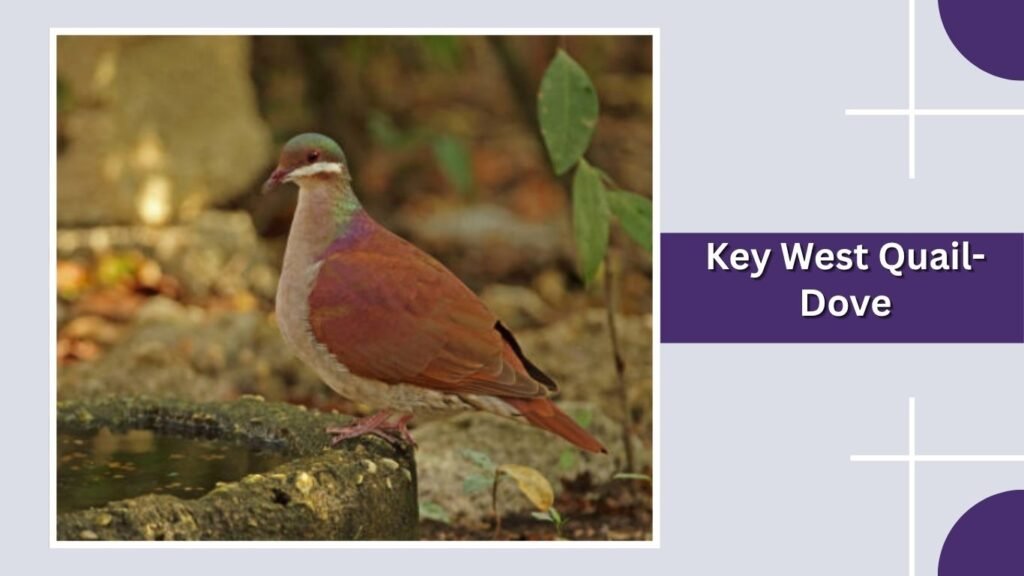
The Key West Quail-Dove is a rare and elusive ground-dwelling dove known for its rich coloration and secretive nature. It is one of the least commonly seen doves, spending most of its life hidden in dense forest habitats.
Identification
- Medium-sized, robust body
- Rich reddish-brown to chestnut plumage
- Darker wings with subtle shading
- Short tail and rounded wings
- Dark bill and reddish legs
- Bright eyes that contrast with its darker face
Habitat
The Key West Quail-Dove is primarily associated with dense tropical and subtropical forests. Historically found in parts of the Caribbean, it prefers thick undergrowth where it can remain concealed. This species relies heavily on undisturbed forest environments and is rarely found in open or urban areas.
Behaviors
This dove is extremely shy and secretive, spending most of its time on the forest floor. It moves quietly through dense vegetation and is usually solitary. When threatened, it quickly retreats into cover instead of flying long distances. Its call is soft and low, making it difficult to detect in its natural habitat.
Diet and Lifespan
The Key West Quail-Dove mainly feeds on seeds, fallen fruits, and small invertebrates found on the forest floor. It forages slowly among leaf litter, carefully selecting food. Its exact lifespan is not well documented, but like similar species, it is estimated to live around 3 to 5 years in the wild.
FAQs
What is a ground dove?
A ground dove is a small to medium-sized dove that spends most of its time on the ground rather than in trees. These birds are commonly found in open areas, forests, and scrublands, where they forage for seeds and small food items.
Where are ground doves commonly found?
Ground doves are mainly found in the Americas, especially in tropical and subtropical regions. They live in a variety of habitats, including forests, grasslands, farmlands, and even urban areas where food and shelter are available.
What do ground doves eat?
Ground doves primarily feed on small seeds and grains found on the ground. Some species also eat fruits and tiny insects. Their feeding habits play an important role in seed dispersal and maintaining ecological balance.
Are ground doves migratory birds?
Most ground dove species are non-migratory and stay in the same region throughout the year. However, some populations may move short distances depending on seasonal changes, food availability, and environmental conditions.
How long do ground doves live?
Ground doves generally live between 3 to 6 years in the wild. Their lifespan depends on factors such as habitat quality, availability of food, and the presence of predators. In safer environments, they may live slightly longer.
