
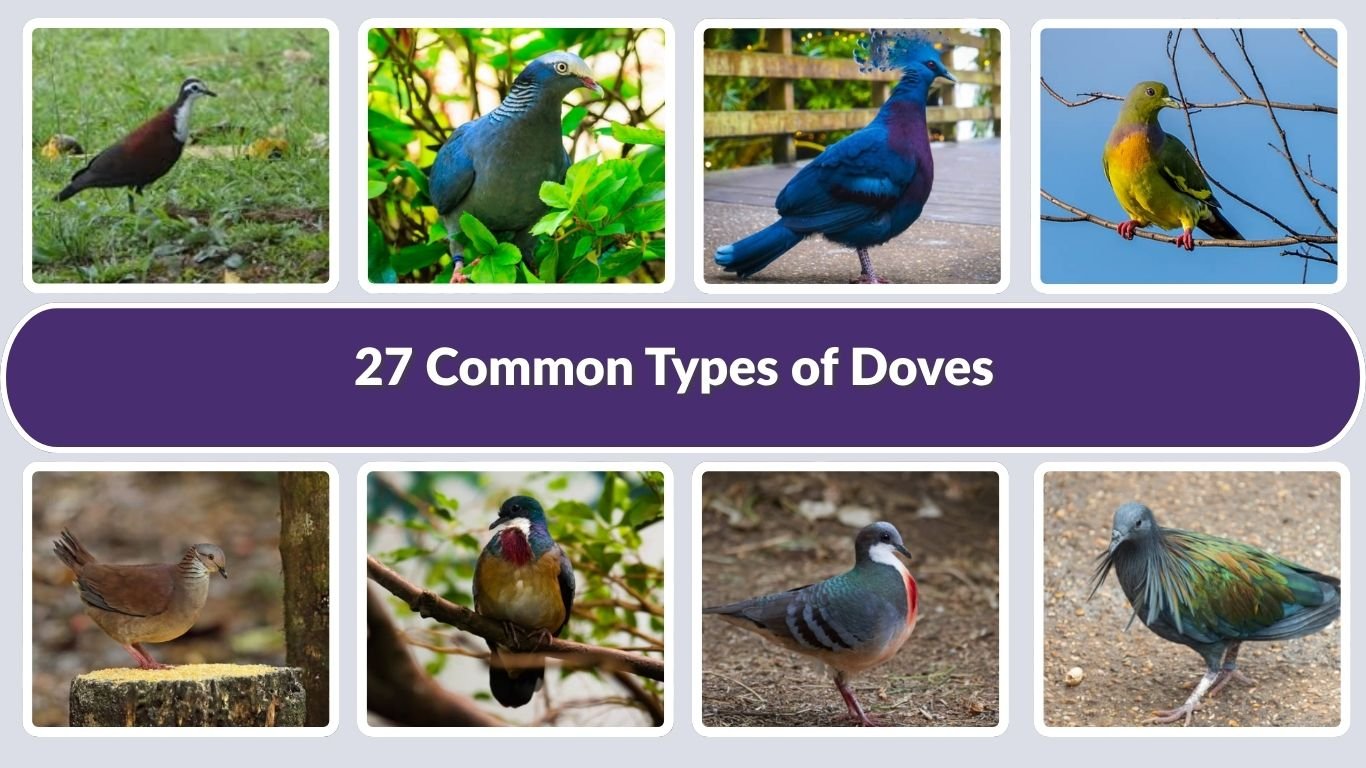
Doves are gentle and graceful birds belonging to the Columbidae family, known for their soft cooing sounds and peaceful nature. Found across the world in a wide range of habitats, they can live in forests, grasslands, deserts, and even busy urban areas. Their calm behavior, beautiful plumage, and strong adaptability make them one of the most familiar and beloved bird groups.
In this guide, we explore 27 common types of doves, highlighting their identification, habitat, differences, and lifestyle. Learning about these species will help you recognize their unique features and better appreciate the diversity of these charming birds.
1. Mourning Dove
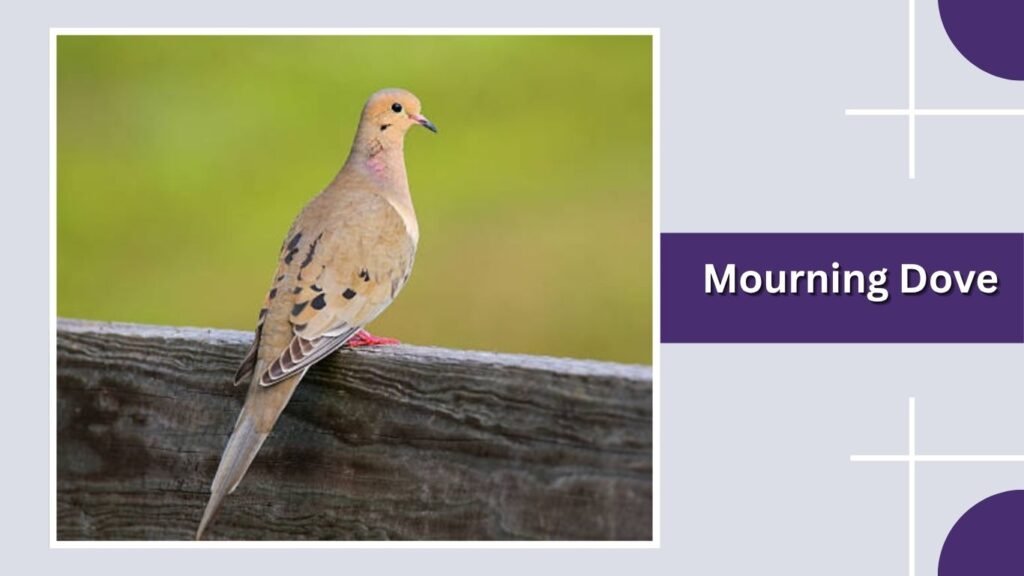
The Mourning Dove is one of the most common and widespread doves in North America, known for its soft, mournful cooing sound. It is a graceful bird with a slender body and long tail, often seen perched on wires or foraging on the ground. Its gentle appearance and calm behavior make it a familiar sight in both rural and urban areas.
Identification
- Medium-sized dove with a slender, streamlined body
- Soft gray-brown plumage with a slightly pinkish chest
- Long, pointed tail with white edges
- Small, round head and dark eyes
- Black spots on the wings
- Thin, pointed bill
- Smooth, fast flight with sharp wingbeats
Habitat
The Mourning Dove prefers open and semi-open habitats such as grasslands, farmland, suburban areas, parks, and roadsides. It is highly adaptable and often found near human settlements where food is available. This species avoids dense forests, instead favoring areas with open ground for feeding and scattered trees or structures for perching and nesting.
Comparison
Compared to the Eurasian Collared Dove, the Mourning Dove is more slender with a longer, pointed tail and lacks the distinct black collar marking. It also has a softer, more mournful call, while the Eurasian Collared Dove produces a more rhythmic cooing sound. The Mourning Dove’s flight is faster and more direct.
Diet and Lifespan
The Mourning Dove primarily feeds on seeds, grains, and small plant material, usually foraging on the ground. It may occasionally eat insects but mostly relies on plant-based food. It swallows seeds whole and stores them in its crop. The average lifespan is around 2 to 5 years in the wild, although some individuals can live longer.
2. Eurasian Collared Dove
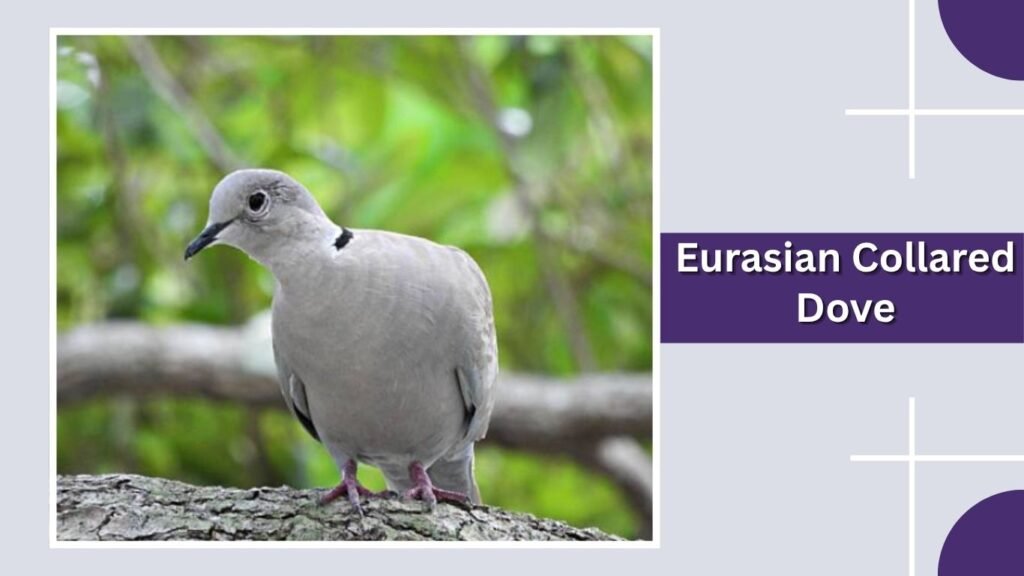
The Eurasian Collared Dove is a widespread and adaptable species originally from Asia and Europe but now found in many parts of the world. It is known for its calm nature and distinctive black collar marking on the back of its neck. This dove is commonly seen in urban and suburban areas, often perched on rooftops, wires, or trees.
Identification
- Medium-sized dove with a plump body
- Pale gray to buff-colored plumage
- Distinct black half-collar on the back of the neck
- Long, squared tail with white edges
- Small head with dark eyes
- Slim, slightly curved bill
- Smooth, steady flight
Habitat
The Eurasian Collared Dove prefers open habitats such as towns, villages, farmland, and suburban areas. It is strongly associated with human settlements and rarely found in dense forests. This species thrives in warm climates and is often seen near buildings, gardens, and agricultural fields where food is abundant.
Comparison
Compared to the Mourning Dove, the Eurasian Collared Dove is bulkier and has a shorter, more squared tail. Its most noticeable feature is the black neck collar, which the Mourning Dove lacks. Its call is also more rhythmic and repetitive, unlike the softer, mournful sound of the Mourning Dove.
Diet and Lifespan
The Eurasian Collared Dove feeds mainly on seeds, grains, and plant material, often foraging on the ground. It may also eat small insects occasionally. This species is well adapted to human environments, where food is easily available. Its average lifespan is around 3 to 6 years in the wild.
3. Rock Dove (Rock Pigeon)
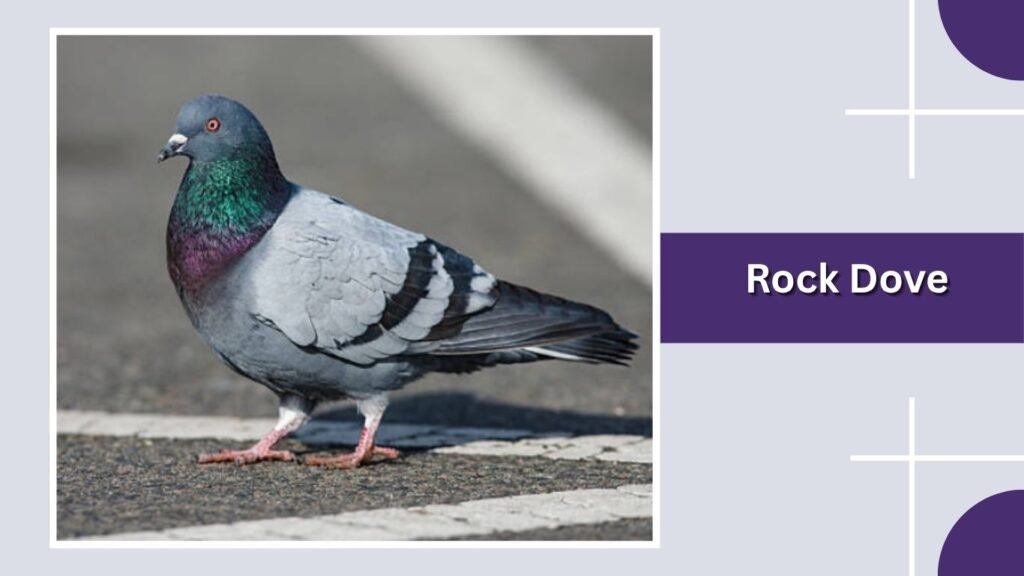
The Rock Dove, commonly known as the Rock Pigeon, is one of the most familiar birds worldwide. Originally native to cliffs and rocky areas, it has adapted extremely well to urban environments. Seen in cities, towns, and parks, this species is known for its strong flight and close association with humans.
Identification
- Medium-sized bird with a plump body
- Variable plumage, often gray with two black wing bars
- Iridescent green and purple sheen on the neck
- Short neck and small head
- Red or orange eyes
- Short, dark bill with a pale base
- Broad, rounded wings and strong flight
Habitat
The Rock Dove is highly adaptable and primarily found in urban environments such as cities, buildings, bridges, and parks. It originally inhabited cliffs and rocky coastlines, which is why buildings serve as ideal substitutes. It also occurs in farmland and open countryside, especially near human settlements.
Comparison
Compared to the Eurasian Collared Dove, the Rock Dove has more variable coloration and lacks the black neck collar. It is also more strongly associated with urban environments and is often seen in large flocks. Its body is more compact and its flight more powerful and direct.
Diet and Lifespan
The Rock Dove feeds mainly on seeds, grains, and human food scraps, especially in cities. It often forages on the ground in groups. This species is highly opportunistic and benefits from human-provided food. Its average lifespan is around 3 to 6 years in the wild, though some may live longer in protected environments.
4. Spotted Dove
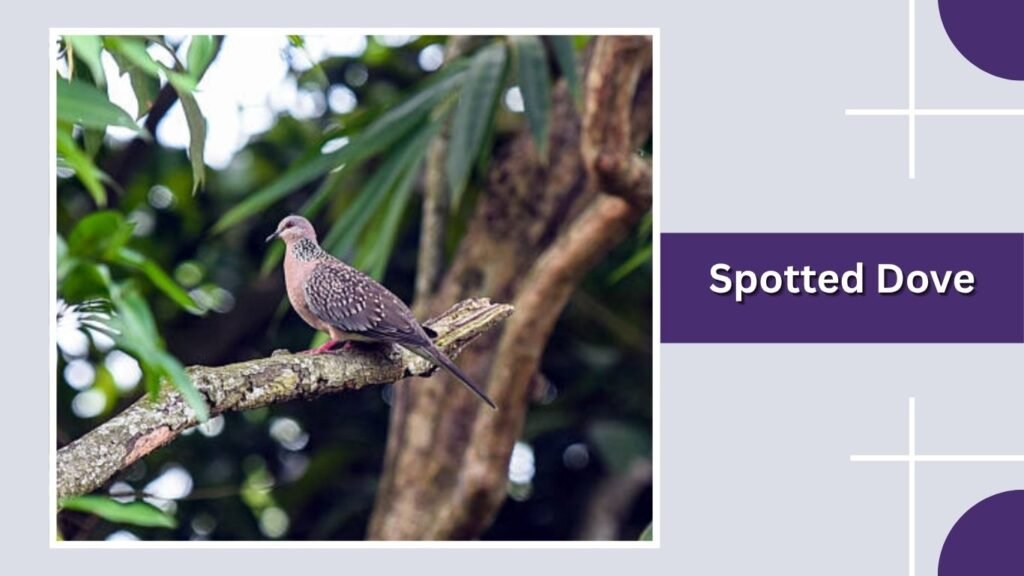
The Spotted Dove is a graceful and attractive species commonly found in Asia and introduced to other regions. It is easily recognized by its distinctive spotted collar and soft cooing call. This dove is often seen walking on the ground or perched in open areas, showing a calm and gentle nature.
Identification
- Medium-sized dove with a slender body
- Warm brown plumage with a slightly pinkish tone
- Distinct black collar with white spots on the neck
- Long, graduated tail with white edges
- Small head with dark eyes
- Slender, dark bill
- Smooth, gliding flight
Habitat
The Spotted Dove prefers open habitats such as gardens, farmland, parks, and woodland edges. It is commonly found near human settlements and adapts well to urban and suburban environments. This species favors areas with scattered trees and open ground for feeding.
Comparison
Compared to the Rock Dove, the Spotted Dove is more slender and has a distinctive spotted collar, which the Rock Dove lacks. It is also less variable in color and usually seen in pairs or small groups rather than large flocks. Its call is softer and more melodic.
Diet and Lifespan
The Spotted Dove mainly feeds on seeds, grains, and small plant materials, usually foraging on the ground. It may occasionally consume small insects. This species is calm and methodical while feeding. Its average lifespan is around 5 to 8 years in the wild.
5. Zebra Dove
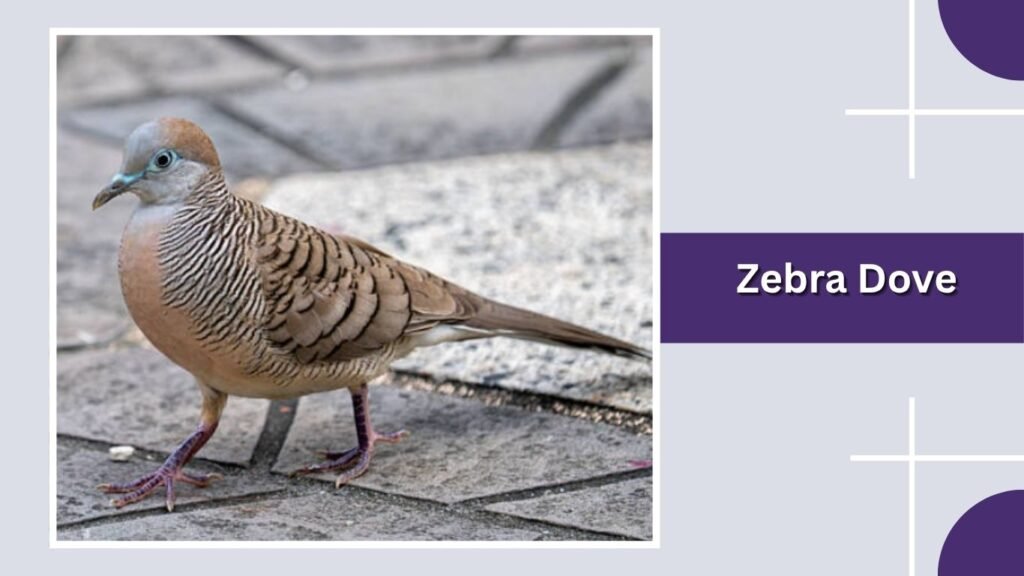
The Zebra Dove is a small, delicate dove known for its soft, rhythmic cooing and fine barred pattern across its body. It is commonly found in Southeast Asia and is often seen in open areas and near human habitation. Its gentle nature and distinctive appearance make it easy to recognize.
Identification
- Small dove with a slim, graceful body
- Brownish-gray plumage with fine black-and-white barring (zebra-like pattern)
- Pale blue skin around the eyes
- Long, narrow tail with white edges
- Small head and slender bill
- Pinkish legs
- Quick, low flight close to the ground
Habitat
The Zebra Dove prefers open habitats such as grasslands, gardens, farmland, and urban areas. It is often found near human settlements, especially in parks and roadsides. This species avoids dense forests and favors areas with open ground for feeding and scattered vegetation for cover.
Comparison
Compared to the Spotted Dove, the Zebra Dove is much smaller and has a finely barred pattern instead of a spotted collar. It also has a more delicate build and softer, more repetitive call. Its flight is lower and quicker, often close to the ground.
Diet and Lifespan
The Zebra Dove feeds mainly on seeds, small grains, and tiny plant materials, foraging mostly on the ground. It may also consume small insects occasionally. This species is calm and often feeds alone or in pairs. Its average lifespan is around 5 to 7 years in the wild.
6. Laughing Dove
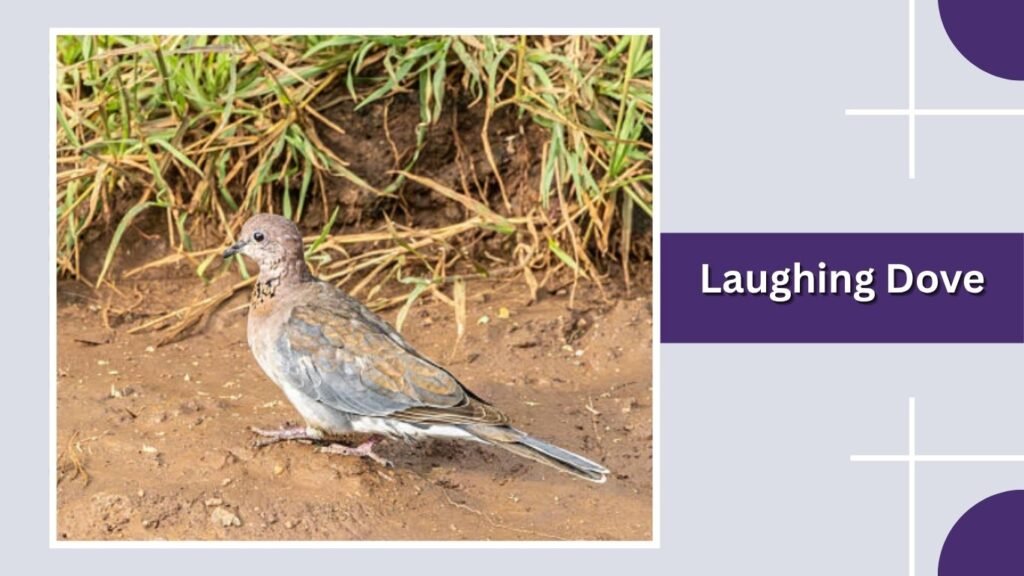
The Laughing Dove is a small and elegant dove commonly found in Africa, the Middle East, and South Asia. It is named for its soft, rhythmic cooing sound that resembles gentle laughter. This species is often seen in pairs or small groups and is well adapted to living near human settlements.
Identification
- Small to medium-sized dove with a slim body
- Pinkish-brown plumage with a warm tone
- Distinct black-and-white spotted patch on the neck
- Long, narrow tail with white edges
- Small head with dark eyes
- Slender, slightly curved bill
- Graceful, smooth flight
Habitat
The Laughing Dove prefers open and semi-open habitats such as grasslands, scrublands, farmland, and urban areas. It is commonly found in gardens, parks, and villages, especially in warm climates. This species avoids dense forests and thrives in areas with scattered trees and open ground.
Comparison
Compared to the Zebra Dove, the Laughing Dove is slightly larger and has a warmer, more pinkish coloration. It also has a distinct spotted neck patch, while the Zebra Dove has fine barring across its body. Its call is softer and more “laughing” in tone.
Diet and Lifespan
The Laughing Dove feeds mainly on seeds, grains, and small plant materials, foraging on the ground. It may occasionally eat small insects. This species is calm and often feeds in pairs. Its average lifespan is around 4 to 6 years in the wild.
7. Ring-necked Dove
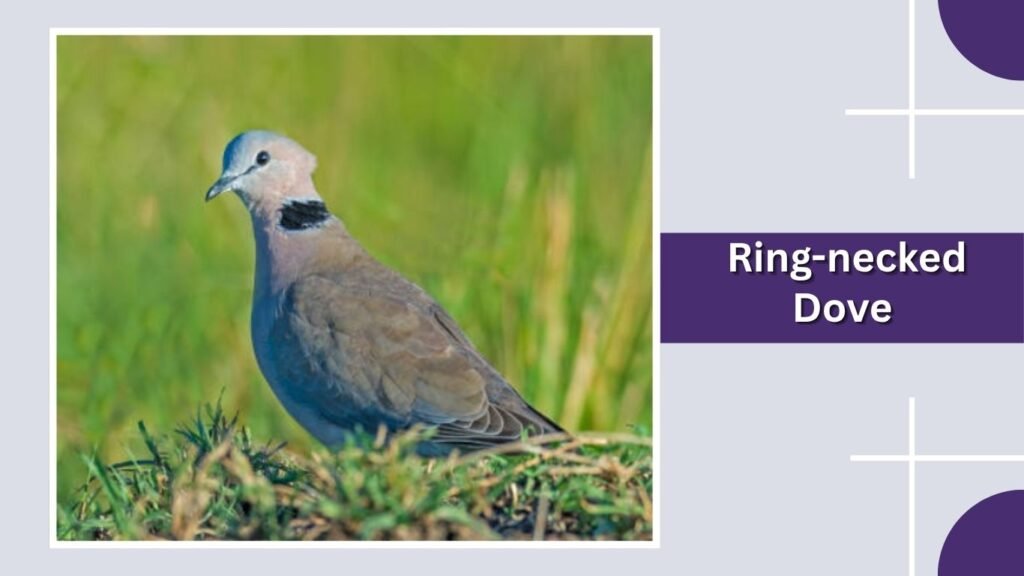
The Ring-necked Dove is a calm and gentle species often associated with human habitation. It is widely kept as a domestic bird but also occurs in the wild in parts of Africa and introduced regions. Its soft cooing and simple appearance make it a familiar and peaceful presence in many environments.
Identification
- Medium-sized dove with a slender body
- Pale gray to creamy-white plumage
- Distinct thin black ring around the back of the neck
- Long, slightly pointed tail with white edges
- Small head with dark eyes
- Slender, light-colored bill
- Smooth, steady flight
Habitat
The Ring-necked Dove prefers open habitats such as gardens, parks, farmland, and suburban areas. It is strongly associated with human environments and is often seen near homes, aviaries, and urban spaces. In the wild, it favors warm, dry regions with scattered trees and open ground.
Comparison
Compared to the Laughing Dove, the Ring-necked Dove is paler and lacks the spotted neck patch, instead having a clean black ring. It also appears more uniform in color and slightly larger. Its call is softer and more repetitive, lacking the “laughing” tone of the Laughing Dove.
Diet and Lifespan
The Ring-necked Dove feeds mainly on seeds, grains, and small plant materials, usually foraging on the ground. It adapts well to feeding near humans and may take food from feeders. Its average lifespan is around 10 to 15 years, especially in protected or domestic conditions.
8. Diamond Dove
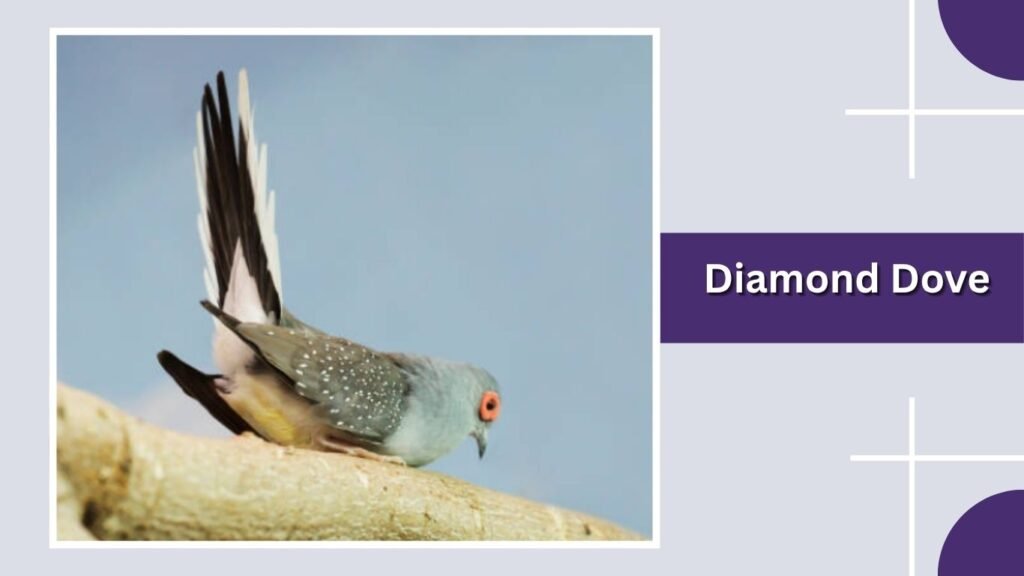
The Diamond Dove is a small and delicate species native to Australia, admired for its fine white spots that resemble tiny diamonds on its wings. It is a quiet and gentle bird, often seen alone or in pairs. Its soft cooing and attractive appearance make it popular in aviculture as well as in the wild.
Identification
- Very small dove with a slim, compact body
- Grayish-brown plumage with white “diamond-like” spots on wings
- Reddish eye ring around dark eyes
- Long, narrow tail with white edges
- Small head and slender bill
- Pinkish legs
- Quick, low and direct flight
Habitat
The Diamond Dove prefers dry and semi-arid habitats such as grasslands, scrublands, and open woodlands. It is commonly found near water sources in otherwise dry regions. This species avoids dense forests and thrives in open landscapes with scattered vegetation.
Comparison
Compared to the Ring-necked Dove, the Diamond Dove is much smaller and more delicate, with distinctive white spots on its wings. It also has a brighter eye ring and a lighter overall appearance. Its call is softer and less repetitive.
Diet and Lifespan
The Diamond Dove feeds mainly on small seeds and grains, foraging on the ground. It may also consume tiny insects occasionally. This species is calm and often feeds quietly in open areas. Its average lifespan is around 5 to 10 years in the wild.
9. Inca Dove
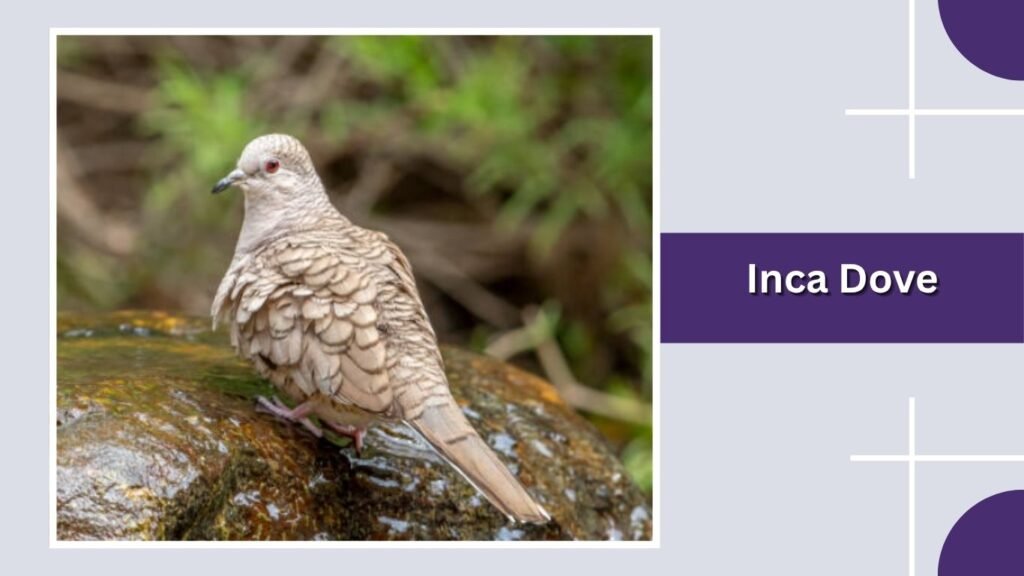
The Inca Dove is a small, slender dove commonly found in the southwestern United States, Mexico, and Central America. It is known for its scaled, patterned feathers and soft cooing calls. This species is often seen in urban and suburban areas, where it calmly forages on the ground or perches in trees.
Identification
- Small dove with a slim, delicate body
- Grayish-brown plumage with a “scaly” pattern on the feathers
- Long, narrow tail with white edges
- Small head with dark eyes
- Slender, slightly curved bill
- Pinkish legs
- Quick, fluttering flight
Habitat
The Inca Dove prefers open and semi-open habitats such as deserts, scrublands, towns, and suburban areas. It is commonly found near human settlements, especially in warm regions. This species often gathers around feeding areas and is well adapted to dry environments.
Comparison
Compared to the Diamond Dove, the Inca Dove is slightly larger and lacks the bright white spots, instead showing a scaled feather pattern. It is also more commonly found in urban environments, while the Diamond Dove prefers more natural, arid habitats.
Diet and Lifespan
The Inca Dove feeds mainly on seeds, grains, and small plant material, usually foraging on the ground. It may occasionally eat small insects. This species is gentle and often feeds in small groups. Its average lifespan is around 2 to 5 years in the wild.
10. White-winged Dove
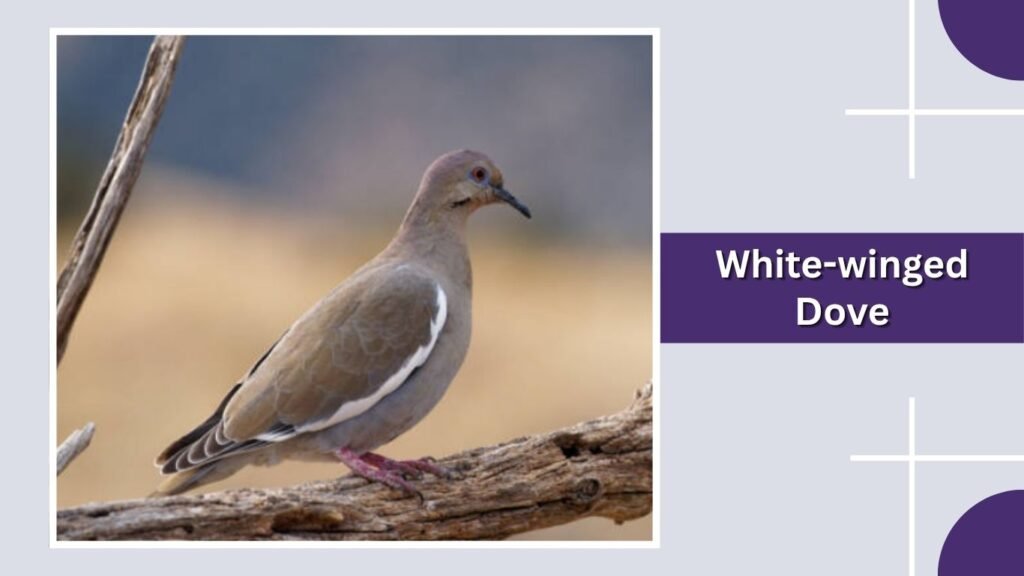
The White-winged Dove is a medium-sized dove commonly found in the southwestern United States, Mexico, and Central America. It is easily recognized by the bold white stripe on its wings, especially visible in flight. This species is social and often seen in flocks, particularly around feeding and nesting areas.
Identification
- Medium-sized dove with a sturdy body
- Gray-brown plumage with a slightly darker back
- Distinct white stripe along the wings (very visible in flight)
- Short, rounded tail with white tips
- Small head with dark eyes
- Blue skin around the eyes
- Strong, direct flight
Habitat
The White-winged Dove prefers open habitats such as deserts, scrublands, farmland, and urban areas. It is often found near water sources and areas with abundant food. This species adapts well to human environments and is commonly seen in towns, gardens, and agricultural regions.
Comparison
Compared to the Inca Dove, the White-winged Dove is larger and has a more robust body. Its most noticeable feature is the bold white wing stripe, which the Inca Dove lacks. It is also more social and often seen in larger groups.
Diet and Lifespan
The White-winged Dove feeds mainly on seeds, grains, fruits, and plant materials. It may also consume small insects occasionally. This species often forages on the ground or in low vegetation. Its average lifespan is around 10 to 15 years in the wild.
11. Common Ground Dove
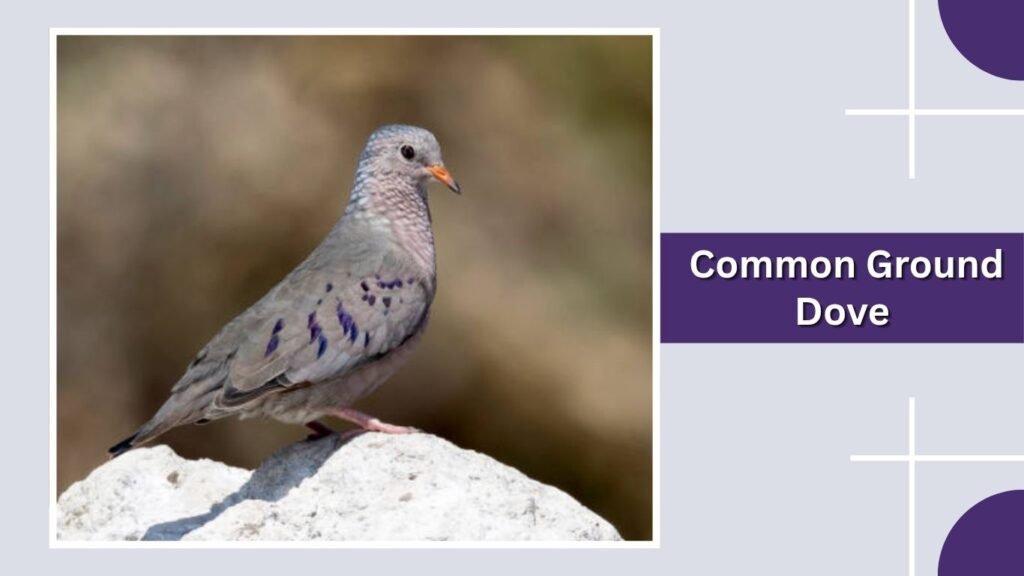
The Common Ground Dove is one of the smallest doves in the Americas, known for its compact size and soft, rapid cooing sound. It is often seen walking on the ground in open areas, blending well with its surroundings. Despite its small size, it is quite active and widely distributed in warm regions.
Identification
- Very small dove with a short, rounded body
- Grayish-brown plumage with a slightly pinkish tone
- Fine dark spots on the wings
- Short tail compared to other doves
- Small head with dark eyes
- Short, thin bill
- Quick, low flight close to the ground
Habitat
The Common Ground Dove prefers open and dry habitats such as grasslands, scrublands, farmland, and roadsides. It is commonly found in warm climates and often near human settlements. This species favors areas with bare ground where it can easily forage for food.
Comparison
Compared to the White-winged Dove, the Common Ground Dove is much smaller and has a shorter tail. It also lacks the bold white wing stripe and appears more compact. Its behavior is more ground-oriented, often walking rather than perching for long periods.
Diet and Lifespan
The Common Ground Dove feeds mainly on small seeds and grains, foraging on the ground. It may occasionally consume tiny insects. This species is usually seen alone or in pairs while feeding. Its average lifespan is around 3 to 6 years in the wild.
12. Ruddy Ground Dove
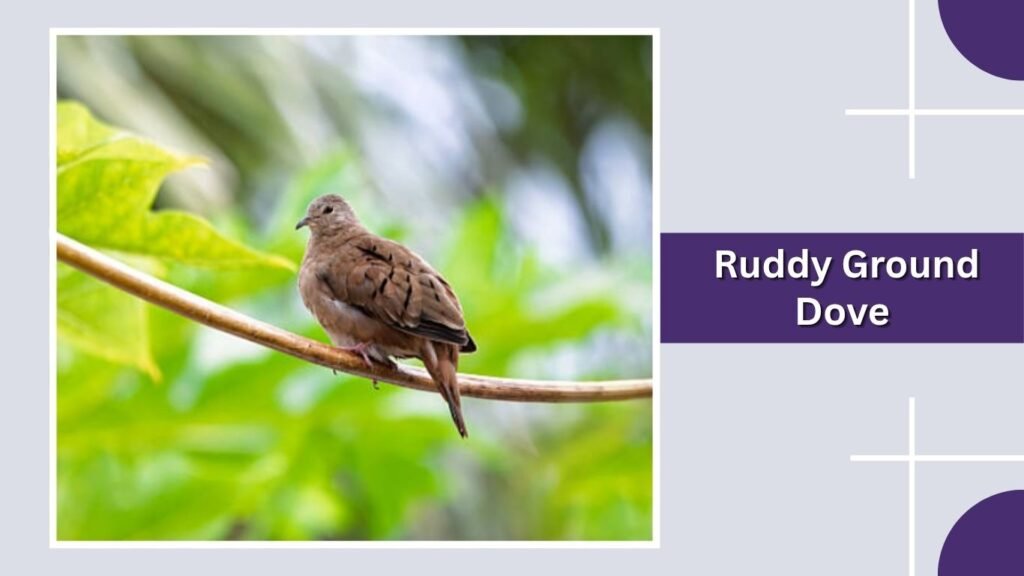
The Ruddy Ground Dove is a small and warm-colored dove commonly found in the Americas. It is especially known for its reddish-brown (ruddy) plumage and gentle cooing sounds. This species is often seen walking on the ground in open areas and is well adapted to both rural and urban environments.
Identification
- Small dove with a compact body
- Reddish-brown (rusty) plumage, especially in males
- Slightly paler underparts
- Short, rounded tail
- Small head with dark eyes
- Slender, slightly curved bill
- Quick, low flight close to the ground
Habitat
The Ruddy Ground Dove prefers open habitats such as grasslands, farmland, scrublands, and urban areas. It is commonly found near human settlements, especially in warm climates. This species favors areas with open ground where it can easily forage for seeds.
Comparison
Compared to the Common Ground Dove, the Ruddy Ground Dove has a warmer, reddish coloration and appears slightly more uniform in color. It is also a bit more noticeable due to its brighter tone, while the Common Ground Dove is more grayish and better camouflaged.
Diet and Lifespan
The Ruddy Ground Dove feeds mainly on small seeds and grains, foraging on the ground. It may occasionally consume tiny insects. This species is usually seen alone or in pairs and is calm while feeding. Its average lifespan is around 3 to 6 years in the wild.
13. African Collared Dove
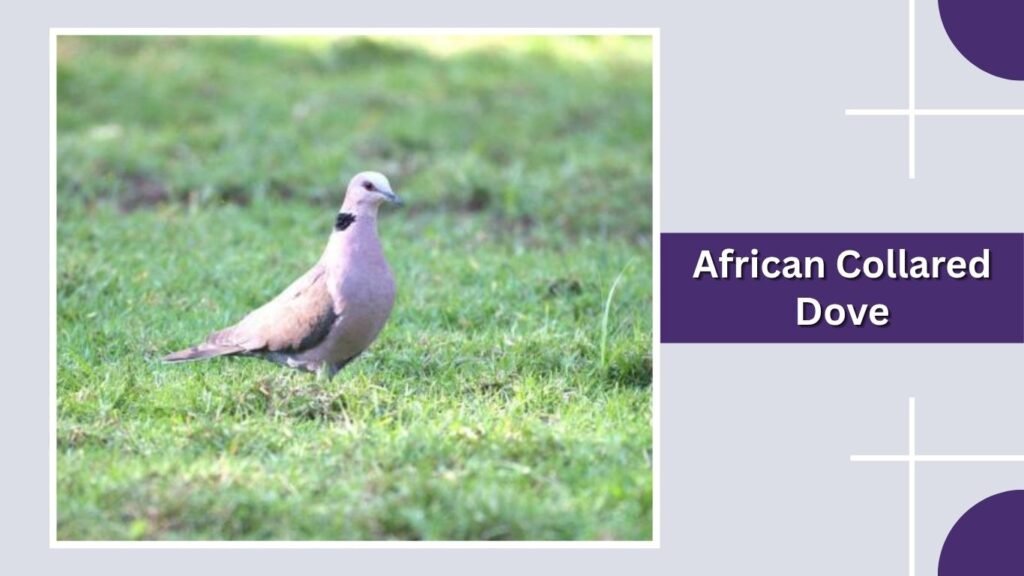
The African Collared Dove is a graceful species native to Africa, known for its soft coloration and distinctive neck marking. It is closely related to other collared doves and is often seen in open areas and near human settlements. Its calm behavior and gentle cooing make it a familiar bird in its range.
Identification
- Medium-sized dove with a slender body
- Pale gray to light brown plumage
- Distinct black half-collar on the back of the neck
- Long, slightly pointed tail with pale edges
- Small head with dark eyes
- Slender, light-colored bill
- Smooth, steady flight
Habitat
The African Collared Dove prefers open habitats such as savannas, grasslands, farmland, and villages. It is commonly found in warm regions and often lives near human settlements where food is available. This species avoids dense forests and favors areas with scattered trees and open ground.
Comparison
Compared to the Eurasian Collared Dove, the African Collared Dove is quite similar but may appear slightly smaller and more lightly colored. Both share the distinctive black neck ring, but geographic location is often the easiest way to tell them apart.
Diet and Lifespan
The African Collared Dove feeds mainly on seeds, grains, and small plant materials, usually foraging on the ground. It may occasionally eat small insects. Like other doves, it is calm and methodical while feeding. Its average lifespan is around 5 to 8 years in the wild.
14. Barbary Dove
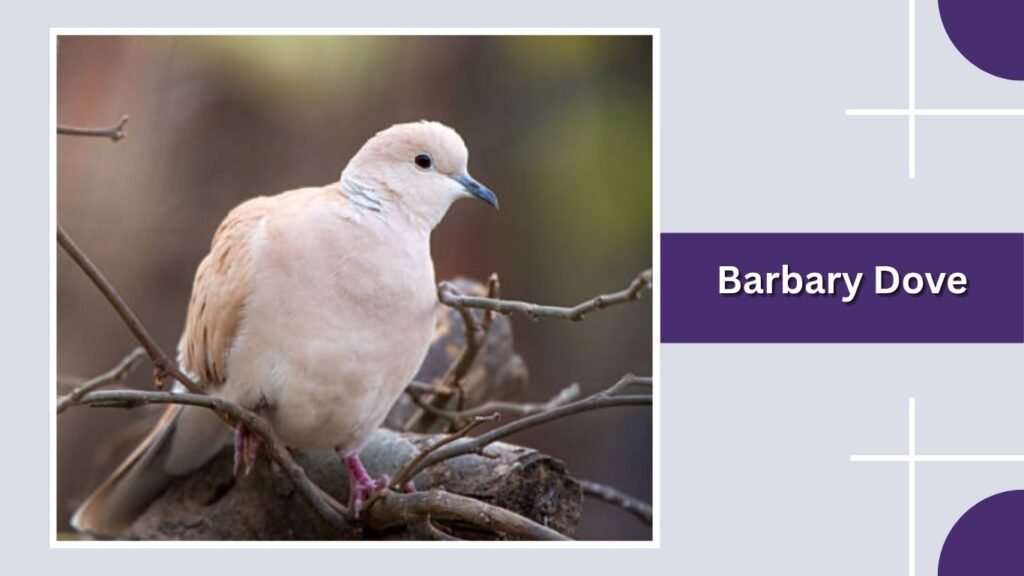
The Barbary Dove is a domesticated form of the African Collared Dove and is commonly kept as a pet or ornamental bird. It is known for its gentle nature, soft cooing, and pale coloration. This species is often associated with peace and is frequently used in ceremonies and symbolism.
Identification
- Medium-sized dove with a slender body
- Pale cream, white, or light gray plumage
- Distinct thin black collar on the neck
- Long, slightly pointed tail
- Small head with dark or reddish eyes
- Light-colored bill
- Smooth, graceful flight
Habitat
The Barbary Dove is mostly found in captivity or around human settlements. When free-ranging, it prefers open areas such as gardens, parks, and farmland. It is closely associated with human environments and is rarely found in truly wild, natural habitats.
Comparison
Compared to the African Collared Dove, the Barbary Dove is usually lighter in color and more commonly seen in domestic settings. While both share the black neck ring, the Barbary Dove often appears more uniform and pale due to selective breeding.
Diet and Lifespan
The Barbary Dove feeds mainly on seeds, grains, and small plant materials. In captivity, it is often provided with a balanced diet of grains and supplements. It is easy to care for and adapts well to human care. Its lifespan can range from 10 to 15 years, especially in protected conditions.
15. White-tipped Dove
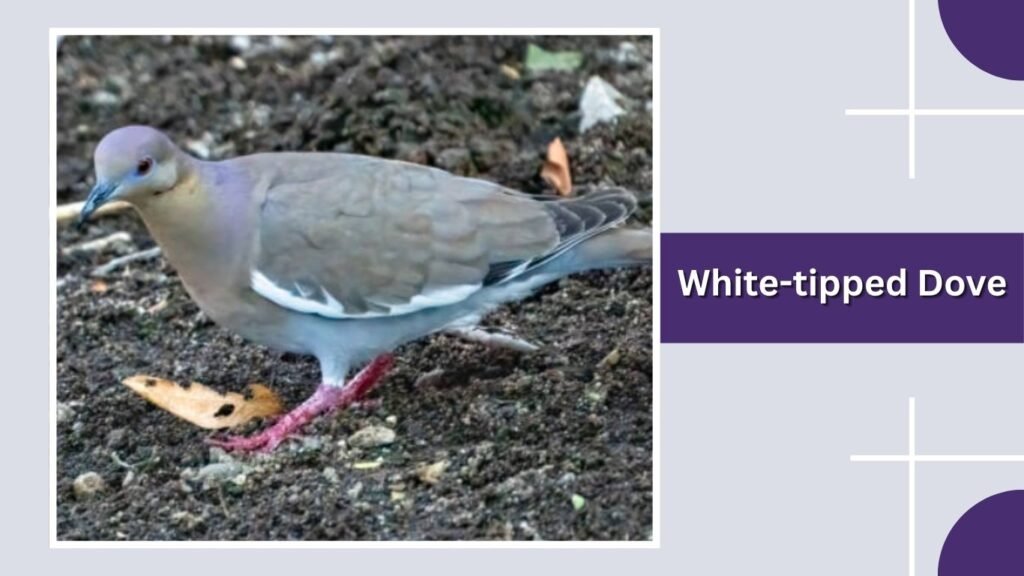
The White-tipped Dove is a shy and ground-loving species found in parts of the Americas. It is known for its soft coloring and the distinctive white tips on its tail feathers, which are especially visible in flight. This dove is often heard more than seen, as it prefers to stay hidden in dense vegetation.
Identification
- Medium-sized dove with a plump body
- Warm brown to grayish-brown plumage
- Distinct white tips on the outer tail feathers
- Slight bluish skin around the eyes
- Small head with dark eyes
- Slender, slightly curved bill
- Quick, low flight with visible tail markings
Habitat
The White-tipped Dove prefers dense habitats such as forests, woodlands, thickets, and forest edges. It is often found in tropical and subtropical regions, especially near water sources. This species spends much of its time on the ground and prefers areas with thick cover for protection.
Comparison
Compared to the Barbary Dove, the White-tipped Dove is darker and more naturally camouflaged. It also has distinctive white tail tips, which the Barbary Dove lacks. Additionally, it is more secretive and less associated with human environments.
Diet and Lifespan
The White-tipped Dove feeds mainly on seeds, fruits, and small plant materials, often foraging on the ground. It may occasionally eat small insects. This species is usually solitary or seen in pairs. Its average lifespan is around 5 to 8 years in the wild.
16. Emerald Dove
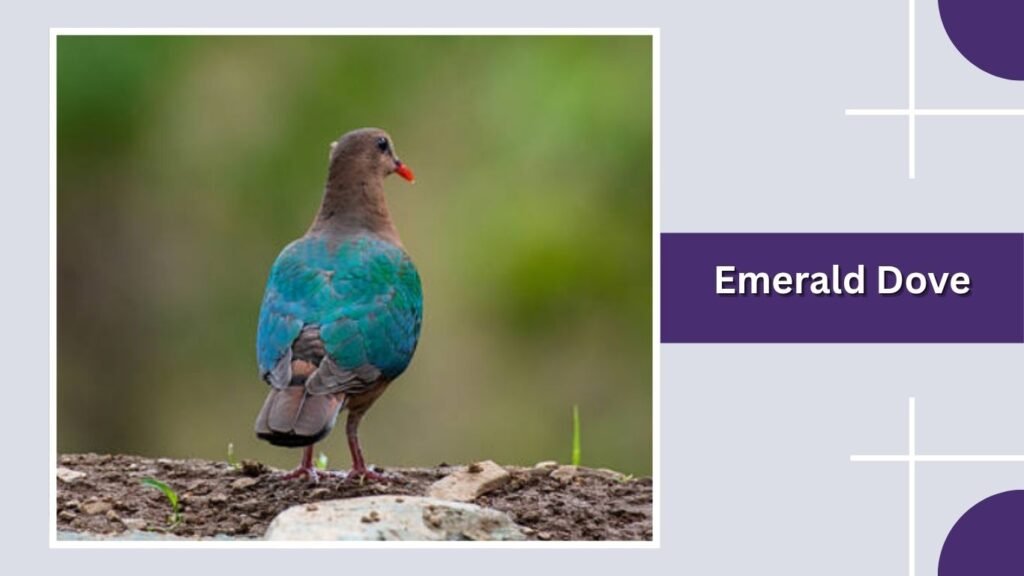
The Emerald Dove is a beautifully colored species found across South and Southeast Asia, known for its bright green wings and gentle behavior. It is often associated with forests and is admired for its calm nature and soft cooing. This dove spends much of its time on the ground but flies swiftly when disturbed.
Identification
- Medium-sized dove with a compact body
- Bright emerald-green wings and back
- Reddish-brown head and underparts
- White patch on the forehead (in many individuals)
- Short, rounded tail
- Red bill and pinkish legs
- Fast, direct flight
Habitat
The Emerald Dove prefers dense forests, woodlands, and forest edges, especially in tropical and subtropical regions. It is commonly found in shaded areas with plenty of ground cover. This species often stays close to the forest floor and may be seen near water sources or quiet clearings.
Comparison
Compared to the White-tipped Dove, the Emerald Dove is much more colorful, with its striking green wings and reddish body. It is also more strongly associated with forest habitats, while the White-tipped Dove may be found in a wider range of wooded environments.
Diet and Lifespan
The Emerald Dove feeds mainly on seeds, fruits, and fallen berries, foraging on the ground. It may also consume small insects occasionally. This species is usually seen alone or in pairs and prefers quiet feeding areas. Its average lifespan is around 6 to 10 years in the wild.
17. Green Imperial Pigeon
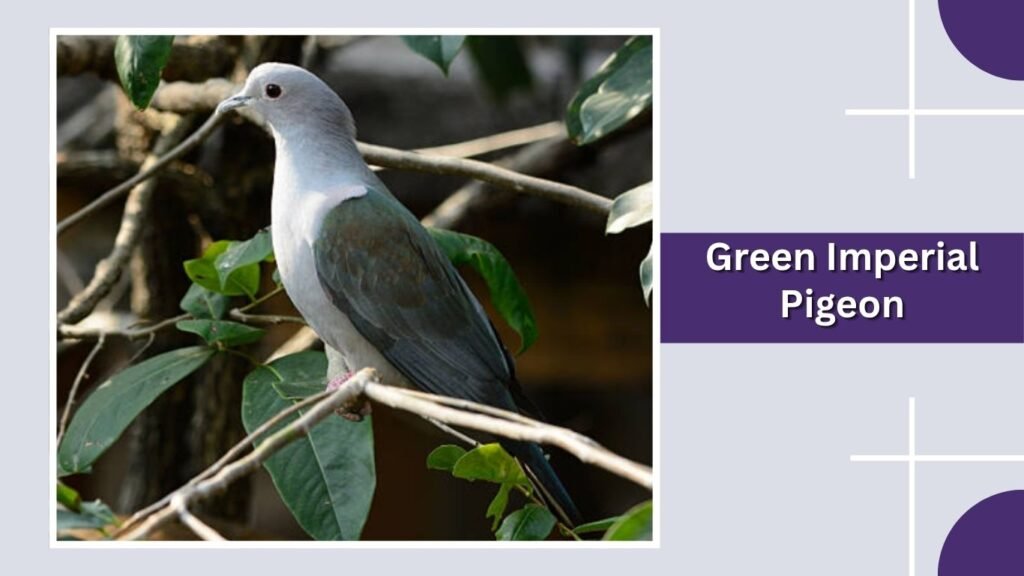
The Green Imperial Pigeon is a large and striking bird found across South and Southeast Asia. Although called a pigeon, it shares many features with doves and is known for its elegant appearance and calm behavior. It is often seen high in trees, feeding on fruits and moving gracefully through forest canopies.
Identification
- Large pigeon with a robust body
- Soft gray head and neck
- Greenish back and wings
- Pale underparts with a slightly yellowish tone
- Short tail compared to body size
- Strong, slightly curved bill
- Smooth, powerful flight
Habitat
The Green Imperial Pigeon prefers forests, woodlands, and coastal areas, especially in tropical and subtropical regions. It is commonly found in tree canopies and rarely seen on the ground. This species thrives in areas with abundant fruiting trees and dense vegetation.
Comparison
Compared to the Emerald Dove, the Green Imperial Pigeon is much larger and spends more time in trees rather than on the ground. Its coloration is also more subtle, lacking the bright contrast seen in the Emerald Dove. It has a heavier build and slower, more powerful flight.
Diet and Lifespan
The Green Imperial Pigeon feeds mainly on fruits, berries, and seeds, often swallowing them whole. It plays an important role in seed dispersal within forests. This species forages mostly in trees rather than on the ground. Its average lifespan is around 8 to 12 years in the wild.
18. Pink-necked Green Pigeon
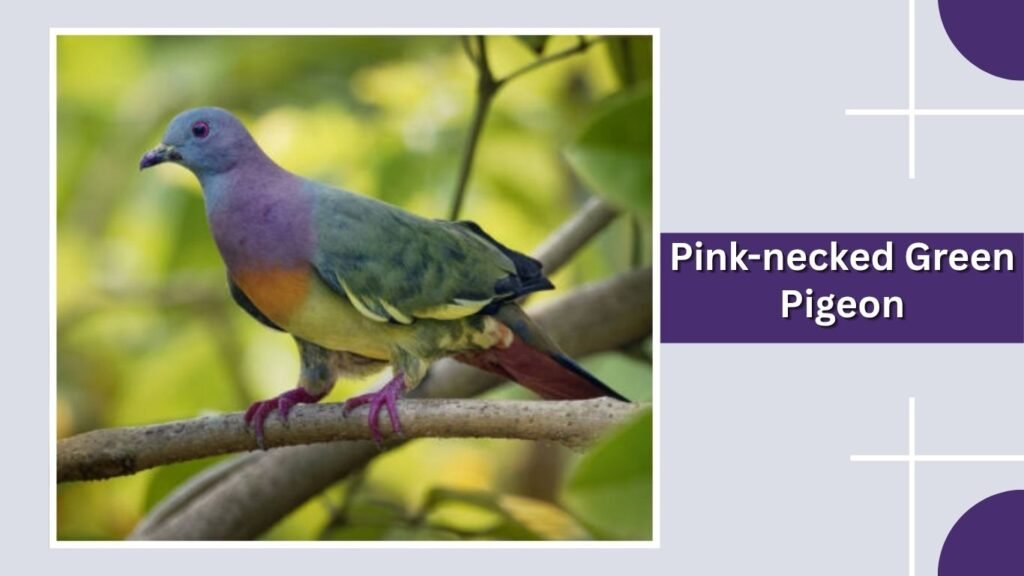
The Pink-necked Green Pigeon is a colorful and elegant species found in Southeast Asia. Males are especially striking with their soft pink neck and vibrant green body. This bird is mostly seen in trees, where it feeds quietly on fruits. Its gentle behavior and bright colors make it one of the more attractive members of the dove and pigeon family.
Identification
- Medium-sized pigeon with a plump body
- Bright green wings and back
- Pink to rosy neck (especially in males)
- Pale underparts with a slight yellow tint
- Short tail
- Light-colored bill with a bluish base
- Smooth, direct flight
Habitat
The Pink-necked Green Pigeon prefers forests, woodlands, gardens, and urban parks with fruiting trees. It is commonly found in tropical and subtropical regions, especially in Southeast Asia. This species spends most of its time in the canopy and is rarely seen on the ground.
Comparison
Compared to the Green Imperial Pigeon, the Pink-necked Green Pigeon is smaller and more colorful, especially with its pink neck. It is also more commonly found in urban parks and gardens, while the Green Imperial Pigeon prefers deeper forests.
Diet and Lifespan
This species feeds mainly on fruits, berries, and figs, playing an important role in seed dispersal. It forages in trees rather than on the ground and often feeds quietly in small groups. Its average lifespan is around 6 to 10 years in the wild.
19. Orange-breasted Green Pigeon
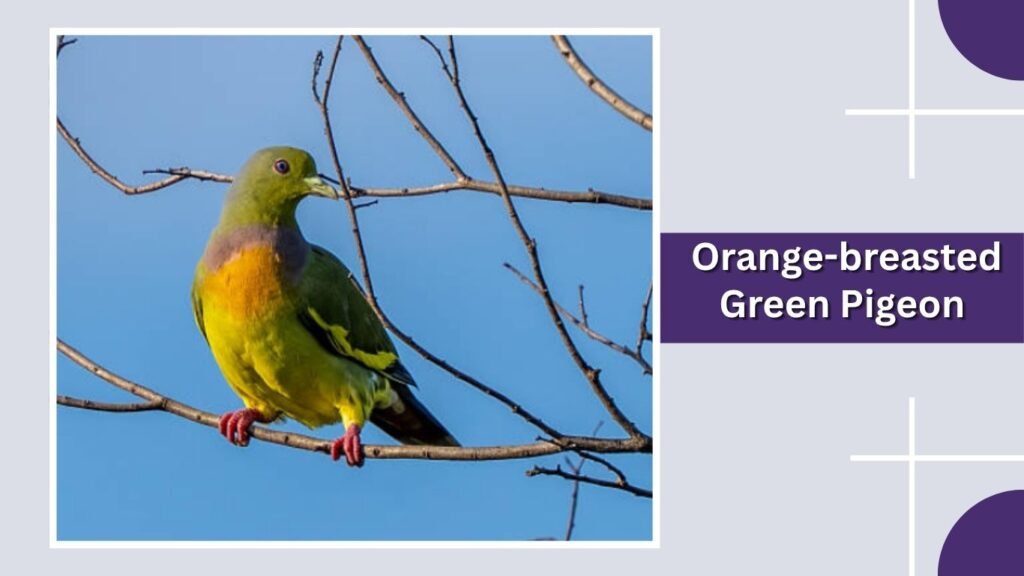
The Orange-breasted Green Pigeon is a colorful and eye-catching species found in parts of Southeast Asia. It is known for its bright green body and vivid orange breast, making it one of the more striking pigeons. This bird is usually seen in trees, quietly feeding on fruits and blending into leafy surroundings.
Identification
- Medium-sized pigeon with a plump body
- Bright green wings and back
- Distinct orange or golden breast
- Grayish head with a slight bluish tone
- Short tail
- Light-colored bill
- Smooth, direct flight
Habitat
The Orange-breasted Green Pigeon prefers forests, woodlands, and areas with abundant fruiting trees. It is commonly found in tropical regions and spends most of its time in the canopy. This species may also visit gardens and parks if suitable trees are present.
Comparison
Compared to the Pink-necked Green Pigeon, the Orange-breasted Green Pigeon is distinguished by its bright orange breast rather than a pink neck. Both species share a similar green body, but their chest coloration makes identification easier.
Diet and Lifespan
This species feeds mainly on fruits, berries, and figs, often foraging high in trees. It plays an important role in seed dispersal. Like other green pigeons, it rarely comes to the ground. Its average lifespan is around 6 to 10 years in the wild.
20. Nicobar Pigeon
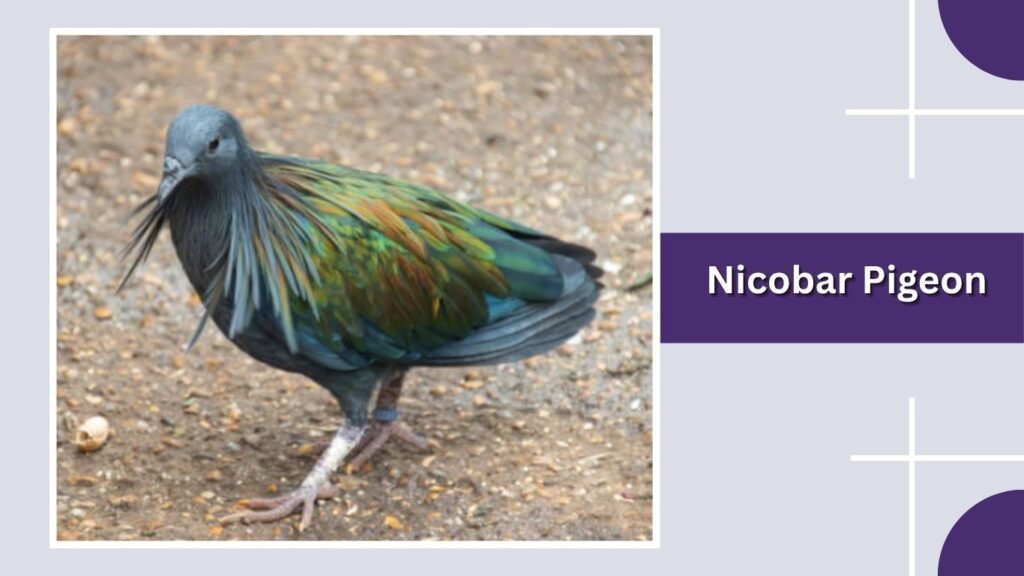
The Nicobar Pigeon is one of the most striking and unusual members of the dove family, found on small islands and coastal regions in Southeast Asia and the Pacific. It is known for its shimmering metallic feathers and long neck plumes. This species is also notable for being one of the closest living relatives of the extinct dodo.
Identification
- Medium to large pigeon with a robust body
- Metallic green, blue, and bronze plumage
- Long, hackle-like feathers on the neck
- White tail contrasting with darker body
- Dark head with a slightly curved bill
- Red legs
- Strong, direct flight
Habitat
The Nicobar Pigeon prefers coastal forests, mangroves, and small islands. It is often found near shorelines and spends time both on the ground and in trees. This species tends to roost and nest on offshore islands while foraging on nearby land, helping it avoid predators.
Comparison
Compared to the Orange-breasted Green Pigeon, the Nicobar Pigeon is larger and far more metallic in appearance, with iridescent feathers and long neck plumes. It also has a white tail, which is not seen in most green pigeons. Its island habitat further distinguishes it.
Diet and Lifespan
The Nicobar Pigeon feeds mainly on seeds, fruits, and plant material, often foraging on the ground. It may also consume small invertebrates occasionally. This species plays a role in seed dispersal across islands. Its average lifespan is around 8 to 15 years in the wild.
21. Victoria Crowned Pigeon
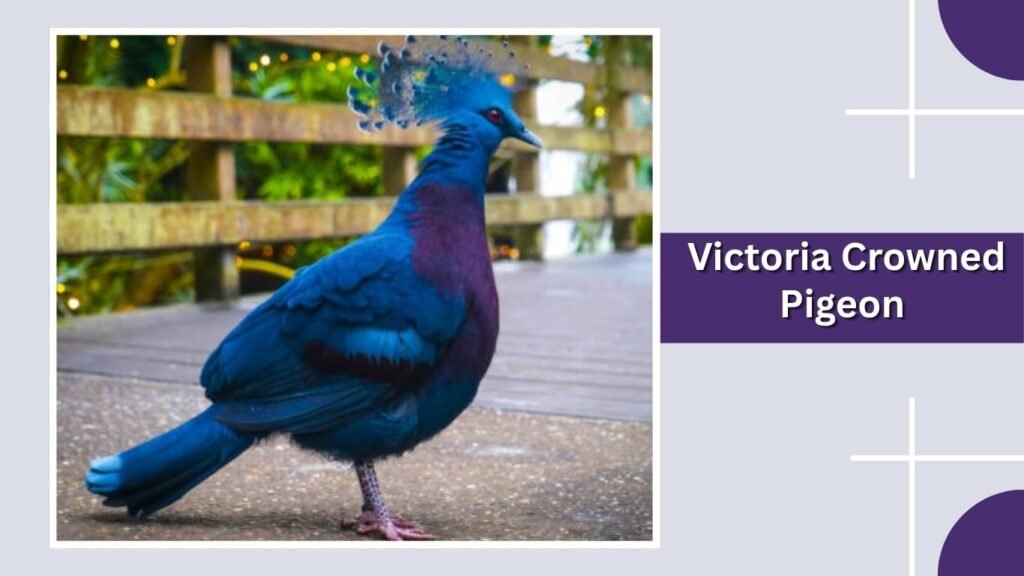
The Victoria Crowned Pigeon is one of the largest and most magnificent members of the dove family, native to New Guinea. It is famous for its beautiful blue plumage and elegant lace-like crest on its head. This ground-dwelling bird has a calm nature and is often seen walking slowly through forest floors.
Identification
- Very large pigeon with a heavy, rounded body
- Soft blue-gray plumage
- Prominent fan-shaped crest with lace-like tips
- Deep red eyes
- Dark mask around the eyes
- Short tail
- Strong legs for walking
Habitat
The Victoria Crowned Pigeon prefers lowland rainforests, swamp forests, and dense tropical woodlands. It spends most of its time on the forest floor, foraging for food. This species is rarely found in open areas and depends on dense vegetation for shelter and protection.
Comparison
Compared to the Nicobar Pigeon, the Victoria Crowned Pigeon is much larger and has a distinctive crest, which the Nicobar lacks. It is also more ground-dwelling, while the Nicobar Pigeon moves between ground and trees. Its soft blue color contrasts with the metallic tones of the Nicobar.
Diet and Lifespan
The Victoria Crowned Pigeon feeds mainly on fallen fruits, seeds, and small invertebrates, foraging on the forest floor. It plays an important role in seed dispersal. This species is generally slow-moving and calm. Its average lifespan is around 10 to 15 years in the wild.
22. Luzon Bleeding-heart Dove
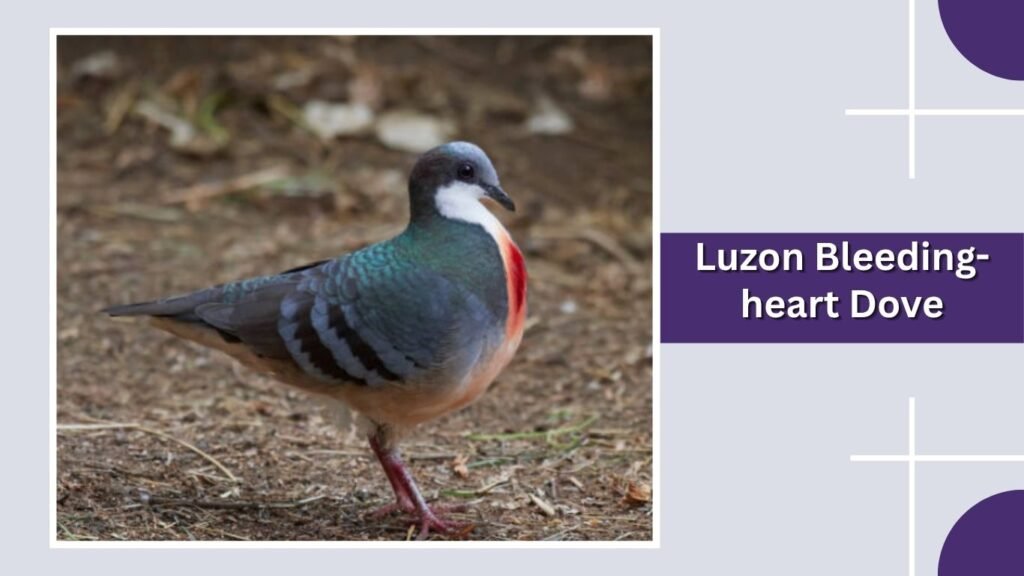
The Luzon Bleeding-heart Dove is a rare and beautiful species native to the Philippines, especially the island of Luzon. It is named for the vivid red patch on its chest that resembles a bleeding wound. This shy, ground-dwelling bird is often hidden in dense forests and is rarely seen in the wild.
Identification
- Medium-sized dove with a plump body
- Grayish-white underparts with a striking red “bleeding” patch on the chest
- Brown to reddish-brown back and wings
- Short tail
- Dark eyes with a bluish eye ring
- Slender bill
- Mostly walks on the ground rather than flying
Habitat
The Luzon Bleeding-heart Dove prefers dense tropical forests, especially lowland rainforests. It spends most of its time on the forest floor, staying hidden among leaf litter and vegetation. This species requires undisturbed habitats and is sensitive to environmental changes.
Comparison
Compared to the Victoria Crowned Pigeon, the Luzon Bleeding-heart Dove is much smaller and lacks the large crest. Its most distinctive feature is the red chest patch, which is unique among doves. It is also more secretive and less likely to be seen in open areas.
Diet and Lifespan
This species feeds mainly on seeds, fallen fruits, and small invertebrates found on the forest floor. It forages quietly and cautiously in dense vegetation. Due to its secretive nature, detailed lifespan data is limited, but it is estimated to live around 5 to 8 years in the wild.
23. Mindanao Bleeding-heart Dove
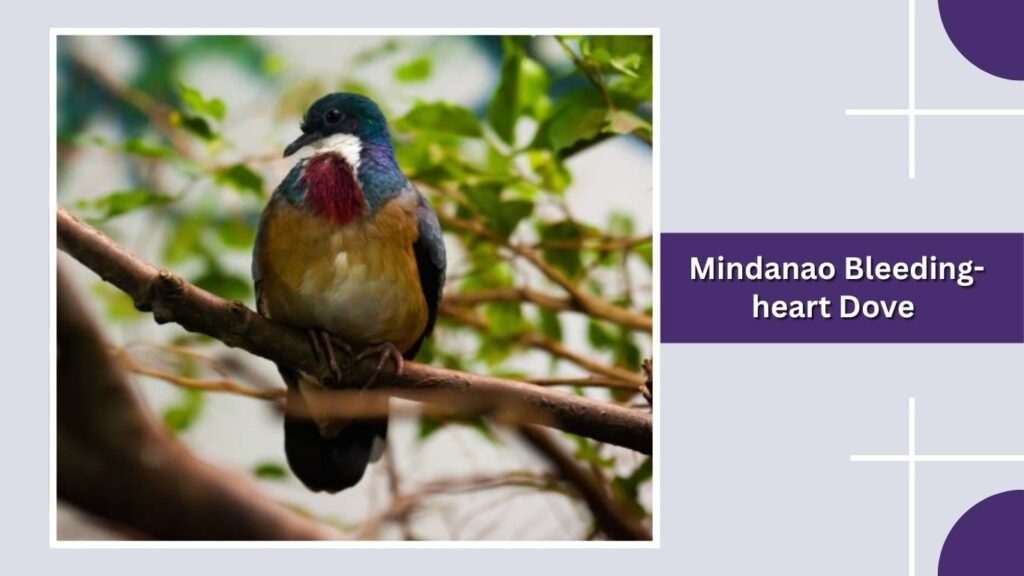
The Mindanao Bleeding-heart Dove is another rare and striking species from the Philippines, found mainly on the island of Mindanao. Like its Luzon relative, it is known for the vivid red patch on its chest that looks like a wound. This shy and ground-dwelling bird is rarely seen due to its secretive behavior and preference for dense forests.
Identification
- Medium-sized dove with a plump body
- Pale underparts with a bright red “bleeding” patch on the chest
- Brown to reddish-brown upperparts
- Short tail
- Dark eyes with a faint eye ring
- Slender bill
- Mostly walks quietly on the forest floor
Habitat
The Mindanao Bleeding-heart Dove inhabits dense tropical forests, especially lowland and foothill rainforests. It prefers thick undergrowth where it can remain hidden. This species depends on undisturbed habitats and is rarely found in open or human-altered areas.
Comparison
Compared to the Luzon Bleeding-heart Dove, this species is similar in appearance but differs slightly in coloration and is found on a different island. Both share the distinctive red chest patch, but geographic location is the main way to distinguish them.
Diet and Lifespan
The Mindanao Bleeding-heart Dove feeds mainly on seeds, fallen fruits, and small invertebrates found on the forest floor. It forages quietly and cautiously in dense vegetation. Its lifespan is not well documented but is estimated to be around 5 to 8 years in the wild.
24. Key West Quail-Dove
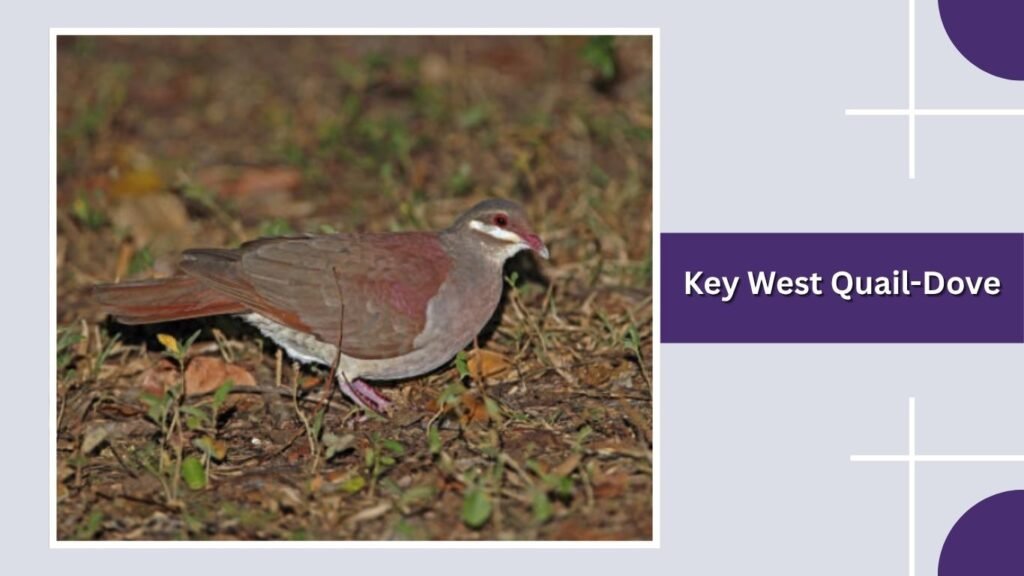
The Key West Quail-Dove is a secretive and ground-dwelling bird found in parts of the Caribbean, including Cuba and nearby islands. It is known for its rich coloration and shy nature, often staying hidden in dense forests. This species is rarely seen but can sometimes be heard moving quietly through leaf litter.
Identification
- Medium-sized dove with a plump, rounded body
- Rich brown and reddish plumage
- Slight bluish or purplish sheen on parts of the head or neck
- Short tail
- Red or pinkish legs
- Dark eyes
- Mostly walks on the ground rather than flying
Habitat
The Key West Quail-Dove prefers dense tropical forests, woodlands, and thick undergrowth. It spends most of its time on the forest floor, staying hidden among leaves and vegetation. This species relies on undisturbed habitats and is rarely found in open or urban areas.
Comparison
Compared to the Mindanao Bleeding-heart Dove, the Key West Quail-Dove lacks the distinctive red chest patch. It is also more uniformly colored and found in a completely different region. Both species are shy and ground-dwelling, but their markings and locations differ.
Diet and Lifespan
The Key West Quail-Dove feeds mainly on seeds, fruits, and small invertebrates found on the ground. It forages quietly among leaf litter, using its camouflage for protection. Its lifespan is not well documented but is estimated to be around 5 to 8 years in the wild.
25. White-crowned Pigeon
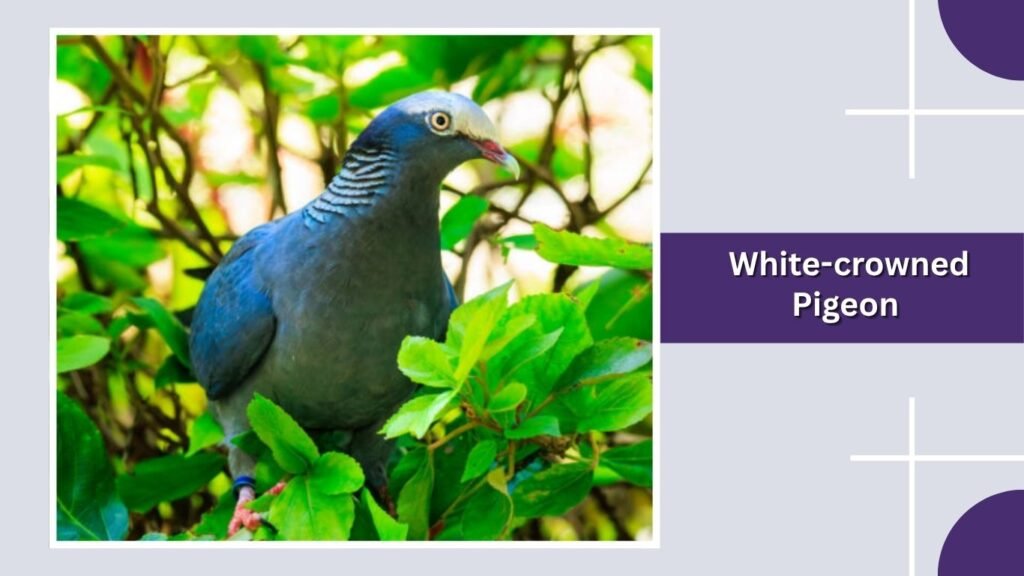
The White-crowned Pigeon is a large and elegant species found in the Caribbean and parts of southern Florida. It is known for its striking white crown and iridescent neck feathers. This bird spends much of its time in trees but often travels to coastal areas and islands in search of food.
Identification
- Large pigeon with a robust body
- Dark gray to blackish plumage
- Distinct bright white crown on the head
- Iridescent green and purple sheen on the neck
- Red eyes
- Short tail
- Strong, direct flight
Habitat
The White-crowned Pigeon prefers coastal forests, mangroves, and tropical woodlands. It is often found near shorelines and islands, where it can access fruiting trees. This species spends most of its time in the canopy and may travel long distances between feeding and nesting sites.
Comparison
Compared to the Key West Quail-Dove, the White-crowned Pigeon is larger and more tree-dwelling rather than ground-focused. Its bright white crown and glossy neck feathers make it much more noticeable, while the quail-dove is more camouflaged and secretive.
Diet and Lifespan
The White-crowned Pigeon feeds mainly on fruits, berries, and seeds, often foraging in trees. It plays an important role in seed dispersal in coastal ecosystems. Its average lifespan is around 8 to 12 years in the wild.
26. Blue-headed Quail-Dove
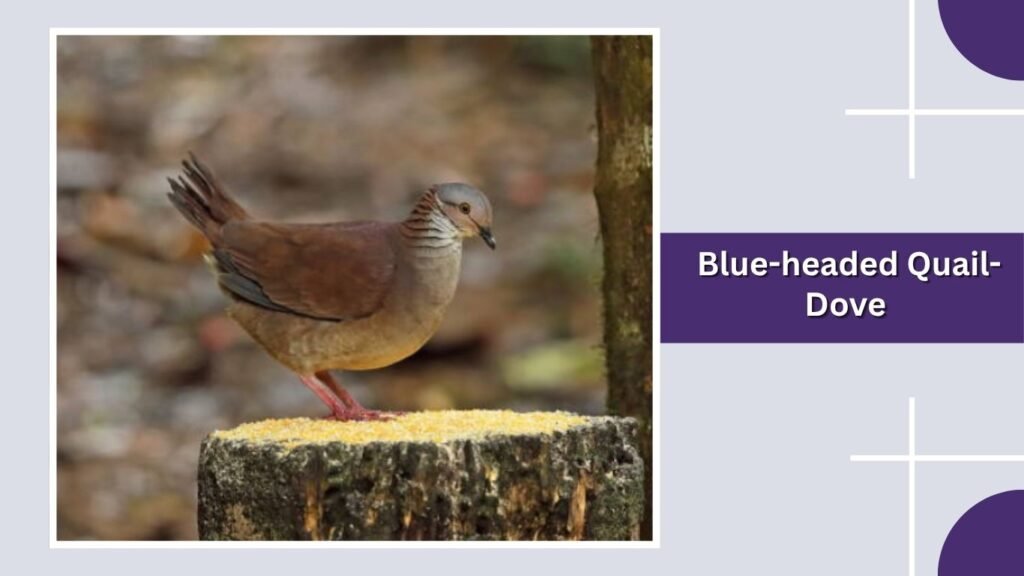
The Blue-headed Quail-Dove is a beautifully colored and elusive species found in the Caribbean, especially in Cuba. It is known for its vibrant blue head and rich body coloration. This shy, ground-dwelling bird spends most of its time hidden in dense forest undergrowth, making it difficult to observe in the wild.
Identification
- Medium-sized dove with a rounded body
- Bright blue head and upper neck
- Reddish-brown body with subtle color variations
- Short tail
- Red or pinkish legs
- Dark eyes
- Mostly walks quietly on the forest floor
Habitat
The Blue-headed Quail-Dove prefers dense tropical forests, especially moist lowland and mountain forests. It stays close to the ground, moving through thick vegetation and leaf litter. This species depends on undisturbed forest habitats and is rarely seen in open areas.
Comparison
Compared to the White-crowned Pigeon, the Blue-headed Quail-Dove is smaller and more ground-dwelling. It also has a striking blue head, unlike the pigeon’s white crown. Its behavior is more secretive, and it is less likely to be seen in open or coastal environments.
Diet and Lifespan
This species feeds mainly on seeds, fruits, and small invertebrates found on the forest floor. It forages quietly and cautiously in dense vegetation. Its lifespan is not well documented but is estimated to be around 5 to 8 years in the wild.
27. White-fronted Ground Dove
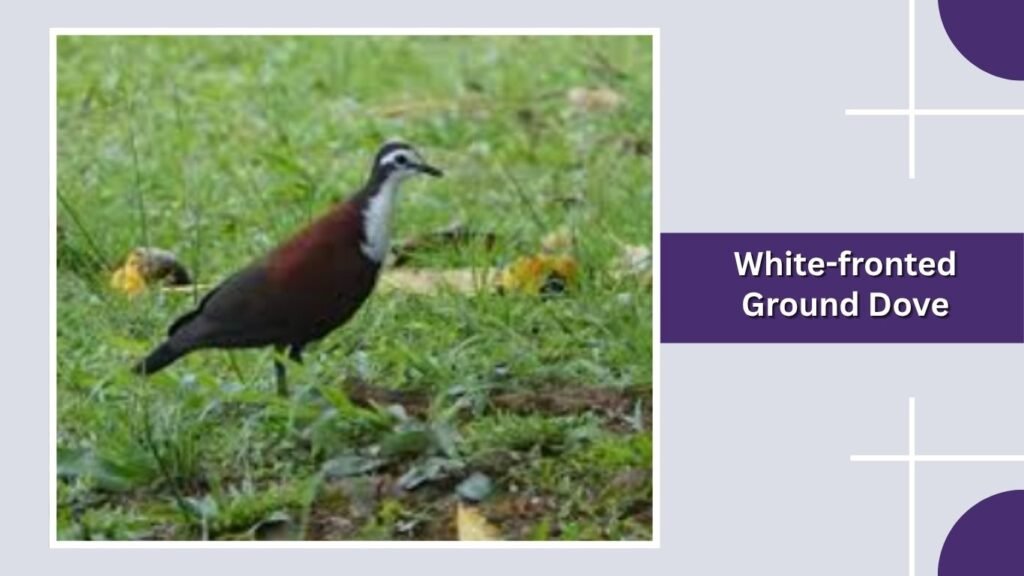
The White-fronted Ground Dove is a small and subtle species found in parts of Central and South America. It is known for its quiet behavior and preference for staying close to the ground. This dove is often overlooked due to its plain coloration and secretive nature, but it is well adapted to its environment.
Identification
- Small dove with a compact body
- Gray-brown plumage with a soft, muted tone
- Distinct pale or white patch on the forehead
- Short tail
- Small head with dark eyes
- Slender, slightly curved bill
- Quick, low flight close to the ground
Habitat
The White-fronted Ground Dove prefers open and semi-open habitats such as grasslands, scrublands, farmland, and forest edges. It is often found in dry or lightly vegetated areas where it can forage easily. This species spends most of its time on the ground and relies on camouflage for protection.
Comparison
Compared to the Blue-headed Quail-Dove, the White-fronted Ground Dove is much smaller and less colorful. It lacks the bright blue head and instead has a simple, muted appearance. It is also more commonly found in open habitats rather than dense forests.
Diet and Lifespan
The White-fronted Ground Dove feeds mainly on small seeds, grains, and plant material, foraging on the ground. It may occasionally consume tiny insects. This species is usually seen alone or in pairs. Its average lifespan is around 3 to 6 years in the wild.
FAQs
What is the difference between a dove and a pigeon?
Doves and pigeons belong to the same bird family (Columbidae) and are very similar. Generally, “dove” is used for smaller, more delicate species, while “pigeon” refers to larger ones. However, the terms are often used interchangeably and do not represent strict scientific differences.
Where are doves commonly found?
Doves are found almost all over the world, except in extreme polar regions. They live in a variety of habitats, including forests, grasslands, deserts, and urban areas. Many species adapt well to human environments like cities and farms.
What do doves eat?
Doves primarily feed on seeds, grains, fruits, and small plant materials. Some species may also eat small insects occasionally. Most doves forage on the ground, while others prefer feeding in trees.
Are doves migratory birds?
Some dove species are migratory, while others are resident (stay in one place year-round). Migration depends on the species and location, with birds in colder regions more likely to migrate to warmer areas during winter.
How long do doves live?
Most doves live between 3 to 10 years in the wild, depending on the species and environmental conditions. Some species, especially in captivity, can live longer with proper care and fewer threats.
