
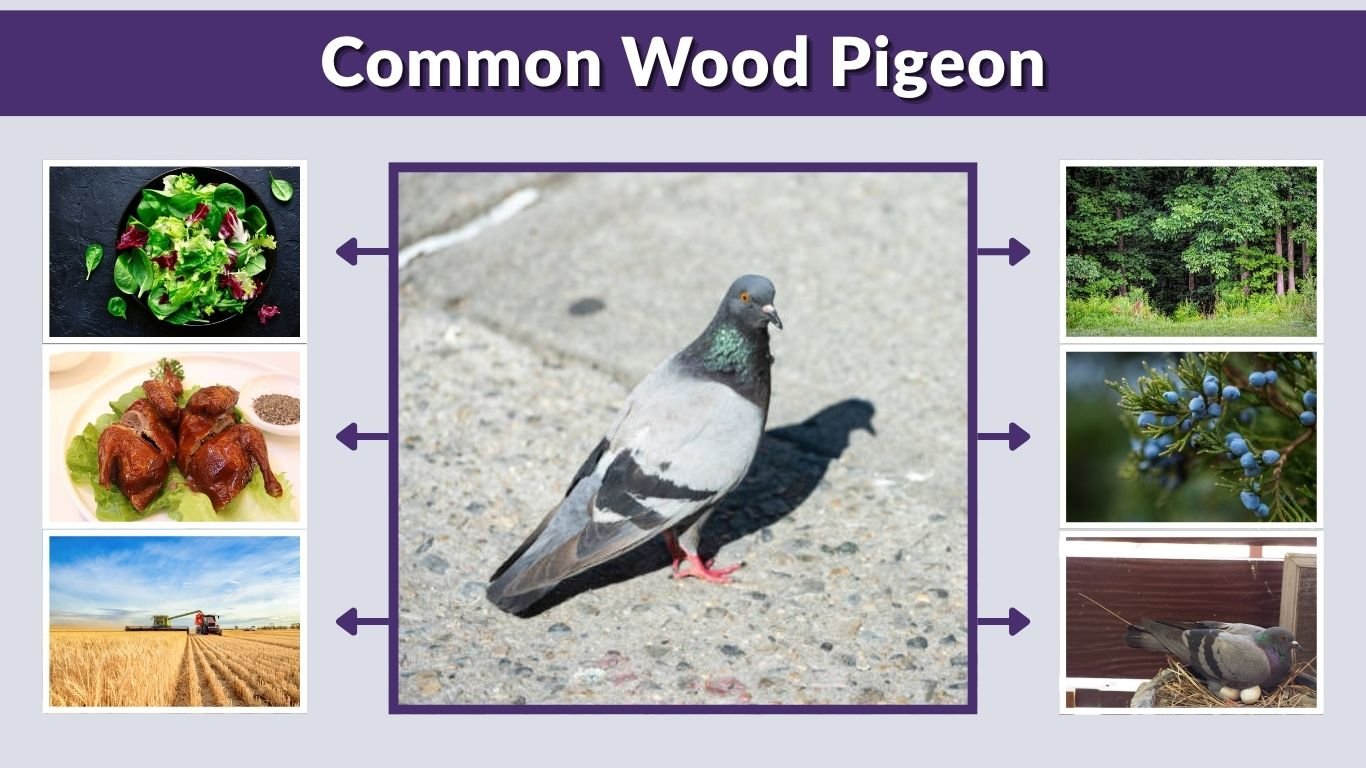
The common wood pigeon is the largest and most recognizable pigeon species found across the United Kingdom and much of Europe. Known for its soft cooing calls, white neck patches, and broad wings, this bird thrives in forests, gardens, farmland, and urban parks. Wood pigeons are highly adaptable and are now common visitors to backyard feeders and city green spaces. Their calm behavior, loud wing claps during flight, and seasonal flocking patterns make them easy to observe throughout the year. Understanding their habitat, diet, nesting habits, and sounds helps birdwatchers identify this familiar species more easily.
What Is a Common Wood Pigeon?
The common wood pigeon is a large member of the pigeon and dove family scientifically known as Columba palumbus. It is widespread throughout Europe and is especially common in the United Kingdom and Ireland.
Unlike smaller city pigeons, wood pigeons have a heavier body, broader wings, and distinctive white markings around the neck and wings. These birds are often seen feeding in open fields, resting in tall trees, or visiting gardens in search of seeds and berries.
What Does a Common Wood Pigeon Look Like?
Several physical characteristics help distinguish the common wood pigeon from other pigeons.
- Gray body with a pinkish chest
- White patches on the neck and wings
- Broad rounded wings for strong flight
- Yellow eyes with a pale beak
- Long tail with dark feather edges
Adult wood pigeons are significantly larger than feral city pigeons and may appear bulky when perched in trees or walking on the ground.
Male vs Female Common Wood Pigeon
Male and female wood pigeons look very similar in coloration and body shape. Males are usually slightly larger and may behave more aggressively during courtship or territorial disputes.
During breeding season, males often perform display flights while puffing their chests and producing loud wing claps. Females tend to remain quieter while focusing on nesting and egg care.
Common Wood Pigeon Habitat and Range
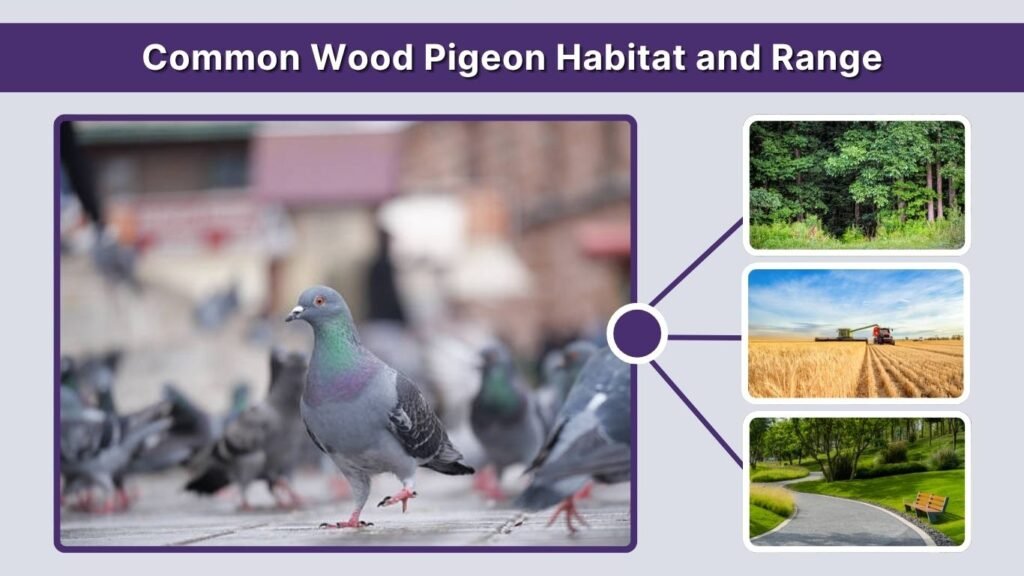
The common wood pigeon is highly adaptable and can survive in many different environments. Although traditionally associated with forests and farmland, the species has expanded successfully into suburban gardens and urban parks.
Wood pigeons prefer areas with trees for nesting and open ground for feeding. Their ability to adapt to human environments has helped populations grow steadily across Europe.
Common Wood Pigeon Habitat
The species thrives in habitats that provide food, shelter, and safe nesting areas.
Common habitat types include:
- Woodland edges and forests
- Farmland and agricultural fields
- Public parks and gardens
- Suburban neighborhoods
- Hedgerows and countryside areas
These environments support seeds, grains, berries, and vegetation that wood pigeons depend on throughout the year.
Common Wood Pigeons in the UK and Ireland
Wood pigeons are among the most widespread birds in the United Kingdom and Ireland. They are commonly seen in England, Scotland, Wales, Northern Ireland, and rural regions across Ireland.
Their populations increase significantly in farmland areas where crops and grain fields provide reliable feeding opportunities. In urban environments, wood pigeons frequently visit bird feeders and grassy parks.
Common Wood Pigeon Sounds and Calls
The common wood pigeon is famous for its deep and repetitive cooing sounds. These calls are often heard early in the morning or during quiet evenings when birds perch high in trees.
Many people recognize the sound even if they cannot immediately spot the bird because the calls carry well across gardens and woodland habitats.
What Does a Common Wood Pigeon Sound Like?
The typical wood pigeon call consists of a slow rhythmic coo repeated several times in sequence. Birdwatchers often describe the sound as calm, low-pitched, and repetitive.
These calls are mainly used during breeding season to attract mates and establish territory. Males are especially vocal during spring and summer when nesting activity increases.
Common Wood Pigeon Call Identification
Wood pigeons also produce other sounds besides cooing calls. Their wings create a loud clapping noise during sudden takeoff, especially when startled by predators or human movement.
Important wood pigeon vocalizations include:
- Repetitive territorial cooing
- Soft communication sounds between mates
- Warning calls during disturbances
- Loud wing claps during flight
- Breeding calls in spring mornings
These sounds help birdwatchers identify wood pigeons even in dense trees or distant fields.
Common Wood Pigeon Diet and Feeding
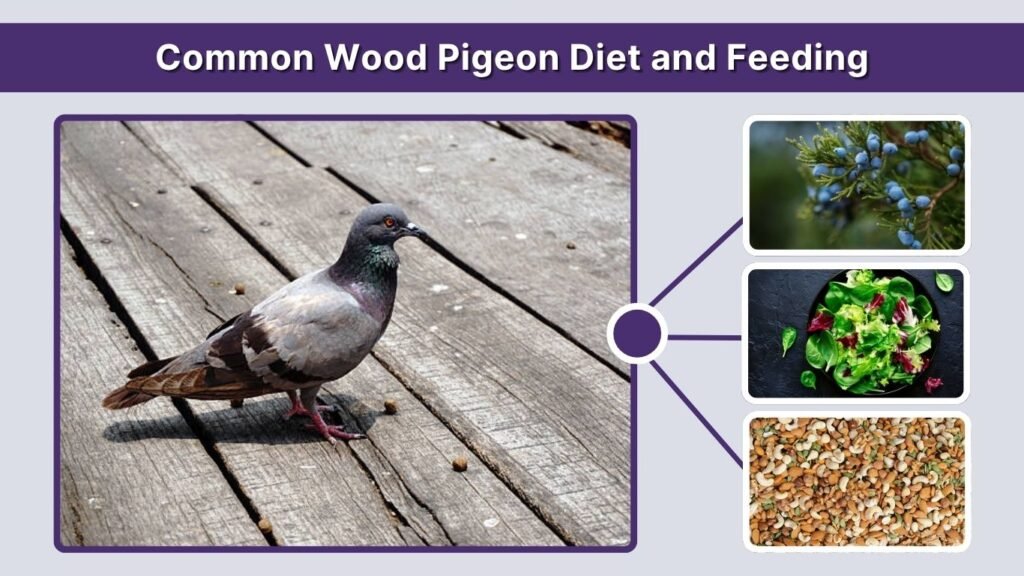
The common wood pigeon feeds mainly on seeds, grains, leaves, berries, and agricultural crops. These birds spend much of their time walking slowly on the ground while searching for food.
Because they adapt well to human environments, wood pigeons often feed in gardens, parks, and farmland throughout the year.
What Do Common Wood Pigeons Eat?
Wood pigeons consume a wide variety of plant-based foods depending on season and habitat.
Common foods include:
- Seeds and cereal grains
- Berries and small fruits
- Clover and green leaves
- Garden vegetables and crops
- Nuts and fallen plant material
During colder months, large flocks may gather in agricultural fields where leftover grain provides important winter food sources.
Common Wood Pigeon Nesting and Breeding
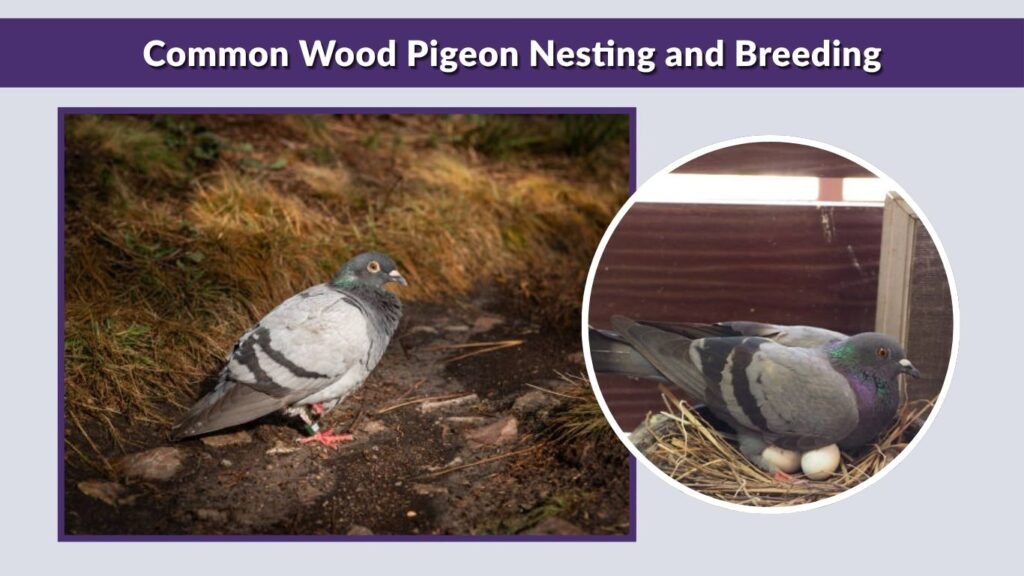
Common wood pigeons breed successfully in both rural and urban habitats. Their nests are usually built in trees, hedges, or dense shrubs where leaves provide protection from predators and weather.
Breeding season often begins in spring, although some pairs may continue nesting well into autumn when food remains abundant.
Common Wood Pigeon Nest Structure
Wood pigeon nests are relatively simple and loosely built from twigs and small branches. Although the nests may appear fragile, they provide enough support for eggs and growing chicks.
Both male and female birds participate in nest building and parental care. Pairs often remain together for long periods and may raise several broods within a single breeding season.
Common Wood Pigeon Eggs and Chicks
Female wood pigeons usually lay two white eggs during each breeding cycle. Both parents share incubation duties and take turns protecting the nest while the eggs develop.
Young chicks hatch after about two weeks and remain in the nest while being fed by their parents. Adult wood pigeons produce a nutrient-rich substance called crop milk, which helps chicks grow rapidly during early development.
Common Wood Pigeon Breeding Behavior
Several behaviors help wood pigeons reproduce successfully in different habitats.
- Courtship flights with loud wing claps
- Territorial cooing from tree branches
- Shared nest-building responsibilities
- Cooperative feeding of chicks
- Multiple broods during warm seasons
These breeding strategies contribute to the species’ large and stable population across Europe.
Common Wood Pigeon Lifespan and Behavior
The common wood pigeon is a cautious but highly adaptable bird that survives well in both natural and urban environments. Daily activity usually includes feeding, resting in trees, and moving between nesting and feeding areas.
Although wood pigeons appear calm, they react quickly to danger and can take flight with surprising speed when threatened by predators or sudden movement.
How Long Do Common Wood Pigeons Live?
Wild wood pigeons commonly live several years, although lifespan depends on habitat quality, predators, disease, and food availability.
Factors affecting survival include:
- Predator attacks from hawks and foxes
- Harsh winter weather conditions
- Food supply during colder months
- Hunting pressure in rural regions
- Nest success and chick survival
Birds living in safe urban parks and protected woodland areas may survive significantly longer than those exposed to heavy predation or environmental stress.
Common Wood Pigeon Behavior
Wood pigeons often gather in large flocks during autumn and winter when feeding in farmland and open fields. Outside breeding season, they become highly social and may travel together while searching for food.
Their strong memory and cautious nature help them avoid repeated danger. Many individuals return regularly to the same gardens, parks, and feeding areas throughout the year.
Common Pigeon vs Wood Pigeon
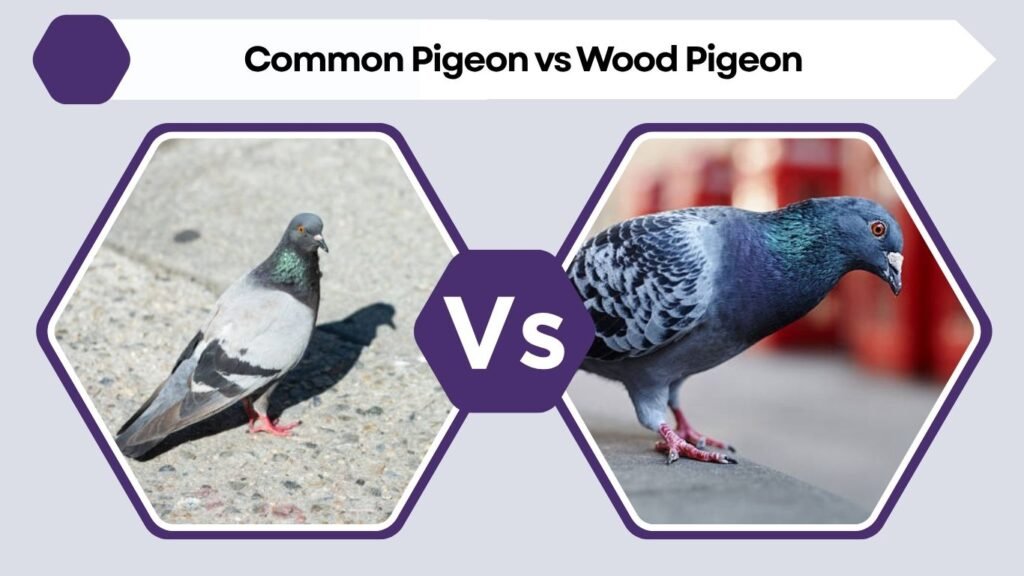
Many people confuse common wood pigeons with feral city pigeons because both belong to the same bird family. However, several important differences help separate the two species.
Wood pigeons are larger, bulkier, and more strongly associated with forests and countryside habitats. Feral pigeons are generally smaller and more common in crowded urban centers.
Appearance Differences
Several physical traits make identification easier for birdwatchers.
- Wood pigeons have white neck patches
- Feral pigeons show more color variation
- Wood pigeons are larger and heavier
- City pigeons have shorter necks
- Wood pigeons display pinkish chest feathers
These differences become especially noticeable when the birds appear side by side in parks or gardens.
Habitat and Feeding Differences
Wood pigeons prefer woodland edges, farmland, and suburban gardens, while feral pigeons thrive mainly in urban environments near buildings and public spaces.
Wood pigeons feed heavily on grains, leaves, and berries, whereas city pigeons often rely on human food waste and scattered urban food sources.
Common Wood Pigeon in Flight
The common wood pigeon is a powerful flyer with broad wings and strong takeoff ability. When startled, the bird often launches into the air with loud wing claps that create a sudden rushing sound.
In flight, white wing patches become highly visible and help distinguish the species from other pigeons and doves.
Flight Identification Tips
Birdwatchers can identify wood pigeons by observing several flight features.
- Broad rounded wings
- Visible white wing bands
- Fast direct flight style
- Loud clapping sounds during takeoff
- Long tail with dark edging
These traits make the species easier to recognize even from a distance.
Can You Eat Common Wood Pigeon?
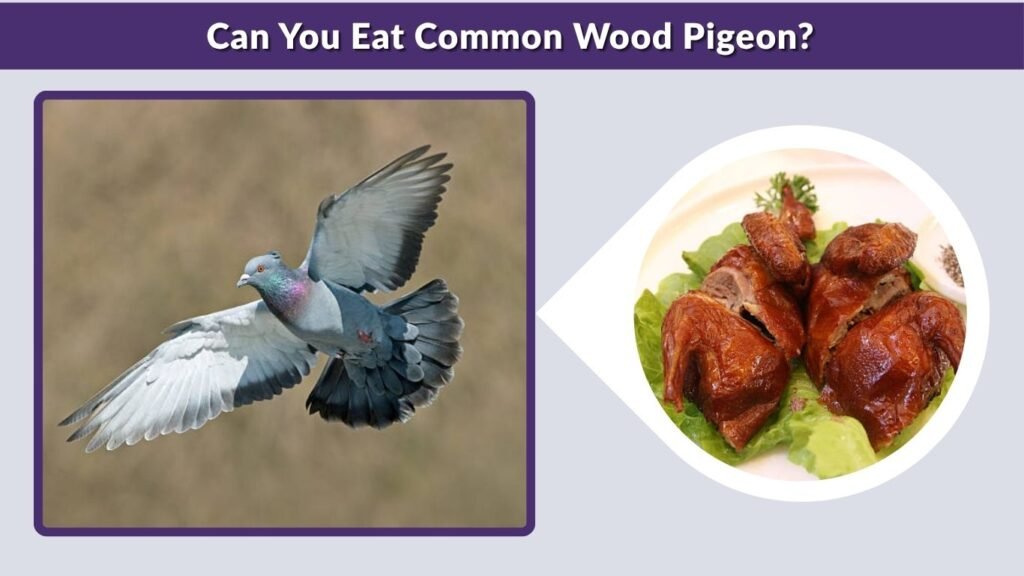
In some European countries, common wood pigeons are considered game birds and are legally hunted during regulated seasons. Their meat is often described as lean and flavorful.
Hunting regulations vary depending on country and local wildlife laws, so legal requirements must always be followed carefully.
Wildlife Regulations and Ethics
Responsible wildlife management is important for maintaining healthy wood pigeon populations and balanced ecosystems.
Ethical considerations include:
- Following legal hunting seasons
- Respecting protected habitats
- Avoiding unnecessary suffering
- Supporting sustainable population management
- Protecting nesting birds during breeding season
These practices help ensure long-term conservation while allowing traditional rural hunting activities.
Common Wood Pigeon Spiritual Meaning
The common wood pigeon is often associated with peace, loyalty, and emotional balance. In folklore and symbolic traditions, pigeons frequently represent home, communication, and guidance.
Because wood pigeons are strongly connected to forests and countryside environments, they are also viewed as symbols of harmony with nature and seasonal change.
Common Wood Pigeon Symbolism
Common symbolic meanings linked to wood pigeons include:
- Peace and calmness
- Loyalty and partnership
- Safe return home
- Patience and stability
- Communication and connection
These symbolic associations appear in literature, folklore, and wildlife traditions throughout Europe.
FAQs
Are common wood pigeons protected?
Common wood pigeons are protected under wildlife laws in many countries, although regulated hunting may be allowed during certain seasons. Protection rules vary by region, especially in the United Kingdom and Europe. Nesting birds and active nests are generally protected from disturbance during breeding periods.
Do common wood pigeons migrate?
Some common wood pigeons migrate seasonally, especially populations living in colder northern regions. Others remain in the same area year-round if food is available. Large flocks may travel south during winter months to find milder weather and reliable feeding grounds.
Why are wood pigeons common in gardens?
Wood pigeons frequently visit gardens because they can find food, water, and nesting areas there. Bird feeders, lawns, shrubs, and vegetable gardens provide seeds and plant material that support feeding throughout the year. Urban parks and suburban environments also offer safe resting locations.
Can common wood pigeons recognize people?
Common wood pigeons can become familiar with regular human activity and may recognize people who frequently provide food. Although they remain naturally cautious birds, repeated exposure to safe environments can reduce fear and encourage them to return to the same feeding areas consistently.
Are common wood pigeons aggressive?
Common wood pigeons are generally peaceful birds, but males may become territorial during breeding season. Aggressive behavior usually involves chasing rivals, wing displays, and vocal calls rather than physical fighting. Outside nesting periods, wood pigeons often gather calmly in large feeding flocks.
