
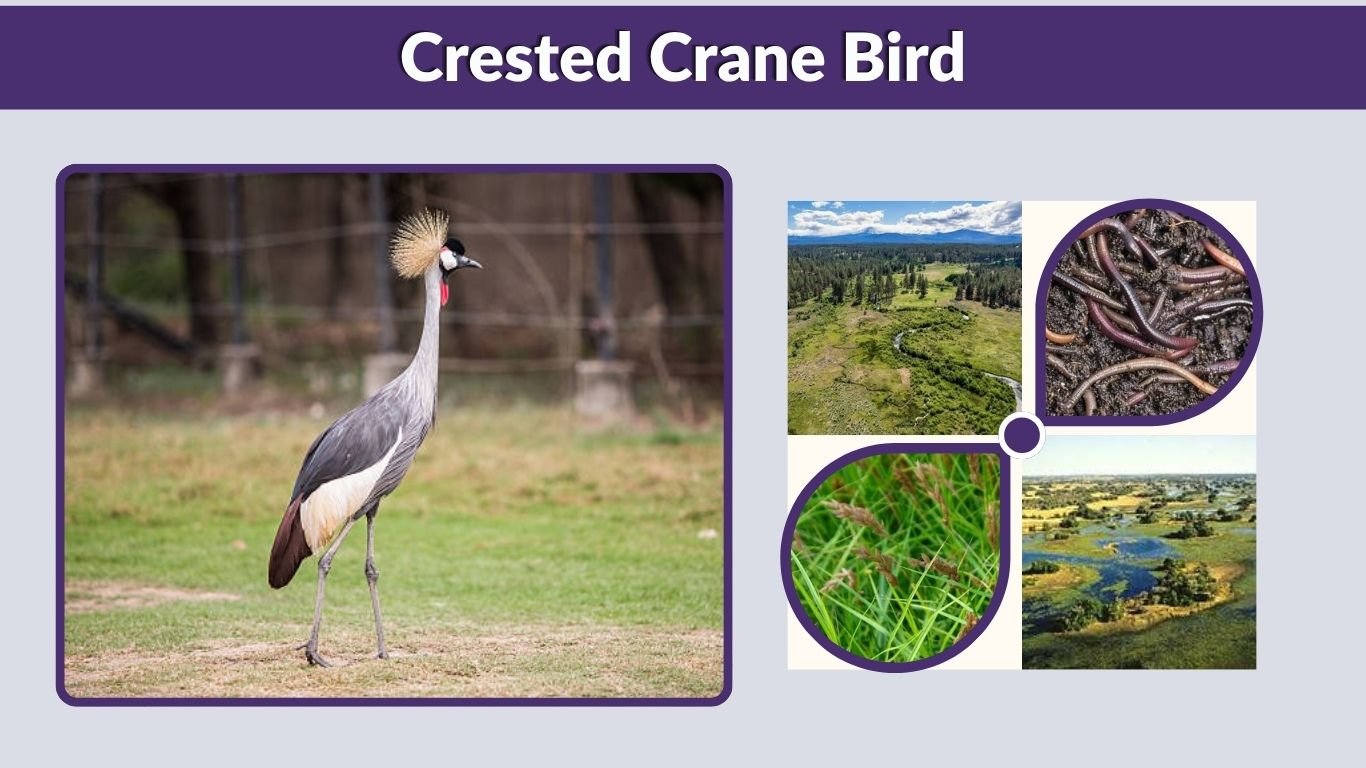
The crested crane bird, more accurately called the Grey Crowned Crane, is one of Africa’s most recognizable birds. Its golden crown, red throat pouch, white cheeks, long legs, and graceful dancing displays give it a striking appearance. Scientifically known as Balearica regulorum, this crane lives in wetlands, grasslands, agricultural fields, and savannas across eastern and southern Africa. The East African subspecies found in Uganda is an important national symbol but faces serious threats from habitat loss and illegal capture.
What Is a Crested Crane Bird?
“Crested crane” is a common name frequently used in Uganda for the Grey Crowned Crane. It belongs to the crane family Gruidae and the crowned-crane genus Balearica. The species has two recognized subspecies:
- East African Grey Crowned Crane (Balearica regulorum gibbericeps)
- Southern Grey Crowned Crane (Balearica regulorum regulorum)
The East African subspecies occurs from Uganda and Kenya southward into northern Mozambique and Zimbabwe. The southern subspecies is found from southern Angola and Namibia through Botswana, Zimbabwe, and South Africa.
Crested Crane Identification
The bird’s most distinctive feature is the fan-shaped crown of stiff golden feathers on its head. Each crown feather has a darker tip, producing a glowing, halo-like appearance.
Other identification features include:
- Pearly grey body and neck
- White wings with gold, chestnut, and brown feathers
- Black forehead and crown base
- Large white cheek patches
- Inflatable red throat pouch
- Long black legs
- Short grey bill
- Long hind toe used for perching
Males and females look nearly identical, although males are usually slightly larger. Juveniles are duller, with brownish head feathers, grey-brown plumage, and a less-developed crown.
Size and Physical Features
| Feature | Typical Measurement |
| Height or body length | 100–110 cm |
| Wingspan | 180–200 cm |
| Weight | 3–4 kg |
| Diet | Omnivorous |
| Conservation status | Endangered |
An adult stands approximately one meter tall and may have a wingspan approaching two meters. Despite its long legs and broad wings, it normally weighs only about 3–4 kilograms.
Crested Crane Habitat and Range
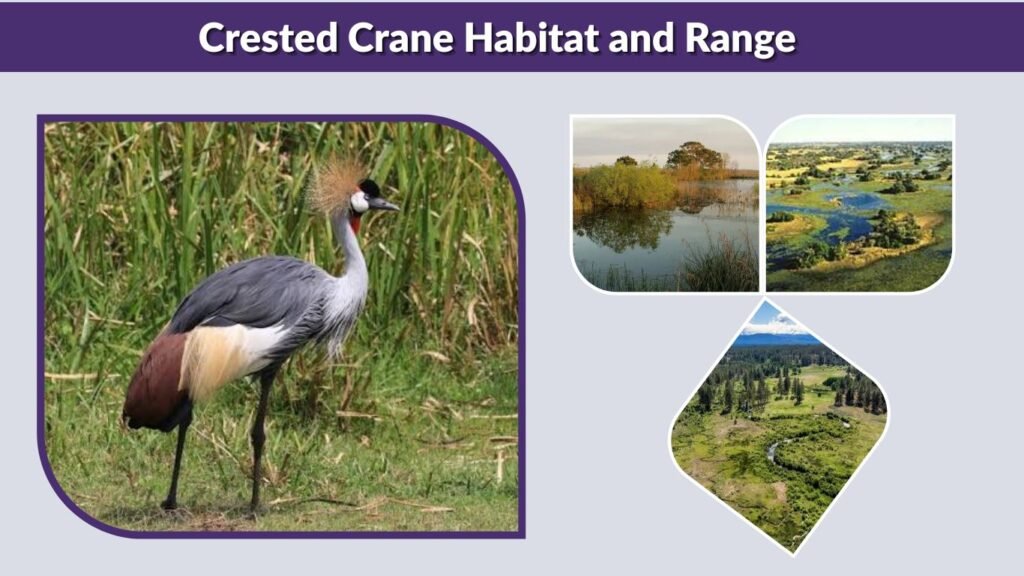
Grey Crowned Cranes live in eastern and southern Africa. They are strongly associated with wetlands but usually require a mixture of wet and dry environments.
Preferred Habitat
Common habitats include:
- Freshwater marshes
- Seasonally flooded grasslands
- Wet meadows
- Lake and river margins
- Open savannas
- Pastures
- Cropland and fallow fields
- Grasslands near shallow water
Wetlands provide protected nesting sites, while nearby grasslands and farms provide feeding areas. The cranes may travel between these habitats according to rainfall, water levels, and food availability.
Can Crested Cranes Perch in Trees?
Grey Crowned Cranes are among the few cranes capable of perching in trees. Their long hind toes allow them to grip branches securely.
They frequently roost in trees, on high structures, or in shallow water. Elevated roosts may provide protection from predators that hunt on the ground. Black Crowned Cranes share this unusual tree-perching ability.
What Do Crested Cranes Eat?

Crested cranes are omnivores that eat both animal and plant material. They commonly forage by walking slowly through short grass, wetlands, and agricultural fields.
Natural Diet
Their diet includes:
- Grass and sedge seeds
- Insects
- Worms
- Small lizards
- Frogs and other small animals
- Plant shoots
- Maize and other grains
- Cultivated crops such as millet and soybeans
A crane may stamp its feet while walking to disturb hidden insects. It may also follow cattle and other large grazing animals to catch insects flushed from the vegetation. Newly plowed farmland can provide easy access to worms, insects, seeds, and exposed plant material.
Their use of farmland can create conflict with farmers. The birds consume crop pests but may also eat maize, uproot seedlings, or damage young plants while searching for food.
Behavior and Communication
Crested cranes are famous for their energetic dancing. A display may include jumping, bowing, running, wing spreading, head bobbing, and tossing pieces of vegetation.
Why Do Crested Cranes Dance?
Dancing is strongly connected with courtship and pair bonding, but it is not limited to the breeding season. Adults and young birds may dance throughout the year.
During courtship, a pair may call together, inflate their red throat pouches, bow, open their wings, and leap into the air. These coordinated movements help strengthen the relationship between the birds. Grey Crowned Cranes generally form monogamous pairs and may remain together for many years.
Crested Crane Call
The adult produces a loud, low, booming or honking call. Its inflatable throat pouch helps amplify the sound. Paired birds often call together during territorial or courtship displays.
Outside the breeding season, cranes may gather in flocks. Breeding pairs become more territorial and defend the area around their nest.
Crested Crane Nesting and Reproduction
Breeding usually follows seasonal rainfall because rising water creates suitable nesting habitat and can make nests harder for some predators to reach.
Nest and Eggs
Both adults construct a platform nest from grasses and wetland vegetation. The nest is usually placed in shallow water, beside a wetland, or among tall plants.
A female generally lays two to four pale bluish eggs. Both parents incubate them for approximately 28–30 days and help protect the nest.
Chicks and Parental Care
Crested crane chicks are precocial, meaning they hatch relatively well developed. They can leave the nest and follow their parents soon after hatching.
Both parents guide, feed, and defend the chicks. The young initially have soft buff-colored plumage and gradually acquire the grey body, red throat pouch, white cheeks, and golden crown of an adult. Fledging may occur between approximately 56 and 100 days after hatching.
Why Is the Crested Crane Uganda’s National Bird?
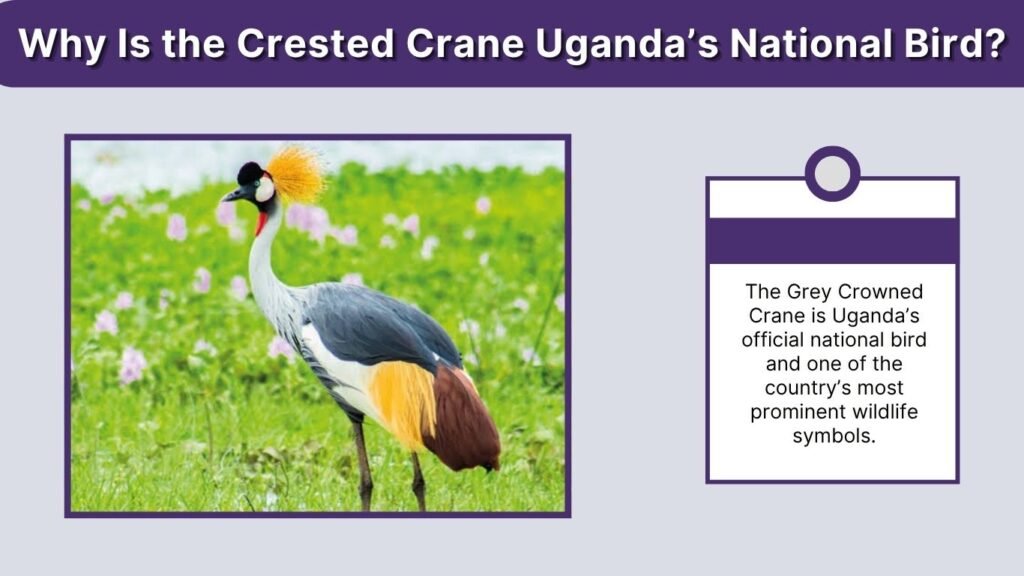
The Grey Crowned Crane is Uganda’s official national bird and one of the country’s most prominent wildlife symbols. It appears inside the white disc at the center of Uganda’s national flag and also stands beside the shield on the national coat of arms.
On the flag, the crane faces the hoist side and raises one leg. The bird is widely associated with Uganda’s natural beauty, dignity, peaceful character, and forward movement.
The national flag contains six horizontal black, yellow, and red bands. According to Uganda’s Office of the Vice President, black represents African peoples, yellow represents Africa’s sunshine, and red represents African brotherhood.
Is the Crested Crane Endangered?
The Grey Crowned Crane is currently classified as Endangered. Although it remains widespread in parts of Africa, its population has declined considerably.
Main Threats
Major threats include:
- Wetland drainage
- Conversion of habitat into farmland
- Pollution and pesticide use
- Illegal capture for the wildlife trade
- Collection of eggs or chicks
- Poisoning following crop damage
- Collisions with electrical lines
- Disturbance around nesting wetlands
- Loss of grasslands and roosting trees
Its beautiful crown and decorative appearance have made it a target for illegal capture. Protecting wetlands, reducing wildlife trafficking, working with farming communities, and preventing disturbance near nests are essential for its survival.
FAQs
What is the scientific name of the crested crane?
The scientific name is Balearica regulorum. The bird is more widely known internationally as the Grey Crowned Crane. Uganda’s birds generally belong to the East African subspecies, Balearica regulorum gibbericeps.
Is the crested crane found only in Uganda?
No. It occurs across several countries in eastern and southern Africa, including Kenya, Uganda, Rwanda, Tanzania, Zambia, Zimbabwe, Mozambique, Botswana, Namibia, Angola, and South Africa.
Can crested cranes fly?
Yes. Crested cranes are strong fliers with broad wings. They fly with their neck and legs extended and may travel between wetlands, feeding fields, and nighttime roosts.
What is special about the crested crane?
Its golden feather crown, dancing displays, loud calls, inflatable red throat pouch, and ability to perch in trees make it unusual. It is also Uganda’s national bird and appears on the country’s flag and coat of arms.
How long do crested cranes live?
Grey Crowned Cranes may live for more than 20 years under suitable conditions. Longevity varies according to habitat quality, food availability, predation, disease, and human disturbance.
