
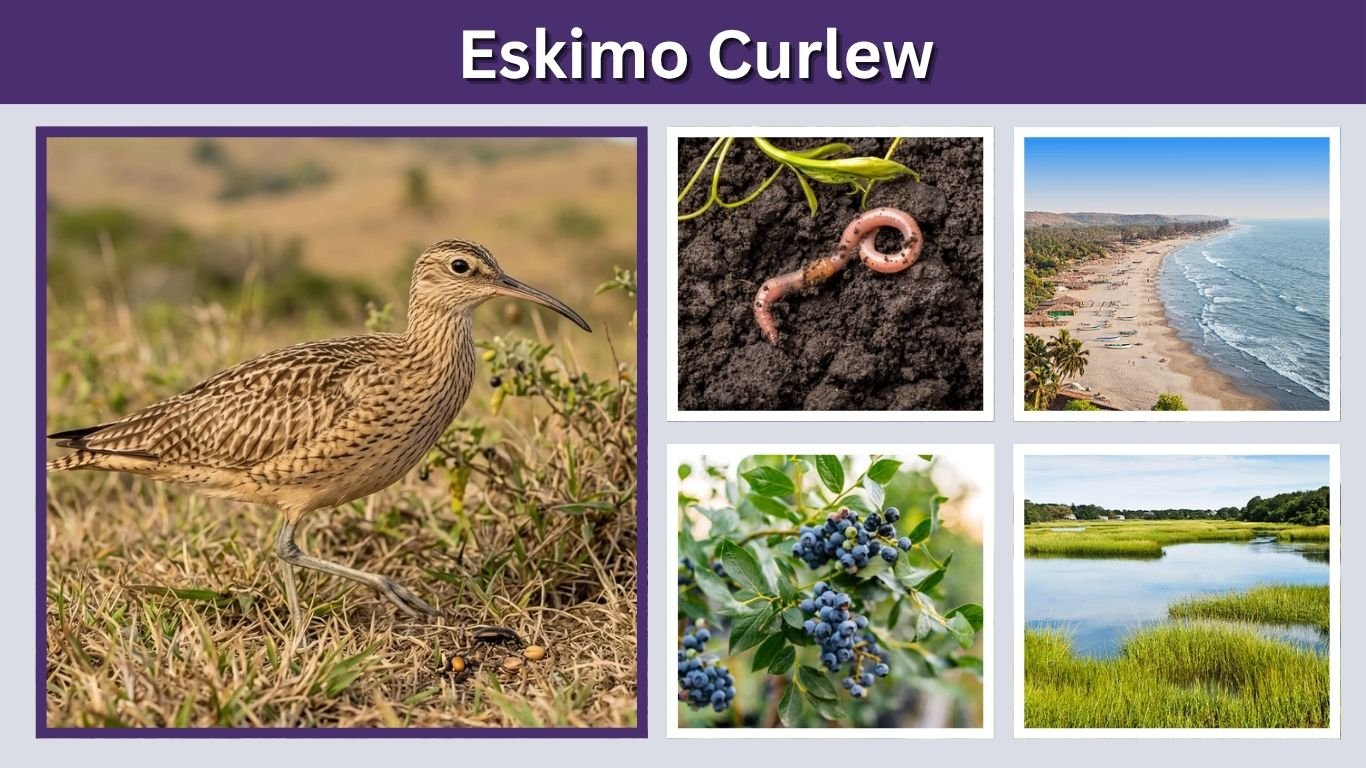
The Eskimo curlew (Numenius borealis) is one of North America’s most mysterious shorebirds. Once numbering in the hundreds of thousands, this small curlew made spectacular migrations between Arctic breeding grounds and South American wintering areas. Heavy commercial hunting caused its population to collapse during the late 1800s, and no confirmed living bird has been documented since the 1960s. Today, the Eskimo curlew remains officially endangered in the United States and Canada, although many experts believe it may already be extinct.
What Is an Eskimo Curlew?
The Eskimo curlew is a migratory shorebird in the sandpiper family, Scolopacidae. Its scientific name is Numenius borealis.
It was once one of the most abundant migratory shorebirds in the Americas, gathering in enormous flocks during seasonal movements.
Eskimo Curlew Identification
The bird could be recognized by several characteristics:
- About 30 cm long
- Slender, slightly downward-curved bill
- Brown and cinnamon-colored plumage
- Dark markings across the breast and flanks
- Pale stripe along the crown
- Bluish-gray legs
- Relatively compact body for a curlew
- Bright cinnamon-colored underwings
Its smaller size and shorter bill distinguished it from the larger whimbrel, although the two species could be difficult to separate at a distance.
Is the Eskimo Curlew Extinct?
The answer remains uncertain.
The Eskimo curlew has not been formally declared extinct by major North American wildlife authorities. It remains listed as endangered, but officials acknowledge that it may no longer survive.
When Was the Last Eskimo Curlew Seen?
The last confirmed physical record was a bird collected in Barbados in 1963. Government of Canada records state that no confirmed sightings have occurred since the 1960s.
Numerous possible sightings have been reported since then, including observations in Canada and the United States. However, none has produced sufficiently convincing photographic, specimen, or other evidence.
Possible reports were made as recently as 2006, but they remain disputed.
Therefore, the safest description is possibly extinct rather than definitely extinct.
How Many Eskimo Curlews Are Left?
Nobody knows.
Historical estimates made during the late 20th century suggested that only a tiny number might remain, but these estimates were largely speculative.
Canadian authorities now state that the current population is unknown and that there may be very few, if any, individuals still alive. Searches of historical breeding and wintering areas have failed to find confirmed surviving birds.
If a population does survive, it is believed to be exceptionally small.
Why Did the Eskimo Curlew Become Endangered?

The bird’s decline is one of the most dramatic examples of how rapidly uncontrolled hunting can devastate a once-abundant species.
Major Causes of Decline
Important factors included:
- Intensive commercial hunting
- Shooting of large migrating flocks
- Conversion of native grasslands
- Loss of migration stopover habitat
- Changes to South American wintering grounds
- Decline of important food sources
- Extremely small surviving population
During the late 19th century, Eskimo curlews were hunted extensively for the commercial meat trade. Because they traveled in large flocks, hunters could kill many birds at once.
Canadian conservation authorities identify overhunting as the primary cause of the population collapse between the 1870s and 1890s.
Eskimo Curlew Habitat
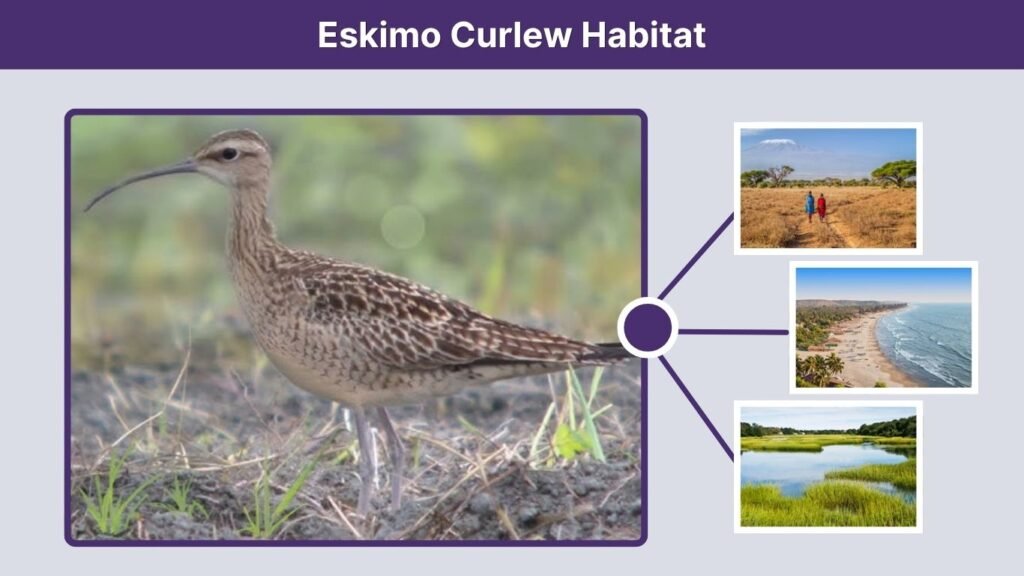
The species used very different habitats during breeding, migration, and winter.
Breeding Habitat
Confirmed breeding occurred in the Arctic tundra of northwestern Canada, particularly the Northwest Territories.
The birds used open upland tundra containing low vegetation. Breeding may also historically have occurred across a wider region, including parts of Nunavut, Yukon, Alaska, and possibly Russia, although confirmed nesting locations were extremely limited.
Migration Habitat
During migration, Eskimo curlews used:
- Native grasslands
- Prairies
- Coastal areas
- Marshes
- Mudflats
- Open fields
- Berry-producing habitats
The Great Plains were particularly important during spring migration because they provided abundant insects and other food.
Winter Habitat
Most historical winter records came from the pampas of Argentina. Records also existed from Uruguay, Chile, and possibly other parts of southern South America.
Eskimo Curlew Migration Route
The Eskimo curlew undertook one of the most impressive migrations of any shorebird.
Fall Migration
After breeding in Arctic Canada, birds traveled east toward Newfoundland and Labrador.
From there, they apparently made a long flight south over the Atlantic toward South America before eventually reaching wintering grounds in Argentina.
Spring Migration
Their return journey followed a different route.
Birds apparently moved north from Argentina along western South America before passing through Central America, Mexico, and the Gulf region.
They then crossed the Great Plains of the United States and Canada before returning to Arctic breeding areas.
This enormous circular migration required dependable feeding areas throughout two continents.
What Did Eskimo Curlews Eat?
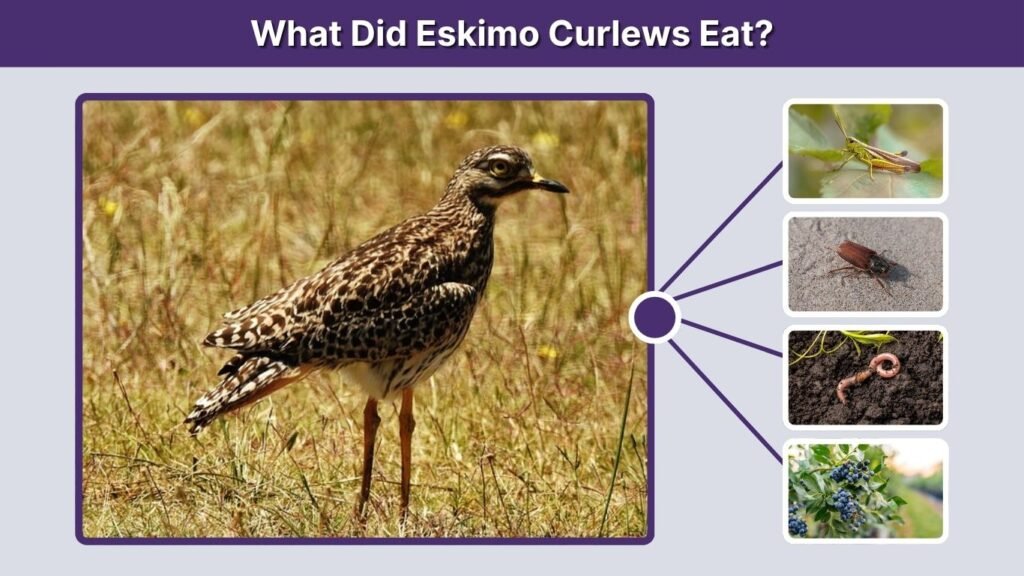
The Eskimo curlew had a varied diet that changed depending on location and season.
Main Foods
Its diet included:
- Grasshoppers
- Grasshopper eggs
- Beetles
- Flies and fly larvae
- Earthworms
- Small coastal invertebrates
- Crowberries
- Blueberries
- Other berries
Before making long autumn flights toward South America, curlews consumed berries that helped them accumulate energy reserves.
During spring migration across the Great Plains, grasshoppers and their eggs were particularly valuable food sources.
The extinction of the Rocky Mountain grasshopper and the conversion of prairie habitat may have reduced food supplies available to any surviving Eskimo curlews.
Eskimo Curlew Breeding and Life Cycle
Very little is known about the species’ reproduction because scientists have not confirmed an active nest in well over a century.
Nesting
Eskimo curlews nested on the ground in open Arctic tundra.
Like many shorebirds, their eggs were naturally camouflaged against surrounding vegetation and soil.
The most remarkable fact is that no confirmed nesting activity has been recorded since 1866, despite later searches in historical breeding areas.
This lack of recent breeding evidence makes estimating population size or reproductive success impossible.
Eskimo Curlew Behavior
Historical accounts describe Eskimo curlews as highly social migratory birds.
They traveled in large flocks and concentrated at productive feeding areas during migration.
Their tendency to gather in large numbers unfortunately made them particularly vulnerable to hunters.
The birds used their curved bills to collect insects and other small prey from vegetation, soil, and coastal environments.
Before lengthy migration flights, they fed intensively to build energy reserves.
Eskimo Curlew vs Whimbrel
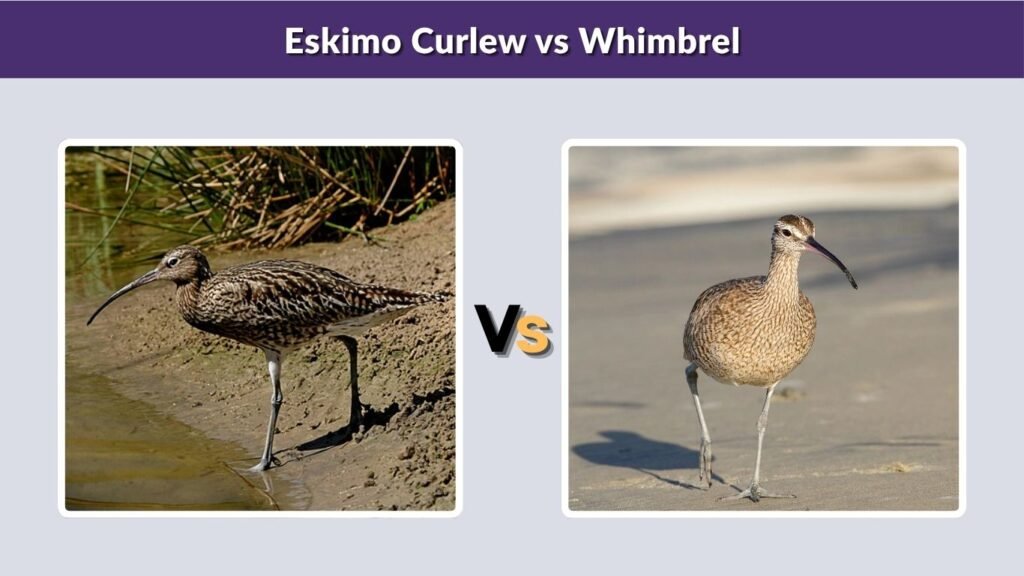
The whimbrel is one of the birds most likely to be confused with an Eskimo curlew.
Main Differences
The Eskimo curlew was considerably smaller and had a shorter, more delicate bill.
A whimbrel generally has a longer and more strongly curved bill, along with distinctive head stripes.
Identification is particularly difficult because young whimbrels can temporarily have shorter bills. This is one reason modern unconfirmed Eskimo curlew sightings require strong photographic or physical evidence before being accepted.
Eskimo Curlew Conservation Status
The species remains legally protected despite uncertainty about whether any individuals survive.
The U.S. Fish and Wildlife Service lists the Eskimo curlew as endangered, while Canada also protects it as an endangered species.
Canadian recovery assessments have concluded that active recovery is currently not feasible because authorities do not know of any surviving birds capable of reproduction.
Instead, credible reports should be investigated in case a remnant population is discovered.
Interesting Eskimo Curlew Facts
- Its scientific name is Numenius borealis.
- It was once found in enormous migratory flocks.
- Its breeding grounds were in Arctic Canada.
- Most known wintering occurred in Argentina.
- It traveled thousands of miles during annual migration.
- Commercial hunting caused a catastrophic population decline.
- The last confirmed specimen was collected in 1963.
- No confirmed nesting has been recorded since 1866.
- Several later sightings have been reported but not verified.
- The species may now be extinct.
FAQs
Is the Eskimo Curlew Extinct?
Possibly, but it has not been universally declared extinct. Wildlife authorities continue to classify it as endangered or possibly extinct because no confirmed bird has been documented since the 1960s.
When Was the Last Confirmed Eskimo Curlew Sighting?
The last authenticated record was a specimen collected in Barbados in 1963. Later reports have remained unconfirmed.
How Many Eskimo Curlews Are Left?
The current population is unknown. There may be no surviving birds, although the possibility of a tiny undiscovered population has not been completely ruled out.
Why Did the Eskimo Curlew Disappear?
Unregulated commercial hunting was the primary cause of its dramatic decline. Grassland habitat loss and changes in important food resources may also have prevented the population from recovering.
Where Did Eskimo Curlews Live?
They bred in Arctic Canada, migrated through North America and the Atlantic region, and primarily wintered in the pampas of Argentina. Their annual migration covered an enormous portion of the Americas.