
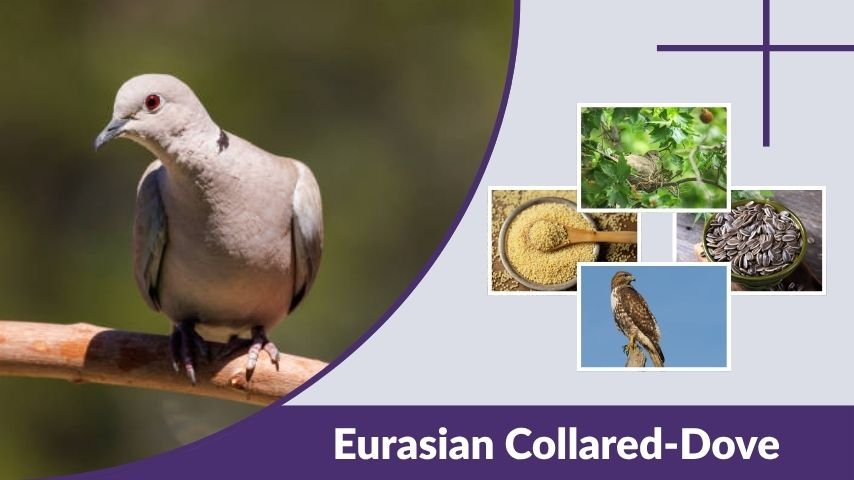
The Eurasian Collared-Dove is a pale-colored dove commonly seen in cities, suburbs, farms, and backyard feeders. Known for its soft cooing calls and black neck collar, this adaptable bird has spread rapidly across Europe and North America over the past century. Many birdwatchers recognize the Eurasian collared-dove because of its calm behavior and ability to live comfortably near humans. Its repetitive three-note call and steady flight style make it easy to notice in both urban and rural areas.
This dove species is now one of the most successful urban birds in many regions. Its fast breeding cycle, flexible diet, and strong adaptability have helped it thrive in environments where other birds may struggle to survive.
What Is a Eurasian Collared-Dove?
The Eurasian collared-dove is a medium-sized dove species known for its pale gray-tan feathers and thin black collar located on the back of the neck. It belongs to the same bird family as pigeons and other doves.
Eurasian Collared-Dove Scientific Classification
The scientific name of the Eurasian collared-dove is Streptopelia decaocto. It belongs to the Columbidae family, which includes pigeons and doves worldwide.
Although many people confuse collared-doves with pigeons, they are generally slimmer and more graceful in appearance. Their long tails and soft feather coloring help distinguish them from city pigeons.
History and Origin of the Eurasian Collared-Dove
The Eurasian collared-dove originally came from parts of Asia and southeastern Europe. During the twentieth century, the species rapidly expanded across Europe and later reached North America.
After arriving in the Bahamas during the 1970s, the birds spread quickly across the United States. Today, they are common in many urban and suburban environments.
Why Eurasian Collared-Doves Spread So Quickly
Several factors helped these birds become highly successful:
- Fast reproduction rates
- Adaptation to cities
- Flexible feeding habits
- Tolerance of human activity
- Ability to use artificial structures for nesting
Their ability to thrive near people has made them one of the fastest-spreading bird species in modern history.
Eurasian Collared-Dove Identification
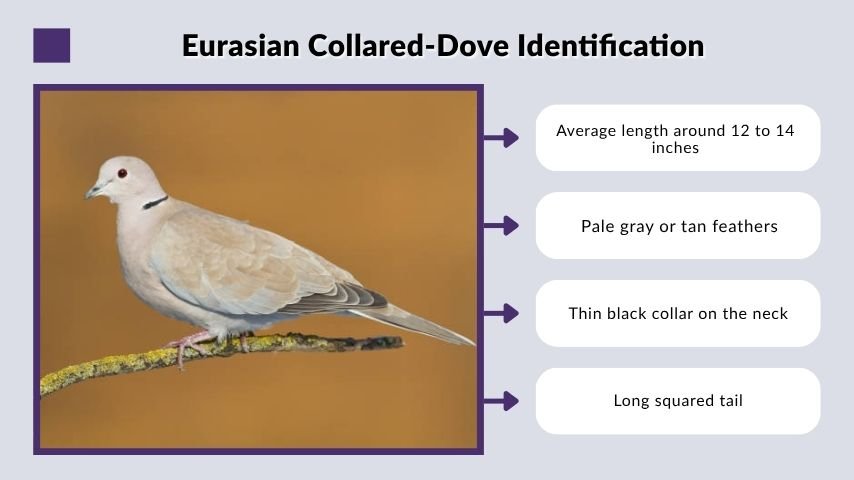
Eurasian collared-doves are relatively easy to identify because of their pale coloring and distinct black neck marking. Their body shape and flight style also help separate them from similar dove species.
Eurasian Collared-Dove Size and Appearance
- Average length around 12 to 14 inches
- Pale gray or tan feathers
- Thin black collar on the neck
- Long squared tail
- Dark eyes
- Pinkish legs and feet
Their wings appear broad and smooth during flight, giving them a calm and steady flying motion.
Male vs Female Eurasian Collared-Dove
Male and female Eurasian collared-doves look very similar, making identification difficult in the field. Males are sometimes slightly larger and may display more active courtship behavior during breeding season.
Both sexes share the same pale feather coloration and black neck collar. Their soft cooing calls are also similar.
Juvenile Eurasian Collared-Dove Identification
Young Eurasian collared-doves usually appear duller than adults. Juveniles often lack the strong black collar that mature birds display.
Young birds commonly show:
- Softer brown-gray feathers
- Smaller body size
- Faint neck markings
- Darker facial appearance
As juveniles mature, their collar becomes darker and more visible.
Eurasian Collared-Dove vs Mourning Dove
| Feature | Eurasian Collared-Dove | Mourning Dove |
| Tail Shape | Squared tail | Pointed tail |
| Neck Marking | Black collar | No collar |
| Body Size | Larger | Smaller |
| Feather Color | Pale gray-tan | Brown-gray |
| Call Type | Repetitive coo | Soft mournful whistle |
The squared tail is often the easiest way to distinguish a Eurasian collared-dove during flight.
Eurasian Collared-Dove Habitat and Range
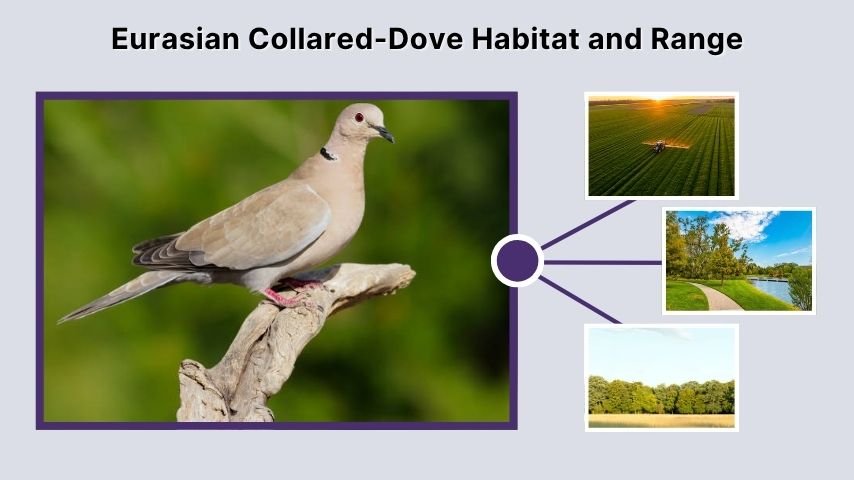
Eurasian collared-doves are highly adaptable birds that live comfortably in both rural and urban environments. They are especially common around human settlements where food and nesting locations are easy to find.
Preferred Habitat
These doves commonly live in:
- Residential neighborhoods
- Farms and barns
- Public parks
- Small towns
- Backyard feeding stations
- Open woodland edges
Unlike some forest birds, Eurasian collared-doves prefer open spaces with scattered trees and buildings.
Eurasian Collared-Dove Range Expansion
One of the most remarkable things about this species is how quickly it expanded across multiple continents. After spreading through Europe, the birds established large populations throughout North America in only a few decades.
Today, Eurasian collared-doves are found in:
- Most of the United States
- Southern Canada
- Mexico
- Europe
- Parts of Asia
Their population continues growing in many suburban areas.
Are Eurasian Collared-Doves Migratory?
Eurasian collared-doves are generally non-migratory birds. Most remain in the same region year-round if food and shelter remain available.
However, younger birds may travel short distances while searching for new territory. Weather conditions and food shortages can also cause temporary local movement.
Eurasian Collared-Dove Sounds and Communication
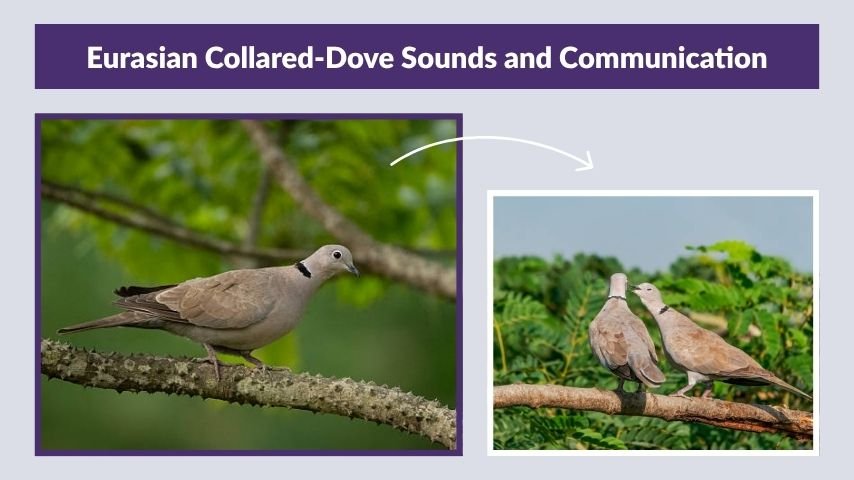
The Eurasian collared-dove is best known for its repetitive cooing sounds that are often heard early in the morning and throughout the day.
Eurasian Collared-Dove Sound
The bird’s call is usually described as a repeated three-part coo. Many people hear the sound from rooftops, utility poles, and backyard trees.
Their vocalizations are used for:
- Defending territory
- Attracting mates
- Pair communication
- Warning nearby birds
The repetitive rhythm of their call makes the species easy to identify even without seeing the bird.
What Does the Call Mean?
Male Eurasian collared-doves often call repeatedly during breeding season to attract females and warn rival males away from their territory.
Paired birds also communicate quietly with each other while feeding or nesting nearby.
Flight Sounds and Body Signals
Eurasian collared-doves also communicate through flight movements and body posture. During takeoff, their wings create a sharp clapping sound that may help warn nearby birds of danger.
These doves use body signals such as:
- Puffing chest feathers
- Bowing movements
- Tail spreading
- Wing displays
- Head bobbing
Courtship behavior often includes males circling females while producing repeated cooing calls.
Eurasian Collared-Dove Diet and Feeding Habits
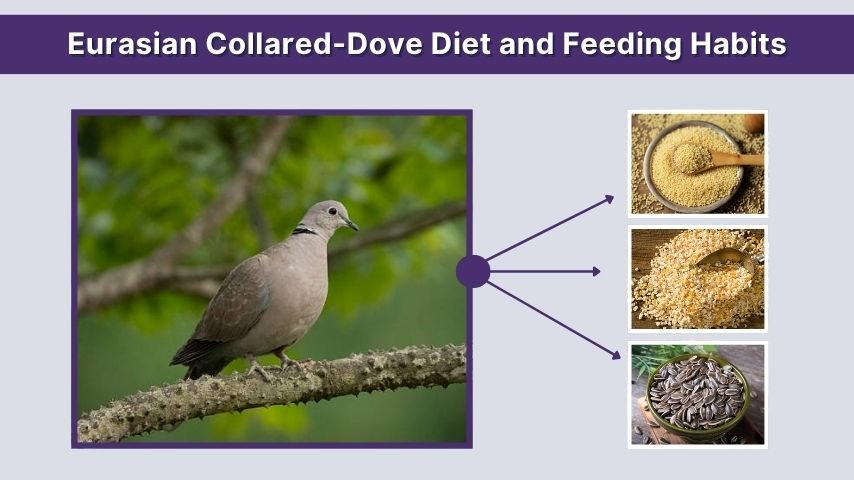
Eurasian collared-doves mainly eat seeds and grains found on the ground or at bird feeders. Their flexible diet allows them to survive successfully in cities, farms, and suburban neighborhoods.
What Do Eurasian Collared-Doves Eat?
- Millet
- Cracked corn
- Sunflower seeds
- Wheat grains
- Wild grass seeds
- Small berries
These birds spend much of their day walking on the ground while searching for food.
Feeding Behavior
Eurasian collared-doves often feed in pairs or small groups. They usually forage calmly beneath feeders or across open fields where seeds are easy to locate.
Their feeding habits include:
- Ground foraging
- Visiting backyard feeders
- Feeding near farms
- Searching open grassy areas
Unlike aggressive urban pigeons, collared-doves are generally peaceful around other birds.
Best Foods for Eurasian Collared-Doves
People who enjoy backyard birdwatching can attract Eurasian collared-doves using several seed types.
Popular feeder foods include:
- Millet mixes
- Cracked corn
- Sunflower chips
- Mixed grain blends
Platform feeders and ground feeding stations work especially well because these doves prefer feeding close to the ground.
Eurasian Collared-Dove Nesting and Life Cycle
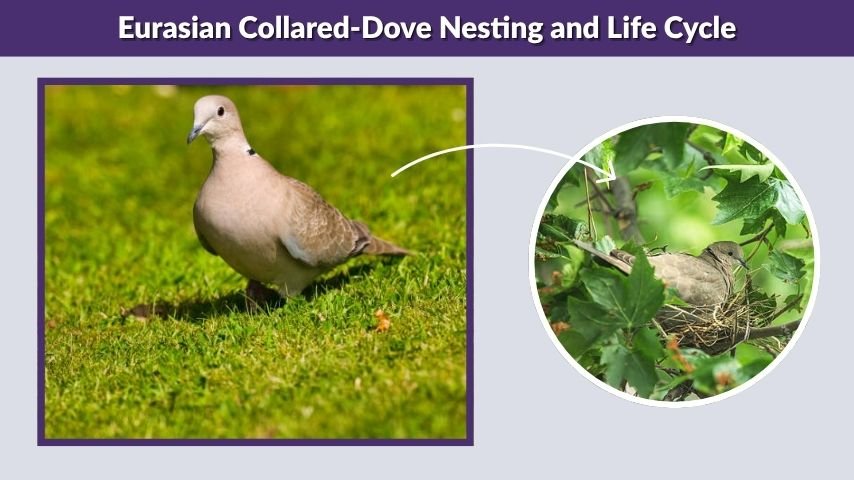
Eurasian collared-doves breed successfully in many different environments. Their ability to nest multiple times each year is one reason their populations continue expanding rapidly.
Breeding Season
Breeding may occur during much of the year in warmer climates, though activity often increases during spring and summer.
Breeding behavior includes:
- Courtship displays
- Repeated cooing calls
- Nest building
- Territory defense
- Pair bonding
Most pairs remain together for long periods and cooperate while raising young birds.
Eurasian Collared-Dove Nest
These doves build simple nests using small sticks and twigs. Nests are often loose platforms placed in elevated locations.
Common nesting sites include:
- Trees
- Building ledges
- Utility poles
- Shrubs
- Backyard structures
Their nests may appear fragile, but they are usually strong enough to support eggs and chicks successfully.
Eggs and Chicks
Female Eurasian collared-doves typically lay two white eggs per nesting attempt. Both parents help incubate the eggs and care for the chicks after hatching.
Important nesting facts:
- Eggs are plain white
- Clutch size is usually two eggs
- Incubation lasts about two weeks
- Chicks grow rapidly
- Parents feed chicks crop milk
Young birds leave the nest within a few weeks after hatching.
Eurasian Collared-Dove Lifespan
Most Eurasian collared-doves survive several years in the wild if they avoid predators and environmental hazards.
Common survival challenges include:
- Hawks and falcons
- Cats
- Harsh weather
- Vehicle collisions
- Window strikes
Birds living near safe feeding areas often survive longer than those in heavily urbanized environments.
Eurasian Collared-Dove Behavior
Eurasian collared-doves are calm and social birds that adapt well to living near humans. Their relaxed behavior makes them common visitors to parks, gardens, and residential areas.
Social Behavior
These birds often remain close to mates and may gather in loose flocks while feeding.
Their social habits include:
- Pair bonding
- Group feeding
- Shared roosting areas
- Calm interactions with humans
Unlike many territorial birds, Eurasian collared-doves are usually peaceful around other dove species.
Flight Style
Eurasian collared-doves fly with smooth, direct wingbeats and short glides. Their broad wings help them travel efficiently between feeding and nesting areas.
In flight, they appear:
- Steady
- Fast-moving
- Straight-flying
- Graceful
The long squared tail is especially noticeable during flight.
Are Eurasian Collared-Doves Aggressive?
Although generally peaceful, Eurasian collared-doves sometimes compete with native birds for food and nesting space. Their rapidly growing populations have caused concern in some regions.
Aggressive behavior may include:
- Chasing smaller birds
- Defending feeders
- Territorial calling
- Wing-flapping displays
However, they are usually less aggressive than pigeons or starlings.
Predators and Threats
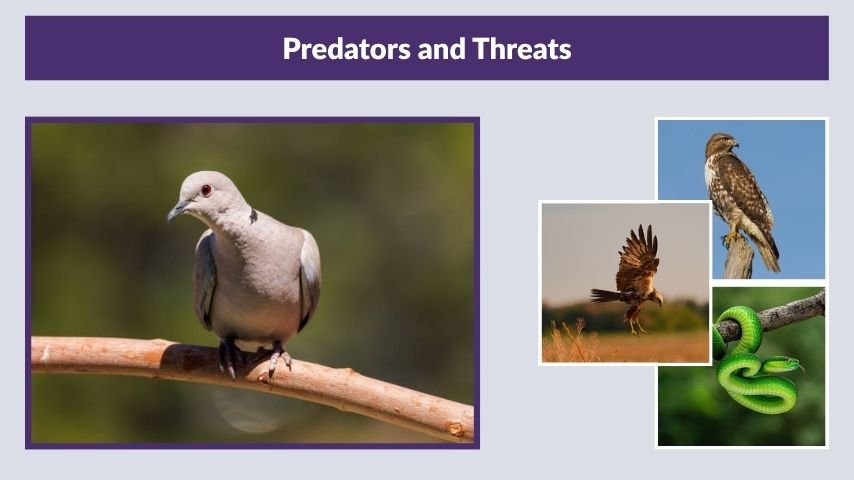
Despite their adaptability, Eurasian collared-doves still face threats from predators and human-related dangers.
Natural Predators
- Hawks
- Falcons
- Owls
- Snakes
- Domestic cats
Young chicks and eggs are especially vulnerable to predators while inside nests.
Human-Related Threats
Urban environments create several hazards for Eurasian collared-doves.
Major dangers include:
- Window collisions
- Traffic accidents
- Habitat destruction
- Pollution exposure
Extreme weather and disease outbreaks can also affect local populations.
Are Eurasian Collared-Doves Invasive?
Many wildlife experts consider Eurasian collared-doves an invasive species in North America because of their rapid spread and competition with native birds.
Their expansion may affect:
- Native dove populations
- Food availability
- Nesting locations
- Local ecosystems
Despite these concerns, the species remains highly successful across much of its introduced range.
Interesting Eurasian Collared-Dove Facts
Eurasian collared-doves have several unusual traits that make them interesting to birdwatchers and researchers.
Fun Facts About Eurasian Collared-Doves
- They spread across North America extremely quickly
- Their call contains a recognizable three-note pattern
- They can breed several times yearly
- Most pairs stay together long-term
- They thrive in urban environments
Why Birdwatchers Notice Them
Birdwatchers often notice Eurasian collared-doves because they are highly visible and vocal birds found near homes and parks.
Their popularity comes from:
- Easy identification
- Calm personality
- Frequent feeder visits
- Distinctive neck collar
- Loud repetitive calls
FAQs
Can Eurasian collared-doves live in cities?
Yes. Eurasian collared-doves adapt very well to cities and suburban neighborhoods. Buildings, backyard feeders, parks, and utility poles provide ideal nesting and feeding opportunities, helping these birds thrive close to human activity.
Do Eurasian collared-doves mate for life?
Many Eurasian collared-dove pairs remain together for long periods and may breed multiple times each year. Strong pair bonding helps both birds cooperate while building nests, incubating eggs, and feeding young chicks.
How long do Eurasian collared-doves live?
In the wild, Eurasian collared-doves usually live several years if they avoid predators and accidents. Their lifespan depends on food availability, weather conditions, disease exposure, and urban dangers like traffic or window collisions.
Why do Eurasian collared-doves sit on power lines?
Power lines provide safe resting spots with good visibility. From these elevated perches, Eurasian collared-doves can watch for predators, communicate with mates, and locate nearby feeding areas more easily.
Are Eurasian collared-doves friendly to humans?
Eurasian collared-doves are generally calm birds that tolerate people well. They commonly visit backyard feeders and parks without showing much fear, especially in areas where humans regularly provide food and water.
