
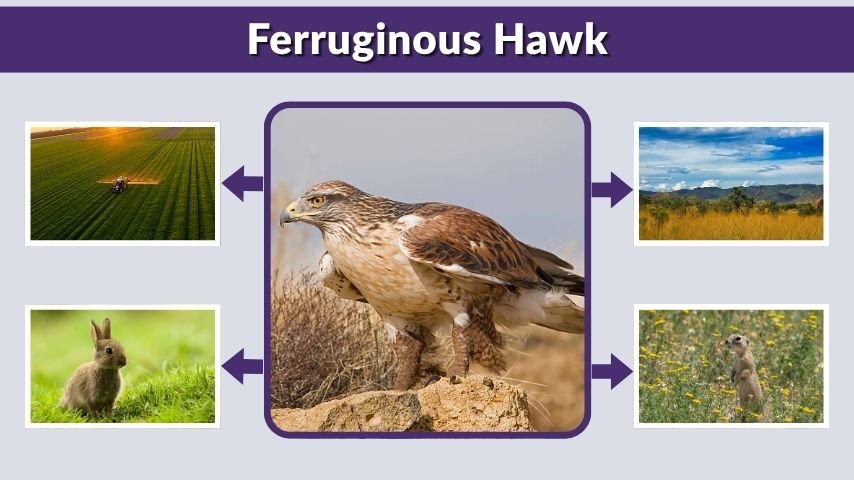
The Ferruginous Hawk is the largest hawk in North America and one of the most impressive raptors found across the continent’s grasslands and open plains. Known for its broad wings, rusty-colored plumage, and powerful hunting abilities, this species plays a vital role in maintaining healthy prairie ecosystems. Birdwatchers and wildlife enthusiasts often seek to identify the Ferruginous Hawk because of its unique appearance and behavior. This guide explores its identification features, size, habitat, and adaptations that make it one of the most remarkable birds of prey.
What Is a Ferruginous Hawk?
The Ferruginous Hawk (Buteo regalis) is a large bird of prey belonging to the Buteo genus. It is commonly found in open landscapes throughout western North America. Unlike many forest-dwelling raptors, this hawk thrives in grasslands, deserts, and prairies where it can easily spot prey from the air or elevated perches. Its name comes from the rusty, iron-colored feathers that are visible on much of its body.
Scientific Classification
The Ferruginous Hawk belongs to the following classification:
- Kingdom: Animalia
- Phylum: Chordata
- Class: Aves
- Order: Accipitriformes
- Family: Accipitridae
- Genus: Buteo
- Species: Buteo regalis
Why Is It Called Ferruginous?
The word “ferruginous” means rust-colored or iron-rust colored. Adult Ferruginous Hawks often display rich reddish-brown feathers on their backs, shoulders, and legs, giving them their distinctive appearance.
Ferruginous Hawk Identification
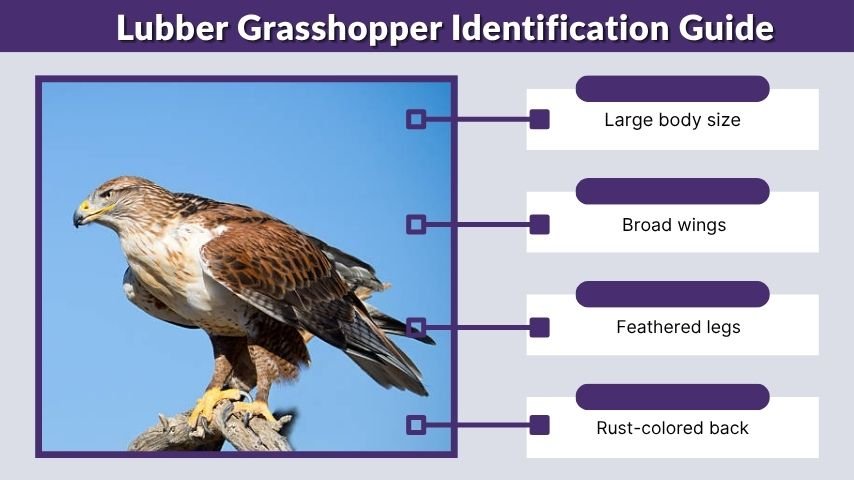
Identifying a Ferruginous Hawk can be relatively easy once you know its key field marks. Its large size, broad wings, and pale underparts make it stand out from many other North American hawks. Birders often rely on a combination of body shape, plumage patterns, and flight characteristics for accurate identification.
Overall Appearance
Adult Ferruginous Hawks have a broad chest, long wings, and feathered legs that extend down to their feet. This feature is uncommon among many hawk species and often helps distinguish them from similar raptors.
Light Morph vs Dark Morph
Ferruginous Hawks occur in two primary color forms:
- Light morph birds have pale underparts and rusty upperparts.
- Dark morph birds appear much darker overall.
- Light morphs are significantly more common.
- Both morphs share the same body structure and size.
Key Identification Features
Look for these characteristics when identifying a Ferruginous Hawk:
- Large body size
- Broad wings
- Feathered legs
- Rust-colored back
- Pale underparts
- White tail base
These traits are especially visible when the bird is perched or soaring overhead.
Ferruginous Hawk Size and Measurements
The Ferruginous Hawk is recognized as the largest hawk species in North America. Its impressive dimensions help it dominate open-country habitats where larger prey species are available.
Average Length
Adult Ferruginous Hawks typically measure between 20 and 27 inches in length. Females are generally larger than males, a common trait among birds of prey.
Wingspan and Weight
The species possesses an enormous wingspan that contributes to efficient soaring and hunting across vast landscapes.
| Measurement | Male | Female |
| Length | 20–24 in | 22–27 in |
| Wingspan | 48–56 in | 52–60 in |
| Weight | 2–3 lbs | 3–5 lbs |
Size Comparison
Compared with many common hawks, the Ferruginous Hawk appears noticeably larger and heavier. Its wingspan can rival that of some eagle species, making it one of the most imposing raptors in its range.
Ferruginous Hawk Range and Habitat
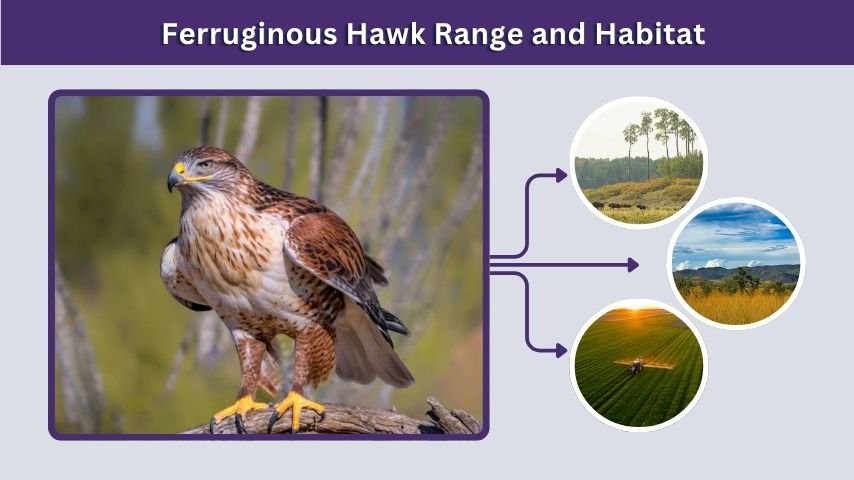
Ferruginous Hawks are strongly associated with open habitats where visibility is excellent and prey is abundant. Their distribution covers much of western North America, particularly regions dominated by grasslands and shrublands.
Geographic Range
This species breeds primarily throughout the western United States and parts of Canada. During winter, some populations move south into Mexico and the southern United States.
Preferred Habitats
Ferruginous Hawks commonly inhabit:
- Native prairies
- Sagebrush plains
- Desert grasslands
- Agricultural fields
- Open rangelands
These habitats provide ideal hunting opportunities and nesting locations.
Regional Distribution
The species is frequently observed in several states and provinces, including Colorado, Utah, Arizona, Texas, Alberta, and portions of California. Their presence is often linked to healthy populations of ground-dwelling mammals.
Ferruginous Hawk Diet and Hunting Behavior
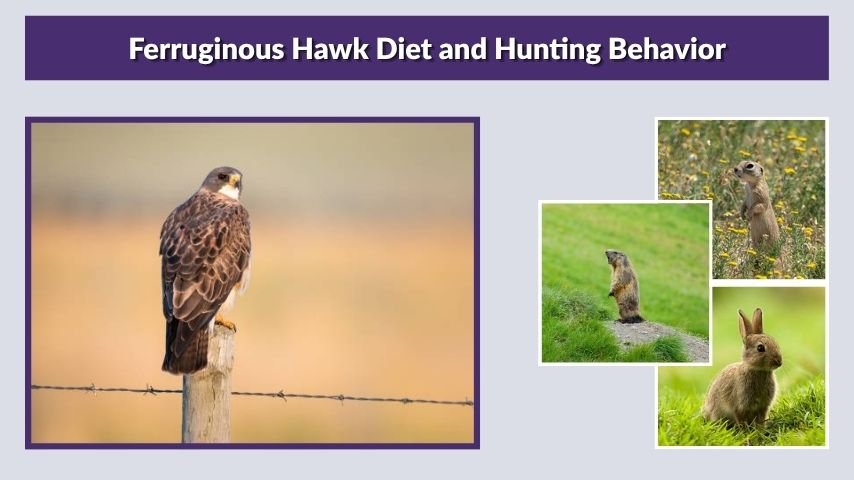
As powerful predators of open landscapes, Ferruginous Hawks rely heavily on mammals for food. Their hunting strategies have evolved specifically for life in grassland ecosystems where prey can be spotted from long distances.
What Do Ferruginous Hawks Eat?
The diet consists primarily of small to medium-sized mammals. However, birds and reptiles may also be consumed when available.
Common prey includes:
- Prairie dogs
- Ground squirrels
- Rabbits
- Pocket gophers
- Mice
- Small birds
Hunting Techniques
Ferruginous Hawks use several hunting methods depending on habitat conditions and prey availability. They may soar high above open fields, perch on elevated structures, or hunt while hovering in strong winds. Their exceptional eyesight allows them to detect movement from remarkable distances, giving them a significant advantage over prey.
The combination of size, speed, and visual acuity makes the Ferruginous Hawk one of the most effective hunters in North America’s grassland ecosystems.
Ferruginous Hawk Flight and Adaptations
The Ferruginous Hawk is an exceptional flier that has evolved to thrive in wide-open landscapes. Its large wings and lightweight frame allow it to soar efficiently for long periods while searching for prey. These adaptations reduce energy expenditure and help the bird cover vast areas of grassland and desert habitat.
Flight Characteristics
Ferruginous Hawks often soar at considerable heights, using thermal currents to remain airborne. Their broad wings and wide tail provide excellent control and stability during flight.
Adaptations for Open Landscapes
Several physical adaptations contribute to the species’ success:
- Large wingspan for efficient soaring
- Exceptional eyesight for spotting prey
- Feathered legs for protection
- Powerful talons for capturing mammals
- Strong beak for tearing prey
These features allow the Ferruginous Hawk to dominate many open-country ecosystems.
Speed and Hunting Efficiency
Although not as fast as falcons during dives, Ferruginous Hawks can quickly descend upon prey once a target is located. Their combination of patience, aerial observation, and swift attacks makes them highly effective hunters.
Juvenile Ferruginous Hawks
Young Ferruginous Hawks differ noticeably from adults in both coloration and appearance. Learning these distinctions helps birdwatchers avoid confusion with other large hawk species.
Juvenile Appearance
Juvenile birds generally appear paler and less richly colored than adults. Their markings are often softer and less defined, especially on the chest and back.
Unlike mature birds, juveniles lack the deep rusty coloration that gives the species its name. However, their overall body shape and size remain useful identification clues.
Juvenile vs Adult Ferruginous Hawks
Several differences separate young birds from adults:
- Juveniles have lighter plumage.
- Adult birds display richer rust-colored feathers.
- Juveniles show less distinct markings.
- Adult birds exhibit stronger contrast in coloration.
- Juveniles often have lighter eyes.
These changes gradually occur as the bird matures and molts into adult plumage.
Common Identification Challenges
Young Ferruginous Hawks are occasionally mistaken for Red-Tailed Hawks or Rough-Legged Hawks. Observers should focus on leg feathering, wing shape, and overall body proportions rather than color alone.
Ferruginous Hawk vs Red-Tailed Hawk
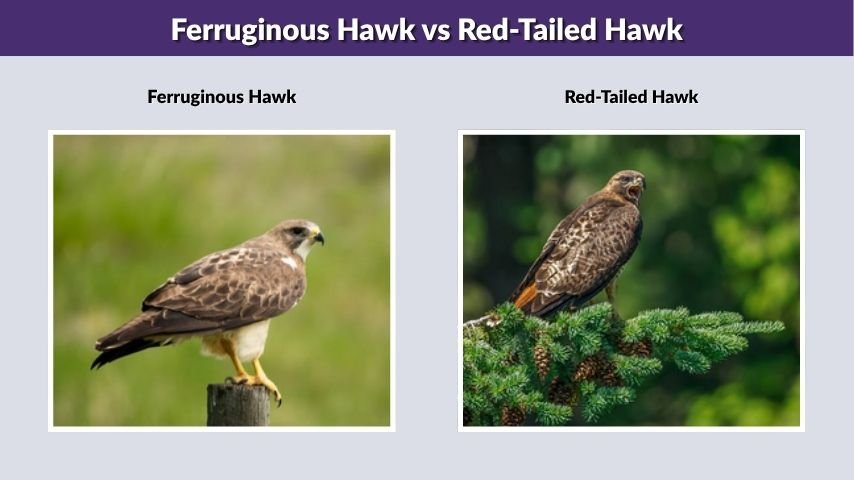
The Ferruginous Hawk and Red-Tailed Hawk share overlapping ranges and similar habitats, making them one of the most frequently compared raptor species. Although they can appear alike from a distance, several key differences help separate them.
Size Differences
Ferruginous Hawks are generally larger than Red-Tailed Hawks. They possess broader wings and a more robust body structure.
Tail and Plumage Differences
Adult Red-Tailed Hawks are famous for their reddish tails, while Ferruginous Hawks display pale tails with subtle rusty markings. Their overall coloration is also lighter than many Red-Tailed Hawks.
Flight Characteristics
When soaring, Ferruginous Hawks often appear more eagle-like because of their larger wings and broader profile. Red-Tailed Hawks usually show a more compact silhouette.
Quick Identification Tips
Remember these field marks:
- Ferruginous Hawk is larger.
- Ferruginous Hawk has feathered legs.
- Red-Tailed Hawk has a distinctive red tail.
- Ferruginous Hawk appears paler underneath.
- Ferruginous Hawk has broader wings.
These characteristics are often enough for confident identification in the field.
Migration and Seasonal Movements
Migration patterns vary depending on location and food availability. Northern populations are more likely to migrate than birds living in southern regions.
Do Ferruginous Hawks Migrate?
Yes, many Ferruginous Hawks migrate seasonally. Birds breeding in Canada and northern states often move south during winter when prey becomes less available.
Winter Range
Wintering birds can be found throughout the southern United States and parts of northern Mexico. Open habitats remain essential during this period.
Migration Routes
Most migration occurs through western North America. Individuals may travel hundreds of miles between breeding and wintering grounds.
Predators, Threats, and Conservation
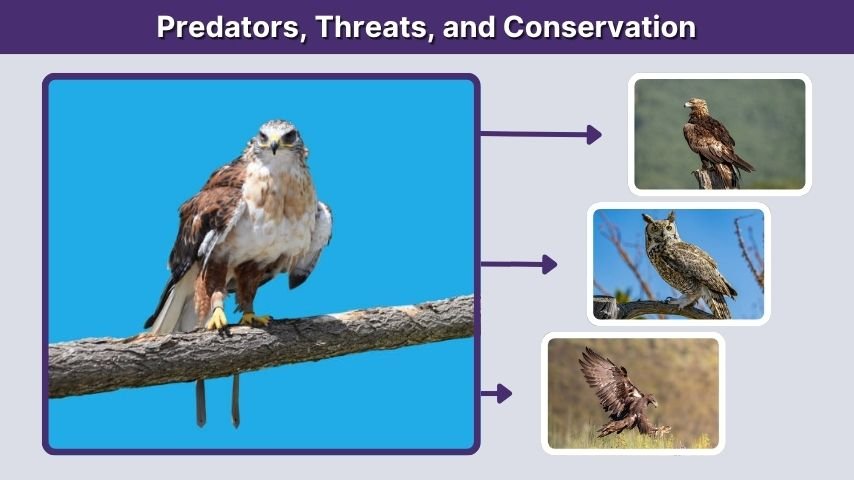
Although adult Ferruginous Hawks have few natural predators, they face numerous environmental challenges that can affect population stability. Conservation efforts continue to play an important role in protecting suitable habitat.
Natural Predators
Potential predators include:
- Golden Eagles
- Great Horned Owls
- Coyotes near nests
- Larger raptors
Nestlings and young birds face greater risks than adults.
Human-Caused Threats
Habitat destruction remains one of the greatest concerns for Ferruginous Hawks. The conversion of grasslands into agricultural and urban areas reduces available nesting and hunting grounds.
Additional threats include energy development, human disturbance near nests, and declines in prey populations.
Conservation Status
While the species is not currently considered globally endangered, regional declines have occurred in some areas. Conservation programs focused on grassland preservation have helped support Ferruginous Hawk populations across parts of their range.
Nesting and Reproduction
Ferruginous Hawks build large nests in locations that provide clear views of surrounding landscapes. Nest sites may be placed on cliffs, trees, shrubs, utility structures, or even the ground in open prairie environments.
Breeding Season
Courtship and nesting activities generally begin during spring. Pairs often return to the same nesting territories year after year.
Egg Laying and Incubation
Females typically lay several eggs per breeding season. Incubation lasts about a month, with both parents contributing to nest defense and food delivery.
Raising Young
After hatching, chicks grow rapidly due to a steady supply of prey. Within several weeks, young birds begin practicing flight before eventually leaving the nest.
Interesting Ferruginous Hawk Facts
Largest Buteo in North America
The Ferruginous Hawk holds the title of North America’s largest hawk in the Buteo genus.
Feathered Legs
Unlike most hawks, Ferruginous Hawks have feathers extending down their legs, giving them a somewhat eagle-like appearance.
Prairie Specialist
Few raptors are as closely associated with grassland ecosystems as the Ferruginous Hawk, making it an important indicator species for prairie health.
FAQs
Are Ferruginous Hawks rare?
Ferruginous Hawks are not considered rare across their overall range, but they are less common than many other hawk species. Their populations are concentrated in western North America’s grasslands, prairies, and desert regions.
What does a Ferruginous Hawk sound like?
Ferruginous Hawks produce harsh, high-pitched calls that are often described as a series of raspy “kree-a” or “kee-ah” sounds. They are generally most vocal during the breeding season and when defending their territory.
How long do Ferruginous Hawks live?
In the wild, Ferruginous Hawks typically live between 10 and 20 years. Survival rates depend on habitat quality, food availability, weather conditions, and human-related threats.
Why are Ferruginous Hawks important to ecosystems?
Ferruginous Hawks help control populations of small mammals such as prairie dogs, rabbits, and ground squirrels. By regulating prey numbers, they contribute to maintaining healthy grassland ecosystems.
Do Ferruginous Hawks build nests in trees?
While they may nest in trees, Ferruginous Hawks are highly adaptable nest builders. They often construct nests on cliffs, rock outcrops, shrubs, utility poles, artificial platforms, and even directly on the ground in open prairie habitats.