
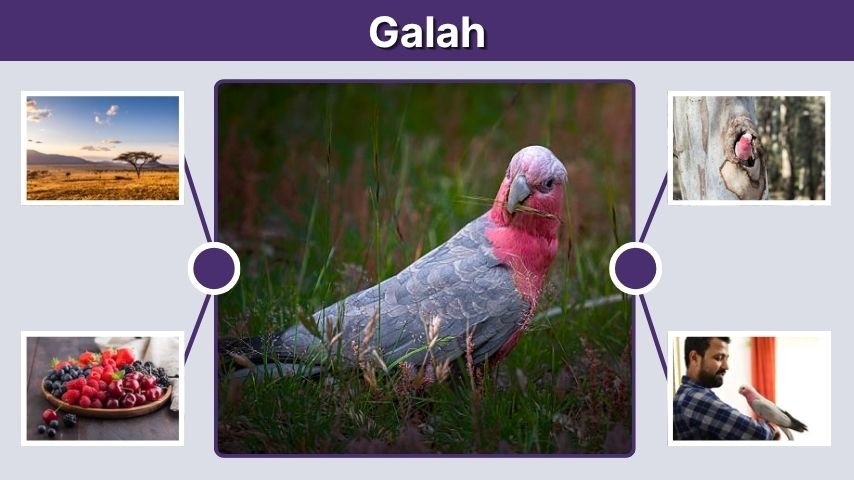
Galah cockatoos are among the most recognizable parrots in Australia because of their bright pink feathers, playful personality, and social behavior. These medium-sized birds are highly intelligent and can adapt well to different environments, from forests to urban parks. Many bird lovers also keep galahs as pets because they are affectionate and entertaining companions.
The galah cockatoo bird is known for its long lifespan and strong bond with humans. In the wild, galahs travel in noisy flocks and spend much of their day feeding on seeds and grasses. Their unique appearance and lively nature have made them one of the most popular cockatoo species worldwide.
What Is a Galah Cockatoo?
The galah is a colorful species of cockatoo native to Australia. It belongs to the parrot family and is famous for its pink chest, grey wings, and playful behavior. Galahs are intelligent birds that can live in both natural and urban environments. Their ability to adapt and interact socially makes them one of the best-known cockatoo species in the world.
Scientific Name and Classification
The scientific name of the galah is Eolophus roseicapilla. It is part of the cockatoo family called Cacatuidae. Unlike larger white cockatoos, galahs have softer pink and grey coloring that makes them easy to identify in the wild.
Why the Bird Is Called “Galah”
The word “galah” comes from an Indigenous Australian language. In Australia, the word is sometimes also used as slang for a silly or playful person because these birds are known for their funny and energetic behavior.
Physical Appearance
- Bright pink chest and face
- Grey wings and back
- Short white crest on the head
- Dark grey curved beak
- Pink legs and feet
- Females often have reddish eyes
Galah Cockatoo Size and Lifespan
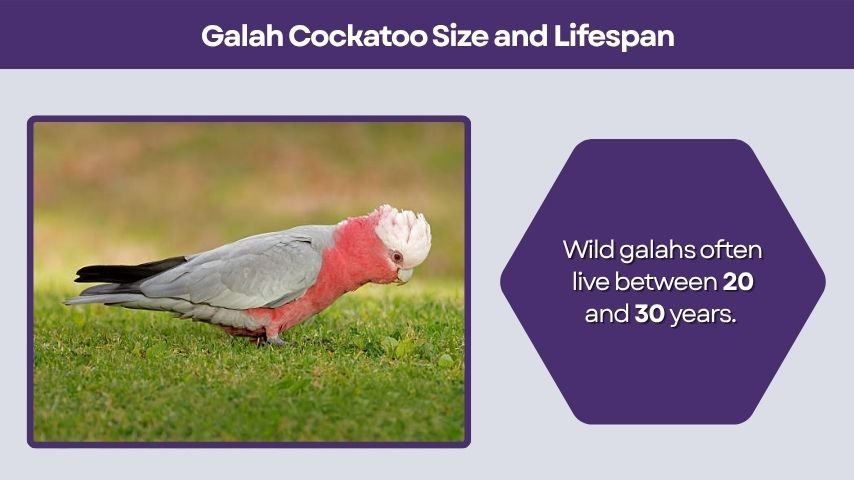
Galahs are medium-sized parrots with strong bodies and wide wings. Their lifespan is one of the reasons they are popular as pets. With proper care and nutrition, captive galahs can live for several decades. In the wild, survival depends on food availability, predators, and environmental conditions.
Average Size and Weight
Adult galahs usually grow between 14 and 15 inches long. Their wingspan can reach around 30 inches. Most birds weigh between 270 and 350 grams depending on diet and habitat.
Galah Lifespan in the Wild
Wild galahs often live between 20 and 30 years. They face dangers such as predators, drought, and habitat loss. Despite these challenges, galahs are considered one of the most successful cockatoo species in Australia.
Galah Lifespan in Captivity
Pet galahs can live much longer with proper care. Many captive birds reach 40 years or more. A healthy diet, mental stimulation, and regular veterinary care greatly improve their lifespan.
Habitat and Distribution of Galahs
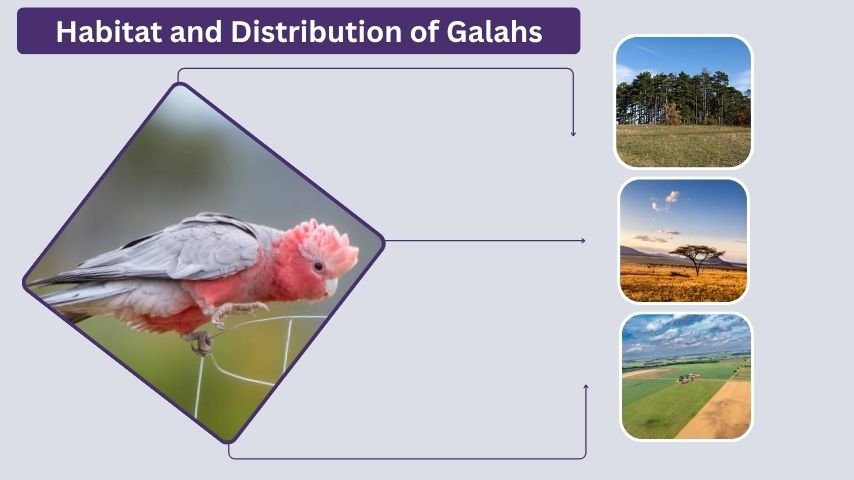
Galah cockatoos are found across most parts of Australia. These birds prefer open habitats where they can easily search for food and gather in flocks. Their adaptability allows them to thrive in both rural and urban environments, making them one of the most widespread parrots in the country.
Native Range
Galahs naturally occur throughout mainland Australia. They are especially common in grasslands, farmlands, and open woodlands. The species has also been introduced to Tasmania, where breeding populations now exist.
Preferred Habitats
- Open forests and woodlands
- Grasslands and savannas
- Agricultural farms
- City parks and gardens
- Coastal regions with scattered trees
Adaptation to Human Environments
Galahs have adapted extremely well to human activity. They often feed in parks, sports fields, and farms where seeds and grasses are plentiful. Their social behavior also helps them survive in busy urban areas.
Galah Behavior and Personality
Galah cockatoos are famous for their friendly and playful nature. They are highly social birds that spend much of their lives in groups. Their intelligence allows them to learn quickly, communicate with flock members, and interact closely with humans.
Social and Friendly Nature
Galahs usually travel in large flocks that may contain hundreds of birds. They enjoy grooming each other and communicating through loud calls. Pet galahs often develop strong bonds with their owners and enjoy regular attention.
Intelligence and Learning Ability
These birds are capable of solving simple problems and learning tricks. Some galahs can imitate sounds and human speech, although they are not the best talkers among parrots. Their curiosity makes them active and entertaining companions.
Vocalizations and Sounds
Galahs produce loud screeches, whistles, and chattering sounds. These calls help flock members stay connected while flying or feeding. Their noisy behavior is especially noticeable during sunrise and sunset.
What Do Galah Cockatoos Eat?
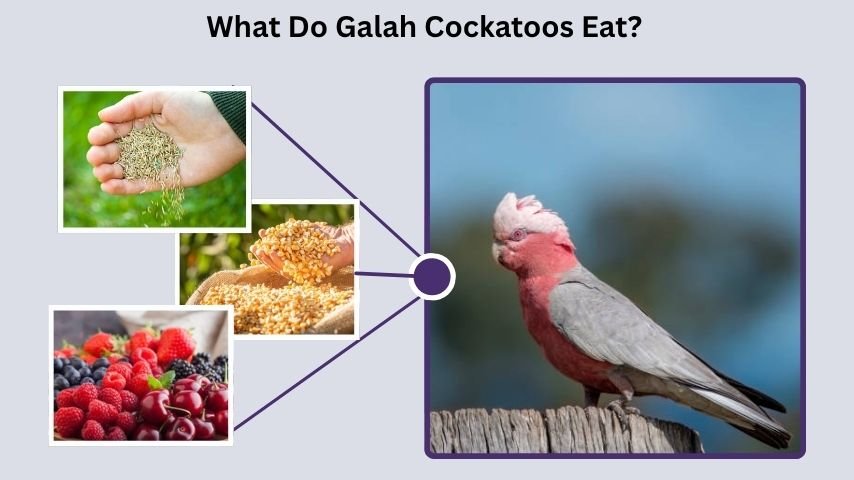
Galah cockatoos mainly feed on seeds, grasses, and plant material in the wild. Their diet changes depending on the season and food availability. Pet galahs need a balanced diet to stay healthy and active. Poor nutrition can lead to obesity, feather problems, and other health issues, so proper feeding is very important for long-term care.
Natural Diet in the Wild
Wild galahs spend much of their day searching for food on the ground. They often feed in open grassy areas alongside other parrots and cockatoos.
- Grass seeds
- Grains and crops
- Fruits and berries
- Nuts and roots
- Insects occasionally
Foods for Pet Galahs
Pet galahs need a varied diet that includes healthy commercial pellets and fresh foods. Fresh water should always be available throughout the day.
- High-quality parrot pellets
- Leafy green vegetables
- Apples, berries, and bananas
- Small amounts of seeds and nuts
- Fresh clean water daily
Foods Galahs Should Avoid
Some foods are dangerous for parrots and should never be offered to galahs.
- Chocolate
- Avocado
- Caffeine
- Salty snacks
- Alcohol and sugary foods
Galah Cockatoo as a Pet
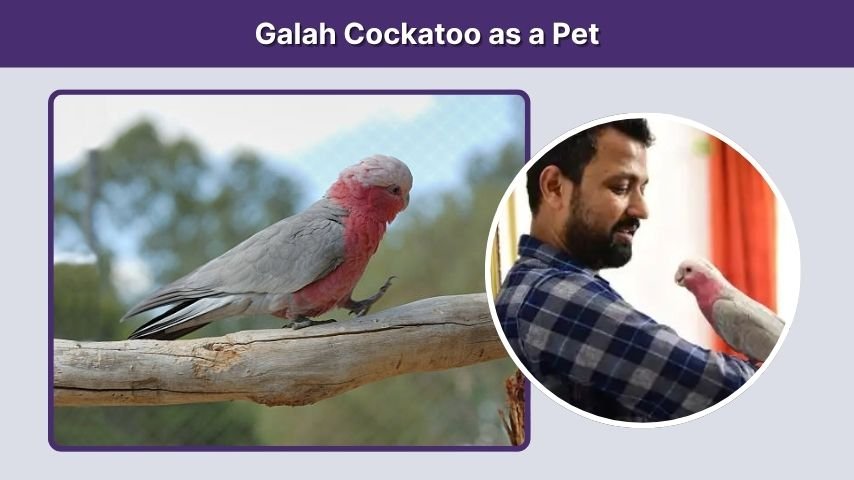
Galah cockatoos are popular pets because of their affectionate personalities and playful behavior. However, they require daily interaction, mental stimulation, and proper care. These birds can become noisy or destructive if they feel bored or lonely. Potential owners should understand the long-term commitment before bringing a galah home.
Pros of Keeping a Galah
Galahs are entertaining birds that enjoy human interaction. Their social personality makes them suitable for experienced bird owners who can spend time with them regularly.
Challenges of Ownership
These birds can become loud, especially in the morning and evening. They also need attention and exercise every day. Without proper stimulation, some galahs may develop feather-plucking habits.
Cage and Space Requirements
A galah needs a large cage with enough room to spread its wings and climb comfortably. Toys, perches, and safe chewing materials help keep the bird mentally active and physically healthy.
Training and Socialization
Galahs respond well to positive reinforcement training. With patience, they can learn simple commands, tricks, and social behaviors. Early socialization also helps reduce fear and aggression.
Breeding and Life Cycle
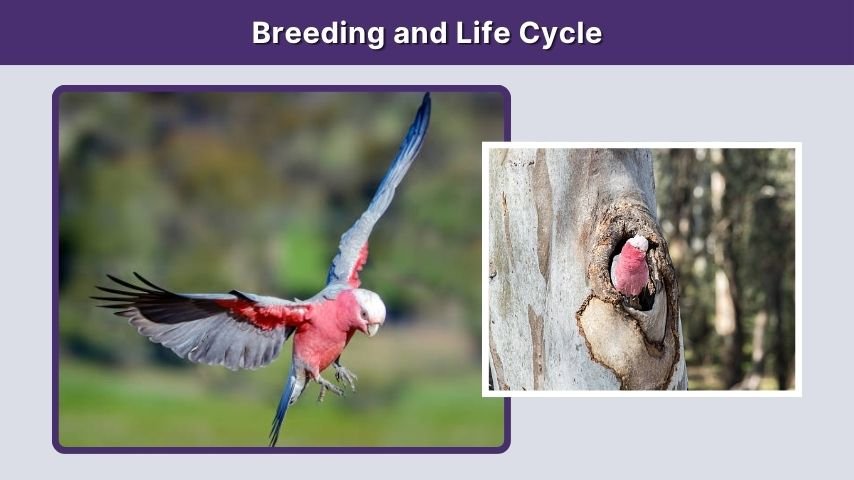
Galahs breed during favorable seasons when food is abundant. They usually form strong pair bonds and return to nesting areas each year. Both parents help raise the chicks until they are old enough to fly and feed independently.
Breeding Season
The breeding season varies by region and climate. In many areas of Australia, galahs breed between late winter and early summer when conditions are suitable.
Nesting Habits
Galahs normally build nests inside tree hollows. They prefer tall eucalyptus trees that provide safety from predators and harsh weather conditions.
Eggs and Incubation
Female galahs usually lay between two and five eggs. Both parents take turns incubating the eggs for about 25 days until the chicks hatch.
Raising Chicks
Young galahs remain in the nest for several weeks after hatching. The parents feed and protect them until they become fully feathered and capable of flight.
Common Health Problems in Galahs
Like other parrots, galahs can suffer from health problems if they do not receive proper nutrition and care. Regular veterinary checkups and a clean environment are essential for keeping these birds healthy and active throughout their lives.
Nutritional Deficiencies
Poor diets that contain too many seeds can cause obesity and vitamin deficiencies. Balanced nutrition helps maintain healthy feathers, bones, and energy levels.
Feather Plucking
Stress, boredom, or lack of attention may lead to feather plucking. Mental stimulation and social interaction are important for preventing this behavior.
Respiratory Infections
Dusty environments and poor hygiene can cause breathing problems in galahs. Symptoms may include sneezing, wheezing, or nasal discharge.
Interesting Facts About Galahs
Galah cockatoos are full of personality and display many unusual behaviors that make them fascinating birds. Their playful nature and adaptability have helped them become one of Australia’s most recognized parrots.
Unique Facts
- Galahs can live over 40 years in captivity
- They often hang upside down while playing
- Large flocks may contain hundreds of birds
- Galahs are excellent long-distance flyers
- They are among Australia’s most common cockatoos
FAQs
How long does a galah cockatoo live?
A galah cockatoo can live between 20 and 30 years in the wild. In captivity, many galahs live more than 40 years when given proper nutrition, exercise, and veterinary care. Their long lifespan makes them a major long-term commitment for pet owners.
Are galah cockatoos good pets?
Galah cockatoos can make excellent pets for experienced bird owners. They are affectionate, intelligent, and playful birds that enjoy human interaction. However, they require daily attention, mental stimulation, and a spacious environment to stay healthy and happy.
Can galah cockatoos talk?
Some galah cockatoos can learn to mimic words and sounds, although they are not as skilled at talking as certain other parrot species. Most galahs are better known for their loud calls, whistles, and playful vocal behavior rather than advanced speech ability.
What do galah cockatoos eat?
Galahs mainly eat seeds, grasses, fruits, vegetables, and grains. Pet galahs should receive a balanced diet that includes high-quality pellets along with fresh produce. Foods like chocolate, avocado, caffeine, and salty snacks should always be avoided because they are harmful to parrots.
Where do galah cockatoos live?
Galah cockatoos are native to Australia and are found across most parts of the country. They commonly live in open woodlands, grasslands, farms, and urban parks. Their ability to adapt to human environments has helped them become one of Australia’s most widespread parrots.
