
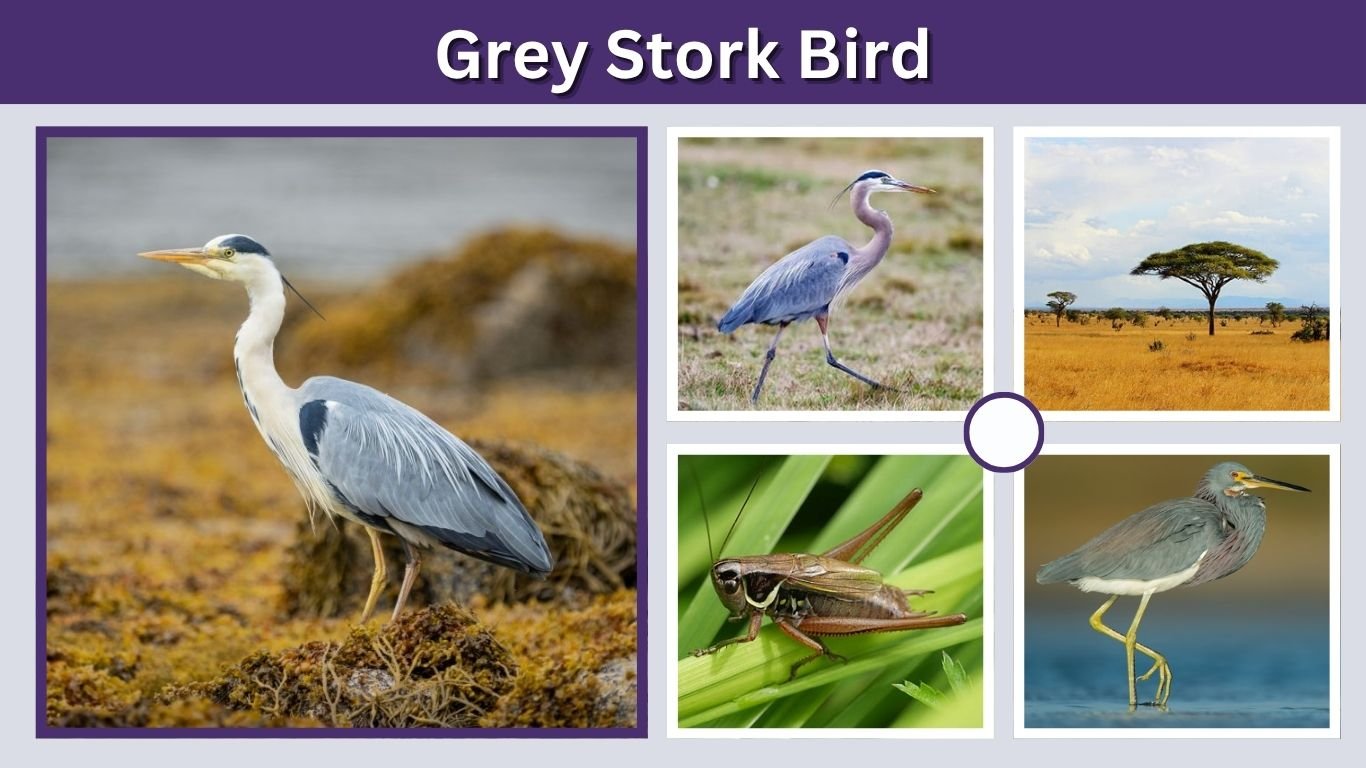
“Grey stork bird” is a descriptive phrase rather than the official name of one species. People commonly use it for tall, grey waterbirds with long legs, long necks and pointed bills. Depending on the location, the bird may be a grey heron, great blue heron, sandhill crane, brolga or juvenile wood stork. The easiest way to identify it is to examine its head colour, bill shape, size, habitat and neck position during flight.
Is There a Bird Called the Grey Stork?
There is no widely recognised species officially named the “grey stork.” Most birds receiving this description belong to the heron or crane families rather than the stork family.
Storks vs Herons vs Cranes
Although these birds have similar body shapes, they belong to separate families:
- Storks have heavy bodies, thick bills and broad wings. They fly with their necks extended.
- Herons have dagger-shaped bills and flexible S-shaped necks. They normally retract their necks during flight.
- Cranes have relatively straight necks, compact heads and strong legs. They fly with their necks extended and often give loud calls.
Observing the bird in flight is one of the quickest ways to separate a heron from a crane or stork.
Common Grey Stork-Like Birds
Several species match the general description of a tall grey bird that looks like a stork. Geographic location is often the strongest identification clue.
| Species | Main colour | Head feature | Location |
| Grey heron | Grey, black and white | White head with black stripe | Europe, Africa and Asia |
| Great blue heron | Blue-grey | White face and dark crown | North America |
| Sandhill crane | Uniform grey | Red crown | North America |
| Brolga | Silver-grey | Red head and black dewlap | Australia |
| White-faced heron | Light blue-grey | White face | Australia |
| White-necked heron | Dark grey and white | Long white neck | Australia |
| Juvenile wood stork | White with grey neck | Pale bill and partly feathered head | Southeastern U.S. |
| Marabou stork | Grey-black and white | Bald pinkish head | Sub-Saharan Africa |
Grey Heron
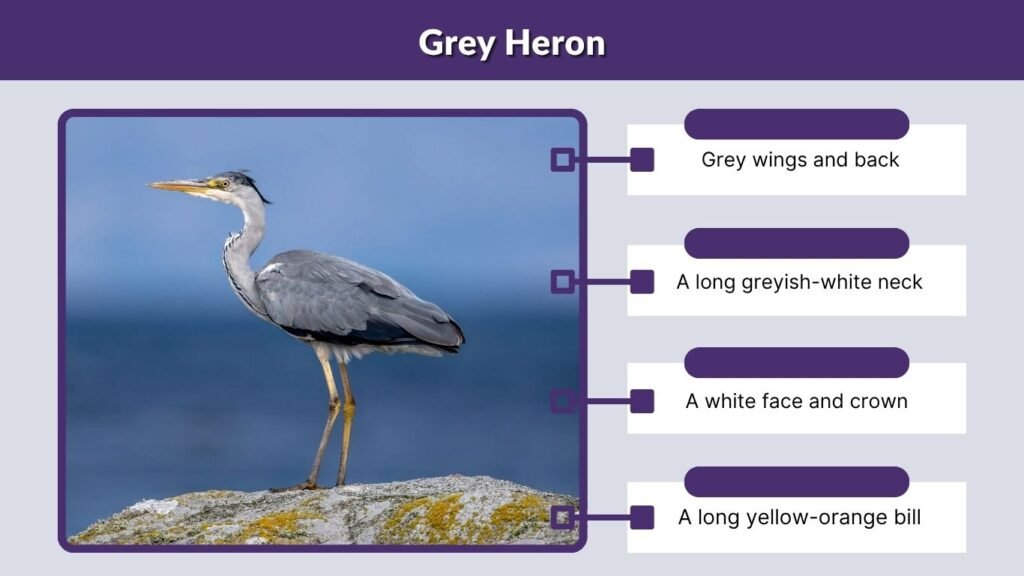
The grey heron (Ardea cinerea) is probably the closest match to the phrase “grey stork bird” in Europe, Africa and Asia. It is a large waterbird but belongs to the heron family.
Identification
The grey heron has:
- Grey wings and back
- A long greyish-white neck
- A white face and crown
- Black markings behind the eyes
- A long yellow-orange bill
- Dark legs
- A wingspan of approximately 175–195 cm
Adults may develop long black head plumes during the breeding season. Juveniles have duller heads and less distinct facial markings.
Habitat and Diet
Grey herons live beside rivers, lakes, reservoirs, estuaries, marshes and coastal wetlands. They may also visit agricultural fields and urban ponds.
Their diet includes fish, frogs, aquatic insects, crustaceans, snakes, small birds and rodents. They normally stand motionless or walk slowly before striking prey with their sharp bills.
Great Blue Heron
In North America, a grey stork-looking bird is frequently a great blue heron (Ardea herodias). Despite its name, its plumage usually appears blue-grey or slate-grey.
Identification
The Cornell Lab’s identification guide describes the great blue heron as a very large blue-grey bird with an orange-yellow bill and dark crown.
Its main features include a long S-shaped neck, dagger-like bill, black head plumes and shaggy chest feathers. In flight, it retracts its neck and allows its long legs to trail behind.
Habitat and Feeding
Great blue herons inhabit freshwater and saltwater wetlands throughout much of North America. They are commonly seen around ponds, rivers, lakes, marshes and coastlines.
They eat fish, frogs, crayfish, snakes, insects and small mammals. Unlike true storks, they generally hunt visually and strike prey with a rapid forward movement of the head and neck.
Big Grey Bird With a Red Head
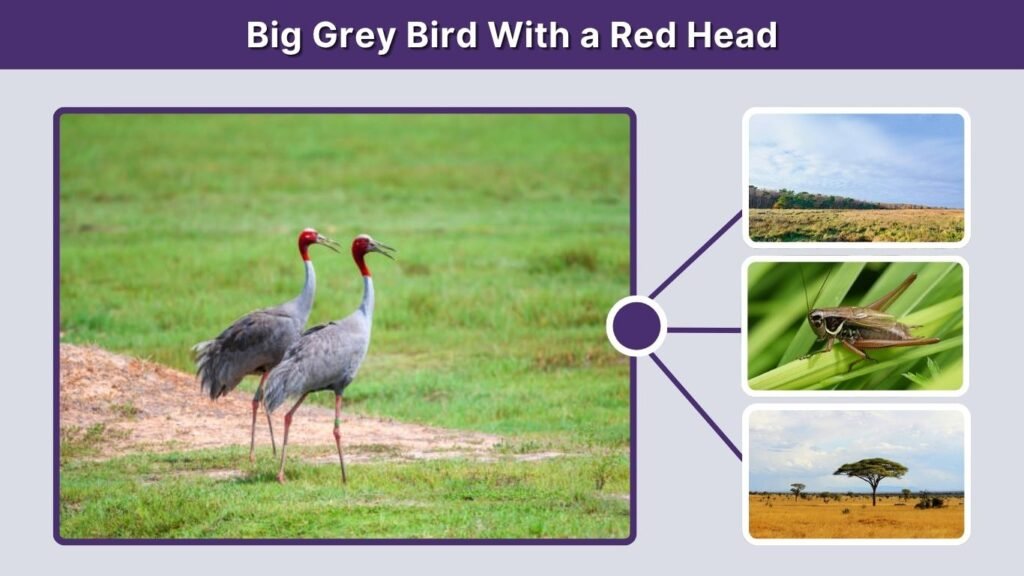
A tall grey bird with red on its head is usually a crane. The exact species depends strongly on whether the observation occurred in North America or Australia.
Sandhill Crane in North America
The sandhill crane (Antigone canadensis) is a tall, heavy-bodied grey bird with a noticeable red crown. Some individuals have rusty-brown stains on their feathers from applying iron-rich mud while preening.
Sandhill cranes have straight, pointed bills rather than the heavier bills of storks. They live in open marshes, wet meadows, grasslands and agricultural fields. Their loud rolling or rattling calls may be heard more than a mile away.
Unlike herons, sandhill cranes fly with their necks fully extended. Drooping rear feathers create a distinctive bustle over the tail.
Brolga in Australia
A large grey stork-like bird with a reddish head in Australia is probably a brolga (Antigone rubicunda). The brolga is a crane, not a stork.
The Australian Museum describes it as a large grey crane with a bare red head, grey crown, black dewlap and grey legs. Brolgas inhabit wetlands, grassy plains, mudflats and irrigated agricultural areas.
They are famous for energetic courtship dances involving leaping, running, bowing and wing flapping. Their diet includes plant tubers, seeds, grain, insects, frogs, molluscs and small animals.
Grey Stork-Like Birds in Australia
Australia has several grey waterbirds that may initially be mistaken for storks. Size, face colour and neck markings help distinguish them.
White-Faced Heron
The white-faced heron is one of Australia’s most widespread herons. It is relatively slender and mostly light blue-grey with a noticeable white face.
It commonly visits wetlands, beaches, tidal flats, farm dams and even urban parks. Its smaller body and thin, pointed bill separate it from the much larger brolga and black-necked stork.
White-Necked Heron
The white-necked heron has a white head and long white neck with two rows of dark spots. Its wings and upper body are dark slate-grey, while the underparts are grey with white streaking.
This species is found across mainland Australia, especially around freshwater wetlands, flooded pastures, farm dams and roadside ditches. It feeds on fish, frogs, crustaceans and insects.
Black-Necked Stork
Australia’s only widespread true stork is the black-necked stork, sometimes called the jabiru. Adults are primarily black and white rather than grey. They have a glossy black neck, white body, massive black bill and long reddish legs.
A large uniformly grey Australian bird with a red head is therefore much more likely to be a brolga than a black-necked stork.
Grey Stork-Like Birds in South Texas
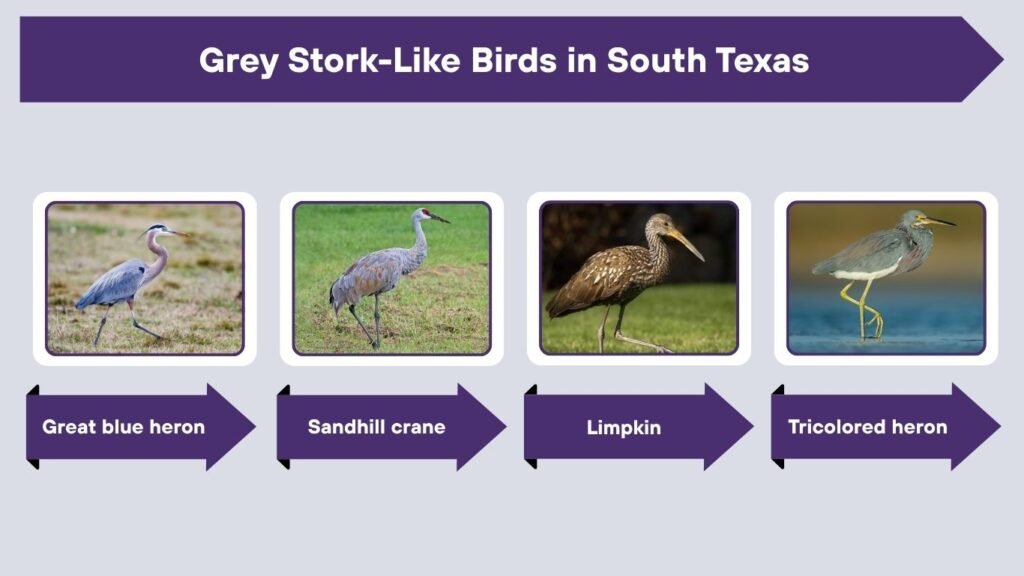
South Texas supports many large wading birds. The identification depends on whether the bird has a red crown, dagger-shaped bill or heavy curved bill.
Most Likely Species
A grey stork-like bird in South Texas may be:
- Great blue heron: Blue-grey body, yellow bill and folded neck in flight
- Sandhill crane: Uniform grey body, red crown and extended neck
- Juvenile wood stork: White body, black flight feathers and grey feathered neck
- Limpkin: Brownish-grey plumage with white spots and a slightly curved bill
- Tricolored heron: Slender blue-grey body with a white belly
Sandhill cranes are commonly seen in open fields and marshes during the cooler months, while great blue herons remain closely associated with water.
Juvenile Wood Stork
A young wood stork can appear greyer than an adult, particularly around its head and neck. However, most of its body remains white.
How to Identify It
Juvenile wood storks have a pale yellowish bill and grey feathers on the neck. As they mature, the bill turns black and the head becomes dark, bare and scaly.
The wings reveal broad black flight feathers. Wood storks fly with their necks and legs extended, unlike herons. They are primarily found in Florida and other southeastern states, although wandering juveniles occasionally appear much farther north.
White Stork-Like Bird With a Yellow Bill
A tall white bird with a yellow bill and dark or grey-looking legs in Michigan or elsewhere in North America is most likely a great egret.
Great Egret Identification
Great egrets are entirely white with:
- A long yellow-orange bill
- Long black or dark grey legs
- A slender S-shaped neck
- Dark feet
- A standing height of approximately three feet
They fly with the neck folded against the body. A white ibis has a downward-curved orange-red bill, while a wood stork has black wing feathers and a much heavier bill.
How to Identify a Grey Stork-Looking Bird
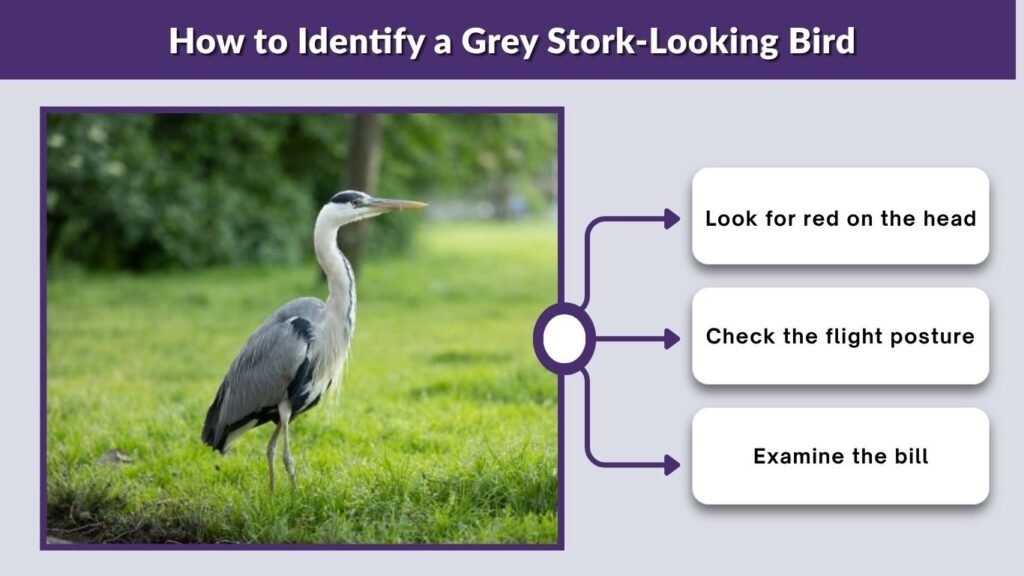
Begin with location, then examine the bird’s head, bill, body and flight posture.
Quick Identification Method
- Look for red on the head: A North American bird is probably a sandhill crane; an Australian bird is likely a brolga.
- Check the flight posture: A folded neck indicates a heron; an extended neck suggests a crane or stork.
- Examine the bill: Herons have pointed dagger-like bills, cranes have straighter bills, and storks usually have thick, heavy bills.
- Observe the habitat: Herons stay close to water, while cranes frequently forage in open fields.
- Check the body colour: A juvenile wood stork is mainly white, not uniformly grey.
FAQs
What is the grey bird that looks like a stork?
The most likely identification is a grey heron, great blue heron or sandhill crane. Grey herons occur mainly in Europe, Africa and Asia, while great blue herons and sandhill cranes are widespread in North America. Location and head colour provide valuable clues.
What large grey bird has a red head?
In North America, a large grey bird with a red crown is usually a sandhill crane. In Australia, it is probably a brolga. Both are cranes rather than storks and fly with their long necks and legs fully extended.
What is the grey stork bird in Australia?
Australia has no species officially called a grey stork. A very large grey bird with a red head is usually a brolga. Smaller grey birds near water may be white-faced herons, while large dark grey-and-white birds may be white-necked herons.
How can you tell a heron from a stork?
Observe the bird during flight. Herons normally fold their necks into an S-shape, whereas storks fly with their necks extended. Herons generally have sharp, dagger-like bills; storks tend to have heavier bodies, thicker bills and broader wings.
Is a grey stork dangerous?
Herons, cranes and storks generally avoid humans and are not considered dangerous. However, their long, powerful bills can cause injury if someone attempts to handle or corner them. Observe wild waterbirds from a distance and keep pets away from injured individuals.