
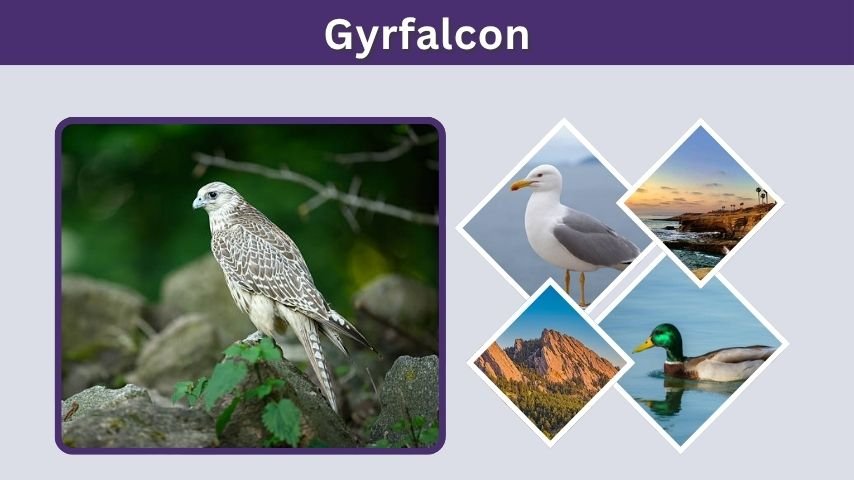
The gyrfalcon is the largest falcon in the world and one of the most powerful birds of prey in the Arctic. Known for its strong body, broad wings, and striking color forms, this bird can appear white, gray, brown, or very dark. It hunts mainly birds across cold, open landscapes and remote cliffs. In this guide, you will learn about gyrfalcon size, pronunciation, habitat, range, diet, speed, flight, and key facts.
What Is a Gyrfalcon?
The gyrfalcon is a large Arctic falcon built for strength, speed, and survival in cold northern regions. It is admired for its powerful flight and rare beauty. Unlike smaller falcons, the gyrfalcon looks heavier and broader, yet it remains fast and agile. It is closely linked with tundra, cliffs, coastlines, and open hunting areas.
Gyrfalcon Definition
A gyrfalcon is a large bird of prey and the biggest falcon species in the world. It belongs to the falcon family and hunts mainly other birds. This raptor is strongly connected with Arctic and subarctic regions, where it uses open space and powerful flight to chase prey.
Gyrfalcon Scientific Name
The scientific name of the gyrfalcon is Falco rusticolus. It belongs to the family Falconidae, the same family as peregrine falcons, kestrels, merlins, and prairie falcons. The bird is best known for its large size, northern range, and white, gray, brown, or dark color forms.
Gyrfalcon Meaning
The word “gyrfalcon” refers to this large northern falcon. Today, the name is mostly used for the real bird, especially in wildlife guides and birdwatching resources. It may also appear in other names, but in nature, it describes a powerful Arctic raptor with a strong hunting style.
How to Pronounce Gyrfalcon
Many readers search for gyrfalcon pronunciation because the word looks unusual. The first letter is usually spoken with a soft sound, not like the hard “g” in “go.” The most common English pronunciation is close to “JER-fal-kun” or “JUR-fal-kun,” although accents can change the sound slightly.
Gyrfalcon Pronunciation in English
You can pronounce gyrfalcon as JER-fal-kun. Some speakers say JUR-fal-kun, with a similar first syllable. The “falcon” part may sound like FAL-kun or FAWL-kun, depending on the accent. The important point is that the beginning usually sounds like “jer,” not “gear.”
Common Pronunciation Questions
People often ask several questions about the word because it is not common in everyday speech:
- How do you pronounce gyrfalcon?
- Is the “g” hard or soft?
- Does it sound like “gear falcon”?
- How do you pronounce gyrfalcon in English?
- Is “gyrfalcon” one word or two?
Gyrfalcon Size and Appearance
The gyrfalcon is larger and heavier than most falcons, which makes it impressive even from a distance. It has a strong body, broad chest, long tail, and powerful wings. Its color can vary greatly, from nearly white to gray, brown, or dark, so appearance alone can sometimes be confusing.
Gyrfalcon Size
The gyrfalcon is the largest falcon species. It has a heavier body than a peregrine falcon and looks more muscular in flight. Females are usually larger than males, which is common among many birds of prey. This size gives the gyrfalcon power when hunting birds in open Arctic landscapes.
Gyrfalcon Wingspan
The gyrfalcon has long, strong wings that help it fly across wide northern habitats. Its wings are still pointed like a falcon’s, but they can look broader than those of smaller falcons. This gives the bird both speed and power, especially when chasing prey over tundra or coastlines.
White Gyrfalcon
The white gyrfalcon is one of the most famous color forms. It is often linked with Greenland and the High Arctic. Some white birds are almost pale all over, while others show dark markings on the wings, back, or tail. This form is especially popular in photos and wildlife art.
Gray, Brown, and Dark Gyrfalcons
Not all gyrfalcons are white. Many are gray, brown, or very dark. Dark birds are sometimes called black gyrfalcons, although they may show deep brown or gray tones. These color forms all belong to the same species, but they can look very different from one another.
Where Do Gyrfalcons Live?
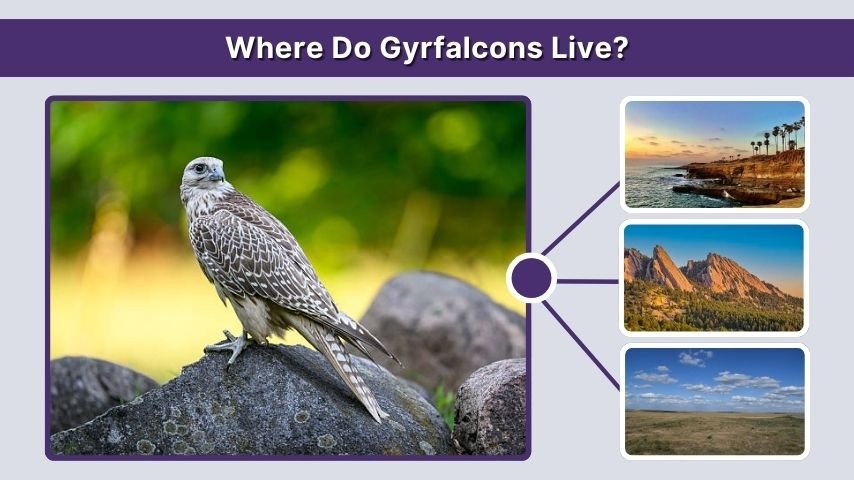
Gyrfalcons are birds of cold northern regions. They are closely connected with Arctic and subarctic habitats where open hunting areas and remote nesting cliffs are available. Their range includes northern parts of North America, Greenland, Iceland, northern Europe, and northern Asia. Some individuals may move farther south during winter.
Gyrfalcon Habitat
Gyrfalcons prefer open, wild habitats where they can hunt birds and nest safely. They are often found in remote places with cliffs, tundra, rocky slopes, and cold coastlines.
Common gyrfalcon habitats include:
- Arctic tundra
- Coastal cliffs
- Rocky mountains
- Open northern plains
- Cold shorelines
- Remote nesting cliffs
- Open winter fields
Gyrfalcon Range
The gyrfalcon range covers many northern regions of the world. In North America, it is linked with Alaska and Canada. It is also found in Greenland, Iceland, Scandinavia, and northern Asia. During winter, some birds may move south, especially when food becomes harder to find.
Gyrfalcon in Iceland and Greenland
Iceland and Greenland are strongly connected with gyrfalcons. Greenland is especially famous for pale and white gyrfalcons, while Iceland has important wild populations. These places provide cold open landscapes, cliffs, and bird prey that support the gyrfalcon’s hunting and nesting needs.
What Do Gyrfalcons Eat?
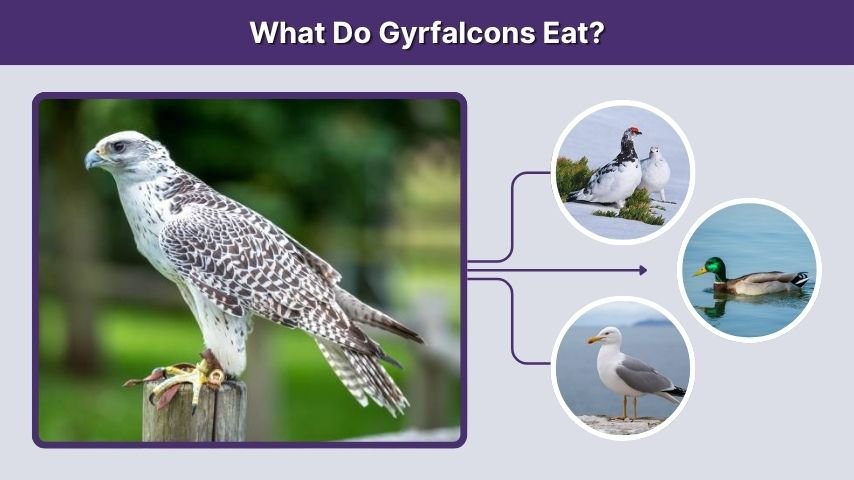
Gyrfalcons are powerful hunters that mostly eat birds. Their diet depends on location, season, and available prey. In Arctic areas, ptarmigan are one of their most important foods. Near coasts, they may hunt seabirds, gulls, ducks, and shorebirds. Their strong flight helps them chase prey across open landscapes.
Gyrfalcon Diet
The gyrfalcon diet is mainly bird-based. It hunts in open areas where it can use speed, strength, and surprise. Common prey includes:
- Ptarmigan
- Ducks
- Gulls
- Geese
- Shorebirds
- Seabirds
- Other medium-sized birds
- Occasionally small mammals
How Gyrfalcons Hunt
Gyrfalcons hunt with strong, direct flight. They may chase prey across tundra, cliffs, or coastlines instead of relying only on steep dives. Their hunting style is powerful and persistent. They can attack from above, fly low over open ground, or pursue birds through cold northern air.
Gyrfalcon Predators
Adult gyrfalcons have few natural predators because they are large, strong, and aggressive near nesting areas. Eggs and chicks are more vulnerable than adults. Depending on the location, foxes, ravens, larger raptors, or other nest predators may threaten young birds or eggs.
Gyrfalcon Flight and Speed
The gyrfalcon is a fast and powerful flyer, but its fame is different from the peregrine falcon’s. The peregrine is best known for record-breaking diving speed, while the gyrfalcon is known for strength, endurance, and forceful hunting in Arctic landscapes. Its flight looks strong, direct, and controlled.
Gyrfalcon Speed
A gyrfalcon can fly very fast during hunting chases and dives, but it is not usually called the fastest animal. That title is commonly linked with the peregrine falcon. The gyrfalcon’s real advantage is a mix of speed, power, size, and endurance in harsh northern habitats.
Gyrfalcon in Flight
A gyrfalcon in flight looks broad, strong, and confident. It has pointed wings like other falcons, but its body may seem heavier than a peregrine falcon’s. It often uses steady wingbeats and direct flight while crossing open tundra, coastlines, or rocky northern areas.
Gyrfalcon Flying Style
The flying style of a gyrfalcon is built for open country. It can chase prey across long distances and keep pressure on birds that try to escape. Instead of depending only on a single dramatic dive, it uses power, speed, and persistence to catch prey.
Gyrfalcon vs Peregrine Falcon
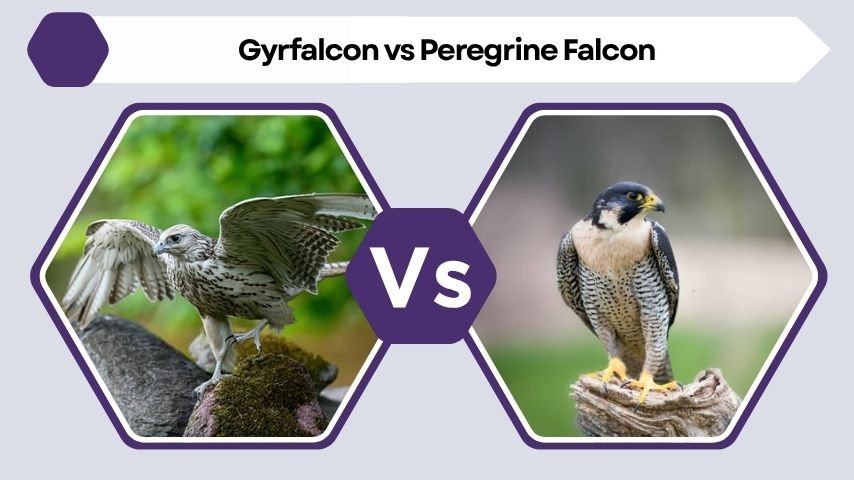
The gyrfalcon and peregrine falcon are both impressive birds of prey, but they are not the same. The gyrfalcon is larger, heavier, and more strongly linked with Arctic regions. The peregrine falcon is smaller, more widespread, and famous for its extreme diving speed during a hunting stoop.
Size Difference
The gyrfalcon is bigger and heavier than the peregrine falcon. It has a broader body, stronger build, and more powerful appearance. Female gyrfalcons are especially large. This size helps them hunt larger birds in open northern habitats.
Speed Difference
The peregrine falcon is faster in its famous hunting dive. It can reach extreme speeds when dropping from high above prey. The gyrfalcon is also fast, but it is better known for strength, endurance, and powerful direct pursuit rather than record-breaking dive speed.
Habitat Difference
Peregrine falcons can live in many habitats, including cliffs, coastlines, mountains, and cities. Gyrfalcons are more strongly connected with Arctic and subarctic landscapes. They are usually found in colder, more remote northern regions with open hunting areas and cliff nesting sites.
Color Difference
Peregrine falcons usually have a darker hood and strong facial markings. Gyrfalcons show more color variation. They may be white, gray, brown, or very dark. This wide range of color forms is one reason the gyrfalcon is so visually striking.
Gyrfalcon Call and Behavior
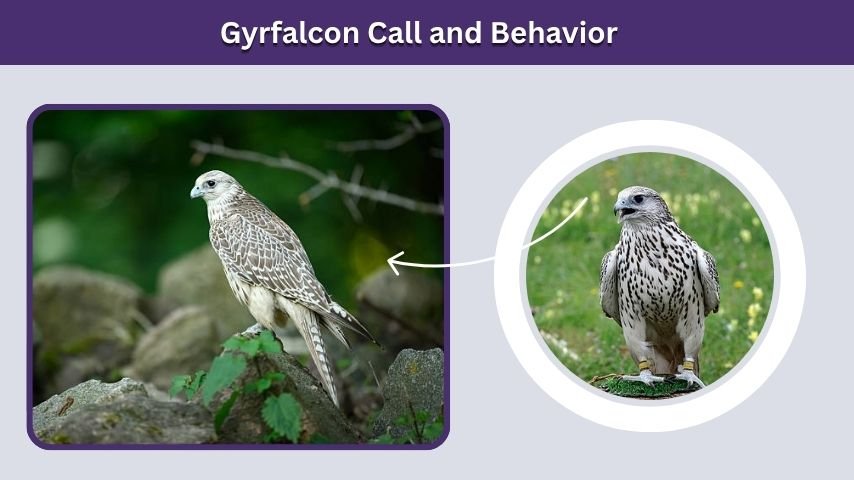
Gyrfalcons are often found in remote northern places, so many people know them more from photos than from sound. Their calls are most likely heard near nesting cliffs or during territorial behavior. Like other falcons, they are alert, powerful, and protective around their nesting areas.
Gyrfalcon Call
The gyrfalcon call is usually a harsh, repeated falcon sound. It may be heard when adults are defending territory, communicating with a mate, or reacting to danger near the nest. The sound is not musical like a songbird’s call, but it is strong and sharp.
Gyrfalcon Behavior
Gyrfalcons are territorial birds, especially during the breeding season. They often use high cliffs for nesting and open landscapes for hunting. Their behavior shows strength, patience, and alertness. They may spend time watching from a perch before launching into fast pursuit.
Gyrfalcon Nesting Behavior
Gyrfalcons usually nest on cliffs or high rocky places. They do not build detailed nests like many smaller birds. Instead, they may use ledges or old nests made by other large birds. These high sites help protect eggs and chicks from many ground threats.
Gyrfalcon Falconry and Sale Questions
Some people search for gyrfalcons because of falconry or sale interest. However, gyrfalcons are wild raptors, not ordinary pets. Buying, selling, keeping, or training one may require strict permits, legal approval, expert care, and ethical handling. Readers should never support illegal capture or wildlife trade.
Gyrfalcon Falconry
Gyrfalcons have a long history in falconry because of their size, strength, and hunting ability. However, falconry is highly regulated in many places. It requires proper training, licensing, housing, food, health care, and respect for wildlife laws.
Gyrfalcon for Sale
A gyrfalcon should never be bought or captured illegally. Any legal possession depends on local laws, permits, captive-breeding rules, and professional standards. People interested in falconry should first contact official wildlife authorities or licensed falconry organizations.
FAQs
What is a gyrfalcon?
A gyrfalcon is the largest falcon in the world. It is a powerful Arctic bird of prey known for its strong body, large size, color variation, and ability to hunt birds in cold northern habitats.
How do you pronounce gyrfalcon?
Gyrfalcon is commonly pronounced JER-fal-kun or JUR-fal-kun. The first syllable usually has a soft “g” sound, not the hard “g” sound in “go.”
Where do gyrfalcons live?
Gyrfalcons live mostly in Arctic and subarctic regions. They are found in northern North America, Greenland, Iceland, northern Europe, and northern Asia. Some may move farther south during winter.
What do gyrfalcons eat?
Gyrfalcons mostly eat birds. Their common prey includes ptarmigan, ducks, gulls, geese, shorebirds, seabirds, and other medium-sized birds. They may occasionally eat small mammals depending on location.
Is a gyrfalcon bigger than a peregrine falcon?
Yes, the gyrfalcon is bigger and heavier than the peregrine falcon. The peregrine is more famous for extreme diving speed, while the gyrfalcon is known as the largest falcon in the world.