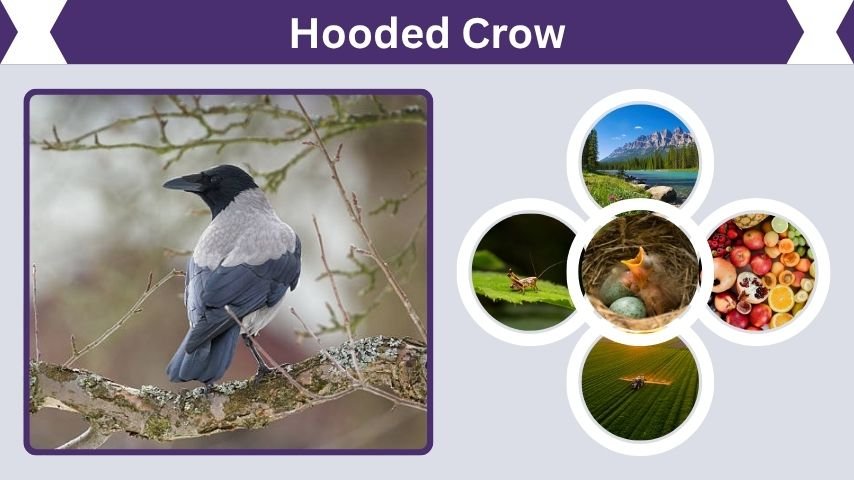
The hooded crow is a smart and adaptable bird found across parts of Europe, the Middle East, and coastal regions. Its gray body and black head make it easy to recognize compared to other crow species. Many birdwatchers search for information about hooded crow identification, habitat, diet, and intelligence because this bird shows remarkable problem-solving skills in both wild and urban environments.
These crows are known for their loud calls, strong memory, and scavenging behavior. They can survive in forests, farmland, city parks, and coastal cliffs. Learning more about the hooded crow helps bird lovers better understand one of nature’s most intelligent birds.
What Is a Hooded Crow?
The hooded crow is a medium-sized member of the crow family. It is closely related to the carrion crow but has a very different appearance. Birdwatchers often notice its gray body combined with glossy black feathers on the head, wings, and tail. This species is highly adaptable and can live in many different environments, from busy cities to remote coastal areas.
Scientific Classification
- Scientific name: Corvus cornix
- Family: Corvidae
- Related to ravens, rooks, and carrion crows
- Considered one of the smartest birds in the crow family
Why It Is Called a Hooded Crow
The bird gets its name from the black feathers covering its head and neck like a hood. This dark coloring contrasts strongly with the pale gray body. In some areas, people also call it the gray crow because of its body color.
Hooded Crow Identification
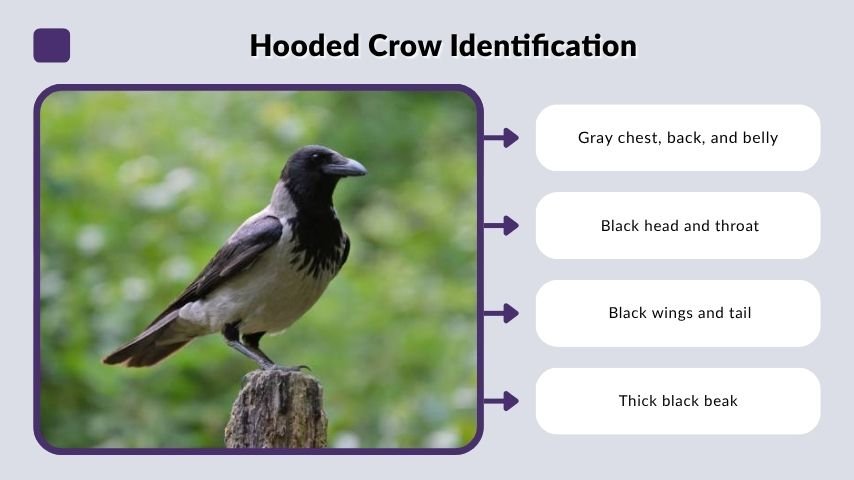
Identifying a hooded crow is usually simple because of its unusual color pattern. Unlike the fully black carrion crow, this species has a combination of gray and black feathers. Its thick beak and broad wings also help birdwatchers recognize it from a distance. The bird’s confident walking style and loud calls are additional clues when spotting one in the wild.
Physical Appearance
- Gray chest, back, and belly
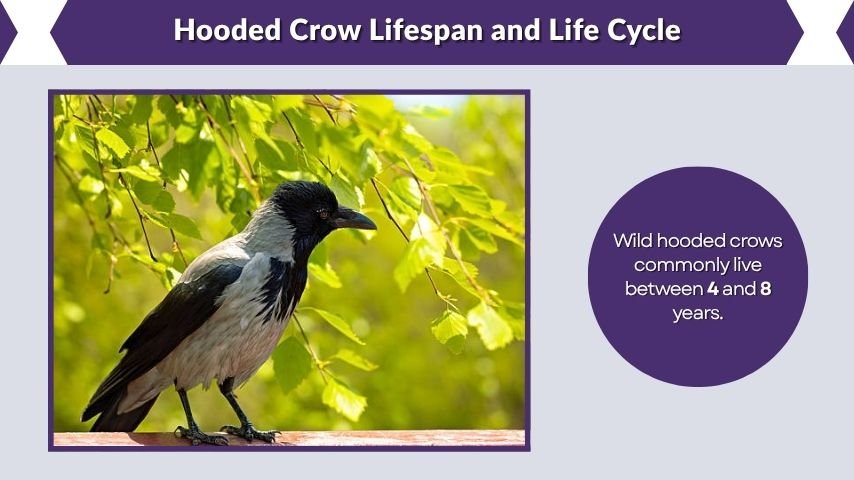
- Black head and throat
- Black wings and tail
- Thick black beak
- Dark eyes and strong legs
Hooded Crow Size
Adult hooded crows are medium to large birds. Most grow between 18 and 22 inches long with a wingspan reaching nearly 40 inches. They are slightly smaller than ravens but larger than many songbirds commonly seen in cities and fields.
Juvenile Identification
Young hooded crows often appear duller than adults. Their gray feathers may look brownish, and their beaks are sometimes lighter in color. Juveniles also behave more cautiously while learning survival skills from their parents.
Magpie vs Hooded Crow
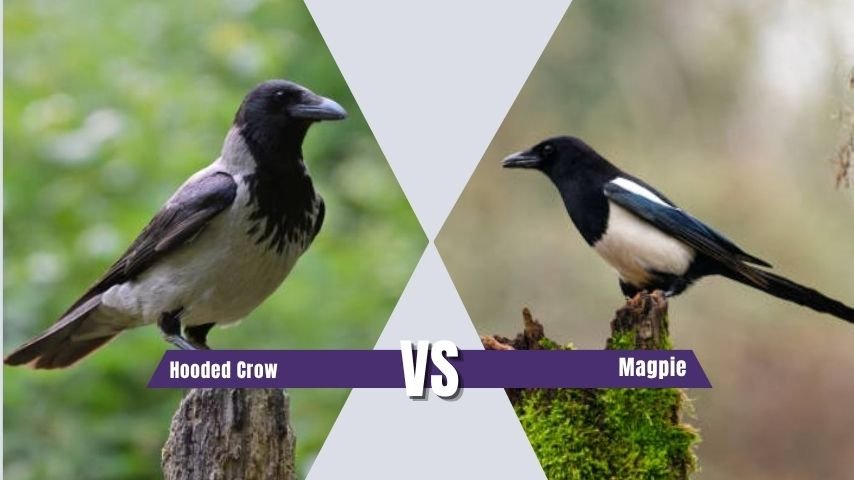
Many people confuse hooded crows with magpies because both birds belong to the crow family and show high intelligence. However, there are several easy ways to tell them apart. The hooded crow is larger and heavier, while the magpie has a longer tail and brighter feather patterns. Their behavior and flight styles are also quite different in natural habitats.
Main Differences
| Feature | Hooded Crow | Magpie |
| Body Color | Gray and black | Black and white |
| Tail Length | Medium | Very long |
| Size | Larger | Smaller |
| Flight Style | Slow and steady | Quick and agile |
| Voice | Deep caw | Chattering sounds |
Intelligence Comparison
Both birds are highly intelligent. Hooded crows are famous for recognizing human faces and solving problems, while magpies are known for curiosity and memory. Scientists consider both species among the smartest birds in the world.
Hooded Crow Habitat and Range
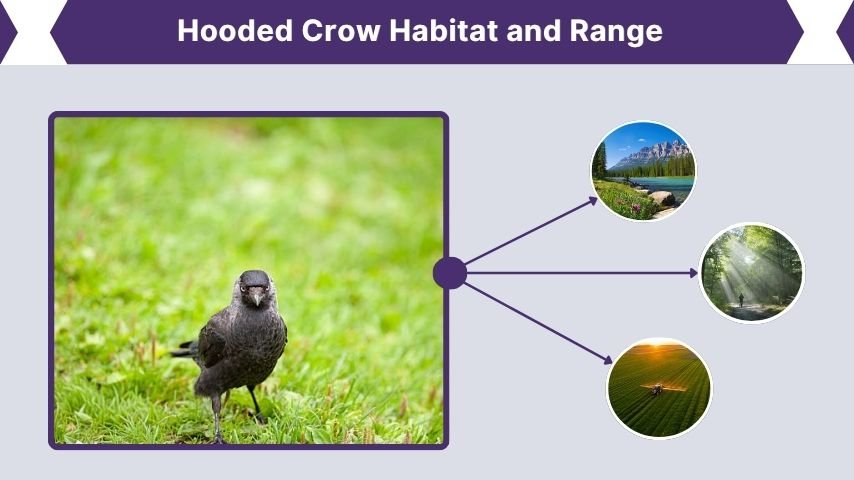
The hooded crow lives across many parts of Europe and nearby regions. It adapts well to different climates and environments, allowing it to survive in both natural and urban areas. These birds are especially common near coastlines, farmland, open woodland, and cities where food is easy to find throughout the year.
Hooded Crow Range
- Northern and Eastern Europe
- Parts of Scandinavia
- Coastal regions of Ireland and Scotland
- Middle Eastern areas
- Some Mediterranean islands
Preferred Habitats
Hooded crows prefer open spaces with nearby trees for nesting. They often live near rivers, beaches, forests, and farms. In cities, they can be seen searching for food in parks, roadsides, and garbage areas.
Seasonal Movement
Some hooded crow populations stay in the same area year-round, while northern birds may move south during colder months. Their movement depends on weather conditions and food availability.
Carrion Crow vs Hooded Crow
The carrion crow and hooded crow are very closely related birds. In some parts of Europe, they even live in the same regions and occasionally interbreed. Despite their similarities, the easiest way to separate them is by plumage color. Birdwatchers often compare these species because they share many behaviors, calls, and feeding habits while still looking noticeably different in the field.
Appearance Differences
The carrion crow is completely black from head to tail, while the hooded crow has a gray body with black wings, head, and tail. Both species have thick beaks and strong legs, but the hooded crow’s lighter body color makes it easier to recognize from a distance.
Habitat Comparison
Carrion crows are more common in western Europe, while hooded crows dominate northern and eastern regions. In overlap zones, both birds may compete for food and nesting areas. They adapt well to cities, farmland, and woodland edges.
Can They Interbreed?
Scientists have discovered that carrion crows and hooded crows sometimes mate in regions where their ranges meet. Their hybrid offspring may show mixed gray and black feather patterns. This has created debate among researchers about whether they should be considered separate species.
Hooded Crow Diet
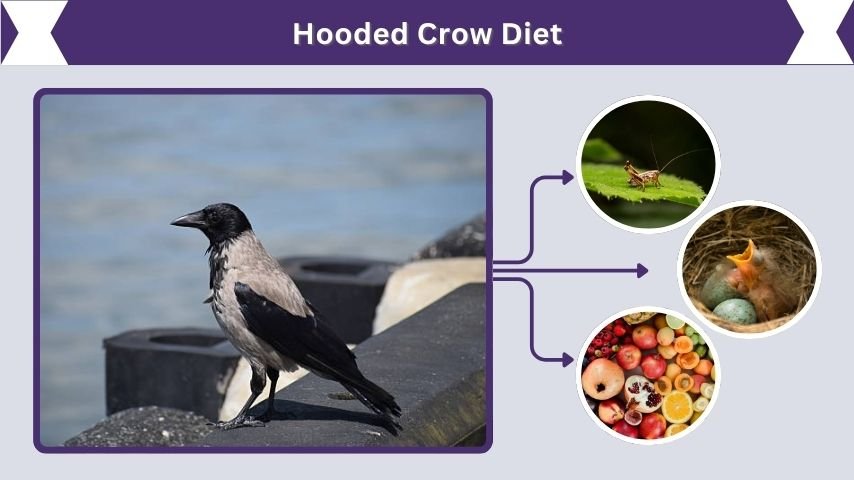
Hooded crows are omnivorous birds with a highly flexible diet. Their intelligence allows them to find food in many different environments. They eat both plant and animal material and are known for scavenging near humans. Because they can adapt their feeding habits easily, hooded crows survive successfully in forests, coastlines, farms, and busy cities.
What Do Hooded Crows Eat?
- Insects and worms
- Small rodents
- Bird eggs and chicks
- Fruits and berries
- Seeds and grains
- Fish and shellfish
- Human food scraps
Hunting and Feeding Behavior
These crows often search for food while walking on the ground. They may steal eggs from nests, crack shells on rocks, or scavenge from garbage bins. Some hooded crows even store extra food in hidden locations for later use.
Feeding Near Humans
In urban areas, hooded crows quickly learn where food is available. They gather near roads, fishing ports, parks, and outdoor restaurants. Their adaptability helps them survive even in crowded environments where other birds struggle.
Hooded Crow Intelligence
Hooded crows are considered among the smartest birds in the world. Their ability to solve problems and remember information has fascinated scientists for years. These birds can learn from experience, recognize danger, and communicate effectively with other crows. Their intelligence plays an important role in helping them survive in changing environments.
Problem-Solving Skills
- Using traffic to crack nuts
- Opening containers for food
- Learning feeding routines
- Avoiding dangerous people or animals
- Adapting quickly to new situations
Memory and Recognition
Research shows that hooded crows can remember human faces for long periods. If a person threatens them, they may continue reacting cautiously even years later. They also remember safe feeding locations and return to them regularly.
Social Learning
Young crows learn survival skills by watching adults. Groups of hooded crows communicate through calls and body language to warn each other about danger or food opportunities.
Hooded Crow Lifespan and Life Cycle
The hooded crow has a relatively long lifespan compared to many bird species. Survival depends on food availability, weather, predators, and human activity. These birds form strong breeding pairs and care for their young carefully during the nesting season.
Hooded Crow Lifespan
Wild hooded crows commonly live between 4 and 8 years, although some individuals survive much longer. Birds living in safer environments with stable food sources often reach older ages.
Breeding Season
Breeding usually begins in spring. Hooded crows build nests high in trees, cliffs, or large structures. Females lay several eggs, and both parents help protect and feed the chicks.
Growth of Young Birds
Baby hooded crows hatch with very little feather coverage and depend fully on their parents. After several weeks, young birds leave the nest but continue learning survival skills from adult crows nearby.
FAQs
How can you identify a hooded crow?
A hooded crow is easy to identify by its gray body and black head, wings, and tail. It also has a thick black beak and strong legs. Its loud “caw” calls and confident walking style help birdwatchers recognize it in both urban and natural habitats.
What is the difference between a hooded crow and a carrion crow?
The biggest difference is feather color. A carrion crow is completely black, while a hooded crow has a gray body with black markings. They are closely related birds and sometimes interbreed in regions where their ranges overlap.
What do hooded crows eat?
Hooded crows are omnivores and eat many kinds of food. Their diet includes insects, eggs, fruits, seeds, small animals, shellfish, and human food scraps. They are skilled scavengers and can adapt their feeding habits to different environments.
Are hooded crows intelligent birds?
Yes, hooded crows are highly intelligent birds known for problem-solving and memory skills. They can recognize human faces, learn from experience, and even use objects to help them access food. Scientists consider them among the smartest bird species.
Where do hooded crows live?
Hooded crows live across Northern and Eastern Europe, parts of the Middle East, and several coastal regions. They prefer habitats such as farmland, woodland edges, coastal cliffs, parks, and urban areas where food is easy to find.