
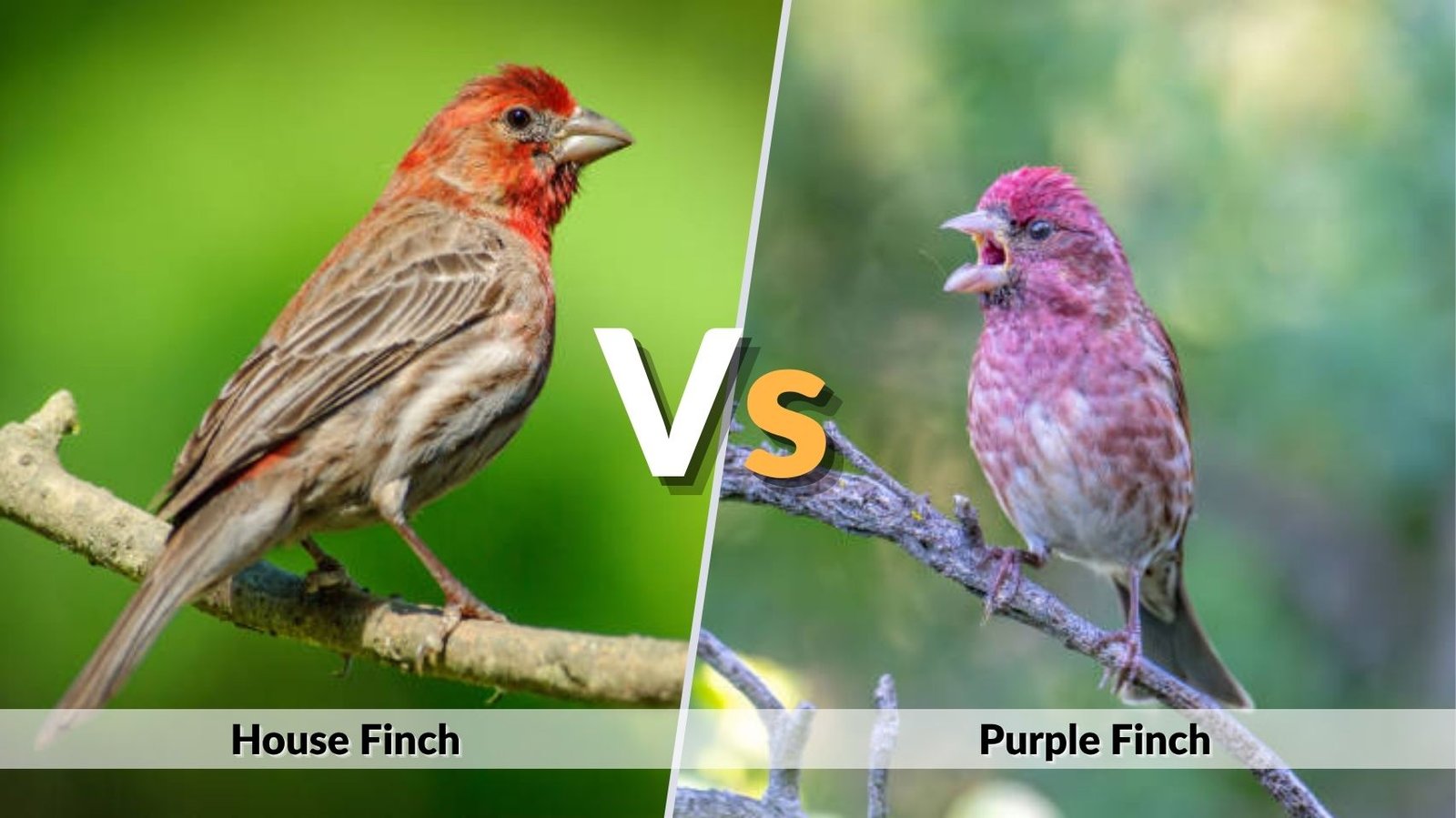
House finches and purple finches are small North American songbirds often confused due to similar size and shape. Male house finches show bright red, orange, or yellow plumage, while male purple finches display a deeper raspberry hue. Females of both species are streaked brown, making identification more challenging. Key differences include tail shape, plumage details, song patterns, egg appearance, and nesting habits. This guide provides detailed comparisons of physical traits, vocalizations, egg characteristics, and behavior to help birdwatchers accurately distinguish between house and purple finches.
Physical Differences Between House Finch and Purple Finch
Male and female house and purple finches exhibit differences in size, coloration, and markings. Observing these details carefully allows accurate identification in the field.
Size and Shape
- House finch: 5–6 inches long, slender body, short tail
- Purple finch: 5.5–6 inches, slightly bulkier, slightly notched tail
- Juveniles: smaller, streaked, difficult to distinguish
Male Plumage
- House finch: bright red, orange, or yellow head and chest
- Purple finch: raspberry-red head and breast, darker streaking on sides
- Tail: purple finch tail shows subtle notching; house finch tail is straight
Female Plumage
- House finch: streaked brown with subtle olive or yellow tones
- Purple finch: buffy-brown with heavier streaking on breast
- Head and breast streaking are key for distinguishing females
Song and Vocalization Differences
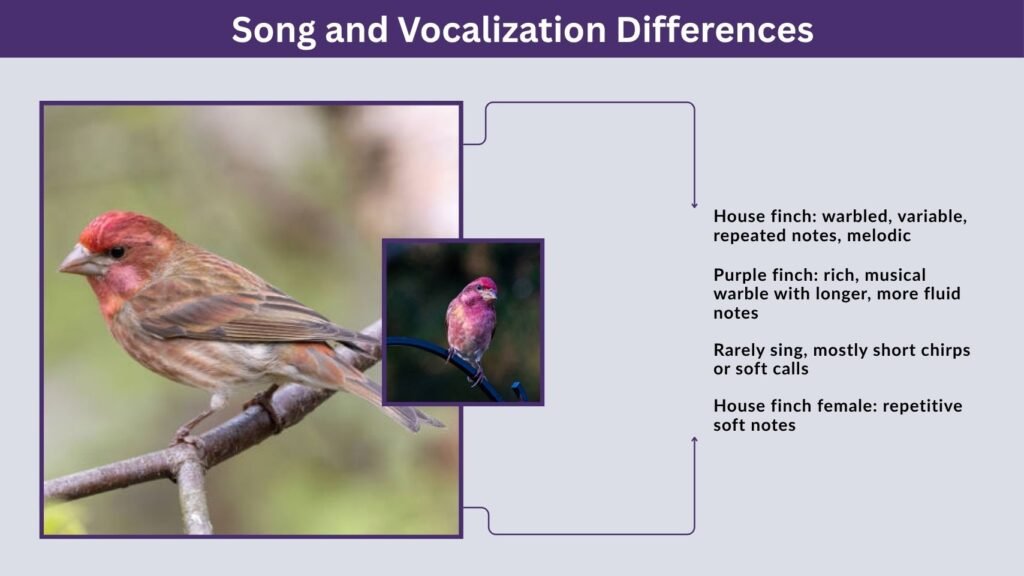
Songs and calls provide reliable cues for identifying house and purple finches. Vocalizations are most useful during the breeding season when males are singing to attract mates.
Male Song
- House finch: warbled, variable, repeated notes, melodic
- Purple finch: rich, musical warble with longer, more fluid notes
- Regional differences exist but raspberry tone is unique to purple finches
Female Vocalizations
- Rarely sing, mostly short chirps or soft calls
- House finch female: repetitive soft notes
- Purple finch female: higher-pitched short calls
House Finch and Purple Finch Eggs and Nest Comparisons
Eggs and nesting behavior offer additional identification clues. Observing color, size, and placement helps distinguish species and track reproductive success.
Egg Color and Size
- House finch: pale blue to greenish, lightly speckled, 0.7–0.8 inches long
- Purple finch: slightly larger, bluish-green, heavier speckling
Nesting Habits
- House finch: urban/suburban trees, shrubs, ledges, or eaves
- Purple finch: prefers coniferous or woodland trees
- Both may be parasitized by cowbirds, occasionally affecting clutch survival
Number of Eggs
- House finch: 2–6 per clutch, multiple clutches possible
- Purple finch: typically 3–5 eggs per clutch
- Eggs carefully aligned within nests for incubation
Behavioral Differences
Behavioral patterns, feeding, and social habits are important for distinguishing these species in overlapping habitats.
Female and male house finches are highly adaptable to urban environments, often forming large flocks and visiting backyard feeders. Purple finches, in contrast, are more woodland-oriented, foraging primarily in trees and shrubs. Territoriality and breeding behavior also vary: house finch males sing from perches and defend feeder territories, while purple finch males establish tree territories. Females of both species focus on nest building and incubation, with males assisting once chicks hatch.
House Finch and Purple Finch Habitat and Distribution
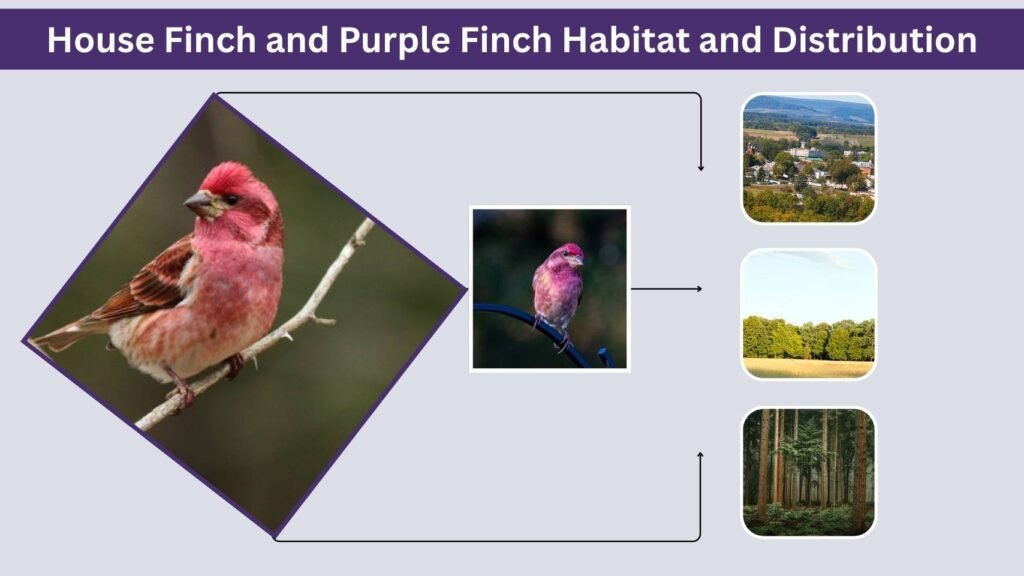
House finches and purple finches occupy overlapping but distinct ranges in North America. Understanding their preferred environments can help birdwatchers locate them and observe breeding or feeding behavior safely.
House finches are highly adaptable, thriving in urban, suburban, and rural areas. They often nest in trees, shrubs, and even man-made structures, taking advantage of feeders and ornamental plants. Purple finches prefer woodland habitats, particularly coniferous and mixed forests, though they occasionally visit suburban areas. Recognizing these habitat preferences helps differentiate the species in areas where both are present.
- House finch: widespread across North America, urban and rural areas
- Purple finch: forests and woodland edges, occasionally suburban feeders
- Overlap occurs in towns near forests, especially during winter
House Finch and Purple Finch Feeding and Diet
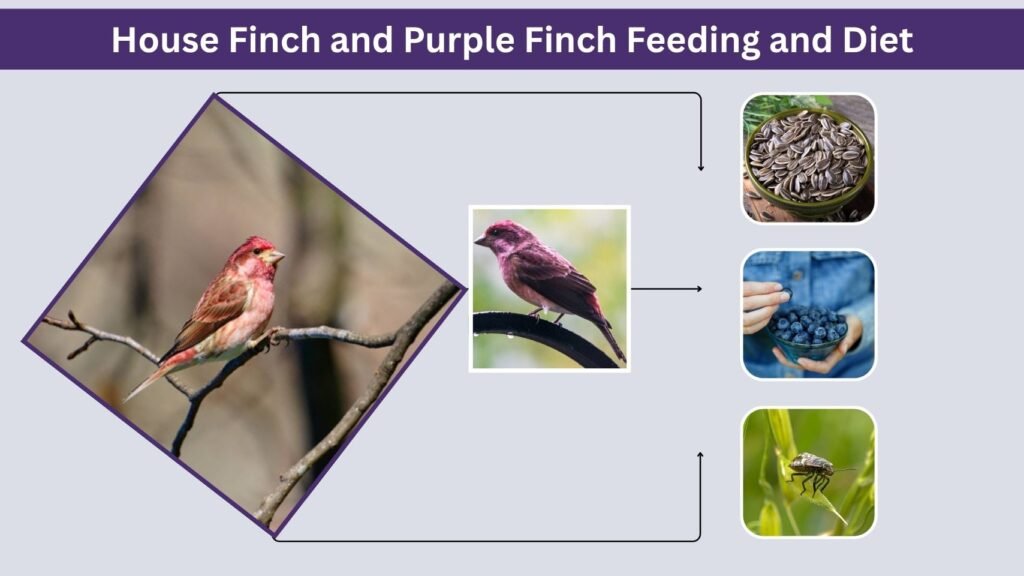
Feeding behavior is another distinguishing factor. Female and male house finches are primarily seed eaters but are highly flexible and readily visit backyard feeders. Purple finches also consume seeds and berries but prefer foraging in trees and shrubs, showing less urban adaptability.
Common Foods
- House finch: sunflower seeds, dandelion seeds, millet, small berries
- Purple finch: conifer seeds, berries, occasional insects during breeding season
- Both species supplement diets with whatever is seasonally available
Feeding Habits
- House finches feed in flocks, often mixed with other small birds
- Purple finches forage in smaller groups, sometimes solitary
- Feeding location and method provide subtle identification clues
Visual Identification Tips
Careful observation of plumage, tail shape, and head markings helps distinguish house finches from purple finches, especially when females or juveniles are involved.
Key Field Marks
- Male coloration: house finch bright red/orange, purple finch deeper raspberry
- Tail shape: purple finch slightly notched, house finch straight
- Wing and rump: house finch may show olive/yellow hints; purple finch more uniform
Images and Comparison
- Side-by-side photos of males and females highlight differences
- Comparisons of eggs, tail, and streaking patterns aid backyard identification
- Observing both species in the same habitat improves learning
FAQs
How can I tell a house finch from a purple finch?
Males are easiest to distinguish by red intensity and streaking. Females differ in breast streaking and subtle buff tones. Tail shape and habitat are also helpful clues.
Do female house finches and purple finches look similar?
Yes, both are streaked brown, but purple finch females have heavier streaking and a buffier tone than house finches.
How do their eggs differ?
House finch eggs are pale blue to greenish with light speckles, 0.7–0.8 inches long. Purple finch eggs are slightly larger, more heavily speckled, and bluish-green.
Do both species sing year-round?
Males sing primarily during the breeding season. Females rarely sing but use short calls to communicate with mates or alert to danger.
Can house and purple finches live in the same area?
Yes, their ranges overlap, especially in towns near forests. House finches dominate urban feeders, while purple finches stick to woodland areas.
