
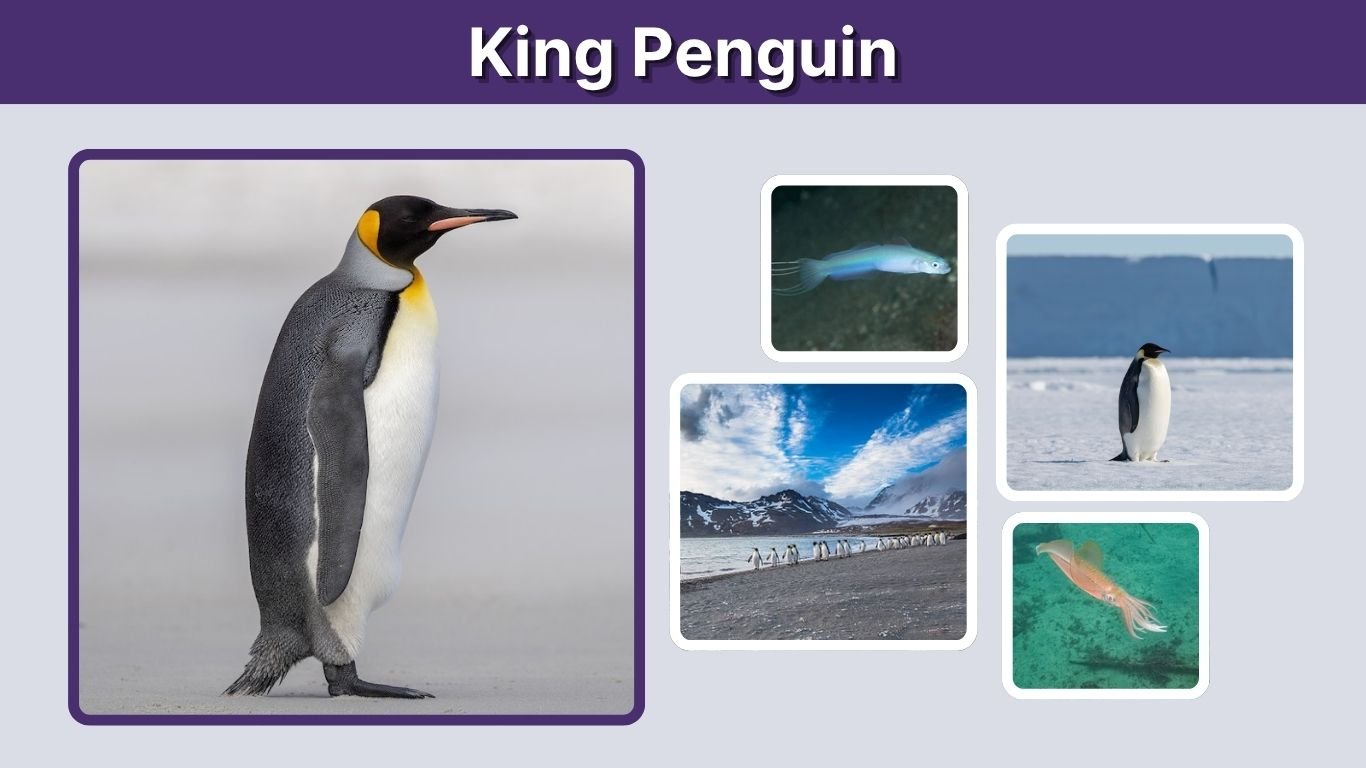
The King Penguin (Aptenodytes patagonicus) is the world’s second-largest living penguin, surpassed only by the Emperor Penguin. Famous for its elegant black-and-white body, bright orange neck patches, and enormous breeding colonies, this seabird inhabits remote sub-Antarctic islands. King Penguins spend much of their lives at sea hunting fish and squid, returning to land for breeding and molting. This guide explores King Penguin size, habitat, diet, chicks, predators, lifespan, adaptations, conservation status, and key differences between King and Emperor Penguins.
What Does a King Penguin Look Like?
King Penguins have a tall, streamlined body designed for efficient swimming in cold Southern Ocean waters. Adults show a dark head and back, white belly, silvery-gray upper body, and vivid orange-yellow patches around the ears and upper chest. Their long, narrow bill also carries orange coloration. Males and females look very similar, although males tend to be slightly larger.
King Penguin Size, Height and Weight
Important measurements include:
- Height: approximately 85–95 cm
- Weight: commonly about 8–15 kg depending on season
- Rank: second-largest living penguin species
- Body shape: tall and relatively slender
- Flippers: proportionally larger than those of Emperor Penguins
- Sex differences: males average slightly larger than females
Body weight changes considerably through the breeding season because adults may fast while incubating or caring for an egg.
Scientific Name and Appearance
The scientific name of the King Penguin is Aptenodytes patagonicus. It shares the genus Aptenodytes with the Emperor Penguin, reflecting their close evolutionary relationship.
One of the easiest identification features is the intense orange patch on each side of the head. A thin band of orange-yellow color continues toward the upper chest. Juvenile birds look less colorful until they develop mature plumage.
Where Do King Penguins Live?
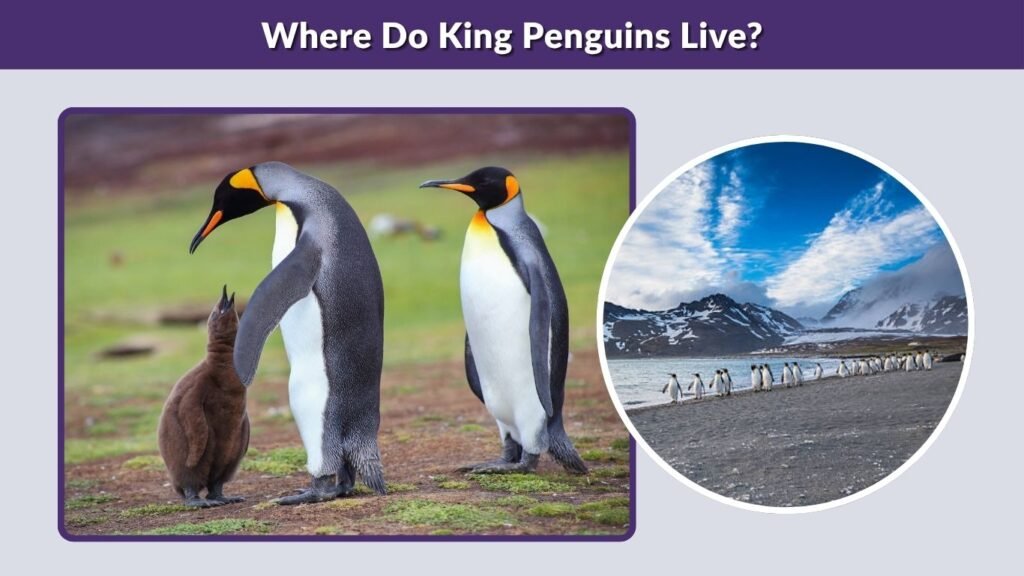
King Penguins are birds of the sub-Antarctic, rather than true Antarctic ice specialists. They breed on remote islands surrounding the Southern Ocean, generally between about 45°S and 55°S. Colonies are established on beaches, valleys, and relatively level areas free of permanent snow and ice. Access to nearby ocean feeding grounds is particularly important during their unusually long breeding cycle.
King Penguin Habitat and Distribution
Important breeding locations include:
- South Georgia
- Crozet Islands
- Kerguelen Islands
- Prince Edward Islands
- Macquarie Island
- Heard Island and McDonald Islands
- Falkland Islands
- Some southern South American locations
Large colonies may contain hundreds of thousands of breeding pairs. South Georgia and the Crozet Islands support some of the most significant concentrations.
Do King Penguins Live in Antarctica?
King Penguins are occasionally seen near Antarctica, but their major breeding colonies occur farther north on sub-Antarctic islands.
This differs from Emperor Penguins, which breed around the Antarctic continent itself. King Penguins generally prefer ice-free ground, whereas Emperor Penguins are famous for breeding on Antarctic fast ice during extremely harsh winter conditions.
What Do King Penguins Eat?
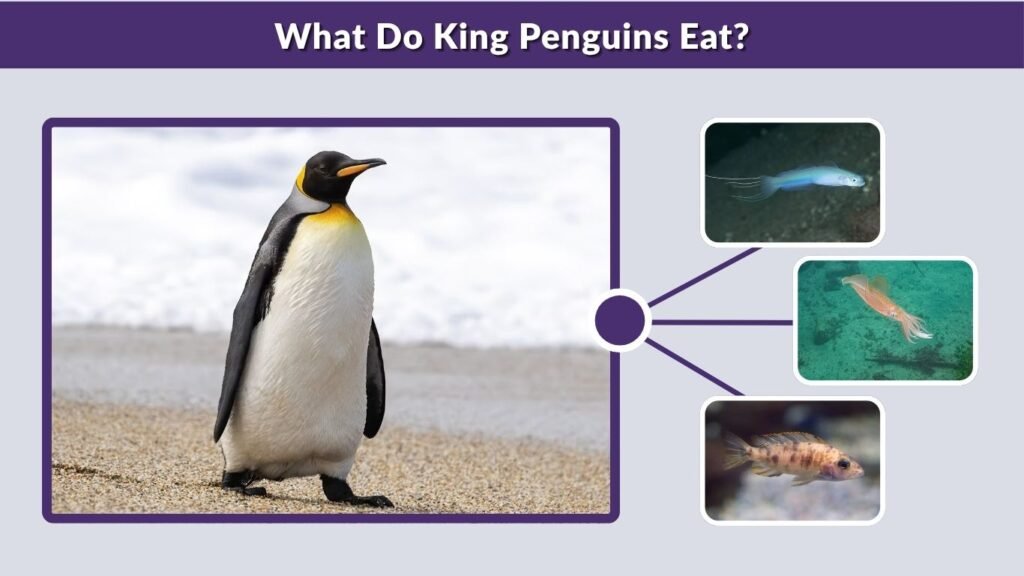
King Penguins are powerful marine hunters that spend extended periods foraging at sea. Their streamlined bodies and strong flippers allow them to pursue fast-moving prey underwater. Diet changes with season and food availability, but fish dominate much of their feeding. Adults must sometimes travel considerable distances from breeding colonies before returning with food for their growing chicks.
King Penguin Diet
Common foods include:
- Lanternfish, especially myctophid fish
- Other small schooling fish
- Squid
- Other small marine prey
Lanternfish are particularly important during the breeding season. During winter, squid can make up a larger proportion of the diet. Adults swallow prey at sea and later regurgitate partially digested food for their chicks.
King Penguin Predators
Adult King Penguins face their greatest danger in the ocean. Leopard seals and killer whales are known predators.
Eggs and young chicks face a different group of enemies around breeding colonies. Skuas, sheathbills, and giant petrels can prey upon eggs and vulnerable young. At the Falkland Islands, caracaras and turkey vultures may also take eggs and chicks.
Adaptations for Cold Ocean Life
King Penguins have dense waterproof plumage and insulating body fat that help them cope with cold marine conditions. Their wings have evolved into powerful flippers, while their streamlined bodies minimize resistance underwater.
Like other penguins, they use their feet and tail for steering while swimming. Their ability to store substantial body reserves is particularly valuable during breeding periods when adults may spend extended periods fasting on land.
King Penguin Egg, Chick and Life Cycle
King Penguins have one of the longest and most unusual reproductive cycles among penguins. A complete breeding cycle can take roughly 13–16 months, meaning successful pairs cannot simply raise a new chick on the same schedule every year. Instead of constructing nests, adults incubate their single egg directly on their feet beneath a warm fold of abdominal skin.
Egg and Incubation
King Penguin reproduction involves several distinctive stages:
- Females generally produce one egg
- No traditional nest is constructed
- The egg rests on the parent’s feet
- Incubation lasts about 54 days
- Males normally perform the first incubation shift
- Parents alternate between incubation and feeding at sea
- Successful breeding often occurs about twice every three years
The long breeding schedule makes timing particularly important for chick survival.
Why Are King Penguin Chicks Brown and Fluffy?
A King Penguin chick looks dramatically different from an adult. Young birds develop thick chocolate-brown down that provides insulation while they remain on land.
As chicks grow, they often gather into groups called crèches. Parents spend long periods at sea and return periodically to feed them. During winter, chicks can experience extremely long gaps between meals while adults search for food.
Before going to sea, the chick molts its fluffy brown down and develops waterproof juvenile feathers.
King Penguin Lifespan
Precise wild lifespan estimates are difficult to establish. Animal Diversity Web notes that King Penguins are long-lived birds but that firm numerical wild-lifespan data are limited. Captive individuals have been recorded living to around 26 years.
Survival is most challenging during youth. Food shortages, severe weather, predation, and long fasting periods can all reduce chick survival.
King Penguin vs Emperor Penguin
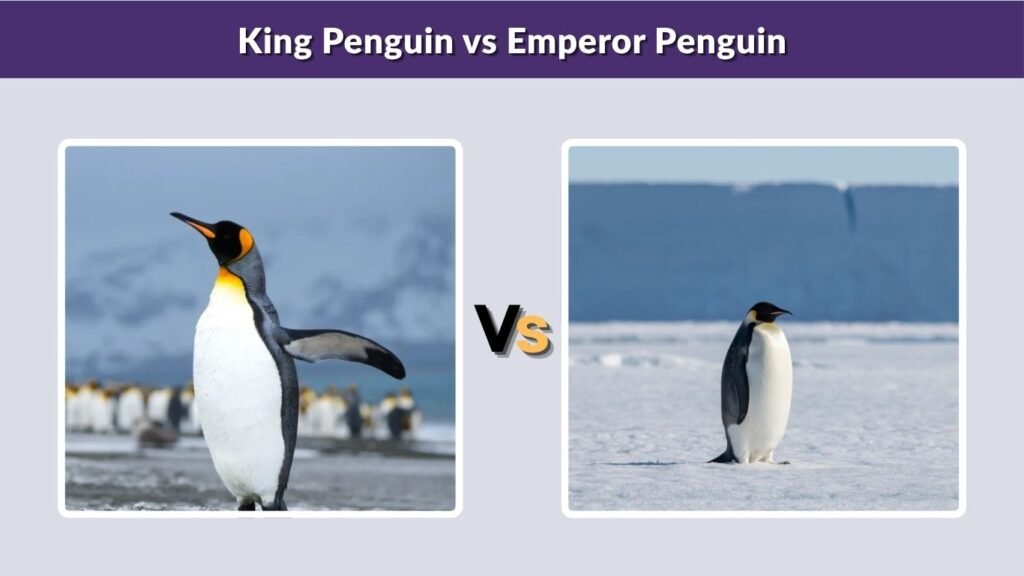
King and Emperor Penguins are close relatives and are sometimes confused because both have tall bodies, orange-yellow markings, and similar shapes. However, their size, breeding habitat, coloration, and breeding schedule differ considerably. The Emperor is the world’s largest penguin, while the King is second-largest and normally breeds on sub-Antarctic islands rather than Antarctic sea ice.
Main Differences Between King and Emperor Penguins
The Emperor Penguin is considerably heavier and can weigh up to around 40 kg early in its breeding season, while King Penguins generally weigh approximately 8–15 kg. Emperor Penguins also breed around Antarctica, often on fast ice.
King Penguins are slimmer, have brighter orange ear patches, and normally breed on ice-free sub-Antarctic shores. Their breeding cycle can extend beyond a year, while Emperor Penguins complete their breeding cycle within the Antarctic seasonal ice cycle.
King Penguin IUCN Status and Population
King Penguins experienced severe exploitation during the nineteenth and early twentieth centuries when people killed large numbers for oil. Many colonies were greatly reduced. After commercial exploitation ended, populations recovered at numerous breeding sites. Today, millions of individuals remain spread among major colonies, although changes in marine ecosystems and food availability can continue to influence individual populations.
Is the King Penguin Endangered?
The King Penguin is currently listed as Least Concern in the conservation information provided by the Australian Antarctic Program. The global population is estimated at approximately 1.6 million breeding pairs, and the overall population appears to have stabilized in recent decades despite declines at some large colonies.
Protecting breeding islands and productive Southern Ocean feeding grounds remains important because these birds depend heavily on healthy marine food webs.
FAQs
King Penguins are often confused with Emperor Penguins because of their similar shape and colorful neck markings. However, questions about their habitat, height, chicks, food, and behavior reveal several important differences. The following answers address five of the most common questions about this distinctive sub-Antarctic seabird and summarize key facts useful for identification and understanding its life cycle.
1. How Tall Is a King Penguin?
An adult King Penguin generally stands approximately 85–95 cm tall, making it the second-largest living penguin species.
2. What Does a King Penguin Eat?
King Penguins mainly eat fish, particularly lanternfish. Squid also becomes more important in their diet during winter.
3. Where Does the King Penguin Live?
King Penguins mainly live and breed on sub-Antarctic islands such as South Georgia, Crozet, Kerguelen, Macquarie, Prince Edward, and Heard Island.
4. Why Are King Penguin Chicks So Fluffy?
Their thick brown down provides insulation while they remain on land. Before entering the ocean independently, chicks molt this down and develop waterproof juvenile feathers.
5. What Is the Main Difference Between King and Emperor Penguins?
Emperor Penguins are larger and breed primarily around Antarctica on sea ice, while King Penguins are smaller, more brightly orange around the head, and breed mainly on ice-free sub-Antarctic islands.
