
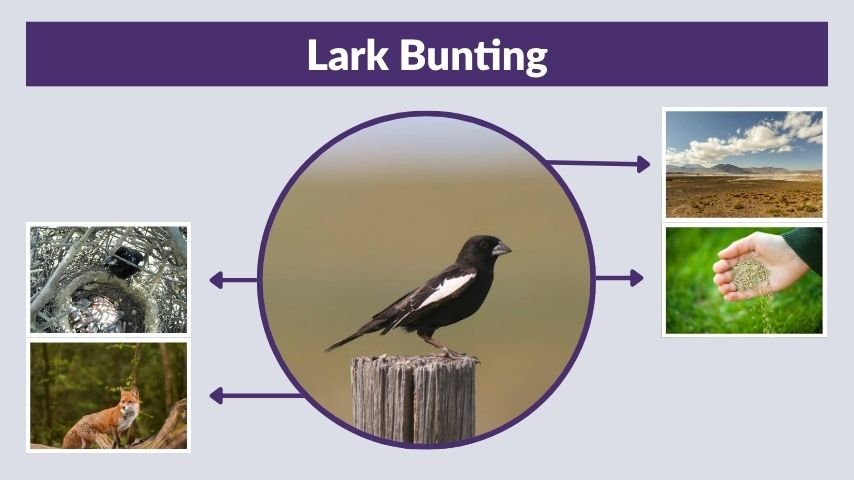
The Lark Bunting is a striking grassland bird best known for its beautiful songs and dramatic seasonal colors. During breeding season, male lark buntings display glossy black feathers with bold white wing patches, while females remain brown and streaked for camouflage. These birds are commonly found across the Great Plains of North America, especially in open prairie habitats. Birdwatchers admire them for their aerial singing displays and active behavior during spring. Despite their simple appearance in winter, lark buntings become highly noticeable once breeding season begins.
This unique songbird is also the state bird of Colorado and plays an important role in prairie ecosystems. Its feeding habits, migration patterns, and social behavior make it a fascinating species for bird lovers and wildlife enthusiasts.
What Is a Lark Bunting?
The lark bunting is a medium-sized North American songbird that belongs to the sparrow family. It is especially famous for the male’s black breeding plumage and musical flight songs performed over open grasslands.
Lark Bunting Scientific Classification
The scientific name of the lark bunting is Calamospiza melanocorys. It belongs to the Passerellidae family, which includes many New World sparrows and buntings.
Unlike colorful tropical buntings, the lark bunting is specially adapted to life in dry prairie habitats. Its body shape, strong beak, and ground-feeding behavior help it survive in grassland environments.
Why Is It Called a Lark Bunting?
The bird received its name because of its singing style and bunting-like appearance. Its aerial display songs resemble the behavior of larks, while its thick beak and body shape resemble traditional buntings.
Male birds often fly upward while singing loudly before gliding back to the ground. This behavior is one of the easiest ways to identify the species during breeding season.
Where Are Lark Buntings Found?
Lark buntings are mainly found across central North America. Their range includes prairie regions and open plains where grasses dominate the landscape.
Common habitats include:
- Shortgrass prairies
- Open ranchlands
- Agricultural fields
- Dry grasslands
- Prairie shrub areas
During migration and winter, these birds move toward the southern United States and northern Mexico.
Lark Bunting Identification
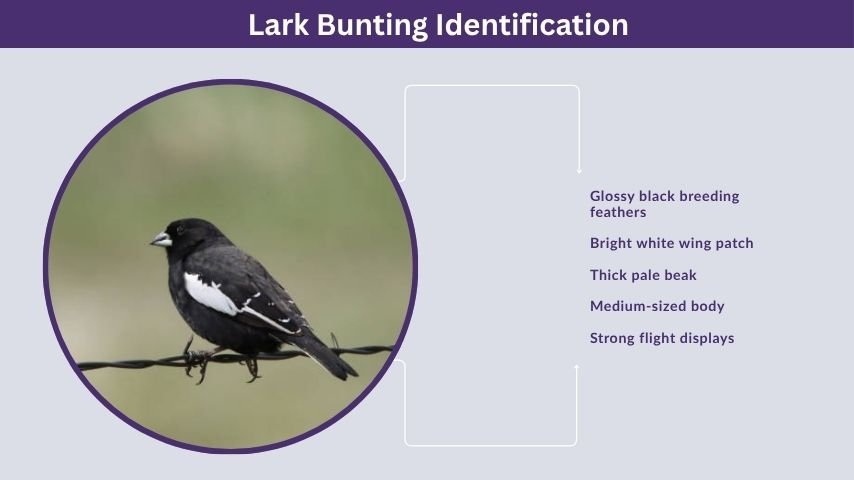
Lark buntings can look very different depending on age, sex, and season. Male birds become especially noticeable during spring and summer when their feathers change dramatically.
Male Lark Bunting Identification
- Glossy black breeding feathers
- Bright white wing patch
- Thick pale beak
- Medium-sized body
- Short tail
- Strong flight displays
Breeding males are among the easiest grassland birds to recognize because of their high contrast black-and-white appearance.
Female Lark Bunting Identification
Female lark buntings look much more subtle than males. Their brown streaked feathers help them blend into grassland habitats while nesting.
Key female features include:
- Brown upperparts
- Pale chest
- Dark streaking
- Light eyebrow stripe
- Smaller white wing markings
Females are sometimes confused with sparrows because of their earthy coloring.
Juvenile Lark Bunting Appearance
Young lark buntings closely resemble females during their first months of life. Juveniles display streaked brown feathers that provide camouflage from predators.
As young males mature, darker feathers slowly begin replacing the brown plumage. By the next breeding season, males develop the striking black coloration adults are known for.
Lark Bunting vs Sparrow
| Feature | Lark Bunting | Sparrow |
| Male Breeding Color | Black with white wing patch | Usually brown or gray |
| Habitat | Open grasslands | Many habitats |
| Song Display | Aerial singing flights | Usually perch singing |
| Body Shape | Larger and stockier | Smaller and slimmer |
Lark Bunting Habitat and Range
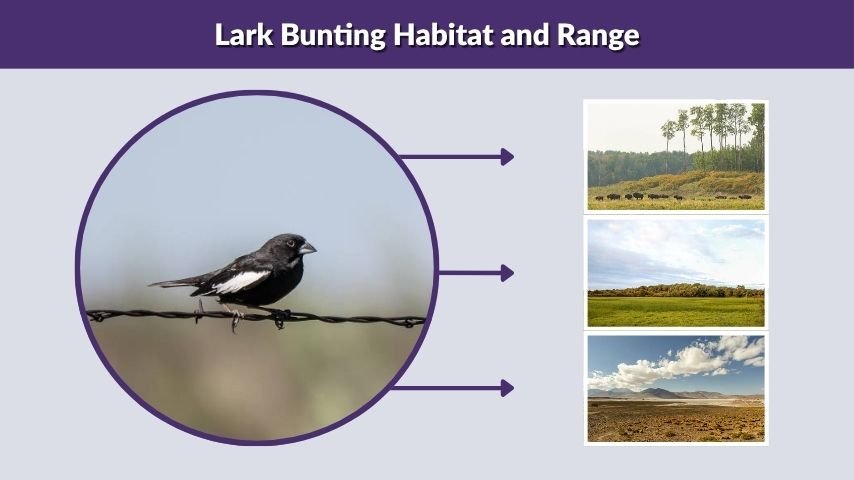
Lark buntings thrive in open grasslands where they can forage on the ground and perform display flights without obstruction. Their habitat preference makes them an important symbol of North American prairie ecosystems.
Lark Bunting Habitat
These birds prefer habitats with wide open spaces and scattered vegetation.
Typical habitats include:
- Native prairies
- Grazing fields
- Sagebrush grasslands
- Dry plains
- Farmland edges
They usually avoid dense forests and urban areas because open visibility helps them detect predators and communicate more effectively.
Lark Bunting Range Map
Lark buntings breed mainly across the Great Plains region of the United States and parts of southern Canada. States like Colorado, Kansas, Nebraska, and Wyoming contain large breeding populations.
In winter, many birds migrate southward into:
- Texas
- Arizona
- New Mexico
- Northern Mexico
Their migration patterns can change depending on rainfall and food availability.
Are Lark Buntings Migratory?
Yes, lark buntings are migratory birds. They travel seasonally between breeding grounds and winter feeding areas.
Migration usually occurs:
- Northward during spring
- Southward during autumn
- In loose feeding flocks
- Across open plains and agricultural areas
Weather conditions and food supplies strongly influence their movement patterns.
Lark Bunting Behavior and Communication
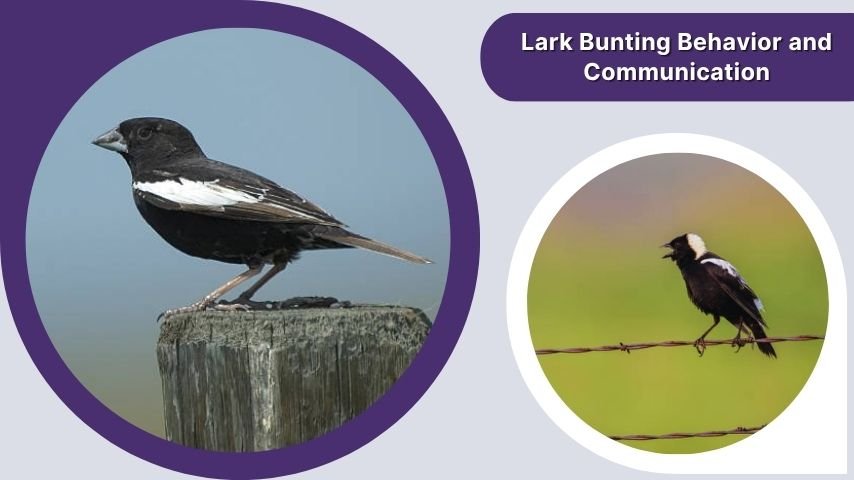
Lark buntings are active and social birds that communicate using songs, display flights, and visual signals. Breeding males become especially energetic during spring.
Lark Bunting Song and Calls
Male lark buntings perform musical flight songs above grasslands to defend territory and attract females. These songs include whistles, trills, and repeated notes delivered during slow gliding flights.
Their vocal behavior becomes most noticeable during early morning hours in breeding season.
Mating and Courtship Displays
Courtship behavior in lark buntings is highly visual and energetic. Males perform repeated aerial displays while flashing their white wing patches during flight.
These displays help:
- Attract mates
- Warn rival males
- Establish territory
- Demonstrate physical fitness
Social Behavior of Lark Buntings
Lark buntings are social birds that often gather in loose flocks outside the breeding season. During migration and winter, groups may feed together across grasslands and agricultural fields. In the breeding season, however, males become territorial and defend nesting areas from rivals.
These birds communicate using:
- Flight displays
- Short contact calls
- Territorial songs
- Body posture signals
- Wing flashing behavior
Their social structure changes throughout the year depending on food availability and breeding activity.
Lark Bunting Diet and Feeding Habits
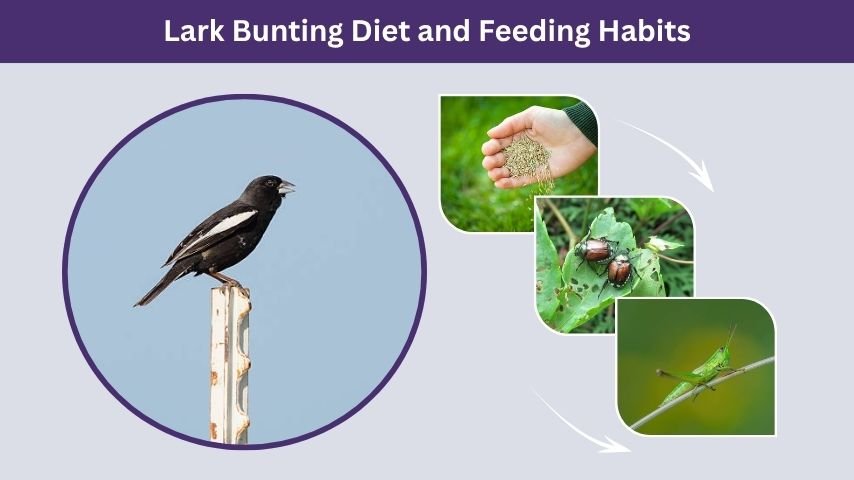
Lark buntings are mainly ground-feeding birds that search for seeds and insects in open grasslands. Their diet changes with the seasons, especially during nesting periods when young chicks require more protein-rich food.
What Do Lark Buntings Eat?
- Grass seeds
- Beetles
- Caterpillars
- Small insects
- Wild grains
- Weed seeds
- Grasshoppers
Insects become especially important during spring and summer because they provide nutrients needed for chick growth.
Seasonal Feeding Changes
During the breeding season, lark buntings eat larger amounts of insects to support reproduction and chick development. In colder months, they rely more heavily on seeds and grains found in grasslands and farmland.
Rainfall can also affect feeding patterns. Wet conditions usually increase insect populations, giving buntings more food resources during nesting season.
How Lark Buntings Find Food
Lark buntings usually forage while walking on the ground. They search carefully through grasses and soil for seeds and moving insects.
Their feeding habits include:
- Picking seeds from grasses
- Catching insects near the ground
- Feeding in loose flocks
- Searching open prairie areas
Their thick conical beak is well suited for cracking seeds and catching small prey.
Lark Bunting Nesting and Life Cycle
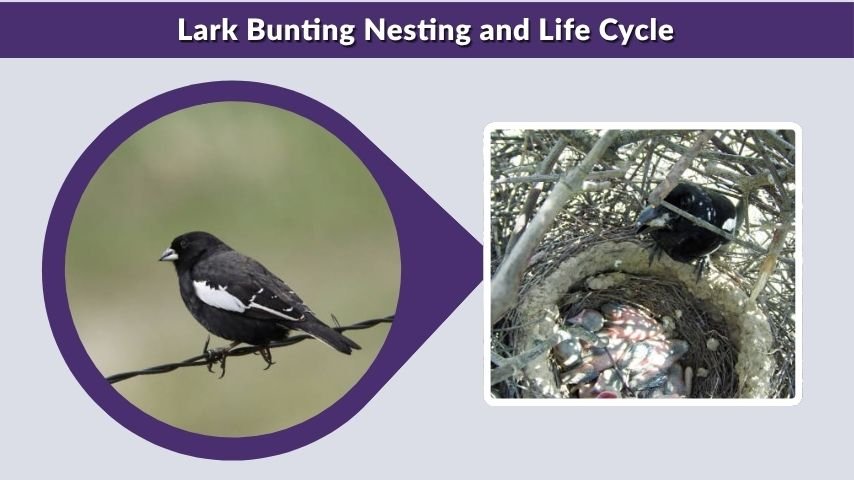
The breeding season is the most active period in a lark bunting’s life. Males establish territories while females focus on nest building and raising young birds in hidden grassland locations.
Lark Bunting Breeding Season
Breeding season generally begins during late spring when birds return to prairie habitats after migration. Male buntings arrive first and immediately begin singing to claim territories.
Breeding activities include:
- Courtship flights
- Territorial defense
- Nest construction
- Egg incubation
- Feeding chicks
Grassland conditions strongly influence breeding success because birds depend on vegetation for nest cover.
Lark Bunting Nest Description
Female lark buntings build nests directly on the ground, usually hidden beneath grasses or shrubs.
Nest features include:
- Cup-shaped structure
- Dry grass lining
- Hidden placement
- Soft plant materials
- Camouflaged appearance
Ground nesting helps protect eggs from harsh prairie winds but also increases exposure to predators.
Eggs and Chicks
Female buntings usually lay several pale-colored eggs with small markings. After incubation, both parents help feed the chicks with insects and soft food.
Important nesting facts:
- Clutch size usually ranges from 3 to 5 eggs
- Incubation lasts around 11 to 12 days
- Chicks grow rapidly
- Young birds leave the nest within a few weeks
Juveniles remain dependent on adults for a short time after fledging.
Lark Bunting Lifespan
Most lark buntings live only a few years in the wild because grassland birds face many environmental challenges. Predators, storms, habitat loss, and migration risks all affect survival.
Common survival threats include:
- Hawks
- Snakes
- Extreme weather
- Habitat destruction
- Food shortages
Birds that survive migration and nesting dangers may live several breeding seasons.
Predators and Threats to Lark Buntings
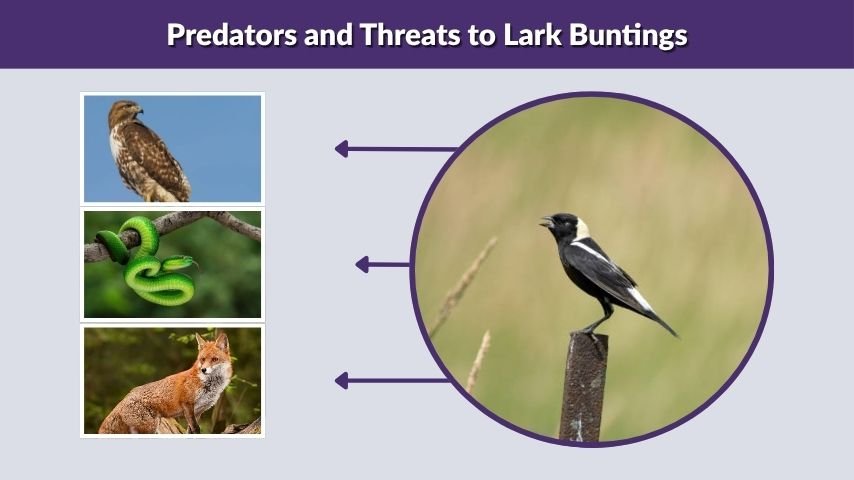
Like many prairie birds, lark buntings face increasing threats due to environmental changes and habitat loss across North America.
Natural Predators
- Hawks
- Snakes
- Foxes
- Coyotes
- Larger birds
- Domestic cats
Ground nests are especially vulnerable because eggs and chicks are easier for predators to reach.
Habitat Loss and Population Decline
Modern agriculture and land development have reduced many natural prairie habitats. Grassland birds like lark buntings are sensitive to habitat changes because they rely on large open areas for nesting and feeding.
Other environmental threats include:
- Overgrazing
- Pesticide use
- Climate change
- Fragmented grasslands
Conservation programs focused on prairie protection are important for maintaining healthy populations.
Conservation Status of the Lark Bunting
Although lark buntings are still widespread, some populations have declined in recent decades. Wildlife organizations continue monitoring their numbers and protecting prairie ecosystems.
Conservation efforts include:
- Prairie restoration
- Sustainable grazing practices
- Protected grassland reserves
- Wildlife monitoring programs
Interesting Lark Bunting Facts
Lark buntings are unique birds with several interesting behaviors and physical traits that make them stand out among North American songbirds.
Fun Lark Bunting Facts
- The lark bunting is the state bird of Colorado
- Males change color dramatically during breeding season
- Their songs are often performed during flight
- They build nests directly on the ground
- Some populations move based on rainfall patterns
Why Birdwatchers Love Lark Buntings
Birdwatchers enjoy spotting lark buntings because of their energetic display flights and seasonal plumage changes. Their songs echo across grasslands during spring, creating one of the classic sounds of the American prairie.
The contrast between the black breeding males and brown females also makes identification interesting for beginner birders.
FAQs
Do lark buntings migrate every year?
Yes. Lark buntings migrate seasonally between breeding grounds in the Great Plains and warmer wintering areas in the southern United States and northern Mexico. Their migration timing often depends on weather conditions and food availability across prairie habitats.
Can female lark buntings sing?
Female lark buntings can produce calls and simple vocal sounds, but males are the primary singers. Male birds perform longer and more complex songs during breeding season to attract mates and defend territories from rival males.
What makes male lark buntings turn black?
Male lark buntings develop black breeding plumage as they mature and enter nesting season. Hormonal changes during spring trigger feather coloration, helping males appear more attractive to females and more visible during courtship displays.
Are lark buntings ground-nesting birds?
Yes. Lark buntings build their nests directly on the ground, usually hidden beneath grasses or shrubs. This nesting strategy provides camouflage but also increases the risk of predators reaching eggs and young chicks.
Why are lark buntings important to grassland ecosystems?
Lark buntings help control insect populations and spread seeds throughout prairie habitats. They are also considered important indicators of healthy grassland ecosystems because their populations depend on stable open prairie environments.
