
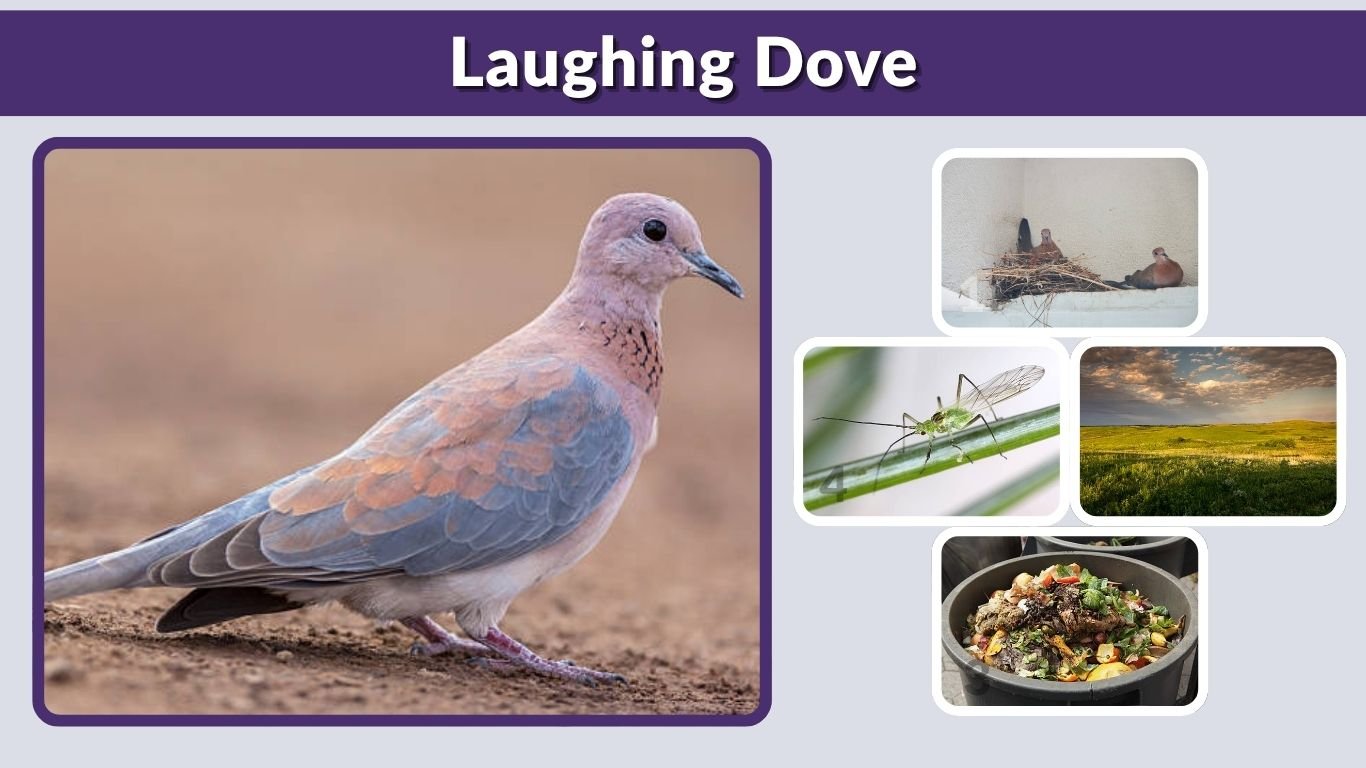
The laughing dove is a small, graceful bird known for its soft, chuckling call that resembles gentle laughter. Common across Africa, the Middle East, and parts of Asia, this species adapts easily to both wild and urban environments. Its calm nature and unique voice make it a favorite among bird watchers. In this guide, you will learn how to identify the laughing dove, understand its habitat, and explore its feeding habits and behavior.
What Is a Laughing Dove?
The laughing dove is a member of the dove family, recognized for its slender body and soothing vocalizations. It is widely distributed and thrives in warm climates. The bird gets its name from its distinctive call, which sounds like soft laughter rather than a typical coo.
Scientific Classification
- Belongs to the pigeon and dove family
- Scientific name commonly known as Spilopelia senegalensis
- Native to Africa and parts of Asia
Common Names
- Laughing dove
- Senegal dove
- Laughing turtle dove
Laughing Dove Physical Appearance and Identification
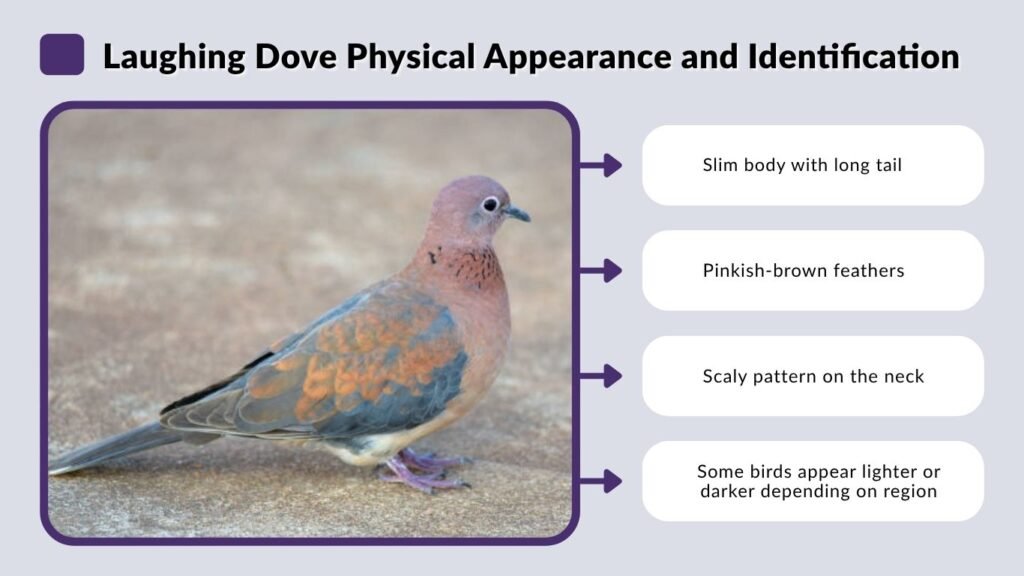
The laughing dove has a delicate and elegant appearance, making it easy to recognize in the wild. Its soft coloration and fine markings help distinguish it from other similar birds.
Key Identification Features
- Slim body with long tail
- Pinkish-brown feathers
- Scaly pattern on the neck
Color Variations and Look-Alikes
- Some birds appear lighter or darker depending on region
- Juveniles have duller colors and less defined patterns
- Can be confused with similar small doves
Laughing Dove Sound and Call
The most distinctive feature of the laughing dove is its unique call. Unlike many birds that produce sharp or melodic sounds, this species creates a soft, repetitive chuckling noise. The sound often carries across open areas, making the bird easy to identify even when hidden from view.
What Does the Call Sound Like?
- Soft, rhythmic chuckling tone
- Repetitive pattern resembling laughter
- Calm and soothing sound
Why Do Laughing Doves Make This Sound?
- To attract mates during breeding season
- To mark territory and signal presence
- To communicate with other doves nearby
Male vs Female Laughing Dove
Male and female laughing doves look very similar, making visual identification difficult. However, slight behavioral differences can help distinguish them, especially during breeding periods when activity levels increase.
Key Differences
- Males are more vocal and active
- Females tend to be quieter
- Males perform display movements during courtship
Laughing Dove Habitat and Distribution
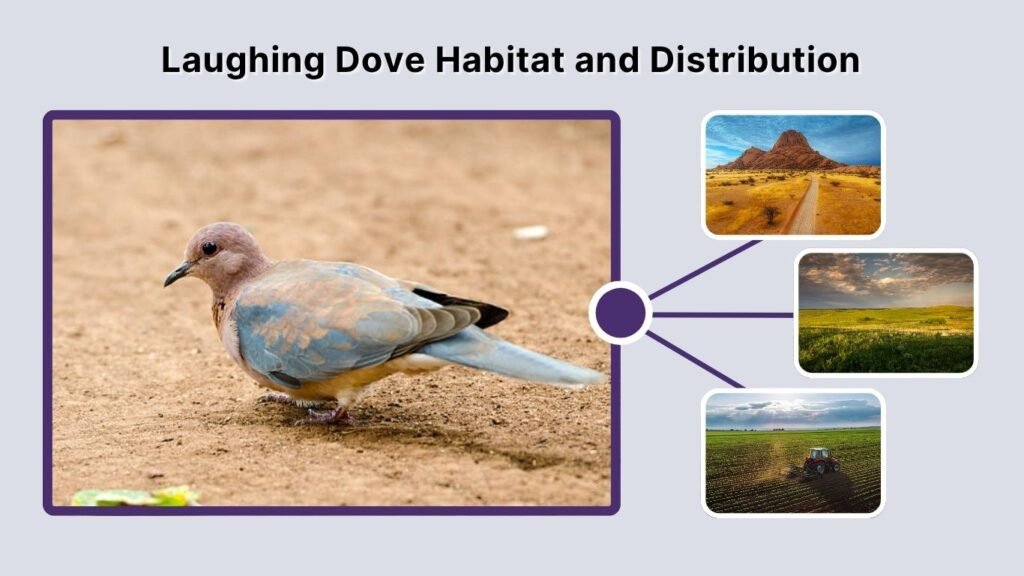
The laughing dove is highly adaptable and can be found in a variety of environments. It prefers warm climates and open spaces where food is easily available. This bird often lives close to human settlements, making it a common sight in towns and villages.
Natural Habitat
Laughing doves are typically found in dry, open areas such as scrublands, grasslands, and farmland. They prefer locations with scattered trees or shrubs where they can perch and nest. Dense forests are usually avoided, as these birds favor open visibility and easy ground access.
Geographic Distribution
- Widely found across Africa
- Present in the Middle East
- Common in South Asia, including India
- Introduced in parts of Australia
Laughing Dove Diet and Feeding Habits
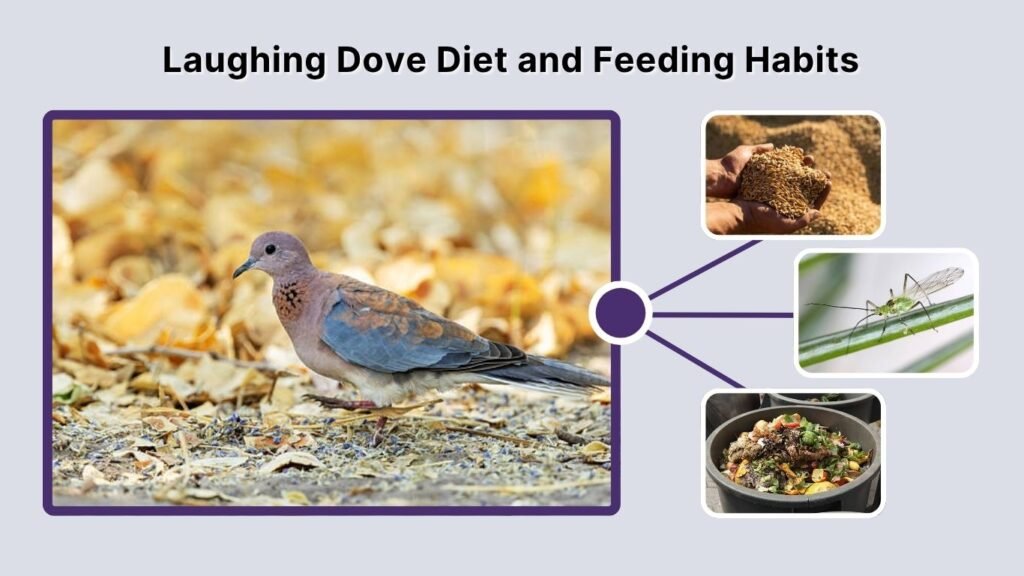
The diet of the laughing dove is simple and based on easily accessible food sources. These birds are ground feeders and spend much of their time searching for food in open spaces. Their feeding habits are calm and methodical.
What Do Laughing Doves Eat?
- Seeds and grains
- Small insects occasionally
- Food scraps in urban areas
Feeding Behavior
- Prefer feeding on the ground
- Often seen alone or in pairs
- Adapt well to human-provided food
Laughing Dove Behavior and Lifestyle
The laughing dove is known for its peaceful and relaxed nature. It rarely shows aggression and often coexists quietly with other bird species. These doves spend much of their day foraging, resting, and occasionally calling. Their calm temperament allows them to thrive in both natural and urban environments, where they remain largely undisturbed by human activity.
Laughing Dove Breeding and Nesting Habits
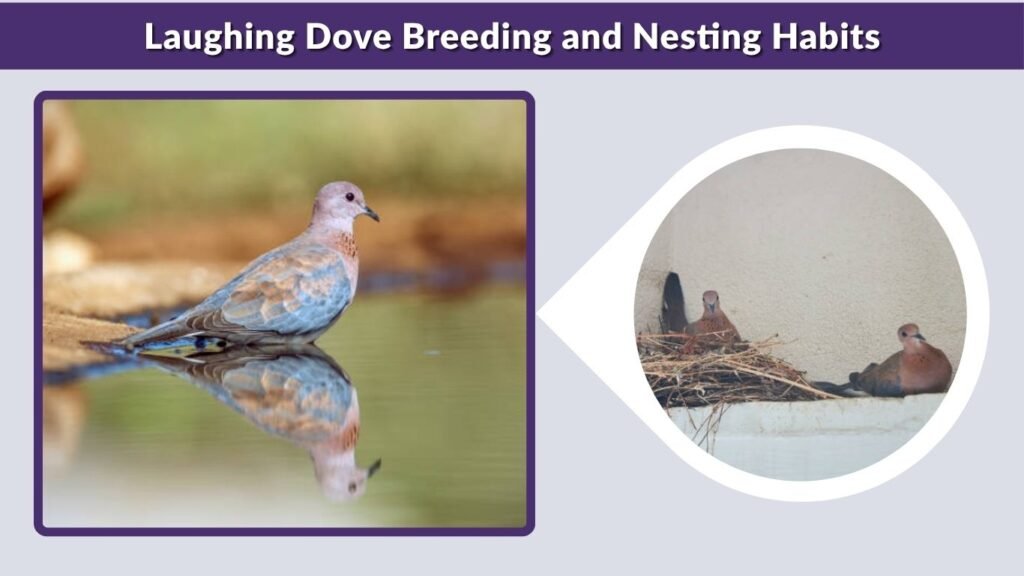
The laughing dove follows simple yet effective breeding patterns that allow it to reproduce successfully in different environments. It builds light nests and raises its young with shared effort. These birds are capable of breeding multiple times a year when conditions are favorable.
Nesting Behavior
- Builds small, loose nests using twigs
- Prefers trees, shrubs, or building ledges
- Chooses quiet and sheltered locations
Eggs and Chicks
- Usually lays two white eggs
- Incubation lasts about two weeks
- Both parents feed and care for chicks
Lifespan of Laughing Dove
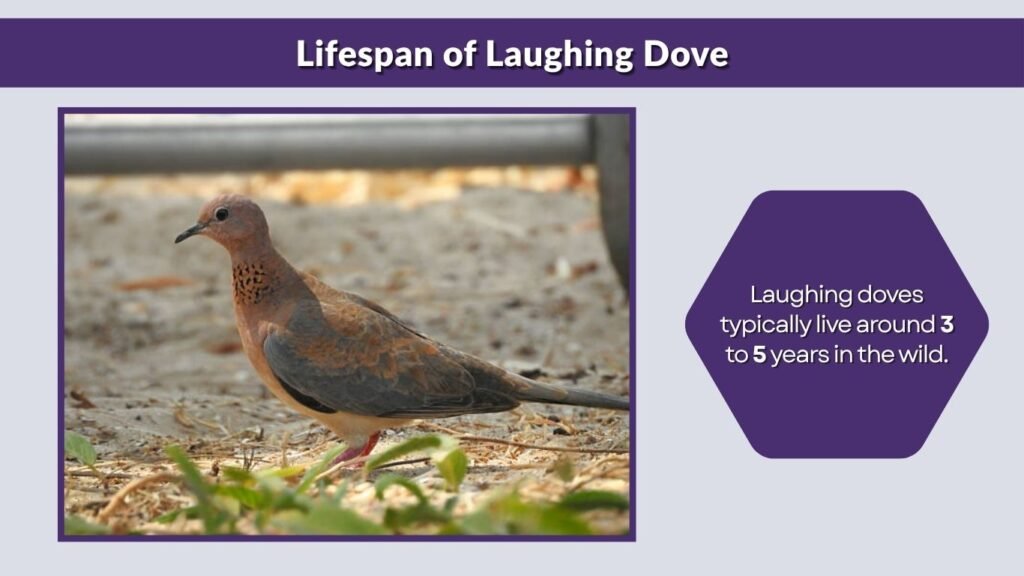
The lifespan of the laughing dove depends on environmental factors such as food availability and safety from predators. In the wild, these birds have a moderate lifespan, but their adaptability helps them survive in different conditions.
Laughing doves typically live around 3 to 5 years in the wild. In safer environments with fewer threats, some individuals may live longer. Factors like climate, habitat quality, and human activity play an important role in determining their longevity.
Laughing Dove vs Mourning Dove
The laughing dove and mourning dove are often compared due to their similar appearance, but they differ in several important ways. Understanding these differences helps with proper identification and observation in the wild.
Key Differences
- Laughing dove has a chuckling call, mourning dove has a sad coo
- Laughing dove is smaller and slimmer
- Mourning dove has a more uniform color pattern
Laughing Dove as a Pet
Laughing doves are sometimes kept as pets because of their gentle nature and soft calls. They are relatively easy to care for compared to many other birds, but they still require proper attention and a suitable environment to stay healthy.
Pet Care Basics
- Provide a spacious and clean cage
- Offer a balanced diet of seeds and grains
- Ensure fresh water is always available
Symbolism and Meaning of Laughing Dove
The laughing dove holds symbolic meaning in different cultures and traditions. Its calm presence and gentle call are often associated with positive emotions and peaceful environments. People sometimes interpret its appearance or sound as a sign of harmony and emotional balance.
In many interpretations, the laughing dove represents peace, love, and communication. Its soft, rhythmic call is seen as a reminder of calmness and connection. This symbolism adds cultural value to the bird beyond its physical characteristics.
Interesting Facts About Laughing Doves
- Known for their unique “laughing” call
- Highly adaptable to dry and urban environments
- Often seen in pairs or small groups
FAQs
Why do laughing doves sound like they are laughing?
Laughing doves produce a soft, repetitive call that resembles gentle laughter. This sound is mainly used during mating and territorial communication. It helps attract partners and signal their presence to other birds nearby.
What do laughing doves eat?
Laughing doves mainly eat seeds and grains collected from the ground. They may also consume small insects occasionally. In urban areas, they adapt easily and feed on garden seeds and available food sources.
What is the difference between laughing dove and mourning dove?
The key difference lies in their sound and appearance. Laughing doves have a chuckling call, while mourning doves produce a more sorrowful cooing sound. They also differ slightly in size and coloration.
How long do laughing doves live?
Laughing doves typically live around 3 to 5 years in the wild. Their lifespan depends on environmental conditions, food availability, and protection from predators.
Can laughing doves be kept as pets?
Yes, laughing doves can be kept as pets in some regions. They are gentle and easy to manage but require proper care, a suitable cage, and a balanced diet to remain healthy.