
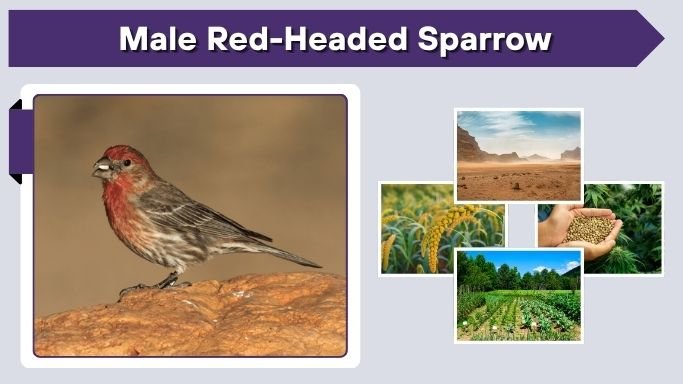
A “male red headed sparrow” is a name many people use when they see a small brown backyard bird with red on its head or chest. However, this bird is usually not a true sparrow. In most cases, it is a male House Finch. House Finches are small seed-eating birds that often visit feeders, gardens, parks, and neighborhoods. The male is easy to notice because of his red face, throat, upper chest, and sometimes red rump. This guide explains the bird’s size, color, habitat, diet, activity, behavior, and identification features.
What Is a Male Red Headed Sparrow?
The name “red headed sparrow” is informal. It usually describes a bird that looks sparrow-like but has red coloring on the head. A true House Sparrow male has a gray head, brown back, pale cheeks, and a black throat bib. It does not have a bright red head.
The bird most people mean is the male House Finch. It belongs to the finch family, not the sparrow family. It has a thick, cone-shaped bill for cracking seeds and a streaky brown body with red coloring on the upper parts. Cornell’s All About Birds describes adult male House Finches as rosy red around the face and upper breast, with a streaky brown back, belly, and tail.
Male Red Headed Sparrow Size
The male House Finch is a small bird, close in size to many common sparrows. It looks compact but can appear slightly slim, especially when perched upright on a feeder or branch.
| Feature | Male House Finch / “Red Headed Sparrow” |
|---|---|
| Length | About 5–6 inches |
| Wingspan | About 8–10 inches |
| Body shape | Small, slim, sparrow-like |
| Bill | Short, thick, cone-shaped |
| Tail | Medium length, slightly notched |
| Weight | Light, usually less than 1 ounce |
The bill is one of the best clues. Sparrows often have seed-eating bills too, but the House Finch bill looks short, strong, and curved along the top edge. This helps it crack sunflower seeds, weed seeds, and other small seeds.
Male Red Headed Sparrow Color
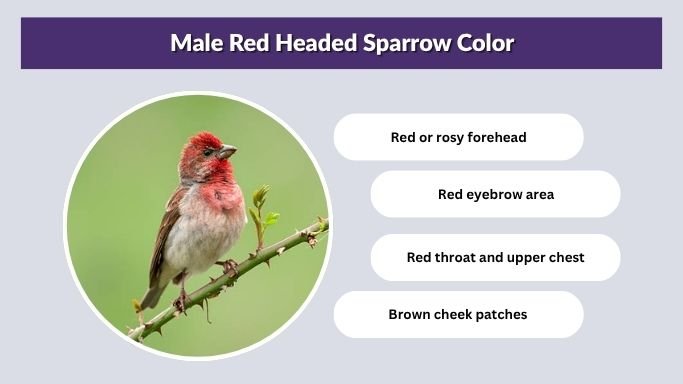
The male House Finch is usually brown and streaked with red coloring on the head and chest. The red is not always the same shade. Some males look bright red, while others look orange, rusty, or even yellowish. This depends partly on diet because the red color comes from pigments in the food the bird eats during molt.
Common Color Features
- Red or rosy forehead
- Red eyebrow area
- Red throat and upper chest
- Brown cheek patches
- Brown streaked back
- Streaked belly and sides
- Sometimes red on the rump
- Brown wings and tail
The color is often strongest on the face and upper breast. The lower belly usually remains pale with brown streaks. This separates the House Finch from a Purple Finch, which often has a more even raspberry wash over the head, chest, and back.
Male vs Female Red Headed Sparrow
Only the male House Finch has the red coloring that causes people to call it a red headed sparrow. The female does not have red. She is mostly gray-brown or brown with heavy streaking on the body.
| Feature | Male House Finch | Female House Finch |
|---|---|---|
| Head color | Red, orange, or yellowish | Brown or gray-brown |
| Chest | Red upper chest | Streaked brown and white |
| Back | Brown and streaked | Brown and streaked |
| Face | Red with brown areas | Plain brown face |
| Overall look | More colorful | Plain and streaky |
Female House Finches can be mistaken for female Purple Finches or sparrows. The male is easier to identify because of the red head and chest.
Habitat of the Male Red Headed Sparrow
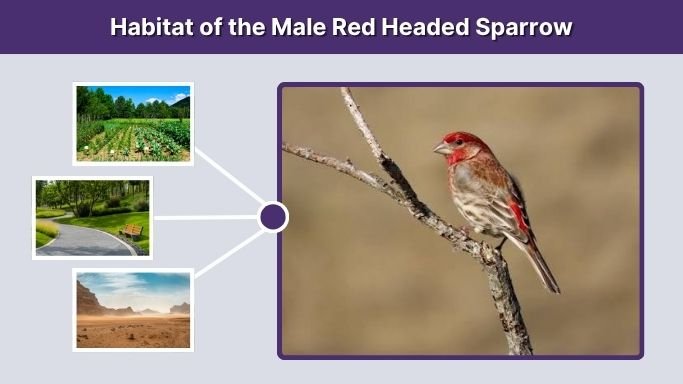
The male House Finch is highly adaptable. It is common in places where people live, including towns, suburbs, farms, gardens, parks, and yards. It also uses open woods, desert edges, orchards, and brushy areas.
House Finches are comfortable around buildings and often perch on roofs, wires, fences, trees, and feeder poles. Audubon describes House Finches as birds of mostly seeds, buds, and berries, and notes they are common around human-altered areas.
Common Habitat Areas
- Backyard gardens
- Bird feeders
- Parks and city trees
- Farms and orchards
- Shrubby edges
- Open woodland edges
- Desert and dry areas
- Building ledges and porches
Because they adapt well to human spaces, House Finches are among the most familiar red-headed backyard birds.
Diet of the Male Red Headed Sparrow
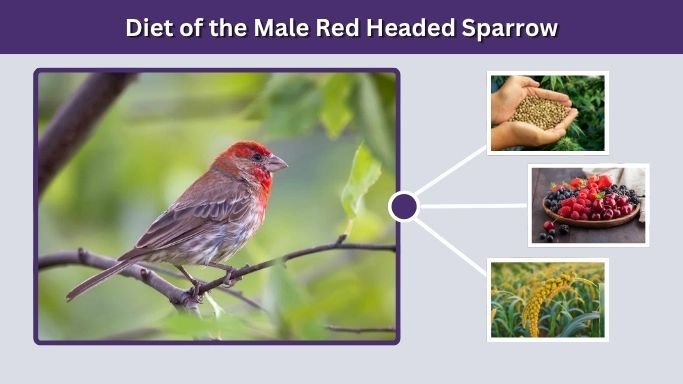
The male House Finch eats mostly plant material. Its diet includes seeds, buds, berries, fruits, and flower parts. Audubon notes that almost all of the House Finch diet is vegetable matter, with weed seeds, buds, flower parts, berries, and small fruits being important foods. It may also eat a few small insects, including aphids.
Foods It Commonly Eats
- Weed seeds
- Sunflower seeds
- Millet
- Safflower seeds
- Berries
- Small fruits
- Flower buds
- Flower parts
- Tree seeds
- Occasional tiny insects
At feeders, House Finches often prefer sunflower seeds. They may visit tube feeders, platform feeders, and hopper feeders. Their strong bills help them open seed shells quickly.
Feeding Behavior
Male House Finches often feed in small groups. They may arrive with females and other finches, perching near the feeder before moving in to eat. They are social birds and often tolerate other House Finches nearby, although small disputes can happen around crowded feeders.
They usually pick up one seed at a time, crack it with the bill, and remove the shell. They may also feed on the ground under feeders where spilled seeds collect.
Feeder Tips
- Offer black oil sunflower seeds
- Keep feeders clean and dry
- Use tube or hopper feeders
- Provide fresh water nearby
- Clean spilled seed to reduce disease risk
- Avoid pesticides near feeding areas
House Finches are prone to eye disease, so cleaning feeders regularly is important.
Daily Activity
The male red headed sparrow, or House Finch, is active during the day. It often feeds in the morning and late afternoon, but it may visit feeders throughout daylight hours. It spends time singing, feeding, perching, preening, and moving with small flocks.
Male House Finches are especially noticeable during breeding season because they sing from exposed perches. Their song is a cheerful, jumbled warble. They may sing from trees, wires, rooftops, or shrubs.
Common Activities
- Singing from high perches
- Visiting feeders
- Traveling in small flocks
- Cracking seeds
- Chasing rivals near feeders
- Following females during courtship
- Collecting food for young
They are not usually shy birds. In many neighborhoods, they become regular visitors.
Song and Calls
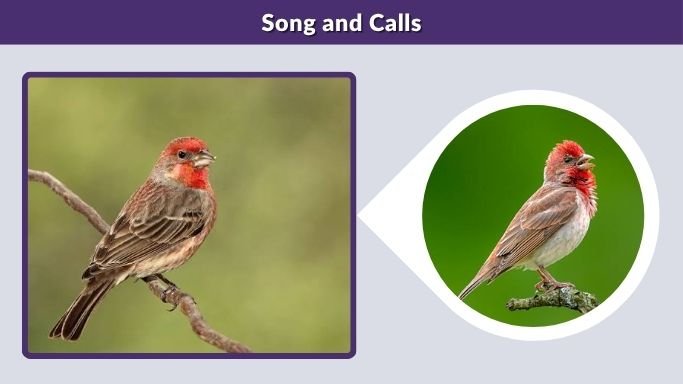
The male House Finch has a bright, musical song. It often sounds like a cheerful series of jumbled notes. The song may end with a slightly rising or buzzy note. Males sing to attract females and defend nesting areas.
Their calls are short and sharp. You may hear them calling while flying, feeding, or moving through shrubs and trees. Because they live close to people, their songs are common sounds in towns and suburbs.
Nesting and Breeding
Male House Finches help during the breeding season by feeding the female and later helping feed the young. The female usually builds the nest, often in a protected place such as a shrub, tree, hanging planter, porch light, ledge, or building corner.
House Finches often nest close to people. This is one reason they are frequently seen around homes. The nest is usually cup-shaped and made from grass, twigs, leaves, hair, feathers, and other soft material.
Nesting Facts
- Nest sites may be in shrubs, trees, ledges, or planters
- Female usually builds the nest
- Male may feed the female during nesting
- Young are fed mostly regurgitated seeds
- Pairs may raise more than one brood in a season
Unlike many songbirds that feed insects to their young, House Finches feed their nestlings mostly plant-based food.
How to Identify a Male Red Headed Sparrow Quickly
The easiest way to identify this bird is to look for a small brown bird with red on the head and chest, a thick seed bill, and streaking on the belly.
Quick Identification Checklist
- Small sparrow-sized bird
- Red, orange, or yellowish head
- Red upper chest
- Brown streaked back
- Brown streaks on belly and sides
- Thick cone-shaped bill
- Often found at feeders
- Usually seen in pairs or small groups
If the bird has a gray head, black bib, and no red, it is more likely a male House Sparrow. If it has a richer raspberry color spread over the whole upper body, it may be a Purple Finch.
Similar Birds
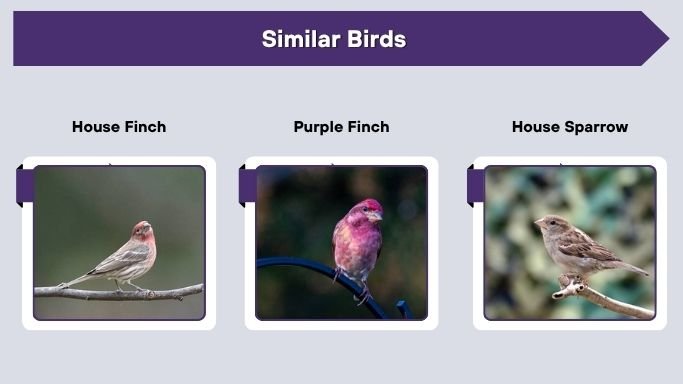
Several birds can be confused with a male red headed sparrow. The most common are Purple Finch, House Sparrow, and Cassin’s Finch in western areas.
| Bird | Main Difference |
|---|---|
| House Finch | Red head/chest, brown streaked body |
| Purple Finch | More raspberry-red wash, less brown face |
| House Sparrow | Gray head, black bib, no red |
| Cassin’s Finch | Red crown, paler body, more western range |
| Redpoll | Red cap, tiny black chin, northern bird |
Color alone can be tricky, so always check body shape, streaking, bill shape, and habitat.
Is the Male Red Headed Sparrow Rare?
The male House Finch is not rare in many areas. It is one of the most common feeder birds in North America. It adapts well to cities, suburbs, farms, and gardens. If you regularly offer sunflower seeds, there is a good chance House Finches may visit.
However, local abundance can vary by region, season, food availability, weather, and disease outbreaks. During winter, they may form larger flocks and visit feeders more often.
FAQs
Is a male red headed sparrow a real sparrow?
Usually, no. The bird people call a male red headed sparrow is often a male House Finch. It looks sparrow-like because it is small and brown, but it belongs to the finch family. True House Sparrows do not have bright red heads.
What does a male red headed sparrow eat?
It eats mostly seeds, buds, berries, fruits, and flower parts. At backyard feeders, it commonly eats sunflower seeds, millet, and safflower. It may also eat a few small insects, but most of its diet is plant-based.
Why is the male red headed sparrow sometimes orange or yellow?
Male House Finch color depends partly on pigments in its diet during molt. Some males become bright red, while others look orange or yellowish. The color variation is normal and does not mean the bird is a different species.
Where does the male red headed sparrow live?
It commonly lives in towns, suburbs, farms, parks, gardens, orchards, open woods, and dry brushy areas. It often nests near buildings, porches, hanging planters, shrubs, and trees. It is one of the most familiar backyard feeder birds.
How can I tell it from a House Sparrow?
A male House Finch has red or orange coloring on the head and chest, with brown streaking on the body. A male House Sparrow has a gray head, white cheeks, chestnut neck, and black bib. House Sparrows do not have red heads.
