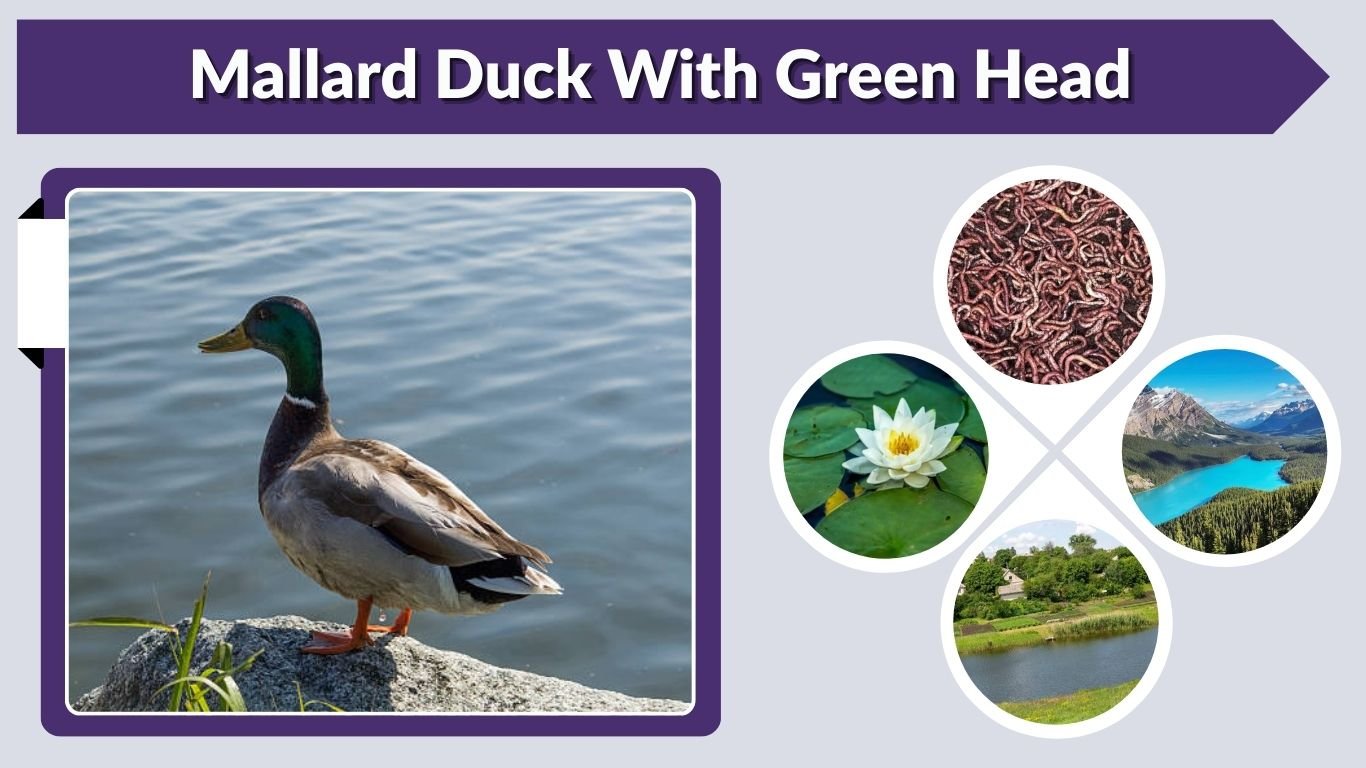
The Mallard duck with a green head is one of the most recognizable waterfowl species in the world. Known for its glossy emerald-green feathers, bright yellow bill, and distinctive white neck ring, this colorful duck is actually the adult male Mallard. Unlike females, which usually have mottled brown feathers, males develop striking plumage that plays an important role in courtship and identification. Understanding why Mallard ducks have green heads, how their appearance changes throughout the year, and how to distinguish them from similar ducks reveals fascinating details about these common waterbirds.
What Is a Mallard Duck With a Green Head?
A Mallard duck with a green head is typically an adult male Mallard (Anas platyrhynchos), commonly called a drake. These ducks belong to the family Anatidae and inhabit wetlands, lakes, ponds, rivers, and marshes across many parts of the world. Their green heads are one of the clearest features separating breeding males from females.
Green-Headed Mallard Duck Identification
- Common Name: Mallard Duck
- Scientific Name: Anas platyrhynchos
- Sex: Male, commonly called a drake
- Head Color: Glossy, iridescent green
- Bill Color: Bright yellow, sometimes with a dark tip
- Neck: Thin white collar beneath the green head
- Chest: Rich chestnut-brown feathers
- Body: Mostly gray with darker rear feathers
- Wings: Blue speculum bordered by white
- Tail: Dark feathers, including characteristic curled central tail feathers in many adult males
The combination of a green head, yellow bill, white neck ring, and brown chest makes breeding males easy to identify.
Why Do Male Mallard Ducks Have Green Heads?
Male Mallards develop green heads because of the microscopic structure of their feathers. Unlike ordinary feather colors produced mainly by pigments, the green appearance comes largely from structural coloration. Tiny structures inside the feathers reflect certain wavelengths of light, creating the glossy, metallic appearance.
How Does the Green Color Develop?
The head feathers contain microscopic layers that interact with incoming light. These structures produce an iridescent effect, meaning the apparent color can change depending on the viewing angle and lighting conditions.
Under bright sunlight, a Mallard’s head may appear emerald green. From another angle, the same feathers can look blue-green, dark green, or nearly black.
Why Is the Green Head Important?
The green head is part of the male Mallard’s breeding plumage and contributes to its visual appearance during courtship.
Males perform various displays to attract females, including head-bobbing, wing movements, and changes in body posture. Their bright plumage makes them visually distinctive during these interactions.
The green coloration is also useful for bird identification because female Mallards generally lack the same brilliant head feathers.
Male vs. Female Mallard Duck With Green Head
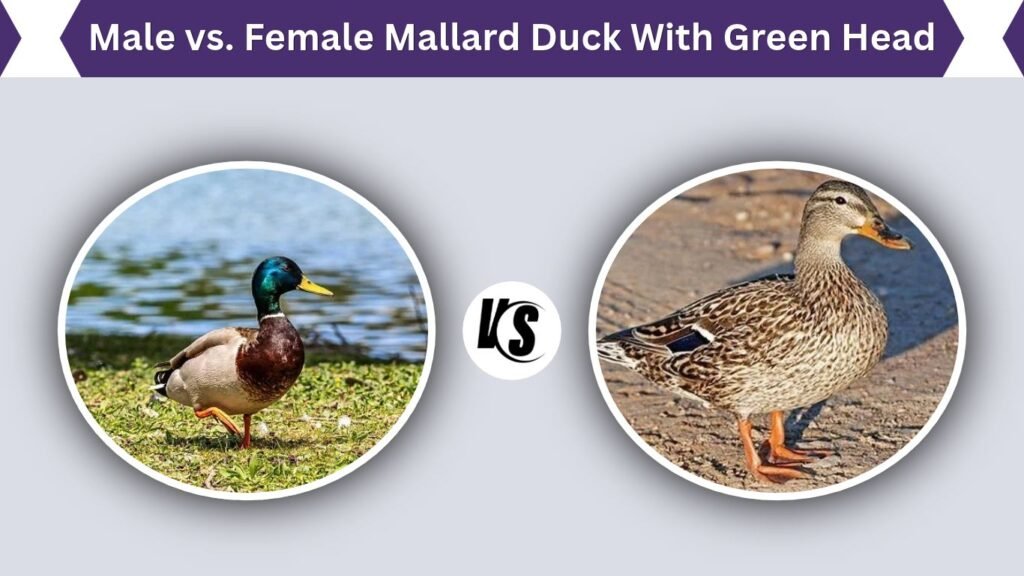
Male and female Mallards have noticeably different appearances, especially during the breeding season. Males display colorful feathers, while females have mottled brown plumage that provides camouflage around nesting areas. However, seasonal molting can temporarily make males look more similar to females.
Male Mallard Appearance
Breeding male Mallards have several colorful characteristics:
- Shiny green head feathers.
- Bright yellow bill.
- Narrow white neck ring.
- Chestnut-brown chest.
- Gray body feathers.
- Blue wing patch bordered by white.
- Black and white tail markings.
Their vibrant appearance makes them particularly noticeable on open water.
Female Mallard Appearance
Female Mallards usually have brown feathers with darker streaks and mottled patterns. Their bills are generally orange with dark markings, although the exact coloration varies.
This natural camouflage helps females remain less visible while incubating eggs in ground nests.
Both male and female Mallards have blue wing patches, although these may be hidden when their wings are folded.
Do Male Mallard Ducks Always Have Green Heads?
No, male Mallard ducks do not maintain their bright green heads throughout the entire year. After the breeding season, they undergo a molt that temporarily replaces their colorful plumage with duller feathers. This seasonal appearance is known as eclipse plumage.
What Is Eclipse Plumage?
During eclipse plumage, male Mallards become predominantly brown and may resemble females.
Their heads lose much of their green coloration, while the chest and body feathers become less contrasting. They may retain features such as a yellowish bill and characteristic tail markings that help distinguish them from females.
After another molt, males regain their colorful breeding plumage.
When Do Mallard Ducks Get Green Heads?
Young male Mallards initially resemble females and have mostly brown juvenile feathers.
As they mature and undergo seasonal molts, their green head feathers gradually develop. Many young males acquire recognizable breeding plumage during their first autumn or winter.
The exact timing depends on age, seasonal conditions, and individual development.
Where Do Green-Headed Mallard Ducks Live?
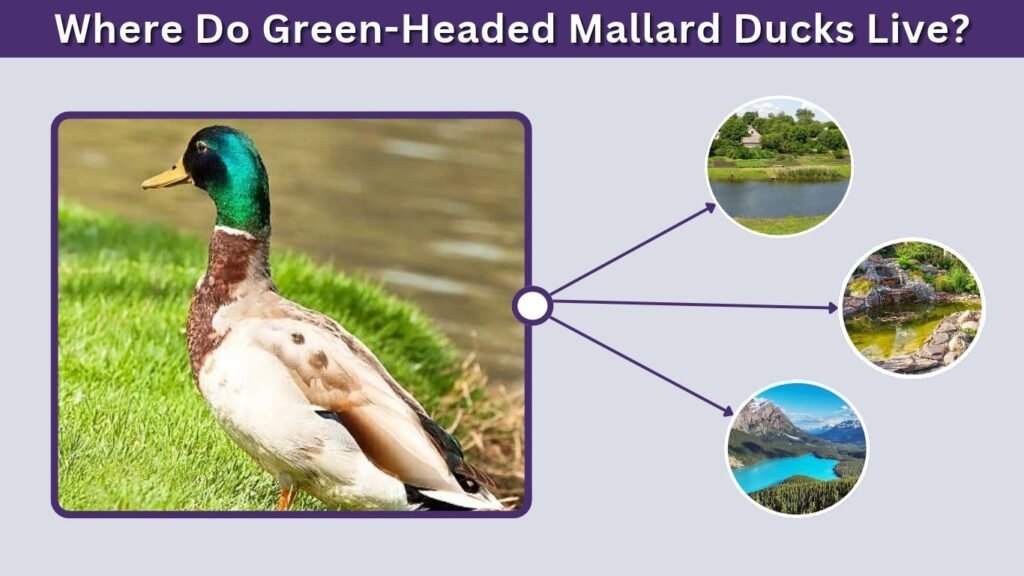
Mallards are among the most widespread and adaptable duck species. They naturally occur across North America, Europe, and Asia and have also been introduced to other regions. Their ability to survive in different wetland environments allows them to thrive in both natural habitats and urban settings.
Common Mallard Duck Habitats
- Freshwater ponds: Provide aquatic plants, insects, and shallow feeding areas.
- Lakes: Offer open water and nearby vegetation for shelter.
- Marshes: Support abundant aquatic organisms and nesting habitat.
- Rivers: Slow-moving sections provide feeding opportunities.
- Wetlands: Seasonal wetlands are important breeding and feeding grounds.
- Urban parks: Artificial ponds and lakes frequently attract Mallards.
- Agricultural fields: Ducks may feed on grains and seeds during migration and winter.
Mallards are dabbling ducks, meaning they usually feed near the water’s surface rather than diving deep underwater.
What Do Mallard Ducks With Green Heads Eat?
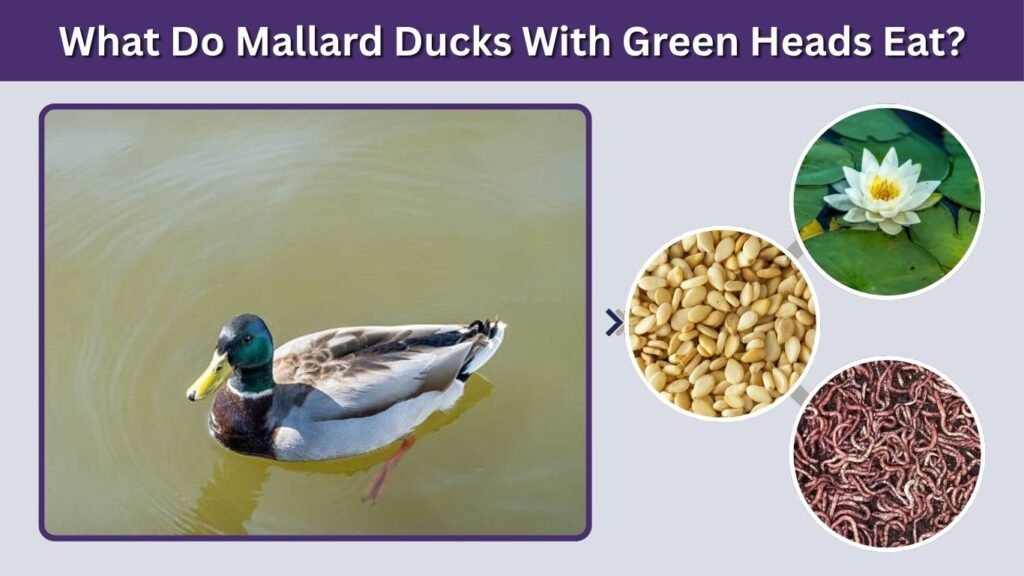
Male Mallards are omnivorous birds that consume both plant and animal matter. Their diet changes with the season, habitat, and availability of food. They frequently feed by tipping their bodies forward in shallow water, allowing them to reach submerged vegetation and small aquatic organisms.
Common Foods of Male Mallards
- Aquatic plants: Tender leaves, stems, and other plant parts.
- Seeds: Seeds from wetland grasses and aquatic vegetation.
- Grains: Corn, wheat, rice, and other agricultural grains.
- Insects: Aquatic insects and their larvae.
- Worms: Earthworms and other small invertebrates.
- Snails: Small freshwater snails provide animal protein.
- Crustaceans: Freshwater shrimp and other small aquatic animals.
During the breeding season, Mallards often consume more animal-based food, while seeds and grains can become particularly important during migration and winter.
Ducks With Green Heads That Are Not Mallards
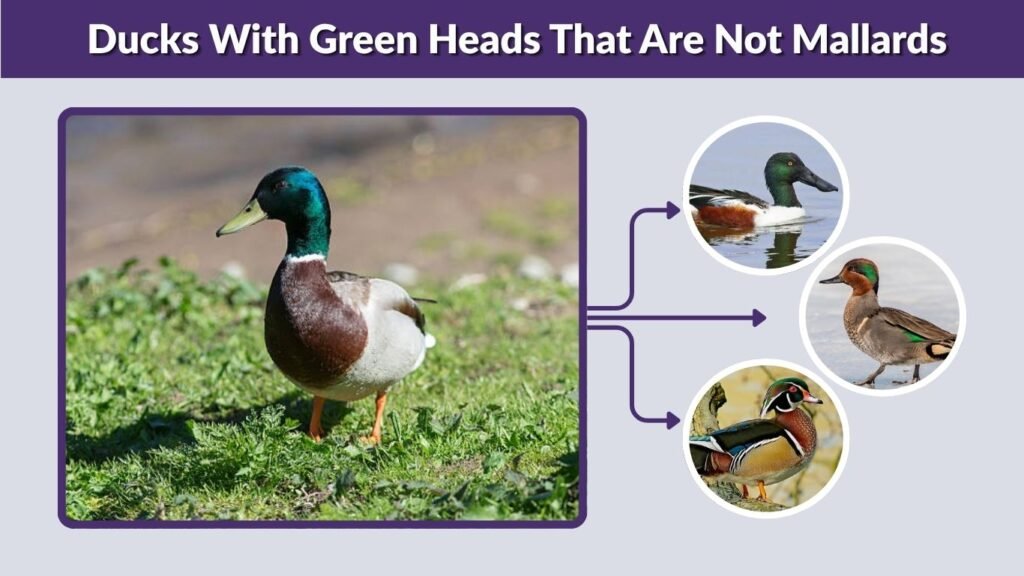
Although Mallards are famous for their green heads, several other duck species also display green or greenish head feathers. These birds can occasionally be confused with Mallards, especially when viewed from a distance. Bill shape, body markings, head patterns, and habitat preferences can help distinguish them.
Northern Shoveler
The male Northern Shoveler has a glossy green head, white chest, reddish-brown sides, and a distinctive oversized, spoon-shaped bill.
Its large bill is the easiest feature for separating it from a Mallard. Northern Shovelers use their specialized bills to filter small aquatic organisms from shallow water.
Wood Duck
Male Wood Ducks have colorful, iridescent heads that include glossy green feathers, white stripes, and an elongated crest.
They also have reddish eyes and richly patterned bodies. Unlike Mallards, Wood Ducks frequently nest in tree cavities near wooded wetlands.
Green-Winged Teal
Male Green-Winged Teal have chestnut-colored heads with broad iridescent green patches extending backward from their eyes.
They are noticeably smaller than Mallards and have compact bodies. Their green markings are limited to specific areas rather than covering the entire head.
Mallard Duck With Green Head NYT Crossword Answer
The phrase “Mallard ducks with green heads, e.g.” appeared as a clue in the New York Times Mini Crossword on July 17, 2025.
The correct answer is MALES, a five-letter word.
This answer refers to the fact that adult male Mallards normally develop the distinctive green head feathers associated with the species. Female Mallards usually have brown heads and mottled body plumage.
Male ducks are also commonly called drakes, but the specific crossword answer for this clue is MALES.
FAQs
1. What is a Mallard duck with a green head called?
A Mallard duck with a green head is called a male Mallard or drake. Adult males develop glossy green feathers, yellow bills, white neck rings, and brown chests during the breeding season. These features distinguish them from females.
2. Do female Mallard ducks have green heads?
Female Mallards normally have mottled brown heads rather than glossy green ones. Their subdued coloration helps provide camouflage around nesting areas. However, unusual hormonal changes can occasionally cause females to develop some male-like plumage characteristics.
3. Why do Mallard ducks have shiny green heads?
Male Mallards have shiny green heads because microscopic structures within their feathers interact with light. This creates structural coloration and iridescence. As lighting and viewing angles change, the same feathers can appear green, blue-green, or almost black.
4. What other ducks have green heads besides Mallards?
Several other duck species display green head feathers, including Northern Shovelers, Wood Ducks, and Green-Winged Teal. They differ from Mallards in bill shape, body size, facial markings, and plumage patterns. These features help birdwatchers identify each species accurately.
5. Do Mallard ducks lose their green heads in winter?
Male Mallards usually lose their bright green head feathers during the postbreeding eclipse molt in summer, rather than throughout winter. They typically regain their colorful breeding plumage during autumn, although exact timing varies with age and seasonal conditions.