
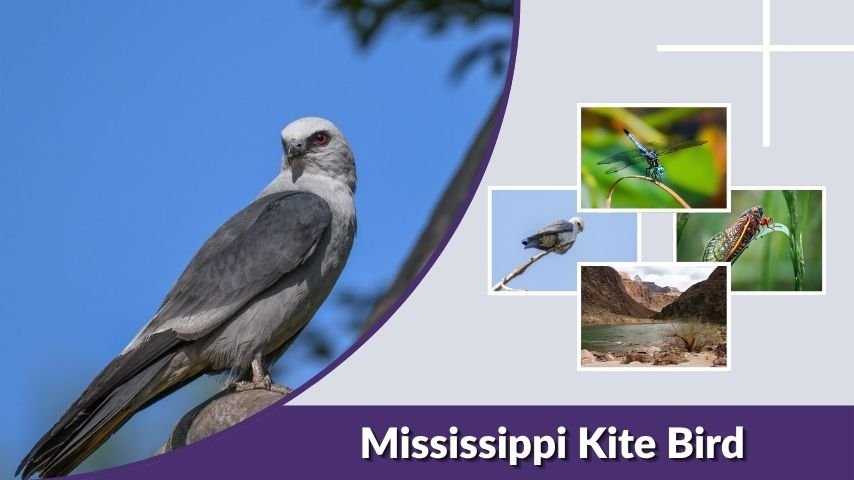
The Mississippi kite bird is a graceful bird of prey known for its smooth flight, pointed wings, pale gray body, and sharp, whistling call. Despite its name, this raptor is not found only in Mississippi. It breeds across parts of the southern and central United States and migrates to South America after nesting season. Mississippi kites are often seen soaring over trees, parks, fields, and neighborhoods in search of insects and small prey.
What Is a Mississippi Kite Bird?
A Mississippi kite is a small to medium-sized raptor in the hawk and kite family. It has a sleek body, long pointed wings, and a narrow tail that help it glide and twist through the air with very little effort.
Mississippi Kite Bird Identification
Adult Mississippi kites have a soft gray appearance that makes them stand out from many darker hawks. Their heads are usually pale gray to whitish, while the wings and tail are darker. From below, they often look smooth, slim, and falcon-like.
Common identification features include:
- Pale gray head
- Dark gray wings
- Long, pointed wings
- Narrow tail
- Red or dark eyes in adults
- Small hooked bill
- Smooth, floating flight style
Young Mississippi kites look different from adults. Juveniles are usually streakier and browner, which can make them harder to identify. They may be confused with young hawks or falcons.
Is the Mississippi Kite a Bird of Prey?
Yes, the Mississippi kite is a bird of prey. It belongs to the same broad group as hawks, eagles, and other kites. However, it is lighter and more aerial than many common backyard raptors.
How Mississippi Kites Hunt
Mississippi kites are excellent fliers. They often hunt in the air, catching insects while gliding or swooping. Instead of sitting low and waiting like some hawks, they spend a lot of time soaring above trees and open spaces.
They may also hunt from perches, especially near nesting areas. Their flight is one of the easiest ways to recognize them because they look graceful, buoyant, and controlled.
What Do Mississippi Kite Birds Eat?
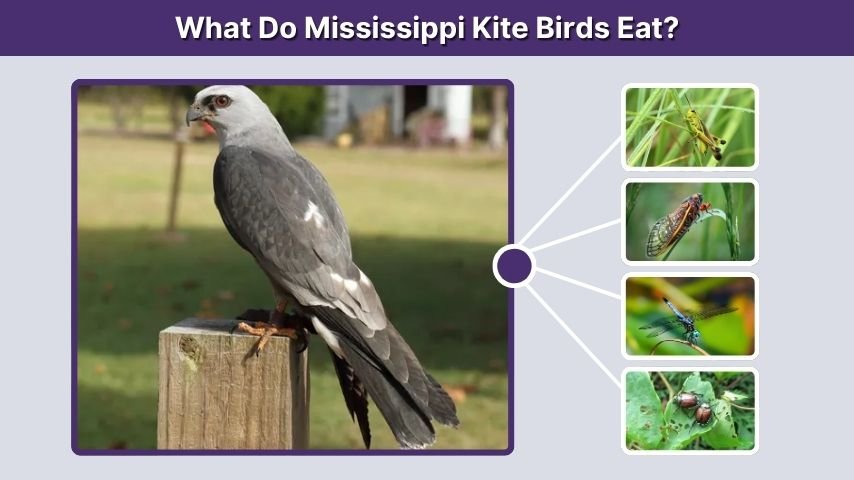
Mississippi kites mainly eat insects, especially large flying insects. Their diet can also include small animals when available.
Common Mississippi Kite Diet
Their food may include:
- Grasshoppers
- Cicadas
- Dragonflies
- Beetles
- Crickets
- Small lizards
- Frogs
- Small snakes
- Small mammals
- Occasionally small birds
Mississippi kites are especially known for catching insects in flight. This makes them useful predators in areas with many crop or yard insects. Audubon describes the species as a graceful flier that often pursues large flying insects, while Cornell notes that Mississippi kites hunt small prey and often nest in groups.
Do Mississippi Kites Eat Birds?
Yes, Mississippi kites can eat birds, but birds are not usually their main food. They are much more strongly associated with insects and small prey. A Mississippi kite may take a small bird if the opportunity appears, but it is not typically known as a major bird-hunting raptor compared with hawks such as Cooper’s hawks or sharp-shinned hawks.
Mississippi Kite Bird Sound and Call
The Mississippi kite bird call is one of its most noticeable traits during nesting season. Its sound is often described as a high, thin whistle or sharp call.
What Does a Mississippi Kite Sound Like?
Many people notice the call before they clearly see the bird. Mississippi kites may call while flying, near the nest, or when warning intruders away from nesting territory.
Their call is commonly heard as a sharp, whistled note. Around active nests, they may become noisy and defensive, especially when people, dogs, crows, or other animals come too close.
Why Mississippi Kites Call
Mississippi kites call for several reasons:
- Defending a nest
- Communicating with a mate
- Warning nearby kites
- Responding to predators
- Calling during flight
If you hear repeated sharp calls from above, look near tall trees. A Mississippi kite may be circling overhead or perched near a nest.
Mississippi Kite Bird Range
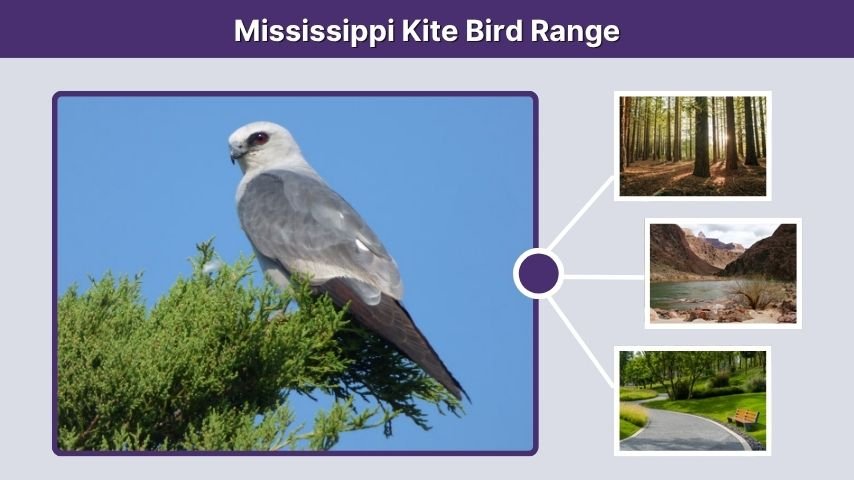
The Mississippi kite breeds in the southern and central United States. It is strongly associated with places such as Texas, Oklahoma, Kansas, Louisiana, Mississippi, Alabama, and other nearby states.
Where Mississippi Kites Live
Mississippi kites use several habitat types, including wooded areas, river bottoms, open country with trees, shelterbelts, city parks, golf courses, neighborhoods, and prairie windbreaks. Cornell describes them as nesting in tree stands ranging from southern prairie windbreaks to old-growth bottomlands and even city parks and golf courses.
American Bird Conservancy also describes the species as a long-distance migrant that breeds across the southern and central United States in low forests, windbreaks, and urban settings.
Mississippi Kite Migration
After nesting, Mississippi kites migrate south for winter. Many travel long distances to South America. This is why people in the United States usually see them during warmer months, especially spring and summer.
Mississippi Kite Birds in Different States
Many searches for this bird include state names, such as Mississippi kite birds in Oklahoma, Kansas, Louisiana, Alabama, New Orleans, Midland TX, and Wichita KS. That makes sense because the species is often seen in the south-central United States.
Mississippi Kite in Oklahoma, Texas, and Kansas
Oklahoma, Texas, and Kansas are among the most familiar states for Mississippi kite sightings. In these areas, the birds may nest in neighborhoods, parks, shelterbelts, and open country with scattered trees.
They can be especially noticeable in summer when adults defend nests and young birds begin to appear.
Mississippi Kite in Louisiana, Alabama, and Mississippi
Mississippi kites also occur in Gulf Coast and southeastern states, including Louisiana, Alabama, and Mississippi. In places such as New Orleans or south Louisiana, they may be seen around wooded neighborhoods, parks, and open areas with mature trees.
Despite the name, Mississippi is not the only place to find this bird, and it is not the state bird of Mississippi. The state bird of Mississippi is the northern mockingbird.
Baby Mississippi Kite Birds
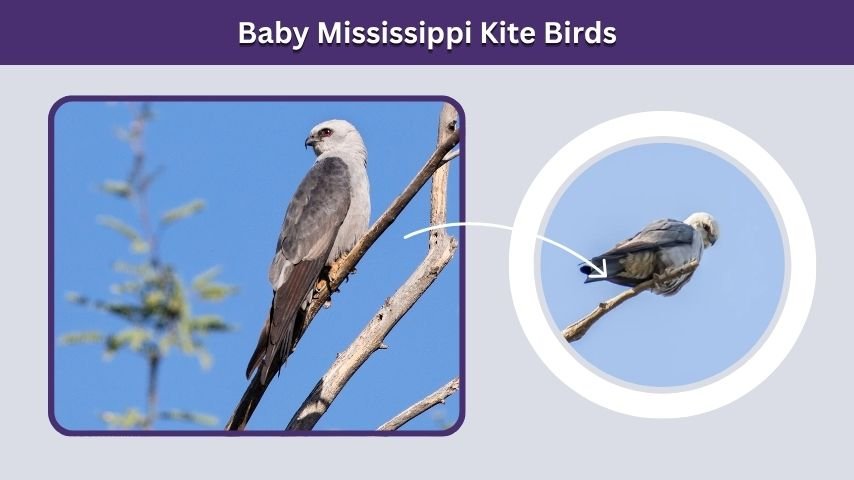
Baby Mississippi kite birds hatch in nests built high in trees. The parents care for the young and bring food to the nest.
What Do Young Mississippi Kites Look Like?
Young Mississippi kites are usually browner and more streaked than adults. This helps them blend in better near the nest. As they grow, they develop the smoother gray appearance of adult birds.
Juvenile Mississippi kites may remain near the nesting area for a period after leaving the nest. During this time, adults may still be protective and vocal.
Mississippi Kite Bird Attack Behavior
Mississippi kite attacks are usually defensive, not predatory. These birds may dive-bomb people, dogs, or other animals that pass too close to a nest.
Are Mississippi Kites Dangerous?
Mississippi kites are not usually dangerous, but they can be intimidating during nesting season. A defensive kite may swoop low, call loudly, or dive toward an intruder. Cornell notes that Mississippi kites may dive-bomb intruders that come too close to the nest tree.
If a Mississippi kite is swooping near you, calmly leave the area. Do not throw objects, disturb the nest, or try to remove the bird. Nesting birds are often protected by law, and the safest solution is to avoid the nest area until the young birds leave.
Mississippi Kite Bird Pictures and Images
Mississippi kite bird pictures usually show a slim gray raptor in flight. In photos, look for the long pointed wings, pale head, darker wing feathers, and narrow tail.
Tips for Identifying Mississippi Kites in Photos
When looking at Mississippi kite bird images, focus on shape as much as color. The bird often appears elegant and streamlined, with a light body and darker flight feathers.
Good photo clues include:
- Smooth gray body
- Pale head
- Long pointed wings
- Dark tail
- Small head compared with wing length
- Graceful soaring posture
In flight, Mississippi kites may look similar to falcons at first glance, but their softer gray color and floating flight style are helpful clues.
Can You Buy a Mississippi Kite Bird?
Searches like “Mississippi kite bird for sale” appear occasionally, but Mississippi kites are wild birds of prey, not pets. In the United States, native migratory birds are generally protected by law, and it is not legal to keep, sell, or capture them without proper permits.
What to Do If You Find an Injured Mississippi Kite
If you find an injured adult or baby Mississippi kite, do not try to keep it. Contact a licensed wildlife rehabilitator, local wildlife agency, or animal control service. Keep pets away and avoid handling the bird unless instructed by a professional.
FAQs
What kind of bird is a Mississippi kite?
A Mississippi kite is a small raptor, or bird of prey, in the hawk and kite family. It is known for graceful flight, pointed wings, a gray body, and a sharp whistling call.
What do Mississippi kite birds eat?
Mississippi kites mainly eat large insects such as grasshoppers, cicadas, beetles, and dragonflies. They may also eat small reptiles, frogs, snakes, small mammals, and occasionally small birds.
What does a Mississippi kite bird sound like?
A Mississippi kite call is usually a high, sharp whistle. The birds may call while flying, defending a nest, or communicating with other kites nearby.
Do Mississippi kites eat other birds?
Mississippi kites may occasionally eat small birds, but birds are not their main food. They mostly feed on insects and other small prey.
Are Mississippi kites aggressive?
Mississippi kites are not aggressive most of the year, but nesting adults may dive-bomb people or pets that get too close to the nest. This behavior is defensive and usually stops once you leave the area.
