
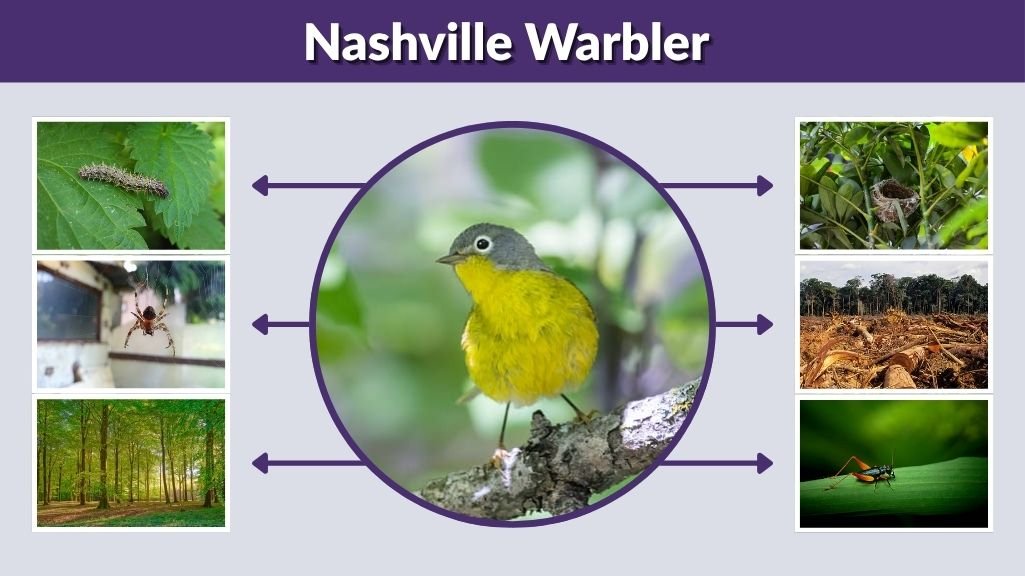
The Nashville warbler is a small colorful songbird known for its yellow underparts, gray head, and active behavior in forests and woodland habitats. This migratory bird travels across North America and is especially noticeable during spring and fall migration seasons. Birdwatchers often identify it by its white eye ring and energetic feeding style.
Nashville warblers feed mainly on insects and frequently move through shrubs and tree branches searching for food. They are sometimes confused with Tennessee warblers, Connecticut warblers, and orange-crowned warblers. This guide explains Nashville warbler identification, habitat, song, diet, nesting, and migration behavior.
What Is a Nashville Warbler?
The Nashville warbler is a small migratory songbird belonging to the wood warbler family. It is known for its bright yellow coloring, active movement, and musical song during breeding season.
Nashville Warbler Scientific Classification
The Nashville warbler belongs to the bird family Parulidae, which includes many colorful North American warblers.
Nashville Warbler Appearance
- Yellow underparts
- Gray head
- White eye ring
- Thin pointed bill
Nashville Warbler Size and Shape
This bird has a small compact body, short tail, rounded wings, and a delicate insect-eating bill.
How the Nashville Warbler Got Its Name
The species received its name because early scientists first described the bird from specimens collected near Nashville, Tennessee.
Nashville Warbler Habitat and Range
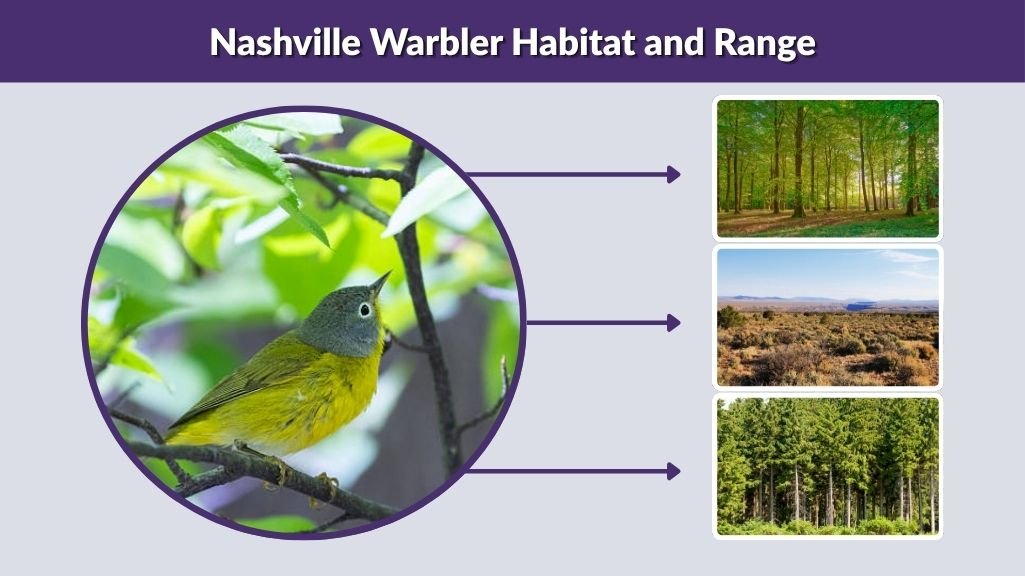
Nashville warblers live in forests, shrubby habitats, and woodland edges. They migrate long distances between breeding and wintering grounds.
Preferred Habitat
These birds prefer conifer forests, mixed woodlands, shrubby clearings, and areas with dense vegetation during breeding season.
Nashville Warbler Range
- Breeds across Canada
- Migrates through the United States
- Winters in Mexico and Central America
- Seen during spring and fall migration
Nashville Warbler in Texas and Canada
Texas becomes an important migration stopover area, while Canada supports many breeding populations during summer months.
Nashville Warbler Range Map
The species occurs widely across North America with migration pathways connecting northern breeding grounds and southern winter habitats.
Nashville Warbler Identification
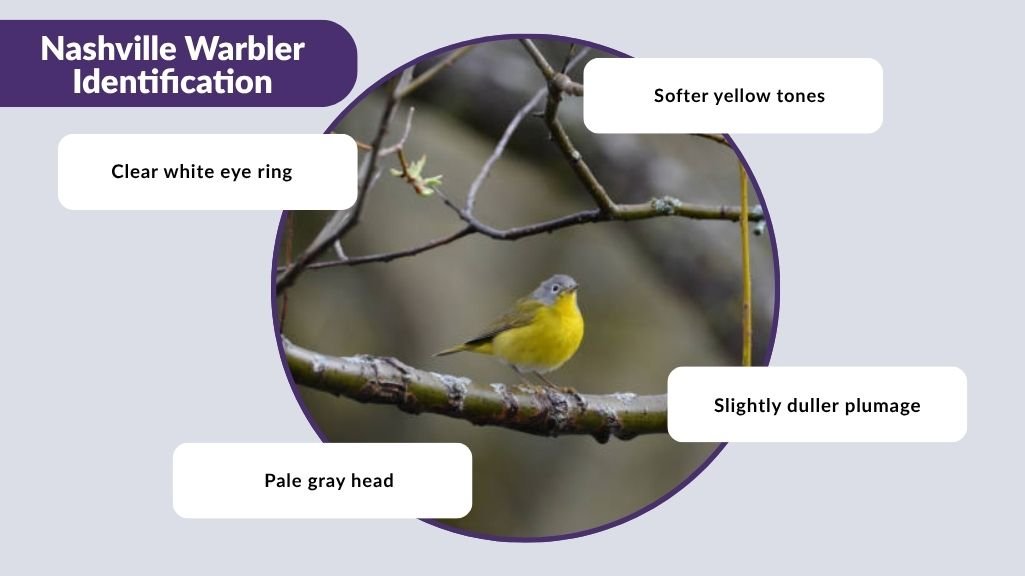
Correct identification can be difficult because Nashville warblers resemble several other small warbler species during migration.
Male Nashville Warbler Identification
Breeding males often appear brighter with stronger yellow coloring and clearer gray head markings.
Female Nashville Warbler Identification
- Softer yellow tones
- Slightly duller plumage
- Pale gray head
- Clear white eye ring
Juvenile and Immature Nashville Warbler
Young birds often appear duller than adults and may show weaker facial markings during early plumage stages.
Nashville Warbler Fall Plumage
During fall migration, many Nashville warblers appear less colorful and may look greener or paler than spring adults.
Nashville Warbler Song and Calls
Nashville warblers use songs and calls for communication, mate attraction, and territorial defense during breeding season.
Nashville Warbler Song
The song usually consists of musical notes and short repeated phrases delivered from trees or shrubs.
Nashville Warbler Call
- Sharp chip sounds
- Contact calls
- Alarm notes
- Flight communication
Flight Calls and Sounds
Migrating birds often produce short calls while flying overhead or moving through woodland habitats.
Recognizing Nashville Warbler Sounds
Birdwatchers often identify Nashville warblers by listening for their distinctive high-pitched songs and chip calls.
Nashville Warbler Diet and Feeding Habits
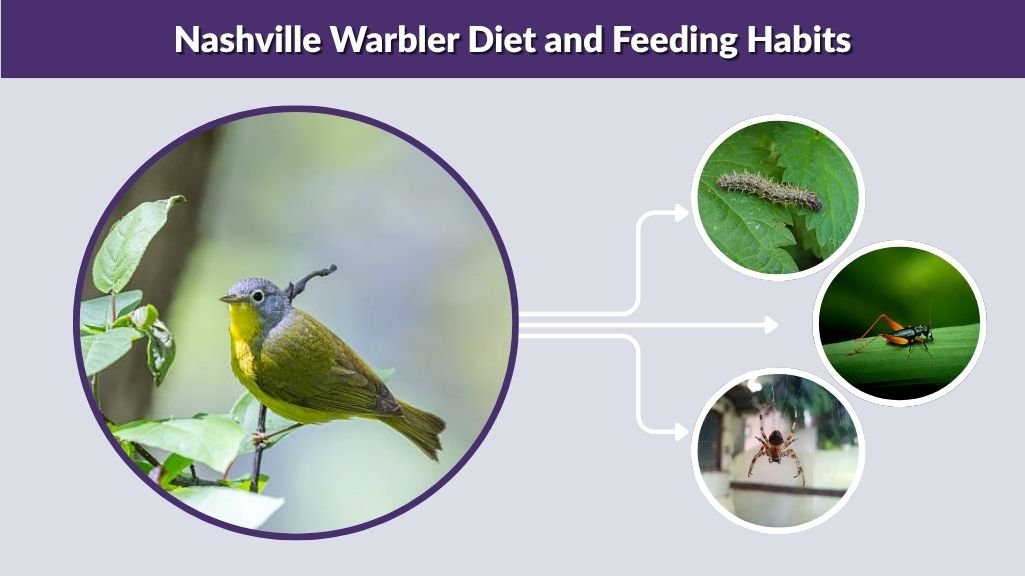
Nashville warblers feed mainly on insects and other small invertebrates found in vegetation and forest habitats.
What Do Nashville Warblers Eat?
- Caterpillars
- Small insects
- Spiders
- Tiny flying insects
Feeding Behavior
Nashville warblers move actively through branches and leaves while searching for insects hidden among vegetation.
Seasonal Diet Changes
Food choices may vary during migration and winter depending on insect availability and environmental conditions.
Drinking Nectar From Flowers
These birds occasionally drink nectar from flowers, especially during migration when additional energy sources become important.
Nashville Warbler Nesting and Breeding
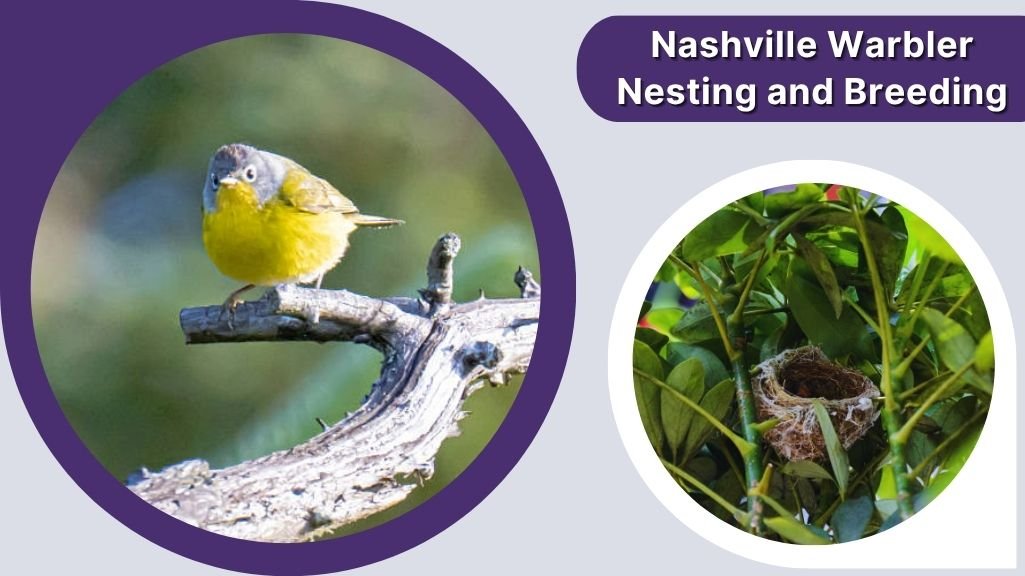
Nashville warblers build hidden nests and carefully raise chicks during the breeding season in northern forest habitats.
Nashville Warbler Nest Locations
Nests are often built close to the ground in dense vegetation, shrubs, moss, or hidden forest areas.
Nashville Warbler Eggs
- Small speckled eggs
- Several eggs per clutch
- Well-hidden nests
- Camouflaged appearance
Breeding Season
Breeding usually begins during late spring when food becomes abundant and migration is complete.
Chicks and Fledglings
Both parents help feed chicks until young birds develop strong flight abilities and leave the nest independently.
Nashville Warbler Migration
Nashville warblers are long-distance migratory birds that travel between northern breeding grounds and warmer winter habitats each year.
Nashville Warbler Migration Routes
These birds migrate across large areas of North America using woodland habitats, river corridors, and stopover feeding locations.
Nashville Warbler Flyway
- Spring northward migration
- Fall southward migration
- Forest migration routes
- Seasonal stopover habitats
Wintering Areas in Mexico and Central America
Many Nashville warblers spend winter in Mexico and Central America where warmer temperatures support insect populations year-round.
Migration Timing in Spring and Fall
Spring migration usually occurs earlier than fall migration as birds travel north to establish breeding territories.
Nashville Warbler vs Similar Species
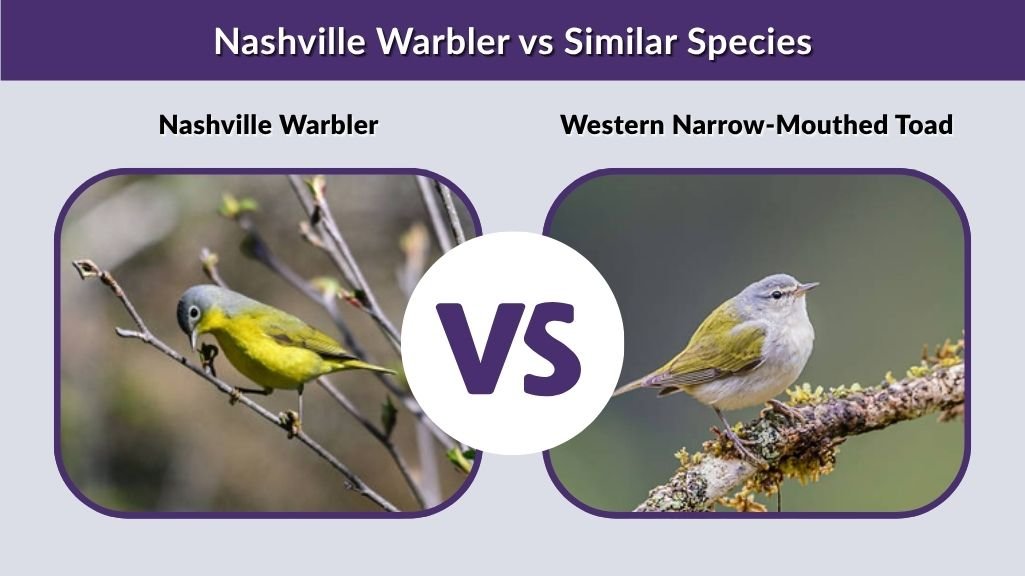
Several warbler species resemble the Nashville warbler, especially during migration when plumage colors become less distinct.
Nashville Warbler vs Tennessee Warbler
Tennessee warblers usually have thinner bills, less noticeable eye rings, and greener upperparts compared to Nashville warblers.
Nashville Warbler vs Connecticut Warbler
- Connecticut warblers larger
- Stronger eye ring appearance
- Different habitat preferences
- Longer tail shape
Nashville Warbler vs Orange-Crowned Warbler
Orange-crowned warblers often appear duller and lack the clean white eye ring common in Nashville warblers.
Nashville Warbler vs Common Yellowthroat
Common yellowthroats usually show stronger facial masks and prefer marshy habitats instead of woodland environments.
Nashville Warbler Behavior
Nashville warblers are energetic birds that constantly move through shrubs and branches while searching for food.
Feeding and Foraging Behavior
They search leaves and small branches carefully while hopping quickly through dense vegetation.
Flocking During Migration
- Mixed-species flocks
- Woodland feeding groups
- Temporary migration gatherings
- Increased social activity
Territorial Habits
Breeding males defend territories using songs and displays to warn away competing birds.
Flight Style and Wing Movement
Their flight is quick and active with short bursts between trees, shrubs, and feeding locations.
Nashville Warbler Male and Female Differences
Male and female Nashville warblers look very similar, although subtle differences may appear during breeding season.
Plumage Differences
Males may show brighter yellow coloring and slightly stronger gray head patterns compared to females.
Behavior Differences
- Males sing more frequently
- Females spend more time nesting
- Both parents feed chicks
- Territorial defense mostly by males
Breeding Season Appearance
During breeding season, males often appear brighter and more active while defending territories.
Why Identification Can Be Difficult
Both sexes share similar body shape, eye rings, and coloration, making accurate identification challenging.
Are Nashville Warblers Rare?
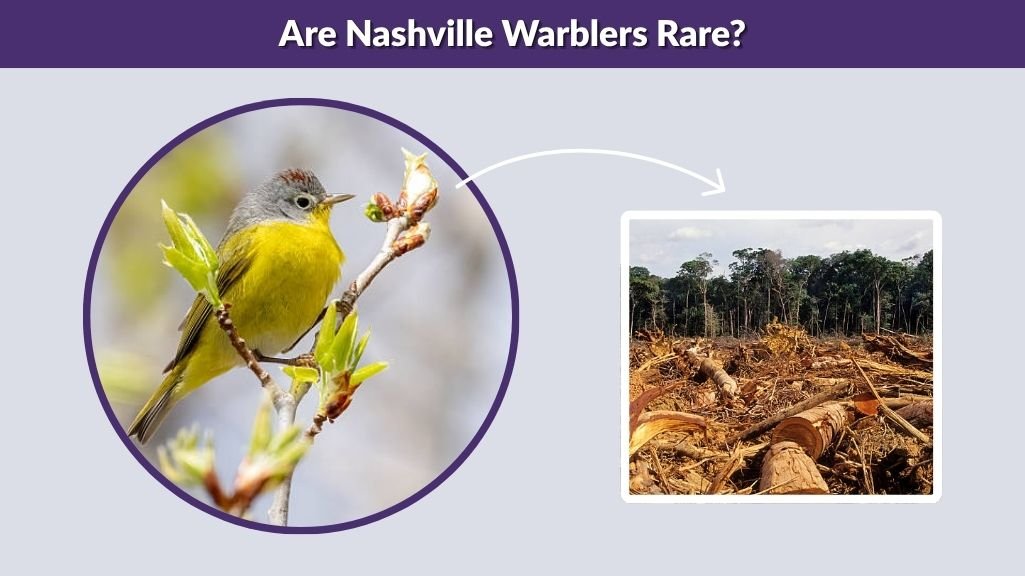
Nashville warblers are generally not considered rare, although sightings depend heavily on migration season and habitat quality.
Population Trends
Many populations remain stable where healthy forest habitats continue to provide food and nesting areas.
Habitat Threats
- Forest destruction
- Habitat fragmentation
- Climate change effects
- Reduced insect populations
Conservation Status
The species currently maintains widespread populations across much of its breeding and migration range.
Birdwatching Importance
Birdwatchers value Nashville warblers because of their colorful appearance, migration behavior, and pleasant songs.
Interesting Facts About Nashville Warblers
Nashville warblers have several unique behaviors and characteristics that make them interesting to birdwatchers.
They Sometimes Drink Flower Nectar
These birds occasionally feed on nectar during migration to gain additional energy for long flights.
They Build Hidden Ground Nests
- Nests hidden in vegetation
- Ground-level nesting sites
- Moss-lined nest cups
- Well-camouflaged eggs
They Migrate Long Distances
Nashville warblers travel thousands of miles each year between breeding and wintering grounds.
Their Eye Ring Helps Identification
The bright white eye ring is one of the most useful field marks for identifying Nashville warblers.
FAQs
What does a Nashville warbler look like?
Nashville warblers are small birds with yellow underparts, gray heads, olive backs, and a noticeable white eye ring.
What does a Nashville warbler eat?
They mainly eat insects, caterpillars, spiders, and other small invertebrates found in trees and shrubs.
How can you identify a Nashville warbler?
Look for a small active bird with yellow underparts, gray head coloring, and a bright white eye ring.
Do Nashville warblers migrate?
Yes, Nashville warblers migrate long distances between North American breeding grounds and warmer winter habitats.
What is the difference between a Nashville warbler and a Tennessee warbler?
Nashville warblers usually have stronger eye rings and brighter yellow coloring, while Tennessee warblers appear greener and slimmer.