A newborn Mallard duck is a small, fluffy waterbird that begins exploring its surroundings shortly after hatching. Recognized by its yellow and brown down feathers, tiny bill, and active behavior, this young duck depends on its mother for warmth, protection, and guidance. Mallard ducklings develop quickly, learning to swim, search for food, and avoid predators during their first weeks of life. Understanding what newborn Mallard ducks look like, what they eat, and how they grow helps explain their fascinating early development.
What Does a Newborn Mallard Duck Look Like?
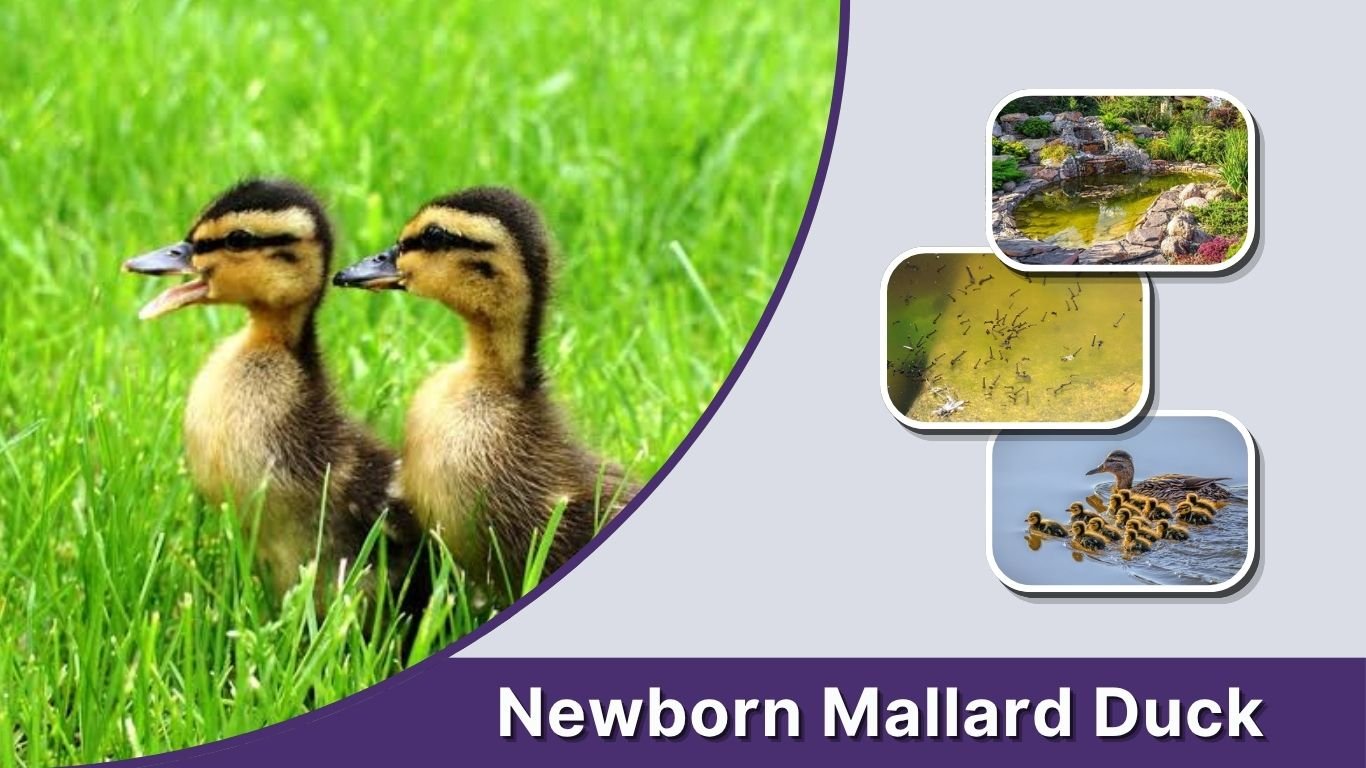
Newborn Mallard ducks are covered in soft, fluffy down rather than mature feathers. Their bodies usually have a combination of yellow, cream, and brown markings that provide natural camouflage in grassy and wetland environments. They hatch with their eyes open and can move around almost immediately.
Newborn Mallard Duck Identification
- Common Name: Mallard duckling
- Scientific Name: Anas platyrhynchos
- Body Color: Yellow, cream, and brown.
- Feathers: Soft, fluffy down covering the entire body.
- Bill: Small, short, and usually dark gray or brown.
- Eyes: Open at hatching, with dark-colored eyes.
- Feet: Small, webbed feet adapted for swimming.
- Body Shape: Compact, rounded, and lightweight.
- Behavior: Active, curious, and capable of walking shortly after hatching.
What Color Are Newborn Mallard Ducks?
Newborn Mallard ducklings usually have yellow or cream-colored undersides with brown or olive-colored markings along their backs and heads. Many have distinctive dark stripes running through their eyes and down the sides of their bodies.
These markings help them blend into vegetation and muddy surroundings, reducing their visibility to predators. Their coloring gradually changes as they grow and develop their juvenile feathers.
What Do Newborn Mallard Ducks Eat?
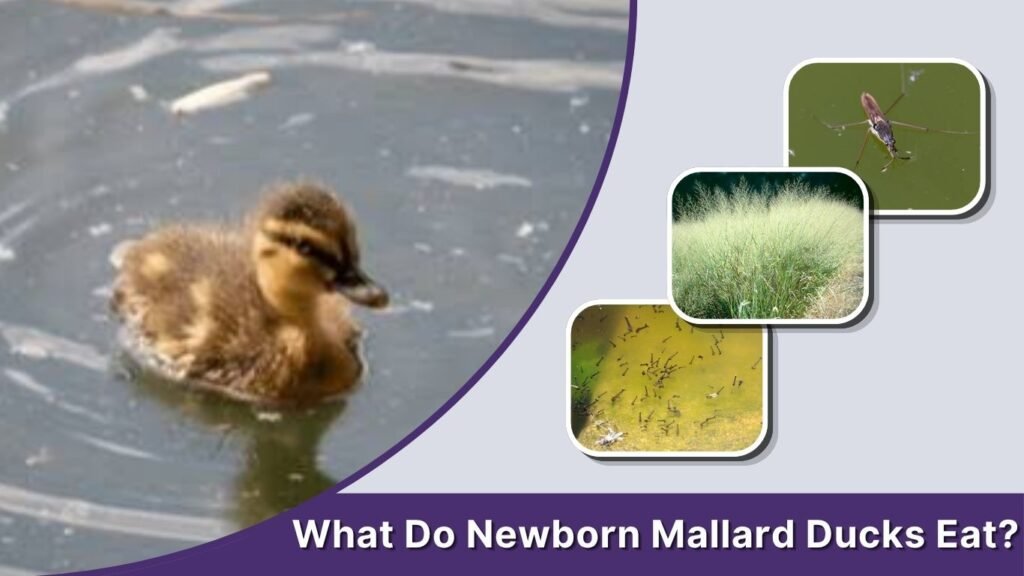
Newborn Mallard ducks are capable of finding and eating food shortly after hatching. Unlike many baby birds, they do not depend on their parents to place food directly into their mouths. Instead, the mother leads them to suitable feeding areas where they can search for small insects, aquatic organisms, and plant material.
Natural Foods of Newborn Mallard Ducks
- Aquatic insects: Small insects and their larvae provide important protein for growing ducklings.
- Mosquito larvae: These tiny aquatic organisms are commonly found in shallow water.
- Small crustaceans: Tiny freshwater crustaceans provide additional nutrients.
- Worms: Small earthworms and other soft-bodied invertebrates can become part of their diet.
- Seeds: Small seeds from grasses and wetland plants provide energy.
- Aquatic vegetation: Young ducklings gradually consume more plant material as they develop.
- Small invertebrates: Snails and other tiny aquatic animals may also be eaten.
Do Mother Mallard Ducks Feed Their Babies?
Mother Mallard ducks do not normally feed their babies directly. Instead, they lead their ducklings to shallow water, muddy areas, and vegetation where food is available.
The mother also teaches them where to search for food and helps protect them from predators. Ducklings follow her closely, learning to forage independently while staying near their family.
What Should Newborn Mallard Ducks Not Eat?
Bread, chips, crackers, sweets, and other processed human foods are unsuitable for newborn Mallard ducks. These foods do not provide the balanced nutrition required for healthy growth.
Wild ducklings should generally be left with their mother rather than hand-fed. If a duckling is genuinely orphaned or injured, contact a wildlife rehabilitator for species-appropriate feeding instructions.
Where Do Newborn Mallard Ducks Live?
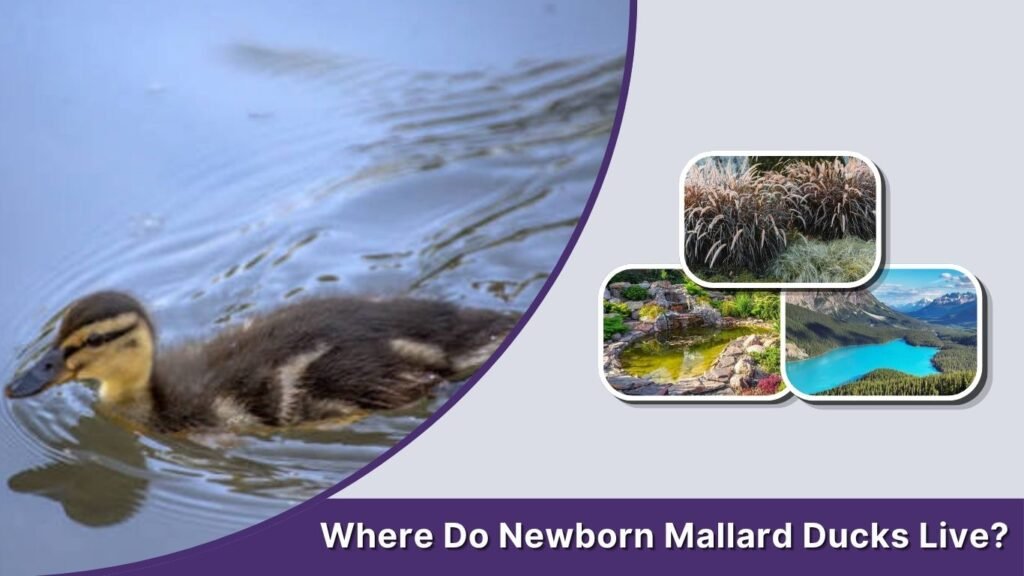
Newborn Mallard ducks typically begin life in a nest located on the ground, often hidden among grasses, shrubs, or other vegetation. Although adult Mallards spend considerable time in water, females usually choose nesting locations on dry land near wetlands, ponds, lakes, or other suitable feeding habitats.
Mallard Duck Nesting and Hatching
Female Mallards build shallow nests using nearby grasses, leaves, and other vegetation. They also use soft down feathers to line the nest and provide insulation for their eggs.
After approximately 23–30 days of incubation, the eggs hatch. The newly emerged ducklings are covered in down, have open eyes, and are ready to move around shortly afterward.
Once the eggs have hatched, the mother leads her young away from the nest toward a nearby water source, where they begin feeding.
Natural Habitat of Newborn Mallard Ducks
Mallard ducklings commonly live in habitats that provide shallow water, vegetation, and plenty of natural food.
Marshes, ponds, lakes, wetlands, and slow-moving waterways are particularly suitable. These environments offer aquatic insects, seeds, small invertebrates, and hiding places that help young ducklings survive.
How Do Newborn Mallard Ducks Grow?
Mallard ducklings develop rapidly during their first several weeks. They begin walking and swimming shortly after hatching, gradually becoming stronger and more independent. Their mother remains nearby, helping them locate food and protecting them from predators until they are capable of surviving with less assistance.
1. First Day After Hatching
During their first day, newborn Mallard ducklings leave the nest with their mother. They can walk, swim, and begin searching for food almost immediately.
They stay close to their mother and siblings, often gathering together when resting or moving through unfamiliar surroundings.
2. First Two Weeks
During the first two weeks, ducklings become more coordinated and active. They spend considerable time feeding, swimming, exploring vegetation, and resting.
Their bodies grow quickly, and their down gradually becomes thicker as they develop.
3. Three to Four Weeks
By approximately three to four weeks, Mallard ducklings are noticeably larger and stronger. Their juvenile feathers begin developing, gradually replacing the soft down covering their bodies.
They become more confident swimmers and improve their ability to find food independently.
4. Six to Eight Weeks
During this stage, young Mallards develop more mature feathers and stronger flight muscles. Their wing feathers continue growing, and they begin practicing movements that prepare them for flight.
Many Mallard ducklings become capable of flying at approximately 52–60 days after hatching.
How to Care for a Newborn Mallard Duck
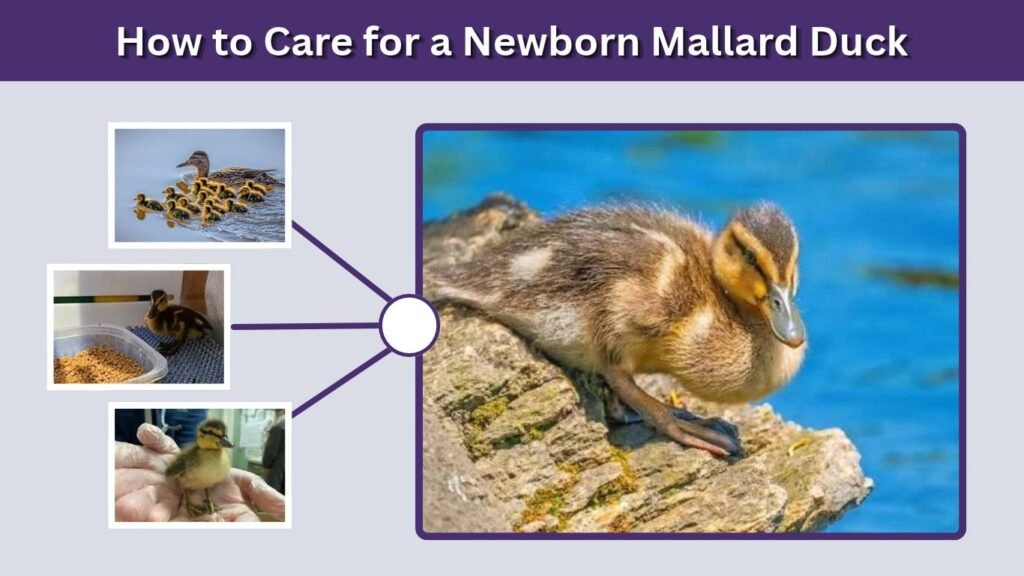
Newborn Mallard ducks are wild animals that normally receive everything they need from their mother and natural environment. If you find one alone, it does not necessarily mean it has been abandoned. The mother may be nearby searching for food or avoiding people.
Keep Ducklings With Their Mother
Whenever possible, allow newborn Mallard ducks to remain with their mother. She provides warmth, protection, guidance, and access to suitable feeding areas.
Keep pets and unnecessary human activity away from the family. Avoid capturing or moving healthy ducklings unless there is an immediate safety concern.
Provide Help for an Orphaned Duckling
If a duckling is visibly injured, cold, weak, or separated from its family, contact a licensed wildlife rehabilitator. Avoid attempting to raise a wild Mallard yourself.
If professional advice is not immediately available, keep the duckling in a ventilated container in a warm, quiet, and dark location while arranging help. Do not force food or water into its mouth.
Avoid Unsafe Water and Feeding
Although Mallard ducklings naturally swim soon after hatching, an isolated or weakened duckling can become chilled or drown in unsuitable water containers.
Do not place a rescued duckling in a deep container of water or attempt to feed it bread, milk, or other household foods. Follow the rehabilitator’s instructions for temporary care and feeding.
FAQs
1. What do newborn Mallard ducks look like?
Newborn Mallard ducks have soft yellow, cream, and brown down feathers, small dark bills, open eyes, and webbed feet. Many have dark markings around their eyes and along their backs, which help them blend into natural surroundings.
2. What do newborn Mallard ducks eat?
Newborn Mallard ducks primarily eat small aquatic insects, insect larvae, tiny crustaceans, worms, and other invertebrates. They also gradually consume seeds and aquatic vegetation as they grow.
3. How soon can newborn Mallard ducks swim?
Mallard ducklings can swim shortly after hatching. They are naturally equipped with webbed feet and waterproofing that develops through maternal care and preening. They usually begin swimming with their mother during their first day of life.
4. How long do newborn Mallard ducks stay with their mother?
Young Mallard ducks generally remain with their mother until they develop enough strength and flight ability to become independent. This usually takes approximately six to eight weeks, although development varies with environmental conditions.
5. When do newborn Mallard ducks start flying?
Mallard ducklings generally begin flying at approximately 52–60 days after hatching. Before this stage, they gradually develop their flight feathers, strengthen their wings, and practice movements needed for flight.