
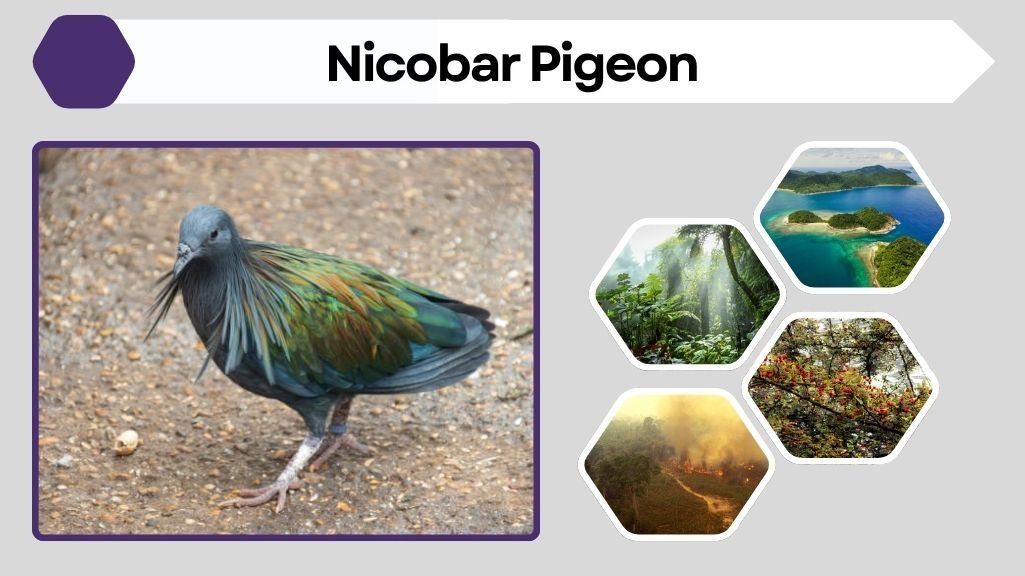
The Nicobar pigeon is one of the most colorful and fascinating birds found in tropical island regions of Asia. Known for its shimmering metallic feathers and striking appearance, this rare pigeon attracts bird lovers, wildlife photographers, and researchers from around the world.
What makes the Nicobar pigeon even more interesting is its close evolutionary connection to the extinct dodo bird. From its unique behavior to its island habitat, the Nicobar pigeon remains one of the most remarkable pigeon species living today.
What Is a Nicobar Pigeon?
The Nicobar pigeon is a large and colorful bird species native to island forests and coastal regions in Southeast Asia. It belongs to the pigeon and dove family but looks far more exotic than ordinary city pigeons. Scientists consider it the closest living relative of the extinct dodo bird, which gives the species special importance in evolutionary studies.
Nicobar Pigeon Scientific Name
The scientific name of the Nicobar pigeon is Caloenas nicobarica. It belongs to the Columbidae family, which includes pigeons and doves. The species is named after the Nicobar Islands, where many of these birds are commonly found.
Physical Characteristics of the Nicobar Pigeon
The Nicobar pigeon is famous for its brilliant appearance and unique body structure.
- Metallic green and blue feathers
- Long neck hackles with shiny reflections
- White tail feathers
- Strong gray beak
- Bright red legs and feet
- Compact but muscular body
Nicobar Pigeon Size and Weight
Compared to ordinary pigeons, the Nicobar pigeon is larger and heavier. Adult birds can grow up to 40 centimeters in length and usually weigh between 450 and 600 grams. Their broad wings help them travel long distances between islands and coastal forests.
Nicobar Pigeon Habitat and Distribution
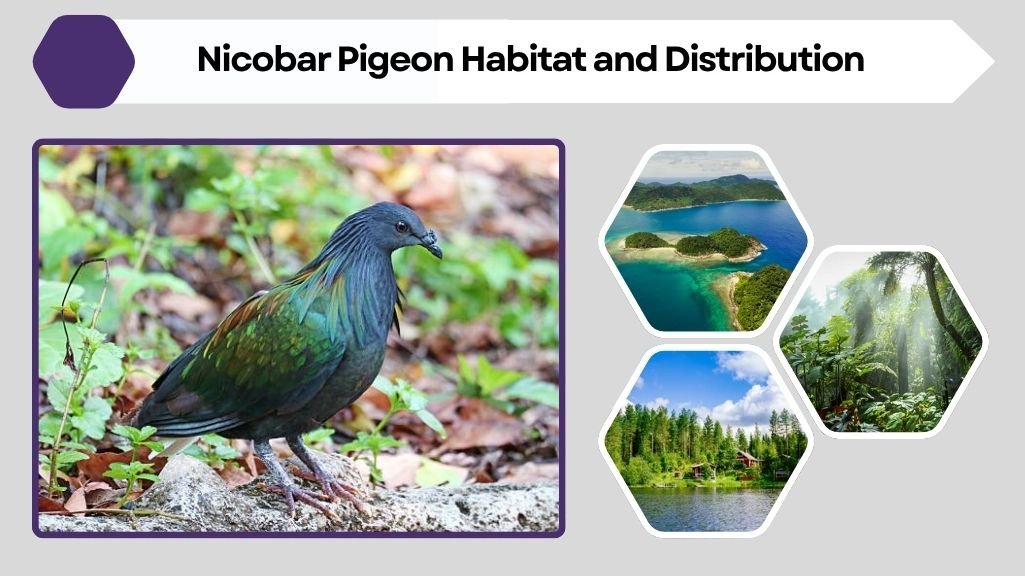
The Nicobar pigeon mainly lives in tropical island environments where dense forests and coastal vegetation provide food and protection. These birds prefer isolated islands because such places reduce the risk of predators and human disturbance.
They are usually seen resting in mangroves, forest edges, and small offshore islands during the day. At dawn and dusk, the birds often travel in groups while searching for food. Their natural distribution covers several countries across Southeast Asia, making them an important species in the region’s biodiversity.
Where Do Nicobar Pigeons Live?
The natural range of the Nicobar pigeon includes many tropical islands and coastal regions.
- Andaman and Nicobar Islands
- Indonesia
- Philippines
- Papua New Guinea
- Solomon Islands
- Myanmar coastal regions
Nicobar Pigeon Biome
These birds survive best in warm tropical environments with dense vegetation.
- Tropical rainforests
- Mangrove forests
- Coastal woodlands
- Small offshore islands
- Humid island ecosystems
Nicobar Pigeon Appearance and Colors
The Nicobar pigeon is widely considered one of the most beautiful pigeon species in the world. Its body shines with metallic colors that change under sunlight, creating a rainbow-like effect. This stunning appearance helps the bird stand out among other tropical birds.
Unlike ordinary pigeons, the Nicobar pigeon has long glossy feathers hanging around its neck like decorative strands. Its elegant color combination and smooth flying style make it highly admired by birdwatchers and photographers.
Why Is the Nicobar Pigeon So Colorful?
The colorful appearance of the Nicobar pigeon comes from the microscopic structure of its feathers. Light reflects from the feather surface and creates iridescent shades of green, blue, bronze, and purple. This natural effect gives the bird its famous rainbow-like glow.
The metallic feathers also play a role in communication and attraction during breeding seasons. Brighter birds are often more attractive to potential mates in the wild.
Male vs Female Nicobar Pigeon
| Feature | Male | Female |
| Body Size | Slightly larger | Slightly smaller |
| Feather Shine | More vibrant | Less bright |
| Neck Feathers | Longer | Shorter |
| Behavior | More territorial | Calmer nature |
Can Nicobar Pigeons Fly?
Yes, Nicobar pigeons are strong and capable flyers. Although they spend much of their time on the ground searching for food, they can travel long distances between islands. Their powerful wings allow them to cross open sea areas while moving between feeding and nesting sites.
These birds usually fly in groups, especially during early morning and evening hours. Their flight is fast, direct, and well suited for island survival.
Nicobar Pigeon Diet and Feeding Habits
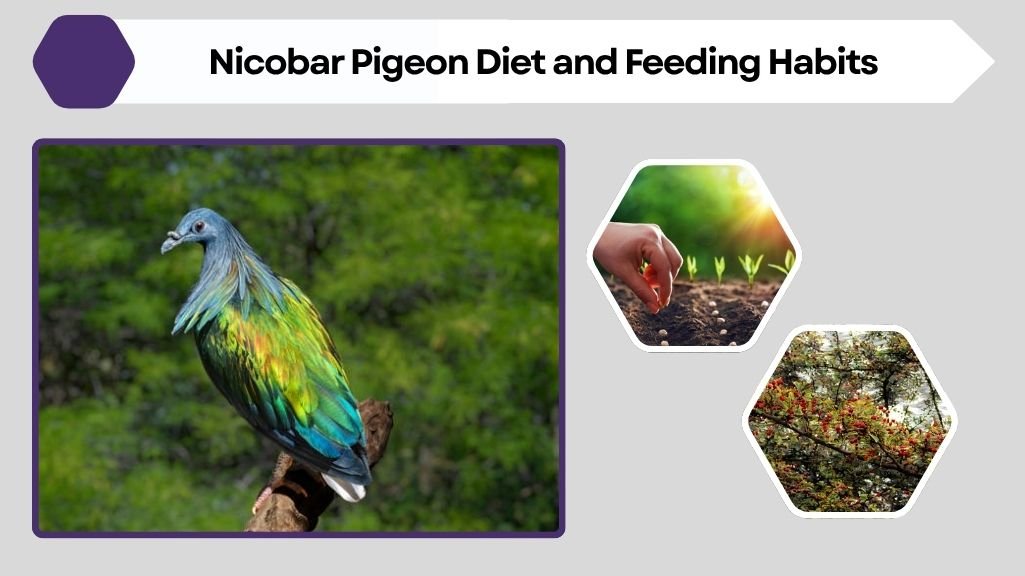
The Nicobar pigeon spends much of its time searching for food on the forest floor. Like many island birds, it plays an important role in spreading seeds and maintaining the balance of tropical ecosystems. Its strong beak and digestive system allow it to consume a wide variety of natural foods.
These pigeons usually feed during cooler parts of the day and travel in small flocks while foraging. Their feeding behavior is calm and highly organized, helping them avoid predators in open areas.
What Does the Nicobar Pigeon Eat?
The Nicobar pigeon has a varied diet that changes depending on seasonal food availability.
- Seeds
- Fallen fruits
- Berries
- Small insects
- Grains
- Forest nuts
Nicobar Pigeon Gizzard Stones
One unusual feature of the Nicobar pigeon is its use of gizzard stones. Like many birds, it swallows small stones that help grind hard food materials inside its digestive system. These stones improve digestion and allow the bird to process seeds and nuts more efficiently.
In some regions, Nicobar pigeon gizzard stones became famous for their use in jewelry and decorative items. This demand unfortunately increased hunting pressure on the species in certain areas.
Nicobar Pigeon Breeding and Life Cycle
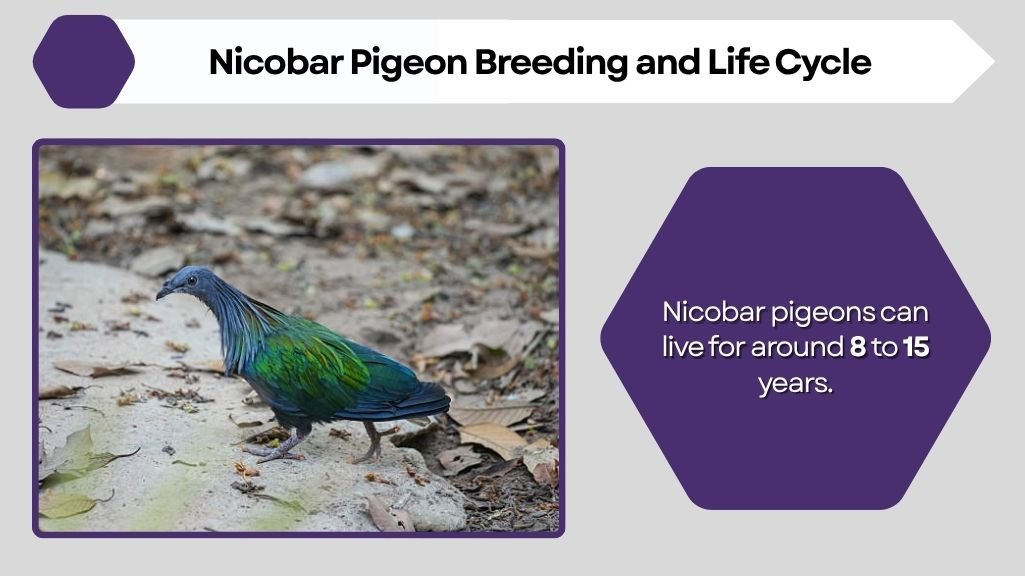
The breeding behavior of the Nicobar pigeon is both fascinating and highly protective. These birds usually nest on isolated islands where predators are less common. During breeding season, pairs remain close together and share parenting duties.
Their nesting sites are often hidden among trees or dense coastal vegetation. Both parents participate in caring for the chick, which increases the survival chances of the young bird in the wild.
Nicobar Pigeon Breeding Behavior
Several behaviors are commonly observed during the breeding season.
- Courtship displays with feather spreading
- Pair bonding between male and female
- Nest building in trees
- Shared incubation duties
- Protective parenting behavior
Nicobar Pigeon Eggs and Chicks
Female Nicobar pigeons usually lay one or two eggs during each breeding cycle. The eggs are smooth, pale, and carefully protected by both parents. After incubation, the chicks hatch with soft down feathers and depend entirely on their parents for warmth and food.
Young Nicobar pigeons grow steadily and develop their colorful feathers as they mature. It may take several months before juveniles fully resemble adult birds.
Nicobar Pigeon Lifespan
In the wild, Nicobar pigeons can live for around 8 to 15 years depending on habitat conditions and predator threats. Birds living in protected environments or zoos may survive even longer because they receive regular food and veterinary care.
Habitat destruction and illegal hunting remain major challenges that can reduce their lifespan in natural ecosystems.
Nicobar Pigeon and the Dodo Connection
One reason the Nicobar pigeon receives so much scientific attention is its relationship with the extinct dodo bird. Researchers believe the Nicobar pigeon is the closest living relative of the dodo, which disappeared centuries ago from Mauritius.
This connection helps scientists study how island birds evolved over time. By examining the Nicobar pigeon’s anatomy and genetics, researchers can better understand the life and evolution of the dodo bird.
Similarities Between the Dodo and Nicobar Pigeon
| Feature | Dodo Bird | Nicobar Pigeon |
| Bird Family | Columbidae | Columbidae |
| Island Habitat | Yes | Yes |
| Strong Ground Behavior | Yes | Moderate |
| Colorful Feathers | Limited evidence | Highly colorful |
| Living Status | Extinct | Living species |
Why Scientists Study the Nicobar Pigeon
Scientists continue studying the Nicobar pigeon for several important reasons.
- Understanding dodo evolution
- Learning about island adaptation
- Researching bird migration
- Protecting endangered species
- Studying tropical ecosystems
Is the Nicobar Pigeon Endangered?
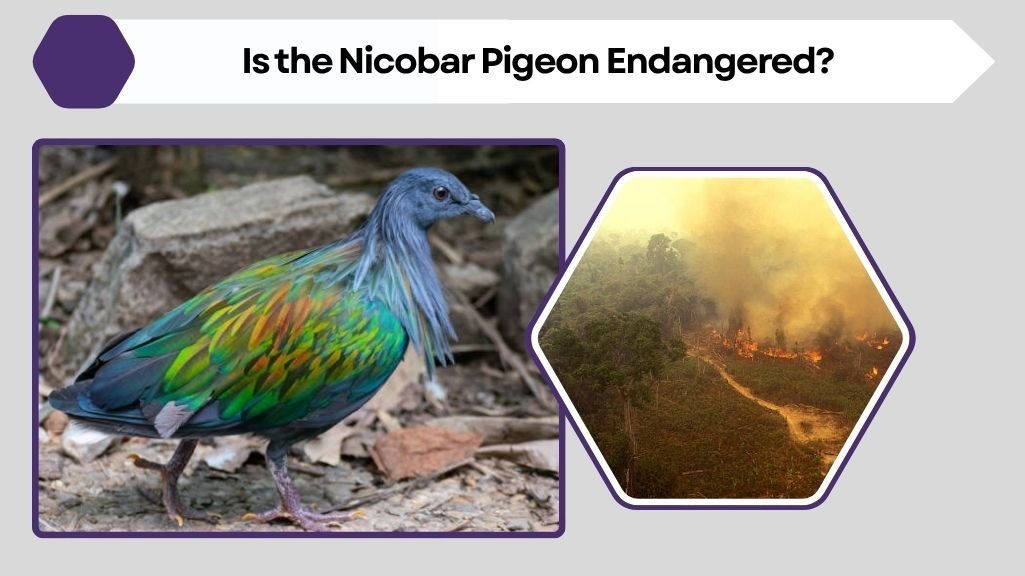
The Nicobar pigeon is currently considered a near-threatened species because of habitat destruction, hunting, and illegal wildlife trade. Many island forests are shrinking due to human activity, reducing safe nesting and feeding areas for the birds.
Conservation organizations are working to protect important habitats and prevent illegal hunting. Several zoos and wildlife programs also support captive breeding efforts to help maintain healthy populations.
Threats to the Nicobar Pigeon
The species faces several dangers in the wild.
- Habitat loss
- Illegal hunting
- Pet trade demand
- Coastal development
- Natural predators
- Climate change impacts
Interesting Facts About the Nicobar Pigeon
The Nicobar pigeon is one of the most unique tropical birds on Earth. Its appearance, behavior, and evolutionary history make it a favorite among bird enthusiasts and wildlife researchers.
Amazing Nicobar Pigeon Facts
- Closest living relative of the dodo bird
- Can fly long distances between islands
- Has metallic rainbow-colored feathers
- Uses gizzard stones for digestion
- Lives mostly on remote tropical islands
- Plays a role in forest seed dispersal
FAQs
Is the Nicobar pigeon extinct?
No, the Nicobar pigeon is not extinct. However, it is considered a near-threatened species due to habitat loss, hunting, and illegal wildlife trade. Conservation efforts are helping protect remaining populations in Southeast Asia and island habitats.
Are Nicobar pigeons dangerous?
Nicobar pigeons are not dangerous to humans. They are generally shy, peaceful birds that avoid confrontation. In the wild, they prefer escaping from threats rather than attacking or defending aggressively.
Can the Nicobar pigeon fly long distances?
Yes, Nicobar pigeons are strong flyers capable of traveling between islands and coastal forests. Their powerful wings help them cross sea channels while searching for food and nesting locations.
Why is the Nicobar pigeon related to the dodo?
Scientists discovered through genetic research that the Nicobar pigeon shares a close evolutionary relationship with the extinct dodo bird. Both species belong to the same bird family called Columbidae.
Can people legally own a Nicobar pigeon?
Ownership laws vary by country. In many places, special permits are required because the bird is protected under wildlife conservation regulations. Ethical concerns also discourage private ownership of rare wild species.