
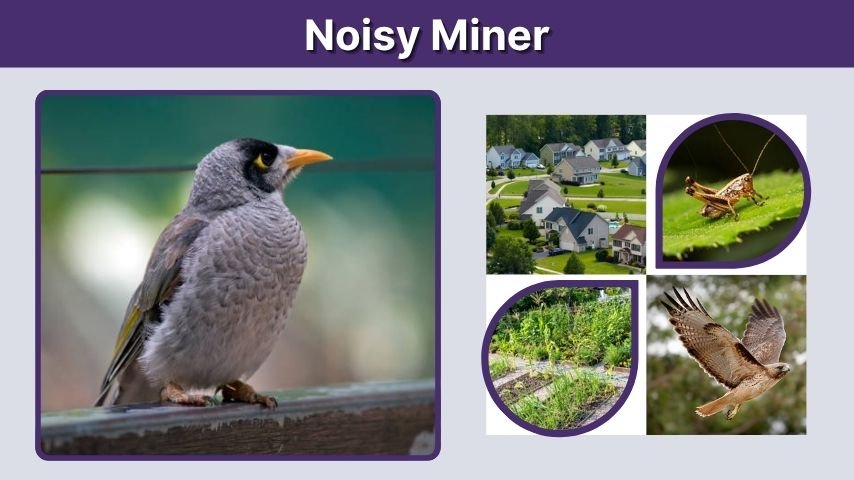
The noisy miner is a highly social Australian bird known for its loud calls and aggressive territorial behavior. Often seen in parks, gardens, and suburban areas, this native honeyeater bird quickly attracts attention with its constant chatter and bold personality. Noisy miners usually live in groups and actively defend their territory from other birds.
Many people search for noisy miner facts because these birds are common in Australian neighborhoods and are famous for swooping and noisy communication. From their diet and nesting habits to their habitat and social behavior, noisy miners are fascinating birds with unique survival skills.
What Is a Noisy Miner?
The noisy miner is a medium-sized native Australian bird belonging to the honeyeater family. It is widely recognized for its loud vocalizations, strong group behavior, and aggressive defense of feeding areas. Unlike the introduced Indian myna bird, the noisy miner is naturally found throughout eastern Australia and plays an important role in local ecosystems.
Scientific Classification
- Scientific name: Manorina melanocephala
- Family: Meliphagidae
- Bird type: Honeyeater
- Native region: Australia
- Common habitat: Urban and woodland areas
Why Is It Called a Noisy Miner?
- Constant loud calls
- Social group communication
- Alarm warning sounds
- Repeated vocal chatter
- Active territorial behavior
Noisy Miner vs Indian Myna
| Feature | Noisy Miner | Indian Myna |
| Native Status | Native Australian bird | Introduced species |
| Main Color | Gray with yellow markings | Brown with black head |
| Bird Family | Honeyeater | Starling family |
| Behavior | Territorial colonies | Urban scavenger |
Noisy Miner Identification
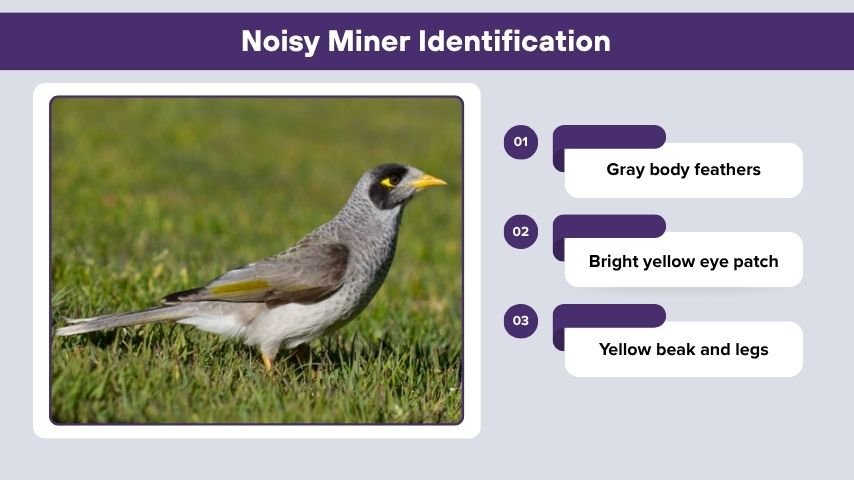
Noisy miners are easy to identify because of their gray feathers, yellow eye patches, and noisy group behavior. They are commonly seen hopping on lawns, perching in trees, or chasing away smaller birds from feeding areas.
Physical Appearance
- Gray body feathers
- Bright yellow eye patch
- Yellow beak and legs
- White wing markings
- Slim body shape
Noisy Miner Size and Wingspan
Adult noisy miners usually measure around 9 to 11 inches in length. Their wingspan is moderate compared to many garden birds, allowing them to fly quickly between trees and open grassy areas.
Juvenile vs Adult Noisy Miner
| Feature | Juvenile | Adult |
| Feather Color | Softer gray tones | Brighter markings |
| Vocal Sounds | Quieter calls | Loud chatter |
| Behavior | More dependent | Strongly territorial |
| Eye Markings | Less visible | Bright yellow patch |
Noisy Miner Habitat and Distribution
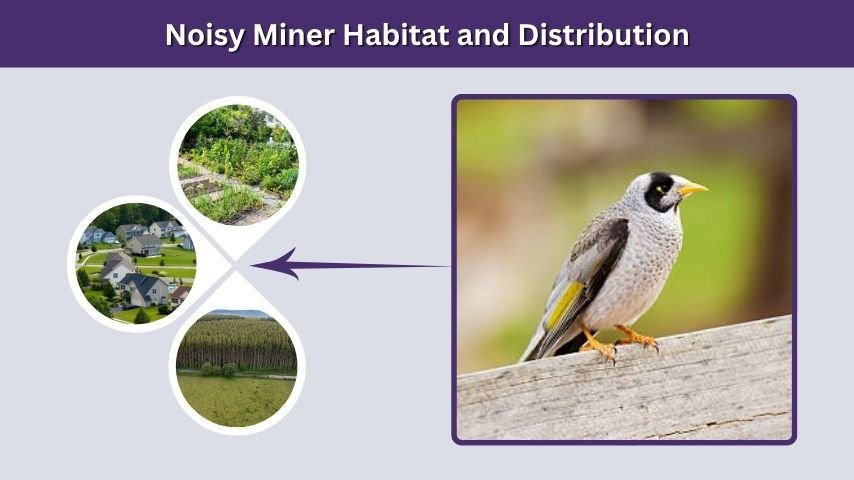
Noisy miners thrive in open forests, suburban gardens, parks, and urban environments across eastern Australia. They prefer areas with scattered trees and open grassy spaces where food is easy to find. Human development has actually helped noisy miners expand into many suburban neighborhoods.
Where Do Noisy Miners Live?
- Eastern Australia
- Parks and gardens
- Residential suburbs
- Open eucalyptus forests
- Woodland edges
Preferred Habitat
Noisy miners prefer habitats with open ground and trees that provide nesting sites and food. They often avoid dense forests because open spaces allow them to spot predators and defend territory more effectively.
Are Noisy Miners Native to Australia?
Yes, noisy miners are completely native to Australia. They are one of the country’s most common urban birds and are especially widespread in eastern and southeastern regions.
Noisy Miner Diet and Feeding Habits
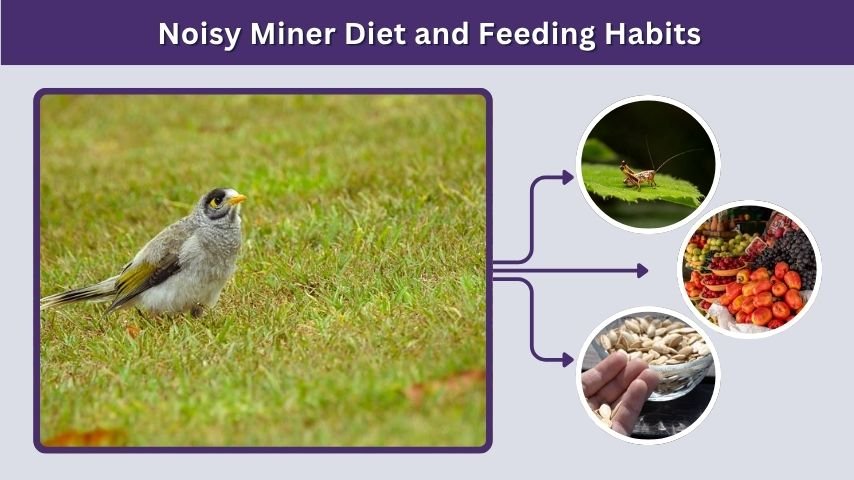
Noisy miners are omnivorous birds that feed on nectar, insects, fruits, and small invertebrates. Their flexible diet helps them survive in both natural and urban environments. They are often seen searching for food in flowering trees and grassy areas.
What Do Noisy Miner Birds Eat?
- Nectar from flowers
- Insects
- Fruits
- Seeds
- Spiders and small invertebrates
Feeding Behavior
- Feed in trees and shrubs
- Search lawns for insects
- Visit flowering plants
- Often feed in groups
- Defend feeding territories
Baby Noisy Miner Diet
Young noisy miners mostly eat insects and protein-rich foods provided by adult birds. Parents frequently feed chicks small insects, nectar, and softened food until they are old enough to forage independently.
Noisy Miner Behavior and Sounds
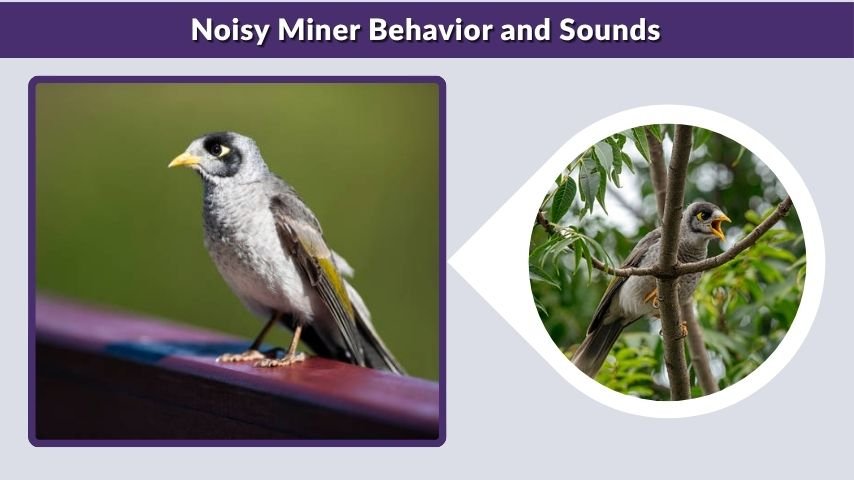
Noisy miners are among the loudest and most aggressive suburban birds in Australia. They constantly communicate with one another using calls, warning sounds, and alarm signals. Their group behavior helps them protect nests and feeding territories from predators and rival birds.
Noisy Miner Bird Sounds
Noisy miners produce a wide range of loud chatter calls, whistles, and warning noises. Their calls are often heard throughout the day in parks and residential areas where groups remain active together.
Why Do Noisy Miners Swoop?
Noisy miners swoop mainly to defend their nests, chicks, and feeding territories. During breeding season, they may aggressively chase away larger birds, pets, and even humans that enter their territory.
Social Behavior
- Live in large social colonies
- Cooperate to defend territory
- Chase away smaller birds
- Warn each other about predators
- Work together during nesting season
Noisy Miner Nesting and Reproduction
Noisy miners build nests in trees and shrubs where chicks can remain protected from predators. Breeding pairs are often supported by other colony members, creating a cooperative social system. Their nesting behavior is one reason these birds are so protective and noisy during breeding season.
Noisy Miner Nest Construction
- Cup-shaped nests
- Built with twigs and grass
- Soft lining inside the nest
- Hidden among branches
- Usually placed in trees or shrubs
Noisy Miner Eggs and Chicks
Female noisy miners usually lay two to four eggs. The eggs are pale with reddish or brown spots. After hatching, chicks rely on adults for warmth and food while growing feathers and learning to fly.
Baby Noisy Miner Care
Adult birds carefully feed and protect baby noisy miners. Young fledglings often remain close to adults after leaving the nest and continue learning survival skills from colony members.
Noisy Miner Predators and Threats
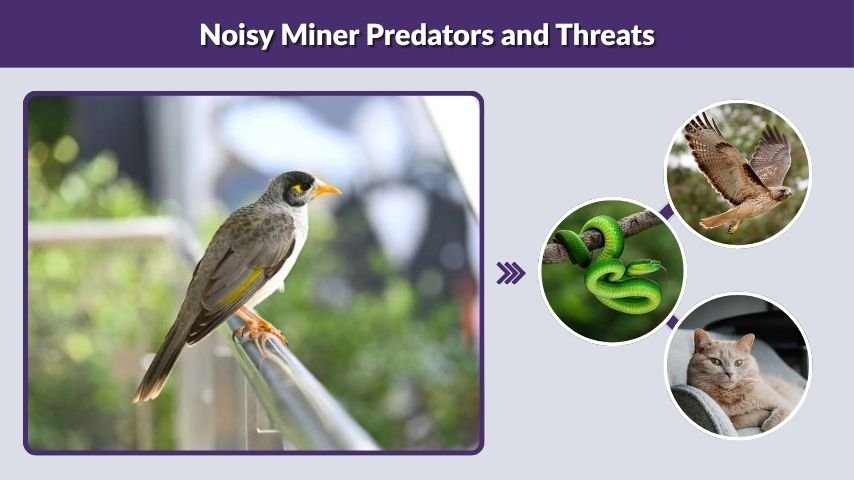
Although noisy miners are aggressive birds, they still face threats from predators and environmental dangers. Eggs and young chicks are especially vulnerable to attacks from larger animals and birds.
Natural Predators
- Hawks
- Snakes
- Cats
- Larger birds
- Monitor lizards
Human-Related Threats
Urban hazards such as cars, windows, and habitat clearing can injure noisy miners or reduce nesting areas. Domestic pets also pose risks to chicks and fledglings in suburban neighborhoods.
Are Noisy Miner Birds a Pest?
Noisy miners are sometimes considered pests because they aggressively chase away smaller native birds. In some areas, their dominance can reduce local bird diversity by preventing other species from feeding or nesting nearby.
How to Deter Noisy Miner Birds
Some people look for ways to reduce noisy miner activity around homes and gardens because of their loud calls and territorial behavior. Humane methods are the safest and most effective approach.
How to Stop Noisy Miner Swooping
- Avoid active nesting areas
- Wear a hat outdoors
- Do not approach nests
- Keep pets away from colonies
- Reduce food scraps around homes
How to Get Rid of Noisy Miner Birds Humanely
Dense shrubs and native plants can encourage more balanced bird populations. Creating habitats for smaller birds may help reduce the dominance of noisy miner colonies naturally.
Protecting Smaller Birds
Gardens with thick vegetation provide hiding places for smaller birds that noisy miners often target. Native flowering plants can also attract a wider variety of bird species.
Interesting Noisy Miner Facts
Noisy miners are highly intelligent and social birds that communicate constantly with colony members. Their teamwork and aggressive behavior make them one of Australia’s most successful urban birds.
Fun Facts About Noisy Miners
- They belong to the honeyeater family
- Groups may contain dozens of birds
- They aggressively defend territory
- Noisy miners communicate with many different calls
- They adapt very well to suburban environments
- Young birds stay with colonies after fledging
- They often dominate bird feeders and gardens
Noisy Miner Symbolism and Meaning
In bird symbolism, noisy miners are often connected with communication, alertness, and social cooperation. Their constant vocal behavior and group protection habits give them a strong association with teamwork and awareness.
Spiritual Meaning
Some people view noisy miners as symbols of:
- Communication
- Community strength
- Alertness
- Protection
- Cooperation
Noisy Miners in Australian Culture
Noisy miners are familiar birds throughout Australia and are often recognized for their loud calls in suburban neighborhoods. Birdwatchers frequently study their unusual social structure and territorial behavior.
FAQs
What do noisy miner birds eat?
Noisy miners eat nectar, insects, fruits, seeds, and small invertebrates. They often feed in flowering trees, gardens, and grassy areas.
Are noisy miners native to Australia?
Yes, noisy miners are native Australian birds commonly found in eastern and southeastern parts of the country.
Why do noisy miners swoop?
They swoop mainly to protect nests, chicks, and feeding territories from predators or intruders during breeding season.
How do you deter noisy miner birds?
Humane methods such as planting dense shrubs, avoiding nests, and reducing food sources can help discourage noisy miner activity.
Are noisy miner birds aggressive?
Yes, noisy miners are highly territorial birds known for aggressively chasing away smaller birds and defending their colonies.
