
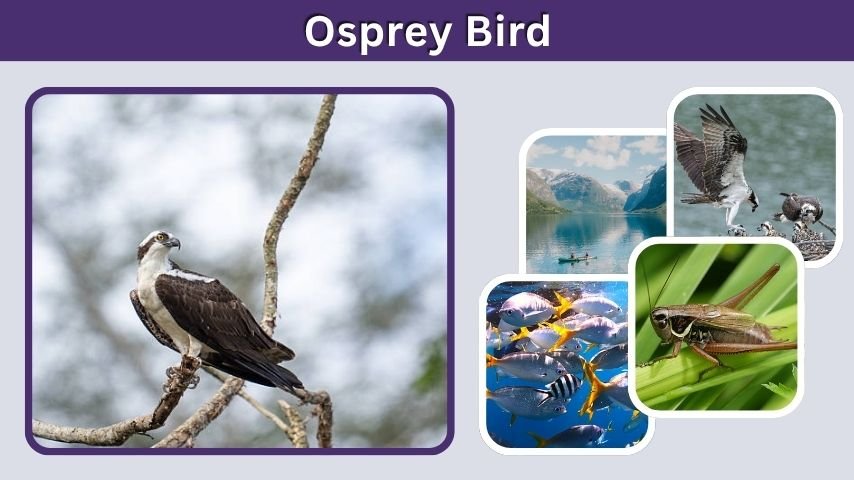
The osprey bird is one of the most skilled fish hunters in the bird world. Often called the fish hawk or sea hawk, this powerful raptor is famous for diving feet-first into water to catch fish. With its white head, dark eye stripe, long wings, and sharp talons, the osprey is easy to recognize near lakes, rivers, wetlands, and coastlines. This article explains its habitat, diet, hunting style, nesting behavior, migration, and interesting facts.
What Is an Osprey Bird?
The osprey is a large bird of prey that belongs to its own bird family. Unlike many raptors that eat different kinds of animals, the osprey is strongly connected to fish and water. Its body, feet, wings, and eyesight are specially adapted for hunting in aquatic environments, making it one of nature’s most efficient fishing birds.
Scientific Identity of the Osprey
The scientific name of the osprey is Pandion haliaetus. It is the only living species in its family, Pandionidae. Although many people call it a hawk, the osprey is not a typical hawk or eagle. It is a unique raptor with special features that separate it from other birds of prey.
Ospreys are found on many continents and are known by several common names. People often call them fish hawks, sea hawks, or river hawks because they spend much of their lives near water and depend mostly on fish for food.
Why the Osprey Is Unique
The osprey is unique because it is almost completely adapted to catching fish. Its long wings help it fly over open water, while its sharp eyes help it spot fish below the surface. Its feet are also unusual because one outer toe can rotate backward, allowing the bird to grip slippery fish with two toes in front and two behind.
How to Identify an Osprey
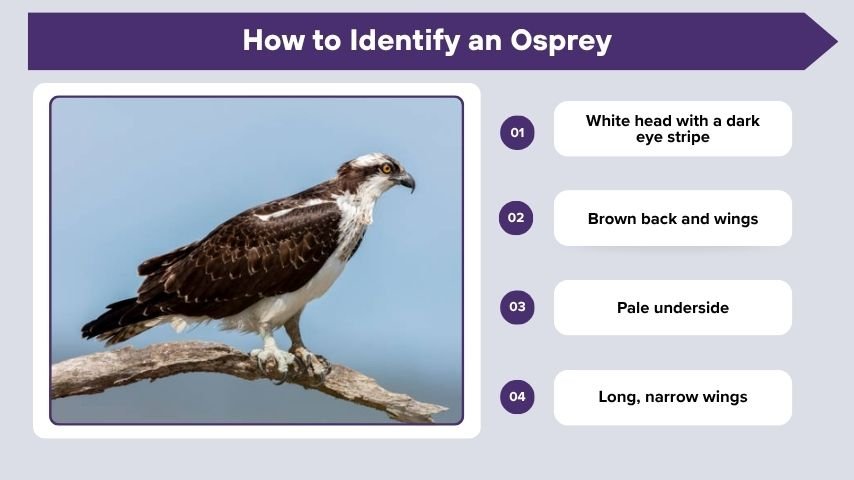
Ospreys have a striking appearance that makes them easier to identify than many other raptors. They are large, long-winged birds with a strong contrast between dark upperparts and pale underparts. Their bold facial markings, hovering flight, and habit of diving into water are some of the best clues for recognizing them in the wild.
Osprey Size and Appearance
An osprey has a slim but powerful body, long wings, and a relatively short tail. Its wings often appear slightly bent when it flies, giving it a distinctive shape in the sky. Adult ospreys usually have brown upperparts, white underparts, and a white head marked with a dark stripe through the eye.
Female ospreys are usually slightly larger than males. They may also have a darker necklace-like pattern across the chest. Young ospreys look similar to adults but often have buff-colored edges on their feathers.
Main Identification Features
Key features of the osprey include:
- White head with a dark eye stripe
- Brown back and wings
- Pale underside
- Long, narrow wings
- Yellow eyes
- Sharp black bill
- Strong curved talons
- Dark patches near the wing joints
These features are especially useful when the bird is seen flying, perched near water, or carrying a fish.
Osprey vs Eagle and Hawk
Ospreys are sometimes confused with eagles or hawks, but they have several differences. Compared with many eagles, ospreys are slimmer and have narrower wings. Bald eagles are larger and heavier, while ospreys are more specialized for catching live fish. Hawks may hunt many types of prey, but ospreys mainly focus on fish.
Osprey Habitat and Distribution
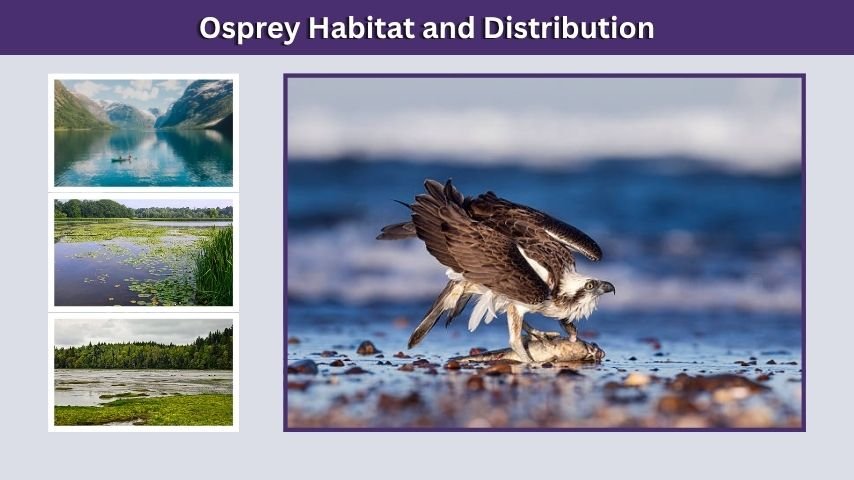
Ospreys live close to water because fish are their main food source. They can survive in many different environments as long as clean water, enough fish, and safe nesting places are available. Their ability to use both natural and human-made nesting sites has helped them live near wild wetlands, coastal areas, reservoirs, and even towns.
Where Ospreys Live
Ospreys are commonly found near:
- Lakes
- Rivers
- Coastlines
- Marshes
- Estuaries
- Reservoirs
- Wetlands
- Bays and islands
They prefer open water where fish are visible from above. Clear or shallow water can make hunting easier, but ospreys can also hunt in deeper coastal waters if fish are near the surface.
Global Range of Ospreys
The osprey has one of the widest ranges of any raptor. It can be found in North America, Europe, parts of Asia, Africa, and Australia. In some places, ospreys stay year-round. In colder regions, they migrate to warmer areas during winter when lakes and rivers freeze or fish become harder to catch.
Their broad distribution shows how adaptable they are, but they still depend heavily on healthy water systems.
Why Water Is Important for Ospreys
Water is essential to osprey survival because fish make up most of their diet. Ospreys usually nest near water so they can hunt efficiently and feed their chicks. If waterways become polluted or fish populations decline, ospreys may struggle to breed successfully.
What Do Ospreys Eat?
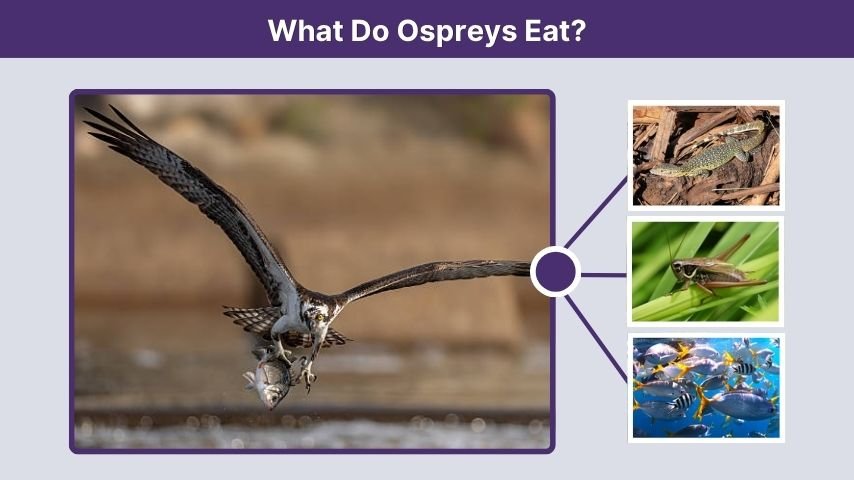
The osprey is one of the most fish-dependent birds of prey in the world. While some raptors hunt mammals, reptiles, insects, and birds, the osprey mainly catches fish. Its hunting style, body shape, feet, and behavior are all designed around finding and gripping fish from the surface of the water.
Main Diet of the Osprey
Fish are the main food of the osprey. They usually catch fish that swim near the surface because these are easier to reach during a dive. The exact species of fish depends on the habitat. Ospreys may catch freshwater fish in lakes and rivers or saltwater fish near coastlines and bays.
Although fish dominate their diet, ospreys may rarely eat small birds, reptiles, amphibians, or mammals. This usually happens when fish are not easily available.
How Ospreys Catch Fish
The osprey’s hunting method is dramatic and easy to recognize. It flies above the water, sometimes hovering in one place while searching below. Once it sees a fish, it folds its wings and dives downward with its feet stretched forward. It then hits the water, grabs the fish with its talons, and uses powerful wingbeats to rise again.
After catching a fish, the osprey often turns it head-first while flying. This reduces air resistance and helps the bird carry its prey more easily.
Special Fishing Adaptations
Ospreys have several adaptations that help them catch fish:
- Reversible outer toe for a stronger grip
- Sharp curved talons
- Rough pads on the feet
- Long wings for hovering and lifting
- Excellent eyesight
- Strong legs
- Dense, oily feathers that help during dives
These adaptations make the osprey one of the best fishing birds in the world.
Osprey Nesting and Breeding Behavior
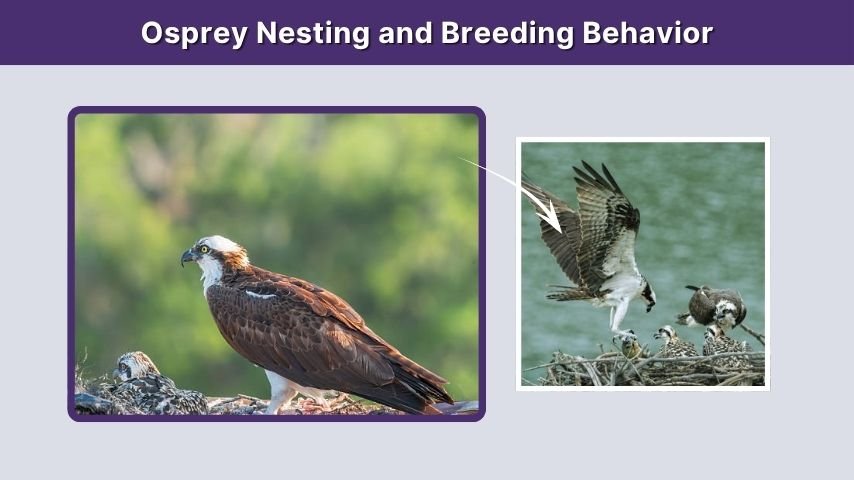
Ospreys are known for their large stick nests, often built high above the ground or water. They prefer open places where they can see danger approaching and fly easily to nearby hunting areas. Many pairs return to the same nest year after year, adding new sticks and materials each breeding season.
Where Ospreys Build Nests
Ospreys build nests in high, open locations such as dead trees, cliffs, utility poles, channel markers, and artificial nesting platforms. They often choose sites near water so they can quickly bring fish back to the nest.
Human-made nesting platforms have helped osprey populations in many areas. These platforms provide safe places to nest, especially where natural nesting trees are limited.
What an Osprey Nest Looks Like
An osprey nest is usually a large pile of sticks, grass, bark, seaweed, and other materials. Over time, the nest can become very large because the same pair may reuse and expand it for many years. Some nests become wide and heavy enough to be seen clearly from far away.
The nest must be strong enough to hold eggs, chicks, and adult birds during the breeding season.
Eggs and Chicks
Female ospreys usually lay two to four eggs. Both parents help protect the nest, but their roles may differ. The male often catches fish and brings food, while the female spends more time incubating eggs and caring for young chicks.
After hatching, osprey chicks are weak and dependent on their parents. They grow quickly on a fish-rich diet and eventually begin flapping, exercising, and learning to fly.
Osprey Migration
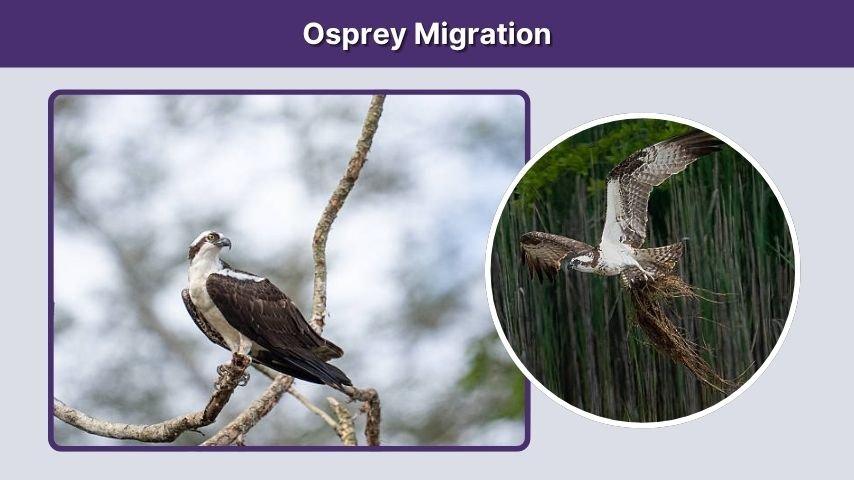
Many ospreys are long-distance migrants. Birds that breed in colder northern regions often travel south for winter, where open water and fish remain available. Migration is one of the most challenging parts of an osprey’s life because it requires strength, navigation skill, and the ability to find food along the journey.
Do All Ospreys Migrate?
Not all ospreys migrate. Some populations live in warm regions where fish are available throughout the year. These birds may stay in the same general area all year. However, ospreys that breed in colder areas usually migrate when winter makes hunting difficult.
Migration depends on climate, food availability, and breeding location.
How Far Ospreys Travel
Some ospreys travel thousands of miles between breeding and wintering areas. For example, birds that breed in North America may migrate to Central or South America. During migration, they follow coastlines, rivers, lakes, and other routes where food is easier to find.
Young ospreys may remain in wintering areas for an extended time before returning north to breed.
Migration Challenges
Ospreys face many dangers during migration, including:
- Storms and strong winds
- Long flights over water
- Food shortages
- Habitat loss
- Collision with structures
- Exhaustion during long journeys
Despite these challenges, many ospreys complete impressive migrations every year.
Interesting Osprey Bird Facts
The osprey is full of fascinating traits that make it different from many other birds. From its fishing skills to its global range, this raptor has earned attention from birdwatchers, researchers, and nature lovers. Its behavior is especially exciting because it often hunts in open areas where people can watch its dives.
Quick Facts About Ospreys
Here are some interesting osprey facts:
- Ospreys are also called fish hawks.
- They eat mostly fish.
- They dive feet-first into water.
- They can rotate one toe backward.
- They often carry fish head-first.
- They build large stick nests.
- They live on several continents.
- Bald eagles sometimes steal fish from them.
- Many ospreys migrate long distances.
Osprey Fact Table
| Feature | Description |
| Common name | Osprey |
| Scientific name | Pandion haliaetus |
| Bird type | Raptor |
| Main food | Fish |
| Habitat | Lakes, rivers, wetlands, and coasts |
| Nickname | Fish hawk or sea hawk |
| Hunting style | Feet-first dive into water |
Why Birdwatchers Love Ospreys
Birdwatchers enjoy watching ospreys because their behavior is active and dramatic. Seeing an osprey hover, dive, splash into water, and rise with a fish is one of the most exciting scenes in birdwatching. Their large nests and repeated use of nesting sites also make them easier to observe during breeding season.
Osprey Conservation and Importance
The osprey is often seen as a conservation success story. In the past, some populations declined because of pollution, pesticides, and habitat damage. Today, many populations have recovered due to stronger environmental protections, cleaner waterways, and artificial nesting platforms. However, ospreys still depend on healthy aquatic ecosystems to survive.
Past Population Declines
Ospreys suffered serious declines in some regions during the twentieth century. One major problem was pesticide pollution, especially chemicals that affected eggshell strength. Thin eggshells broke more easily, causing fewer chicks to survive.
Habitat loss and disturbance near nesting sites also affected osprey breeding success.
Recovery of Ospreys
Osprey recovery became possible after harmful pesticides were restricted and conservation efforts improved. Artificial nesting platforms gave ospreys safe places to breed, especially in areas where natural nest sites were missing. Cleaner waterways also helped fish populations, which supported osprey survival.
Their return to many areas shows how wildlife can recover when people protect habitats and reduce pollution.
Current Threats to Ospreys
Modern ospreys still face threats such as fishing line entanglement, water pollution, habitat loss, and disturbance near nests. Plastic waste and contaminated fish can also create problems. Protecting wetlands, rivers, lakes, and coastlines is important not only for ospreys but also for many other species that depend on healthy water ecosystems.
FAQs
Is an osprey a hawk or an eagle?
An osprey is neither a true hawk nor a true eagle. It is a unique bird of prey in its own family, Pandionidae. However, people often compare it with hawks and eagles because it has sharp talons, strong wings, and powerful hunting behavior.
What does an osprey bird eat?
An osprey mainly eats fish. It hunts by flying over water, spotting fish from above, and diving feet-first to catch prey with its sharp talons. Fish make up most of its diet, although it may rarely eat other small animals.
Where do osprey birds live?
Ospreys live near water, including lakes, rivers, marshes, reservoirs, estuaries, and coastlines. They need places with enough fish and safe nesting sites. They may nest in trees, on cliffs, utility poles, channel markers, or artificial nesting platforms.
Why is the osprey called a fish hawk?
The osprey is called a fish hawk because it hunts and eats mostly fish. Its body is specially adapted for fishing, with sharp talons, rough foot pads, strong wings, and a reversible outer toe that helps it hold slippery prey.
Are osprey birds endangered?
Ospreys are not endangered in many parts of their range today, but they once declined seriously in some areas because of pesticides, pollution, and habitat problems. Conservation work, cleaner waterways, and nesting platforms helped many populations recover successfully.
