
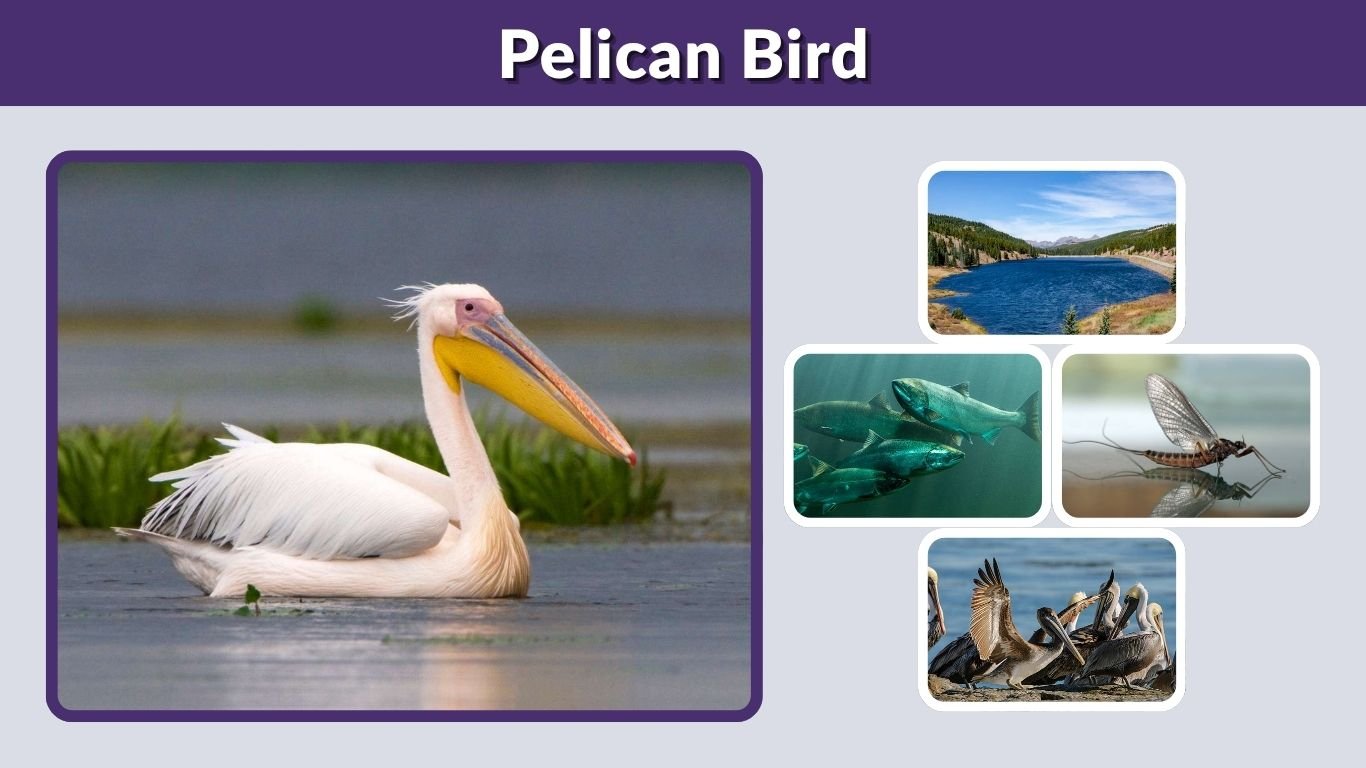
The pelican bird is one of the easiest waterbirds to recognize, thanks to its enormous beak and expandable throat pouch. Pelicans live around lakes, rivers, wetlands, estuaries, and coastlines across many parts of the world. These large birds are skilled fish hunters, powerful fliers, and surprisingly social animals. Species such as the brown pelican, American white pelican, Australian pelican, and great white pelican differ in color, size, habitat, and feeding behavior. Here is everything you need to know about pelican birds, including their diet, beak, habitat, migration, size, and fascinating characteristics.
What Is a Pelican Bird?
A pelican is a large waterbird belonging to the family Pelecanidae and genus Pelecanus. Pelicans are best known for the flexible pouch beneath their long bills, which they use primarily to catch and handle fish.
There are eight living species of pelicans, distributed across warm and temperate regions worldwide. Depending on the species, they may inhabit freshwater lakes, coastal lagoons, rivers, marshes, estuaries, and offshore waters.
Pelican Bird Identification
- Family: Pelecanidae
- Genus: Pelecanus
- Number of living species: 8
- Body: Large and heavy
- Beak: Very long with an expandable throat pouch
- Feet: Fully webbed
- Wings: Broad and powerful
- Diet: Mainly fish
- Habitat: Lakes, rivers, wetlands, estuaries, and coasts
- Colors: White, gray, brown, black, or combinations depending on species
Pelican Bird Types
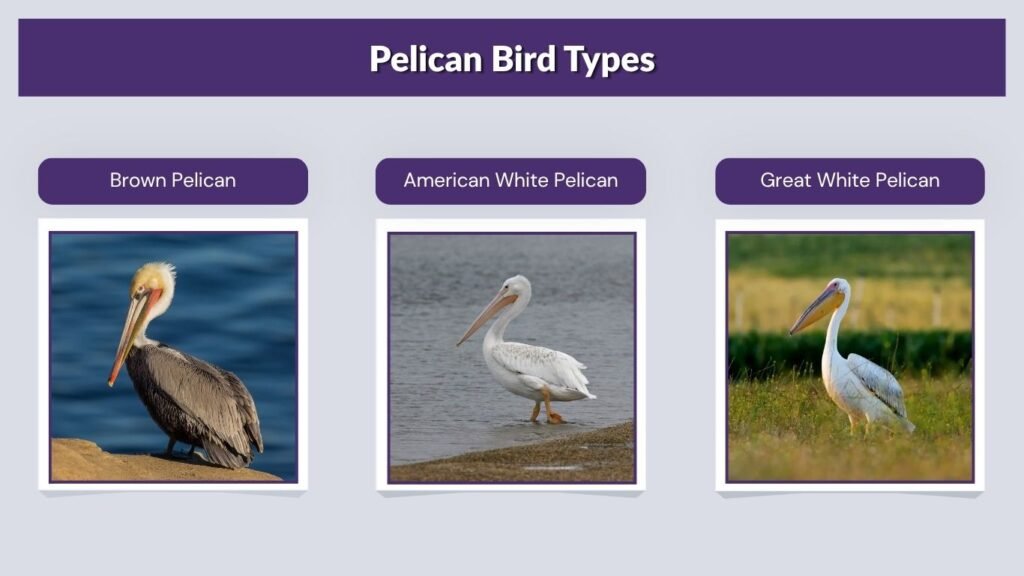
There are several different pelican bird types, ranging from mostly white freshwater species to dark coastal pelicans.
1. Brown Pelican
The brown pelican (Pelecanus occidentalis) is one of the best-known pelican species in North and South America. Unlike many other pelicans, it frequently catches fish by diving headfirst from the air.
Brown pelicans have brownish-gray bodies, pale heads, long bills, and large throat pouches. They are especially common around beaches, bays, coastal islands, and harbors.
2. American White Pelican
The American white pelican (Pelecanus erythrorhynchos) is a huge white bird with black flight feathers and a bright orange bill.
Rather than diving from the air, it normally catches fish while swimming. Groups sometimes cooperate to drive fish into shallow areas before scooping them up.
3. Great White Pelican
The great white pelican is sometimes called the rosy pelican because adults may develop a pale pinkish or rosy appearance.
It is a very large species found across parts of Africa, Europe, and Asia. Great white pelicans often feed cooperatively in lakes and wetlands.
4. Australian Pelican
The Australian pelican is famous for its exceptionally long bill, which is among the longest bills of any living bird.
It occurs throughout Australia and may travel great distances when inland lakes and wetlands fill with water.
Other pelican species include the Dalmatian pelican, pink-backed pelican, spot-billed pelican, and Peruvian pelican.
Pelican Bird Beak and Mouth
The pelican bird beak is one of its most remarkable features. Depending on the species, the bill may measure more than 30 centimeters long, with exceptionally large Australian pelicans having even longer bills.
Attached to the lower bill is an expandable skin pouch called the gular pouch.
What Is the Pelican’s Pouch Used For?
Despite popular belief, pelicans do not normally use their pouch as a permanent storage bag for fish.
Instead, they open their bills while fishing, allowing the pouch to expand and trap fish along with water. The bird then lifts its head, drains the excess water, positions the fish, and swallows it.
The pouch may also help with cooling because its thin skin can release heat.
What Do Pelican Birds Eat?
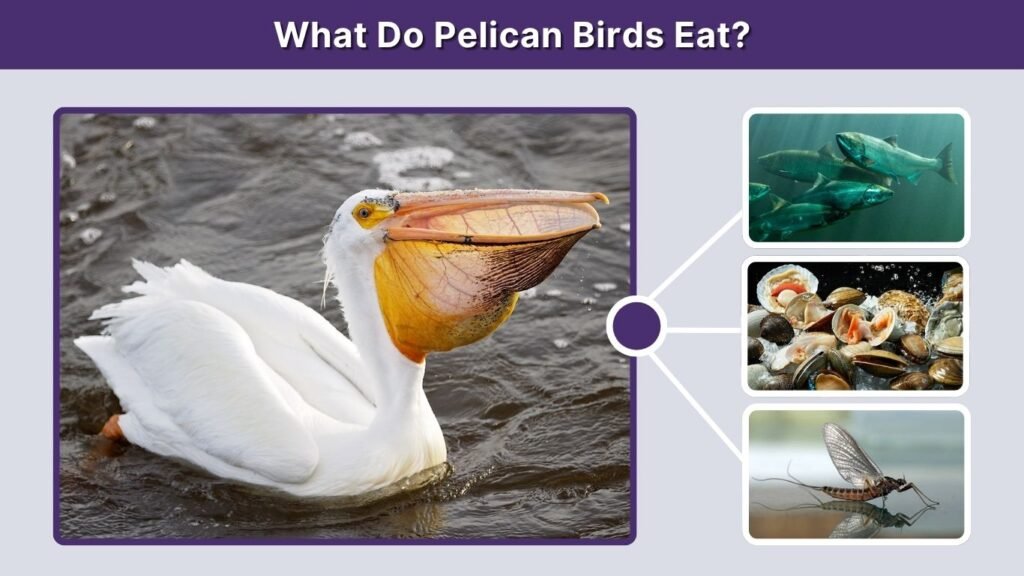
The pelican bird diet consists mainly of fish, although they are opportunistic predators and may eat other animals when available.
Common foods include:
- Fish
- Crustaceans
- Amphibians
- Aquatic insects
- Small reptiles
- Occasionally small birds or other animals
Pelican Bird Eating Fish
Seeing a pelican bird eating fish can be dramatic because the bird may swallow surprisingly large prey whole.
Different species use different hunting techniques. Brown pelicans plunge-dive from the air, while many white pelicans swim at the surface and scoop fish into their pouches.
Groups of pelicans may also work together by forming lines or semicircles and pushing schools of fish toward shallow water.
Pelican Bird Habitat

Pelican bird habitat varies according to species, but nearly all pelicans live close to water.
Typical habitats include freshwater lakes, rivers, marshes, reservoirs, coastal lagoons, estuaries, bays, mangrove areas, and ocean shorelines.
Brown pelicans are strongly associated with marine environments, whereas species such as American white pelicans frequently use large inland lakes during breeding.
Pelicans require areas with reliable food supplies and suitable places for resting and nesting.
Pelican Bird Size and Weight
Pelicans rank among the world’s largest flying waterbirds.
Depending on species and sex, pelicans may measure roughly 1–1.8 meters long and have wingspans exceeding 2–3 meters.
Some of the largest species can weigh more than 10 kilograms.
Why Are Pelicans Such Good Fliers?
A large pelican may appear too heavy for graceful flight, but its broad wings are highly efficient.
Pelicans regularly use rising columns of warm air called thermals. By circling upward in these air currents, they can gain altitude without constantly flapping their wings.
Groups may then glide long distances while conserving energy.
Pelican Bird Migration
Many pelican populations undertake seasonal movements, although migration patterns vary by species and location.
American white pelicans breeding in northern regions commonly migrate south for winter. Some move toward the Gulf Coast, southern United States, Mexico, and Central America.
Australian pelicans can respond dramatically to changing rainfall. When inland lakes suddenly fill after heavy rains, large numbers may travel hundreds or even thousands of kilometers to take advantage of new feeding and breeding opportunities.
Not every pelican population migrates in the same way. Birds in consistently warm areas may remain relatively close to suitable habitats year-round.
Pelican Bird Nest and Reproduction

Pelicans usually breed in colonies, sometimes alongside hundreds or thousands of other birds.
Depending on the species, nests may be constructed on the ground, on islands, in low vegetation, or in trees.
Females generally lay a small clutch of eggs. Both parents may take part in incubation and chick care.
Young pelicans initially depend entirely on their parents for food. Adults feed chicks by regurgitating partly digested food, and older chicks may reach into a parent’s pouch or throat to obtain fish.
What Color Is a Pelican Bird?
There is no single pelican bird color because coloration varies considerably among species.
Brown pelicans are primarily brown, gray, and white, while American white and great white pelicans are predominantly white.
Pink-backed pelicans may have a pale gray-white body with pinkish coloration. Dalmatian pelicans are usually silvery-white or grayish.
Pelicans sometimes appear pink, yellow, red, or orange around the bill, facial skin, pouch, or legs during the breeding season. Therefore, searches for a pink pelican bird, red pelican bird, or yellow pelican bird may sometimes refer to temporary breeding coloration rather than an entirely different species.
Pelican Bird Sounds
Pelicans are generally quieter than many other large birds.
Adult pelicans may produce grunts, hisses, croaks, or low vocalizations, particularly around nesting colonies. Young birds tend to be more vocal and may make repeated calls when begging for food.
Pelicans also communicate through body movements, bill displays, and other visual behaviors.
Interesting Pelican Bird Facts
Pelicans have several fascinating characteristics that make them unique among waterbirds.
- Pelicans have all four toes connected by webbing.
- Their throat pouch is mainly a fishing tool, not a permanent food-storage container.
- Brown pelicans can plunge-dive into the ocean to catch fish.
- Australian pelicans possess exceptionally long bills.
- Pelicans may hunt cooperatively in groups.
- Some species can travel enormous distances during migration.
- Their broad wings allow them to soar efficiently on thermal currents.
- Pelican chicks are fed by their parents for several weeks or months.
- Pelicans occur on every continent except Antarctica.
- The brown pelican is famously associated with Louisiana and appears prominently in the state’s identity.
FAQs
Are Pelican Birds Dangerous to Humans?
Pelicans are generally not aggressive toward humans, but their large bills can cause injury if they feel threatened or are handled. Wild pelicans should be observed from a respectful distance.
Can a Pelican Swallow a Large Fish?
Yes. Pelicans can swallow surprisingly large fish, although extremely large or awkward prey may be difficult to handle. They normally position fish before swallowing them headfirst.
Can Pelicans Fly Long Distances?
Yes. Pelicans are excellent long-distance fliers. Their broad wings allow them to soar on rising air currents and travel while using relatively little energy.
Where Do Brown Pelicans Live?
Brown pelicans occur along coastal areas of the Americas, including the southern United States, Caribbean, Central America, and parts of South America. They are especially associated with warm coastal waters.
What Makes the Pelican Bird Special?
The pelican’s most distinctive feature is its enormous bill and expandable throat pouch. Combined with specialized fishing techniques, webbed feet, powerful wings, and cooperative behavior, these adaptations make pelicans highly successful aquatic birds.
