
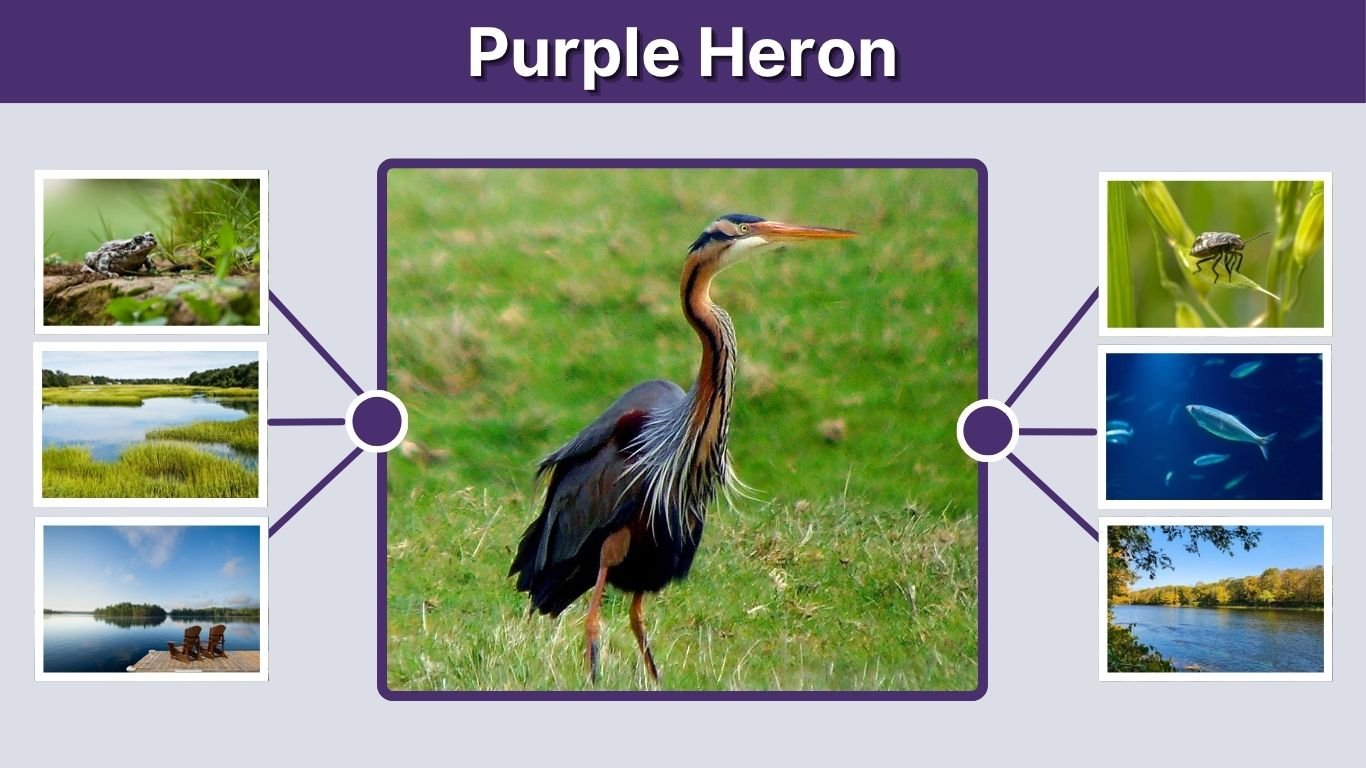
The purple heron (Ardea purpurea) is one of the most elegant and elusive wading birds found across wetlands in Europe, Africa, and Asia. Known for its slender body and striking reddish-purple plumage, it blends effortlessly into dense reeds, making it harder to spot than other herons. This bird fascinates birdwatchers due to its quiet nature, graceful flight, and patient hunting style. Understanding its habitat, diet, and behavior helps reveal why it thrives in some regions while remaining rare in others.
What Is a Purple Heron?
The purple heron is a medium-to-large wading bird belonging to the heron family, Ardeidae. It is specially adapted for life in wetlands, where it hunts and nests in dense vegetation. Compared to more common herons, it is slimmer and more secretive, often staying hidden among reeds for long periods.
Scientific Classification
- Scientific name: Ardea purpurea
- Family: Ardeidae
- Order: Pelecaniformes
Key Identification Features
- Long neck with dark streaks
- Reddish-brown and purple-toned feathers
- Sharp, pointed bill for hunting
- Long legs suited for shallow water
Physical Characteristics of the Purple Heron
The purple heron stands out due to its unique coloration and slender frame. Unlike bulkier herons, it has a more delicate appearance, which helps it move quietly through dense vegetation. Its plumage combines shades of chestnut, grey, and purple, creating a natural camouflage against reeds and marsh plants.
Juvenile Purple Heron
Young purple herons look noticeably different from adults. Their feathers are duller and browner, lacking the rich tones seen in mature birds. As they grow, their markings become more defined, and the characteristic streaks on the neck and body gradually develop.
Purple Heron Habitat and Distribution
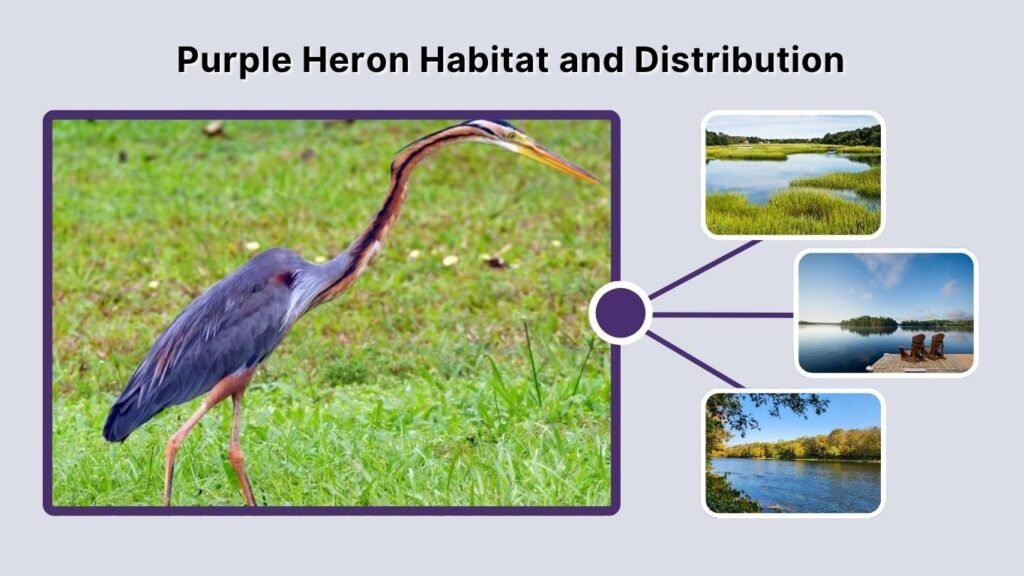
The purple heron thrives in wetland ecosystems where water and dense vegetation are abundant. Its preference for hidden environments makes it less visible than other herons, even in areas where it is relatively common. These habitats provide both food and protection from predators.
Where Does the Purple Heron Live?
- Freshwater marshes and swamps
- Reed beds near lakes and rivers
- Floodplains with slow-moving water
Global Distribution
- Europe: Southern and central regions, with rare sightings in the UK
- Asia: India, Philippines, Singapore, and surrounding areas
- Africa: Widespread, including Madagascar
Behavior and Lifestyle
The purple heron is known for its cautious and solitary nature. It prefers to stay hidden and avoids open spaces whenever possible. Most of its activity takes place during early morning and late evening, when it hunts quietly in shallow water. Its ability to remain motionless for long periods allows it to surprise prey effectively.
Purple Heron Diet
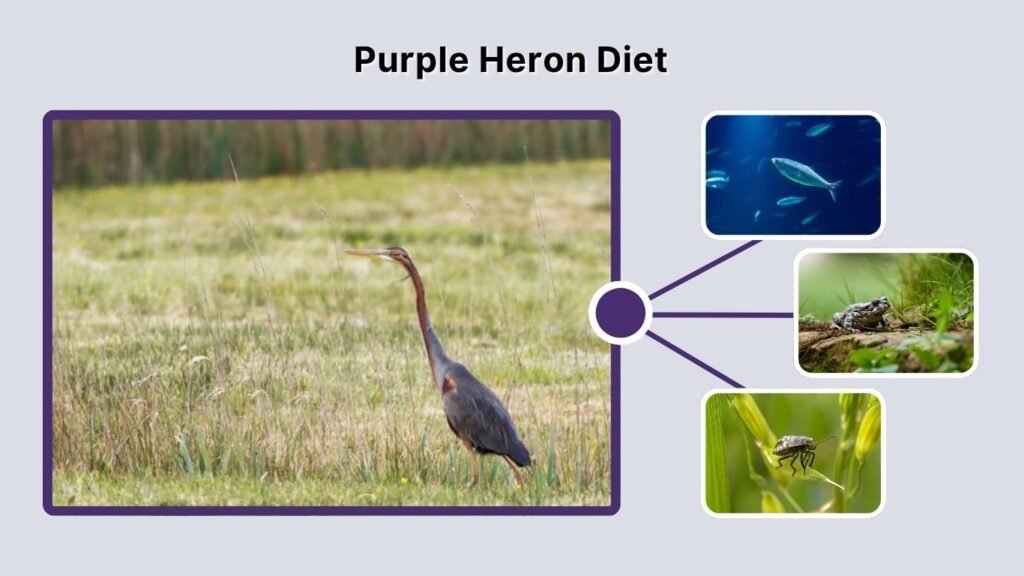
The diet of the purple heron mainly consists of small aquatic animals. Its hunting style is based on patience rather than speed, making it a highly efficient predator in wetland environments.
What Does the Purple Heron Eat?
- Fish, which form the majority of its diet
- Frogs and other amphibians
- Insects and small reptiles
Hunting Technique
The bird stands still in shallow water, carefully watching for movement. Once prey comes within reach, it strikes quickly with its sharp bill. This slow and deliberate approach helps conserve energy while increasing success rates.
Purple Heron in Flight
The flight of the purple heron is both graceful and distinctive. It moves with slow, deep wingbeats and maintains a steady rhythm as it travels across wetlands. Observing it in flight is often easier than spotting it on the ground due to its hidden lifestyle.
Flight Characteristics
- Neck folded into an “S” shape
- Long legs trailing behind
- Smooth and steady wing motion
Identification in Flight
- Slimmer silhouette than grey heron
- Darker body and wings
- More elegant and less bulky appearance
Purple Heron Range and Migration
The purple heron has a wide but uneven distribution, with populations spread across warmer parts of Europe, Africa, and Asia. Its movement patterns depend largely on climate, as birds in colder regions migrate to maintain access to food and suitable nesting sites. Understanding its range helps explain why it is common in some areas yet rare in others.
Migration Patterns
- European populations migrate to Africa during winter
- Birds in tropical regions often remain year-round
- Seasonal travel follows food availability and temperature
Distribution Trends
- Common in warm, wet climates
- Scarce in colder northern regions
- Expanding in some protected wetland areas
Purple Heron vs Grey Heron
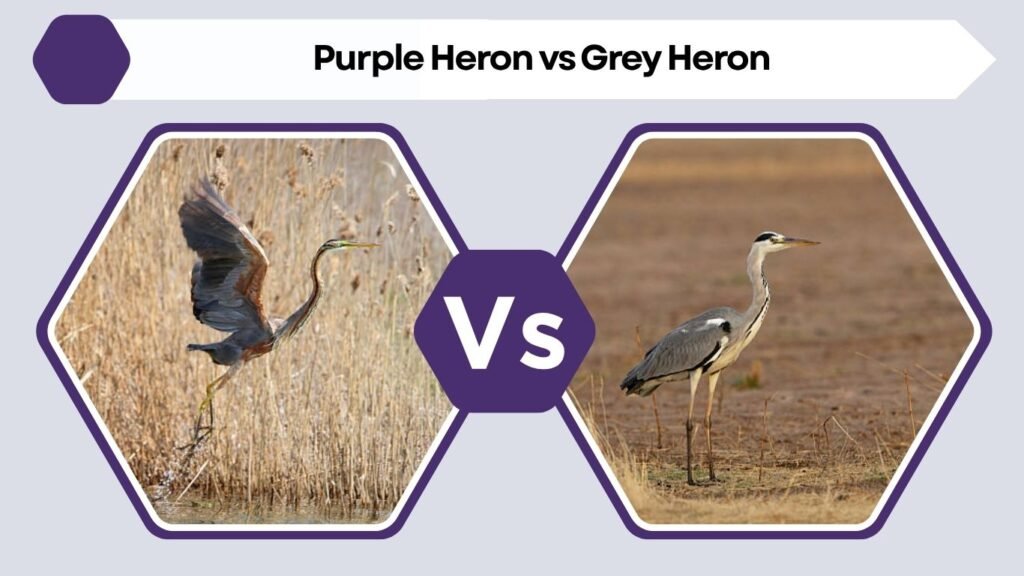
Although both species belong to the same family, the purple heron and grey heron differ significantly in appearance and behavior. These differences are especially noticeable when observing them side by side in similar habitats.
Key Differences
- Purple heron is slimmer with richer coloration
- Grey heron is larger and mostly grey
- Purple heron prefers dense cover, grey heron tolerates open areas
Visibility and Behavior
- Grey herons are easier to spot in open water
- Purple herons remain hidden in reeds
- Hunting styles are similar but differ in location
Purple Heron Around the World
The purple heron’s presence varies widely across continents, with strong populations in tropical and subtropical wetlands. Local conditions such as climate, water availability, and conservation efforts influence how frequently the bird is seen in each region.
Purple Heron in India
India hosts a stable population of purple herons, especially in wetlands, lakes, and riverbanks. The species is relatively easy to spot compared to Europe, as suitable habitats are more widespread.
Purple Heron in the UK
In the UK, the purple heron is considered a rare breeding visitor. Sightings are limited and often attract birdwatchers, particularly during the warmer months when occasional breeding occurs.
Purple Heron in Southeast Asia
In regions like Singapore, Hong Kong, and the Philippines, the bird adapts well to both natural and urban wetlands. Mangroves and reserves provide ideal conditions for feeding and nesting.
Are Purple Herons Rare?
The purple heron is not globally endangered, but its population varies depending on habitat conditions. While it remains common in parts of Africa and Asia, it is less frequently seen in Europe due to habitat loss and climate factors. Conservation of wetlands plays a key role in maintaining healthy populations.
Interesting Purple Heron Facts
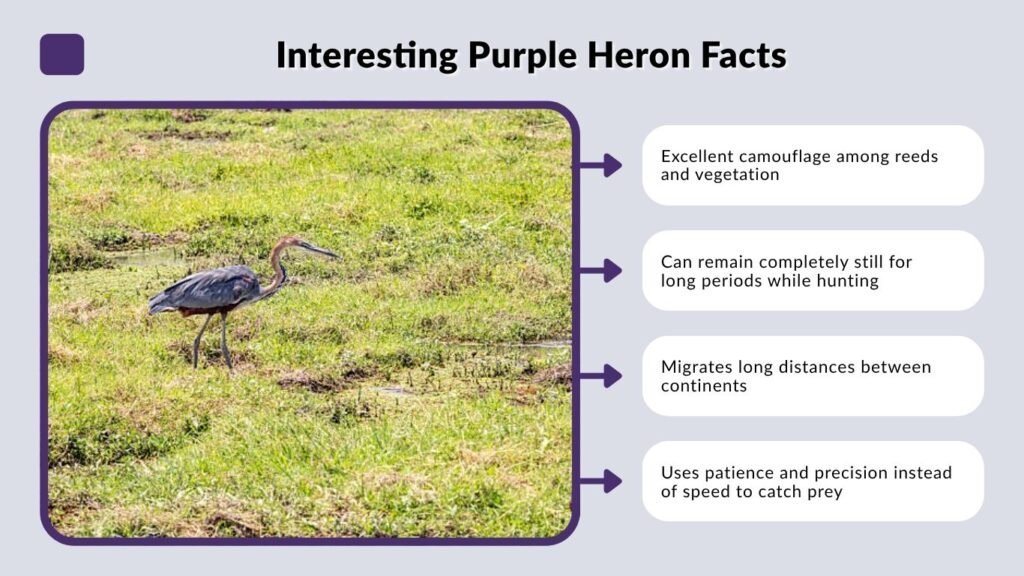
The purple heron is a fascinating species with several unique traits that set it apart from other wading birds. Its behavior and physical adaptations make it highly specialized for life in dense wetland environments.
- Excellent camouflage among reeds and vegetation
- Can remain completely still for long periods while hunting
- Migrates long distances between continents
- Uses patience and precision instead of speed to catch prey
Identification Tips for Birdwatchers
Identifying a purple heron can be challenging due to its secretive nature. However, careful observation of its shape, color, and behavior can make recognition easier, especially when compared to more common heron species.
- Look for a slim body and long neck
- Notice reddish and purple streaks on the plumage
- Observe its preference for dense vegetation
- Compare size and posture with grey herons nearby
FAQs
What is the scientific name of the purple heron?
The scientific name of the purple heron is Ardea purpurea. It belongs to the heron family Ardeidae and is closely related to other wading birds such as the grey heron.
What does a purple heron eat?
Purple herons mainly feed on fish, but they also eat frogs, insects, and small reptiles. Their hunting style involves standing still and striking quickly when prey comes close.
Where can purple herons be found?
They are found across Europe, Africa, and Asia, especially in wetlands like marshes, lakes, and reed beds where food and shelter are readily available.
How is a purple heron different from a grey heron?
Purple herons are slimmer and more colorful, while grey herons are larger and more common. Purple herons also prefer dense vegetation, making them harder to spot.
Are purple herons endangered?
Purple herons are not considered endangered globally, but habitat loss has affected their populations in some regions, highlighting the importance of wetland conservation.
