
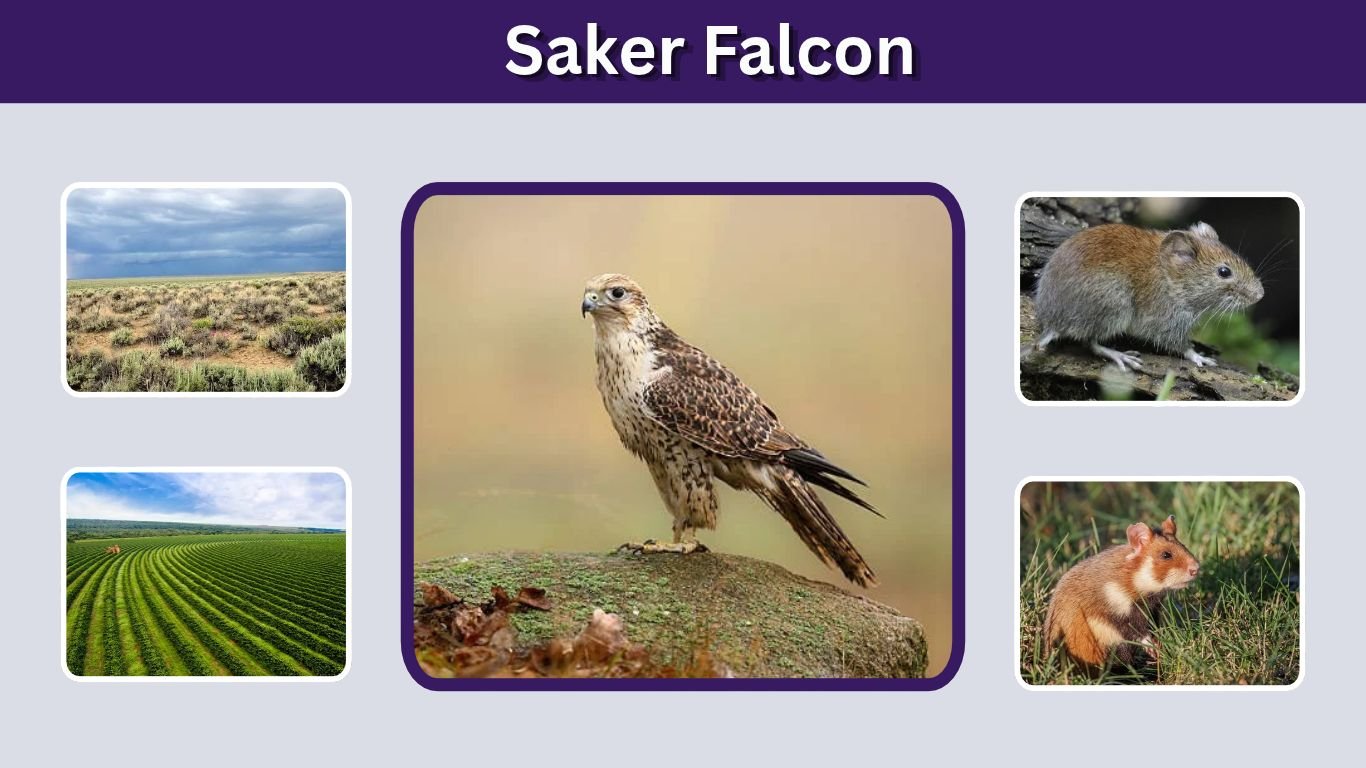
The Saker Falcon (Falco cherrug) is a powerful bird of prey known for its impressive hunting abilities, strong wings, and remarkable flying skills. Found across Europe and Asia, this large falcon prefers open grasslands, steppes, and semi-desert environments. Its distinctive appearance and exceptional hunting performance have made it particularly popular in traditional falconry. However, declining populations and increasing environmental threats have raised serious conservation concerns. Understanding the Saker Falcon’s size, speed, habitat, diet, lifespan, and behavior helps explain why this magnificent bird is so important.
What Is a Saker Falcon?
The Saker Falcon is a large species of falcon belonging to the family Falconidae. Its scientific name is Falco cherrug, and it is closely related to the Gyrfalcon. Known for its strength, intelligence, and hunting persistence, this bird primarily inhabits open landscapes where it can easily locate prey.
Scientific Classification
The Saker Falcon belongs to the genus Falco, which includes Peregrine Falcons, Gyrfalcons, and other birds of prey. It is one of the largest falcon species and is particularly well adapted to hunting terrestrial animals.
Unlike many smaller falcons, Saker Falcons combine powerful wingbeats with excellent maneuverability. Their long tails and relatively broad wings allow them to maintain control during rapid pursuits.
Saker Falcon Size and Physical Characteristics
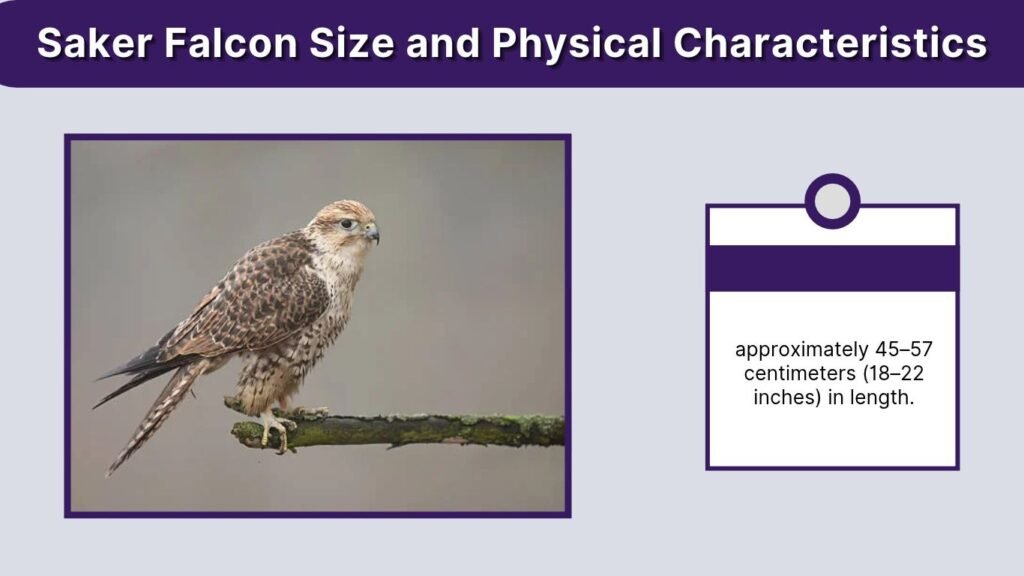
Saker Falcons are recognized by their muscular bodies, broad wings, and distinctive brown plumage. Females are generally larger and heavier than males, a characteristic commonly observed among birds of prey. Their appearance varies considerably depending on age, geographic location, and individual coloration.
Saker Falcon Size and Wingspan
An adult Saker Falcon typically measures approximately 45–57 centimeters (18–22 inches) in length.
Males generally weigh 730–990 grams, while females weigh approximately 970–1,300 grams. Their wingspan ranges from about 97 to 130 centimeters.
These physical characteristics provide the strength necessary to capture relatively large prey, including ground squirrels and medium-sized birds.
Identification and Appearance
Several characteristics help distinguish Saker Falcons from other falcon species:
- Body color: Usually brown with pale cream or whitish underparts.
- Head: Relatively pale, with a less prominent facial stripe than a Peregrine Falcon.
- Wings: Long, broad, and powerful, with relatively pointed tips.
- Tail: Long and useful for maintaining balance during hunting.
- Beak: Strong and hooked for tearing prey.
- Juveniles: Generally darker and more heavily streaked than adults.
Different Colors and Types of Saker Falcons
Saker Falcons display considerable natural color variation. Some individuals have pale sandy feathers, while others exhibit dark chocolate-brown plumage. These variations can create distinctly different appearances within the same species.
Golden, Black, White, and Altai Saker Falcons
A golden Saker Falcon usually refers to an individual with warm golden-brown or sandy plumage. Darker birds are sometimes described as black Saker Falcons, although most are actually deep brown.
Very pale or whitish individuals also occur. The Altai Falcon is a particularly interesting form associated with the Altai region of Central Asia.
Genetic research supports treating the Altai form as part of the eastern Saker Falcon population rather than a clearly separate species. Color descriptions such as golden and black do not represent separate recognized species.
Where Do Saker Falcons Live?
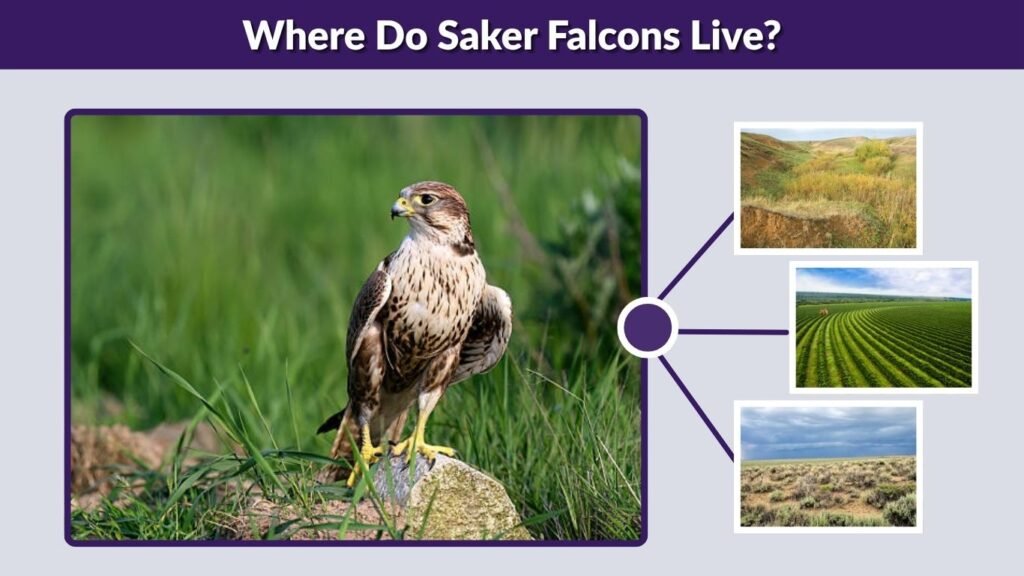
Saker Falcons inhabit a broad geographic range extending from southeastern Europe through Central Asia into parts of China. Their distribution depends heavily on open hunting environments, suitable nesting locations, and reliable prey populations. Some populations remain in their breeding territories throughout the year, while others migrate seasonally.
Saker Falcon Range and Distribution
Important regions where Saker Falcons occur include:
- Mongolia: Extensive grasslands provide important breeding and hunting habitat.
- Kazakhstan: Open steppes support breeding populations.
- Russia: Southern Siberia and surrounding steppe regions provide suitable environments.
- China: Western and northern regions support resident and migratory birds.
- Eastern Europe: Countries such as Hungary and Romania maintain breeding populations.
- Middle East: Areas including the UAE and Saudi Arabia receive migrating and wintering falcons.
Preferred Saker Falcon Habitat
Saker Falcons prefer open grasslands, steppes, agricultural landscapes, semi-deserts, and dry mountain valleys.
These environments provide unobstructed views of potential prey and enough space for fast hunting flights.
They frequently nest on cliffs, trees, or artificial structures. Unlike many birds, Saker Falcons generally do not build their own nests, instead occupying those abandoned by other large birds.
Saker Falcon Diet and Hunting Behavior
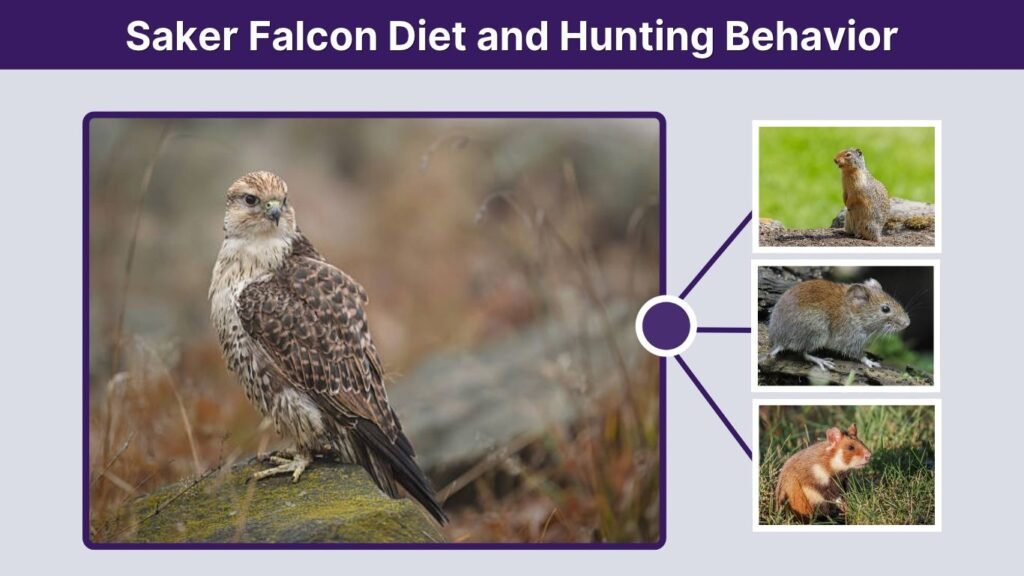
The Saker Falcon is a skilled predator that primarily feeds on small mammals and birds. Its diet changes according to habitat, season, and prey availability. Unlike Peregrine Falcons, which frequently attack birds during spectacular aerial dives, Saker Falcons often pursue prey close to the ground.
What Do Saker Falcons Eat?
Their common prey includes:
- Ground squirrels: An important food source in Central Asian grasslands.
- Voles and mice: Frequently hunted in agricultural and steppe environments.
- Hamsters and other rodents: Captured using powerful talons.
- Pigeons and doves: Taken during aerial or ground-level pursuits.
- Larks and other birds: Common prey in open landscapes.
- Occasional larger birds: Captured when opportunities arise.
Saker Falcon Speed and Hunting Techniques
Saker Falcons are extremely fast and agile hunters, particularly during horizontal flight and low-level pursuits.
They use powerful wingbeats to accelerate toward prey and their long tails to make quick directional changes.
Although very high top-speed figures are sometimes reported online, a reliable, universally established maximum speed for the species is unavailable. The Peregrine Falcon is better documented for its exceptional diving speed.
Saker Falcons depend on sustained pursuit, surprise, and powerful attacks rather than speed alone.
Saker Falcon Breeding and Lifespan
Saker Falcons generally breed during spring, although breeding periods vary geographically. They establish territories around suitable nesting sites and frequently reuse successful locations. Both parents participate in raising their offspring, with females typically performing most incubation duties and males supplying food during the early nesting period.
Nesting and Reproduction
Females commonly lay three to five eggs, although clutch sizes can vary.
Incubation usually lasts approximately 30–35 days. Once hatched, chicks remain dependent on their parents for food and protection.
Young Saker Falcons generally begin flying around five to seven weeks after hatching. However, they continue developing their hunting abilities before becoming fully independent.
How Long Do Saker Falcons Live?
Saker Falcon lifespan varies between wild and captive environments.
In the wild, many individuals live approximately five to seven years, although some survive longer.
Under professional human care, Saker Falcons may live 15–20 years, with exceptional individuals reaching approximately 25 years.
Food availability, disease, environmental hazards, and human activities influence survival.
Saker Falcon vs Gyrfalcon vs Peregrine Falcon
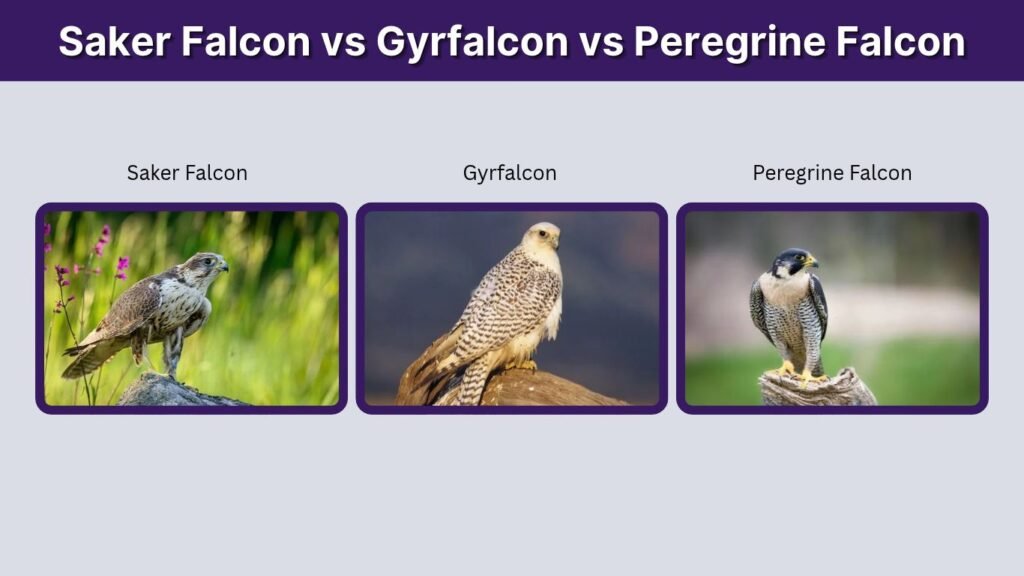
Saker Falcons share several physical characteristics with Gyrfalcons and Peregrine Falcons, but important differences exist.
The Gyrfalcon is generally larger and specializes in hunting across northern and Arctic environments. Its coloration ranges from almost completely white to dark gray.
Peregrine Falcons are famous for their high-speed hunting dives and more strongly marked facial patterns. They occur across a much wider variety of habitats.
Saker Falcons are particularly adapted to open, relatively dry landscapes and frequently capture mammals on or near the ground.
Gyr-Saker hybrids, produced through crosses between Gyrfalcons and Saker Falcons, are also known in captive falconry.
Are Saker Falcons Endangered?
The Saker Falcon is currently classified as Endangered on the IUCN Red List. Populations have declined across parts of its natural range because of several human-related pressures. Conservation organizations are working to protect breeding habitats, reduce preventable deaths, and support sustainable population recovery.
Major Threats to Saker Falcons
Several factors threaten their survival:
- Illegal trapping: Wild falcons are captured for unauthorized wildlife trade.
- Electrocution: Dangerous electrical infrastructure can cause fatal injuries.
- Habitat destruction: Agricultural expansion and land degradation reduce suitable habitats.
- Poisoning: Pesticides and poisoned prey can harm falcons.
- Prey decline: Reduced rodent populations can limit available food.
- Disturbance: Human activity near nesting sites can interfere with breeding.
Conservation Programs
Conservation efforts include artificial nesting platforms, power-line safety improvements, population monitoring, and protection against illegal trapping.
Mongolia is particularly important for Saker Falcon conservation because it supports significant breeding populations.
International cooperation is essential because many birds migrate across national boundaries.
Saker Falcons in Falconry
Saker Falcons have been used in traditional falconry for centuries, particularly throughout Central Asia and the Middle East.
Their strength, hunting persistence, and ability to pursue birds and mammals make them highly valued among experienced falconers.
Captive-bred Saker Falcons and Gyr-Saker hybrids are used in regulated falconry programs. Prices can vary considerably according to breeding, training, lineage, and local market conditions.
However, international trade and ownership are subject to wildlife protection laws. Capturing wild Saker Falcons or purchasing illegally traded birds contributes to conservation problems.
FAQs
1. How Fast Can a Saker Falcon Fly?
Saker Falcons are powerful, fast-flying birds capable of accelerating rapidly during hunting. Their exact maximum speed has not been reliably established. They are especially effective during low-level pursuits, while Peregrine Falcons are better known for reaching extraordinary speeds in steep hunting dives.
2. What Is a Golden Saker Falcon?
A golden Saker Falcon is generally a naturally occurring color variation featuring warm golden, sandy, or light brown feathers. It is not considered a separate species. Plumage coloration varies among individual Saker Falcons because of genetic differences, age, and geographic variation.
3. How Long Does a Saker Falcon Live?
Wild Saker Falcons commonly have an expected lifespan of approximately five to seven years, although some survive longer. Birds receiving professional care in captivity may live 15–20 years, and exceptional individuals can reach around 25 years under favorable conditions.
4. Can You Keep a Saker Falcon as a Pet?
Saker Falcons are specialized birds of prey rather than ordinary household pets. Keeping one requires professional handling skills, appropriate facilities, veterinary care, and legal authorization. Wildlife ownership regulations differ by country, and responsible falconry depends on legally obtained, properly documented birds.
5. Are Saker Falcons Rare in the Wild?
Saker Falcons are considered globally Endangered, although their abundance varies by region. Mongolia and parts of Central Asia retain important breeding populations. Habitat degradation, electrocution, poisoning, and illegal trapping continue threatening their survival, making coordinated international conservation programs essential.