
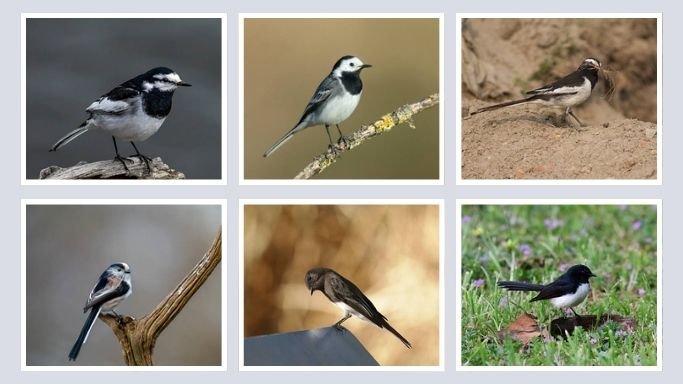
Small black and white birds with long tails are often active, graceful, and easy to notice when they flick, wag, fan, or cock their tails. Some are wagtails that walk on the ground and pump their tails constantly. Others are tiny woodland birds, flycatchers, fantails, or magpie-robins. Because many black-and-white birds look similar at first glance, tail shape, body size, habitat, and movement are the best clues for identification. Here are eight small black and white birds with long tails to know.
1. Pied Wagtail
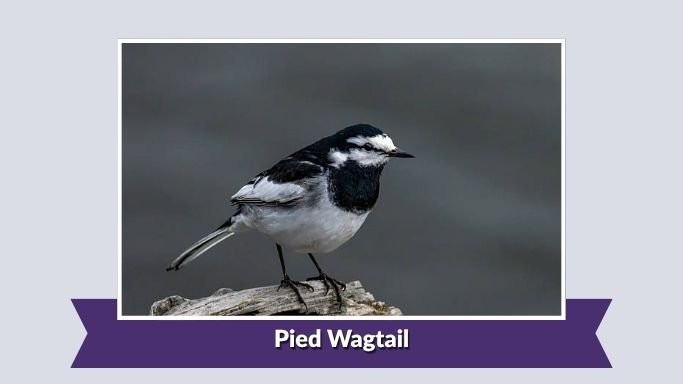
The Pied Wagtail is one of the best matches for a small black and white bird with a long tail. It is slim, active, and often seen walking or running on the ground while wagging its tail. The RSPB describes it as a small, long-tailed, sprightly black-and-white bird that dashes over lawns and car parks in search of food.
Identification
- Small black-and-white bird with a very long tail
- White face, white belly, and black throat area
- Black cap, back, wings, and tail
- White wing bars visible on folded wings
- Slender legs and upright posture
- Constant tail-wagging behavior
- Often walks or runs instead of hopping
Size and Color
The Pied Wagtail is small and neat, usually around sparrow-sized but slimmer. Its body is sharply patterned with black, white, and some grayish tones depending on age and season. The long tail is one of the most obvious features. When the bird lands, it often begins pumping the tail up and down.
Habitat and Diet
Pied Wagtails are common around open ground, lawns, roadsides, farms, parks, rooftops, river edges, and parking lots. They feed mainly on insects and other small invertebrates. Their habit of running across open ground while picking tiny prey makes them easy to recognize.
2. White Wagtail
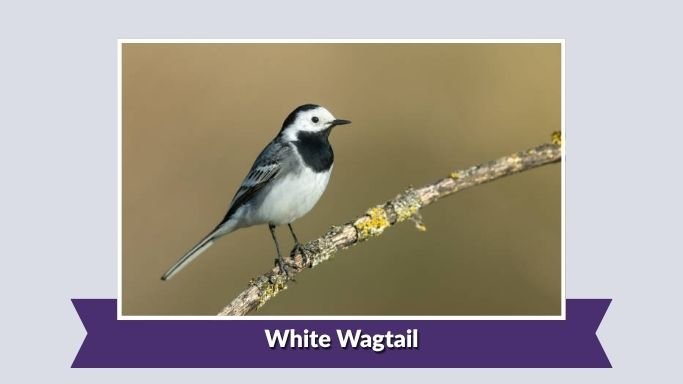
The White Wagtail is closely related to the Pied Wagtail and also fits the description of a small black and white bird with a long tail. It has a slimmer look, grayish upperparts in many forms, and a black-and-white head pattern.
Identification
- Small, slim bird with a long wagging tail
- Black cap and throat in breeding plumage
- White face and pale underparts
- Gray to black upperparts depending on subspecies
- Narrow pointed bill
- Walks quickly on open ground
- Often bobs or pumps its tail
Size and Color
White Wagtails are slender and long-tailed, usually about 6.5 to 7.5 inches long including the tail. Some forms look mostly gray, black, and white, while others are darker. The long tail gives the bird a stretched appearance, especially when seen from the side.
Habitat and Diet
White Wagtails are often found near water, farmland, fields, villages, open lawns, roadsides, and urban spaces. They eat insects, flies, beetles, larvae, and other small invertebrates. They often forage by walking rapidly and picking prey from the ground.
3. White-browed Wagtail
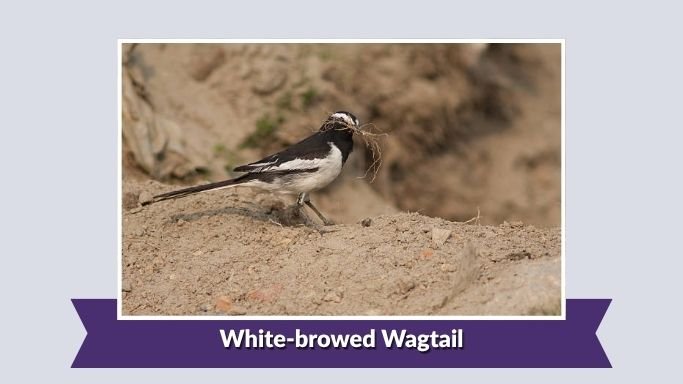
The White-browed Wagtail, also called the Large Pied Wagtail, is a black-and-white wagtail with a long tail and bold white eyebrow. It is common in parts of the Indian subcontinent and is often found near water. It is larger than some wagtails, but still slim and small compared with many backyard birds. It has black upperparts, white underparts, a prominent white brow, and a long constantly wagging tail.
Identification
- Black upperparts and white underparts
- Long tail that wags frequently
- Bold white eyebrow stripe
- White shoulder stripe and wing markings
- Black head, breast, and back
- Slender body and long legs
- Often seen near water or open ground
Size and Color
This wagtail is usually around 8 inches long, with much of that length coming from the tail. Its black-and-white pattern is very bold. The white eyebrow stands out strongly against the black head, making it easier to identify than many similar wagtails.
Habitat and Diet
White-browed Wagtails are common around rivers, ponds, lakes, canals, wetlands, farms, and urban water edges. They feed on insects, small aquatic invertebrates, larvae, and other tiny prey. They often walk along water margins while wagging the tail.
4. Long-tailed Tit
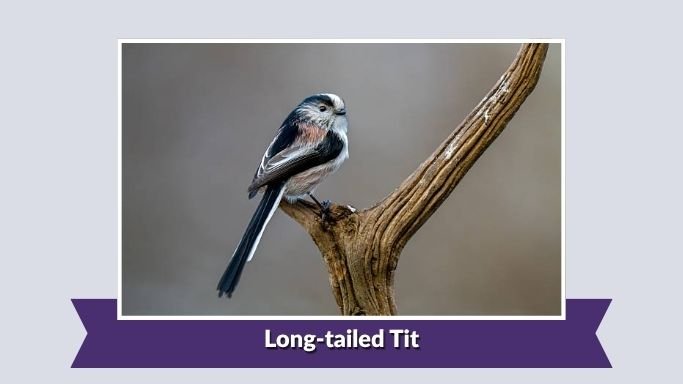
The Long-tailed Tit is a tiny bird with a very long tail, making it one of the most charming small black and white long-tailed birds. It is not purely black and white because many birds show pinkish tones, but its white head, dark markings, black wings, and long black tail make it fit the general search well. Cornell describes it as one of Europe’s smallest birds, a white, black, and pink fluffball with an exceptionally long tail.
Identification
- Very tiny round body
- Exceptionally long narrow tail
- White head in some forms
- Black wings and black tail
- Pinkish or pale body tones
- Tiny bill
- Often travels in busy flocks
Size and Color
The Long-tailed Tit is small by weight, but its long tail makes it look longer than it really is. It is usually about 5 to 6 inches long including the tail. The body is fluffy and round, while the tail is thin and extended.
Habitat and Diet
Long-tailed Tits live in woodlands, hedgerows, parks, gardens, scrub, and forest edges. The Wildlife Trusts notes that this small pink, black, and white bird can be seen in woodlands, gardens, and parks. It feeds mainly on tiny insects, spiders, eggs, larvae, and other small invertebrates.
5. Black Phoebe
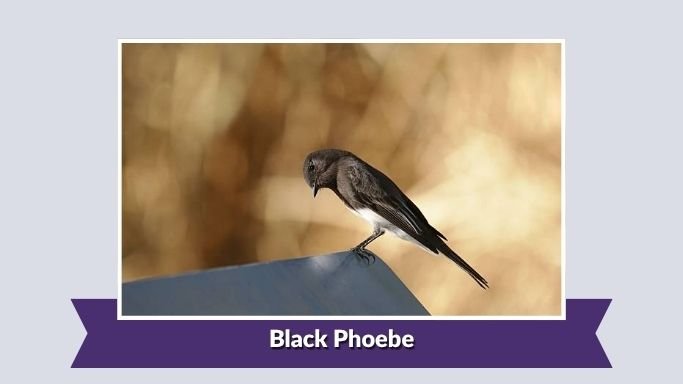
The Black Phoebe is a small flycatcher with a blackish body, crisp white belly, and a fairly long tail that it often pumps while perched. It is not as long-tailed as a wagtail, but its tail movement and black-and-white pattern make it a common match for this search. Cornell describes it as a dapper flycatcher with a sooty black body and crisp white belly, usually seen on low open perches scanning for insects.
Identification
- Sooty black head, chest, and upperparts
- Clean white belly
- Slim upright posture
- Medium-long tail often dipped or pumped
- Thin insect-catching bill
- Usually perches low and open
- Often found near water
Size and Color
The Black Phoebe is small, usually sparrow-sized or slightly larger. Its color pattern is simple: dark charcoal-black above and on the chest, with a bright white belly below. Audubon notes its slim shape, upright posture, and habit of dipping the tail down and up while perched.
Habitat and Diet
Black Phoebes live near streams, ponds, bridges, culverts, farms, gardens, and suburban water sources. They eat flying insects, including flies, beetles, wasps, bees, and moths. They catch prey by flying out from a perch and returning to the same or nearby perch.
6. Willie Wagtail
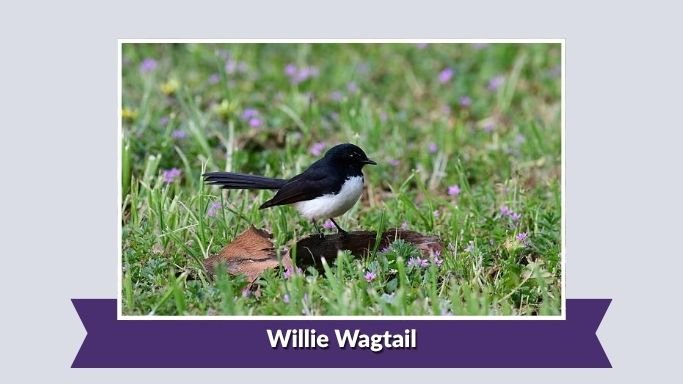
The Willie Wagtail is a small black and white fantail from Australia and nearby regions. It has a long, rounded, fanned tail and is famous for swinging and wagging it while moving. The Australian Museum describes it as a small black-and-white fantail with a white chest and belly, black head, throat, back, wings, and tail, plus a long rounded tail.
Identification
- Small black and white bird
- Long rounded, fanned tail
- White belly and white chest
- Black head, throat, back, wings, and tail
- White eyebrow markings
- Restless tail-swinging behavior
- Often bold around people and animals
Size and Color
Willie Wagtails are slim and active. Their black upper body contrasts clearly with the white belly. The white eyebrow gives the face a sharp expression. The tail is long, rounded, and often spread or swung side to side.
Habitat and Diet
Willie Wagtails live in open woodland, farms, parks, gardens, grassland edges, and around livestock. BirdLife Australia notes that they often follow cattle and sheep to catch insects disturbed by movement. Their diet is mainly insects and other small invertebrates.
7. Oriental Magpie-Robin
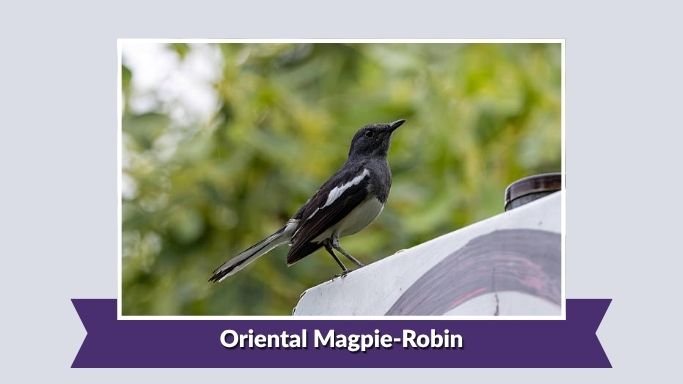
The Oriental Magpie-Robin is a small black-and-white bird with a long tail that is often held upright. It is common across the Indian subcontinent and Southeast Asia. Males are especially distinctive with glossy black upperparts, white underparts, white wing patches, and a long black tail. The species is described as a small passerine, with males being distinctive black-and-white birds with a long tail held upright while foraging or perching.
Identification
- Small black-and-white songbird
- Long tail often cocked upright
- Male has glossy black head, back, and breast
- White belly and white wing patches
- Female is grayer and less glossy
- Often sings from open perches
- Hops on the ground while foraging
Size and Color
The male Oriental Magpie-Robin has a bold black-and-white pattern. Its long tail is one of the most noticeable features, especially when it is raised. Females are usually grayish-black above and paler below but still show the long tail and wing patch.
Habitat and Diet
This bird lives in gardens, villages, parks, open forest, woodland edges, orchards, and scrub. It eats insects, worms, small invertebrates, and sometimes berries. It is also well known for its rich song, often delivered from rooftops, tree branches, or garden posts.
8. Magpie-lark
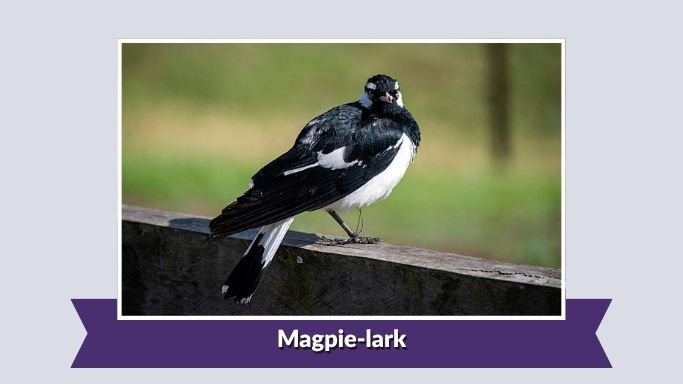
The Magpie-lark is a slender black-and-white bird with a long-looking body and tail. It is larger than some birds on this list, but its slim shape, black-and-white pattern, and ground-walking habits make it a frequent match for people searching for small black and white birds with long tails. New Zealand Birds Online describes it as a slender, black-and-white ground-dwelling songbird with longer legs and an elongated body.
Identification
- Slender black-and-white bird
- Long-looking tail and body
- Black head and chest markings
- White face and underparts
- Long legs for walking on ground
- Straight bill
- Often seen in pairs
Size and Color
The Magpie-lark is not tiny, but it appears neat and slim. Its body pattern is strongly black and white, with differences between males and females in facial markings. The tail adds to its elongated appearance, especially when it walks across lawns or open ground.
Habitat and Diet
Magpie-larks are found in open country, parks, gardens, wetlands, fields, roadsides, and urban areas. They feed mostly on insects, worms, larvae, and small invertebrates. They often walk on the ground and pick prey from soil, grass, or wet edges.
Quick Comparison Table
| Bird | Best Tail Clue | Main Color Pattern | Common Habitat |
|---|---|---|---|
| Pied Wagtail | Long tail, constant wagging | Black, white, gray | Lawns, roadsides, towns |
| White Wagtail | Long wagging tail | Black, white, gray | Open ground, water edges |
| White-browed Wagtail | Long tail, bold wagging | Black above, white below | Rivers, ponds, canals |
| Long-tailed Tit | Extremely long thin tail | White, black, pinkish | Woods, gardens, hedges |
| Black Phoebe | Tail dips while perched | Black body, white belly | Water edges, bridges |
| Willie Wagtail | Long fanned tail | Black upperparts, white belly | Australia, open habitats |
| Oriental Magpie-Robin | Long tail held upright | Black and white | Gardens, villages, forests |
| Magpie-lark | Long-looking tail/body | Bold black and white | Open ground, parks, wetlands |
How to Identify Small Black and White Birds With Long Tails
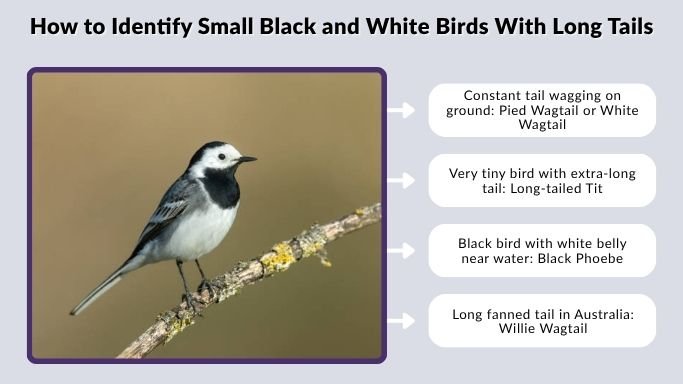
When identifying these birds, do not rely only on color. Many birds are black and white, but tail movement and habitat quickly narrow the answer. A bird walking on pavement and constantly pumping its tail is likely a wagtail. A tiny fluffy bird moving through hedges in a group may be a Long-tailed Tit. A dark flycatcher near water with a white belly may be a Black Phoebe.
Fast Identification Tips
- Constant tail wagging on ground: Pied Wagtail or White Wagtail
- Very tiny bird with extra-long tail: Long-tailed Tit
- Black bird with white belly near water: Black Phoebe
- Long fanned tail in Australia: Willie Wagtail
- Black-and-white bird with cocked tail in South Asia: Oriental Magpie-Robin
- Bold white eyebrow near water in India: White-browed Wagtail
- Black-and-white ground bird in open areas: Magpie-lark
FAQs
What small black and white bird has a long tail?
The Pied Wagtail is one of the best examples of a small black and white bird with a long tail. It is slim, active, and often seen wagging its tail while walking across lawns, roadsides, rooftops, or parking areas.
What black and white bird keeps wagging its tail?
Wagtails are the classic black and white birds that keep wagging their tails. Pied Wagtails, White Wagtails, and White-browed Wagtails all pump their long tails while walking or running on open ground.
What tiny black and white bird has a very long tail?
The Long-tailed Tit is a tiny bird with an exceptionally long tail. It is not purely black and white because it may show pinkish tones, but it has a white, black, and pale body pattern with a very long tail.
What black and white bird has a long tail held upright?
The Oriental Magpie-Robin often holds its long tail upright while foraging or perching. Males are glossy black and white, with white underparts and white wing patches. It is common in gardens and open wooded areas across South and Southeast Asia.
Are all small black and white long-tailed birds wagtails?
No. Wagtails are common examples, but not all black-and-white long-tailed birds are wagtails. Long-tailed Tits, Black Phoebes, Willie Wagtails, Oriental Magpie-Robins, and Magpie-larks can also match this description depending on location.
