
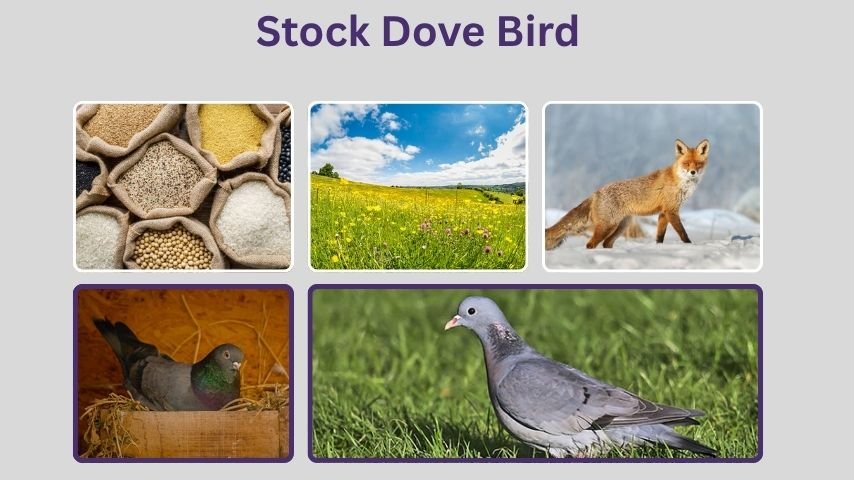
The Stock Dove is one of Europe’s most overlooked pigeon species, often mistaken for the larger Wood Pigeon or the familiar Rock Dove. Despite its plain appearance, this quiet woodland bird has unique behaviors, soft vocal calls, and fascinating nesting habits that attract birdwatchers and wildlife enthusiasts alike. Known scientifically as Columba oenas, the Stock Dove thrives in woodlands, farmland, and open countryside. Understanding its appearance, habitat, feeding style, and breeding behavior can help bird lovers identify this secretive bird more easily in the wild.
What Is a Stock Dove?
The Stock Dove is a medium-sized wild pigeon native to Europe and parts of western Asia. Unlike urban pigeons that gather around cities and buildings, Stock Doves prefer quieter woodland edges, agricultural land, and open rural landscapes. Their smooth grey-blue plumage and dark eyes give them a cleaner and more elegant appearance compared to other pigeon species.
Although they may appear common in some regions, many people rarely notice them because they blend naturally into wooded environments. Birdwatchers often identify them by their gentle cooing sound and fast, direct flight pattern.
Scientific Classification
The Stock Dove belongs to the pigeon and dove family known as Columbidae. Its scientific name is Columba oenas. This species is closely related to the Wood Pigeon and Rock Dove, but it has several distinguishing physical and behavioral features.
Physical Appearance
The Stock Dove has a compact body with soft grey feathers covering most of its body. Its neck displays a slight green and purple iridescent shine when viewed in sunlight. Unlike the Wood Pigeon, it lacks a white neck patch, making identification easier for experienced birdwatchers.
Key physical features include:
- Blue-grey body coloration
- Dark eyes with a small black beak
- Glossy green neck feathers
- Broad wings with darker wing bars
- Smaller size compared to the Wood Pigeon
The bird usually measures around 32 to 34 centimeters in length with a wingspan reaching approximately 65 centimeters.
Stock Dove Habitat and Distribution
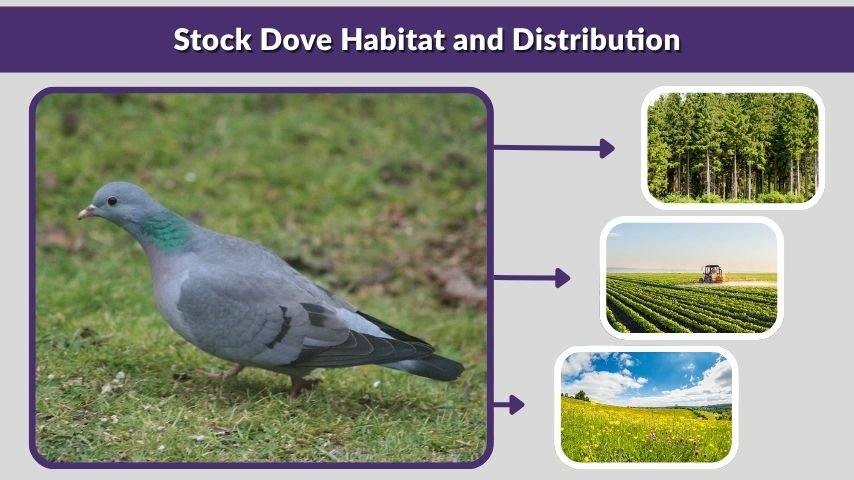
Stock Doves are strongly connected to woodland habitats and farmland areas where old trees provide natural nesting cavities. They avoid busy urban centers and are more commonly seen in peaceful countryside environments.
Their distribution stretches across much of Europe, including the United Kingdom, France, Germany, and parts of Scandinavia. Some populations also live in western Asia. In warmer regions, Stock Doves remain throughout the year, while northern populations may migrate south during winter.
Preferred Habitat
Stock Doves prefer habitats that provide both food and safe nesting areas. Mature trees with hollow trunks are especially important because these birds rely heavily on natural cavities for breeding.
Common habitats include:
- Woodland edges
- Agricultural farmland
- Grasslands and meadows
- Old parks with mature trees
- Rural countryside areas
These birds often search for food in open fields during the daytime before returning to wooded nesting sites.
Seasonal Movement
Migration patterns vary depending on location and climate. Northern populations may travel south to escape harsh winters, while birds living in milder climates usually remain in the same territory year-round.
During colder months, Stock Doves sometimes gather in small flocks with other pigeon species while feeding in farmland areas. Their quiet behavior still makes them less noticeable than larger pigeons.
Stock Dove Diet and Feeding Behavior
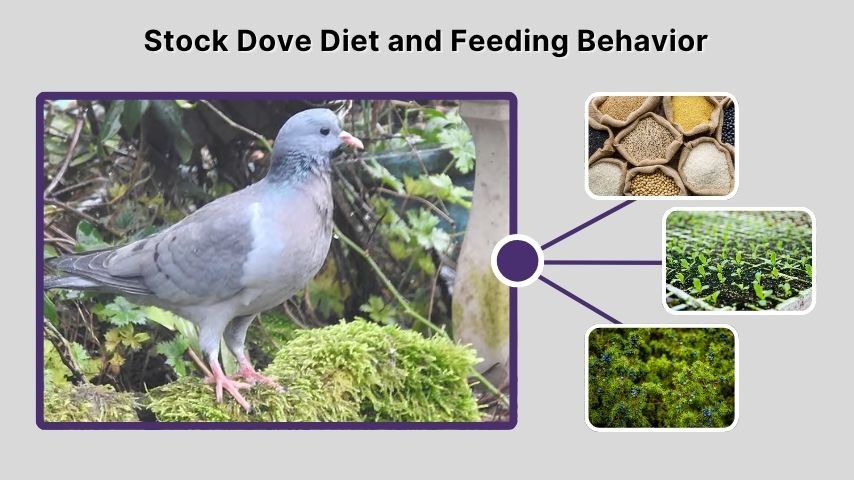
The Stock Dove mainly feeds on seeds, grains, and plant material found on the ground. It spends much of its day searching open fields and grassy areas for food. Unlike some urban pigeons, Stock Doves rarely depend on human food sources.
Their feeding style is calm and methodical. They walk slowly across fields while picking seeds and shoots from the surface. Farmers may occasionally notice them feeding on harvested grain fields during autumn and winter.
Main Food Sources
The diet of a Stock Dove changes slightly with the seasons depending on food availability.
Typical food sources include:
- Seeds and cereal grains
- Wild berries
- Small green shoots
- Agricultural crops
- Plant leaves and roots
Young chicks are fed a nutritious substance called crop milk, produced naturally by both parent birds.
Feeding Habits
Stock Doves prefer feeding in quiet rural locations where disturbances are limited. They are most active during the early morning and late afternoon. Their natural camouflage helps protect them from predators while feeding on open ground.
Unlike aggressive urban pigeons, Stock Doves usually feed peacefully either alone, in pairs, or within small flocks. Their cautious nature allows them to react quickly if danger appears nearby.
How to Identify a Stock Dove
Correctly identifying a Stock Dove can be difficult for beginners because it closely resembles several other pigeon species. However, careful observation makes the differences easier to recognize.
Difference Between Stock Dove and Wood Pigeon
The Wood Pigeon is larger and has a distinct white patch on its neck, while the Stock Dove has a cleaner grey appearance without white markings. Stock Doves also have darker eyes and shorter wings.
Flight and Vocal Sounds
Stock Doves fly with fast and steady wingbeats. Their flight pattern is direct and smooth compared to the louder wing claps sometimes heard from Wood Pigeons.
Their call is a deep and repetitive cooing sound that is softer and more controlled than many other pigeons. Birdwatchers often hear the call before spotting the bird itself in woodland areas.
Stock Dove Breeding and Nesting Behavior
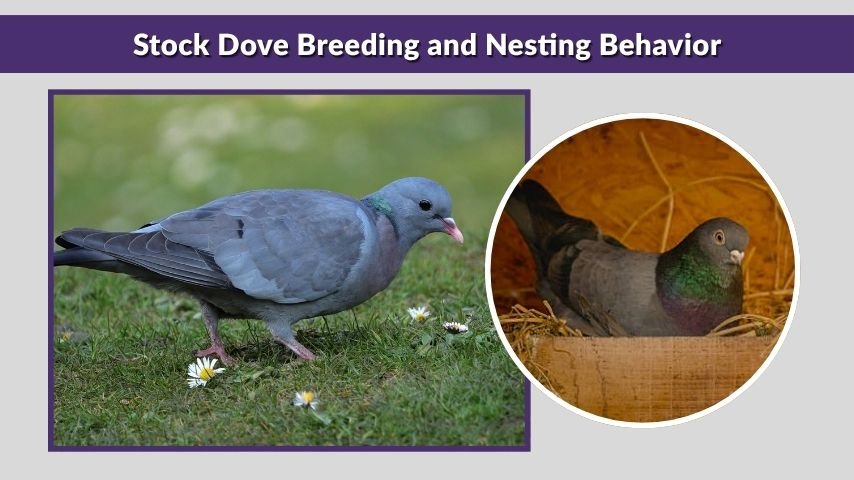
The breeding habits of the Stock Dove are among the most interesting features of this species. Unlike many birds that build open nests in tree branches, Stock Doves prefer nesting inside hollow trees, old woodpecker holes, and other protected cavities. This nesting strategy helps shield eggs and chicks from harsh weather and predators.
Breeding usually begins in spring and may continue into late summer if food conditions remain favorable. During courtship, males perform short display flights and produce repeated cooing sounds to attract females.
Nesting Sites
Stock Doves depend heavily on natural cavities because they rarely create fully exposed nests. In areas where mature trees are limited, they may also use old buildings or specially designed nest boxes.
Popular nesting locations include:
- Hollow tree trunks
- Old woodpecker nesting holes
- Cavities in cliffs or walls
- Abandoned farm buildings
- Artificial bird nest boxes
The nest itself is usually simple and made from small twigs, roots, and dry grass.
Eggs and Young Chicks
Female Stock Doves normally lay two white eggs during each breeding attempt. Both parents share incubation duties and protect the nest carefully. The incubation period generally lasts a little over two weeks.
After hatching, the chicks remain inside the nesting cavity where they are fed crop milk by both adults. As the chicks grow, the parents gradually introduce seeds and plant material into their diet.
Young birds usually leave the nest after several weeks but continue depending on their parents for food and protection during the early stages of development.
Stock Dove Predators and Threats
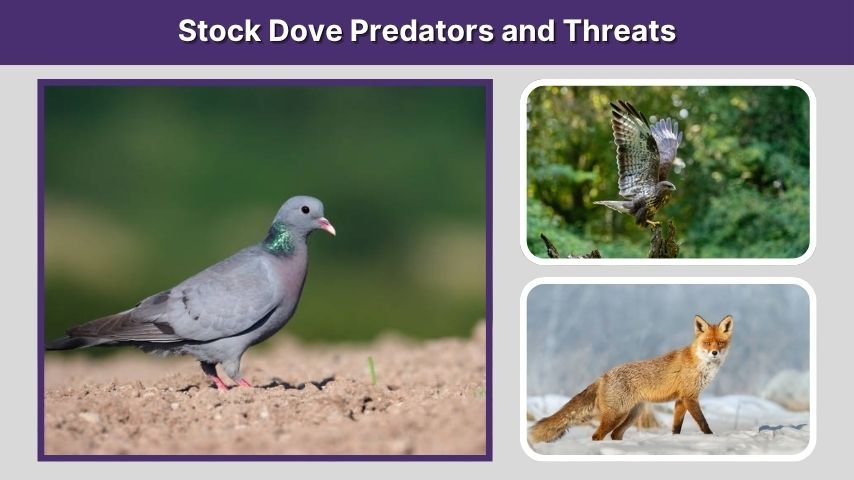
Although Stock Doves are adaptable birds, they still face several natural and human-related threats. Birds of prey are among their biggest predators, especially when adult birds travel across open farmland searching for food.
Habitat destruction has also affected some populations. The removal of old woodland trees reduces the number of suitable nesting cavities available for breeding pairs.
Natural Predators
Several predators target Stock Doves at different stages of life. Eggs and chicks are especially vulnerable when nests are discovered.
Common predators include:
- Hawks and falcons
- Owls
- Foxes
- Martens and squirrels
- Domestic cats
Adult birds rely on fast flight and cautious behavior to avoid danger.
Human Impact on Population
Modern agricultural changes have influenced Stock Dove populations in many regions. Intensive farming methods can reduce food availability and remove natural nesting habitats.
Important threats include:
- Loss of mature woodland
- Fewer nesting cavities
- Pesticide use in farmland
- Urban expansion
- Climate-related habitat changes
Conservation groups encourage woodland preservation and nest box installation to support breeding populations.
Interesting Facts About Stock Doves
The Stock Dove may look simple compared to brightly colored birds, but it has several fascinating characteristics that make it unique among pigeon species.
Lesser-Known Facts
Many people confuse the Stock Dove with common city pigeons, yet it is actually a shy woodland species with very different behavior patterns.
Interesting facts include:
- The Stock Dove is one of the oldest recognized wild pigeon species in Europe.
- It often returns to the same nesting cavity every year.
- Both parents produce crop milk for their chicks.
- Its soft cooing sound is quieter than most pigeons.
- Some birds form long-term breeding pairs.
These traits make the Stock Dove an important part of woodland ecosystems and rural biodiversity.
Birdwatching Tips for Spotting Stock Doves
Stock Doves can be difficult to notice because of their calm behavior and natural camouflage. However, birdwatchers who understand their habits have a much better chance of finding them.
Best Places to Search
Woodland edges near farmland are some of the best locations for observing Stock Doves. Areas with old trees and open grassy feeding grounds are especially productive.
Birdwatchers should pay attention to:
- Mature forests with hollow trees
- Quiet farmland paths
- Open meadows near woodland
- Rural parks and estates
- Nature reserves with grassland habitats
Early morning is usually the best time to observe feeding activity.
Listening for Their Calls
The easiest way to locate a Stock Dove is often by listening carefully for its deep rhythmic cooing. The sound is soft but repetitive and usually comes from hidden perches within trees.
Patience is important because these birds are naturally cautious and may remain motionless for long periods before flying into the open.
FAQs
Are Stock Doves rare?
Stock Doves are not considered globally rare, but they are less commonly seen than Wood Pigeons because they prefer quiet woodland and farmland habitats. Their secretive behavior also makes them harder to notice in the wild.
What do Stock Doves eat?
Stock Doves mainly feed on seeds, grains, berries, shoots, and other plant materials. They usually search for food on the ground in open fields and grassy countryside areas.
How can you identify a Stock Dove?
A Stock Dove can be identified by its smooth grey-blue plumage, dark eyes, glossy green neck feathers, and lack of the white neck patch found on Wood Pigeons.
Where do Stock Doves build nests?
Stock Doves prefer nesting inside tree cavities, old woodpecker holes, abandoned buildings, and nest boxes. They rarely build exposed nests in tree branches.
Do Stock Doves migrate?
Some northern populations migrate south during winter, while birds living in milder climates often remain in the same area throughout the year.