
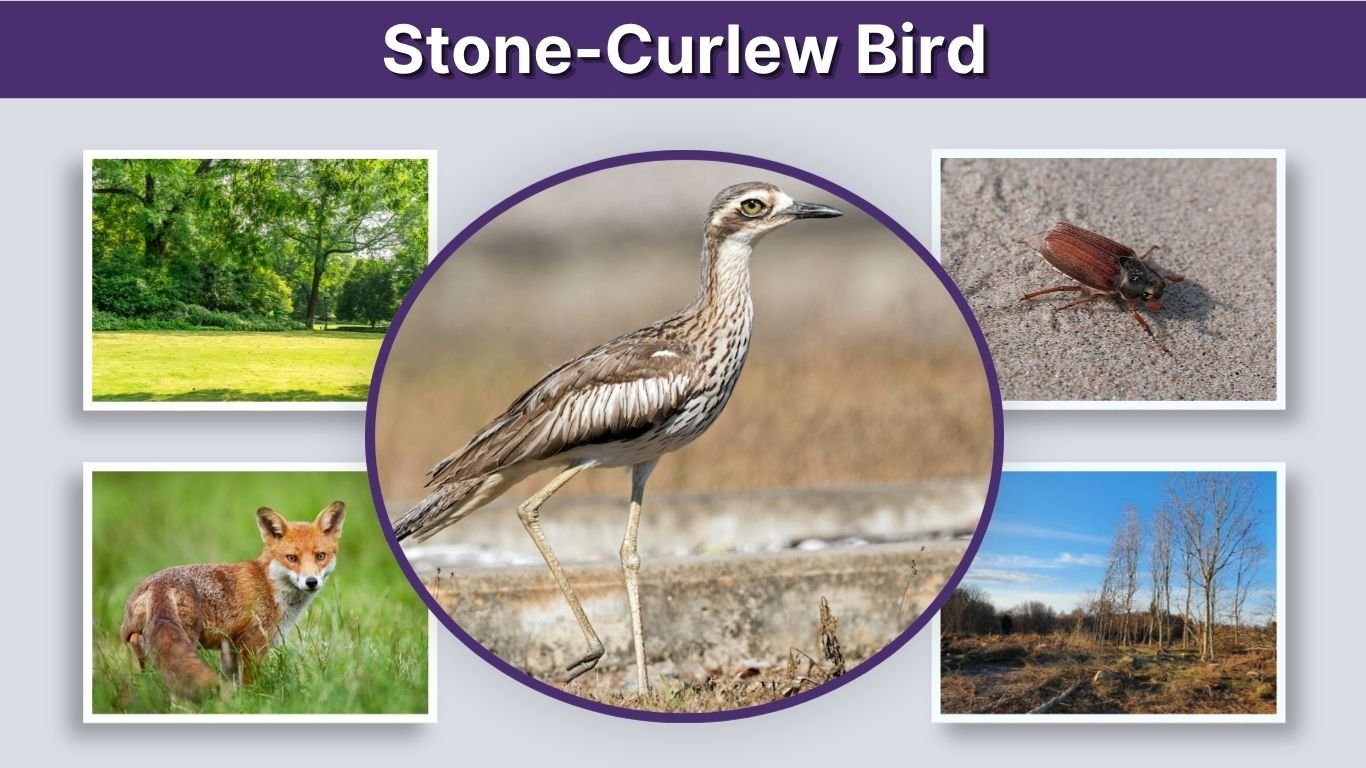
The Stone-curlew bird is a distinctive ground-dwelling bird recognized by its large yellow eyes, long legs, cryptic brown plumage, and haunting nighttime calls. Stone-curlews belong to the family Burhinidae and are sometimes called thick-knees because of their prominent leg joints. Different species occur across Australia, Europe, Asia, Africa, and other regions. The Australian Bush Stone-curlew is particularly famous for its eerie cries after dark, while the Beach Stone-curlew lives mainly along tropical coastlines. This guide explores their identification, habitat, diet, sounds, behavior, nesting, and fascinating adaptations.
What Is a Stone-Curlew Bird?
Despite its name, a Stone-curlew is not a true curlew like the Long-billed or Eurasian Curlew. Stone-curlews belong to the family Burhinidae and have a very different appearance and lifestyle. Most are terrestrial birds that spend considerable time walking on the ground and become particularly active around dusk or during the night.
Stone-Curlew Identification
Common characteristics of Stone-curlews include:
- Large, bright yellow or yellowish eyes
- Long legs adapted for walking on the ground
- Brown, gray, buff, and black camouflage
- Strong, relatively short bill
- Large head compared with body size
- Pale eyebrow or facial markings in some species
- Long wings
- Upright standing posture
- Powerful nighttime calls
Their oversized eyes are among their most noticeable adaptations. They help Stone-curlews remain active under low-light conditions.
The Australian Bush Stone-curlew normally measures around 52–58 cm and has gray-brown upperparts, dark streaking, whitish underparts, a black bill, and prominent yellow eyes.
Types of Stone-Curlew Birds
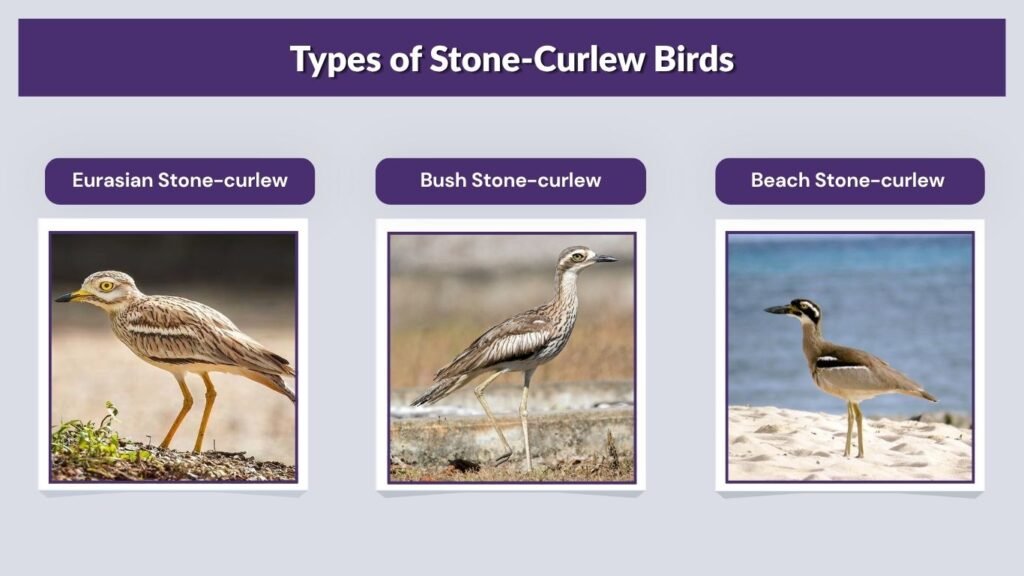
Stone-curlews include several species adapted to habitats ranging from dry grasslands to tropical beaches. Although they share long legs and large eyes, their body size, markings, bill structure, and preferred environments can differ considerably. Two Australian species—the Bush Stone-curlew and Beach Stone-curlew—are especially recognizable and frequently searched because of their unusual appearance and vocalizations.
Common Stone-Curlew Species
Some notable Stone-curlews include:
- Eurasian Stone-curlew – Burhinus oedicnemus
- Bush Stone-curlew – Burhinus grallarius
- Beach Stone-curlew – Esacus magnirostris
- Indian Stone-curlew – Burhinus indicus
- Spotted Thick-knee – Burhinus capensis
- Senegal Thick-knee – Burhinus senegalensis
- Peruvian Thick-knee – Burhinus superciliaris
Bush Stone-Curlew Bird
The Bush Stone-curlew is one of Australia’s best-known nocturnal birds. It occurs in grasslands, woodland, heathland, and some urban environments. During daylight it commonly remains almost motionless beneath vegetation, relying on its mottled plumage to avoid detection.
At night it becomes much more active, walking across the ground in search of food. Bush Stone-curlews may even occur around golf courses, parks, cemeteries, and spacious suburban properties where suitable cover remains.
Beach Stone-Curlew Bird
The Beach Stone-curlew is a much heavier-looking coastal species with a massive bill. It inhabits beaches, islands, estuaries, mudflats, sandflats, reefs, and coastal lagoons.
Its large bill is particularly useful for handling crabs. Beach Stone-curlews can hammer hard-shelled prey before eating it and are strongly associated with relatively undisturbed coastal habitat.
Where Do Stone-Curlew Birds Live?
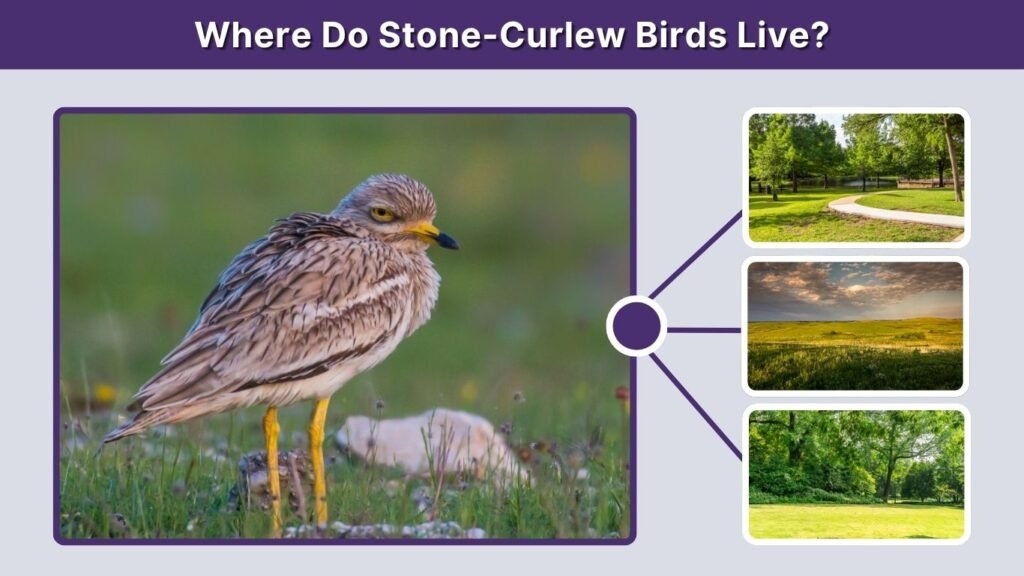
Habitat varies considerably by species. Many Stone-curlews prefer open environments where they can walk easily and detect approaching predators. Unlike typical water-dependent shorebirds, some Stone-curlews spend most of their lives in woodland or dry open country. Others, especially the Beach Stone-curlew, are strongly tied to tidal areas and tropical coastlines.
Bush Stone-Curlew Habitat in Australia
Bush Stone-curlews use environments such as:
- Open woodland
- Grassland
- Heathland
- Dry bushland
- Forest edges
- Parks
- Golf courses
- Cemeteries
- Large gardens
- Lightly developed urban areas
They occur across much of Australia, although populations have declined severely in some southern and southeastern areas because of habitat loss and introduced predators.
Stone-Curlews in Queensland and Darwin
Bush Stone-curlews remain particularly familiar to many people in northern Australia, including Queensland and Darwin. Warm climates and suitable open woodland provide favorable conditions.
Residents may see pairs standing quietly beneath trees during the daytime. After sunset, the same birds become active and vocal, sometimes producing prolonged choruses that can be heard across neighborhoods.
What Do Stone-Curlews Eat?
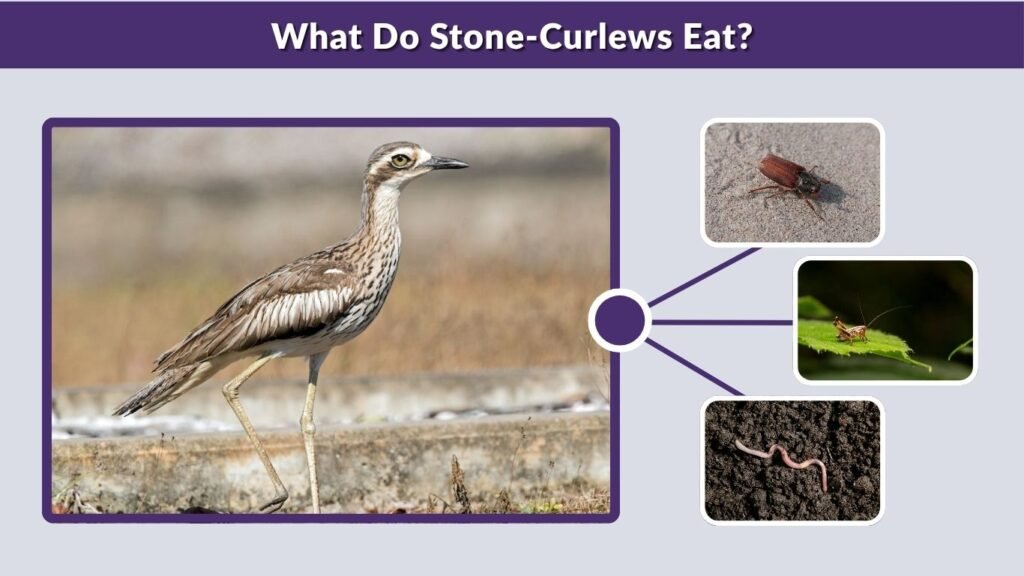
Stone-curlews are primarily ground feeders. Large eyes help them locate food at night, while strong legs allow them to move through grass, leaf litter, exposed soil, and coastal flats. Their exact diet depends on species and habitat, with Bush Stone-curlews consuming terrestrial prey and Beach Stone-curlews specializing more heavily in marine invertebrates.
Bush Stone-Curlew Diet
Bush Stone-curlews commonly eat:
- Insects
- Beetles and other arthropods
- Mollusks
- Small lizards
- Seeds
- Worms
- Other ground-dwelling invertebrates
- Occasionally small mammals
Almost all feeding takes place on the ground, usually after sunset.
Beach Stone-Curlew Diet
Beach Stone-curlews consume mainly:
- Crabs
- Other crustaceans
- Mollusks
- Marine invertebrates
- Occasional insects
Research on Beach Stone-curlew droppings has found crab remains to be particularly important, emphasizing how strongly this species depends on healthy intertidal feeding areas.
Stone-Curlew Bird Call and Sound
Few characteristics of Stone-curlews receive as much attention as their voices. Bush Stone-curlews can produce extraordinarily loud, eerie cries during the night. A single bird may call repeatedly before another responds, eventually creating a chorus. The sound is natural communication rather than a sign that the bird is injured or distressed.
What Does a Bush Stone-Curlew Sound Like?
The Bush Stone-curlew call is often described as a drawn-out “weer-loo” or mournful wailing sound. It may be repeated several times before building into a louder, more intense sequence.
Calls help birds maintain contact with partners and other nearby curlews. They become particularly noticeable around dusk and throughout the night because Bush Stone-curlews are primarily nocturnal.
Why Is It Called the “Devil Bird”?
“Devil bird” is an informal nickname sometimes used for the Bush Stone-curlew, particularly in northern Australia. It comes largely from the bird’s eerie nighttime wailing, which can sound startlingly human to someone hearing it for the first time.
ABC Radio Darwin has noted both “Creepy Curlew” and “Devil Bird” as informal names associated with the species.
The nickname does not mean the bird is dangerous. Bush Stone-curlews are generally secretive birds whose frightening reputation comes mainly from their unusual voice.
Stone-Curlew Nesting and Behavior

Stone-curlews spend much of their lives at ground level, and their breeding strategy reflects that lifestyle. Rather than building elaborate nests high in trees, Bush Stone-curlews usually select relatively open ground. Camouflage, alert adults, and defensive behavior help protect eggs and young from threats.
Nesting and Baby Stone-Curlews
Bush Stone-curlew breeding characteristics include:
- Nest built as a shallow scrape on the ground
- Usually 1–3 eggs
- Both parents participate in incubation
- Adults care for the young together
- Chicks are camouflaged against the ground
- Parents may become defensive near eggs or chicks
- Breeding commonly occurs from about July to January in Australia
Bush Stone-curlews are also known for elaborate courtship displays involving extended wings, raised tails, stamping movements, and repeated calling.
Nocturnal Behavior
During the day, Bush Stone-curlews frequently remain still in shaded places. Their streaked plumage blends remarkably well with fallen leaves, dry grass, and tree bark.
Once darkness arrives, they begin walking through their territories, feeding, interacting with partners, and calling. Their combination of huge eyes and nighttime activity explains why encounters with these birds can feel so unusual.
Stone-Curlew Conservation
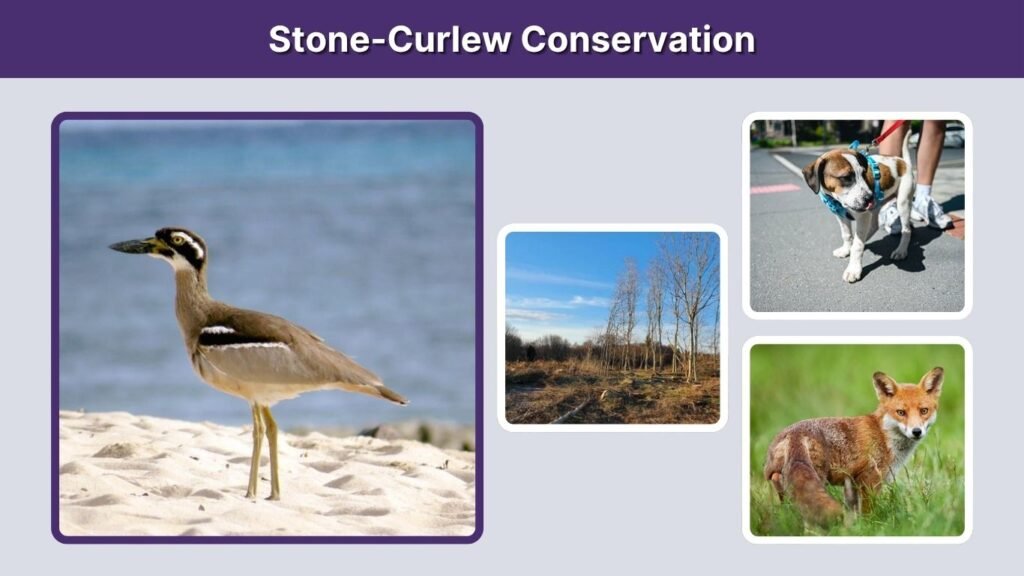
Conservation status differs between species and regions. Bush Stone-curlews are globally categorized as Least Concern, yet this can hide significant local declines. Habitat clearing, urban development, foxes, feral cats, dogs, and disturbance around nesting areas have reduced populations in parts of Australia. The species is considered threatened in some Australian states even though it remains relatively familiar farther north.
Major Threats to Stone-Curlews
Important threats include:
- Habitat clearing
- Loss of open woodland
- Fox predation
- Feral and domestic cats
- Dogs disturbing nesting birds
- Vehicle collisions
- Coastal development
- Disturbance around ground nests
- Loss of feeding areas
Protecting ground cover, reducing disturbance around nests, and managing introduced predators can help maintain local populations.
FAQs
Stone-curlews often generate questions because they look unusual, remain strangely motionless during daylight, and produce surprisingly loud calls after dark. Their common name also causes confusion with true curlews. Understanding their nocturnal lifestyle and ground-dwelling behavior helps explain many of their most recognizable characteristics.
1. Is a Stone-curlew a true curlew?
No. Stone-curlews belong to the family Burhinidae and are not true curlews of the genus Numenius.
2. Why do Stone-curlews scream at night?
Their eerie calls are primarily communication between birds. Bush Stone-curlews are nocturnal, so calling is particularly common after sunset.
3. Are Bush Stone-curlews dangerous?
Generally, no. They normally avoid people, although adults can behave defensively if someone approaches their eggs or chicks.
4. Where do Bush Stone-curlews live?
They occur throughout much of Australia in open woodland, grasslands, heathlands, bushland, and some urban environments.
5. What is the difference between Bush and Beach Stone-curlews?
Bush Stone-curlews are slimmer woodland birds with relatively small bills. Beach Stone-curlews are heavier coastal birds with massive bills adapted for feeding on crabs and other marine prey.
